Hood design-Week 2
1. hood and its components
Hood is opening of body pannel which covers the engine in a front of vehicle.It is consider as another type of door as it consists of outer and inner pannel.The inner panel provides the strength while the outer as metal cover. HOod also helps in Reducing the damage of pedestrian considering head impact, associated with lowspeed crash with pedestrian. Protect the underlying parts and the motor from theft, also to take away the ability to disable the car alarm. Protect parts under the hood from environmental damage, like corrosion and water. Give the car better aerodynamics and a good look with styling.
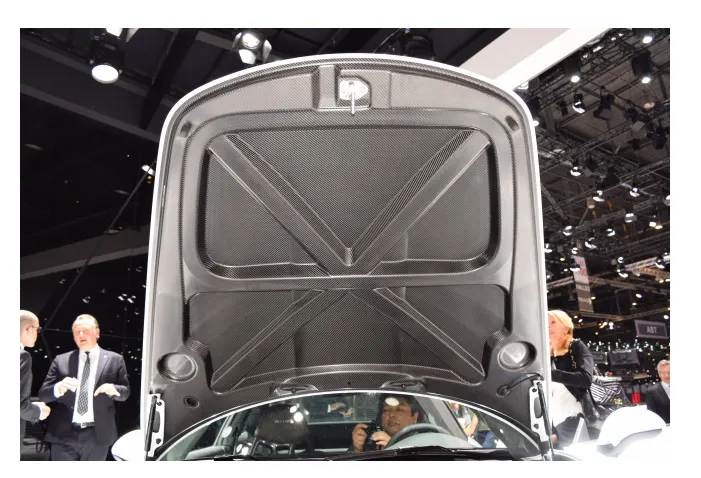
Hood Balancer: A device for supporting the engine hood of motor vehicle in its open position.
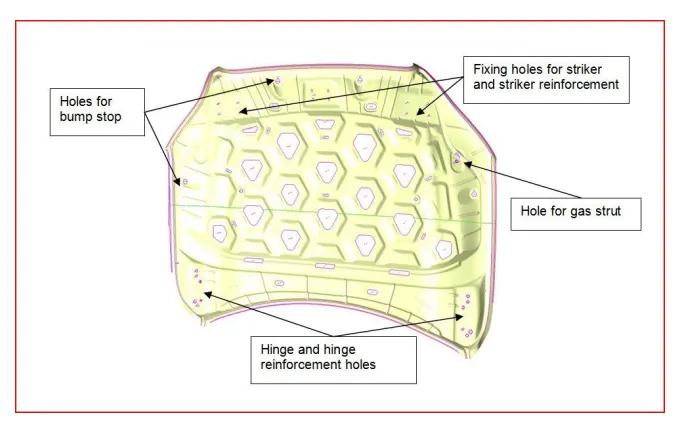
The hood system should allow inspection of the engine and service of the under-hood systems, for example filling fluids. Together with the latch system and opening system, the hood should fulfill the demands in ergonomics concerning opening-closing forces and opening geometry. It should be robust enough to not be damaged by normal daily usage of the car. The complete hood consists of an inner and an outer plate joined together by hemming around the edges of the hood. Rubber based glue is used in the flange joint as glue between outer and inner hood and on points as well in the inner plate pattern as anti-flutter. Front reinforcement i.e stricker reinforcement and hinge reinforcements (steel) are clinched to the inner plate. Spot welding is used in part assembly of front reinforcement.
The inner hood consists of complex geometry . Inorder to provide strength for the frontal crash the inner hood plays the vital role. The design of inner hood is in such a way that the stress generated during frontal crash tends to deflect in outer side of the panel.
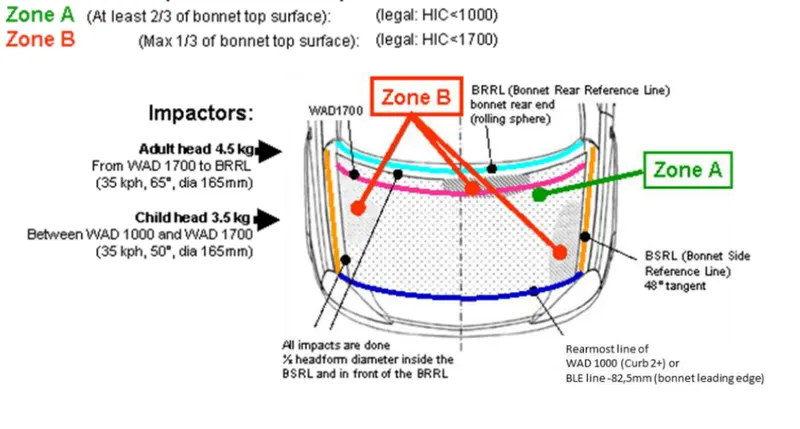
The hood hinges strength should be higher then the buckling force of hood so that it does not damage the windshield. Therefore the hood is intentionally weeken in some specific areas so that during the crash it gets folden up by utself.
Hood Latches -Hood release wire must not open the latch or latches in a crash situation. Hood shall always be attached to body after crash with at least one latch if the car has more than one. The latch or latches will not open due acceleration.
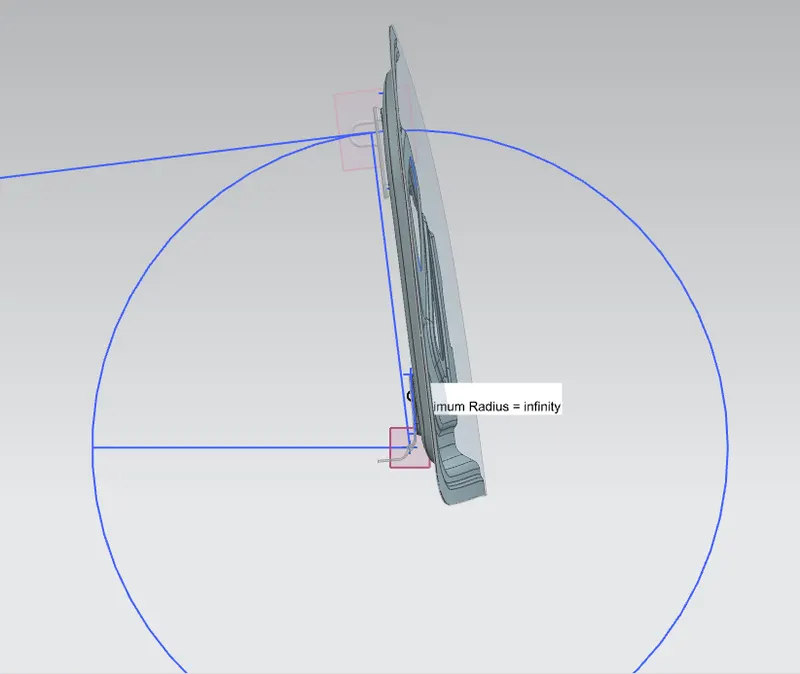
2. Latch Trajectory :
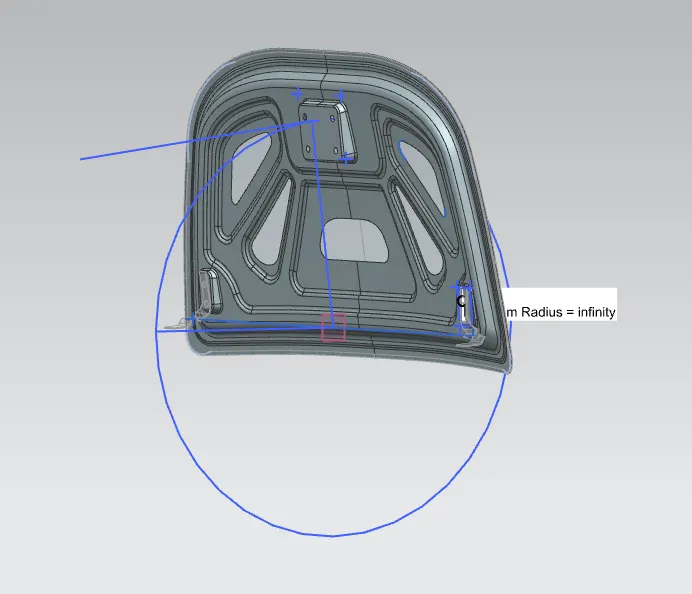
Latch tragectory is decided by using the central axis of the latched hinged in the same plane. The centre of latched axis is decided in such a way that it forms the whole circle passing through the stricker plate with the center at latch axis.
3.Mastic Data :
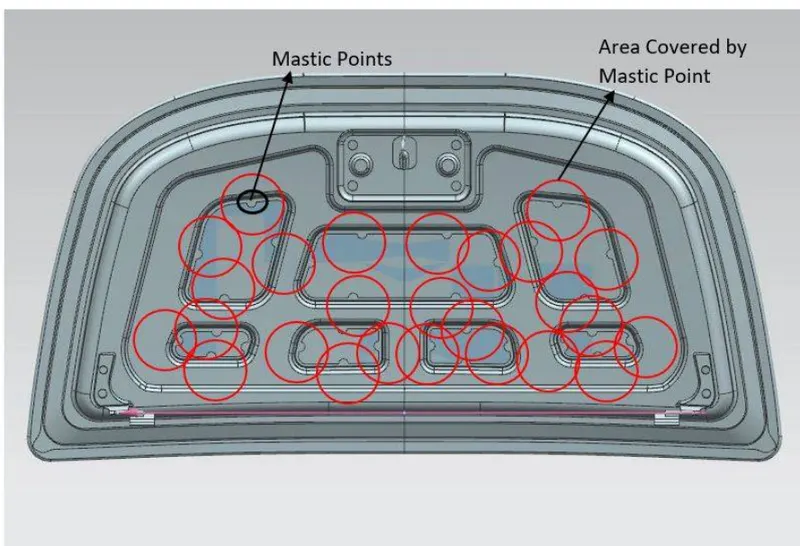
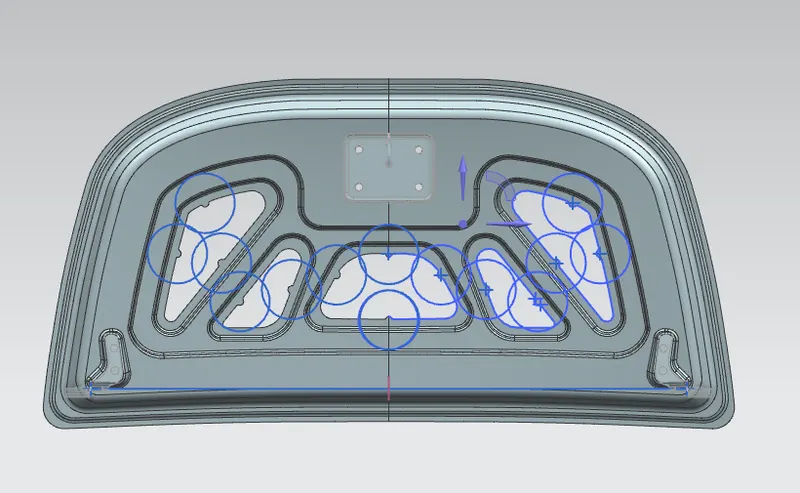
The outer pannel of hood is generally used to provide styling to the car. On this styling surface no spots are used , because it affects the overall asthetic look of the cars body.Generally of 80mm dia. and placed 80mm apart . These area can also be called as stiffnes area as the hood will get folded at this area during the frontal crash and the driver remains safe.
Depending upon the cost of the car mastic points in the inner hood pannel differs. Compared to the cost , mastic points increases as cost of automobile increases.
Emboss Definitions:
Emboss are created to strength the inner hood and direct to inline stress comming towards the driver during frontal crash outside the hood so that the driver remains safe.
Manufacturing process ;
Deep Drawing:
Deep drawing is a sheet metal forming process in which a sheet metal blank is radially drawn into a forming die by the mechanical action of a punch. It is thus a shape transformation process with material retention. During deep drawing of the material it is necessary to note the elasticity of the material. As the elacticity of the material changes , the force required to form the shape also changes.
Hemming: Hems are folds to sheet metal edge , to create the round surface edge. Hems can be of different types, open , flat, teardropped etc , the tolerance depends on the hems radius ,material thickness and features of hems. Hems are created by bending which increases the weight of the component. therefore it adds additional weights to the component.
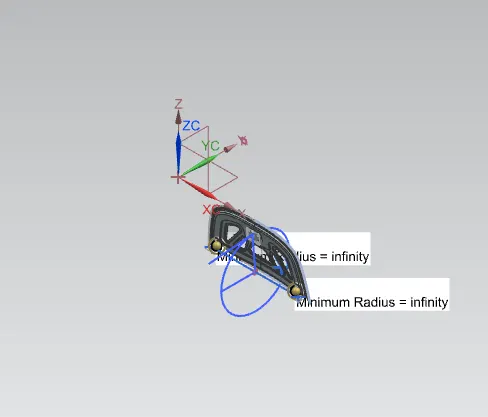
For the design of honge , one must note that the emboss of hinge must be flat i.e radius of infinity as shown above. This ensures that the assembly will rest closely towards the hinge emboss. The Trajectory of the hood pannel is decided from the centre of hinge axis.(NOte the hinge axis must be kept parallel to respective axis ).The Trajectory of hood is decided from the sketch. The sketch give the opening of the hood pannel.
Reliefs : The Reliefs are provided to ensure the correct bending,i.e to ensure that os to prevent unwanted deromation.