Hood design-Week 2
HOOD -
A car hood, also referred to as a bonnet in some other countries, is the hinged cover that rests over the engine of a front-engine vehicle. Its purpose is to provide access to the engine for repair and maintenance.Car hoods are typically constructed from steel and sometimes from aluminum.
Hood Components -
- Hood Outer Panel -
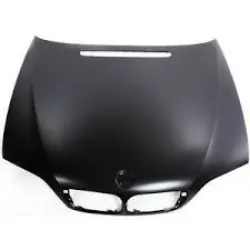
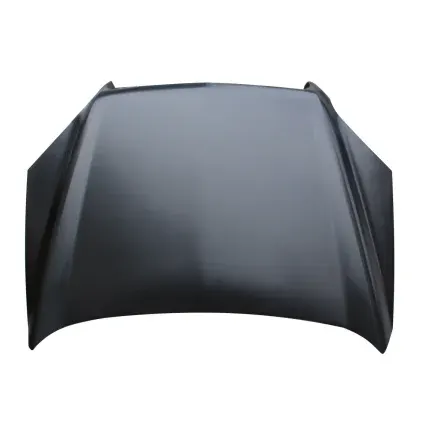
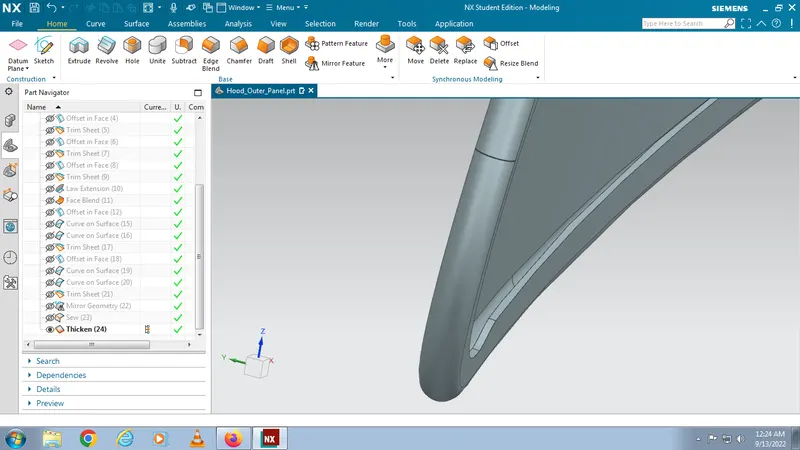
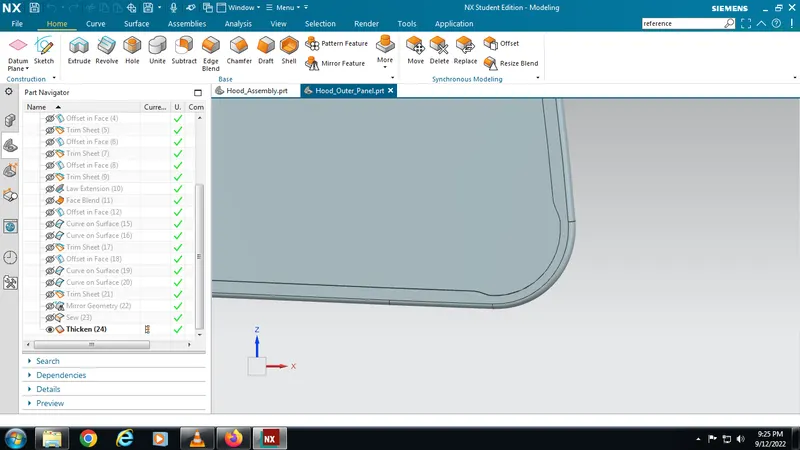
Hood Outer Panel is the outer reinforcement displayed hood we see in front of cars between wind shield and bumper.
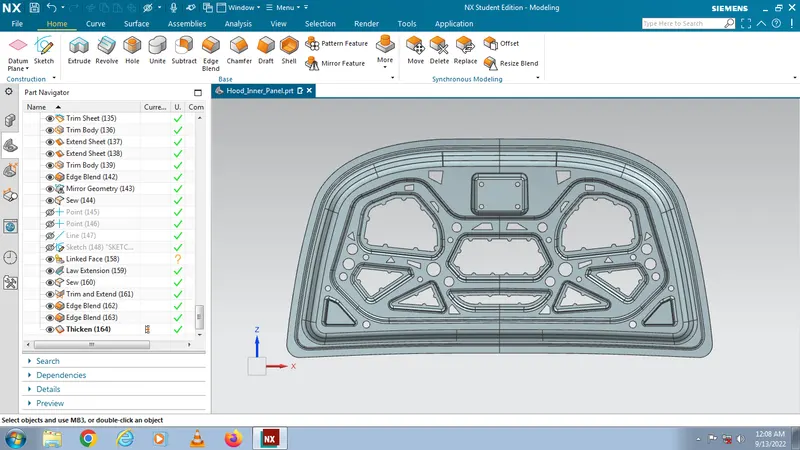
- Hood Inner Panel -
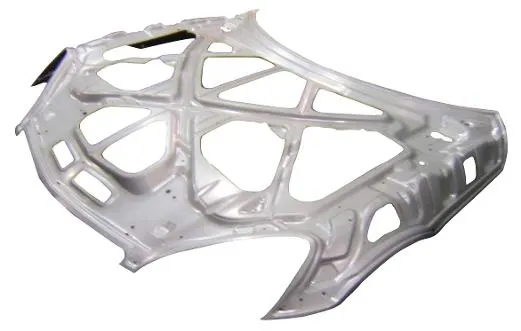
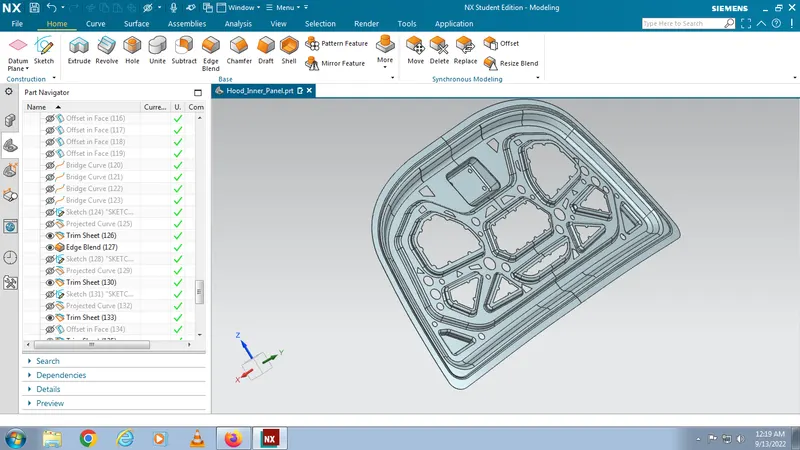
The hood inner panel is a reinforcement panel. The purpose of this panel is to make the outer panel strong. This panel is also responsible for dissipatating or minimizing the force during a head on collision.
- Hinge -
- Latch -
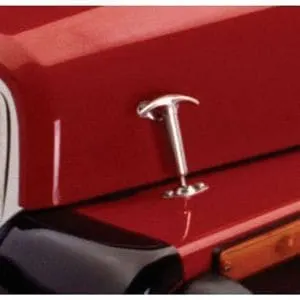
The hood latch system starts with a release handle located on the left side of the driver's area. This handle is connected to an insulated cable that runs towards the front of the vehicle. The other side of the cable is connected to a latch under the hood that keeps the hood flush against the car's body.
Latch Trajectory -
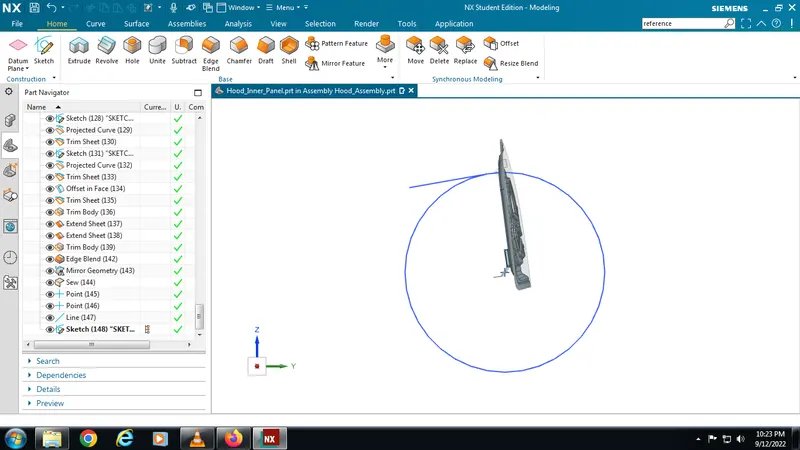
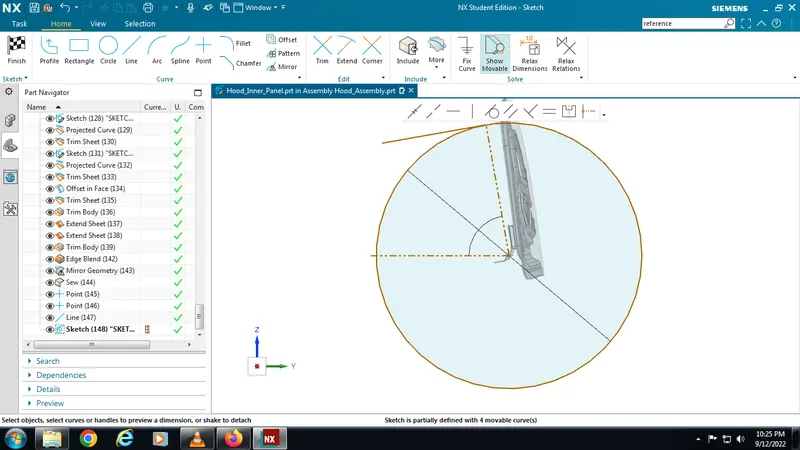
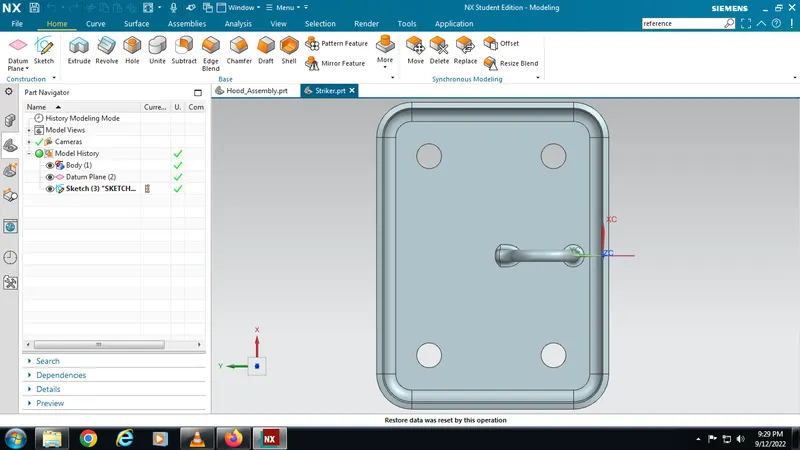
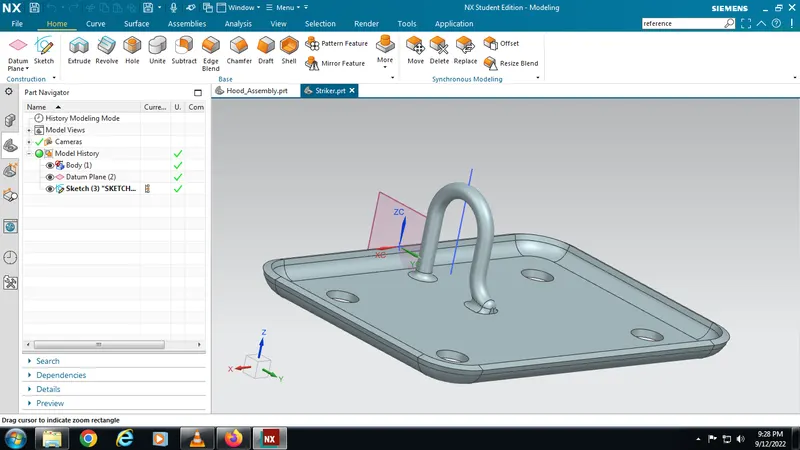
While assembling the latch with the hood panel it is recommended to position the latch striker in such a way that the latch striker exactly fit into the lock hole in the engine compartment. With that advice the latch striker is placed on the inner hood panel using latch trajectory path. This path is created using the the hinge axis taken as reference to draw a big trajectory path.
Mastic Data -
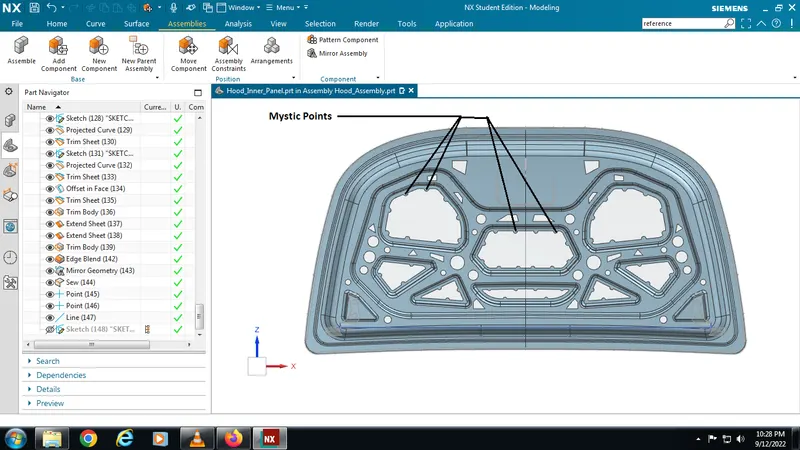
Mastic sealants are elastic compound that behaves like the rubber. It is placed in points between the outer and inner panel known as Mastic Points. Initially is it in paste form, but after the hot furnace bath it gets hardened thus joining the outer and inner panel. Mastic sealant has the tendency to increase the strength of the panel and has influence of 80mm diameter.
Emboss -
An emboss is a metal forming process in which a high pressure is applied on a die to make a imprint on the working surface. In this process it is assumed that the metal thickness remains the same while embossing. Embossed surface plays an important role in car hood panel while crashing or accident of car. Because during the collision, hood is most affected part which sustains all the impact forces while crashing.
Manufacturing Processes -
- Deep-Drawing -
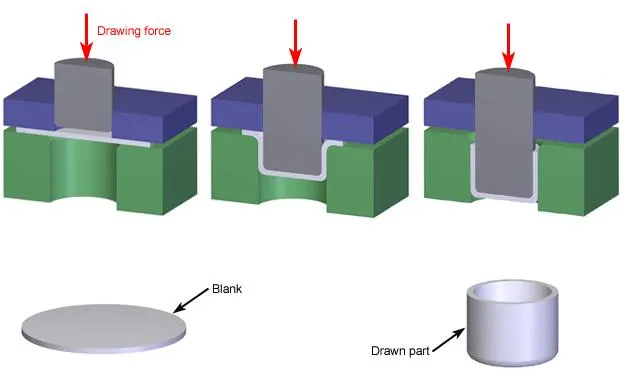
Deep drawing is a sheet metal forming process in which a sheet metal blank is radially drawn into a forming die by the mechanical action of a punch. It is thus a shape transformation process with material retention. The process is considered "deep" drawing when the depth of the drawn part exceeds its diameter.
- Hemming -
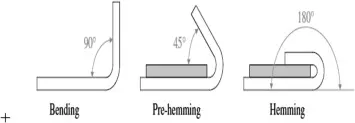
Hemming is a sheet metal forming process in which sheets are joined by bending it to 180°. Automotive body panels and automotive parts such as deck-lids, trunk-lids, doors, hoods and tailgates are formed by hemming process. In this process, usually a sheet is bent with the help of inner sheet in three different stages.
Design of Hood -
Hood Mastersection
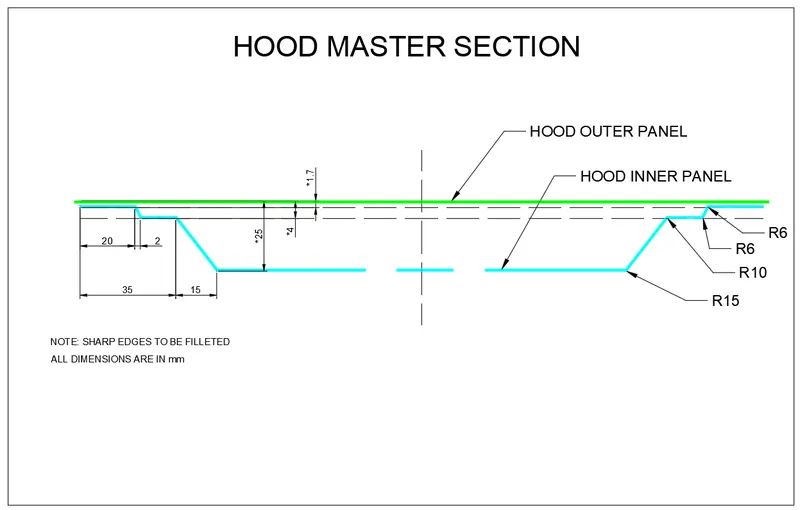
Parameters for Hood design -
- Outer Panel Thickness = 0.75mm
- Inner Panel Thickness = 0.75mm
- Reinforcement Thickness = 1.5mm
Hood Outer Panel -
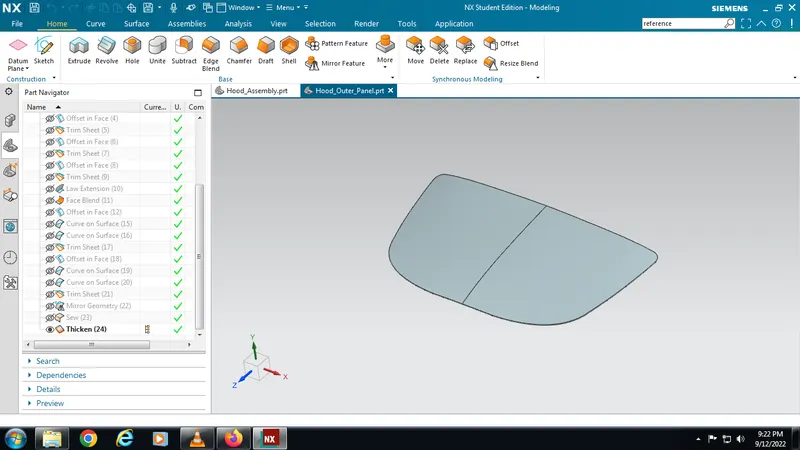
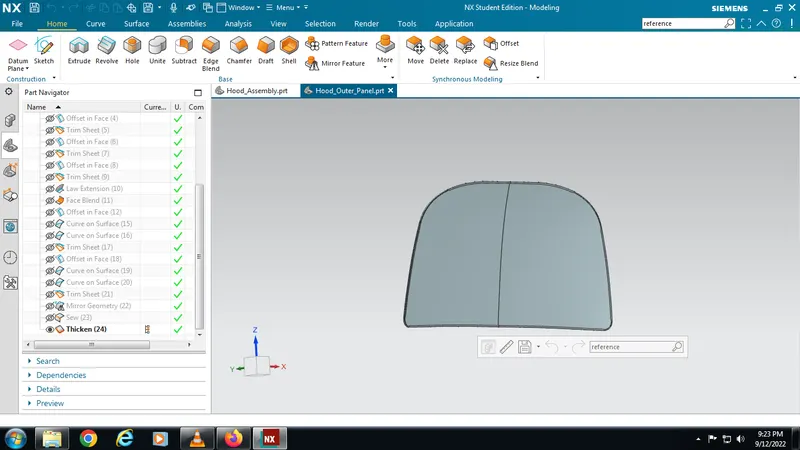
Outer Panel Relief
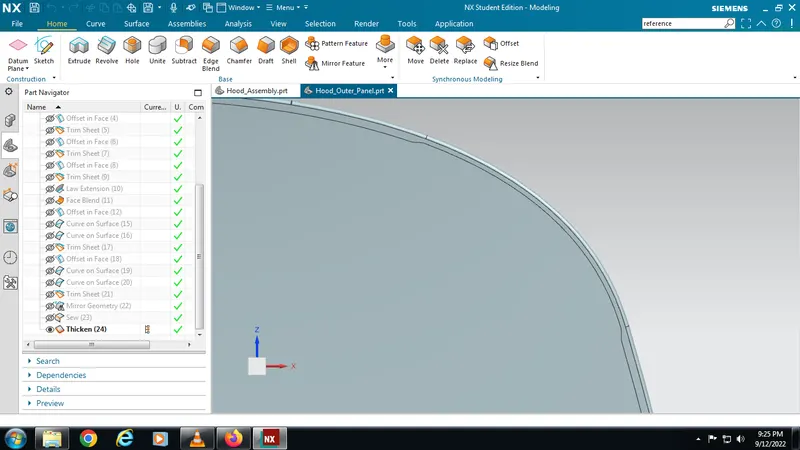
Hood Inner Panel -
Striker -
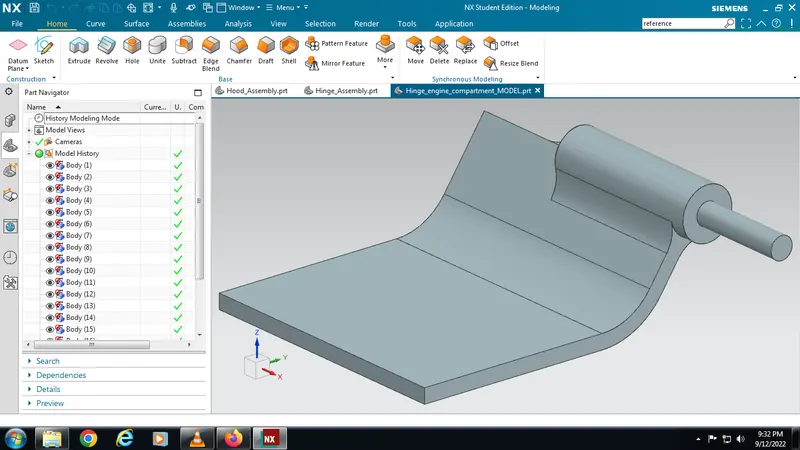
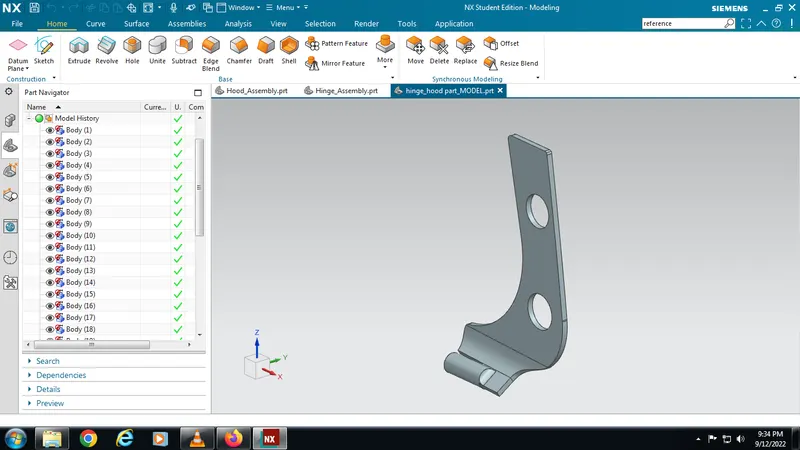
Hinges -
Hinge Part 1
Hinge Part 2
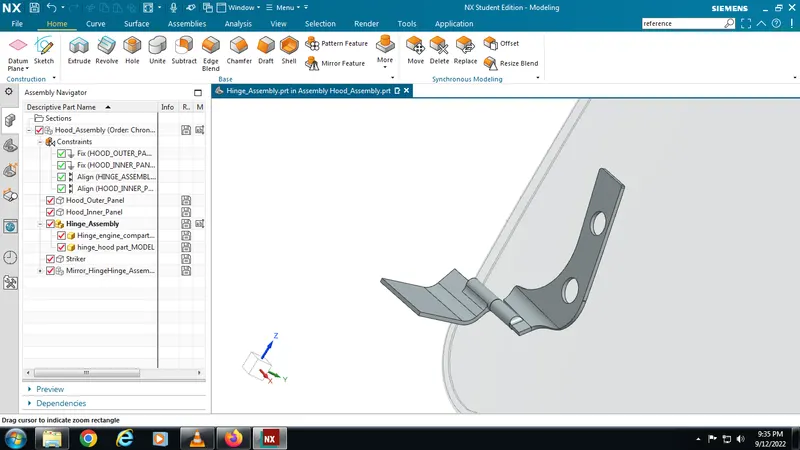
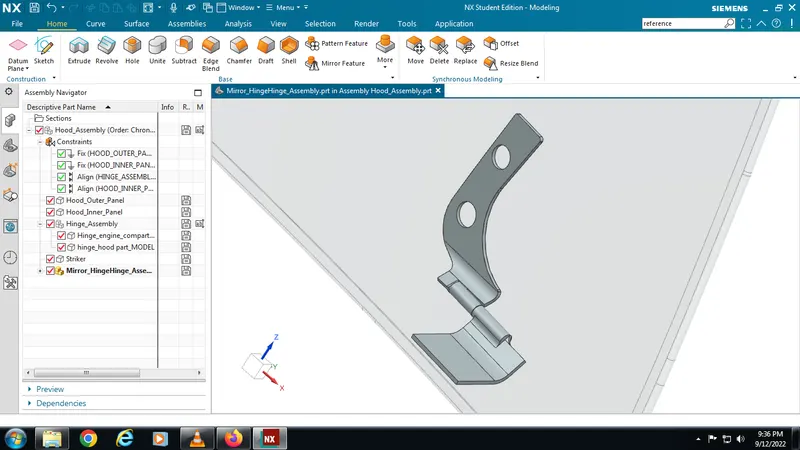
Hood Assembly -
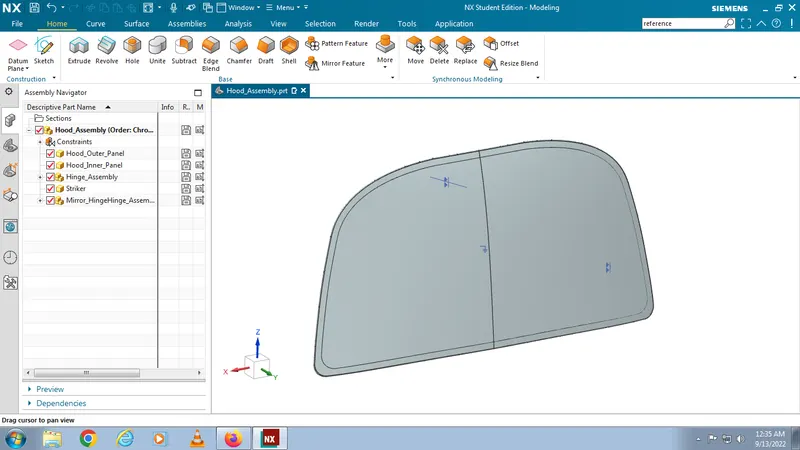
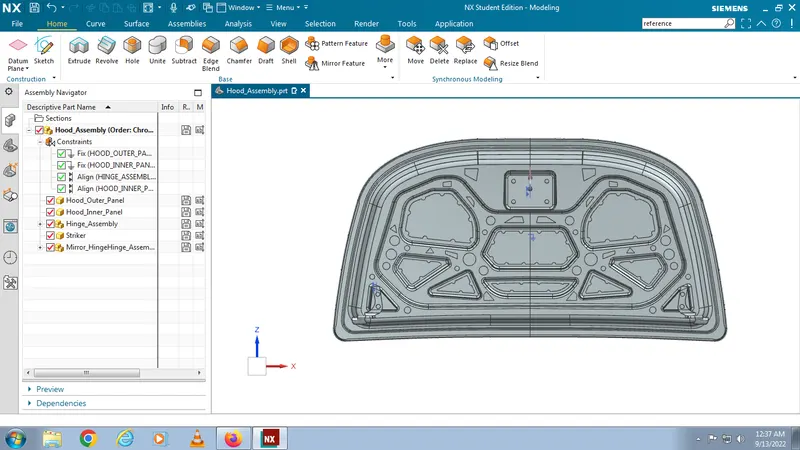
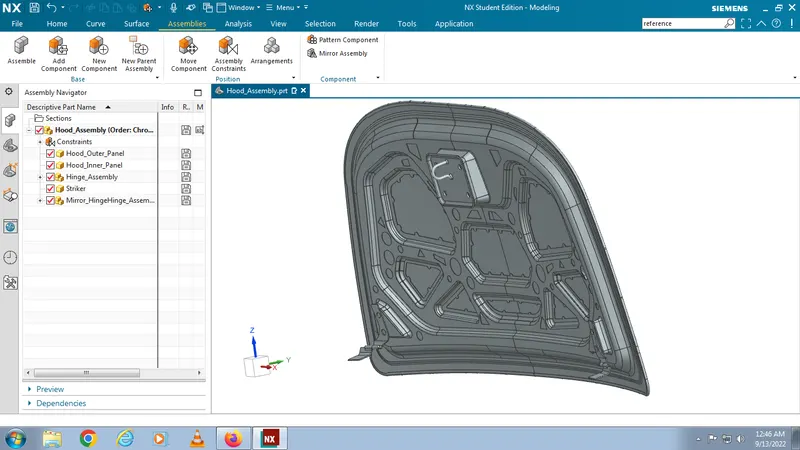
Conclusion -
The hood was designed using the given master sketch and all the other paramater using NX CAD. Also, Learnt about the pedestrian safety requirements used in car, so that driver is left with no harm during frontal collision and the manufacturing process used in the car hood panel i.e. hemming & deep drawing process.
Link for Hood NX Files -
https://drive.google.com/file/d/1XUdEkQQvFeoa_og57cWwNB_qWJdcBNKf/view?usp=sharing