Hood design-Week 2
AIM:
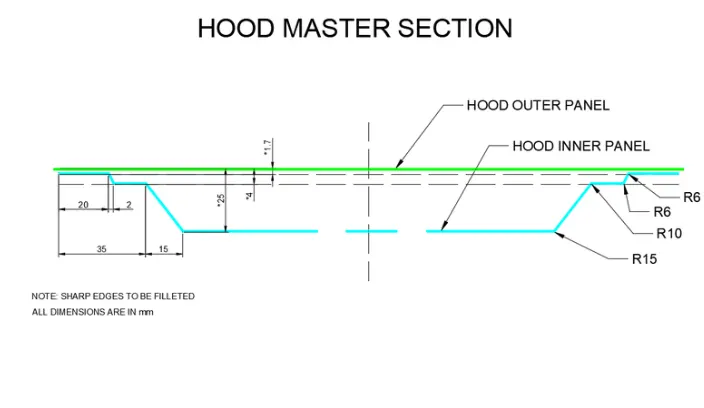
To Design Hood outer panel, inner panel and the necessary reinforcements by following the Master section mentioned with the design parameter explained in the videos. Submit an assembly of Hood inner panel, outer panel, latch, hinge, and the reinforcements.
INTRODUCTION
HOOD
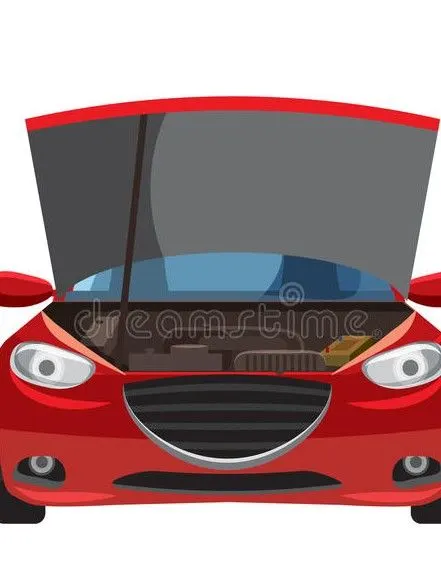
The term car hood is a North American term, used primarily in America and Canada. Hood comes from the Old English word hod which means a hood, a soft covering for the head. Interestingly, hood is used by British English-speakers to refer to the waterproof cloth top covering the passenger compartment of a car or pram.The hood or bonnet is the hinged cover over the engine of motor vehicles. Hoods can open to allow access to the engine compartment, or trunk on rear-engine and some mid-engine vehicles) for maintenance and repair.
A car hood also referred to as a bonnet in some other countries is the hinged cover that rests over the engine of a front-engine vehicle. Its purpose is to provide access to the engine for repair and maintenance. A concealed latch is typically used to hold down the hood. On vehicles with an aftermarket hood and on racecars, hood pins may be used to hold down the car hood. Hoods sometimes also contain a hood scoop, wiper jets, power bulge, and/or hood ornament. Car hoods are typically constructed from steel and sometimes from aluminum. Aftermarket car hoods may be constructed from various other materials, including carbon fiber, fiberglass, or dry carbon.
HOOD DESIGN CONSIDRATION
the hood of car is consider as a frontal enclosed BIW .bonet is design to reduce air resistance as the air flow around the component .they serve great deal of purpose to protect the passenger.
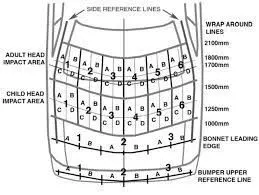
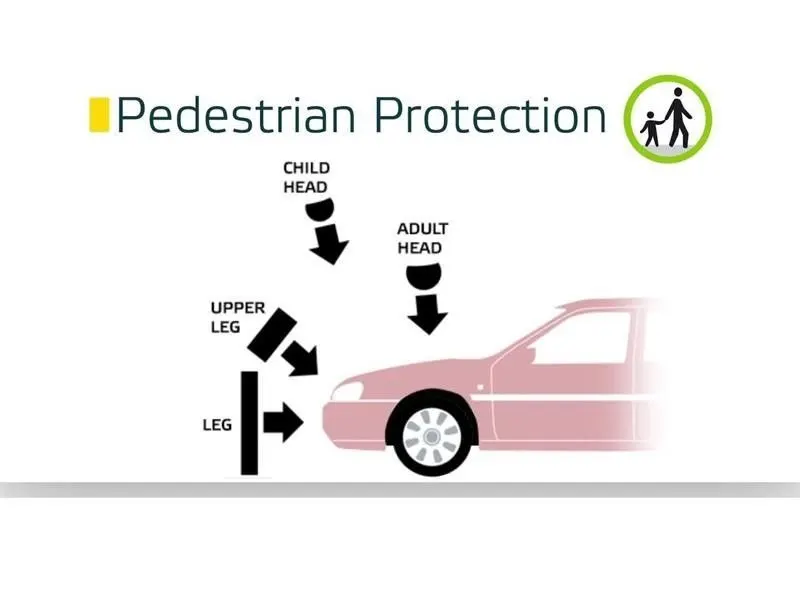
Vehicle safety factors should simultaneously consider occupant and pedestrian safety, given that pedestrians are the third largest category of traffic fatalities. Most pedestrian deaths occur due to traumatic brain injury, resulting from the hard impact of the human head against the vehicle's stiff hood or windshield. Therefore, how to design a pedestrian-friendly vehicle and propose a new hood structure is a matter of urgency for minimising pedestrian head injuries. In this study, three kinds of sandwich hood structures are proposed for reducing pedestrian head injuries, including carbon fibre-reinforced polycarbonate, carbon fibre-reinforced foam and aluminium-reinforced polycarbonate. In assessing the friendliness of vehicle hoods, this study adopts the EEVC/WG17 regulations on headforms for hood tests. The finite element method is used to simulate the impact between the vehicle's hood and the headform impactor. The software used in simulation is LS-DYNA. The results predicted by the headform-hood tests show that the hood structure with aluminium-reinforced polycarbonate material provides enough absorption capability to protect pedestrians from the impacts of accidents. It is also stiff enough to keep pedestrians' heads away from the inner parts of the engine cavity. The analysis models and sandwich materials proposed herein contribute to efforts to design vehicle hood structures and pave the way for developing pedestrian protection technologies.
Data to be used:
Hood Thickness Information
- Outer Panel Thickness = 0.75mm
- Inner Panel Thickness = 0.75mm
- Reinforcement Thickness = 1.5mm
Car Hood has the following components:
- Outer Panel
- Inner Panel
- Striker and Hinge assembly
- Hood Support
- Mastic's
Hood has designed by the process of using the following Sheet Metal Operations :
- Hemming
- Embossing
- Deep Drawing
- Piercing
The input design for the input panel is given below :
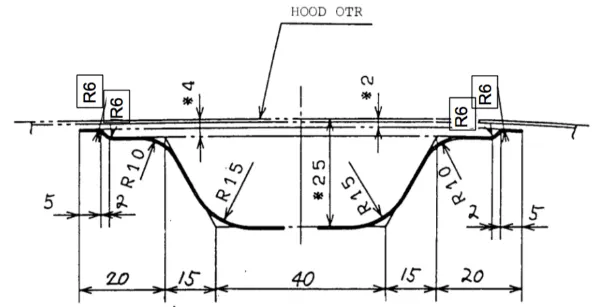
Master Section:
Car Hood Components :
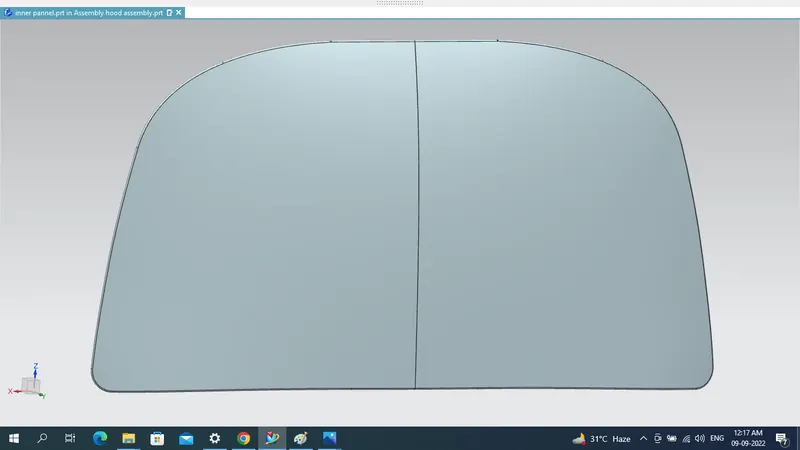
Outer Panel :
- Outer Panel is the most important part of the hood to makes the car in a very good a esthetic proportion.So that the outer panel is perfectly made insense to achieve the aesthatic requirement.So that, the sheet metal operation result which is visible on the outer panel or it reduces the aesthatic value means, those operations are strictly not to be followed to make the outer panel.That's why the hemming process is used to join the outer panel with the inner panel, instead of using welding methods .
- By considering the given Outer Panel thickness ( 0.75mm ) and using the outer panel styling surface the outer panel has been made as below.
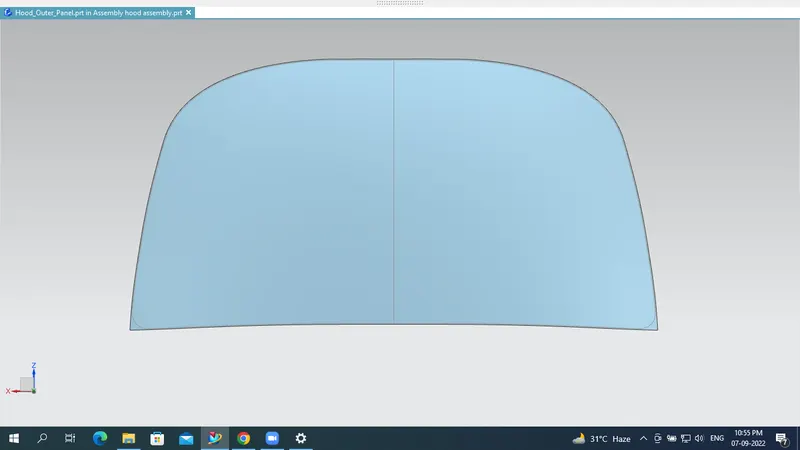
FIG: OUTER PANEL
Inner Panel -
• In the inner panel only we can research&implement the safety of pedestrians&as well as the driver. In this panel only we can attach the reinforcement,embossed,mastic points etc.
• It is an object of the present invention to provideahood inner panel capable of reduction ofareaction force of the hood inner panel even ifalevel of deformation ofahood ofavehicle increases,&ensuringasufficient energy absorption cap.
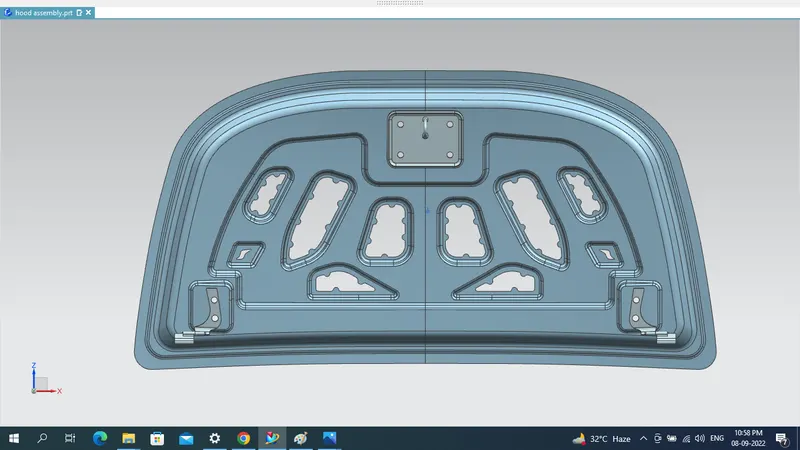
So according to the input design given the outer model should be modified to get the final input panel model.
First the outer panel should be exactley halfed into middle using mid plane and should work on the half anel.
Then all the features should be mirrored and and sewed together.
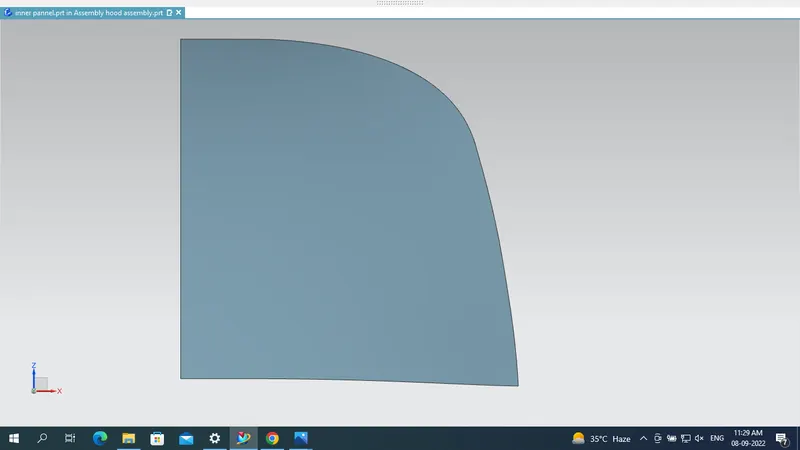
Now we use ofset curve in face and create a ofset in face 20mm.and trim the sheet.
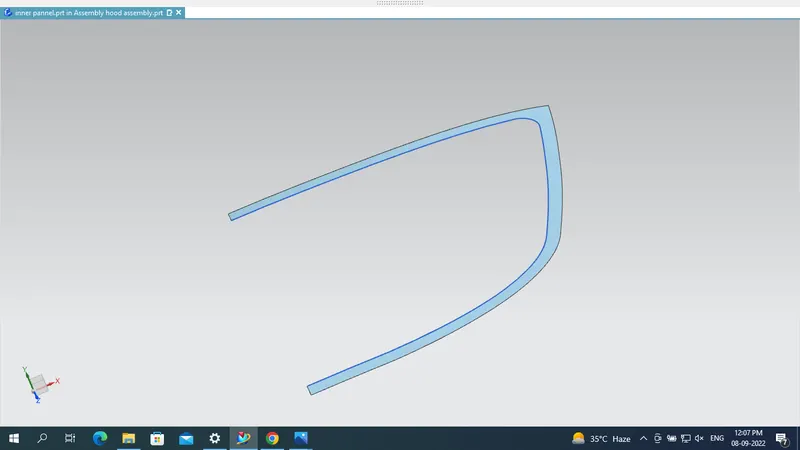
again create new offset 4mm lower surface and create two offset in face 22mm and 35 mm and trim the sheet.
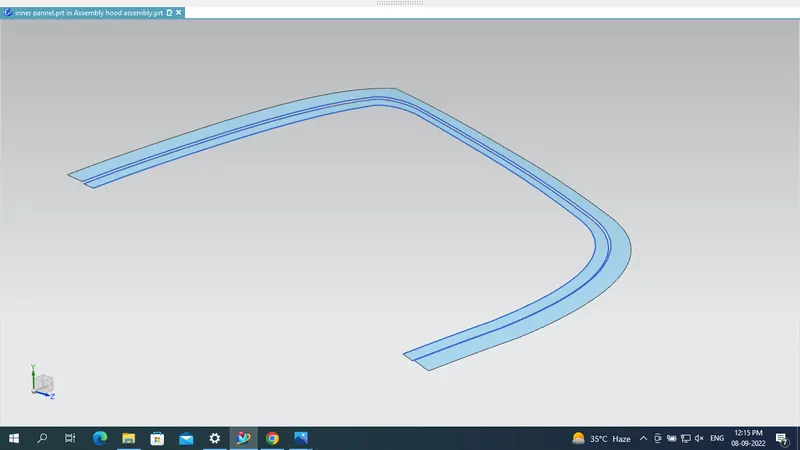
again create a lower offset surface 25mm and create offset in face 50mm and trim the sheet.
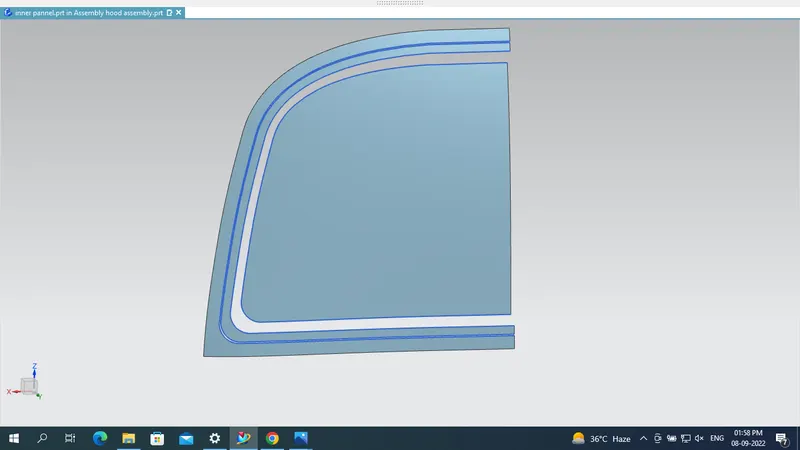
Through curves command is used to join between the both upper surface,middle and lower surface.
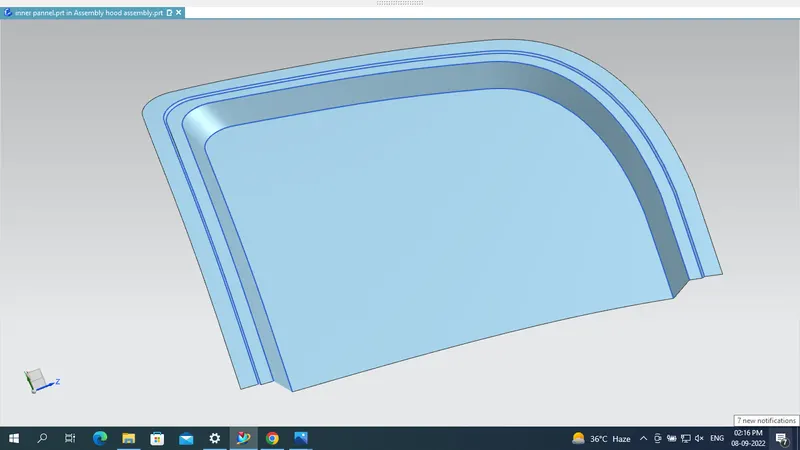
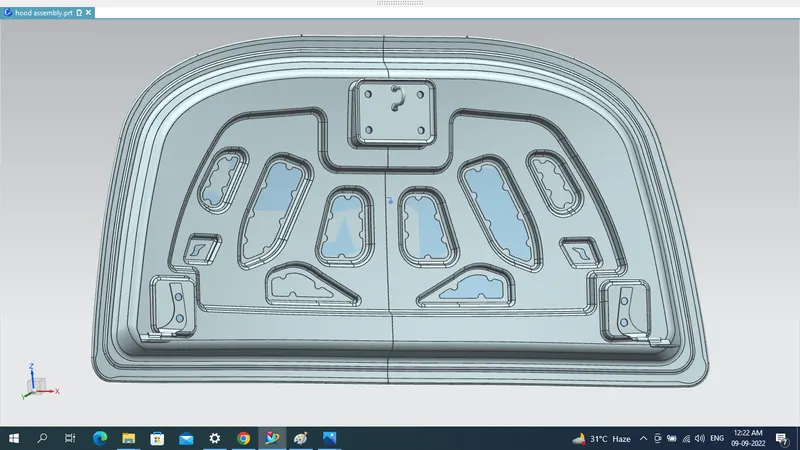
Now embosses should be created on the inner panel for removing material to get a light weight component.
Embossing -
• The sheet metal embossing operation is commonly accomplished with a combination of heat & pressure on the sheet metal, depending on what type of embossing is required.
• Asheet metal is drawn through the male & female roller dies,producing a pattern or design on the sheet metal. Depending on the roller dies used,different patterns can be produced on the sheet metal.
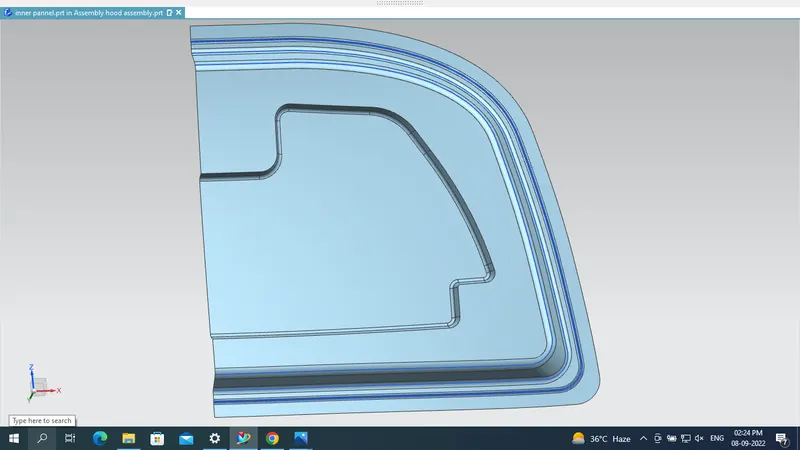
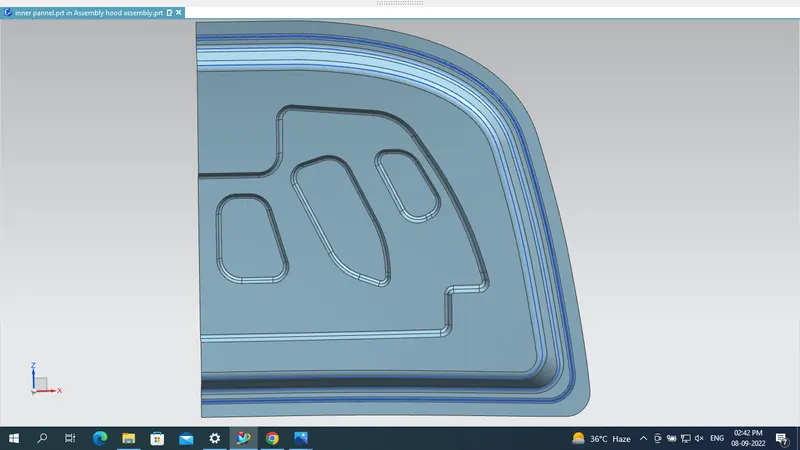
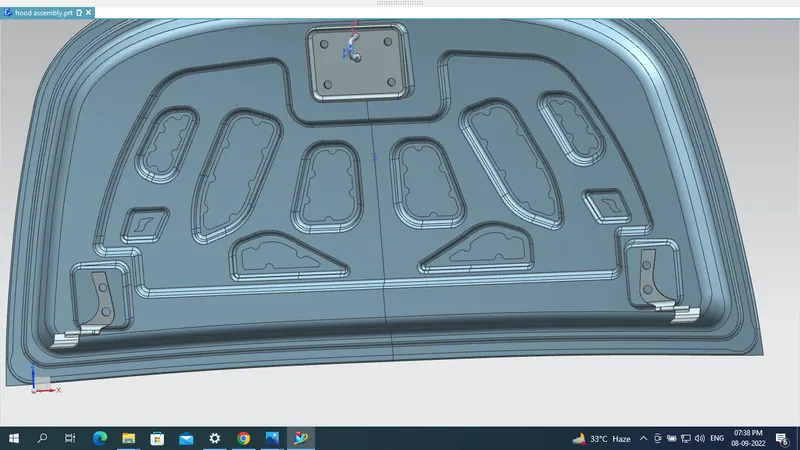
Below image is shown for mastic embosses and the hinge embosses.
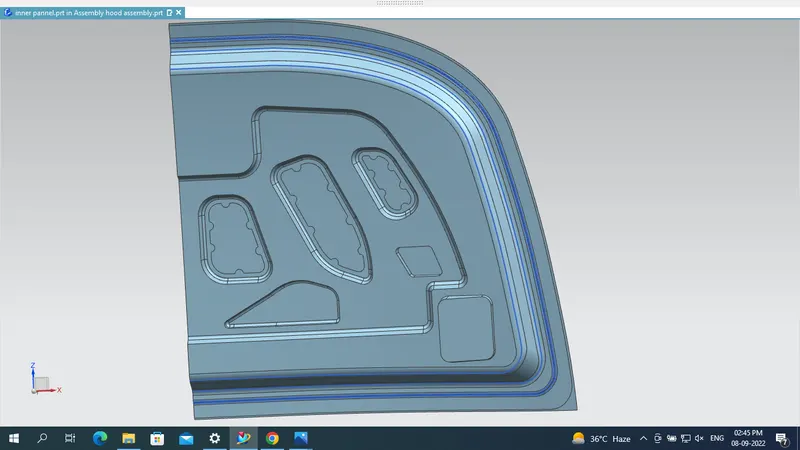
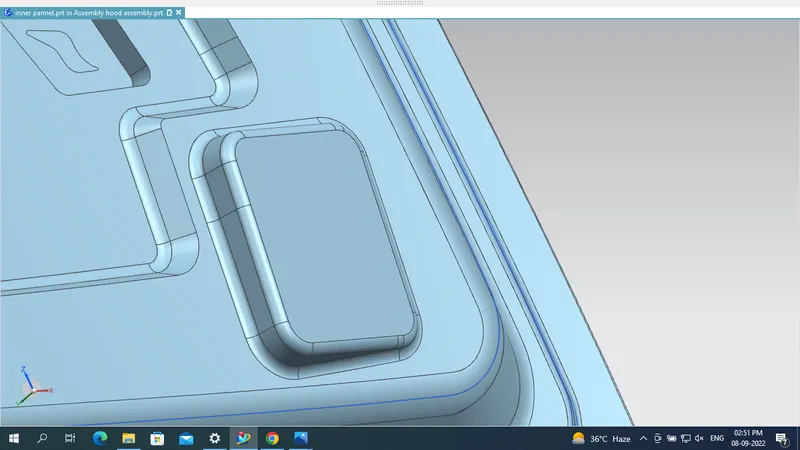
Now the Hinges should be attached at the ends of the embossed inner panel edges.
HINGE PLACEMENT :
First hinges are placed on to the embosses and as inner panel is applied with fixed constraint hinge is placed parallel and touch constaint.
Then the hinge is mirrored with assocative connection to other side to get the same hinge position on other side of the inner panel.
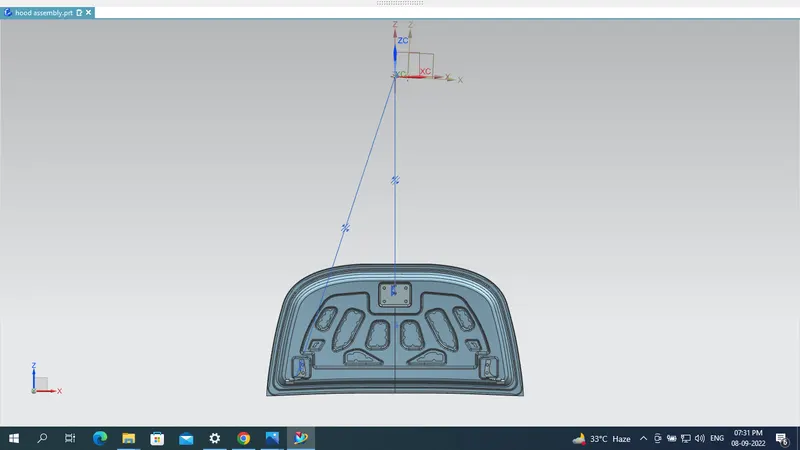
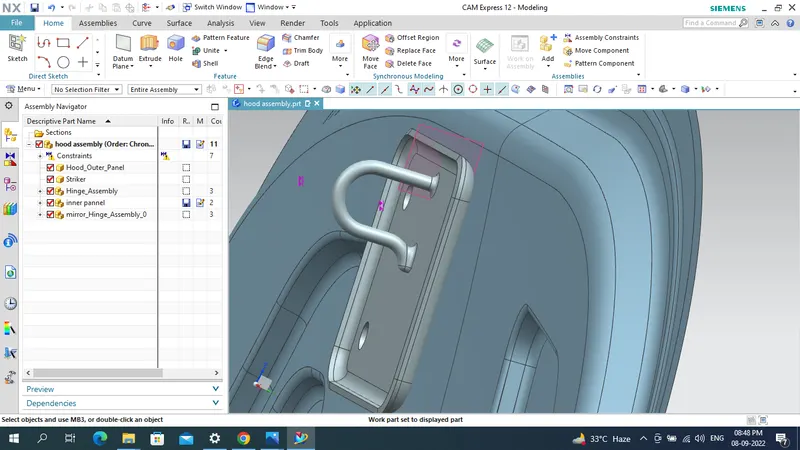
STRIKER
- make the Arc on the both side Hinge by Wave Geometry Linker
- create Point in the Arc (Point-Curve) and also create a Line between these Points.
- now, create a Circle on ZY-Plane on the CSYS Datum plane.
- Coincide this circle-Point with the Hinge Point.
- create two lines through this new Centre point of the circle; also make these line constraint line (Convert to Reference).
- Horizontal line - Parallel , & from Vertical line - make a Tangent line at the end Point of vertical constraint line.
(NOTE : Crosscheck the tangent line by adjusting the angle of circle; It should be move with angle adjustment.)
- now, Create a Point in the middle of Striker's upper edge curve & make a Line on the Striker by using datum plane.
- use command Touch Allign to move Striker at the position of above created point of Tangent Line; due to this our Striker comes to that point near Inner panel.
- Adjust the circle Diameter for placing the Striker at appropriate position.
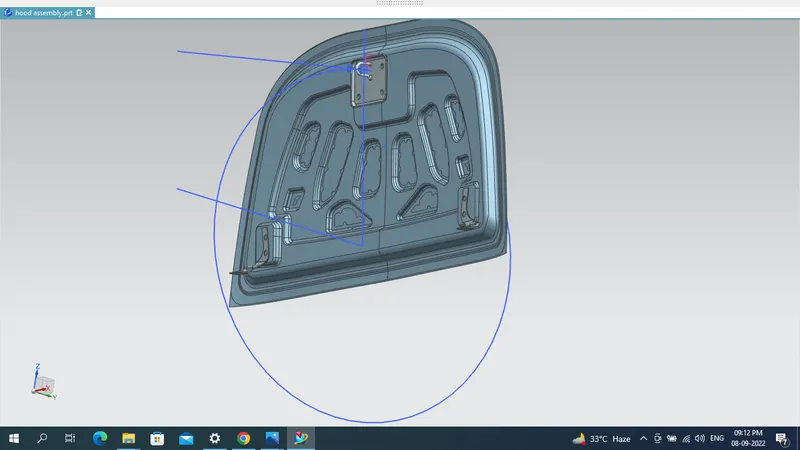
{These Line, Circle shows the Trajectory Path of HOOD or Latch ie; Opening-Closing angles of the HOOD(BONNET)}
LATCH
To fix the Striker on its position, Latch is used.
- create Latch by using Law Extension = face; select face of back-side of Striker.
- apply Edge Blends
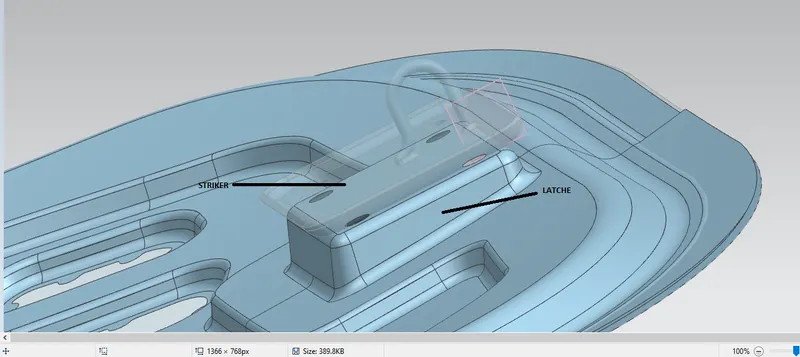
- SEW the surface.
- apply Thickness = 0.75 mm
HEMMING
- HEMMING is a sheet metal forming process in which sheets are joined by bending it to 180degree.
- It is done in the Outer Panel which provides support to the Inner panel & also enhance Aesthatically.
- Automotive Panels/Parts like - doors, hood, deck-lids, trunk-lids
Procedure
- Trim the Outer Panel in half.
- use offset in face=0.5mm & apply Law Extension.
- now, offset this Law Extended surface - inside.
- Offset Outer panel as Master-Section ; { 0.75+0.2 (upper surface thickness+clearance) + 0.75+0.2 (Lower surface thickness+clearance) + 0.75+0.2 (Tolerance) }
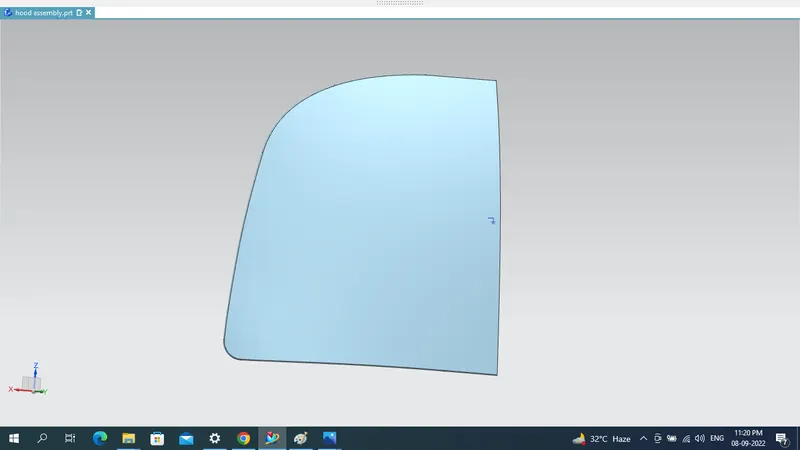
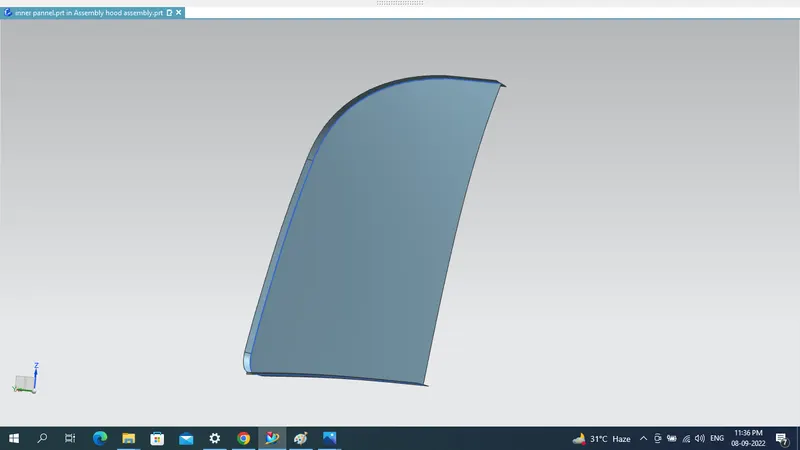
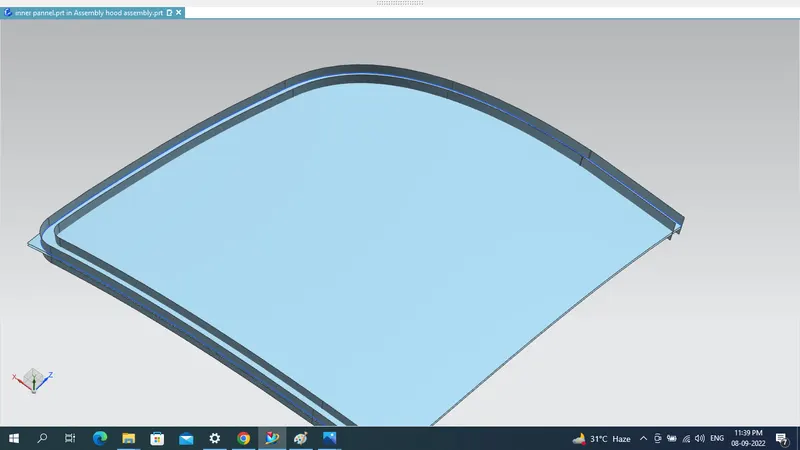
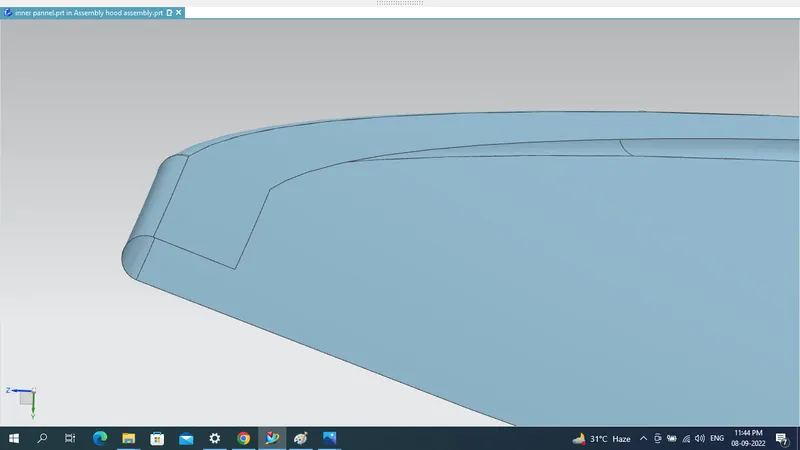
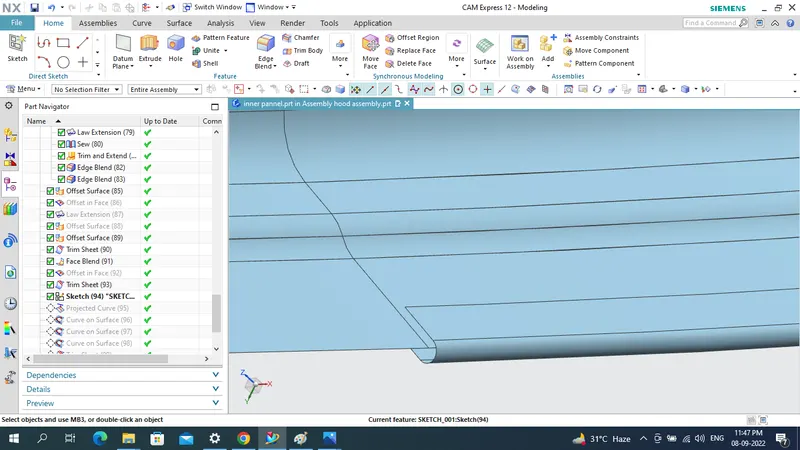
this is our hemming surface
CORNER RELIEF
It is given to reduce the stress concentration and provide smoothness during HEMMING operation.
- use Curve on Surface to make the corner reliefs.
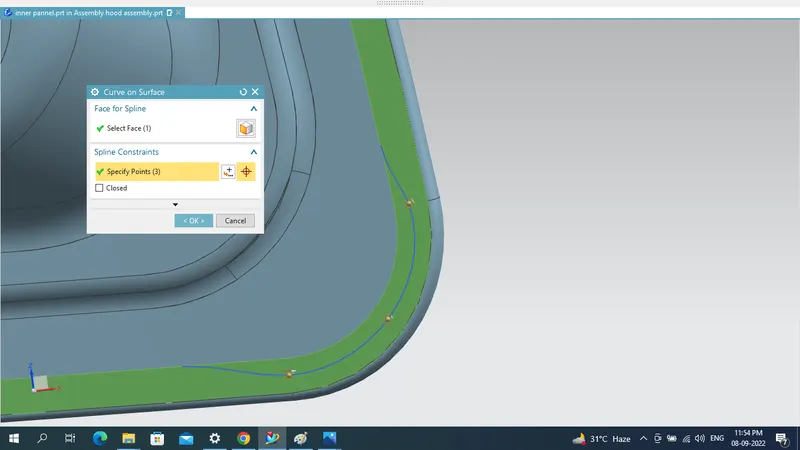
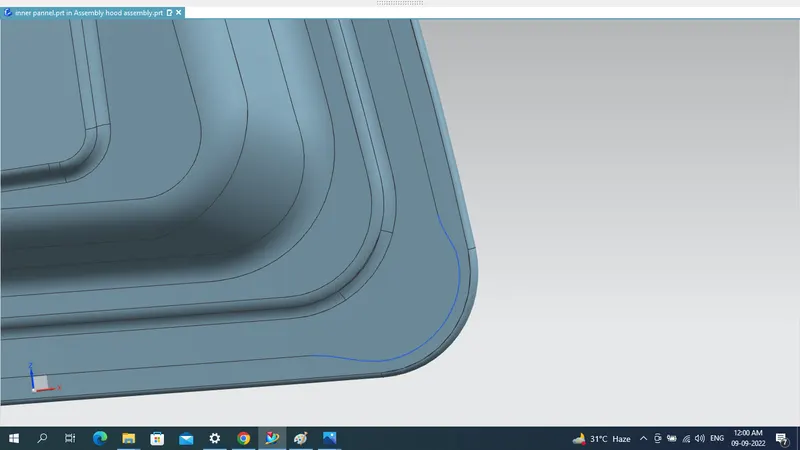
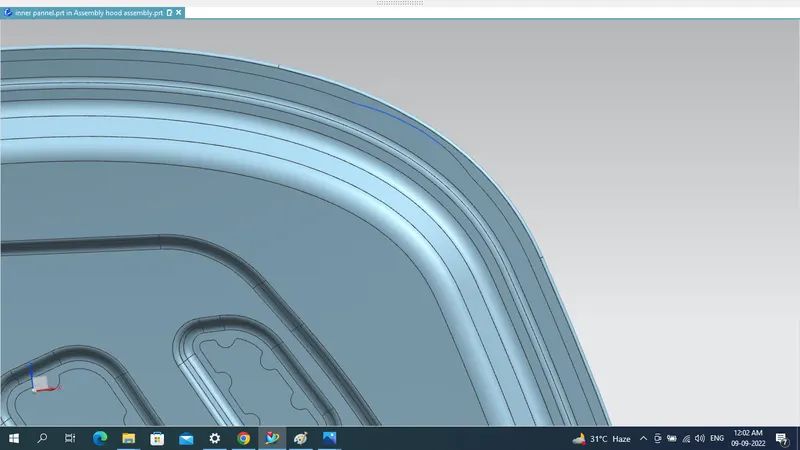
- Thicken the complete Outer HOOD Panel by 0.75mm
FINAL HOOD MODEL DESIGN :
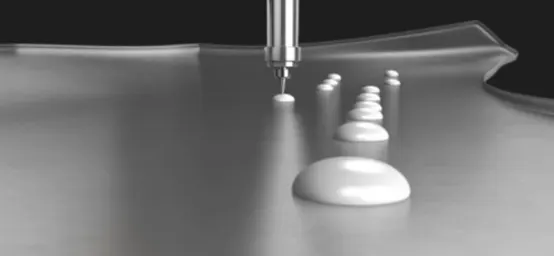
Mastic Points : These are the spots where the inner panel and the outer panel of hood are joined or can say sealed together using a mastic glue. To fix the outer panel, if process like bolting, riveting or welding is used, it will lose all its aesthetics. So, mastic sealant is used which is elastic compound and acts like rubber. It is placed between both the panels. Initially it is in paste form and after hot furnace bath it gets solidify and gives strength to the panels together. One spot normally has influence over diameter of 80 mm.
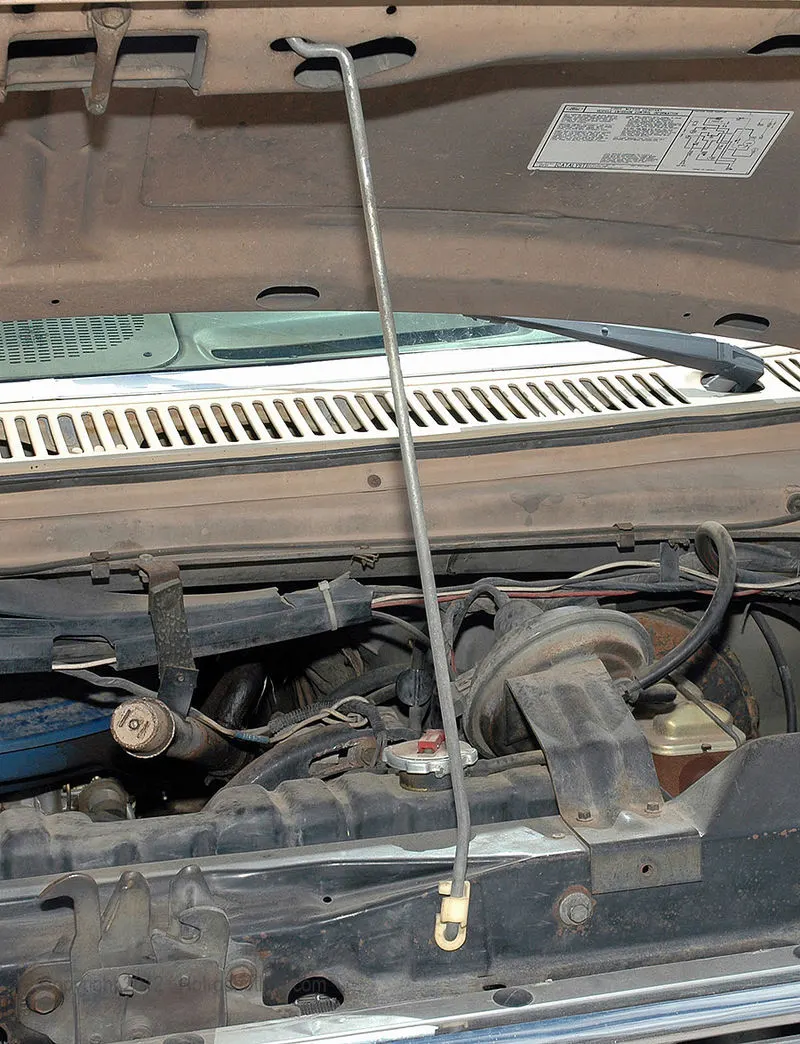
Support Rod : A hood rod is designed to hold your hood propped open whenever you need to do some work in your car's engine bay. When used, it must be firmly secured to ensure that it provides a stable hold on the hood. Meanwhile, when not in use, it must be kept stable in place and must not move around. The hood rod clip is the part assigned with that function. This clip clamps onto the rod and ensures that it is firm in its place when not in use. It keeps the rod from moving around under the hood and from causing trouble.
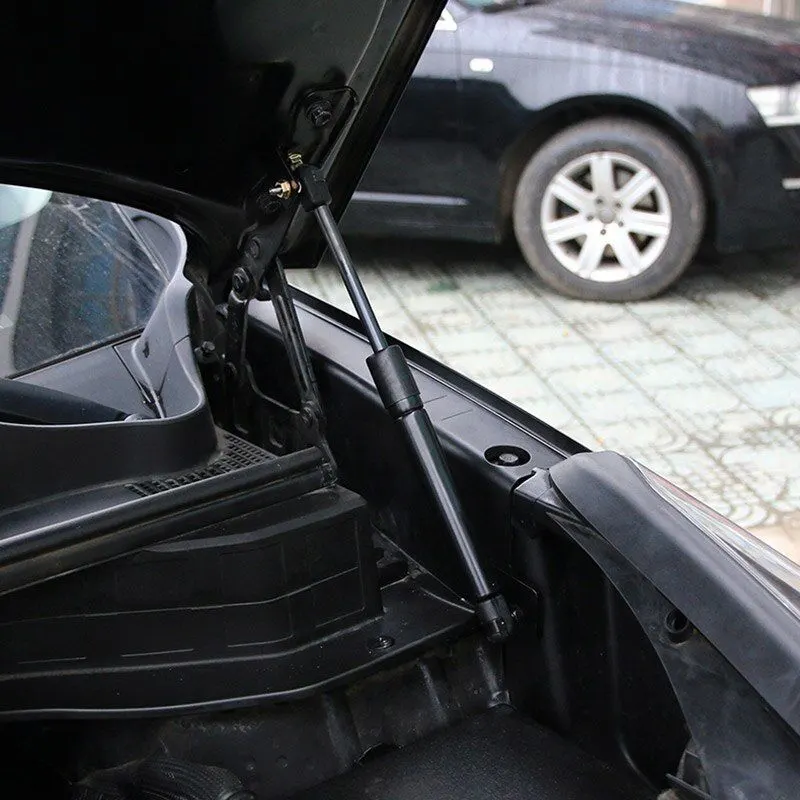
GAS STAY:This is used to open the car hood by just providing little lift force. A small effort is all it needs and other work is done by gas pressure. It is normlly found in high-end cars where the mass of hood is more than normal.
CONCLUSION : In this way, by following the procedure, we designed both panels and set the striker trajectory and the reinforcements necessary and learned the features used in curves, surface and assembly in Siemens NX.
GOOGLE DRIVE LINK :
https://drive.google.com/file/d/1DzXR_Cw-Kfnmz9FndFA5ZW2P5r_LOm9_/view?usp=sharing