Hood design-Week 2
OBJECTIVE
Designing an assembly of Hood Inner Panel, Outer Panel, Latch, Hinge and the Reinforcements.
INTRODUCTION
The hood is a cover in an automobile for the engine compartment. It is hinged over the body and allows access to engine compartment for the repair and maintenance work.
A typical hood assembly consist of hood outer panel, inner panel, latch and striker, hinge, hood stay. Hood stay is an apparatus for supporting the engine hood of a moto vehicle in its open position. The purpose of opening the engine hood is for inspecting engine room, replenishing cooling water and engine oil, changing parts and making repairs etc.
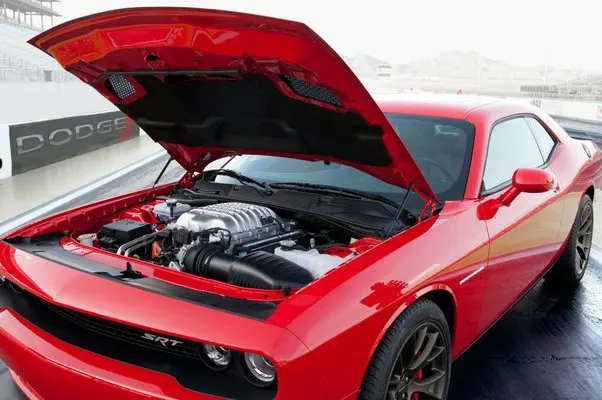
Img shows opened hood.
DESIGN PARAMETERS FOR HOOD DESIGN
Hood Thickness Information
Outer Panel Thickness = 0.75mm
Inner Panel Thickness = 0.75mm
Reinforcement Thickness = 1.5mm
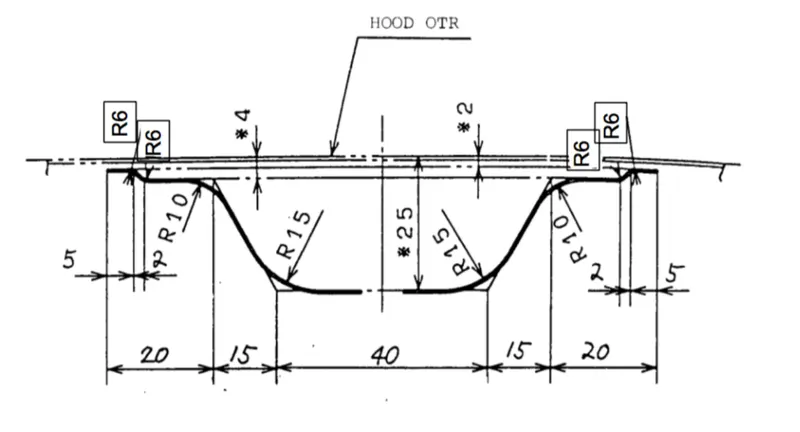
Img shows Master Section.
COMPONENTS OF HOOD
Typical Assembly of hood contains -
- Outer pannel
- Inner pannel
- Latch and striker
- Hinges
- Hood Stray
OUTER PANNEL
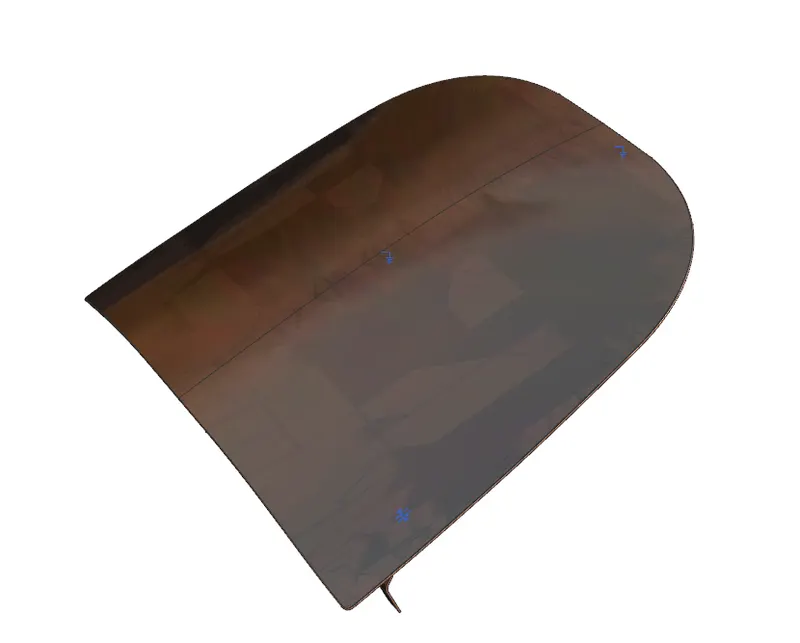
Outer pannel is the one which we directly see, its the aesthetic component of an automobile. the skin of the pannel is provided by the styling team.
the shape, positioning and the size should be aligned with the safety norms, At the time of designing the hood pannel more importance to be given for pedestrian safety.
The outer and inner pannel are attahed together by hemming operation. the mastic sealant is used between both the pannels to reduce vibrations.
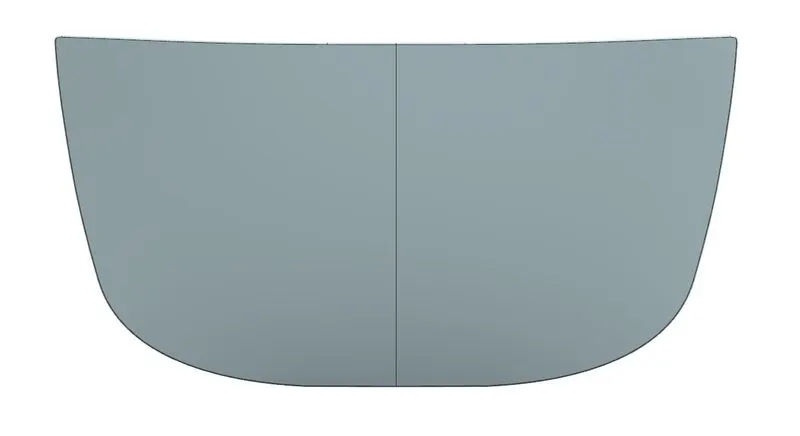
Img shows outer pannel.
INNER PANNEL
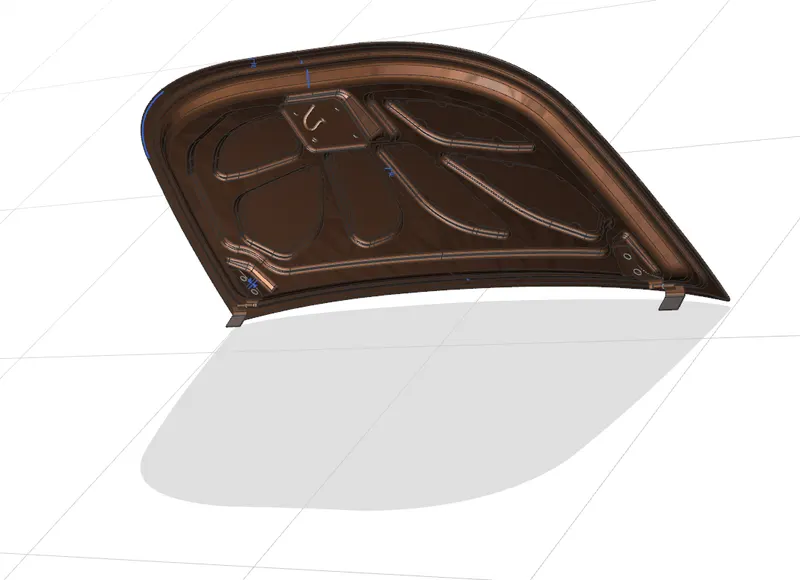
Inner pannel gives the strength and rigidity to the outer pannel. The master section represents the initial emboss shape and size.
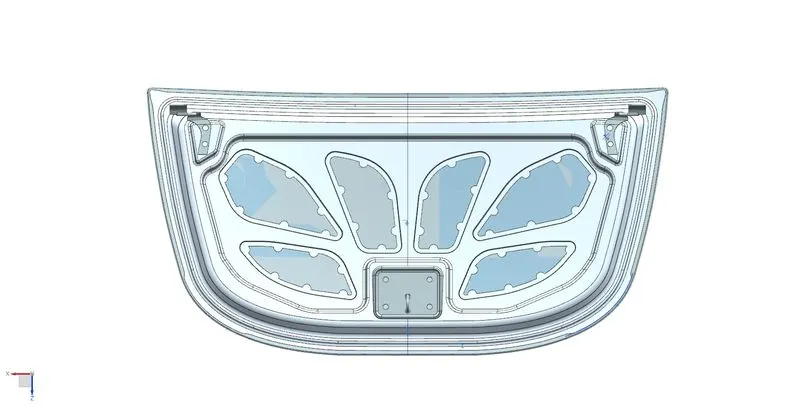
Img shows inner pannel.
LATCH AND STRIKER
Latch and striker mechanism is provided to lock the hood, in order to prevent accidental opening of the hood during driving.
The latch is present on the engine compartment while the striker is attached to inner part of hood.
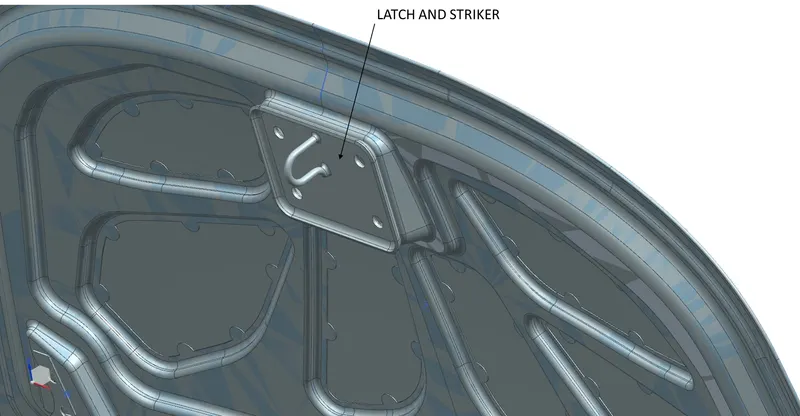
Img shows latch and striker.
HINGES
Hinge is a component that fixes the hood to the fenders of the car. The latch must be fixed perpendicular to the hinge axis so that the hood opens or closes properly.
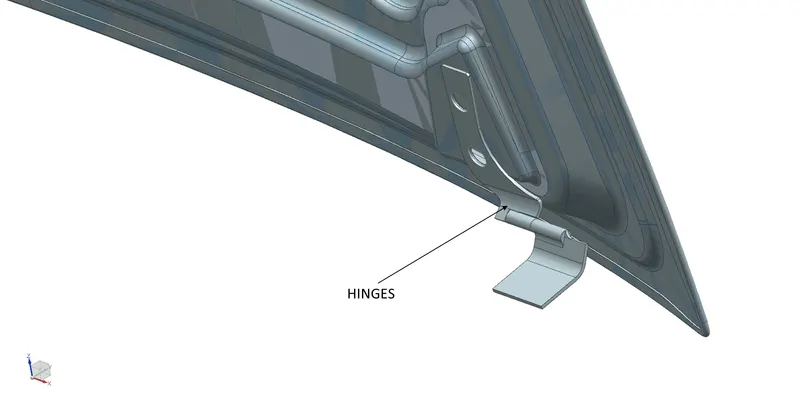
Img shows Hinges.
HOOD STRAY
It is a bended rod that supports the hood in open position. It is also called as hood balancer rod.
Img shows hood stray.
LATCH TRAJECTORY
Latch trajectory is represented by circle drawn from the hinge axis point.
For proper mating condition the striker axis through the tip of the striker should be tangential to the latch trajectory.
The purpose of the developing a trajectory is to ensure the opening and closing of hood is proper and he latch should get placed in proper place.
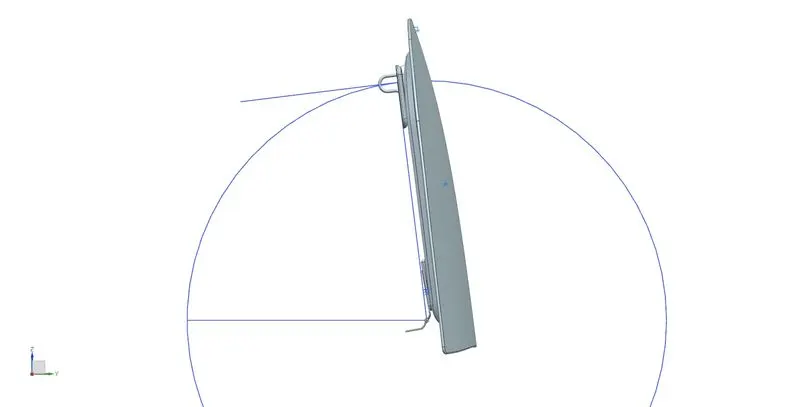
Img shows Latch trajectory.
MASTIC POINTS
Mastic sealant helps to locally improve strength of the hood. It is generally a hard rubber part, which is introduced as a paste in between inner and outer panel of the hood,
which will get hardened inside the furnace.
Every mastic sealant point will have a tendency to improve the local strength in around 80 mm diameter.
Considering this, the mastic points are positioned such that most of the hood region is covered.
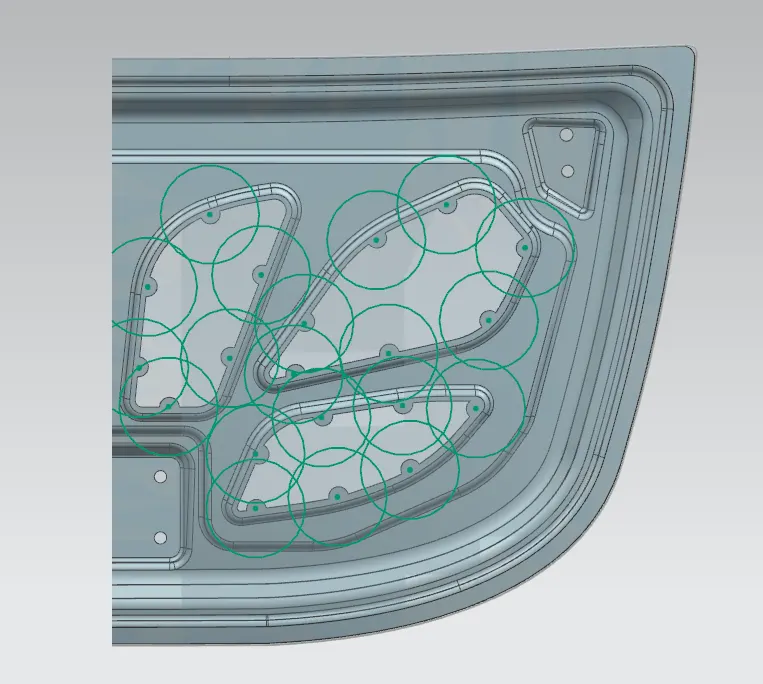
Img shows Mastic points.
IMPACT FORCE DISTRIBUTION
The design should be made in such a way if there is any collison from the front of the vechile, All the forces must directed outside of the vehcile.
Also the distribution of the force must be controlled along with the hood.
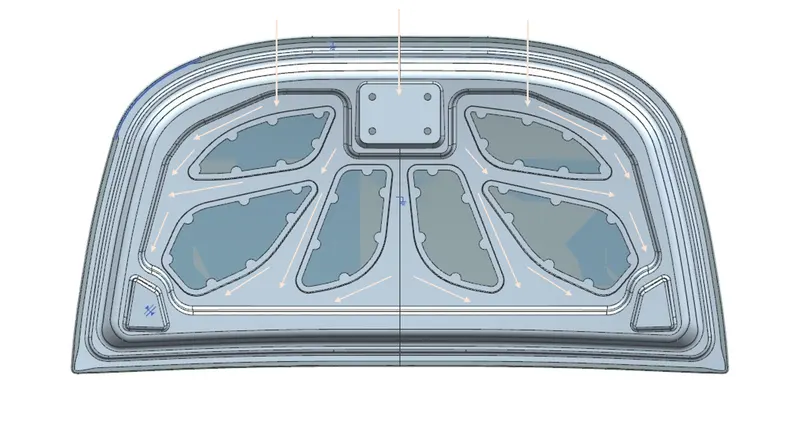
Img shows Impact force distribution.
HEMMING OPERATION
Hemming is a forming operation in which the edges of the sheet are folded over other part or simply folded in order to achieve a tight fit.
In car part production, hemming is used in assembly as a secondary operation after deep drawing, trimming and flanging operations to join two sheet metal parts (outer and inner) together.
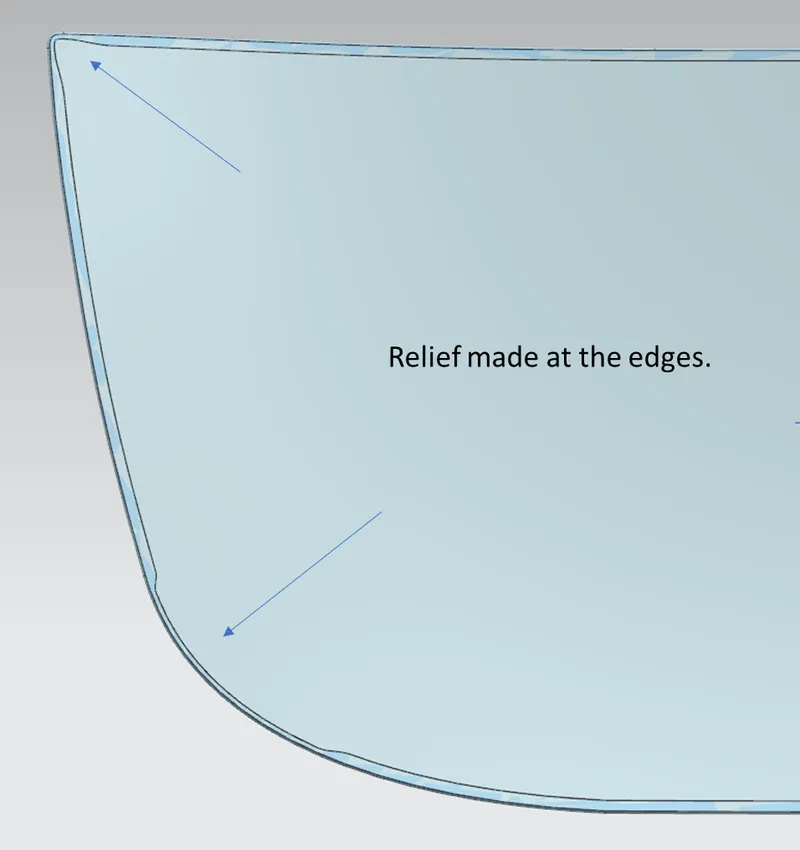
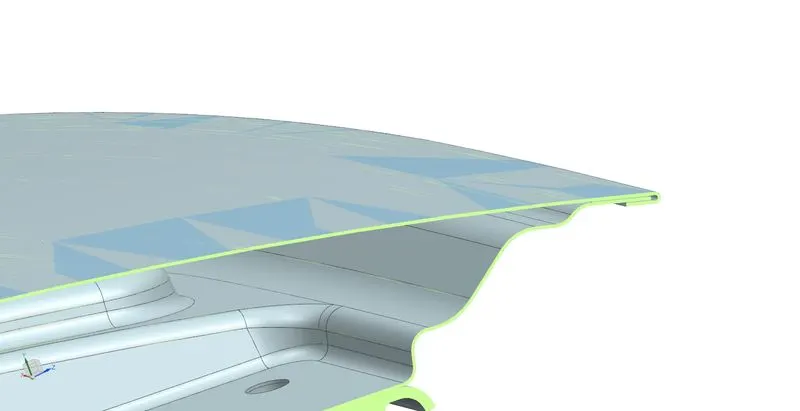
Img shows Hemming operation and hemming reliefs.
DEEP DRAWING OPERATION
Hemming is a forming operation in which the edges of the sheet are folded over other part or simply folded in order to achieve a tight fit.
In car part production, hemming is used in assembly as a secondary operation after deep drawing, trimming and flanging operations to join two sheet metal parts (outer and inner) together.
Img shows Deep drawing operation.
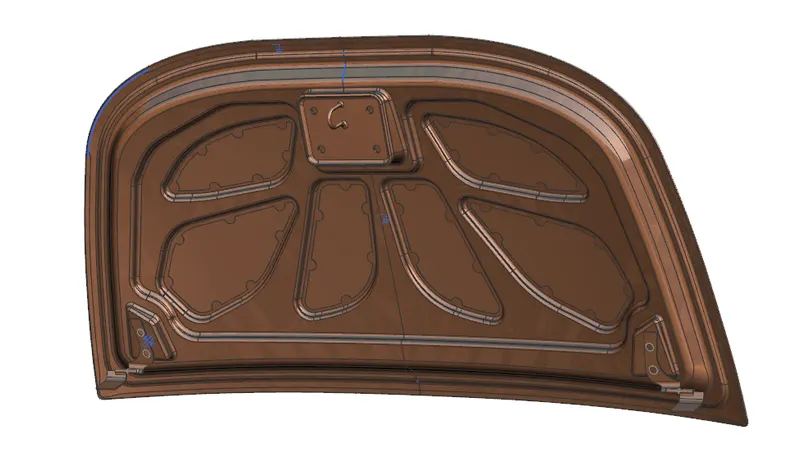
REPRESENTATION OF DESIGNS
CONCLUSION
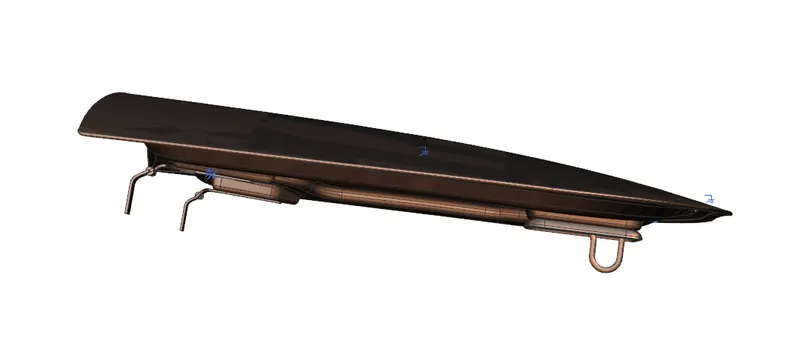
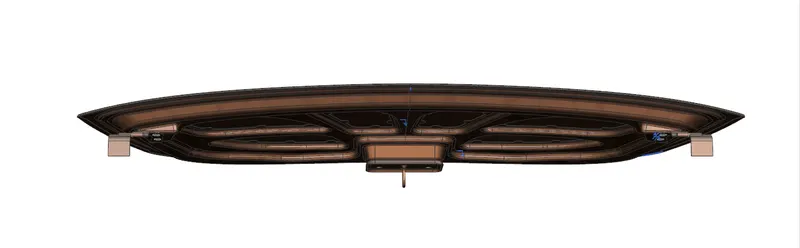
Designed the car hood along with its components and assembled the same, using NX CAD, under given parameters.