Hood design-Week 2
AIM-
Design of Hood outer panel, inner panel, and the necessary reinforcements with the design parameters.
To understand the design strategy and consideration that goes under designing and developing an automotive hood to achieve maximum safety for everyone in and around the vehicle.
With this understanding, an industry-standard hood panel is to be designed which can very well be manufactured and assembled.
INTRODUCTION-
HOOD-The hood or bonnet is the hinged cover over the engine of motor vehicles. Hoods can open to allow access to the engine compartment, or trunk(boot) on rear-engine and some mid-engine vehicles) for maintenance and repair.It is fundamentally a reinforced skin panel with many safety and quality requirements
components of hood
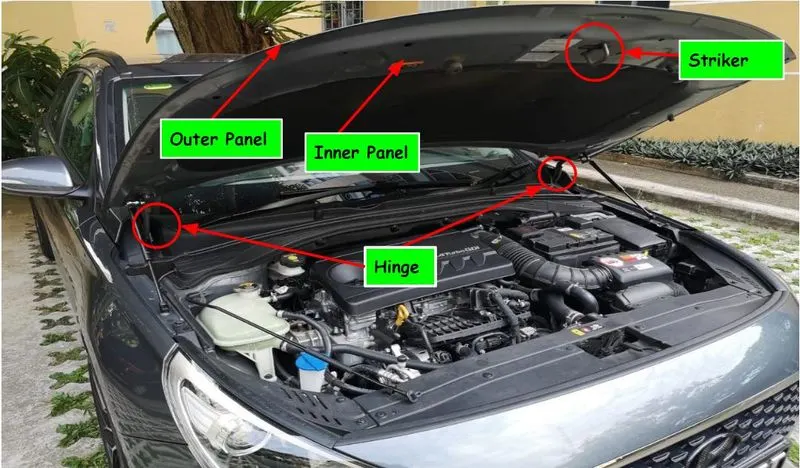
four parts in the hood assembly
A)Outer panel
B)Inner panel
C)Latch system
D)Hinge
A)Outer panel-The outer panel skin surface from the style department with proper aesthetic look, gap, and flushness. The outer hood panel follows the aerodynamic criteria.
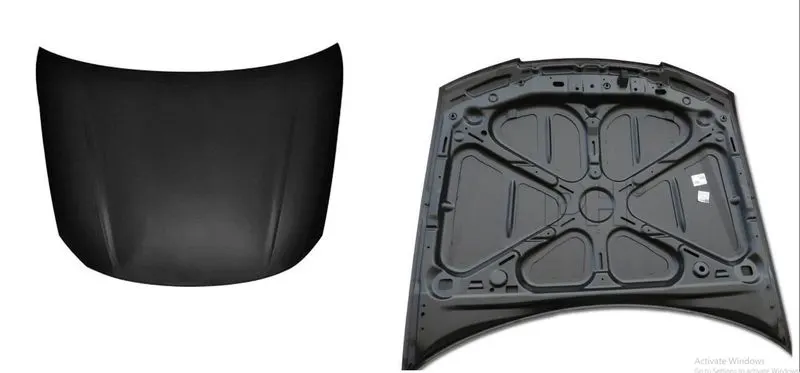
A)Outer panel B)Inner panel
B)Inner panel- Hood inner is the main functional part of the hood design. It’s the most complicated and weight-consuming part of the hood assembly. In the vehicle development, the hood inner was designed to meet the standard load cases.
C)Latch system-The hood latch system is vital to all cars, trucks, or other vehicles. This system is the attachment of hood assembly and vehicle body.
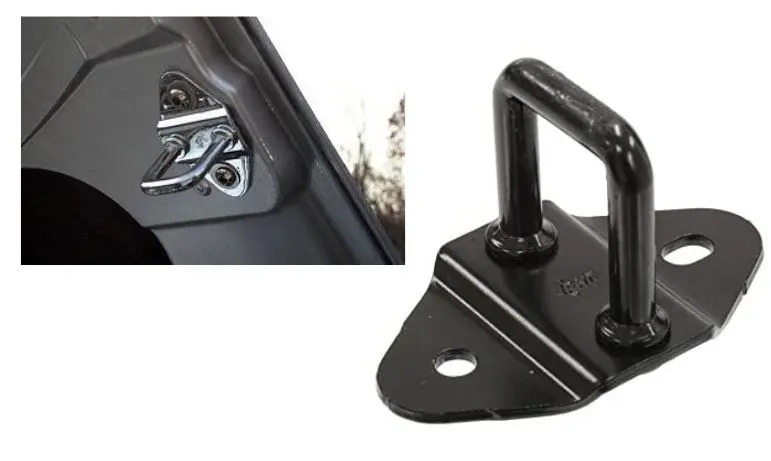
D)Hinge- The hinges also guide and hold the hood when open & close.The hood hinge is a pivot and bracket mechanism that makes it possible for you to open and close your hood. Each car typically has a pair of hood hinges installed in the front of the vehicle.
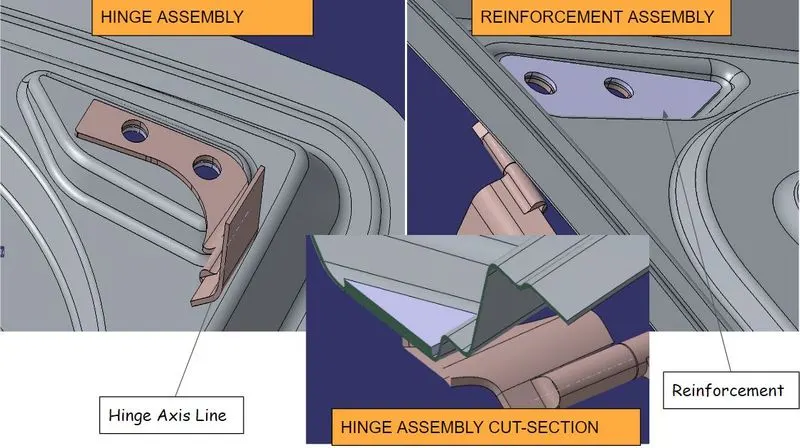
Data to be used:
Hood Thickness Information
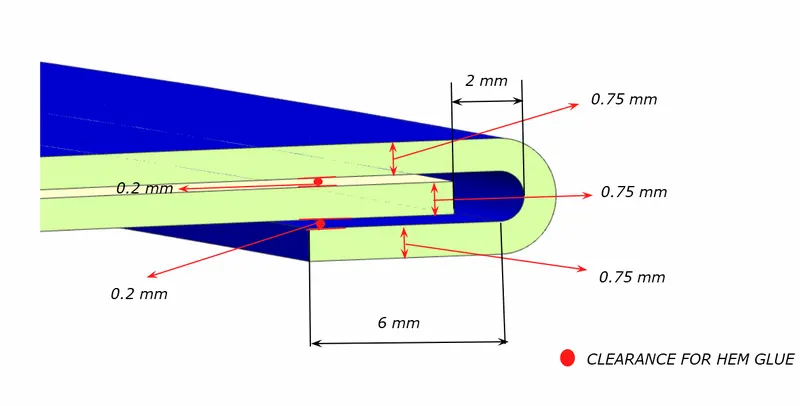
- Outer Panel Thickness = 0.75mm
- Inner Panel Thickness = 0.75mm
- Reinforcement Thickness = 1.5mm
Drawing
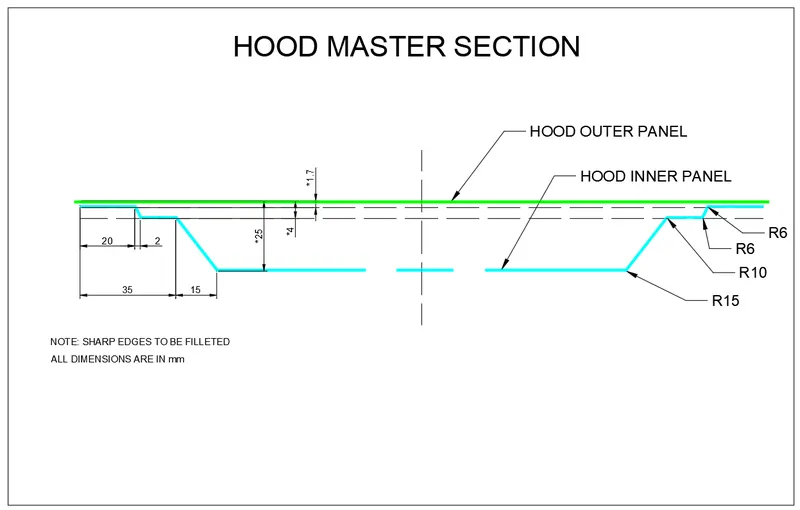
Design consideration-
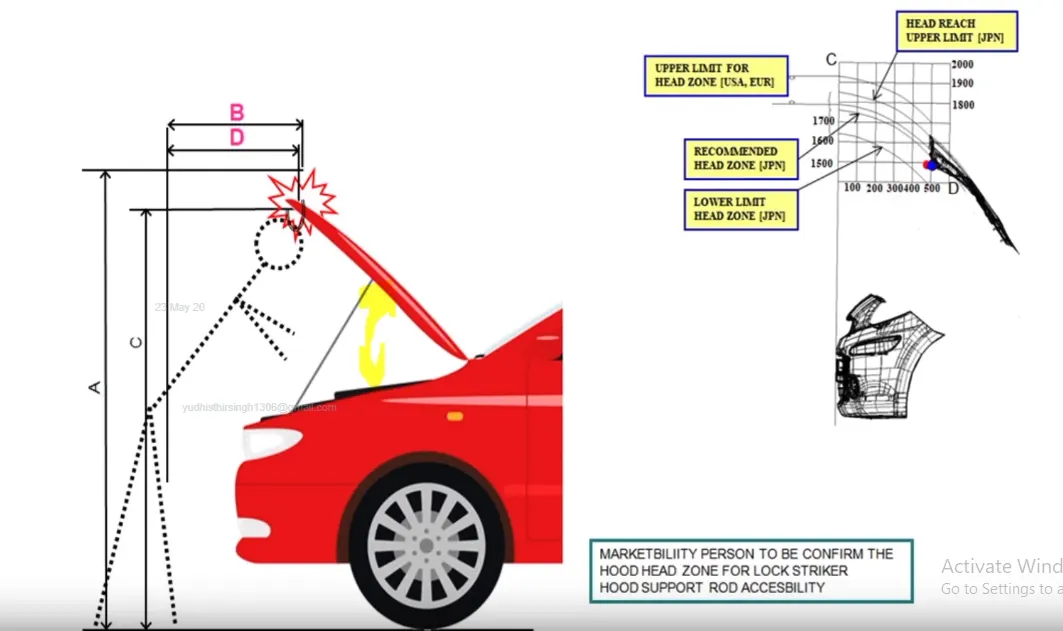
Head clearance is decided upon the zone or country. So same car if it is made for a different country will have different opening angles depending on the country or region.
The distance C and D shown in the image is represented as a graph in the upper right corner of the image. Choosing the right head zone position will decide upon the angle of the hood opening.
Product engineers will also get input from the marketing team for deciding the head zone.
some other important consideration point for hood-1)Pedistrain safety -a)Adult head impact b)child head impact c)bonnet leading edge geometry
2)Vehicle quality - a)Torsional stiffness b)bending stiffness c)dent resistance d)corrosion resistance e)low mass f)noise attenation
g)low mass vehicle centre gravity
3)Occupant safety-a) Frontal crash Collapse b))maintain integrity of the hinges c))retention of loosed componets
4)Styling-a)Tight raddi on hemmed panel edges b)excellent painted surface quality c)stretch flanges d)low strained doubly curved surfaces
5)Manufacture-a)paint drain features b)dent resistance during assembly c)clean sheared edges d)gauling resistance
1)Pedistrain safety-Pedestrian impact energy is absorbed by a sequence of different mechanisms. In most casesthe leg of the pedestrian is first impacted by the bumper system (lower leg impact is a safetycritical load case for the pedestrian that is entirely managed by the bumper system). Initialcontact with the pedestrian is therefore at a point below the centre of gravity of the head andtorso causing rotation. At relatively low velocity impacts (<= 40km/h) the tendency is for thehead to impact the bonnet or the lower part of the windscreen.
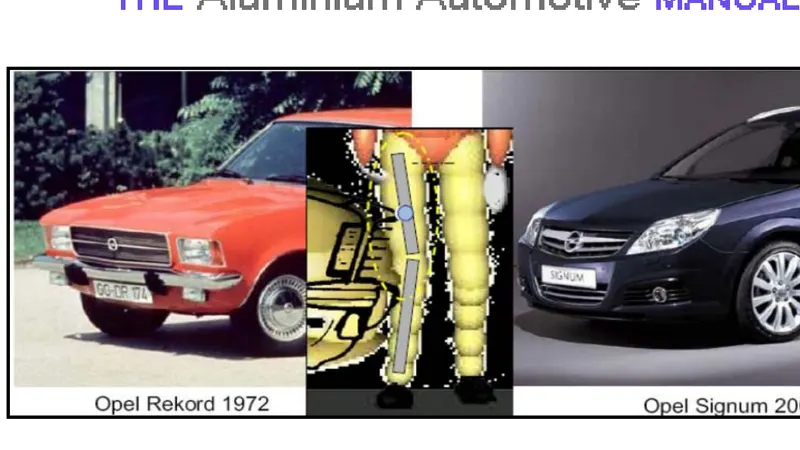
The height, weight and age of the pedestrian all play a role in the kinematics of the event and in his ability to survive. Most fatalities for the younger population are related to brain damagecaused by head impact on the bonnet. For older people additional risks include rupture of arteries in the lower limbs and pelvis from bumper and bonnet leading edges.All major insurance and regulating authorities have studied this topic in order to put in place a range of measures to reduce mortality rates and the severity of injury resulting frompedestrian impacts. These studies have produced test procedures and systems to rank andregulate vehicles for pedestrian safety.
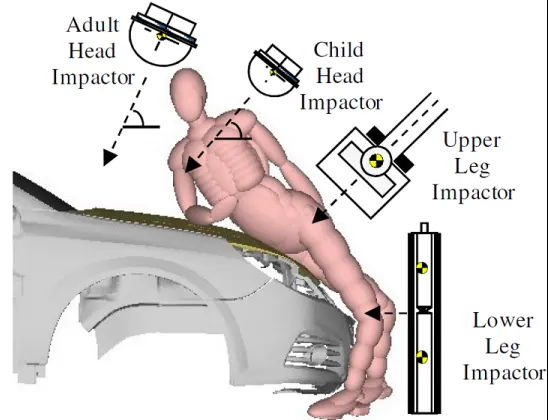
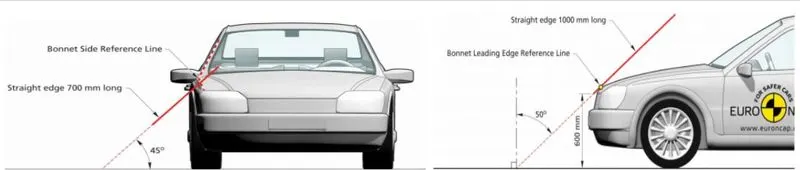
Hood for better pedistrain rating
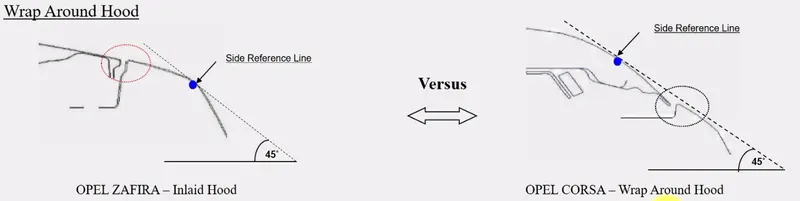
- Inlaid Hood: The line which is drawn 45 deg. from the ground to the Side Reference of the car and which is a meeting point on the fender is called Inlaid Hood.
- Wrap Around Hood: The line which is drawn 45 deg. from the ground to the front surface of the Hood and which is the meeting point on the outer panel is called Inlaid Hood.
- Depending on the Inlaid Hood & Wrap Around Hood, we can design a hood for head impact in the fig shown position of the head impactor.
Designing-
a)Outer pannel b) Inner panel
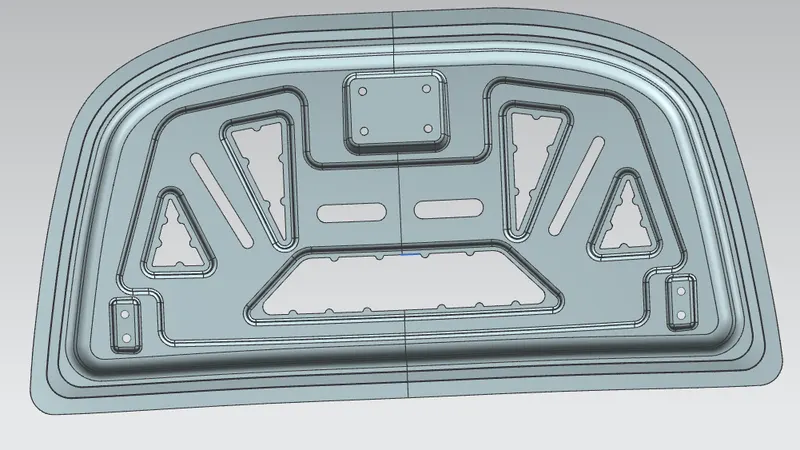
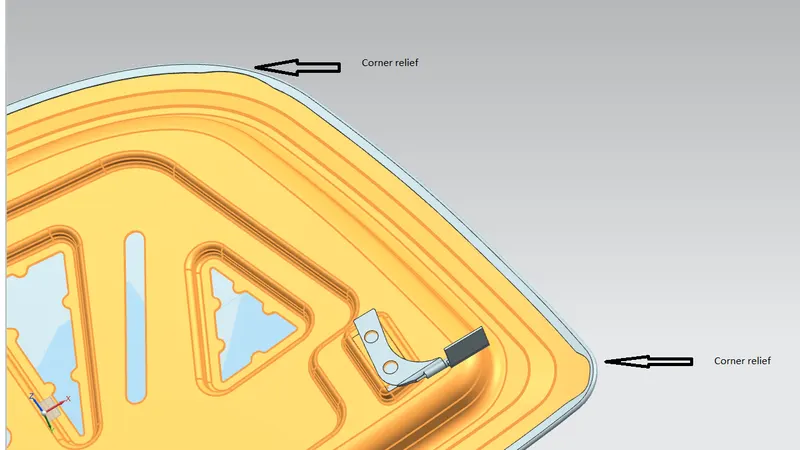
c)Cross section d)Relief corners
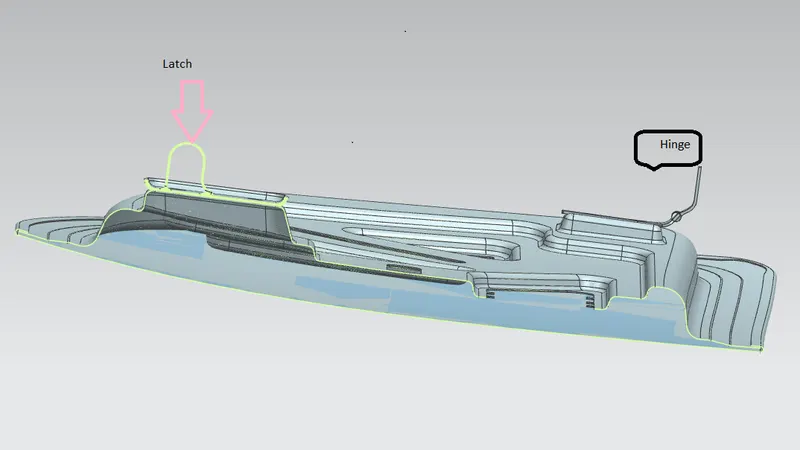
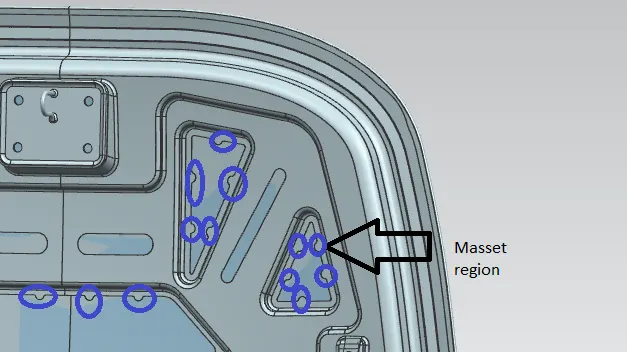
f)Masset region-Mastic is an adhesive that along with thin set mortar is used to stick a sheetmetal while mastic does have strong points such as great adhesiv properties and adaptibility to many subtrates high performance in wet areas is not one of its high points Mastic sealants generally have an influence area of about 80mm.
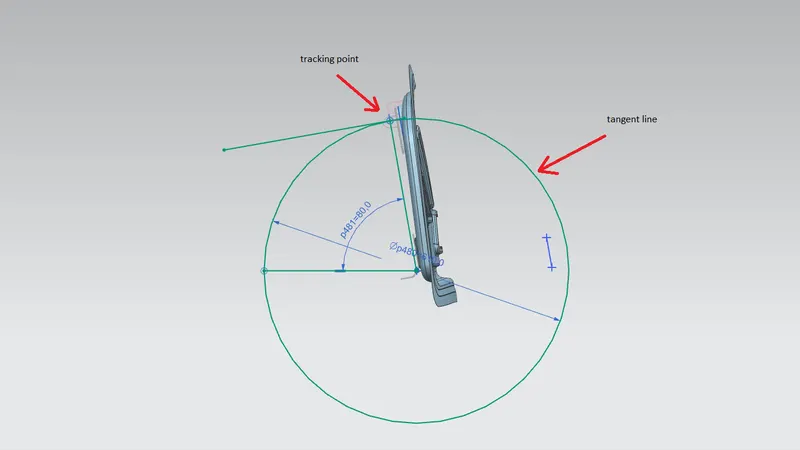
Hood opening & closing trajectory-The trajectory for opening and closing is considered to be proper when the striker's axis is coincidental with the hood center axis. The perpendicular line from this axis is selected from the hinges on either side.
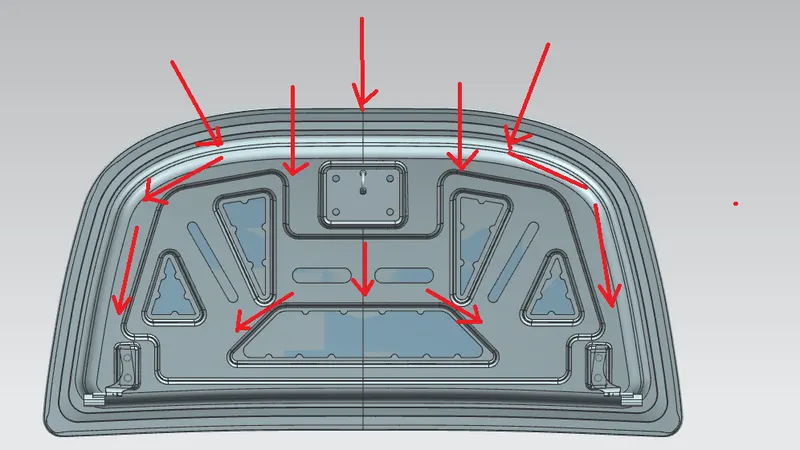
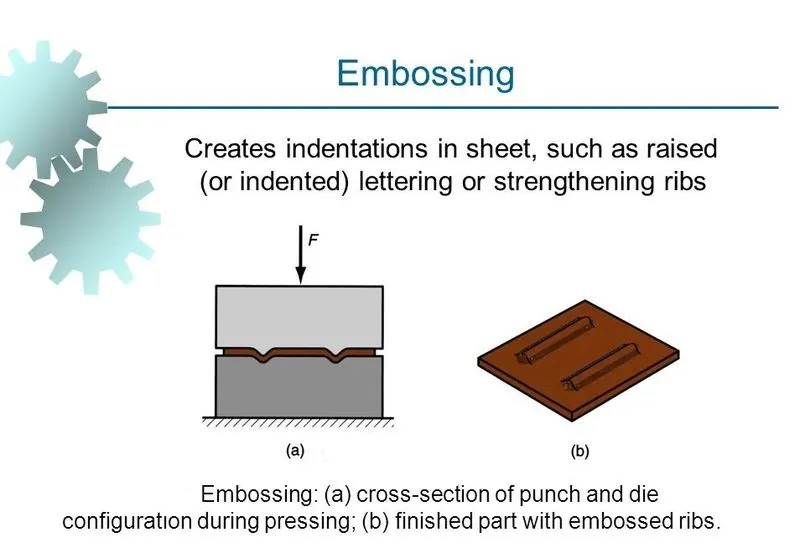
Shock flow-The embossed channels were designed to direct the impact force towards outside of the structure.
- The force acting on the hood can impact the passengers when the vehicle hits an obstacle.
- This force can be reduced with embosses design, By giving some inclination angle to the embosses flanges, the force acting normal to the Hood can be diverted outwards of the hood.
Draft analysis-
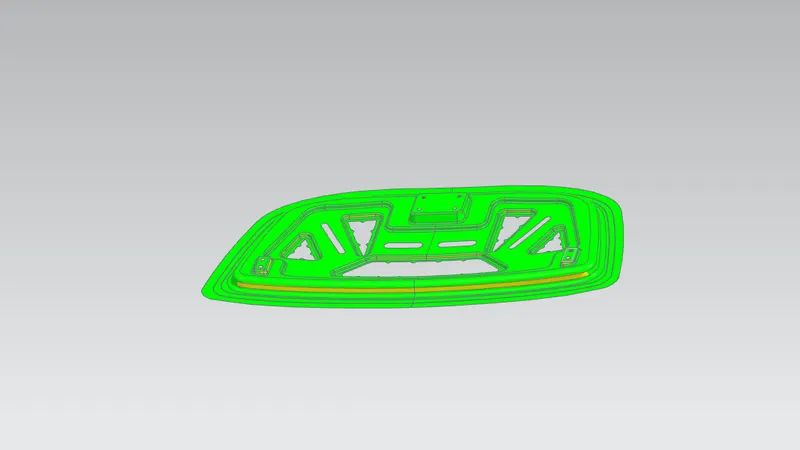
- The draft angle for the inner panel is more than 7 degrees as shown in the following popup.
- Deep drawing is possible for this draft angle
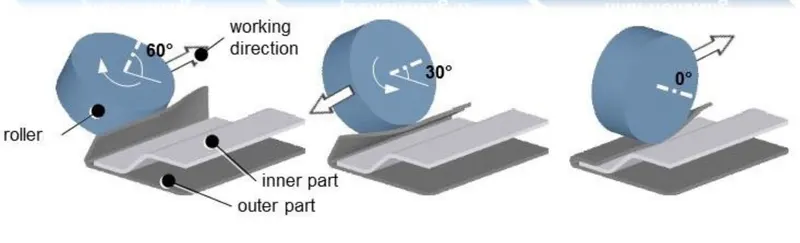
Hemming:
Hemming is a forming operation in which the edges of the sheet are folded or folded over another part in order to achieve a tight fit. Normally hemming operations are used to connect parts together, to improve the appearance of a part, and to reinforce part edges.
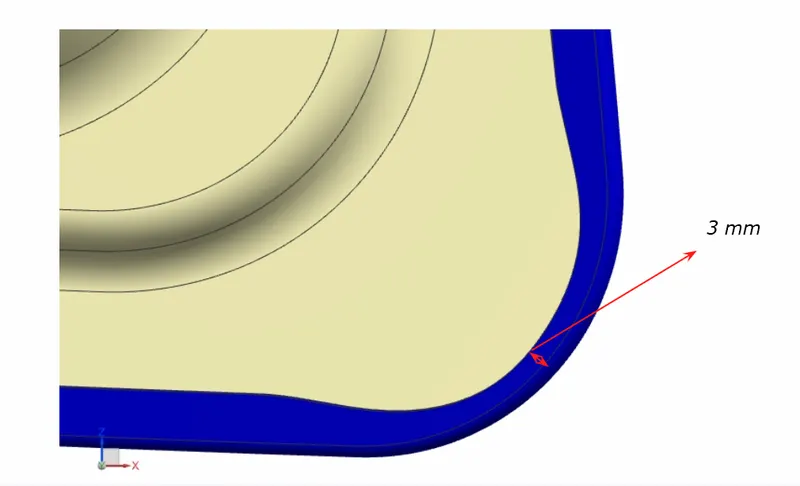
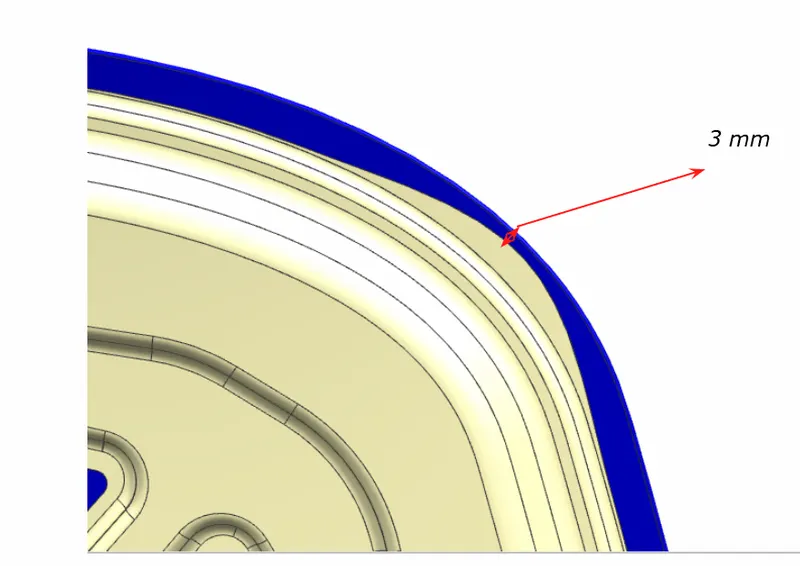
corner relief corner relief
-
MANUFACTURING
The sheet metal parts for the bodywork are created and stamped by robots. These parts form side frames, doors, hoods, and roofs, which are later added onto the main frame of the car.
Once the frame is created and the parts are ready to be assembled, the car will be loaded onto a production line.
The car will travel along a moving assembly line in a factory as robots and people work on them. Manufacturing plant workers will attach parts to the car and may work alongside robots for certain tasks.Robotic working cells will work alone to weld, solder, screw, and glue parts onto the car.
Once the parts of the body are manufactured onto the car, it will undergo detailing. This includes cleaning, layering chemical formulas for protection against corrosion and scratches, and paintaing Finally, the engine, transmission, axles, and exhaust systems are installed into the car and the tires are furnished so the car can stand on its own.
- Material used for car hood-Steel,Aluminium with fiber coating
-
TESTING & QA
Now that the car is ready to drive, it will be tested for quality safety and assurance
-
The vehicle is checked for any imperfections or inconsistencies in the interior and exterior design.
-
The car will run through a series of tests similar to those given at a DMV: the engine is started and stopped several times, the steering alignment is adjusted, the headlights are checked for brightness and reach, brakes are tested for safety, and more.
CONCLUSION:
- The design parameters of the inner panel including master sections are followed.
- The inner panel is designed with a thickness of 0.75mm.
- The outer panel is developed with a hemming flange.
- The reinforcements parts of the required places are created.
- The hood is assembled with hinges and a striker.
-