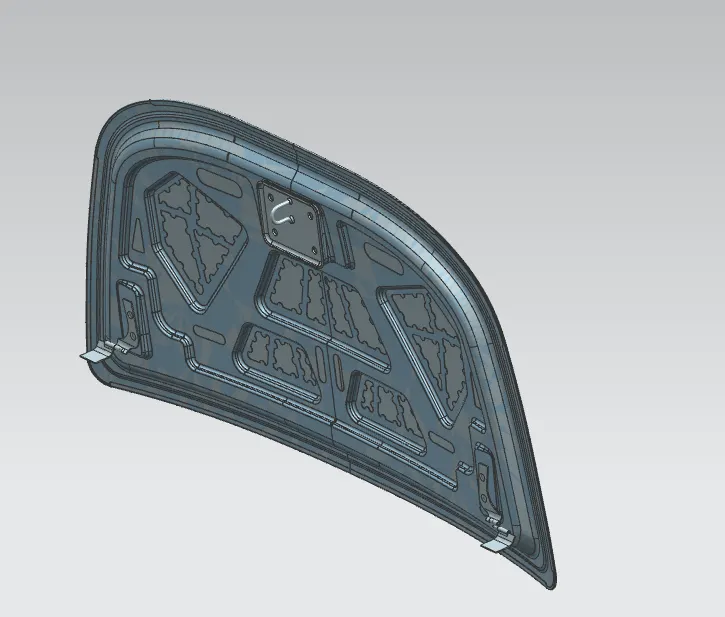
Hood design-Week 2
HOOD DESIGN
AIM:-
To design a Hood outer panel, inner panel and the necessary reinforcements by the given Master section and design parameters.
THEORY:-
Hood is a main component of front portion of a car. It is an opening body panel that covers the engine in front engine vehicle.It consist of an outer panel and inner panel.
The inner panel provides the strength while the outer panel functions as the metal cover.It is an access panel to the engine compartment to enable maintenance of power train, drive belts,battery, fluid levels and lamp units.
Design considerations:-
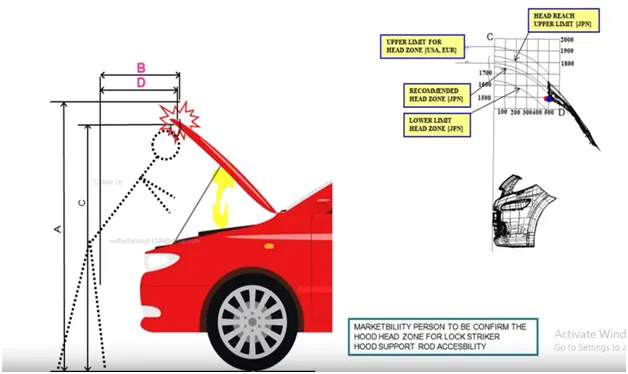
The human comfort factor for automobile design is first consideration. It is a method to safeguard and protect space for the human user and necessary components thtat make up the vehicle being designed. All safety regulations are ensured during this process. Ergonomical consideration consist of Hood clearance, Hood Opening angle and location of support rod or gas stay.
Hood opening angle is different for different regions or countries. It is decided by the average height of the human in that particular country.
There are two types of hood stay, support rod and Gas stay which holds the position of hood at desired angle.
- SUPPORT ROD:-
It is a simple metalic rod. It is not usually made linear to increase rigidity of rod but the length from line connecting support rod retaining point with retaing point on body side to maximum bending point should be less then 35mm to ensure the strength of support rod.
It should have sufficient clearance with other engine components to avoid rattling noise.
Advantages of support rod are as follows
- They are economical.
- Light in wright.
Disadvantages of support rod are as follows
- When striking with the automotive body panel to leavew scars which are very likely to cause rust.
- The metal rod is often too hot to be gripped by hands immidiately after the vehicle has been stopped.
2.GAS STAY:-
It is a device used for supporting the engine hood of a vehicle in its open position by means of an actuator which is activated by gas.
In case of gas stay only initial force is required to open the hood then it automatically opens at desired angle with the extension of
piston in cylinder of gas stay assembly.
Advantages of gas stay are as follows
- No human effort is required.
- easy to operate.
Disadvantagesof Gas stay are as follows
- They are heavy in weight compared to support rod.
- cost is more.
SAFETY REQUIREMENTS :-
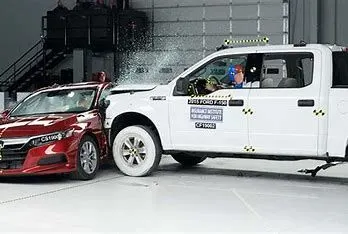
The most important safety requirement is regarding the frontal collision.
It should withstand in high collision forces as well as it should divert the forces in outward direction so inensity of collision forces would be reduced to cabin side of car.
DESIGN
Master Section:-
Master section is a predefined sketch which will be adaptable for different situations.
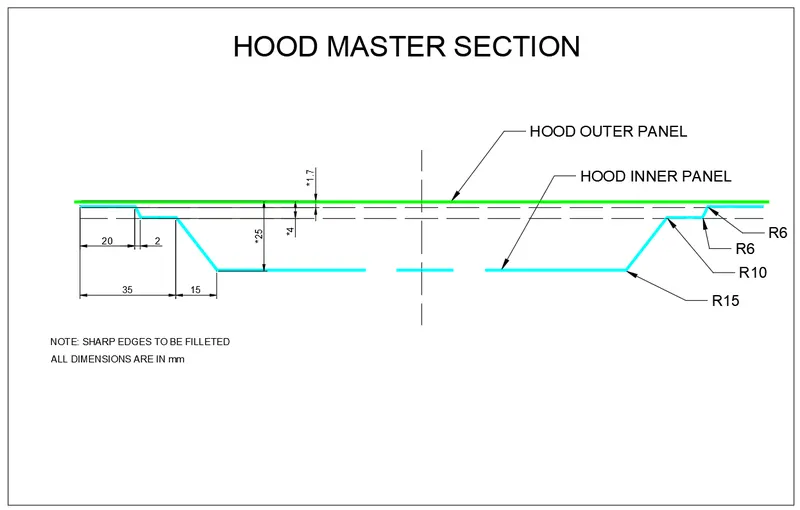
Four main parts of Hood assembly are as follows
- Outer Panel.
- Inner Panel.
- Latch and Striker System.
- Hinge System.
Hood Thickness Information:-
- Outer Panel Thickness= 0.75mm
- Inner Panel Thickness= 0.75mm
- Reinforcement Thickness= 1.5mm
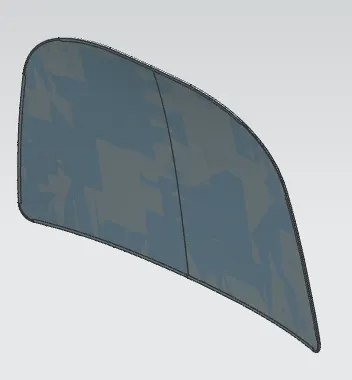
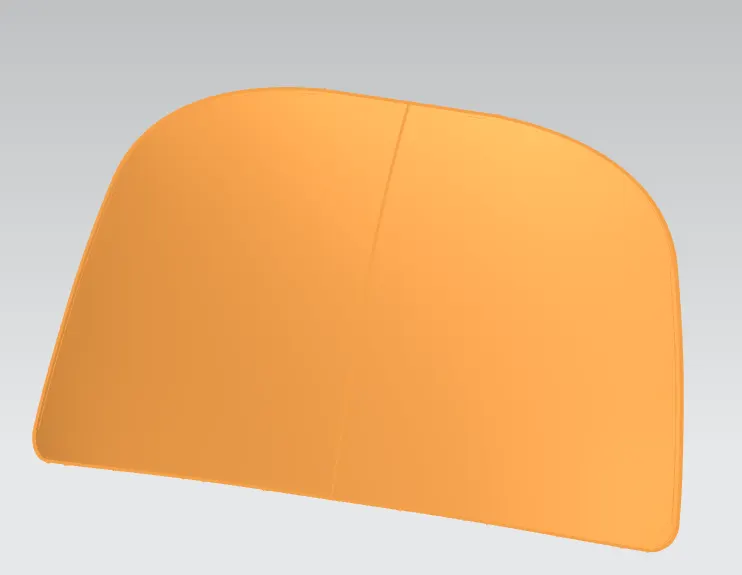
OUTER PANEL:-
We get the outer panel skin surface from style department with proper aesthetic look,gap etc. The shape of the outer panel is made aerodynamic in order to minimize the air effect.Shape of outer panel is reffered as a base to design a inner panel.
INNER PANEL:-
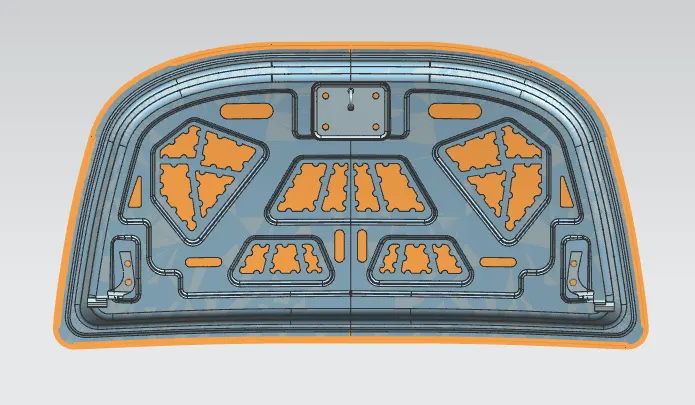
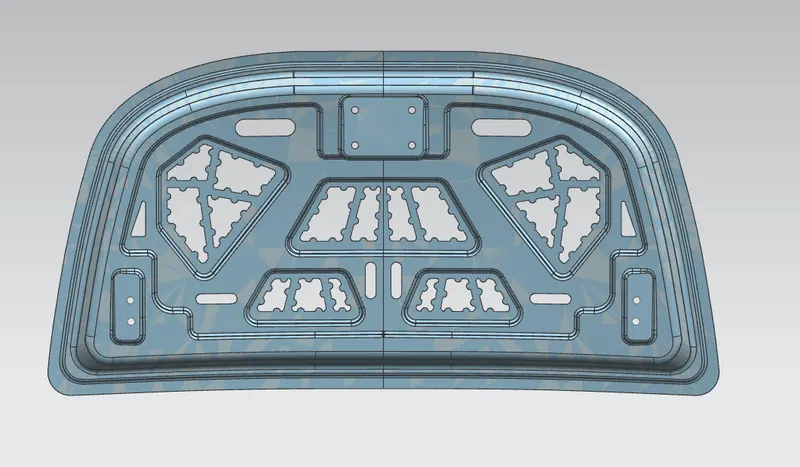
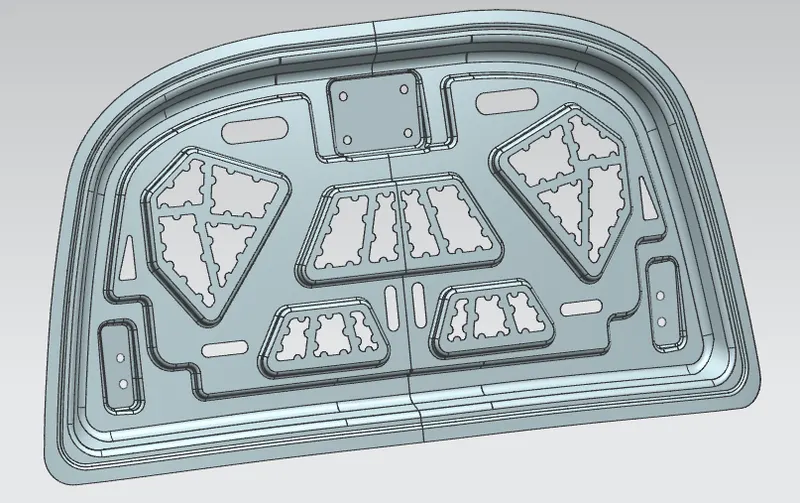
Hood Inner panel is main functional part in hood design. It gives structual support and strength to the outer panel of Hood. The outer and inner panels of the hood are typically attached together using a hemming operation at the edges.
LATCH AND STRIKER:-
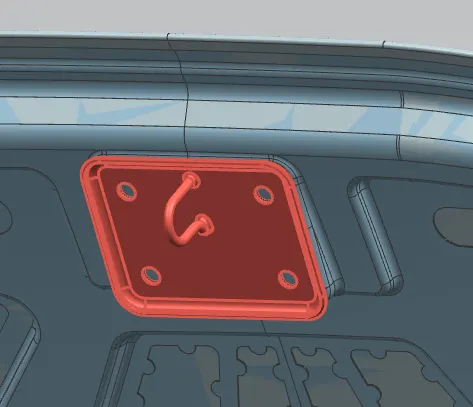
This system is the attachment of hood assembly and vehicle body. The hood latch system must be able to catch the striker of the hood upon closing and instantaneously,as well as automatically, lock. Once in the locked state, it must remain locked and only unlock upon the operator's control.
HINGE SYSTEM:-
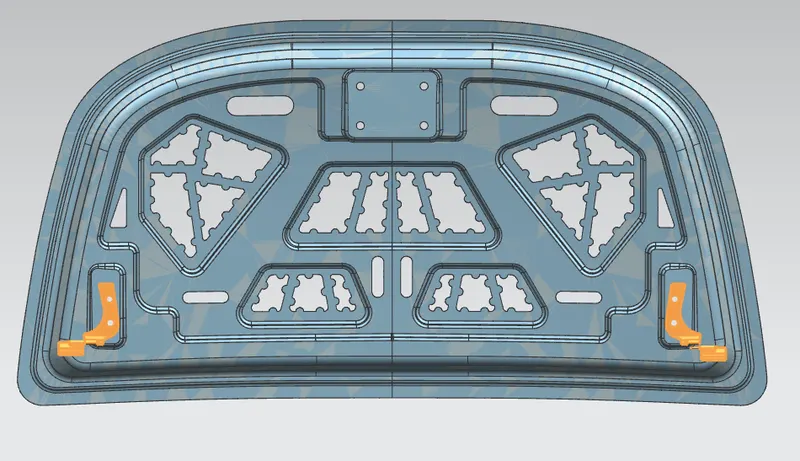
The hinges are used to guide and hold the hood when open & close. Hinge assembly consists of two parts one is connected to the hood inner panel and second is connected to the vehicle body.
REINFORCEMENTS:-
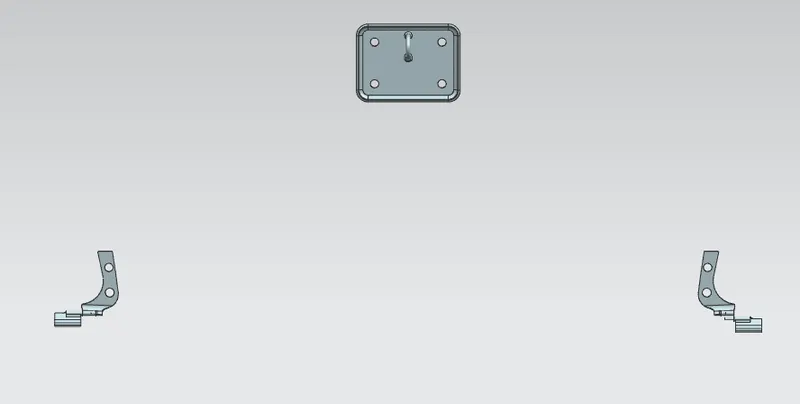
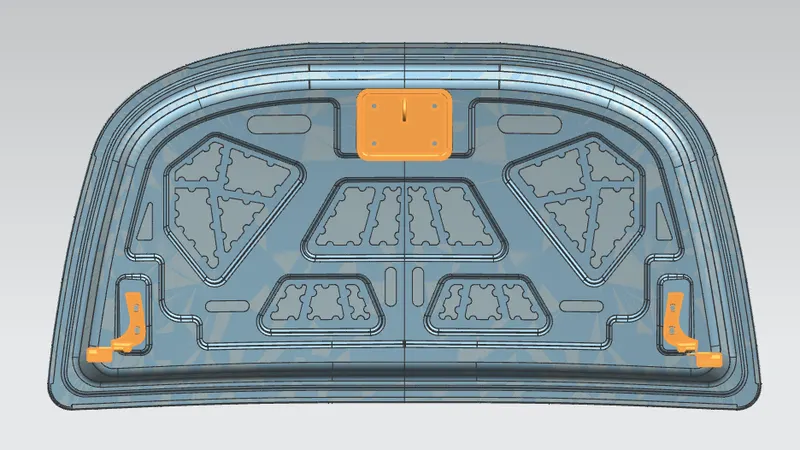
Reinforcement are provided mainly in hinge and latch region. When hinge and latch assemblies are attached to inner panel, strength of that area reduces locally so we add some additional material to increase the strength of the area locally. Thickness of reinforcement material is provided according to the design requirements. In this project, 1.5mm yhickness has been given to both latch and hinge reinforcement.
LATCH TRAJECTORY :-
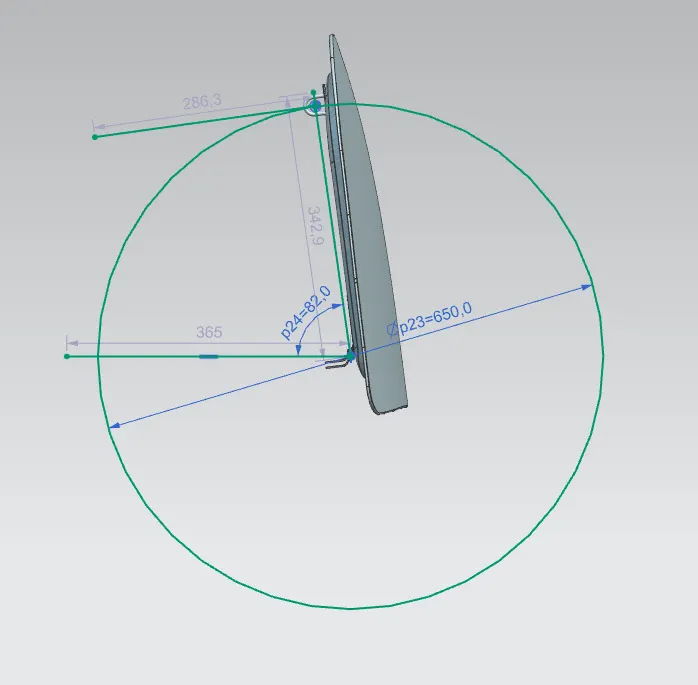
Circle is drawn from the hinge axis center so we can finalize the position of latch striker. For proper mating, the tip of the striker should be tangential to the latch trajectory. The position of latch striker follows the path of this circle.
EMBOSS DEFINITIONS :-
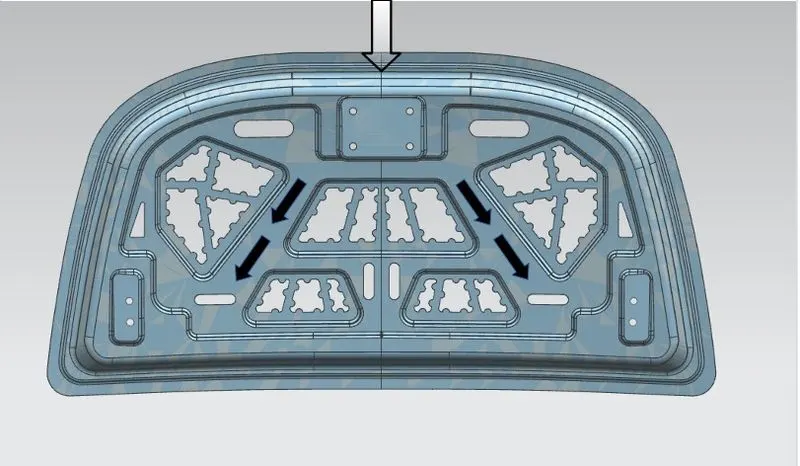
Embosses are provided to increase the strength of inner panel. shape of embosses also determines the direction of collision force distribution. the shape of the embosses should be designed in such a way that, the collision forces should be directed towards outward side of the car (towards hinge side).
FORCE DISTRIBUTION :-
MASTIC DATA :-
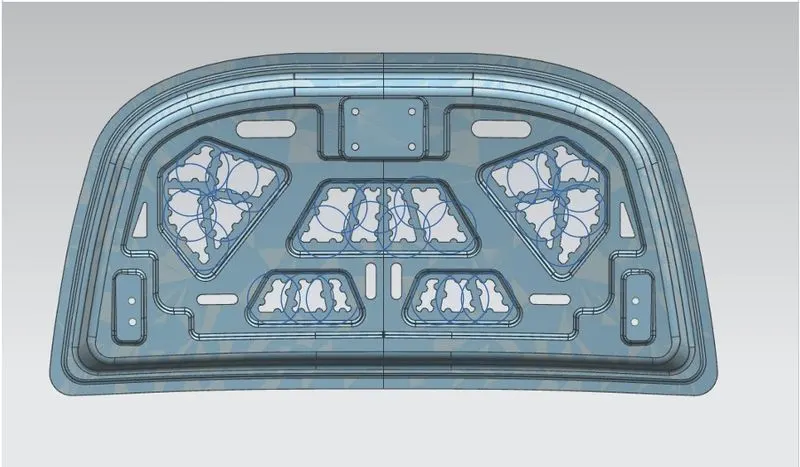
Mastic sealants used between the outer and inner panel. mastic sealants are the rubber like elastic compound which connects the outer and inner panels of car hood at specified points. Mastic sealants are used in the region between the inner and outer panel because other joining process like welding or riveting are not good for car asthetic design. It also helps to improving NVH (Noise vibration and harshness) characteristics.
Mastic salant points are effective around a circular region of 80mm diameter.
MANUFACTURING ASPECTS :-
The most important design consideration of any component is manufacturing aspect. In sheet metal,the component is manufactured by pre=ss tool dies. The press tool is stamping which includes cutting operations like shearing,piercing etc. Forming operations like bending,Deep drawing,hemming etc. The main focus of manufacturing aspect is to manufacture hood assembly with minimum operation sequence and process time.
HEMMING :-
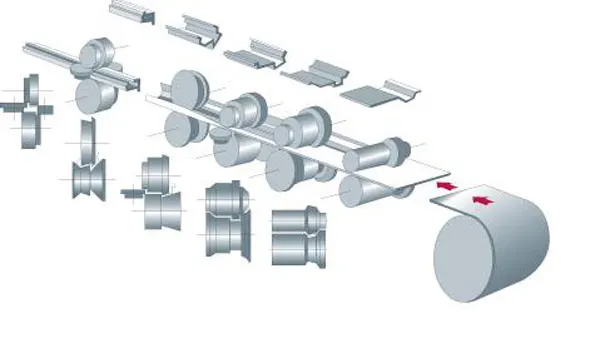
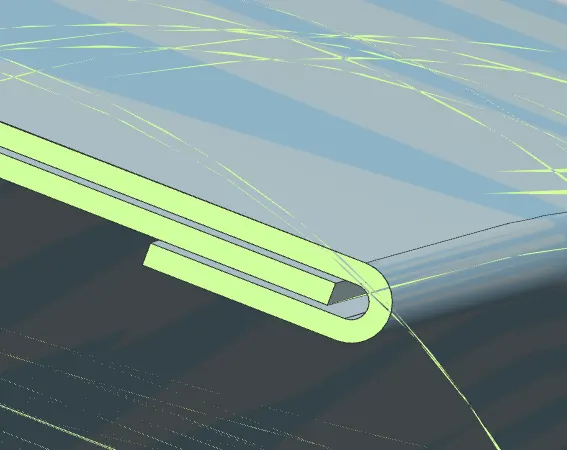
Hemming is a sheet metal forming process in which sheets are joined by bending it usually to 180 deg. Automotive body panels and automotive parts.
This assembly method is widely used in the final stages of production of automobile hoods,doors, or other closeures for aesthetic purpose.
It is a metal working process that involves rolling the edge of sheet metal over and onto itself, essentially creating an area of two layers. During this process, the edge of sheet metal is folded over. The two newly formed layers then liesn flush with each other.
The typical three-step bending process of the hemming operation comprising of the flanging, pre-hemming, and the final hemming process.
ROLL HEMMING :-
Rool hemming is carried out incrementally with a hemming roller. An industrial robot guides the hemming roller and forms the flange.Roll hemming operation can also be divided into several pre-hemming and final hemming process steps.Roll hemming is very flexible to use and tool costs are significantly lower as compared to those of conventional die hemming. However,the cycle times are much higher since the hemming is realized nusing a hemming rooler which follows a defined path
CORNER RELIEF :-
FINAL ASSEMBLY :-