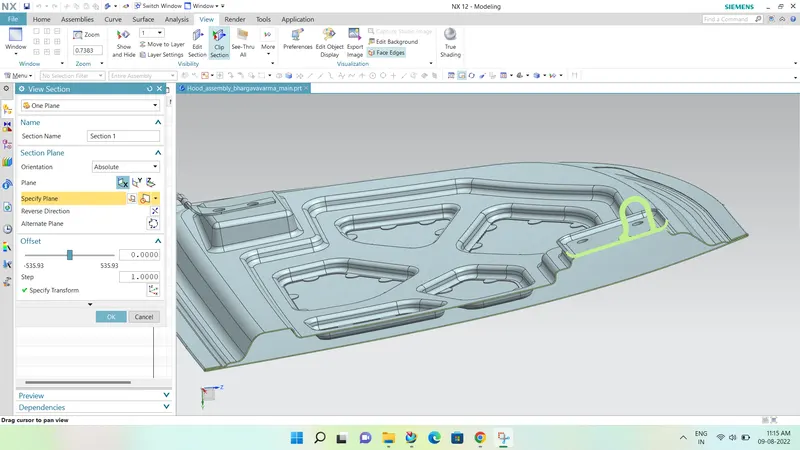
Hood design-Week 2
HOOD:
The Hood is the hinged cover over the engine of the vehicle. Hoods can open to allow access to the engine compartment, or trunk on rear-engine and some mid-engine vehicles for maintenance and repair also to cover the engine compartment and give an aesthetic look to the vehicle. A concealed latch is typically used to hold down the hood. On vehicles with an aftermarket hood and on race cars, hood pins may be used to hold down the car hood. Hoods sometimes also contain a hood scoop, wiper jets, power bulge, and/or hood ornament. Car hoods are typically constructed from steel and sometimes from aluminium. Aftermarket car hoods may be constructed from various other materials, including carbon fibre, fiberglass, or dry carbon. The hood design may vary from one make and model to another, including SUV, MUV, Sedan, Hatchback, or heavy vehicles.
The movement of the hood can be controlled by either one of them:
- Gas stay
- Support rod
Gas Stay
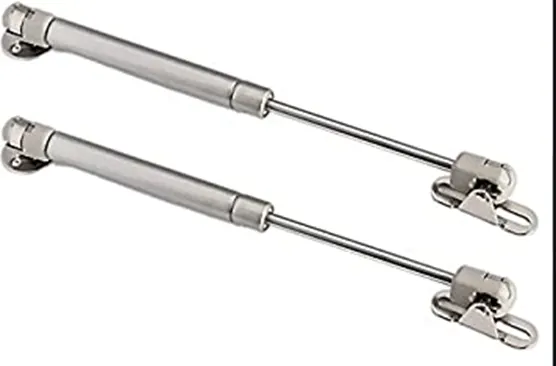
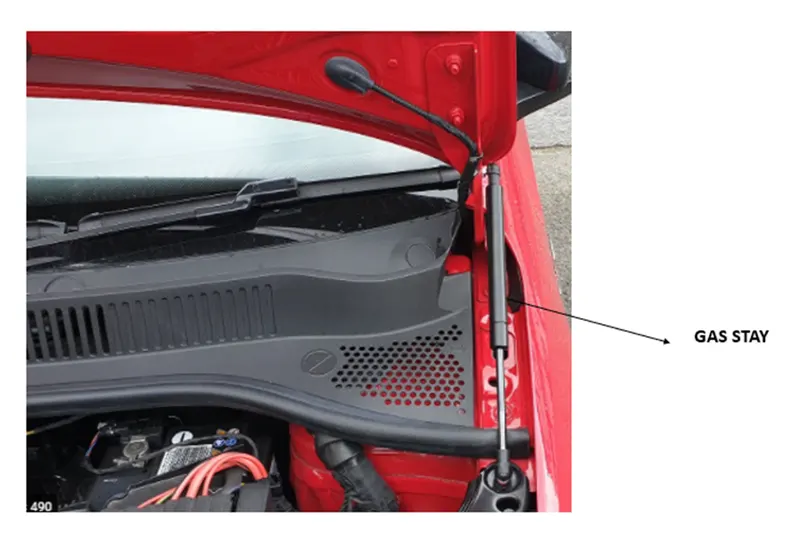
A gas stay is a type of spring that, unlike a typical mechanical spring that relies on elastic deformation, uses compressed gas contained within an enclosed cylinder sealed by a sliding piston to pneumatically store potential energy and withstand external force applied parallel to the direction of the piston shaft.
Support Rod
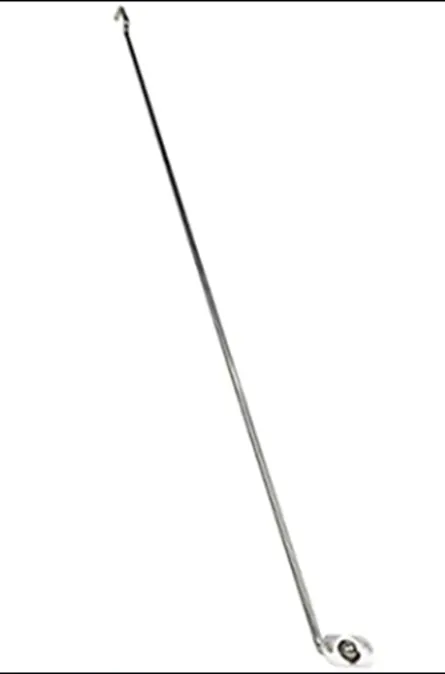
This is the most commonly used rod for opening and closing the hood at a certain angel. One end of the rod is hinged to the engine compartment and the other end is set free so that it can be locked to the hood inner panel when the hood is opened. This is usually used when the weight of the bonnet is small.
It is very important to consider that the support rod should not collide inside the engine compartment.
parameters followed in the designing a hood:
SAFETY REQUIREMENTS
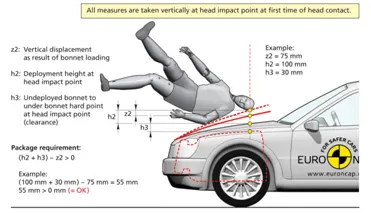
Safety is the most important criteria in automobile designs which concentrates on both pedestrian and occupant safety. The pedestrians are the most vulnerable road users and are at high risk of traffic accidents. The major reason for the fatality of the pedestrian in traffic accident is due to the head injury resulting from the hard impact of the head against the stiffer hood or the ground. This leads to the necessity of new inner hood panel which is less stiffer and pedestrian friendly. The head impact analysis on the present hood of the car was done to study the response of the adult head form at two different locations. Structural and modal analysis for the same present hood assembly was done to observe the local and global stiffness. In order to reduce the head injury of the pedestrian the local stiffness over the area of head impact has to be reduced thus the new design of hood inner panel was focused on that and the structural and modal analysis was done for the new design. The design with lesser local stiffness and similar global stiffness compared to the existing hood was finalized. The head impact analysis for the new design of hood inner panel was performed. The HIC values of the adult head form for two different locations are found to be 706 and 948 which meets the safety limitations of the adult head acceleration during impact as proposed by EEVC WG17 and Euro NCAP regulations. Thus the new design of the hood is pedestrian friendly, considerably maintaining the overall global stiffness of the hood.
PEDESTRAIN SAFETY
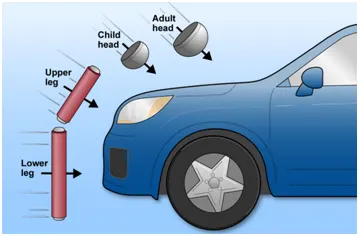
crash mitigation tests that measure the potential for head and leg injuries resulting from pedestrian-motor vehicle crashes have been in place for many years in Europe and Japan. Euro NCAP began head and leg testing in 1997 and Japan began pedestrian head protection testing in 2003 and pedestrian leg protection testing in 2011. In general, these tests launch projectiles designed to simulate a person’s legs or head into various locations on a vehicle’s hood and bumper to assess the effectiveness in limiting pedestrian injury
WRAP AROUND DISTANCE
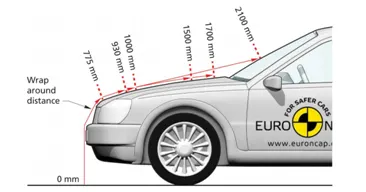
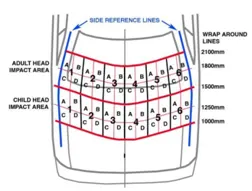
The headform test area is defined as the outer structure that includes the upper surface of all outer structures. It includes, but is not limited to, the bonnet, wings, windscreen scuttle, wiper arms/spindles, windscreen frame, A-pillars and roof. It is bounded by the geometric trace of the 1000mm wrap around line in the front, the Bonnet Side Reference Lines and the 2100mm wrap around distance (WAD)
Methodology:
- Creating Hood Inner Panel
- Creating Hood Outer Panel
- Creating Embossment for Hinge
- Creating Embossment for Latch
- Creating Reinforcements
- Assembling the components
- Performing Draft Analysis on CAD Model
Components of Hood:
The components of the Hood include Hinge, Latch and Reinforcements which are attached to the inner panel of the Hood. The basic definitions of these parts are given below:
Hinge: A hinge is a piece of metal, wood, or plastic that is used to join a door to its frame or to join two things together so that one of them can swing freely.
Latch: The hood latch helps to keep your hood closed. When the hood is closed, the latch slides over what is called a catch, and the spring covers the latch to keep it snug. When you pull the knob inside the car to open the hood, the hood latch cable opens the latch, allowing it to bypass the catch and open. There is, however, a second hood latch, to keep the hood from flying up if accidentally unlatched. That latch will need to be opened with your hand to get the hood fully open.
Reinforcements: The purpose of reinforcement is to provide additional strength for the hood where it is needed. When the latch and striker attached to the panel, the strength will be reduced in that area. To improve the strength in that area the reinforcement is added.
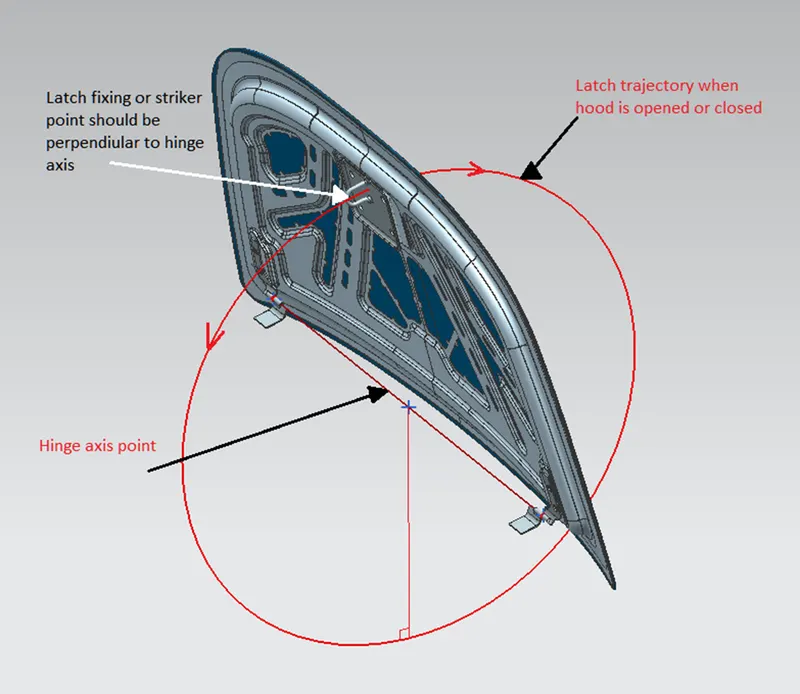
Latch Trajectory:
Latch Trajectory is the orbital path in which the latch should be positioned to the lock hole. The trajectory is drawn based on the reference of the Hinge joint central axis.
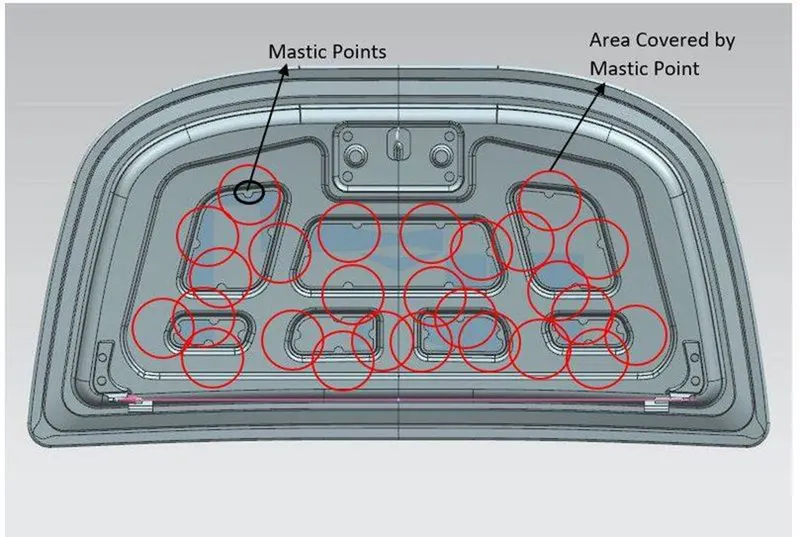
Mastic Data:
Mastic is common as an adhesive and sealant. A mastic sealant is a type of liquid sealant that cures in an elastic state, thus making it flexible while holding the bond of the surfaces that have attached. It adheres to just about any material making an all-purpose type of sealant. Wood, aluminium, glass, marble, and even duct board are all standard applications for mastic sealant.
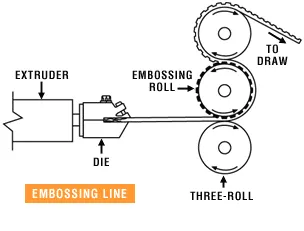
EMBOSSING
embossing is a metal forming process for producing raised or sunken designs or relief in sheet material by means of matched male and female roller dies, theoretically with no change in metal thickness, or by passing sheet or a strip of metal between rolls of the desired pattern.
Metal sheet is drawn through the male and female roller dies producing a pattern or design on the metal sheet. Depending on the roller dies used, different patterns can be produced on the metal sheet.
Characteristics of the metal embossing process include:
- Its ability to form ductile metals,
- Its use in medium to high production runs,
- The ability to maintain the same metal thickness before and after embossing,
- The ability to produce unlimited patterns, depending on the roll dies, and
- The ability to reproduce product with no variation.
Manufacturing Process:
The manufacturing process involves turning raw materials into finished products which are used for some purpose. The economics of the manufacturing operation is a very important consideration. To be viable in the modern environment, a product has to be competitively priced besides having functional and aesthetic appeal. There are different processes available for manufacture. These are classified as Casting Process, Forming Process, Fabrication Process, Material Removal Process.
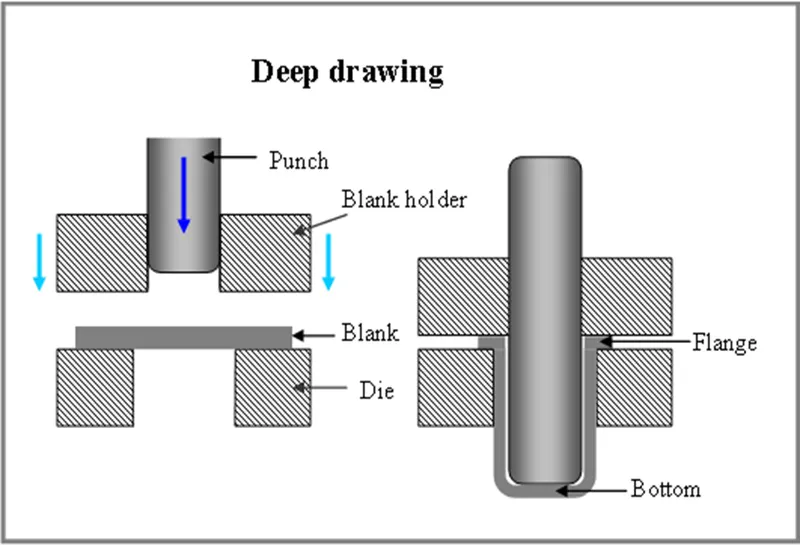
Deep Drawing:
Drawing is the process of making cu[s, shells, and similar articles from metal blanks. Drawing when cup height is more than half the diameter is termed deep drawing. Ductile materials are easier to be drawn into deeper cups. In deep drawing, because of the radial flow of material, the sidewalls increase in thickness as the height is increased. There would be a slight thinning of metal at the bottom corners.
Hemming:
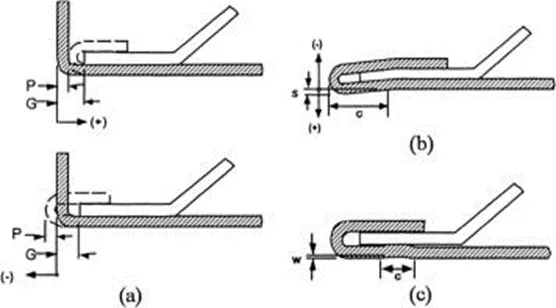
Hemming is a sheet metal forming process in which sheets are joined by bending it usually to 180 degrees. Automotive body panels and automotive parts such as deck lids, trunk lids, doors, hoods, and tailgates are forming by the hemming process.
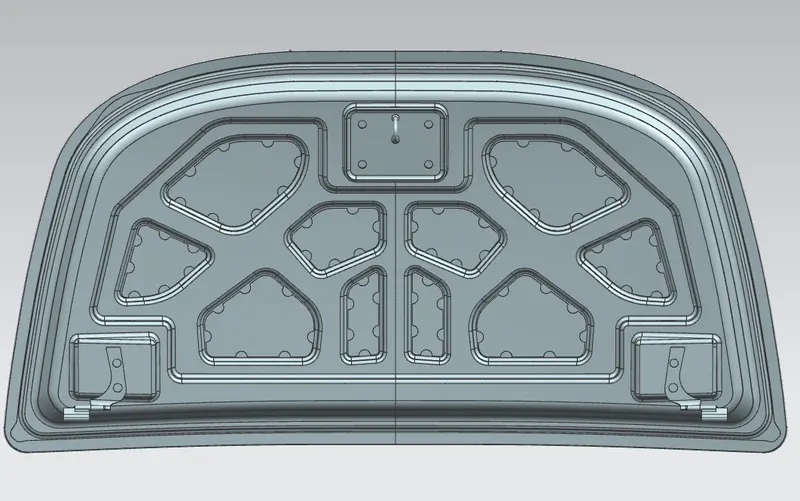
1. Front view
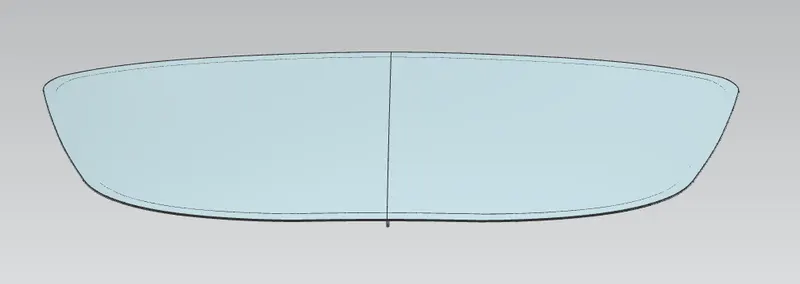
2. Top view
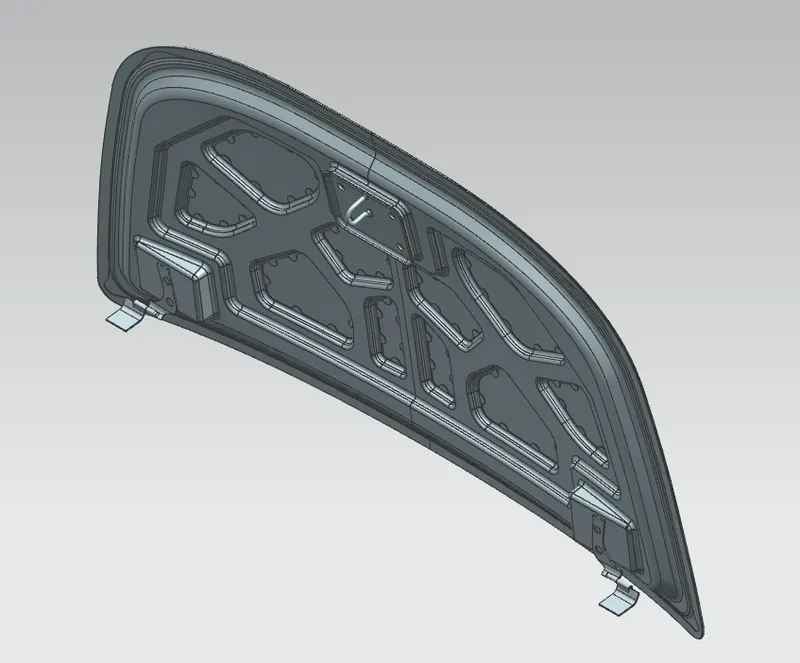
3.Isometric view
4. Hood Inner Panel1
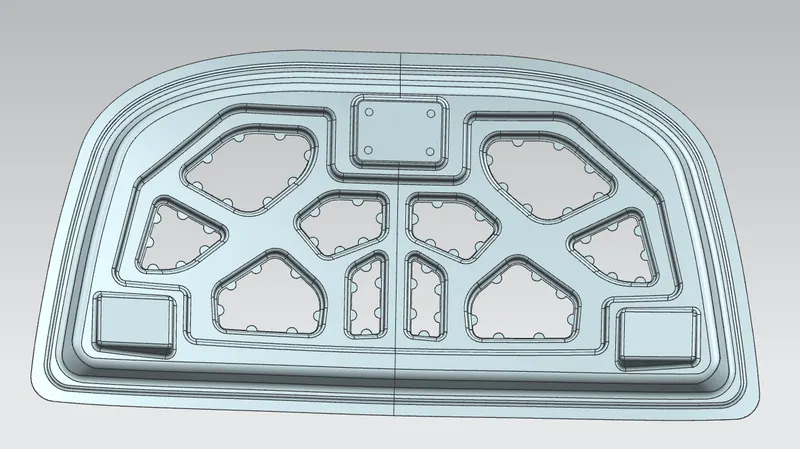
5.Hood Inner Panel 2
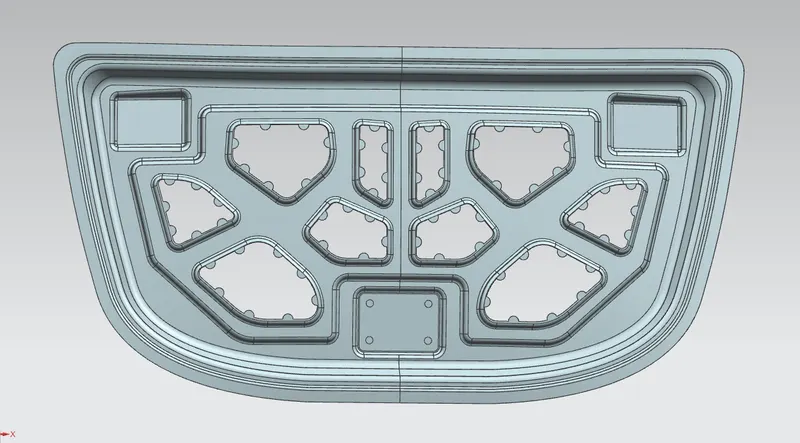
6. Striker
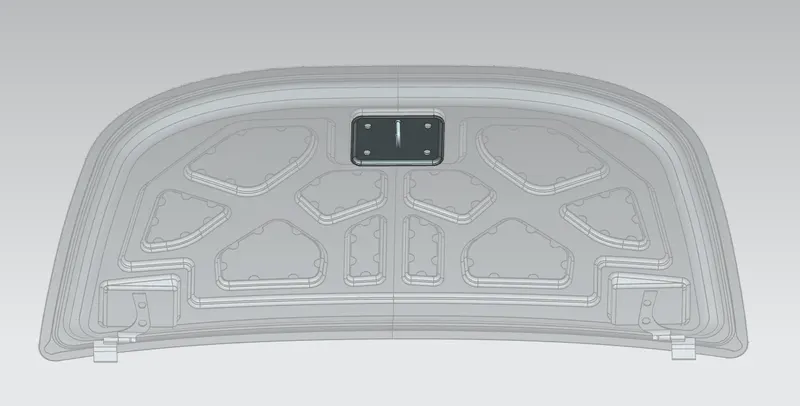
7. hinge
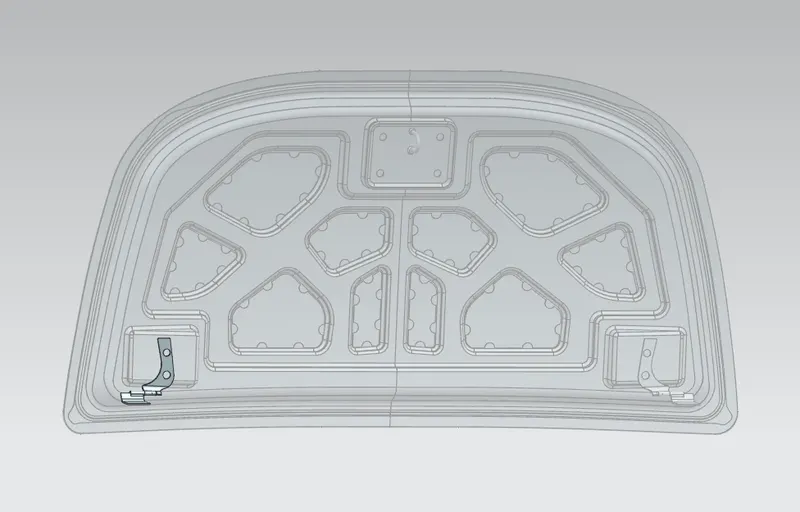
8. Sectional view