Fender Design
FENDER:
It is an aesthetic component/part of a car that frames the wheels. Prevention of sand, mud particles, and other road contaminants from being thrown into the engine compartment and also to the pedestrians by the rotating tires are the main purpose served by the fenders. The front fenders are separate components whereas the rear fenders are integrated with the body sides.
The Importance of car Fenders:
- The fenders are an intricate sheet of metal covering the wheel well of your car.
- Fenders are designed in a manner to provide resistance against wind and other roadside debris.
- When you travel on rough terrains tour vehicle might get minor scratches and dents which look no better. Frequent road bumps can cause your cars paint to chip off which needs a paint job done.
- The car fender are located on either side of the front and rear wheels. The front car fenders begin where the front door hinges run and end just before the bumper. The rear car fenders begin where the back doors close and terminate before the back bumpers.
TYPES OF FENDERS
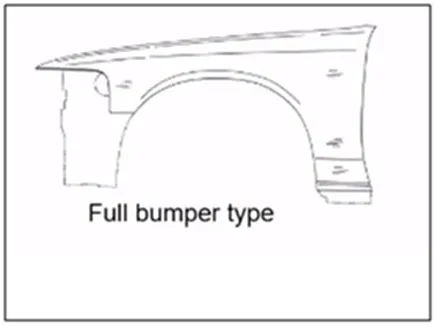
- FULL BUMPER TYPE: These types of fenders were used in earlier models of vehicles. They contribute to the major increment of the steel weight by just covering the front headlights with respect to the bumper region. The problem associated with this kind of fender is there is a lot of wastage in the blank.
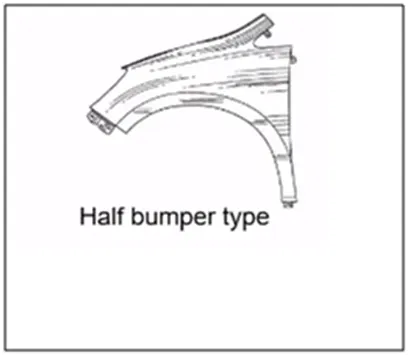
- HALF BUMPER TYPE: These fenders are mainly used for serving the purpose of cost-cutting and reducing enough proportions of the steel wait resulting in a reduction of the weight of the vehicle slightly. They can be economically manufactured, i.e by slightly increasing the blank size, we can produce two fenders at a time.
Design Criteria :
- Embosses are provided to increase the strength.
- Smooth curves are designed for easy manufacturing of panel.
- Ribs are provided to drip area mount to give structual support and extra strengh.
- Maintain extra 10mm from the flat surface for the fastner holes.
- All fillets should maintain 2 or 3mm radius in most regions.
- Thickness of fender is 0.75mm.
MOUNTING REGIONS ON FENDER :
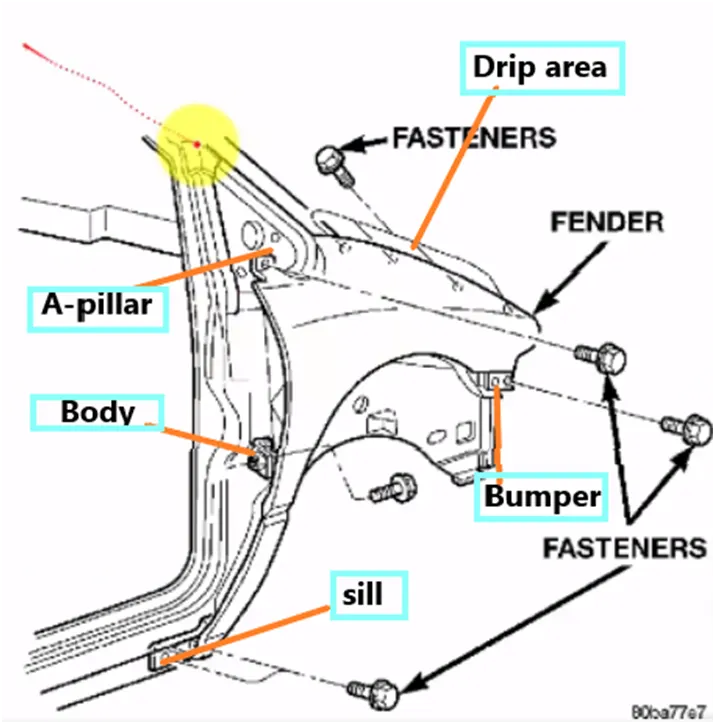
There are 5 mounting regions on the fender , they are
- A- pillar mounting
- Body mounting
- Sill mounting
- Bumper mounting
- Drip mounting
DESIGN METHODOLOGY :
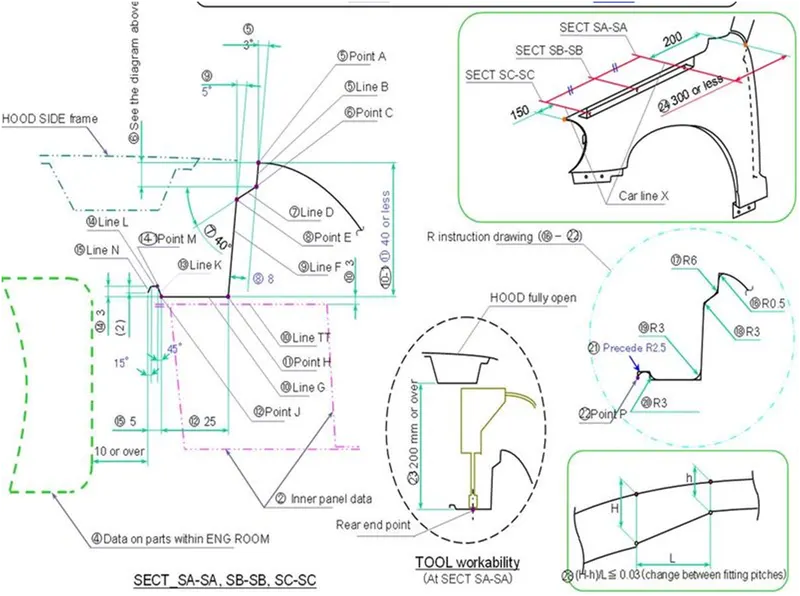
MASTER SECTION
DESIGN 0F DRIP AREA MOUNTING :
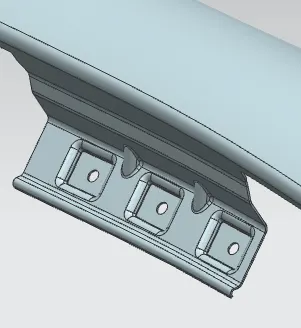
- It is the important mounting uni of the fender . it is connected with the engine compartment , therefore the lot of design constraints are to be followed while designing the fender.
- While designing the drip area we have to initially leave 200-300 mm for cowl top.
- For placing the headlamp we have to leave at least 150 mm at the front while designing the fender.
- Cowl top part consists pf wiper motor and its instruments.
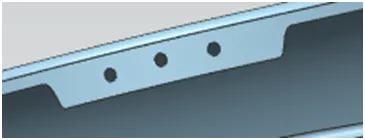
- Two darts are added on the longer side of the drip area in order to provide the stiffness and adds strength to the part . This helps the fender to not to vibrate and impact the forces outside of the fender during motion of the vehicle.
- Embossing are provided on the mounting to strengthen them during fastening.
DESIGN OF SILL MOUNTING AREA :
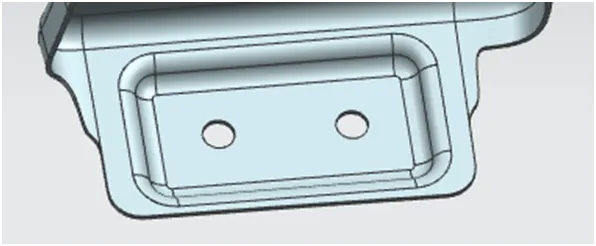
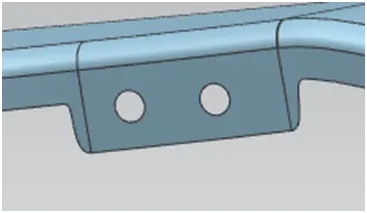
Sill is the panel directly below the bottom of the door supporting the floor and may be used to combine the floor and the body . The bottom end of the fender is mounted on the sill body for reinforcement of the fender panel , thus the sill mounting position is designed with holes and emboss. M5 fasteners are used to fix the fenders on the sill body.
DESIGN OF BUMPER MOUNTING AREA :
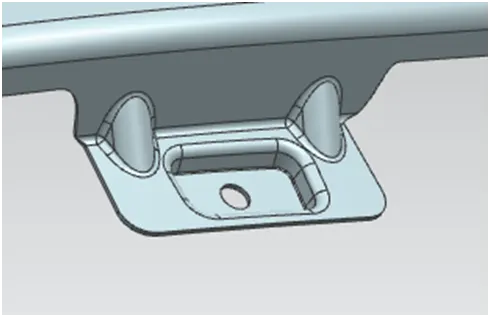
Bumper mounting area is used to fix the plastic bumper to the fender with the help of the fasteners.
DESIGN OF A-PILLAR MOUNTING AREA :
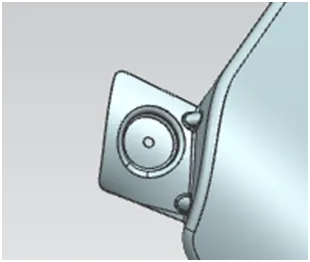
The A -pillar is the structural pillar that combines the body to the roof . this make the sides of the windshield rest . front fenders are fastened to the A -pillar to form a robust structure
DESIGN OF BAFFLE MOUNTING AREA :
Baffle mounting or mudguard are clip fit type of mounting on the inner side of the fender arch over the Tyre . it protects the car engine compartment and pedestrians from causing injuries from chip out debris on the road when the car is in motion . they are mounted on the fender using a special type of locking clips which are made up of plastics.

DIFFERENT VIEWS OF FENDER :
Isometric view:
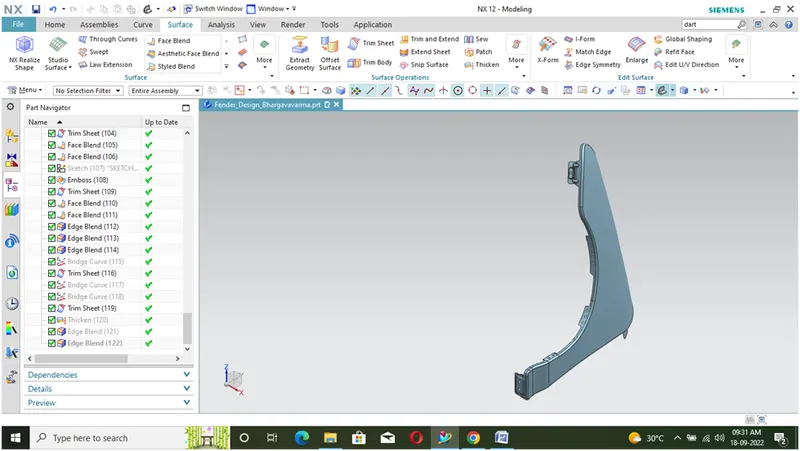
Left view:
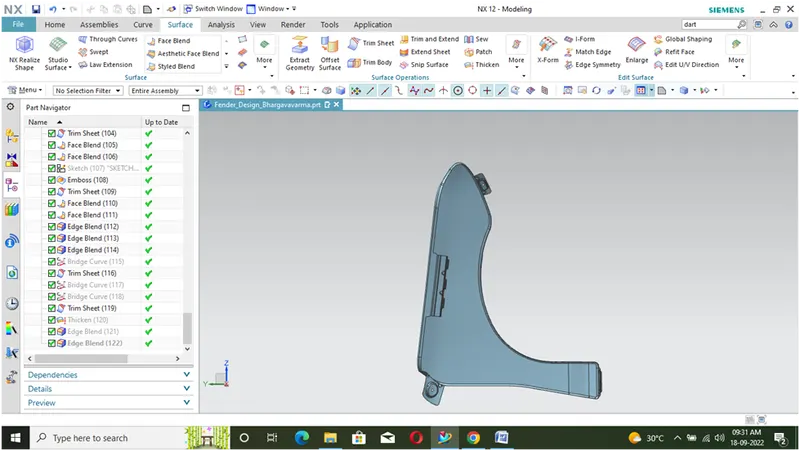
Right view:
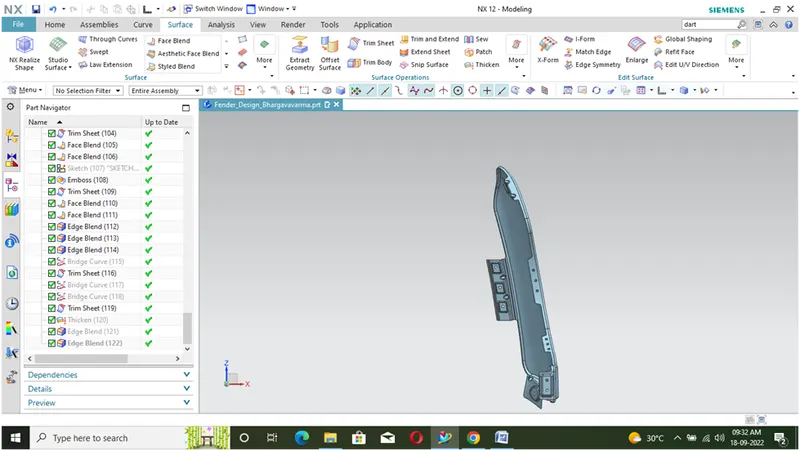
Back view:
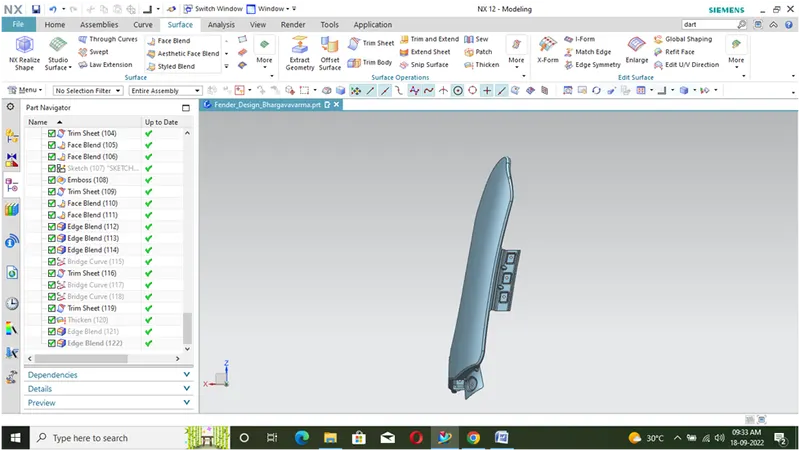
MANUFACTURING PROCESS:
A car Fender bumper is made by a process called reaction injection molding (RIM), which basically consists of making a special polyurethane compound and introducing it into a large fender. RIM is a process that conserves raw materials and reduces costs. It is similar to injection molding except thermosetting polymers are used, which requires a curing reaction to occur within the mold. Common items made via RIM include automotive bumpers, air spoilers, and fenders.
CONCLUSION:
We have developed front fender with mounting points following the design parameters and mastersection .