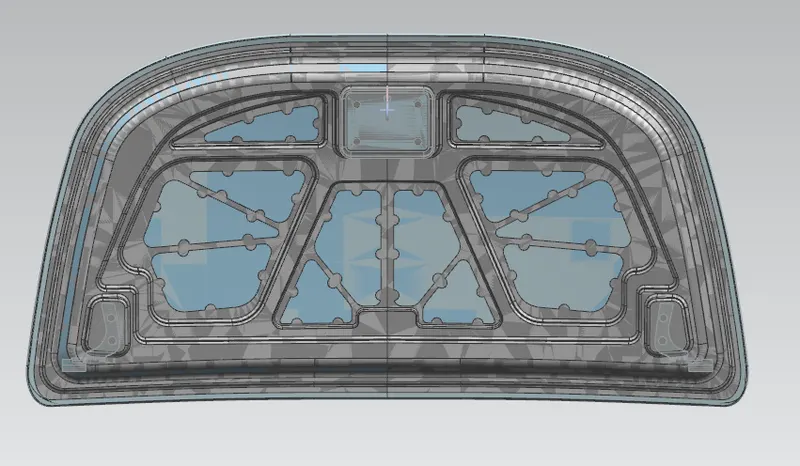
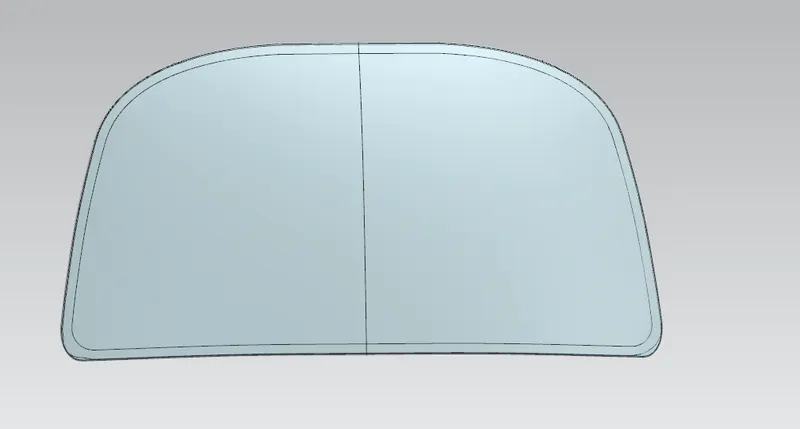
Hood design-Week 2
Aim: Design Hood Outer Panel, Inner Panel and the necessary reinforcements by following the Master Section mentioned with the Design parameters.
The hood or bonnet is a hinged cover over the engine of motor vehicles that allows access to the engine compartment, or trunk for maintenance and repair. The inner panel provides strength while the outer panel functions as the metal cover. Hood comes from the Old English word hod which means a hood, a soft covering for the head. Interestingly, hood is used by British English speakers to refer to the waterproof cloth top covering the passenger-compartment of a car.
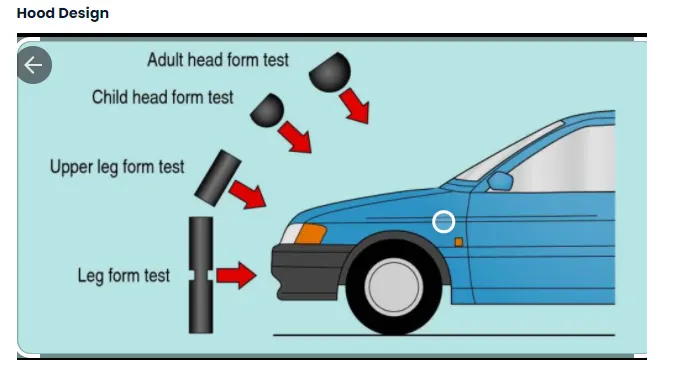
Concerns regarding the severity of a potential pedestrian head injury during a collision with a motor vehicle have led to advanced hood designs on many models. Such designs may include a multi-cone inner hood panel design. An active structure capable of pushing the surface of the hood away from the vehicle's hard motor components in the event of a pedestrian crash is also in use. Pyrotechnic or spring force designs are often used in active-hood design.
GENERATING EMBOSS:
The Emboss is generated on the inner panel to reduce the weight of Hood, some materials are removed and embosses are created to give stiffness to the panel. Sheet metal embossing is a stamping process for producing raised or sunken designs or relief in sheet metal. In this project the Embosses are created to divide the force towards the hinge joints during collision.
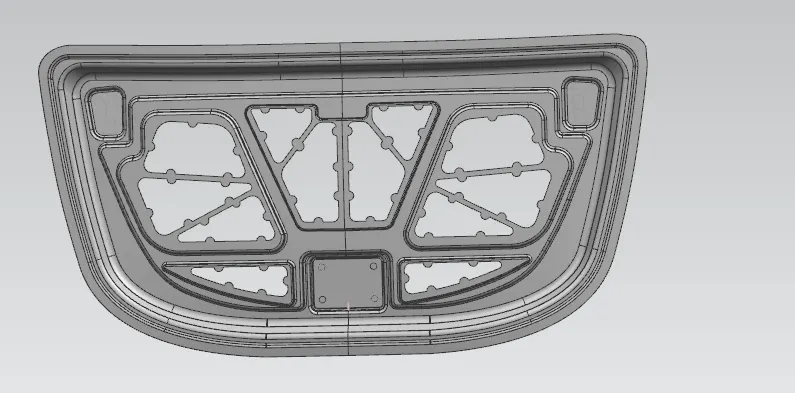
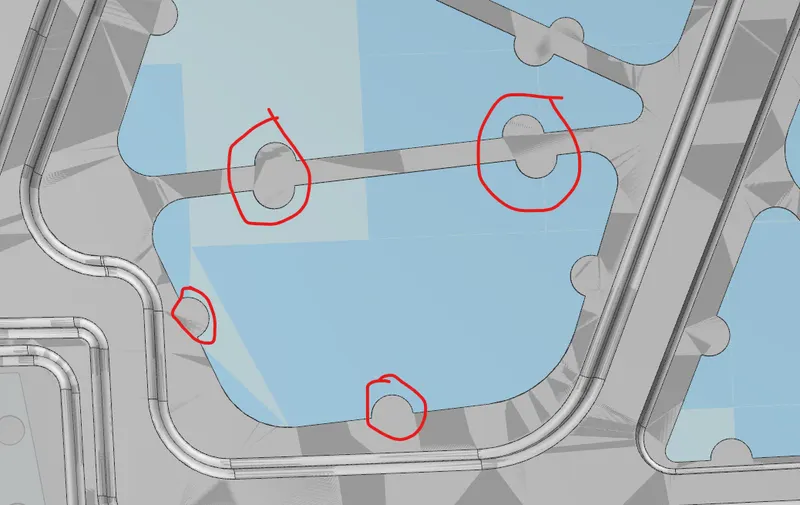
Mastic Points
These points are used to place the mastic sealents to joint the outer panel with Inner panel to radii about ~ 80mm.
Hinge and Striker Assembly
The Hinge and striker is placed on the flat surface of the Hinge Emboss and striker Emboss respectively using constraints option available in Assembly Workbench.
Latch & striker is used for locking the hood with the car. It is usually placed on the space provided on the inner panel.
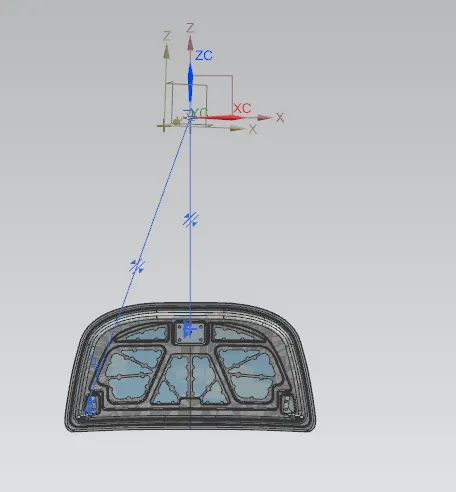
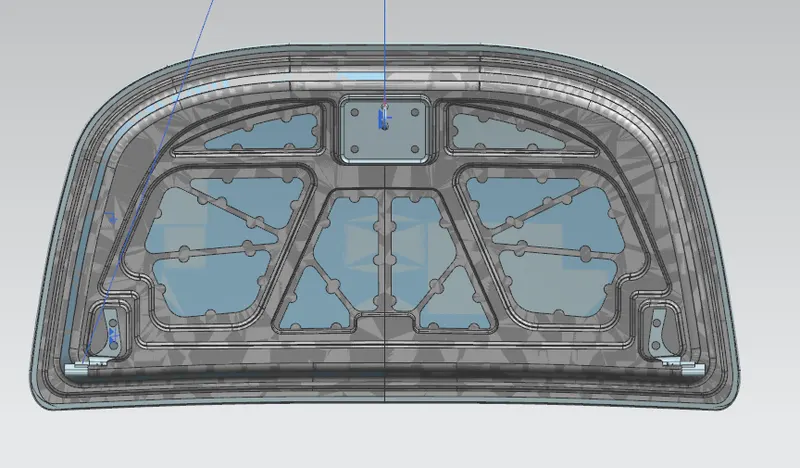
Trajectory Circle of Striker
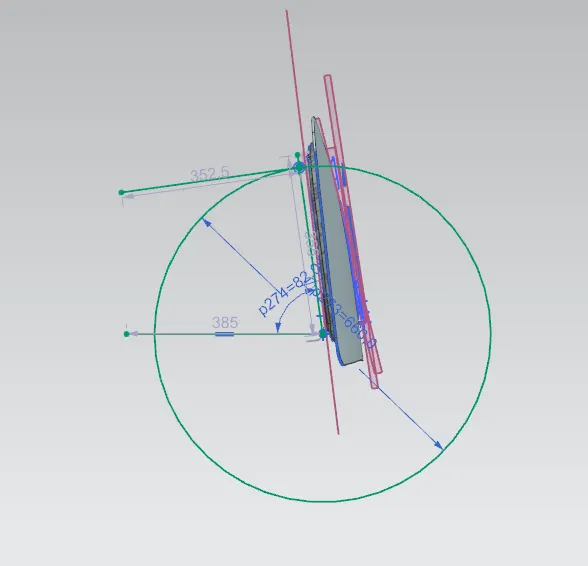
Generated using Sketching options available in NX-CAD.
Opening angle:
It is the angle between the hood surface and the hinge axis (parallel to road).It may vary with countries based on the average height of their citizens.
Hood Support rod and strut:
Support rods are ordinary roads with some bends to make it more rigid and most cars have heavy steel torsion springs and brackets to hold the hood up. Struts were introduced to save weight. Upon lifting the hood, the hood struts extend, assisting you with raising the hood. Also called hood lift support, the hood struts acting as a prop rod to hold the hood up when fully extended.
Hemming-
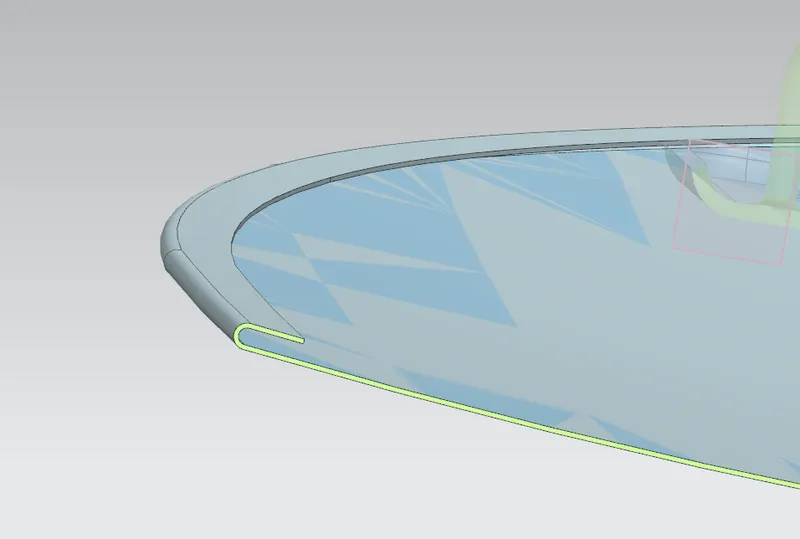
Hemming is a forming operation in which the edges of the sheet are folded or folded over another part in order to achieve a tight fit. Normally hemming operations are used to connect parts together, to improve the appearance of a part and to reinforce part edges.
Hemming is a sheet metal forming process in which sheets are joined by bending it usually to 180 degree. Automotive body panels & parts
such as deck-lids, trunk-lids, doors, hoods & tailgates are formed by hemming processes.
Roll hemming is carried out incrementally with a hemming roller. An industrial robot guides the hemming roller & forms the flange. Roll
hemming operation can also be divided into several pre-hemming & final hemming process steps.
Coventional die hemming is suitable for mass production. In die hemming, the flange is folded over the entire length with a hemming tool.
Normally the actual hemming is a result of a forming operation in which the flange is formed with a hemming tool after the drawing & trimming
operations have been completed.
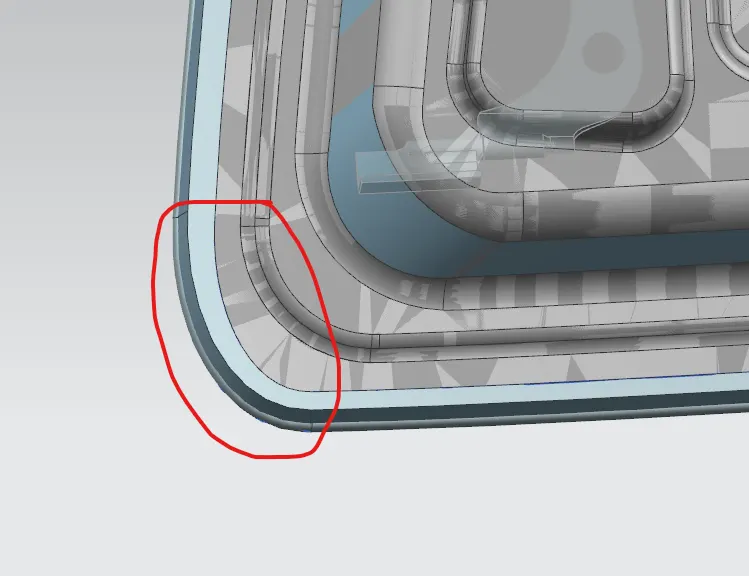
While doing the hemming process a relief angle is formed as a product of hemming when attaining at the corner of the sheet.
RELIEFS
Hemming Reliefs are used to reduce the stress on the sheet while folding on corners. Here hemming relief provided is ~3mm.
FINAL OUTPUT