Hood design-Week 2
HOOD DESIGN
OBJECTIVE:
Design hood outer panel, inner panel and reinforcement with the given outer hood skin, master section and design parameters.
Introduction:
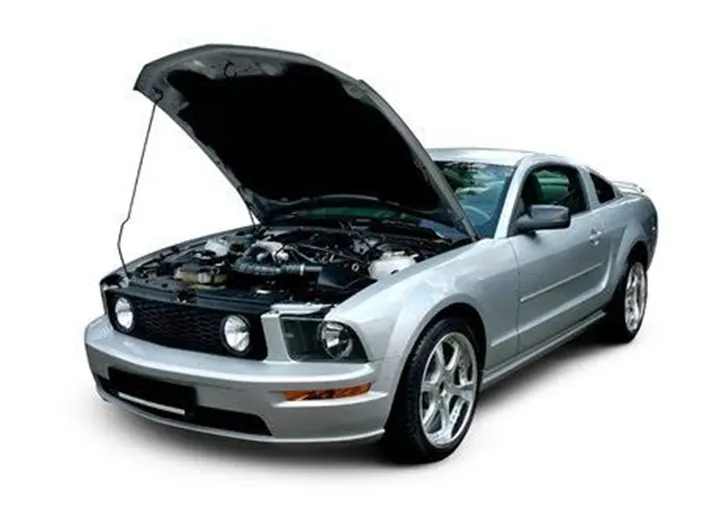
A car hood panel is one of the most important components of the BIW (body in white), it is considered as the closure sheet-metal component. The hood or bonnet is the device that hinged cover over the engine of motor vehicles. It’s can open to allow access to the engine compartment, batteries and etc… for maintenance and repair. The hood also used for better look and attract the people. The term car hood is a North American term, used primarily in America and Canada. Hood comes from the Old English word hood which means a hood, a soft covering for the head. Interestingly, hood is used by British English-speakers to refer to the waterproof cloth top covering the passenger compartment of a car or pram. In UK terminology, a hood refers to a fabric covering over the passenger compartment of the car (known as the “roof” or “top” in the US).
Hoods are usually made from the same material as the rest of the body. This can be steel, aluminium, fiberglass, or carbon fibre. However, some aftermarket companies produce fiberglass or carbon fibre steel hood replacements to make the
vehicle lighter.
Design parameters:
Hood thickness information,
Outer panel thickness = 0.75mm
Inner panel thickness = 0.75mm
Reinforcement thickness = 1.5mm
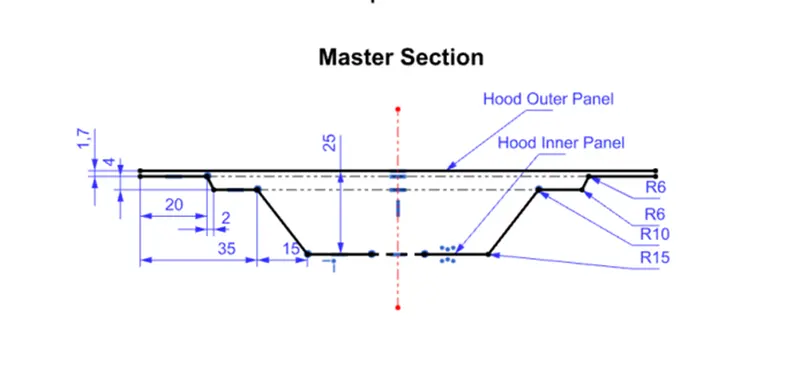
Component of hood
Basically, the hood has the outer panel, inner panel and reinforcement and emboss are used strengthens and to give good look
Latch and sticker mechanism is used to open and close the hood whenever is needed. Latch and hinge are needed some reinforcement for strength.
Type of hood support:
There are two types of support,
- Gas stay
- Support rood
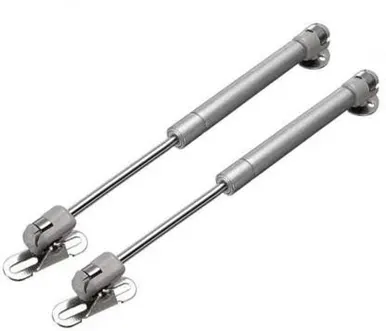
Gas stay
Spring stays are designed to be used on upward lifting door, once you have opened the door slightly the spring will push the door to the fully open position, euro fit stock various size springs depending on the door size requirement. This is mostly used for where the car bonnet weight is heavy.
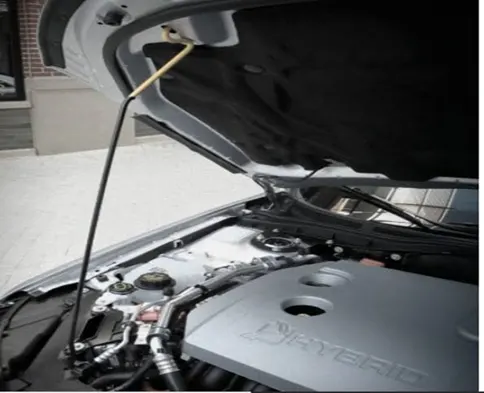
Support rod:
This is widely used in many cars, because this very easy and cheap.in this types we have to manually lift the hood by ourselves and place the support rod in the space provided either in the hood or engine component. This is mostly used for where the car bonnet weight is small
Outer panel:
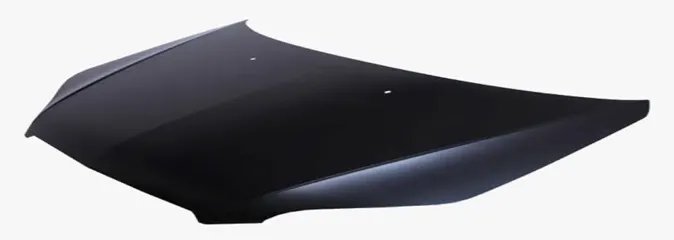
Outer panels are the aesthetic elements of a car. It’s giving the styling look and also fine finishing of car. hood outer panels are made of traditional steel plates, and their quality does not meet the needs of lightweight development. For this reason, it is necessary to obtain lightweight effects through the application of the automotive aluminium sheets. The most widely used car aluminium alloys in the market are deformed aluminium alloys of 6111, 6016, and 5182. The production process of the outer panel of the hood mainly includes blanking, deep drawing, trimming, turnup, and side turnup. Among them, deep drawing is a key process to ensure the quality of parts. The shape, position and size of the hood should satisfy the safety norms. So, while designing the hood we should give more importance to te pedestrian’s safety.
Inner panel:
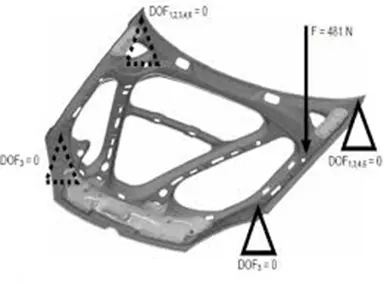
hood inner panel for a vehicle is provided to improve rigidity, durability, and pedestrian protecting performance by comprising a composite structure in which a multi-cone structure and a frame structure are individually arranged on the front and the rear. Since the hood inner panel for a vehicle is simply made thick in order to improve rigidity, the weight is increased, and the rigidity is reduced when the thickness is reduced to improve pedestrian protection.
Hood reinforcement:
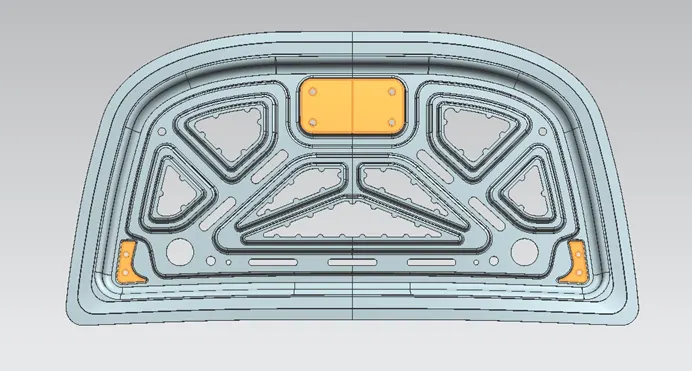
Reinforcement is provided according to the design requirement to the design requirements. Mainly its is provided at the hinge and latch regions to improve the strength locally. Vehicle hood reinforcement structures as provided to reduce impact in collisions. In one embodiment, the structure is to include a lower reinforcement panel configured to mount to a vehicle chassis and an upper reinforcement panel welded to the lower reinforcement panel wherein the deflection of a front deformable wall of the upper reinforcement panel is configured to trigger deflection of rear deformable wall of the lower reinforcement panel. According to the design requirement here it is given 1.5mm thickness to both hinge and latch reinforcement
Hinge assembly
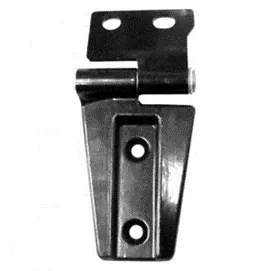
Hinges is the assembly of components connected to the door of the vehicle, linked to each other and cable of rotating around the same axis. Hinges are used to operate the door of house, automobile door etc… A hood hinge mechanism having a pivot pin having a D-shaped cross-sectional shape positioned within a recess. The hood and pin are pivotal to a position where at the D-shaped cross section is oriented to pass through a slotted opening to the recess to thereby allow the hood to be removed or installed on the vehicle. A bracket coupled with the hood abuts a support member when the hood is pivoted to its fully open position such that the hood is held open by the weight of the hood and is generally blocked from being detached from the vehicle unless acted upon by an operators
Mechanism and process of hood
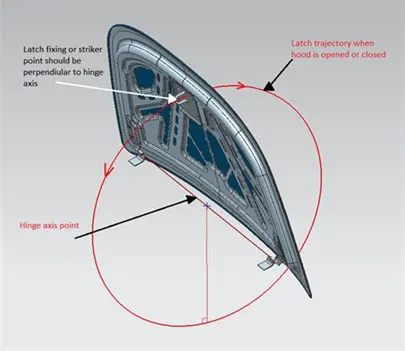
Latch trajectory
The latch trajectory is the path which the striker will follow when the hood is open/closed while pivoting on the hinge axis. The latch trajectory is taken as a circle with the hinge axis as the centre of the circle. The striker is placed 90 degree such that it is tangent to the circle. In general, the hood latch system starts with a release handle located on the left side of the driver’s area. This handle is connected to an insulated cable that runs towards the front of the vehicle. The other side of the cable is connected to a latch under the hood that keeps the hood flush against the car’s body. Pulling the interior release handle will disengage the latch and open the hood a few inches. Once the latch has been disengaged, and the hood lifts a few inches, a safety latch will stop the hood from being fully raise
Mastic data
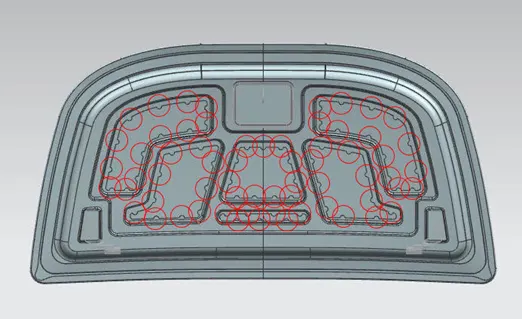
A mastic sealant is used to fix or combine the hood inner panel and outer panel. They create a strong, flexible and waterproof seal, making it ideal for sealing gaps and joints in places where it will need to resist some movement, it is also perfect for outdoor projects. They can provide thermal and acoustical insulation, and may serves as fire barriers. They may have electrical properties, as well. Sealant can also be used for simple smoothing or filling. They are often called upon to perform several of these function or filling. They are often called upon to perform several of these functions at once.
Emboss
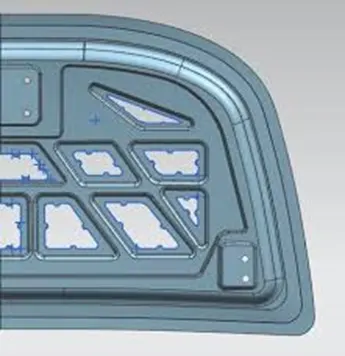
Sheet metal embossing is a stamping process for producing raised or sunken designs or relief in sheet metal. This process can be made by means of matched male and female roller dies, or by-passing sheet or a strip of metal between rolls of the desired pattern. It is often combined with foil stamping to create a shiny, 3D effect. The metal sheet embossing operation is commonly accomplished with a combination of heat and pressure on the sheet metal, depending on what type of embossing is required.
Hamming
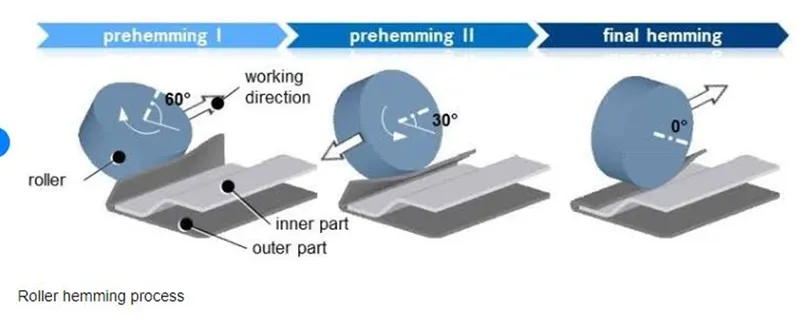
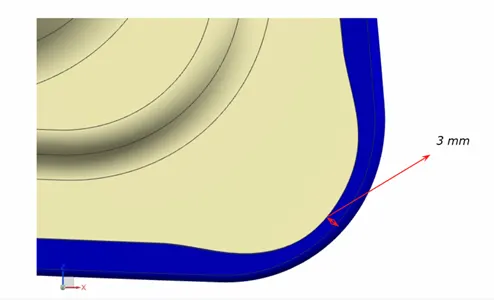
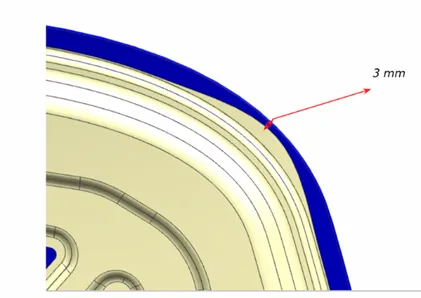
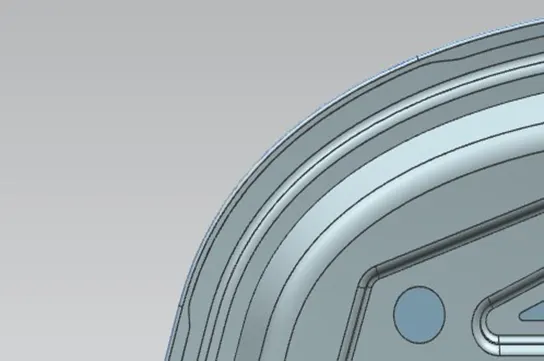
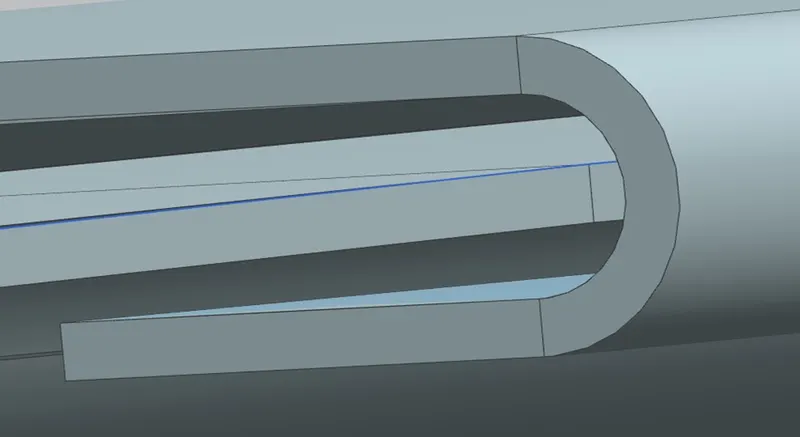
Hemming is a technology used in the automotive industry to join inner and outer closure panels together (hoods, doors, tailgates, etc.). It is the process of bending/folding the flange of the outer panel over the inner one. The accuracy of the operation significantly affects the appearance of the car’s outer surfaces and is therefore a critical factor in the final quality of a finished vehicle
Deep drawing:
Deep drawing is a sheet metal forming process in which a sheet metal blank is radially drawn into a forming die by the mechanical action of a punch. It is thus a shape transformation process with material retention. The process is considered "deep" drawing when the depth of the drawn part exceeds its diameter. A flat sheet metal blank is formed into a hollow body open on one side or a hollow body is formed into a hollow body with a smaller cross-section
Safety measurements and analysis:
Draft analysis:
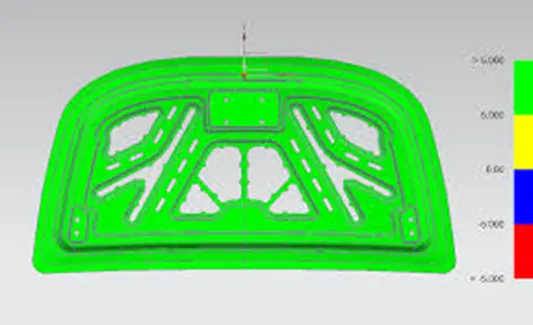
Draft analysis is a software analysis to measure safety and strength for hood design. this analysis must because now the day safety prediction rate will be count one of the major thinks in car. In the software 5degree of draft analysis is made to the inner panel to find ang negative draft. This process is done because we need to develop and summit a positive design to the manufactures. In the follow design we see green colour in all location that mean it good and move to next process. unless other colour may see then it negative part where change that part otherwise change the design
Pedestrian safety test:
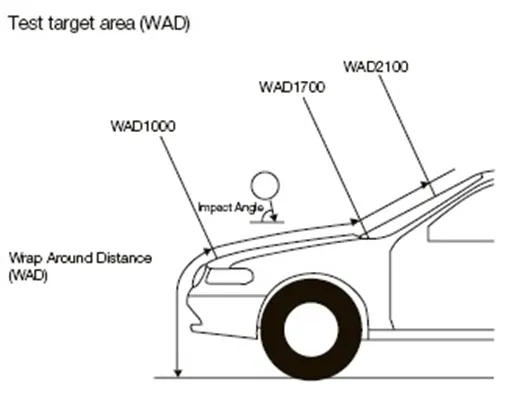
Euro NCAP isa division working with safety aspect test of cars in form of pedestrian protection since about 14lack pedestrians per year are killed by traffic accident in the world as per WHO report. Most accidents occur within city area where the speed are moderates. In these tests the potential risk at injuries to pedestrian head, pelvis, upper and lower legs are assed. To estimate the potential risk of head injury when a vehicle striking an adult or a child, a series of impact test is carried out at 40km/h using an appropriate head-shaped impact mass. Impact test for pedestrian protection is done as illustrated in the following figure.
Impact test area:
The distance between the ground and the evaluated areas of the cars, I. e., Wrap Around Distance (WAD) is measured according to the length of the area where the pedestrians’ heads hit in accidents. Impact location area for adults and children’s head is set based on the data of actual accidents. In the crosswise direction, the side line of the impact test area is from the line obtained by tracing the contact points between a straight edge and the side of the bonnet where the straight edge contacts the bonnet bumper at 45 degrees (Bonnet Side Reference Line) to the inside half diameter of the head impactor.
Impact condition:
Impact angle in the test is 65° for adult pedestrian’s head impactor and 50° for child pedestrian’s head impactor.
Interpretation of evaluation results:
Evaluation is divided into five levels in the following mannerthe pedestrian’s head injury criterion inevitably becomes higher than that of the passengers, given the current vehicle technology. As for the evaluation coverage, it is expanded to cover wider range where certain lifesaving effects are expected in order to promote development of pedestrian protection technology
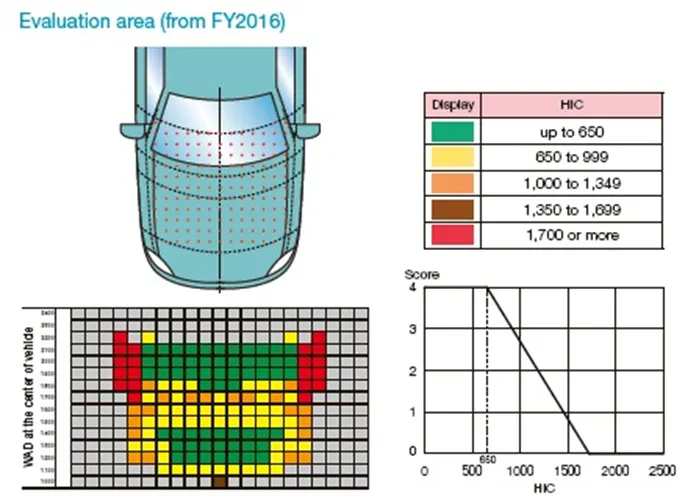
According to European enhanced vehicle-safety committee/pedestrian safety standard, the maximum value of HIC must not exceed more the 1000
FINAL ASSEMBLY:
Inner panel
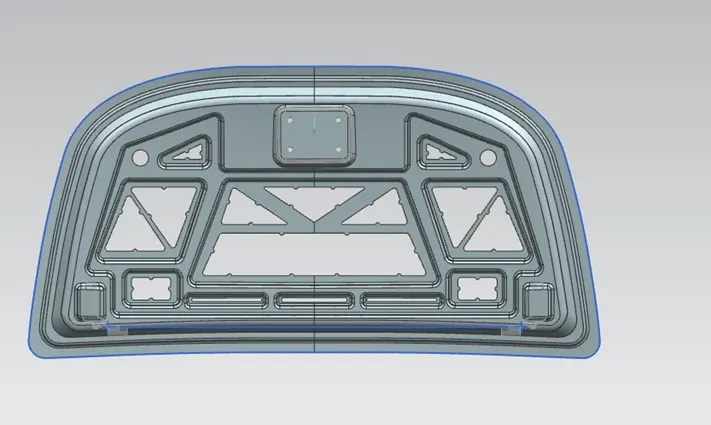
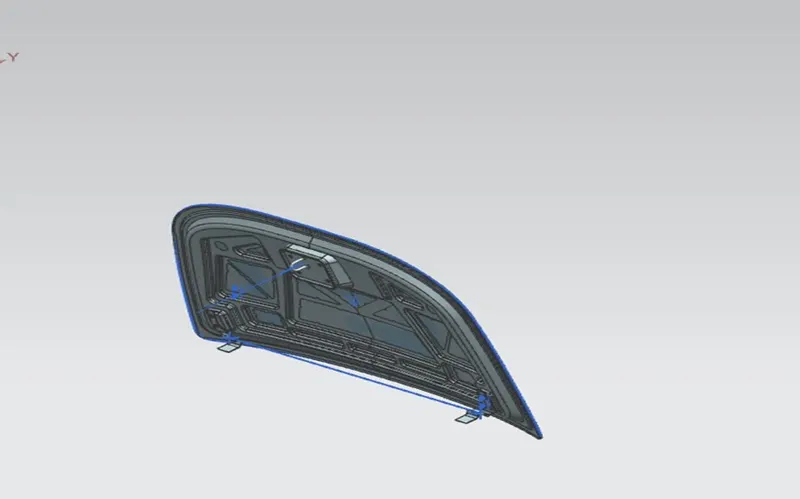
Hood assembly
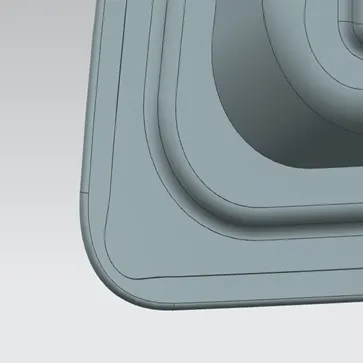
Coroner reliefs
Hemming
CONCULUSTION:
The above design was complete as per given data and also the regulation of the manufacturer standards. In these hood design l learns lot and experience methods, more concept and components of the hood. In these files I attach the designing files also. The above design done using NXCAD software.