Hood design-Week 2
Project Report: Design of a Car Hood Assembly
1. Project Title
Design and Development of Car Hood Assembly with Consideration to Safety, Styling, and Manufacturing Feasibility
2. Objective
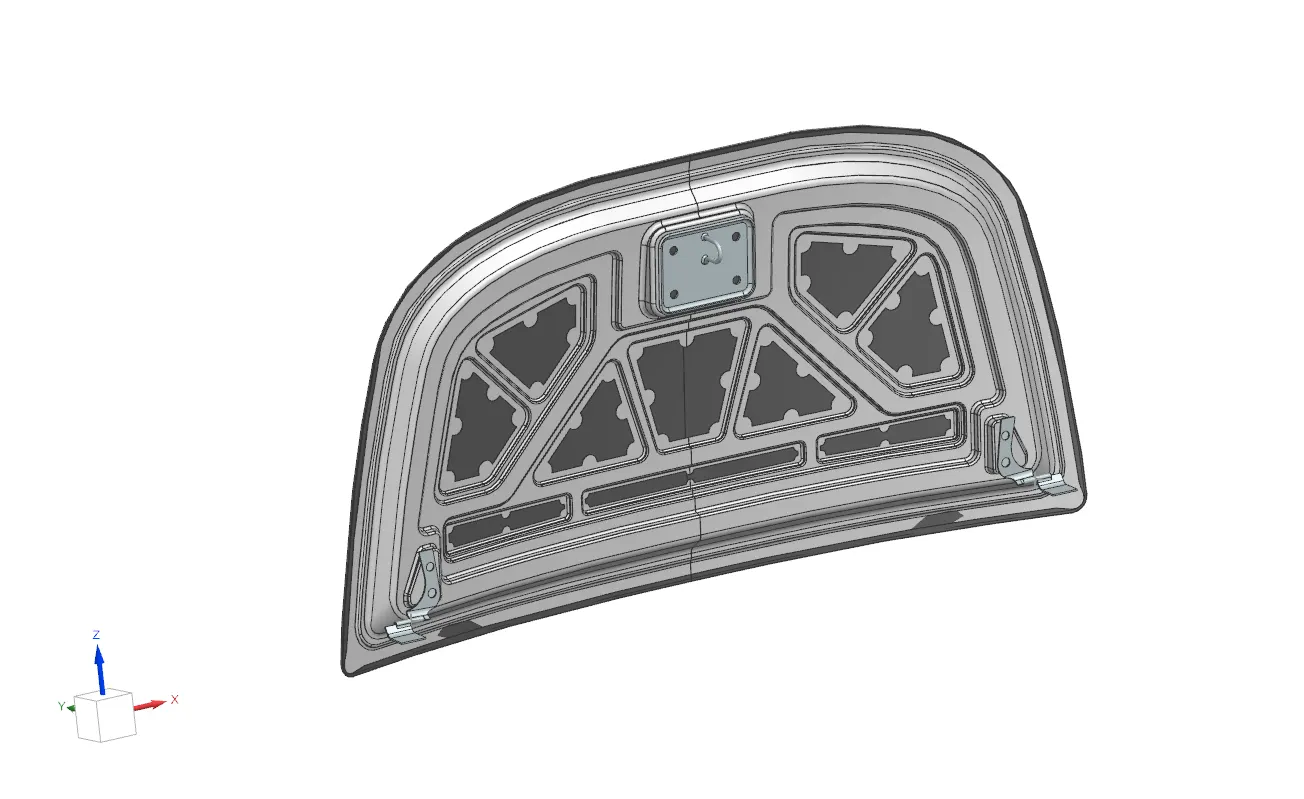
To design a functional and manufacturable car hood assembly consisting of an outer panel, inner panel, and reinforcements (striker and hinge areas), with considerations for pedestrian safety, occupant safety, vehicle aesthetics, and production feasibility.
3. Components of Hood Assembly
-
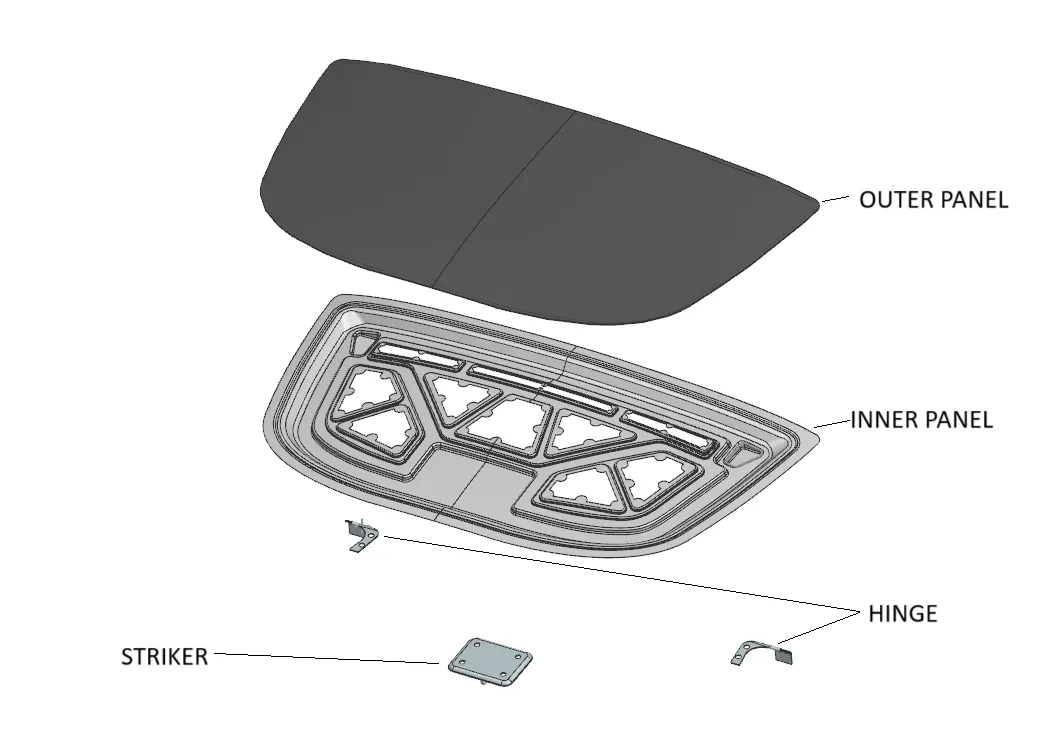
Hood Outer Panel: Provides the aesthetic and aerodynamic surface
-
Hood Inner Panel: Offers structural strength and supports reinforcement features
-
Striker Reinforcement: Enables secure latching with the lock mechanism
-
Hinge Reinforcement: Connects hood to the vehicle body and allows safe opening/closing motion
4. Design Considerations
4.1 Safety
-
Pedestrian Safety:
-
Maintain deformable zones to reduce head injury during collision
-
Inner panel ribs designed with controlled energy absorption sections
-
-
Occupant Safety:
-
Prevent hood intrusion into passenger cabin during crash events
-
4.2 Styling and Appearance
-
Aerodynamic shape aligned with vehicle front fascia
-
Surface continuity with adjacent components (fender, bumper, windshield)
4.3 Manufacturing Feasibility
-
Geometry optimized for sheet metal operations like deep drawing and hemming
-
Draft angles provided for easier panel removal from dies
4.4 Vehicle Quality and NVH
-
Reinforcements designed to minimize vibration and noise
-
Stiffening beads/embossing added for noise control and panel stiffness
5. Key Parameters Considered in Hood Design
| Parameter | Description |
|---|---|
| Opening Angle | Optimized to ensure ergonomic access to engine bay |
| Wrap Around Distance (WAD) | Complies with pedestrian protection regulations |
| NCAP Crash Test | Design aligns with crashworthiness standards |
| NVH Control | Ribs and embossing used to reduce sound and vibrations |
6. Hood Panel Thickness Information
| Component | Thickness |
|---|---|
| Outer Panel | 0.75 mm |
| Inner Panel | 0.75 mm |
| Reinforcements (Striker & Hinge) | 1.5 mm |
These thickness values were chosen to balance between strength, weight, formability, and pedestrian safety. Reinforcement regions are thicker to withstand concentrated stresses.
7. Manufacturing Process
The hood assembly is manufactured using sheet metal operations as follows:
7.1 Blanking and Piercing
Sheet metal blank prepared to desired shape and pierced for functional openings
7.2 Deep Drawing
Forming of the hood outer and inner panels into 3D shape using matched die sets
7.3 Embossing
Ribs and beads added to inner panel for improved stiffness and vibration reduction
7.4 Hemming
Joining of outer and inner panels along edges using hemming technique to ensure tight fit and alignment
8. Software Used
-
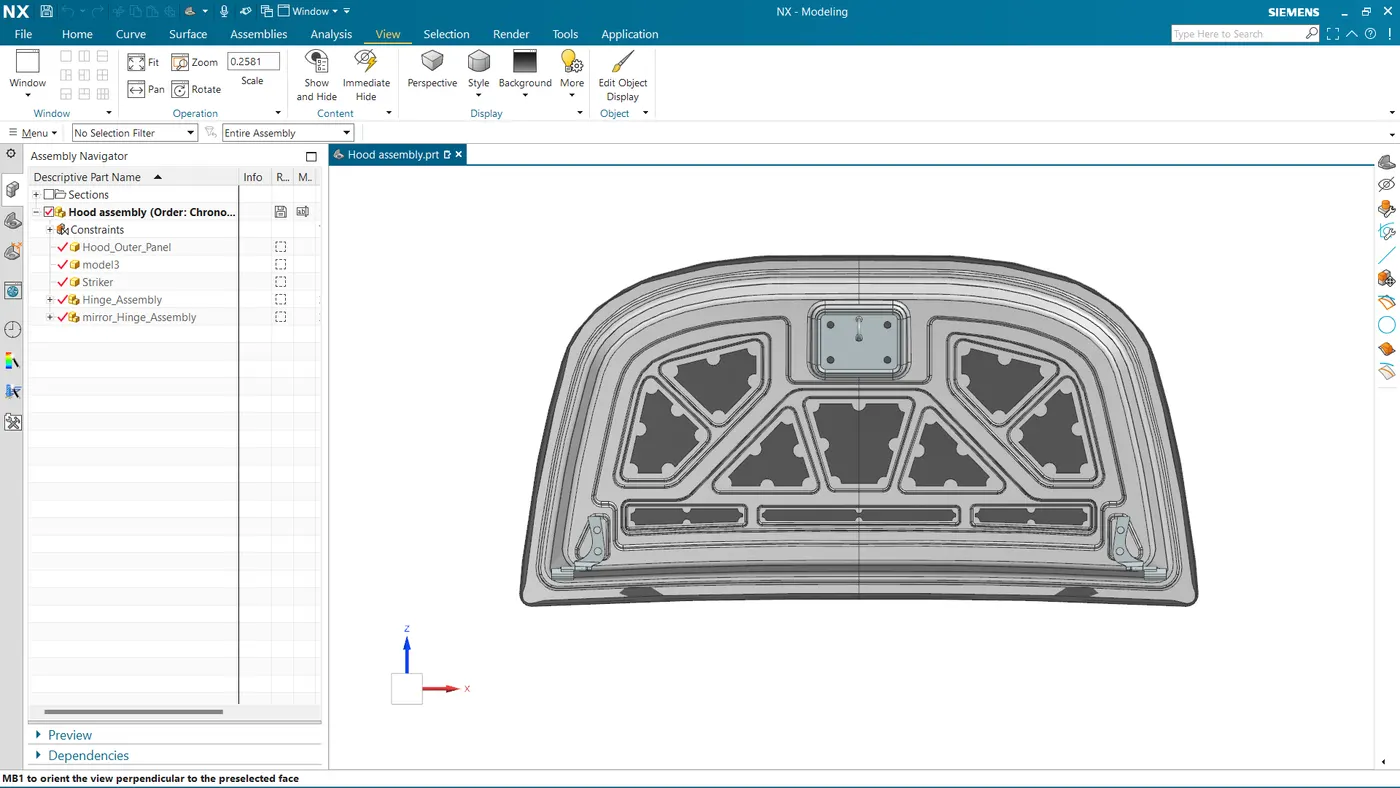
NX CAD: Used for 3D modeling of hood assembly and reinforcement features
9. Conclusion
The designed car hood meets all the functional, aesthetic, safety, and manufacturability requirements.
The defined thickness values and reinforcements ensure proper strength, noise control, and crash performance.
The use of standard sheet metal processes makes the design practical for large-scale production.