Hood design-Week 2
Hood Design: Report
Introduction
The hood is an essential component of an automobile, primarily serving as a protective cover for the engine compartment. It is designed to ensure aesthetics, aerodynamics, pedestrian safety, and structural rigidity. Modern hood designs integrate functionality, manufacturability, and compliance with regulatory requirements, making the design process highly intricate.
Components of a Hood
1. Outer Panel
- Purpose: Provides an aesthetic and aerodynamic surface.
- Material: Typically made from steel, aluminum, or composite materials.
- Design Considerations:
- Smooth, visually appealing surface.
- Compliance with aerodynamic requirements.
- Integration of embosses for rigidity.
2. Inner Panel
- Purpose: Provides structural support and houses reinforcements.
- Material: Same as the outer panel but with added stiffness reinforcements.
- Design Features:
- Integration of ribs and reinforcements to withstand impact and support latch assembly.
- Openings for weight reduction without compromising strength.
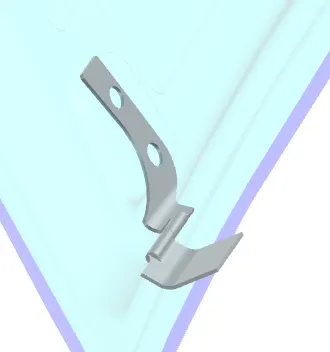
3. Latch Assembly
- Purpose: Ensures secure closure and prevents accidental opening.
- Components:
- Primary latch: Secures the hood during regular operation.
- Secondary latch: Acts as a safety backup.
- Mounting:
- Attached to the inner panel and reinforced with local stiffeners.
4. Hinges
- Purpose: Facilitates opening and closing of the hood.
- Design:
- Typically attached to the cowl or fender structure.
- Designed to allow a controlled trajectory.
5. Sealants and Mastics
- Purpose: Improve NVH (Noise, Vibration, Harshness) and rigidity.
- Application:
- Applied between the outer and inner panels.
- Fills gaps to prevent water ingress and reduce vibrations.
Latch And Striker Trajectory
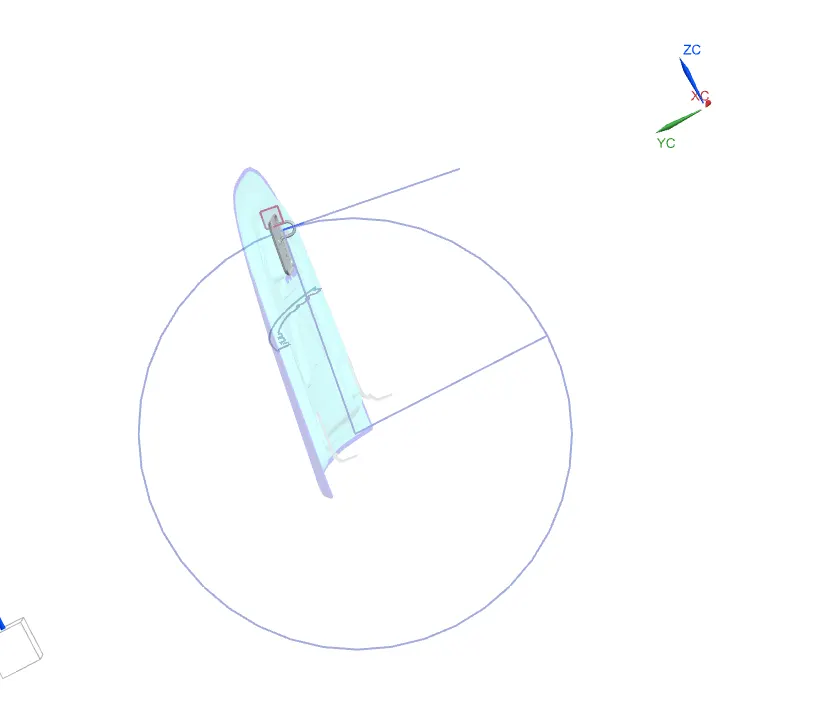
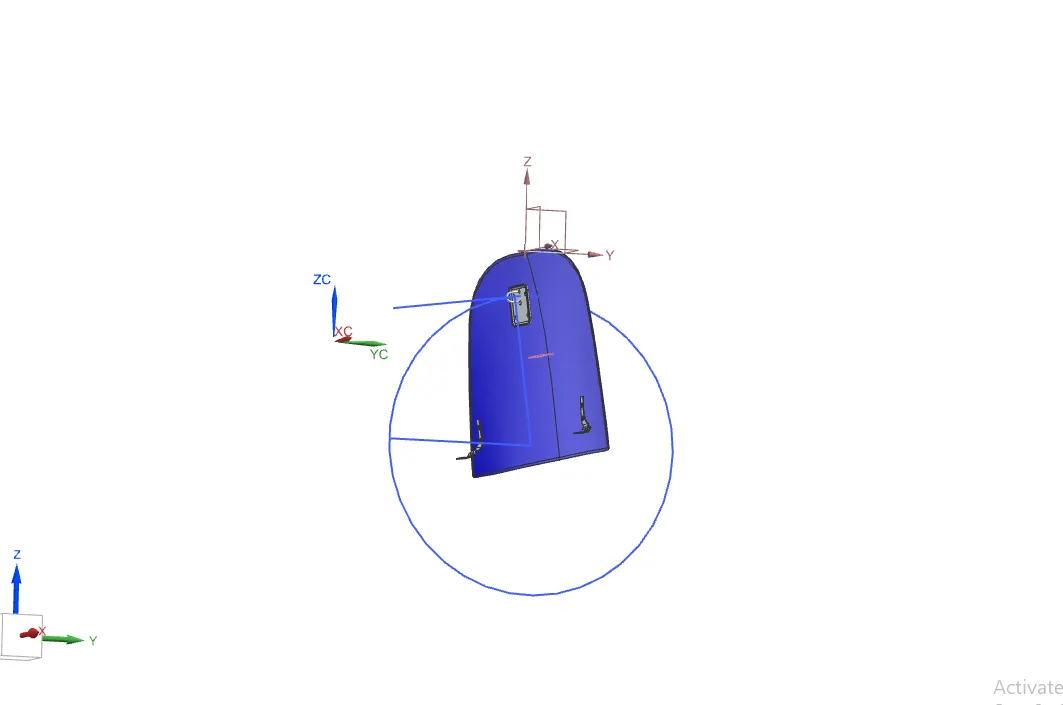
The latch trajectory ensures that the hood latch aligns perfectly with the striker during closure. Proper latch trajectory is crucial for:
- Safety: Ensures secure locking of the hood.
- Durability: Reduces wear on the latch and striker.
- Ease of Operation: Facilitates smooth opening and closing.
Key Parameters
- Trajectory Path:
- The path should align with the motion of the striker during hood opening and closing.
- Hinge Placement:
- Determines the rotation axis and affects the trajectory.
- Angle of Rotation:
- Optimized to achieve a smooth trajectory without misalignment.
- Clearances:
- Sufficient gap to avoid interference with other components.
Mastic Data
Mastic is used to bond the outer and inner panels and improve structural performance.
Properties of Mastic:
- Adhesion Strength: Ensures the panels remain bonded under stress.
- Thermal Stability: Maintains performance under temperature variations.
- Damping Characteristics: Enhances NVH performance.
Placement:
- Applied strategically at specific points between the inner and outer panels.
- Optimized to balance stiffness and weight reduction.
Emboss Definitions
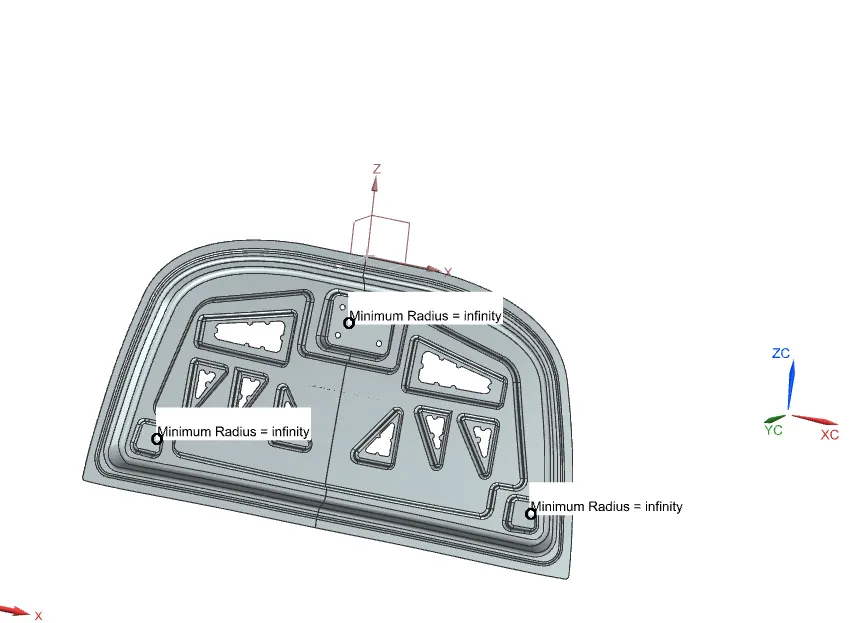
Embosses are stamped features in the inner panel designed to enhance strength and reduce weight.
Types of Embosses:
- Ribs:
- Linear features to increase rigidity.
- Dome Embosses:
- Circular or elliptical protrusions to prevent buckling.
Design Considerations:
- Depth:
- Optimized for strength without compromising manufacturability.
- Orientation:
- Placed to counteract deformation during hood operation.
- Weight Reduction:
- Open sections within emboss patterns to minimize material usage.
Manufacturing Process
The hood manufacturing process involves advanced forming techniques to achieve desired shapes and specifications.
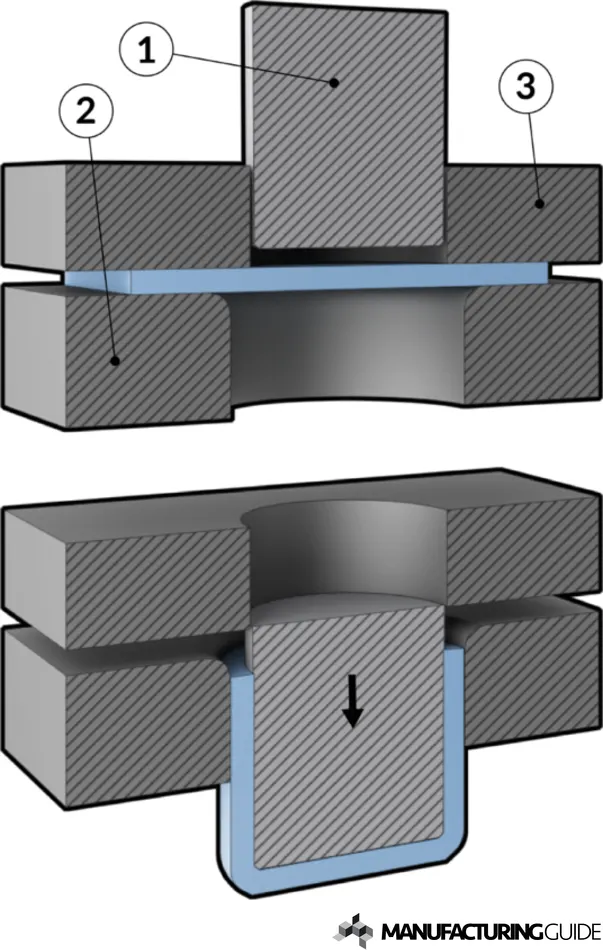
1. Deep Drawing
- Purpose: Converts flat sheet metal into a three-dimensional shape.
- Process:
- A blank sheet is placed on a die.
- A punch applies force, shaping the sheet into the die cavity.
- Key Parameters:
- Blank Holder Force: Prevents wrinkling during forming.
- Draw Ratio: Ensures uniform material flow.
- Lubrication: Reduces friction and prevents tearing.
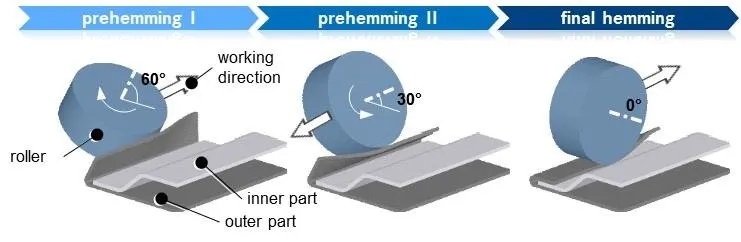
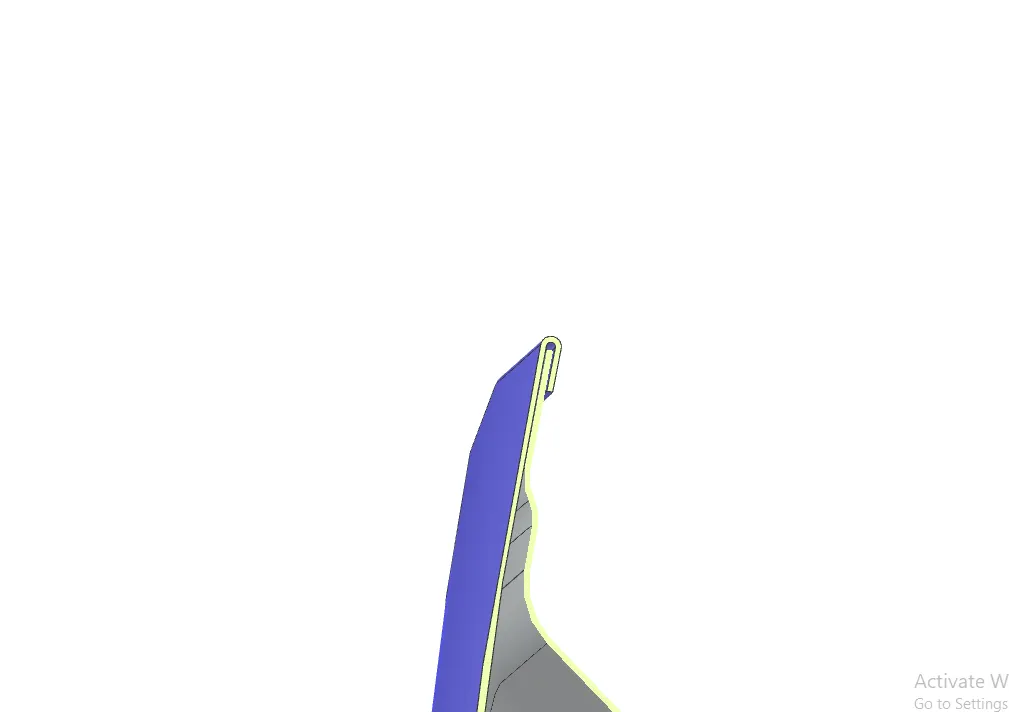
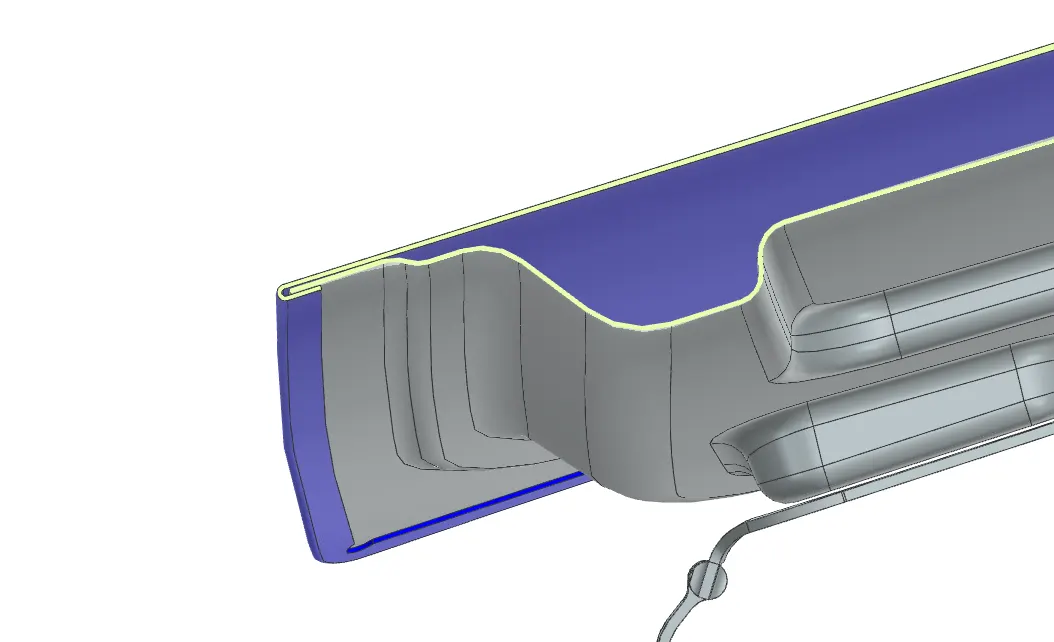
2. Hemming
- Purpose: Joins the inner and outer panels by folding the edges of the outer panel over the inner panel.
- Types of Hemming:
- Roll Hemming: Gradual folding using rollers.
- Die Hemming: Uses a die for precise folding in a single stroke.
- Key Considerations:
- Hemming Clearance: Ensures proper folding without cracks.
- Edge Quality: Prevents sharp edges that could cause NVH issues or injuries.
Additional Steps:
- Trimming and Piercing: Removes excess material and creates openings for components.
- Surface Treatment: Includes painting and anti-corrosion coating.
Draft Analysis
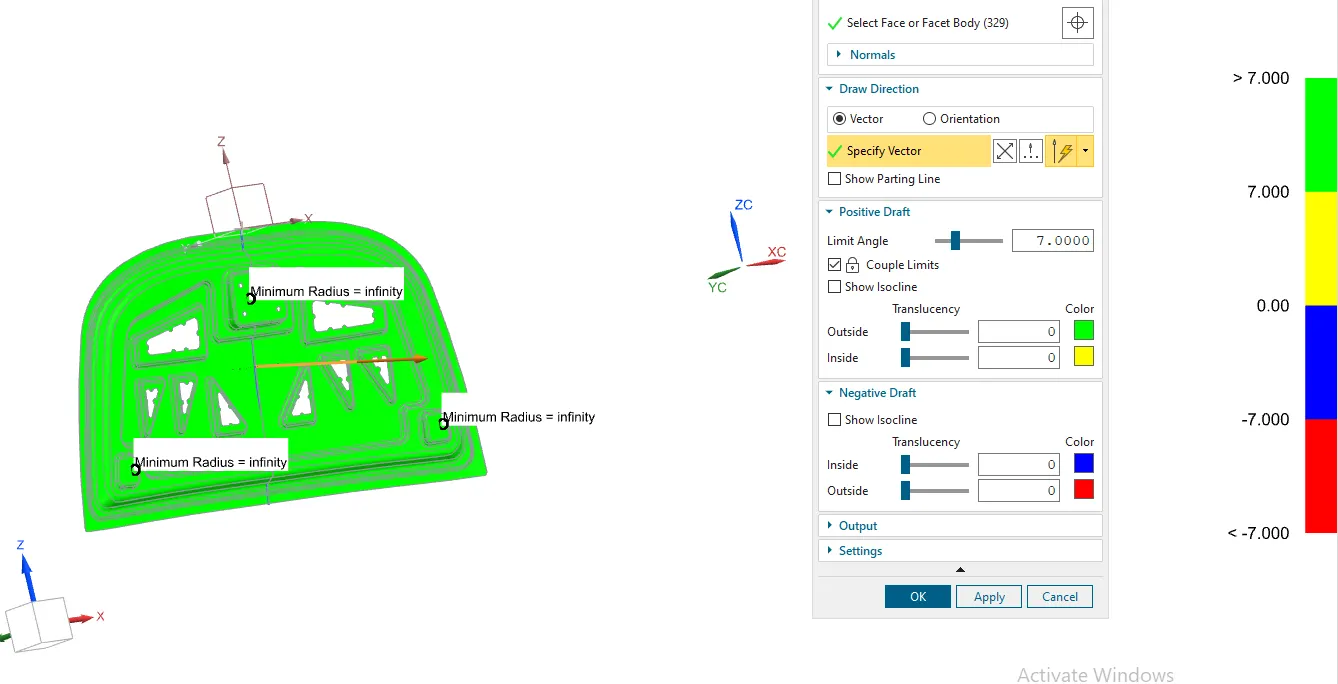
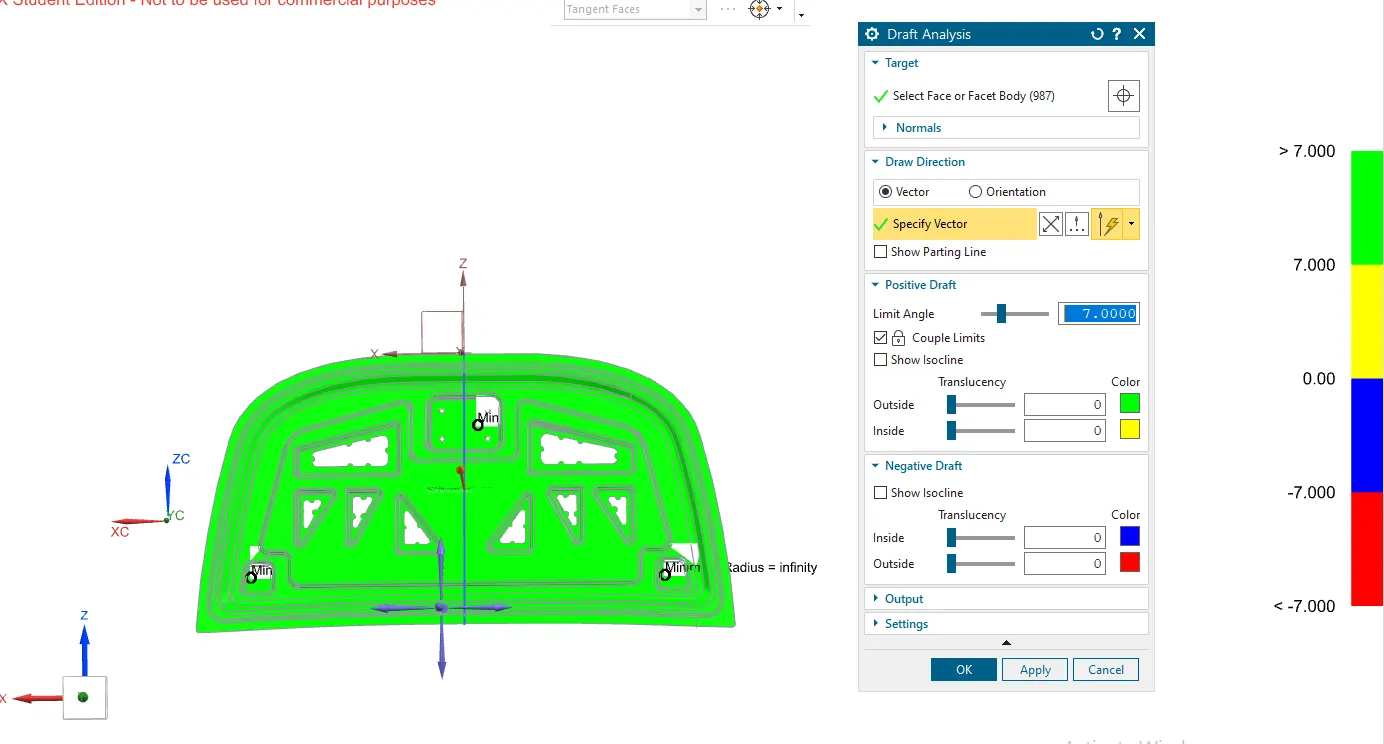
Draft analysis is a critical step in hood design to ensure manufacturability, particularly during the deep drawing process. It evaluates whether the design can be easily removed from the die without causing damage or deformation.
Purpose of Draft Analysis
Preventing Defects:
Identifies areas prone to tearing or wrinkling.
Ensuring Ejection:
Verifies that the formed part can be easily removed from the die.
Tooling Feasibility:
Ensures appropriate draft angles for die manufacturing.
Key Parameters
Draft Angle:
Recommended minimum draft angle: 7° for steel and 3° for aluminum. Here we have used a 7° draft angle.
Ensures smooth ejection from the die.
Undercuts:
Identifies and resolves areas with negative draft that could impede part removal.
Surface Smoothness:
Evaluates regions requiring polishing or adjustments to avoid friction during ejection.
Process
The CAD model of the hood is analyzed using specialized software.
Areas with insufficient draft angles are highlighted.
Modifications are made to the design to ensure manufacturability.
Moment of Inertia Analysis
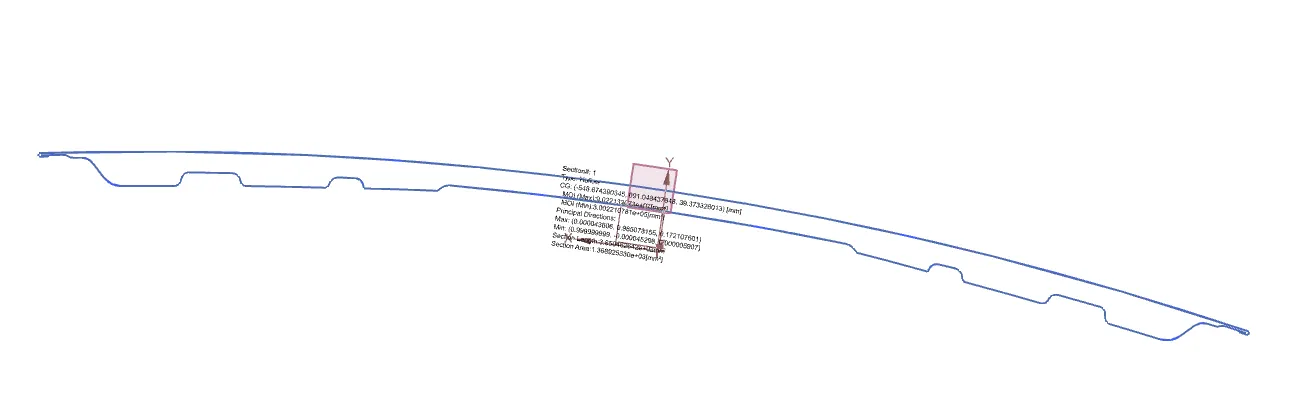
The moment of inertia is a crucial property in hood design that determines the hood's ability to resist bending and torsional loads.
Purpose of Moment of Inertia Analysis
Structural Strength:
Ensures the hood can withstand operational loads and external forces.
Weight Optimization:
Balances strength and weight to improve performance and efficiency.
Crashworthiness:
Enhances the hood's ability to absorb and distribute impact forces.
Key Parameters
Section Modulus:
Determines the resistance to bending stresses.
Mass Distribution:
Analyzes the placement of material to optimize rigidity.
Principal Axes:
Evaluates the orientation of maximum stiffness for effective load management.
Process
CAD Model Analysis:
The hood's CAD model is subjected to moment of inertia calculations using simulation software.
Critical Regions Identification:
Areas with high stress concentrations are identified for reinforcement.
The moi can be increased of decreased via various methods according to the parts parameter
some parts require high moi and some low for strength or rigidity or lightweigth applications
Optimization:
Iterative design adjustments are made to improve stiffness while minimizing weight.
Design Parameters
Several parameters are followed to ensure the hood design meets performance, safety, and aesthetic requirements.
Structural Parameters
- Stiffness:
- Adequate reinforcement to resist deformation.
- Crashworthiness:
- Designed to absorb energy in case of a collision.
Aesthetic Parameters
- Surface Finish:
- Smooth, defect-free outer panel.
- Gap Uniformity:
- Consistent gaps with adjacent panels.
Regulatory Requirements
- Pedestrian Safety:
- Designed to minimize injury during an impact. Here WAP or wrap around distance is taken into consideration.
- Crash Test Standards:
- Meets global crash safety regulations.
Conclusion
Hood design is a multi-faceted process that combines aesthetics, functionality, and manufacturability. By integrating advanced materials, optimized geometries, and precise manufacturing techniques, modern hood designs achieve high performance while adhering to stringent safety and regulatory standards. Proper consideration of latch trajectory, mastic application, emboss patterns, and manufacturing processes ensures a robust and efficient hood assembly.
STUDENT EDITION DOES NOT HAVE EXPORT AS STEP FILE OPTION.