Hood design-Week 2
CAR HOOD DESIGN
OBJECTIVS OF THIS CHALLENGE
- Design the outer panel with the Hemming
- Develop the inner panel
- Develop all the necessary reinforcement
- Mirror and position the hinge & striker mechanism
- Provide mastic data.
- Provide the required Emboss definition.
Data to be used:
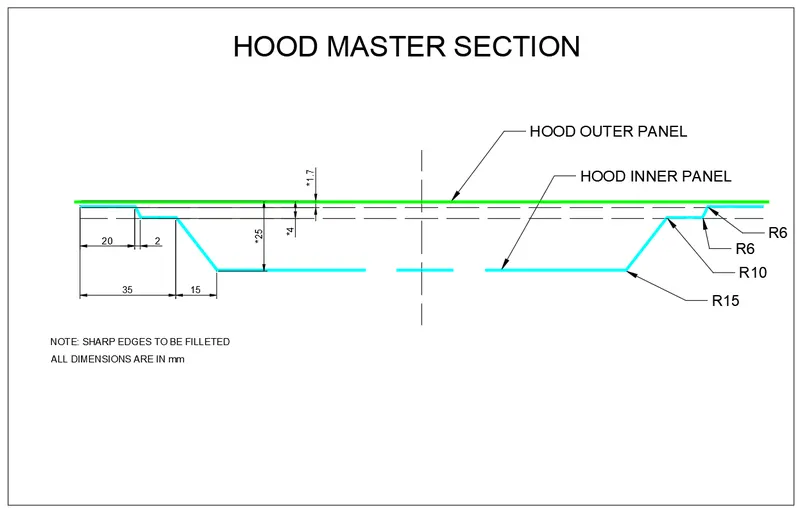
- Ouetr panel thickness = 0.75mm
- inner panel thickness =0.75mm
- Reinforcement thickness =1.5mm
Master section
ENGINE HOOD
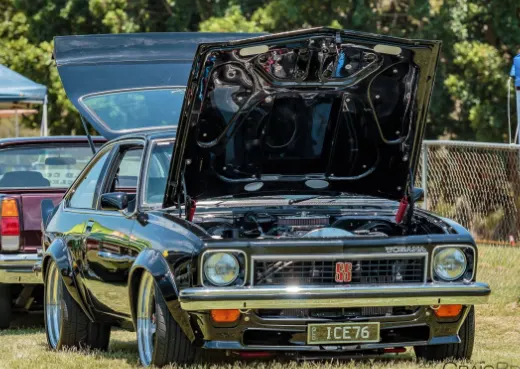
The hood or bonnet is the hinged cover the engine of motor vehicles. Hoods can open to allow access to thr engine compartment. It is the metal part thet covers the engine of an automobile. Bonnet comes from the old French word bonnet,which means cloth used as a headdress. Car hood part material made from steel sometimes from aluminium. It is used to cover the engine compartment with some locking mechanism inside such as a hinge assembly,latch reinforcement and support rod or gas stay.
Types of Hood support:
- Support rod
- Gas stay
fig1.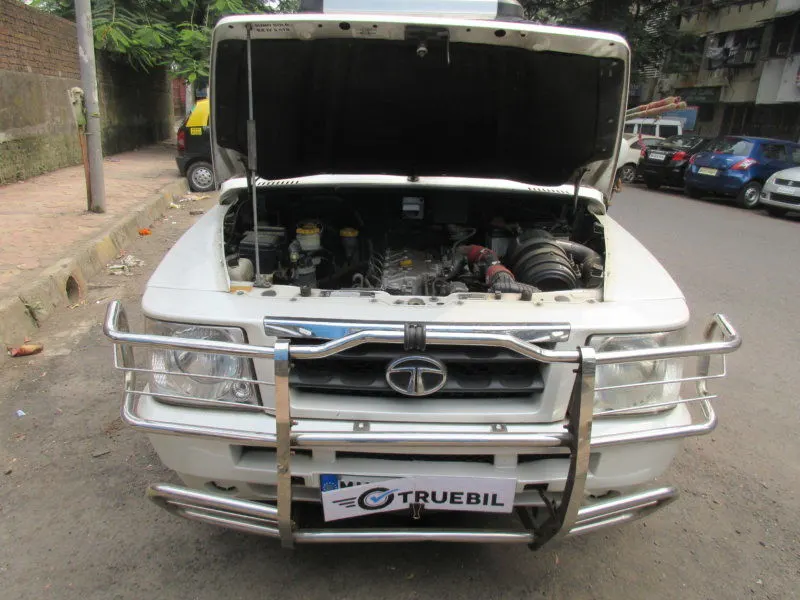 fig2
fig2 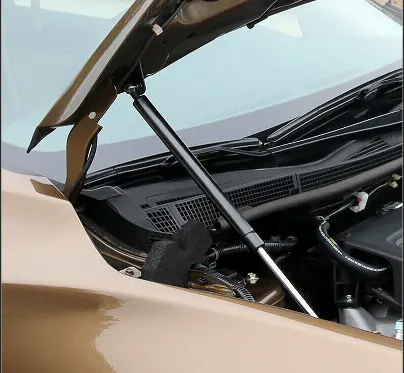
SUPPORT ROD
This is widely used in many cars, Where the hood weight is less. In this type we have to lift the hood by ourselves and place the support rod in the space provided either in the hood or engine compartment. Compare to gas stay rod this is cost effective and less weight.fig1
GAS STAY ROD
This is mostly used in the SUV type cars where the hood (bonnet) is heavy, which cannot be handle easily. This work with hydraulic mechanism through which the hood can lift itself without any external force. fig2
It is an assembly made of Outer and Inner panels to meet various safety & design requirments. Following are the design considerations involved to design hood,
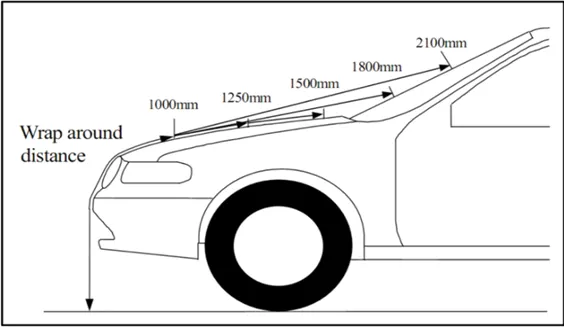
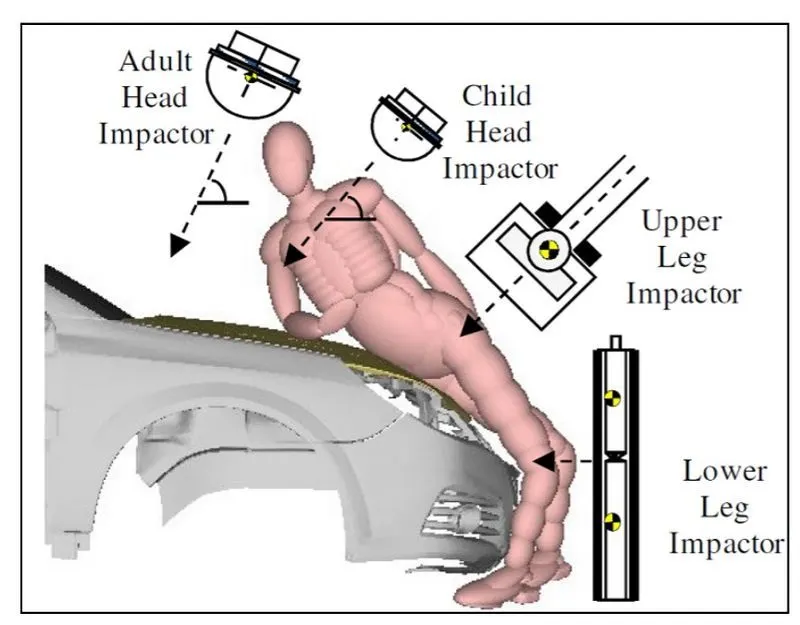
1.PEDESTRIAN SAFETY: Pedestrian safety is always a factor involved in the design of the hood. This is achieved by proper selection of material that can readily deform avoiding risk during impact, providing emboss to inner panels. This is one of the major factors for a vehicle to have better safety.
2.VEHICLE SAFETY: The Hood covers the engine compartment of the vehicle. This is the another factor of vehicle safety.
3.STYLING: It improves the strenght and styling of the vehicle. Hood design is always make in styling surface.
4. MANUFACTURABILITY: The hood is manufacturing of material very often used in the automotive industry.
HOOD COMPONENTS;
HOOD INNER PANEL
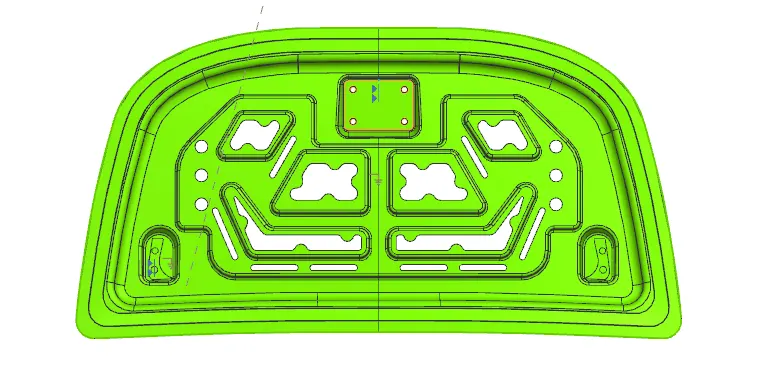
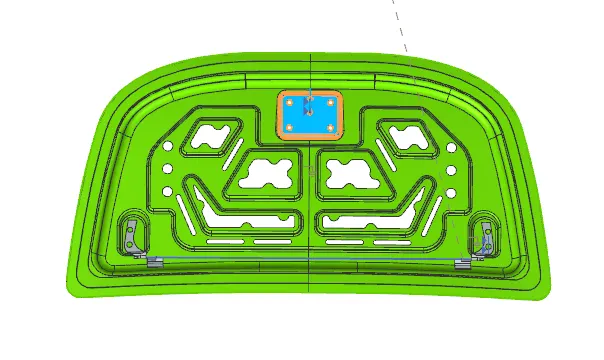
Hood inner panel is the main structure of the hoosd assembly. This parts add stiffness to the vehicle to withstand the frontal crash and has provision to hold hinge, Stopper and Striker. It has embossing to add more stiffness to the part and cutout to reduce the overall weight. It has mastics to be fixed to the Hood outer panel. The inner panel thickness is 0.75mm.
HOOD INNER EMBOSSING
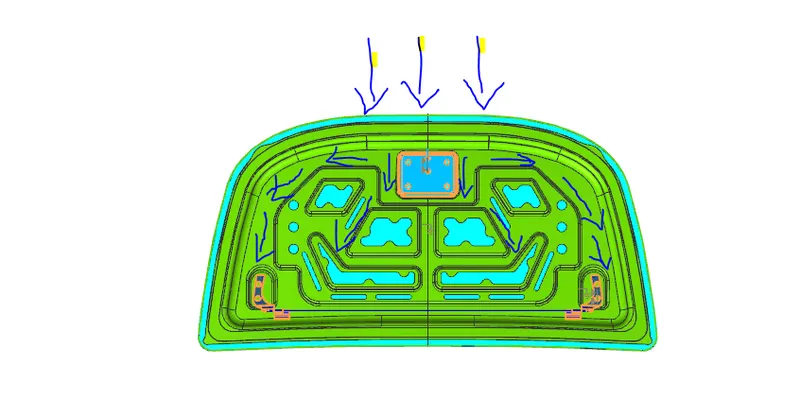
Embossing is done to add more stiffness to the panel. adding embossing will add more strenght and stiffness to the part. The embossing value must be optimum to ensure all the part requirments and pedestrian crass requirments. Embossing is raised projections created on the inner panel for a specific purpose. The major reason being able to transfer the load from the striker region to hinges in the event of collision. It the path along which the load deviates away from the passenger shell to the hinges. Also the cuts provided over the inner panel allows sufficient deformation of the outer panel without any restriction caused during a pedestrain impact. This also contributes to an increase in stiffness of overall hood.
- 40mm Hollow body given near striker and stopper region for more crushable zone above hard part for pedestrian performance.
- 8mm clearance with Hood outer for Mastic zone.
HOOD OUTER PANEL
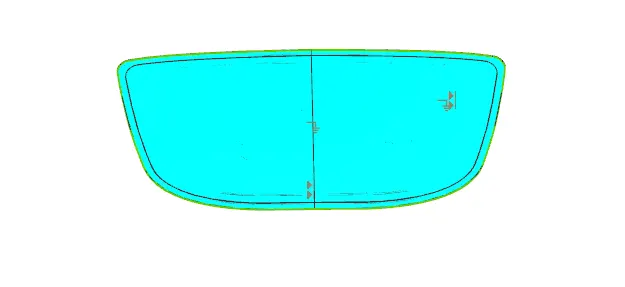
It is the outer panel Hem with inner panel. It is the styling part of the vehicle. The outer panel thickness is 0.75mm.
HEMMING
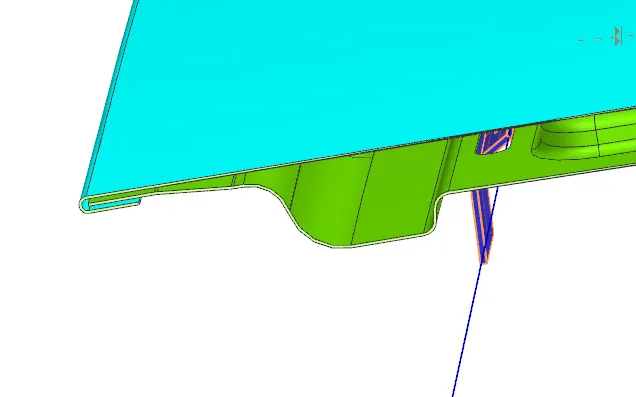
Hood outer Hemming is an operation used to fixed two panels together. Hood outer is fixed to hood inner by Hemming operation. Hemming Operation is not done at hood corners to avoid wrinkling of sheet metal. This process ensures both inner and outer panels are interlocked together. Corner relief must be provided to avoid local stress generation and tearing of sheet metal.
MASTIC SEALANT:
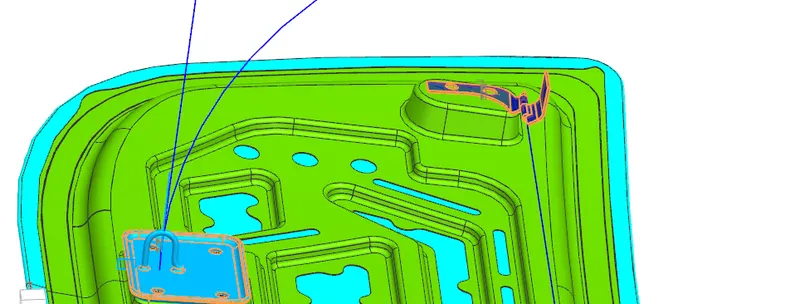
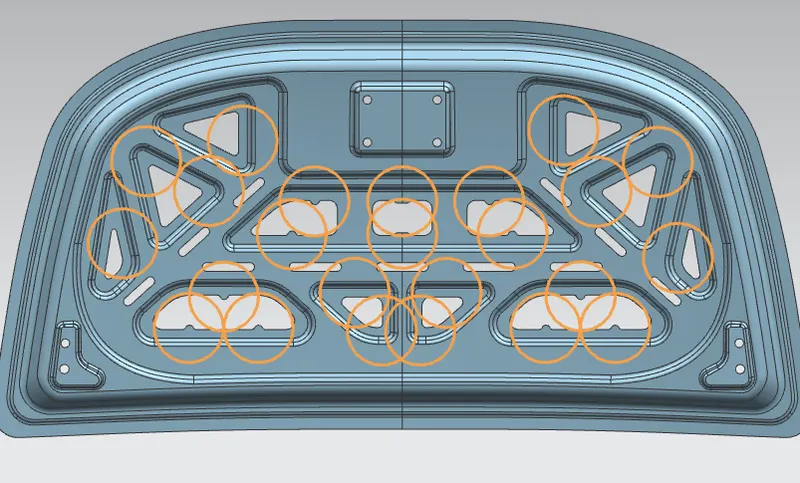
These sealant serve as binding between the inner and outer panel. A single mastic sealant has an 80mm radius of influence. Upon subjecting these selants avoid fluttering of the outer panel during high speed. Mastic sealants are used as an alternative to spot weld. Sealants are fully synthetic products that serve to protect the exterior and paint of avehicle from the harse effects of environment elements like UV Rays,excessive heat,and acid rain. They also provide a nice glossy finish to the car as well as.
POSITIONING OF HINGE:
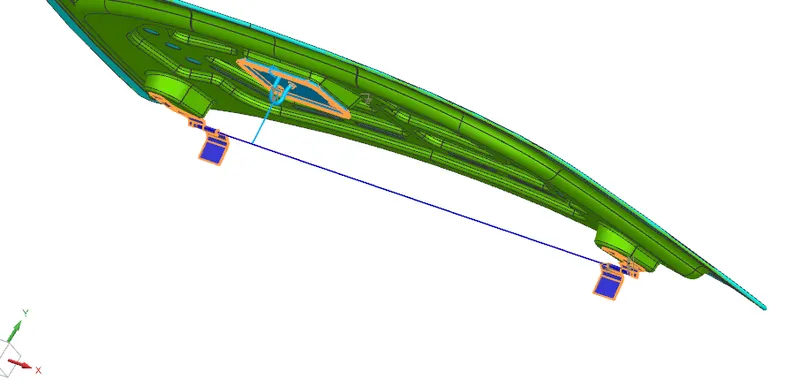
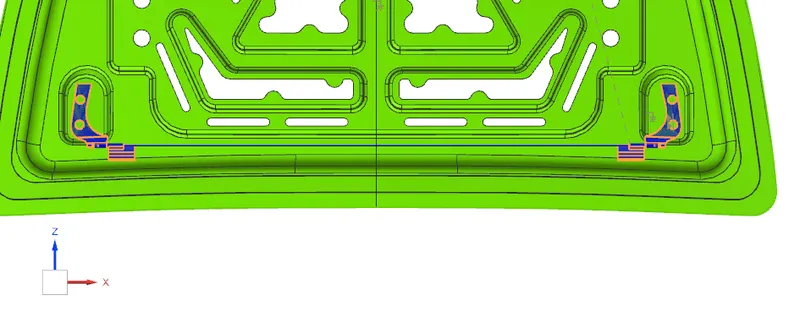
This step involves the positioning of hinges. The hood and car body are connected through hinges. This allows relative motion between the structures. The location of hinges should be choosen such that energy during impact is dissipated away from the passenger shell and to the A-piller of the car body.
LATCH TRAJECTORY OF HOOD
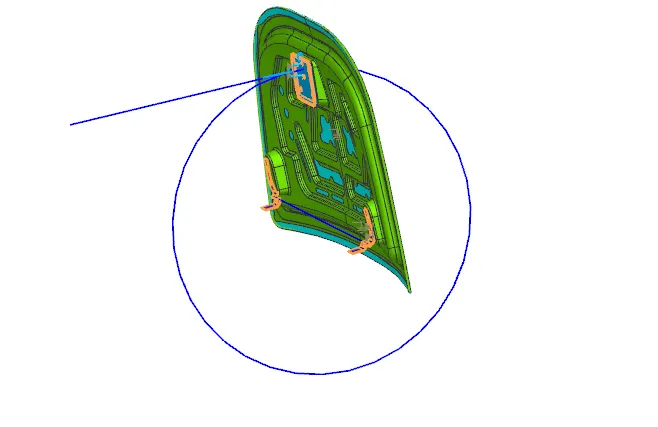
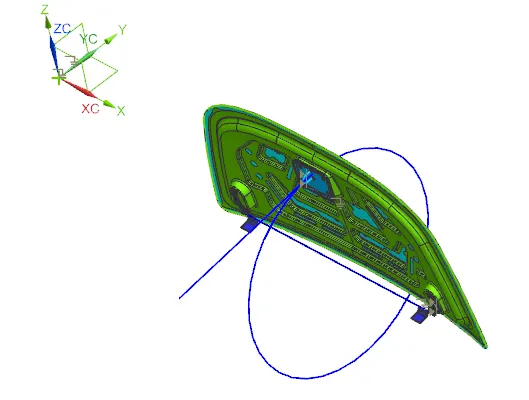
It is refer to path that hood follows while opening and closing. For proper opening and closing of hood it is required to positioned striker, The striker should be perpendicular to the trajectory of hood. Hinges are positioned to respective places and a circle is drawn from centre of hinge axis perpendicular to it up to striker position.
POSITIONING THE LATCH AND STRIKER
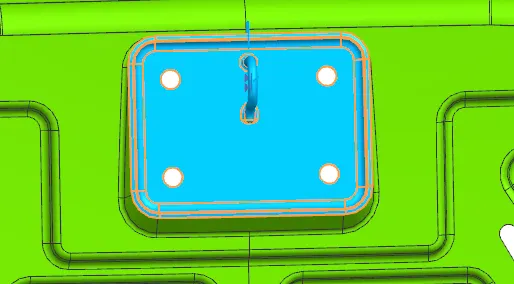
This is the final step involved. This step includes locating the appropriate position of a locking mechanism between the hood and the car body. The location is decided by tracing a circular path with the hinge axis as a center. The point where the path traced intersects with the car body should be the location of placing the latch and striker mechanism.
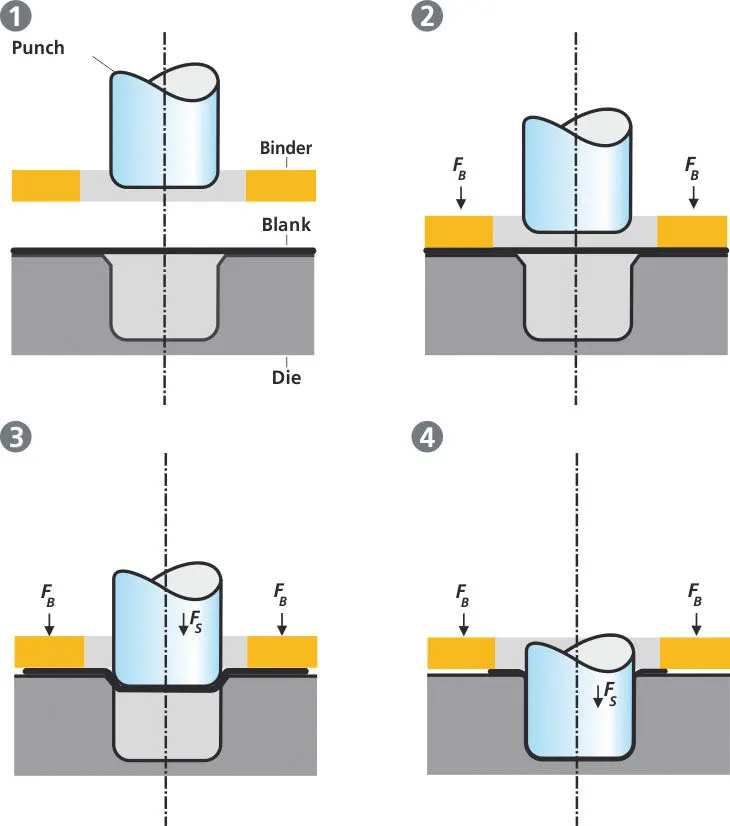
DEEP DRAWING:
Deep drawing is a sheet metal forming process in which a sheet metal blank is radially drawn into a forming die by themecanial action of a punch. It is thus a shape transformaion process with material retention. The process is considered "deep" drawing whenthe depth of the drawn part exceeds its diameter.
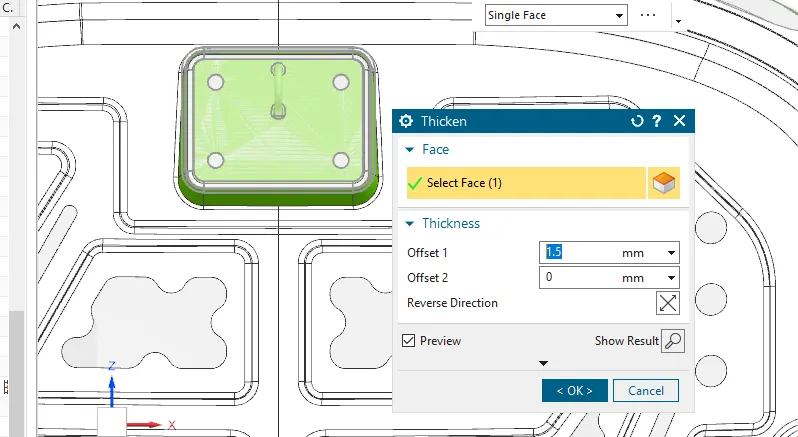
REINFORCEMENT:
This cnbe done to give extra support to the movement part such as hinge,support rod and the latch and striker mechanism.Reinforcement thickness is 1.5 mm on hinge and striker.
FOLLOWING COMMANDS ARE USED IN THIS CHALLENGE:
- OFFSET SURFACE
- TRIMBODY OR TRIM SHEET
- OFFSET CURVE IN FACE
- THROUGH CURVES
- EMBOSS
- FACE BLEND
- EDGE BLEND
- MIRROR GEOMETRY
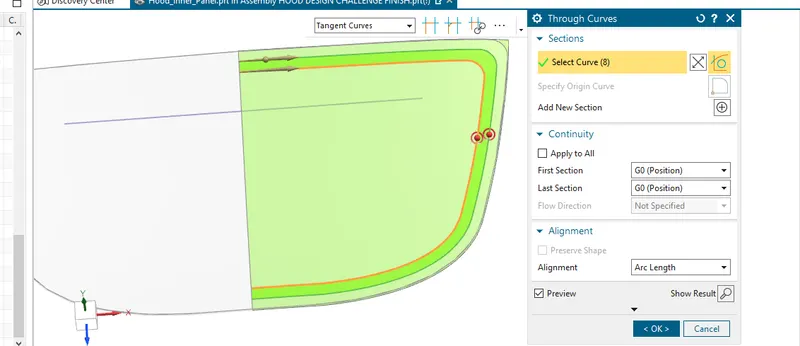
Through curves need two input curves,both of curve with join together.
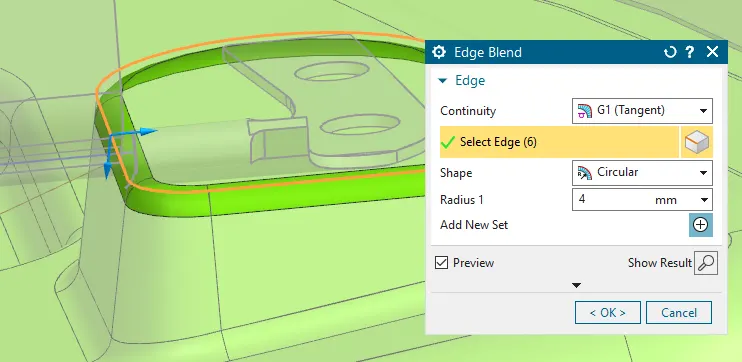
Edge blend is created to the edge curve of the emboss area.
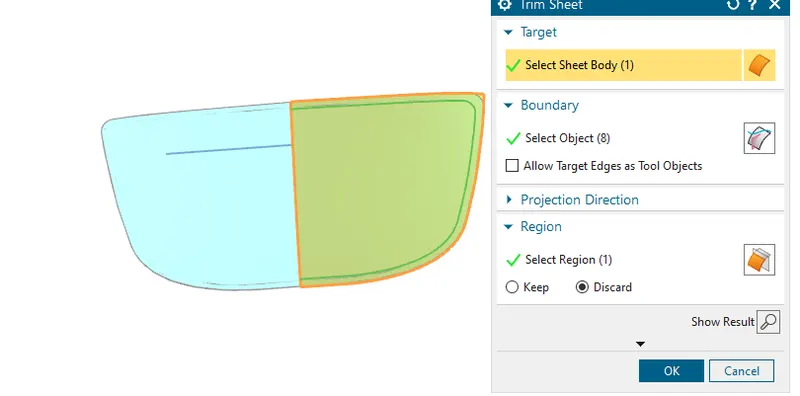
Trimbody or trim sheet using a unwanted curves and edges will be trimmed.
ASSEMBLY OF HOOD
CONCLUSION;
This Concludes the design procedure followed in creatinfg engine hood. The design is passed to analysis for further study. Hood design is completed with all the neccessary design consideration.