Hood design-Week 2
Objective:
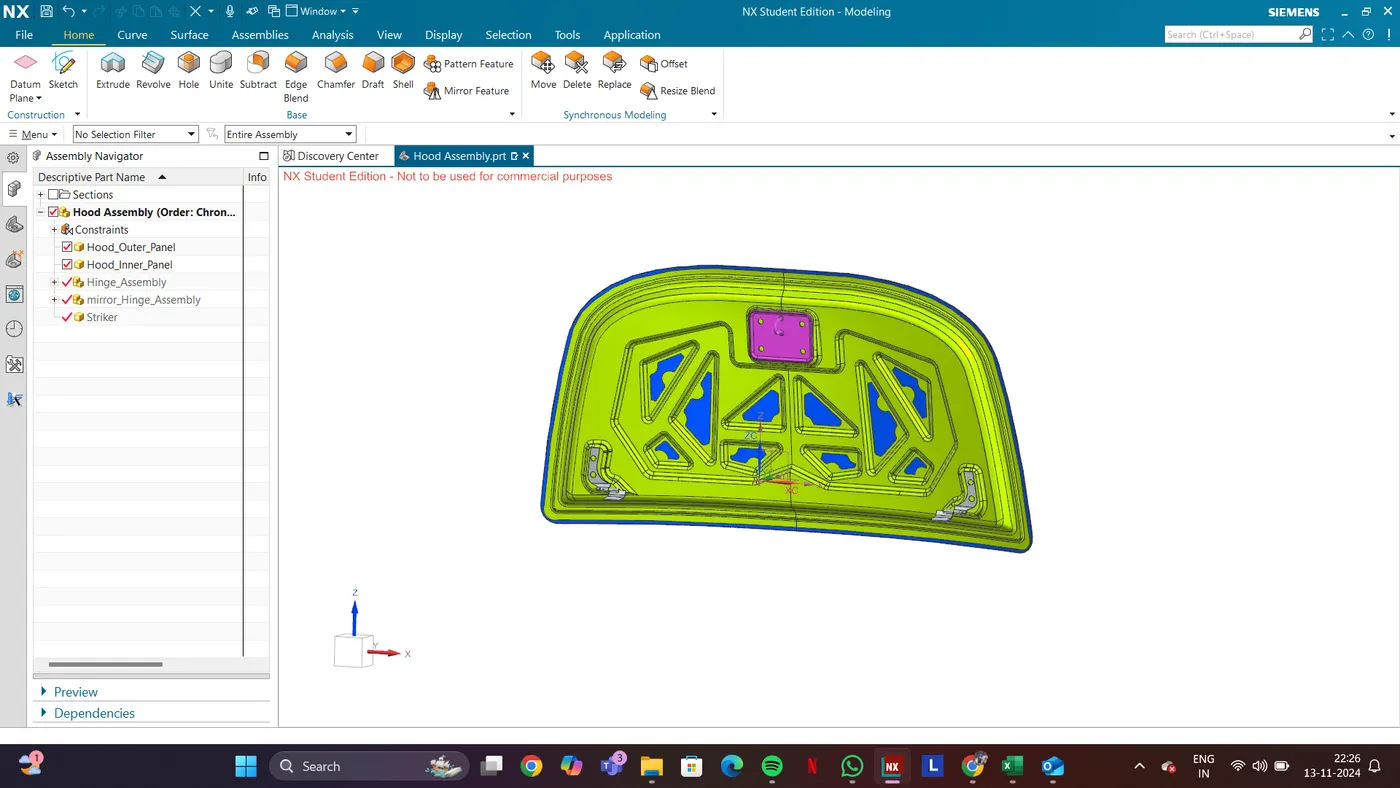
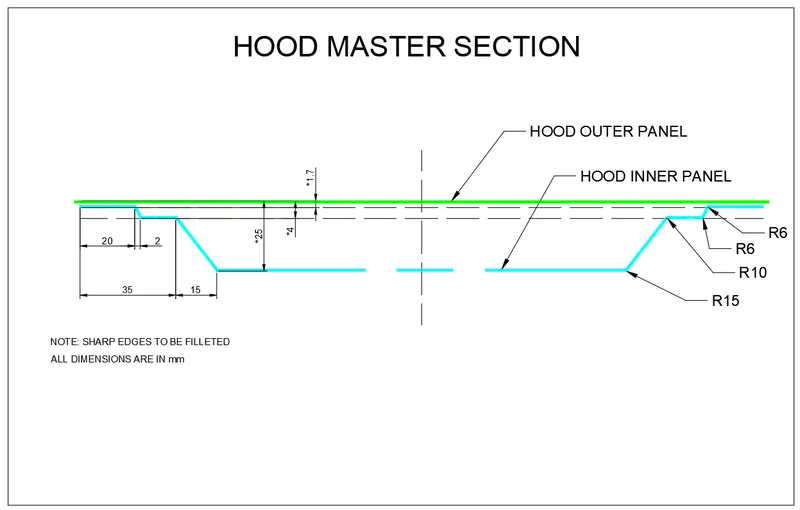
Design Hood Outer Panel, Inner panel and the necessary reinforcements by following the Master Section given with the required design parameters.
Hood:
The hood or bonnet is one of the major aesthetic sheet metal feature in a car. The hood not only contributes in aesthetic appearance but also provides protection for the engine from environmental damages and crash impacts. The hood usually covers the engine from being exposed. Major Aspects that are considered while designing a hood are force distribution towards the side fendors during impact , pedestrian safety, trajectory for lock striker, area section analysis and manufacturability.
Data To Be Used:
- Outer Panel Thickness= 0.75 mm
- Inner Panel Thickness= 0.75 mm
- Reinforcements Thickness = 1.5 mm
The given master section is also used for creating flanges for the inner panel.
Parts Development
Hood Outer Panel:
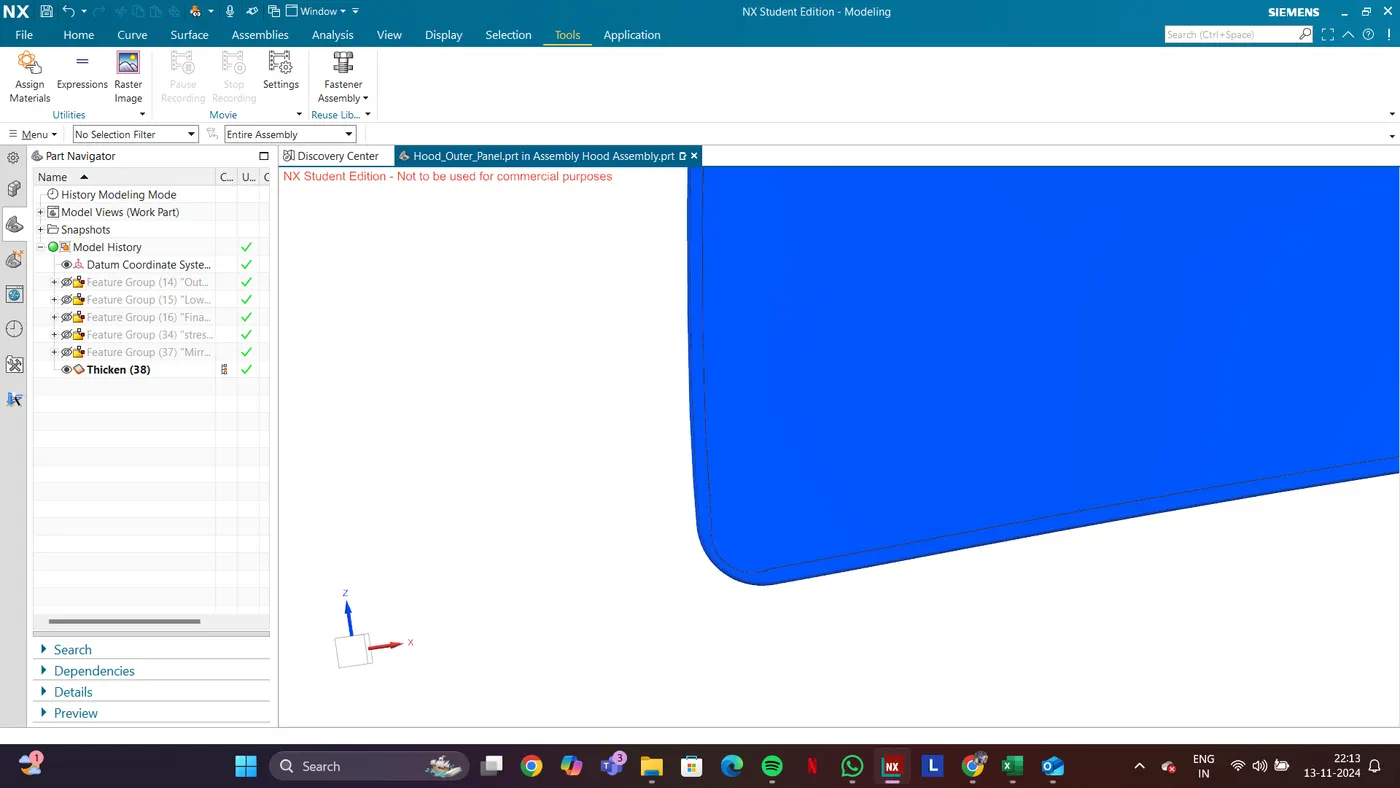
The outer panel is the aesthetic feature that is visually seen to the customer. The outer panel individually cannot withstand the impact during collision. Hence the outer panel is hemmed along with the inner panel which has sufficient reinforcements. Stress Relief cuts are created to increase the ease of hemming process without the development of stress at corners. 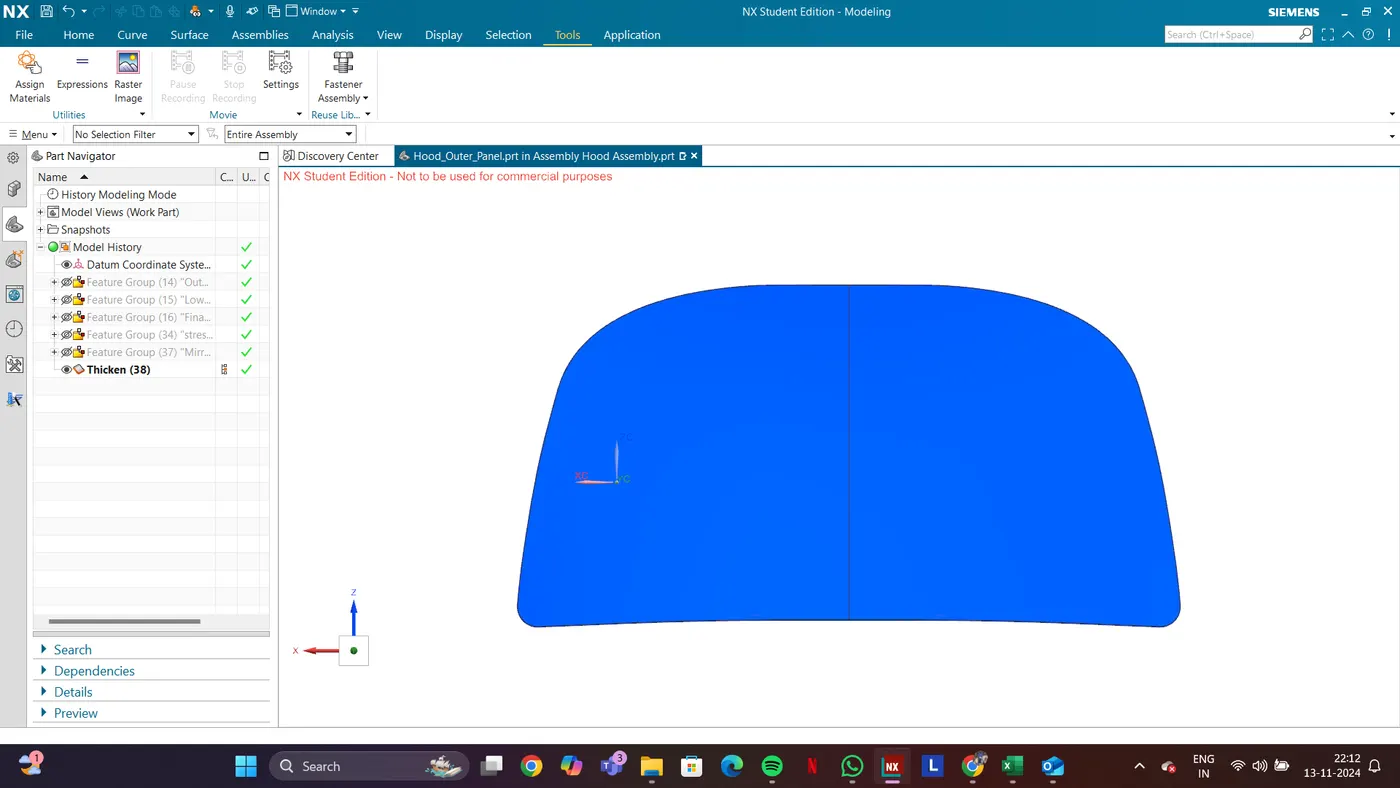
Hood Inner Panel:
The inner panel provides the required strength and rigidity for the hood assembly. The inner panel is developed using the master section that is provided. Embosses are added to the inner panel to increase the force distribution towards the side fenders. Elevations for hinge and striker are added to the inner panel to house the striker and the hinge to it. 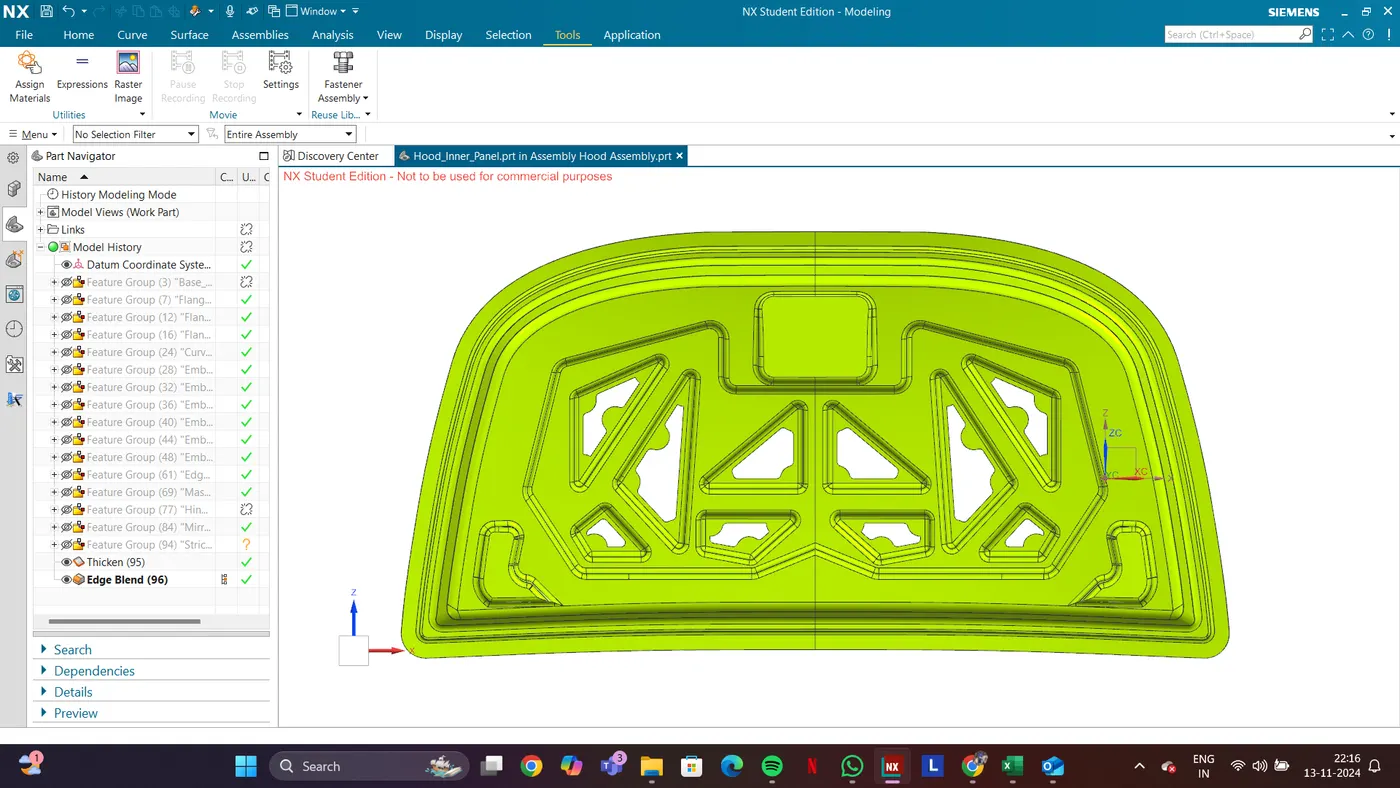
Latch Trajectory:
Latch Trajectory defines the angle at which the striker has to be mounted in order to perfectly lock the striker with the lock. The hinges are fixed in place to extract a straight line which acts as the center of an imaginary circle that resembles the movement of the hood when fixed to the car frame. A imaginary normal line that is taken to the trickers axis is checked for tangency with this imaginary circle, so that in such condition when the hood is attempted to close the striker will perfectly interlock with the locking mechanism.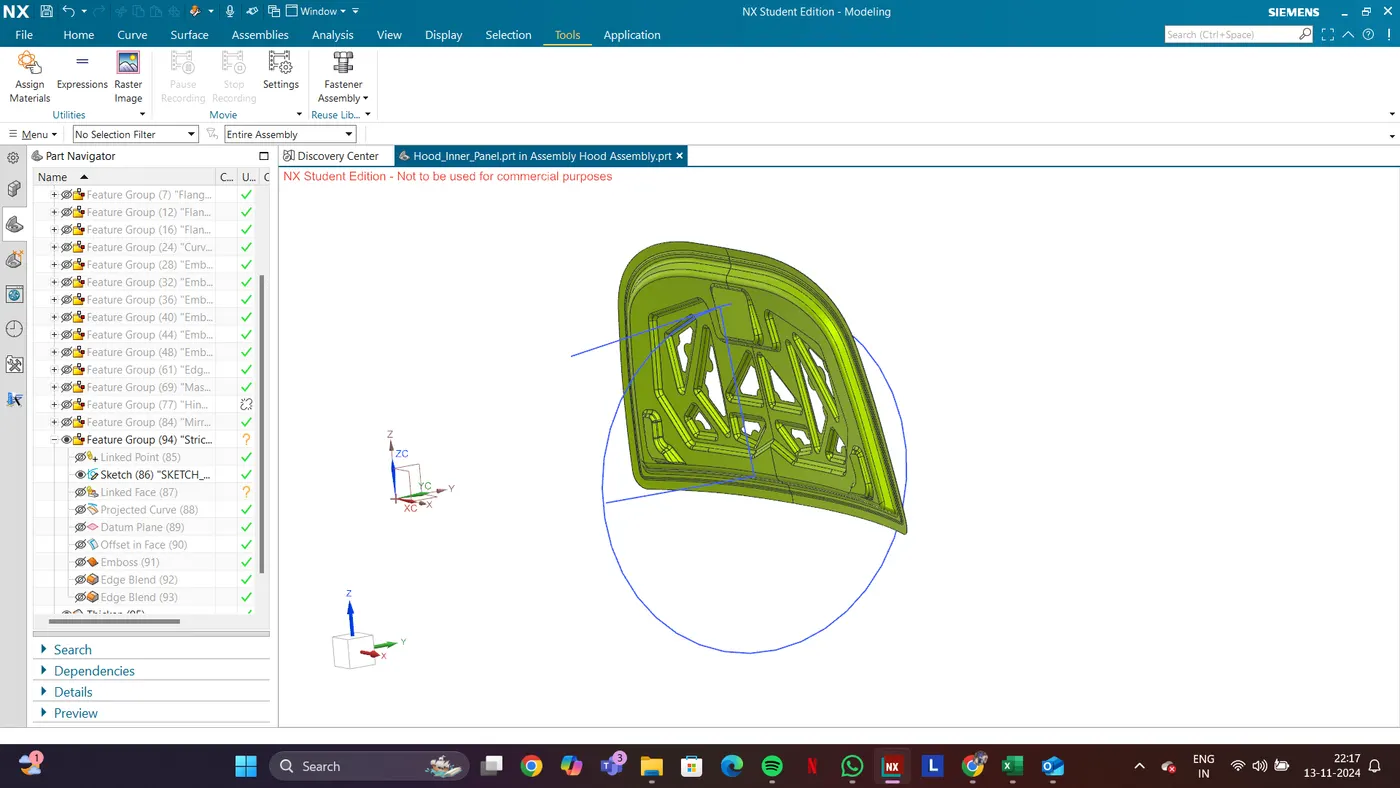
Mastic Data:
To join both the inner and the outer hood panel the hemming process is suitable only for the ends but not for the inner parts. Other joining operations are not possible as it would affect the outer hood panel's look. Hence mastics sealants are used which behaves like rubber and is added between the inner and outer panel. The effect of the mastic sealants covers a circular area about 80mm in diameter. 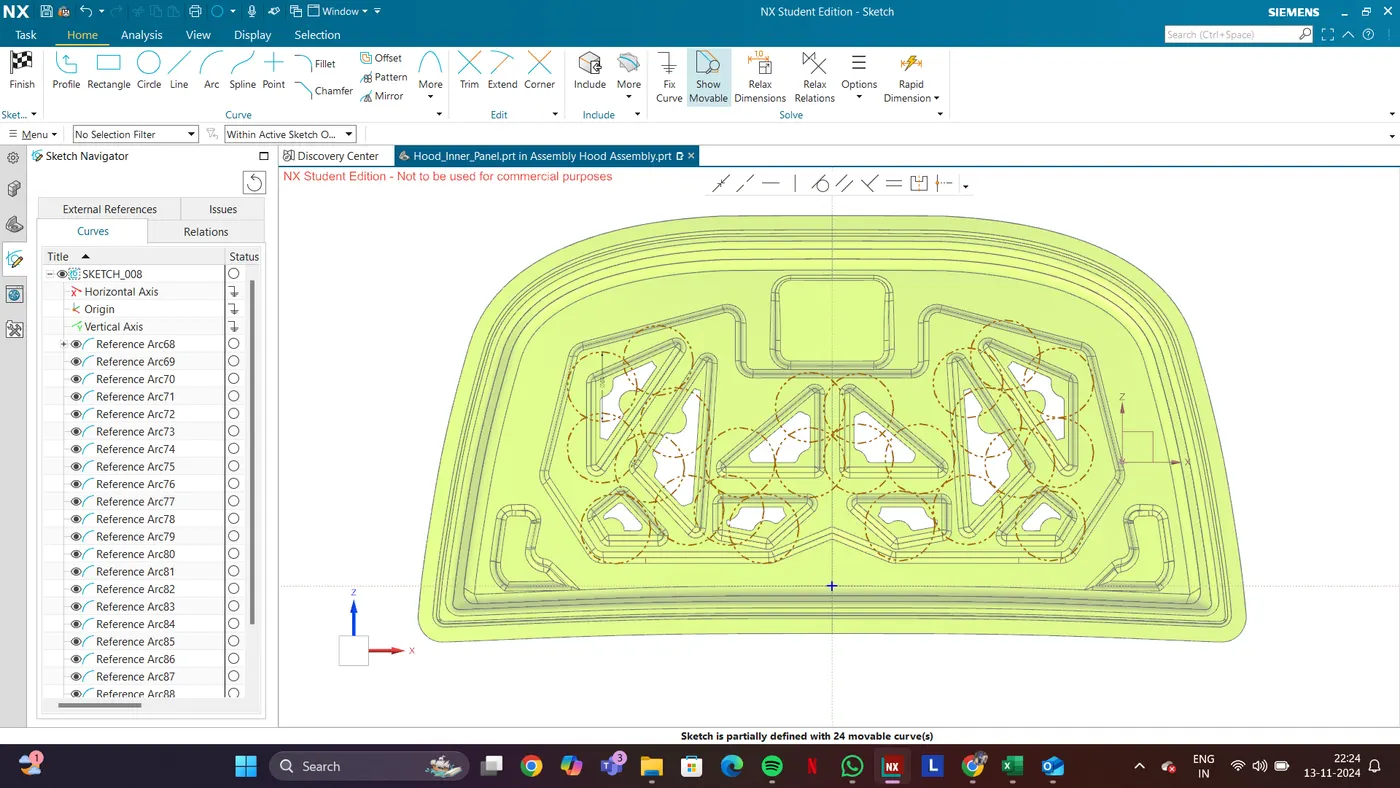
Reinforcements:
Reinforcements are provided for increased strength. They are usually thicker then the thickness of the outer and inner panel and it varies depending on the requirement.
Final Assembly: