Hood design-Week 2
Design of Car Hood Assembly
What is Hood?
Hood: A removable or hinged panel that encloses and protects the engine compartment of a motor vehicle. It shields internal components from external elements, provides structural support, and allows access for maintenance and inspection of the engine and related systems. The hood typically incorporates thermal insulation, aerodynamics, and safety mechanisms and is designed to contribute to the overall rigidity and aesthetics of the vehicle's body structure.
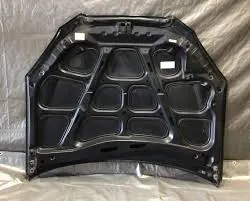
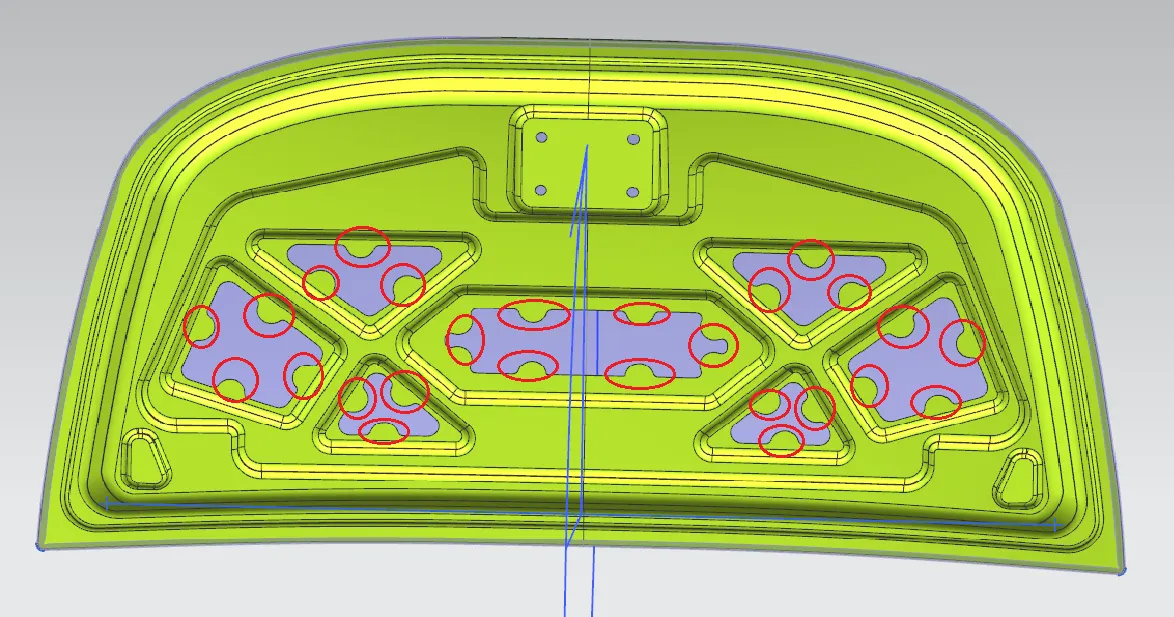
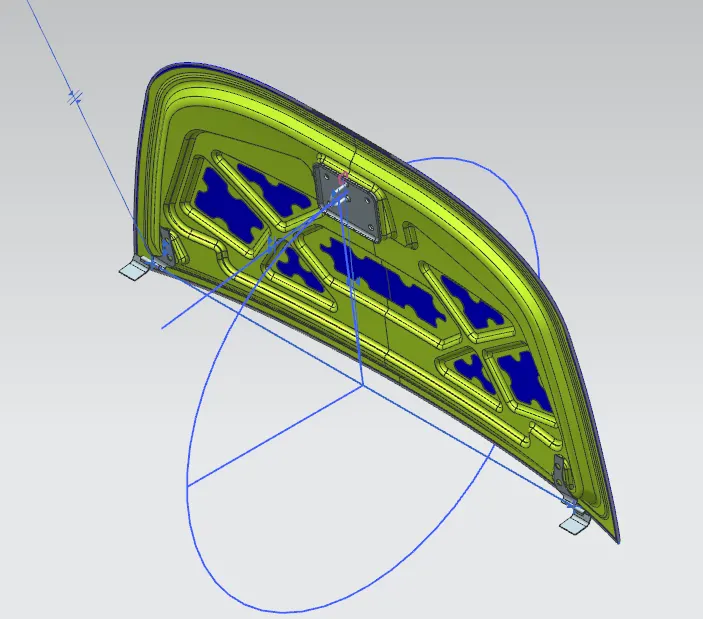
Hood Inner side view
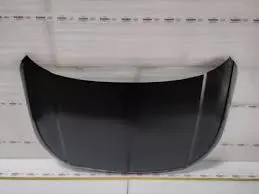
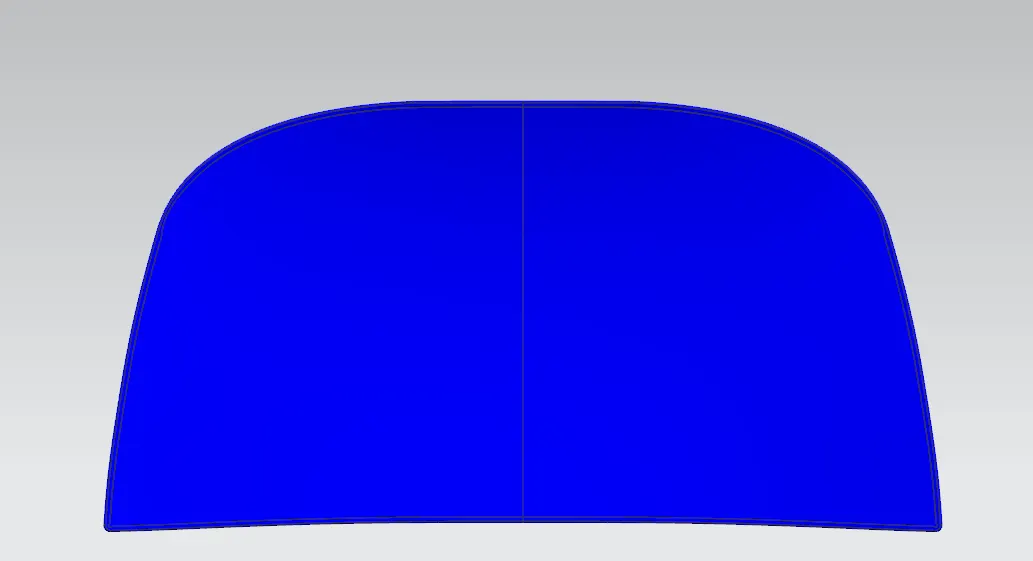
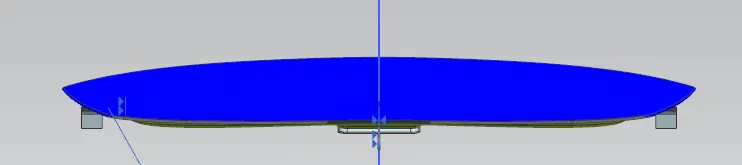
Hood outer side view
The car hood, also known as the bonnet in some regions, is a hinged cover that rests over the engine compartment of a vehicle. Its primary function is to protect the engine and other essential components from debris, weather elements, and potential damage. Here are some key points about the car hood:
Locking Mechanism: Hoods usually have a latch mechanism that secures them when closed, preventing them from accidentally opening while driving.
Material: Car hoods are typically made from metal (such as steel or aluminum) or composite materials. Modern vehicles may use lighter materials to improve fuel efficiency.
Functionality: The hood protects the engine and provides access for maintenance and repairs. It can be lifted to check fluid levels, replace components, or conduct routine inspections.
Design: Hoods come in various shapes and designs, often reflecting the car's overall aesthetic and performance. Some sports cars have vents or scoops for improved airflow and engine cooling.
Safety: In case of a collision, the hood can help absorb some of the impact, providing a degree of protection for the passengers and the vehicle's internal components.
Locking Mechanism: Hoods have a latch mechanism that secures them when closed, preventing them from accidentally opening while driving.
About the project
Design specifications for the automotive hood component
The course support instructors have already provided master section data.
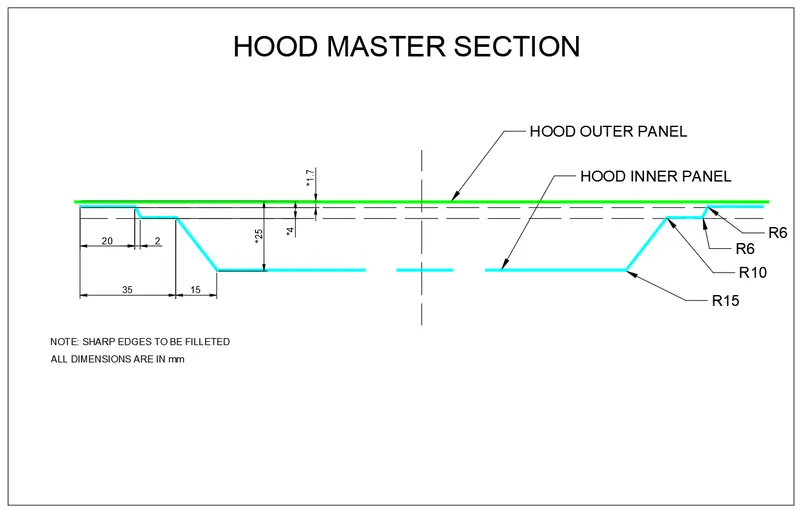
Hood Thickness Information
- Outer Panel Thickness = 0.75mm
- Inner Panel Thickness = 0.75mm
- Reinforcement Thickness = 1.5mm
The process involved in designing a hood as a sheet metal operation is
- Blanking
- hemming
- Punch cutting or piercing
- Deep drawing
- Embossing
Hemming is a forming operation in which the sheet's edges are folded over another part to achieve a tight fit. Normally, hemming operations connect parts, improve the appearance of a part, and reinforce part edges.
In car part production, assembly uses hemming as a secondary operation after deep drawing, trimming, and flanging operations to combine two sheet metal parts (outer and inner). Typical parts for this type of assembly are hoods, doors, trunk lids, and fenders.
Conventional die hemming is suitable for mass production. In die hemming, the flange is folded over the entire length with a hemming tool. Normally, the hemming results from a forming operation in which the flange is formed with a hemming tool after the drawing and trimming operations are completed. The formed flange is then hemmed in several process steps.
Roll hemming is carried out incrementally with a hemming roller. An industrial robot guides the hemming roller and forms the flange. Roll hemming operation can also be divided into several pre-hemming and final hemming process steps. Roll hemming is flexible, and tool costs are significantly lower than conventional die hemming. However, the cycle times are much higher since the hemming is realized using a hemming roller that follows a defined path.
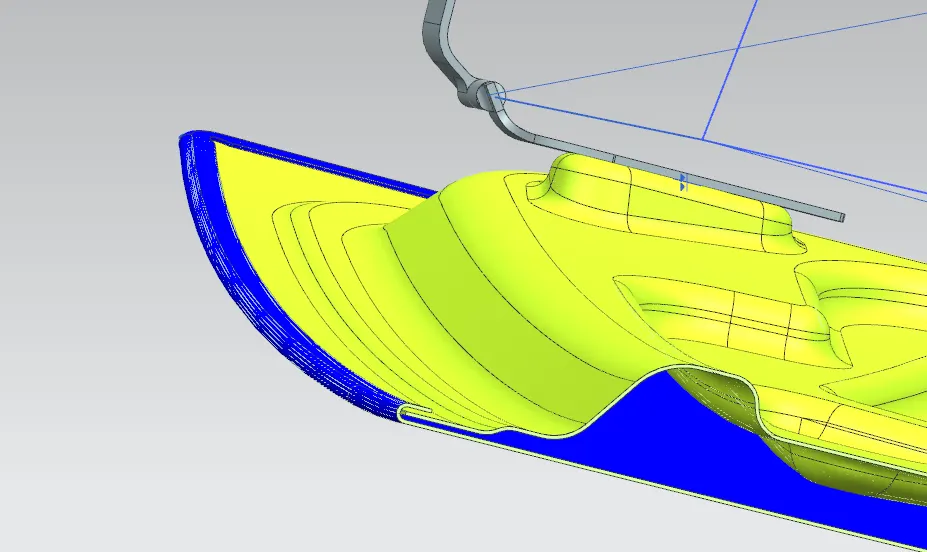
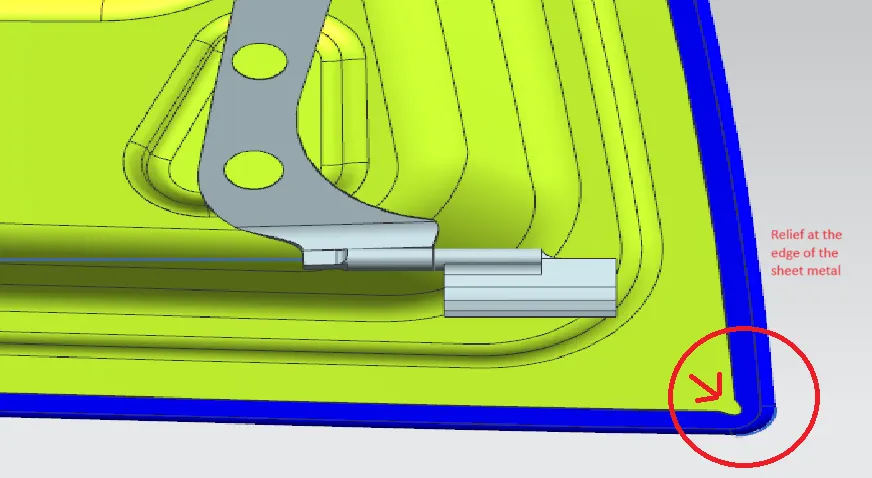
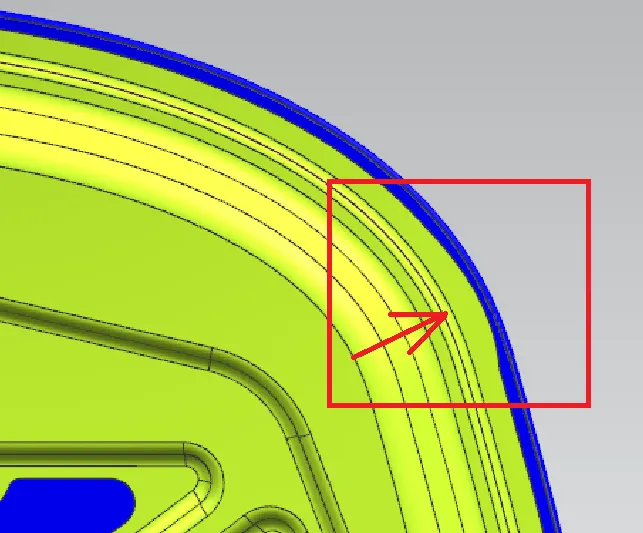
While doing the hemming process, A relief angle is formed as a product of hem when attaining at the corner of the sheet metals.
Embossing in sheet metals
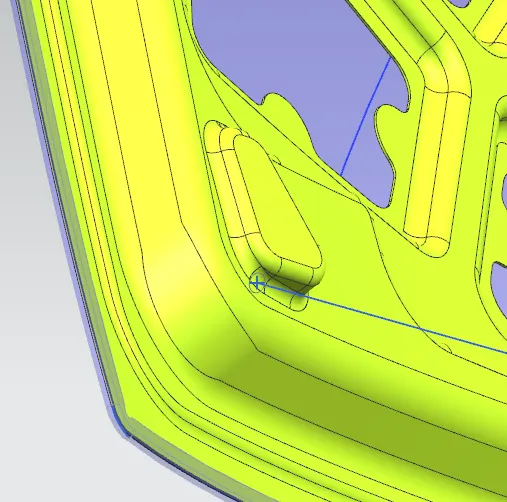
Embossing is a manufacturing process that involves shaping a material to create a design that stands out from the surface. In automotive applications, this typically involves metal forming techniques where pressure is applied to create a three-dimensional pattern.
Aesthetic Appeal: Enhances the visual appeal and can feature brand logos or unique designs for differentiation.
Structural Benefits: Increases rigidity without adding weight, helping to distribute stress across the panel.
Functional Aspects: It can improve heat dissipation by promoting airflow and assisting in water drainage to prevent corrosion.
Customization: Allows manufacturers to create distinctive designs for different models or special editions.
DEEP DRAWING:
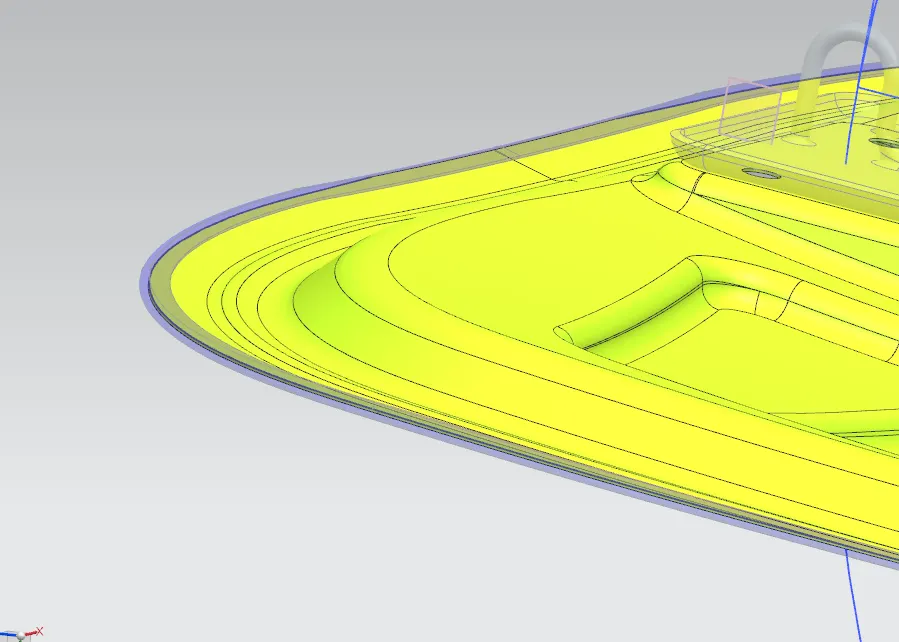
The deep drawing process is a forming process that occurs under a combination of tensile and compressive conditions. A flat sheet metal blank is formed into a hollow body open on one side, or a hollow body is formed into a hollow body with a smaller cross-section.
Mastic data
A mastic sealant data fixes or combines the hood's outer and inner panels. Sealants can provide thermal and acoustical insulation, serve as fire barriers, and have electrical properties. They can also be used for simple smoothing or filling. Sealants are often called upon to perform several of these functions at once. A sealant has three basic functions: It fills a gap between two or more substrates; it forms a barrier through the physical properties of the sealant itself and by adhesion to the substrate; and it maintains sealing properties for the expected lifetime, service conditions, and environments. The sealant performs these functions through correct formulation to achieve specific application and performance properties.
Parts of a Hood
- Outer panel
- Inner panel
- Latch & sticker and its reinforcement
- Hinge & its reinforcement.
- Design of Hood outer panel
- The outer panel of the hood is designed based on the external appearance of the car body and is usually designed by the styling department.
- The hood outer panel is then checked by the design team for strength, and necessary modifications are made if required.
- After finalizing the surface model, hemming is carried out with the inner panel, and a thickness of about 0.75mm is provided.
- Hemming is a method to join two sheet metals without using a welding process. Some relief is provided at the corners to facilitate easy bending on the corners.
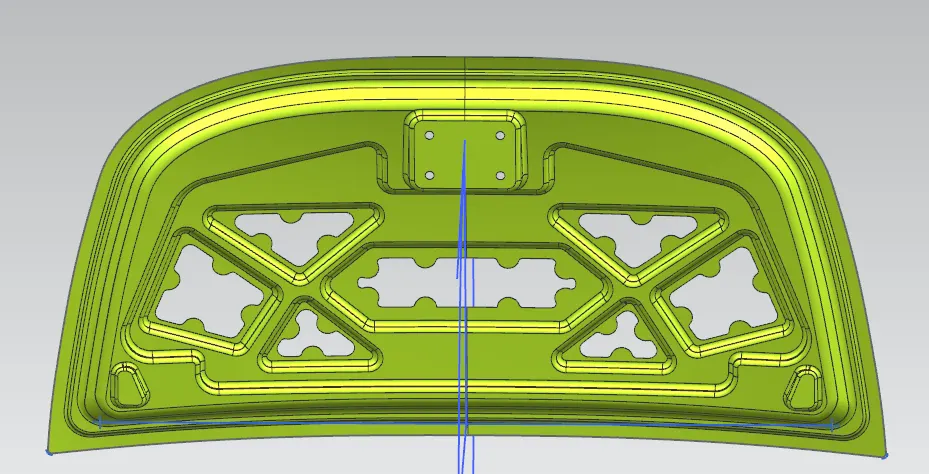
Design of Hood inner panel
- The inner panel of the hood provides strength.
- The hood inner panel is usually manufactured using deep drawing techniques.
- It consists of embosses, impact-deformation space, and mastic data points.
- The inner panel of the hood is designed based on the master sketch below.
-
- An offset of a maximum of 25 mm is provided to the inner panel from the outer panel to provide embosses and impact deformation space.
- An inner panel is designed using surface modeling methods, and a thickness of 0.75mm is provided, as shown below.
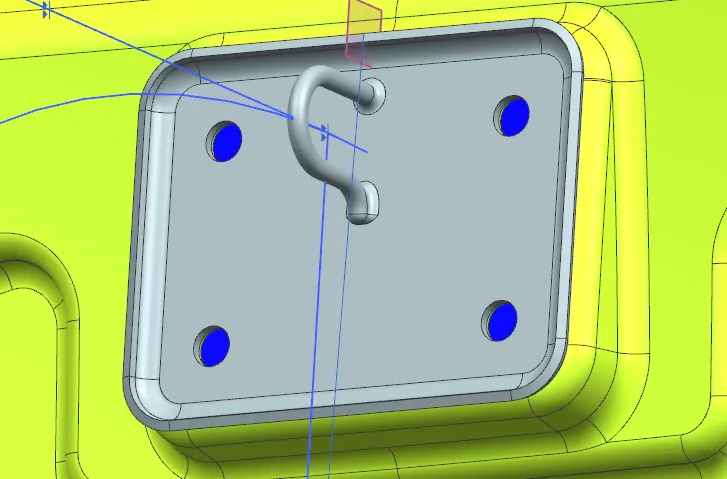
- Design of Latch & Striker
- Latch & striker are used to lock the hood with the car body.
- The Striker in this exactly fits into the hole in the car body.
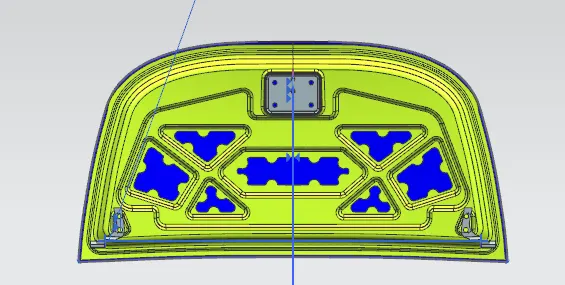
- It is usually placed on the space provided on the hood's inner panel, usually at the middle line.
- The latch & striker is fixed on the hood's inner panel using fasteners and reinforcements.
- Latch & striker reinforcements are used to provide more strength to the assembly.
- Reinforcements are made with sheet metals of a thickness of about 1.75mm.
- Latch & Striker and its reinforcements are shown in the figure below.
- Design of Hinge
- Hinges are used to connect the hood and cowl panel of an automobile.
- It enables the hood to swing open and close.
- The hinge should be strong enough to withstand the weight of the hood and the forces (to some extent) acting on it during the collision.
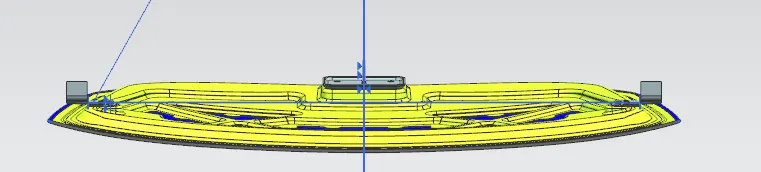
- The line joining the hinge axis's midpoint and the striker's tip should always be normal to the circular trajectory of the hood as it rotates about the hinges.
- Hinges are fixed on the hood's inner panel using fasteners and reinforcements.
- Hinge reinforcements are used to provide more strength to the assembly.
- Reinforcements are made with sheet metals of a thickness of about 1.75mm.
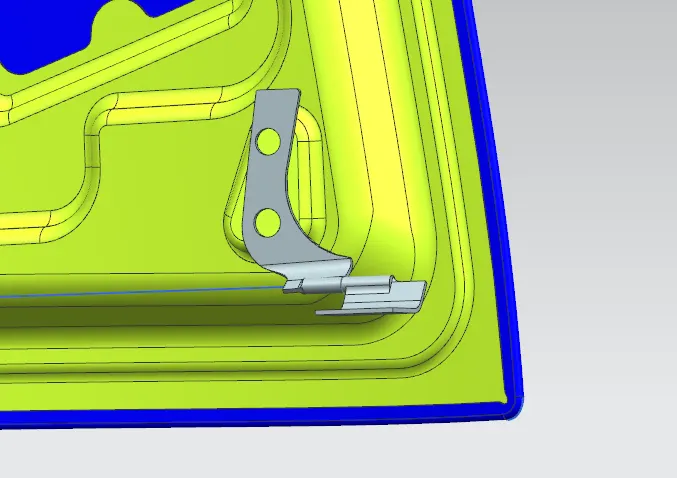
Latch trajectory motion
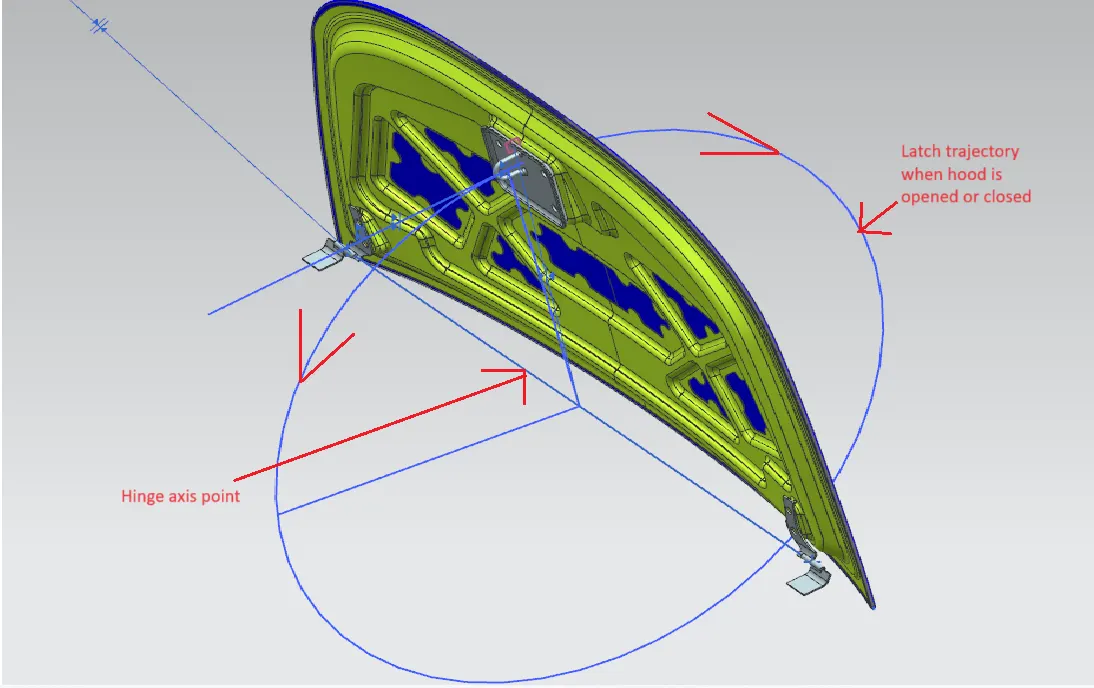
While opening or closing the hood, the latch must be perfectly aligned with the fixing or striker point. For that, the latch's trajectory must be perpendicular to the hinge axis.
Conclusion
- All the hood parts are designed based on the required parameters and assembled together to form the hood.
- Some of the important processes that are carried out for designing the hood of a car are as follows,
- Strength analysis
- The positioning of the hinge and latch & striker
- Mastic sealant placements points
- Hemming of the outer panel with the inner panel and providing relief at the corners.
- Impact deformation space based on pedestrian rating.