Hood design-Week 2
Report On Hood Design
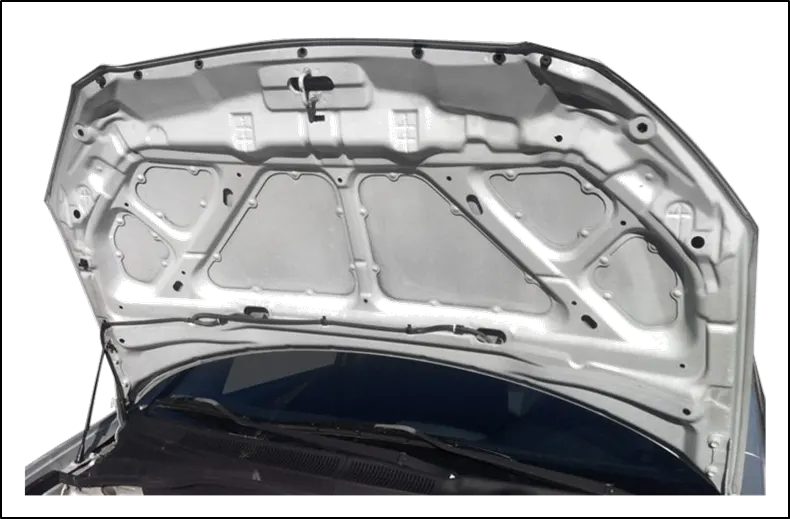
Introduction:
Hood is a sheet metal component typically hinged at the front of the vehicle and is one of the crucial element of the vehicle ‘Closures’.
Steel is most commonly used material for manufacturing of hood/bonnet due to its unique sets of characteristics such as follows,
- Very high strength-to-weight ratio
- Formability
- Weldability
- Low cost
Aluminium, Carbon fibre and Glass fibre can be used as an alternative materials to make Hood/bonnet.
Hood is designed in such a way that it fulfils various engineering and safety requirements such as
- Reduces air resistance
- Passenger Safety
- Provides access to engine compartment to enable their maintenance.
- Enhances the ergonomics of the vehicle.
Hood and its components:
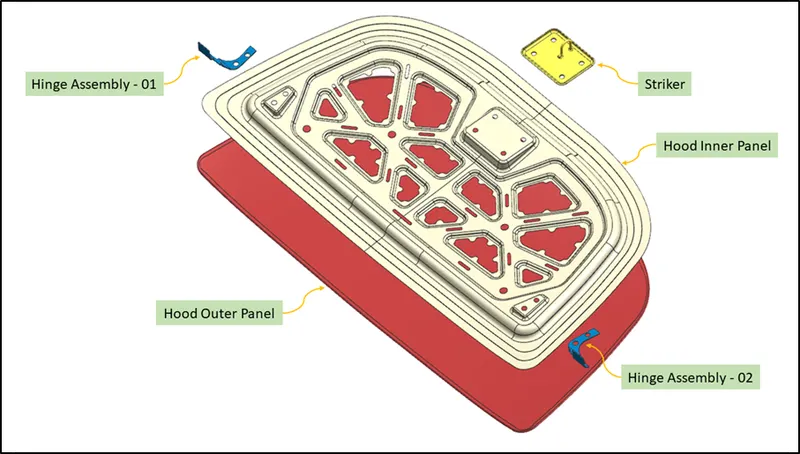
- Outer Panel
- Outer panel is designed to ensure proper aesthetics and aerodynamics.
- It is joined with inner panel using forming operation called hemming.
- Inner Panel
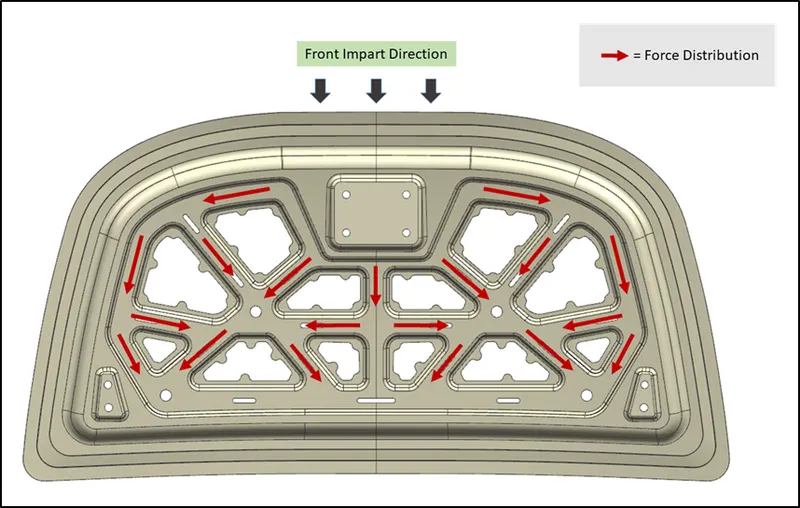
- Inner panel provides strength to outer panel.
- It is designed such that in case of frontal impact, force is diverted away from the passengers.
- Hinge and Striker are mounted on inner panel.
- Hinge Assembly
- Guides opening and closing of Hood at certain angle.
- Latch and striker mechanism
- It holds hood to its closed position.
- Reinforcements
- Reinforcements are additional materials having more thickness joined to the structure to provide extra strength in particular regions, such as Front reinforcement, Latch & Striker reinforcement, and Hinge reinforcement.
Design Considerations for hood assembly:
Design Considerations for hood assembly can be divided into following types,
- Ergonomical Consideration
- Automotive ergonomic is the study of human comfort for automotive design.
- It is a method to safeguard and protect space for the human user and necessary components that make up the vehicle being designed. Ensure all safety regulation requirements are meeting.
- The following aspect considered during primary hood assembly design.
- Head Clearance
- Hood opening angle and Location of stay rod
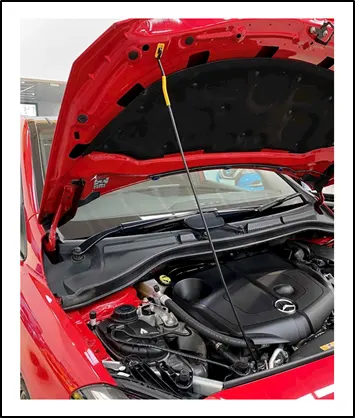
- Latch Operation Full opening angle is mainly depending on the head clearance criteria, geometry of hood assembly and hinge assembly. As per benchmarking study, the angle is 60 to 65degree.
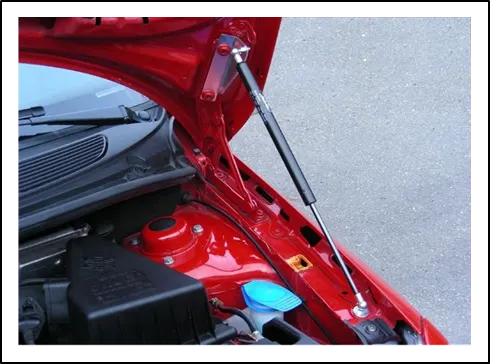
- Gas stay is used when the weight of hood exceeds a certain limit, where it would be difficult for a person to hold and accesses hood.
- Manufacturing Aspects
- The most important design consideration of any component is manufacturing aspect.
- In sheet metal, the component is manufactured by press tool dies. The Press tool is stamping which includes cutting operations like shearing, blanking, piercing etc. and forming operations like bending, drawing etc. The main focus of manufacturing aspect is to manufacture hood assembly with minimum operation sequence and process time. Following aspect are considered for the primary design of hood assembly.
- Tooling Considerations
- Welding Consideration
- Hemming Considerations.
- Regulations
- In automobile industry regulations are flexible from market to market.
- They are usually mandatory by New Car Assessment Program (NCAP) and Electronics and Communication Engineering (ECE) of government rules.
- The regulation aspects such as vision zone, crash test, environment protection and theft protection are to be considered.
Design Parameters:
Hood Thickness information
- Outer Panel Thickness = 0.75mm
- Inner Panel Thickness = 0.75mm
- Reinforcement Thickness = 1.5mm
Master Section Data
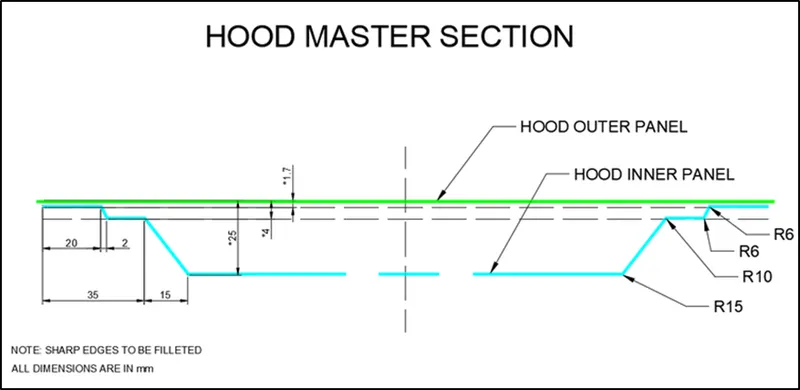
Master sections are the guides for design requirements which decide the component packaging after technical (Styling, Concept or Class-A) surfaces.
 s
s
Manufacturing Process:
Deep Drawing:
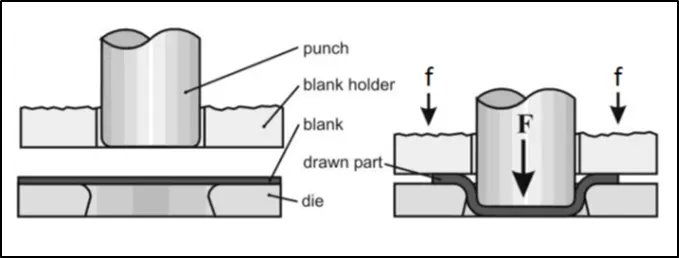
- Deep drawing is the metal forming process by which a flat sheet of metal is cold drawn or formed by a mechanical or hydraulic press into a seamless shell.
- As the material is drawn into the die by the punch, it flows into a three-dimensional shape.
- It is possible to produce a final workpiece using minimal operations and generating minimal scrap that can be assembled without further operations.
Embosses:
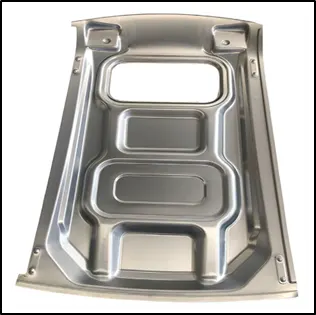
- Embossing is an operation in which sheet metal is drawn to shallow depths with male and female matching dies.
- The operation is carried out mostly for the purpose of stiffening flat panels.
- The operation is also sometimes used for making decoration items like number plates or name plates, jewellery, etc.
Hemming:
- Hemming is a forming operation in which the edges of the sheet are folded or folded over another part in order to achieve a tight fit.
- Normally hemming operations are used to connect parts together, improve the appearance of a part and reinforce part edges.
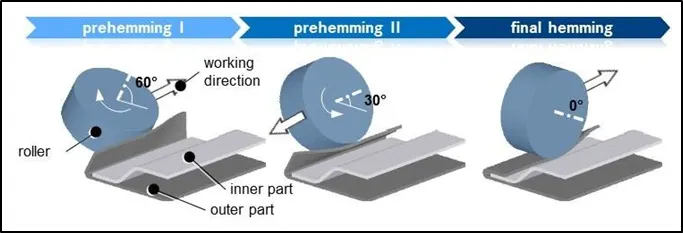
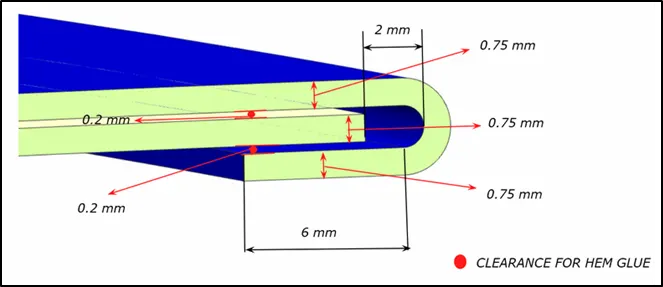
Click/ Copy link below to watch video about how hemming is performed.
https://search.abb.com/library/Download.aspx?DocumentID=RollerHemmingVideo&LanguageCode=en&DocumentPartId=&Action=Launch
Mastic Sealant:
- Mastic adhesives are developed specifically to bond exterior automotive panels to the vehicle’s inner panel structure, such as on roofs, doors, and hoods.
- It remains elastic after curing to reduce panel flapping and to prevent panel distortion
- Mastic sealant has the tendency to increase the strength of the panel and has influence of 80mm diameter.
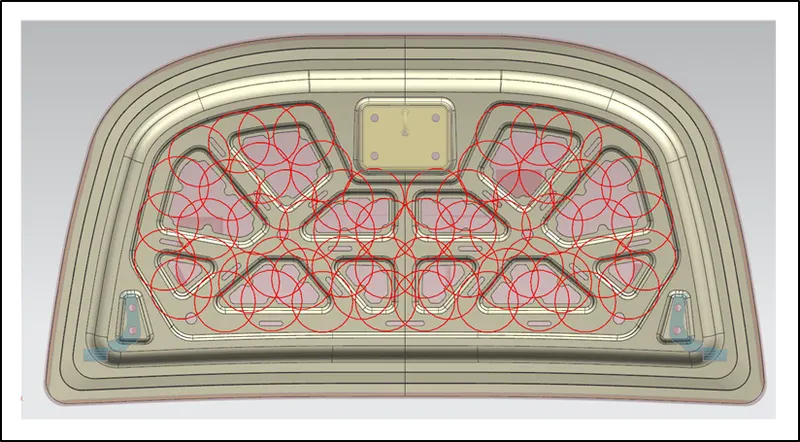
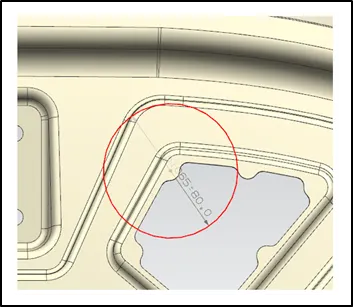
Link: Application of mastic sealant.
https://www.youtube.com/watch?v=kqeG46v1u-w
Corner Relief:
- When bending operation such as hemming is performed on sheet metal parts it produces unwanted deformation such as splits or wrinkles in the flange, material overlaps in the corner areas or material roll-in, hence to avoid such defects Corner reliefs are provided.
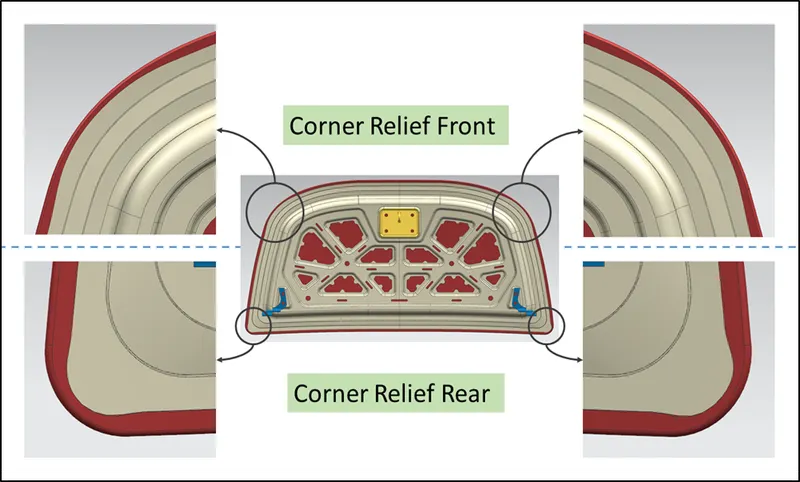
Springback:
- Springback is the geometric change made to a part at the end of the forming process when the part has been released from the forces of the forming tool. Upon completion of sheet metal forming, deep-drawn and stretch-drawn parts spring back and thereby affect the dimensional accuracy of a finished part.
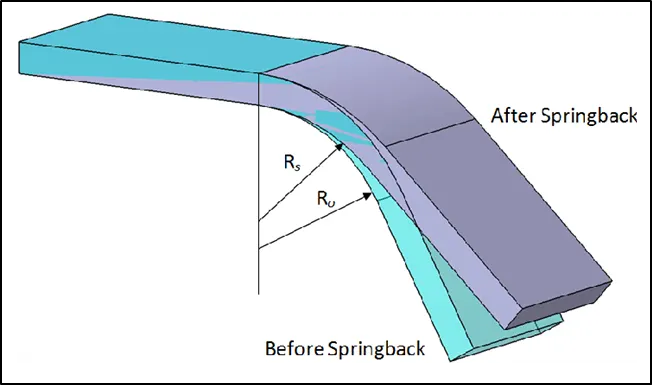
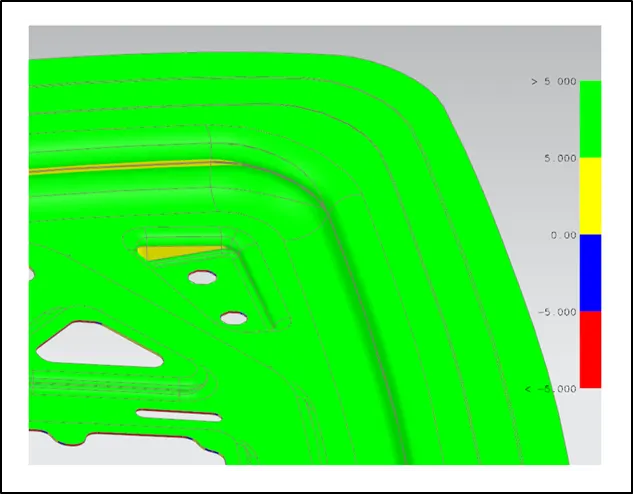
Draft analysis
- Draft analysis is done to virtually inspect the manufacturability of a part.
- Green colour indicates that part is clearing tooling so that core can be removed from the cavity easily.
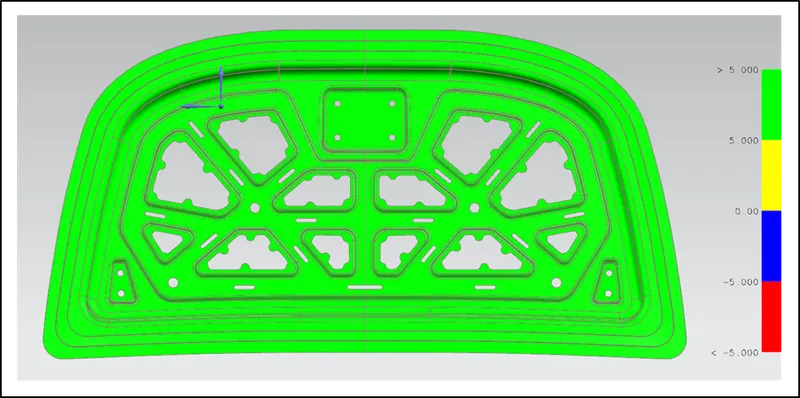
- Some areas are heighted on yellow on which draft is less than 5˚, which indicates that it may cause difficulty while tooling, hence draft of particular region must be increased up to 5˚.
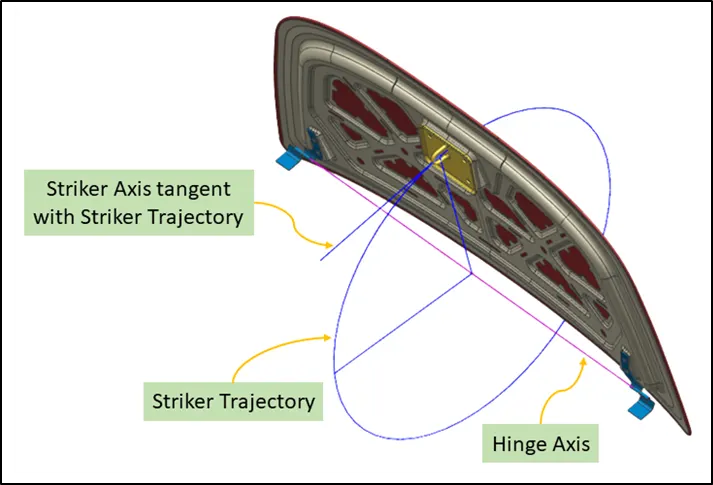
Latch Trajectory
- A circle drawn from centre of hinge axis which is tangent to striker axis can be defined as a Latch trajectory.
- Latch Trajectory is the path on which striker will move/ travel towards the latch.
- Striker axis must be tangent to Latch trajectory for proper guide and fitment of striker and hence lock hood to its closed position.
Safety Considerations
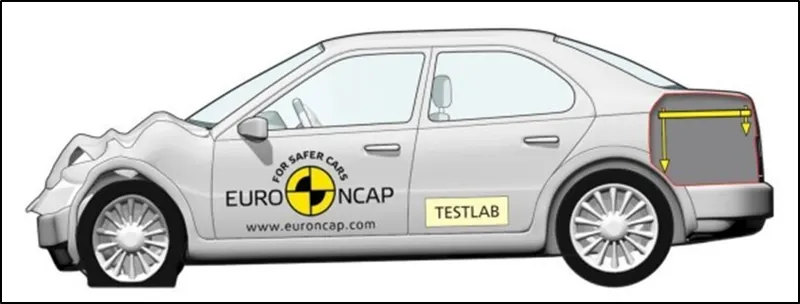
Wrap around distance (WAD):
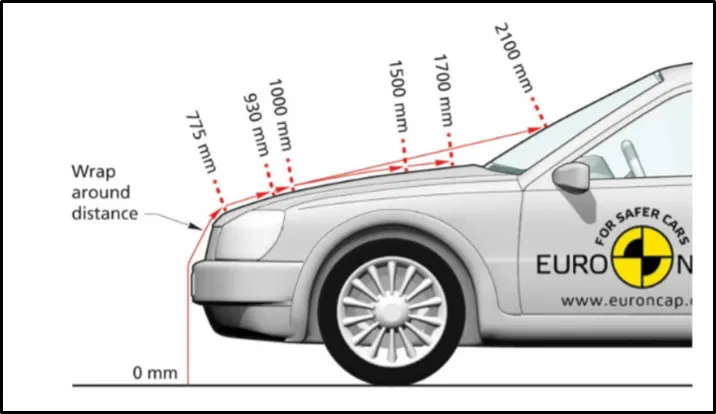
Wrap-around distance is a measurement from the ground to the Head impact zone over the outer surface of the car.
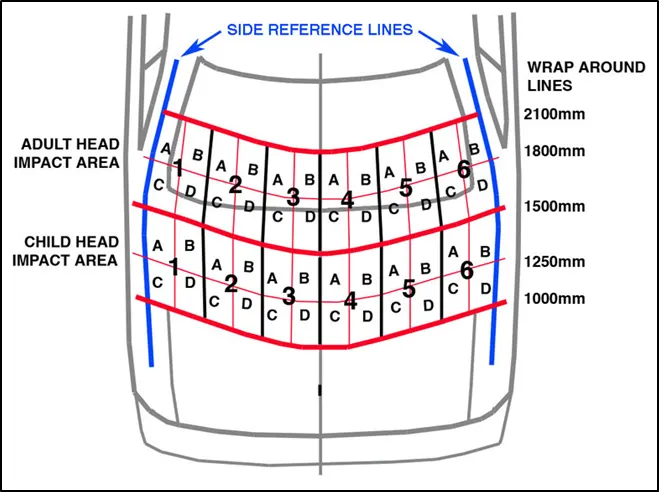
During the crash analysis, typically two test areas are considered ‘Child Impact Zone‘and the ‘Adult Impact Zone’.
- Child head impact zone = 1000mm to 1700mm,
- Adult head impact zone = 1700 to 2100 mm.
Model Views:
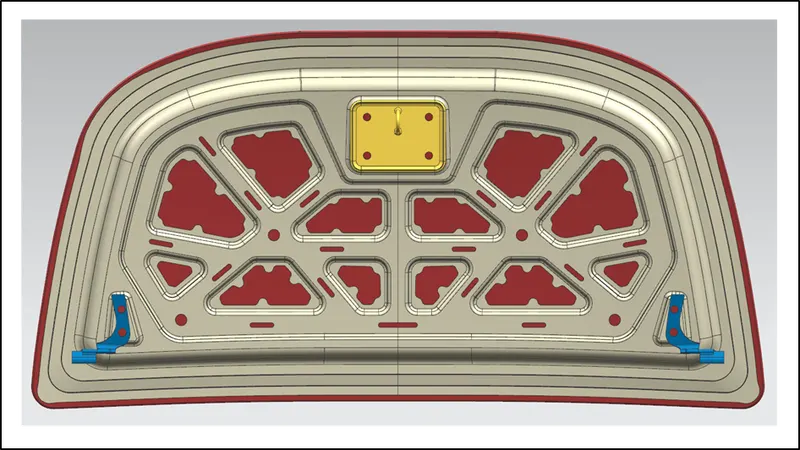
Bottom view
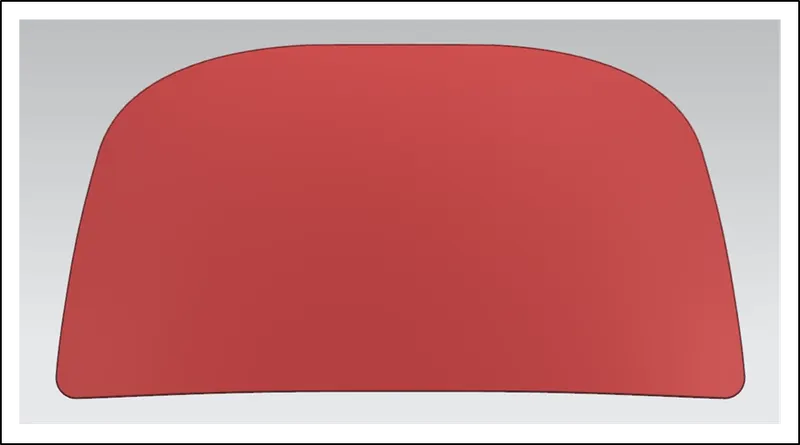
Top View
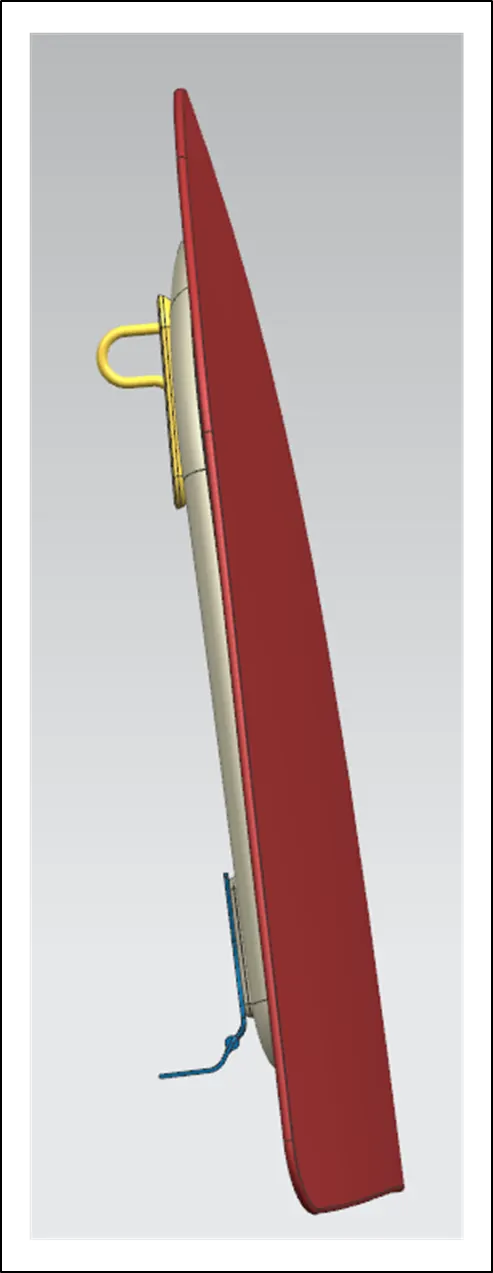
Side View
Isometric View
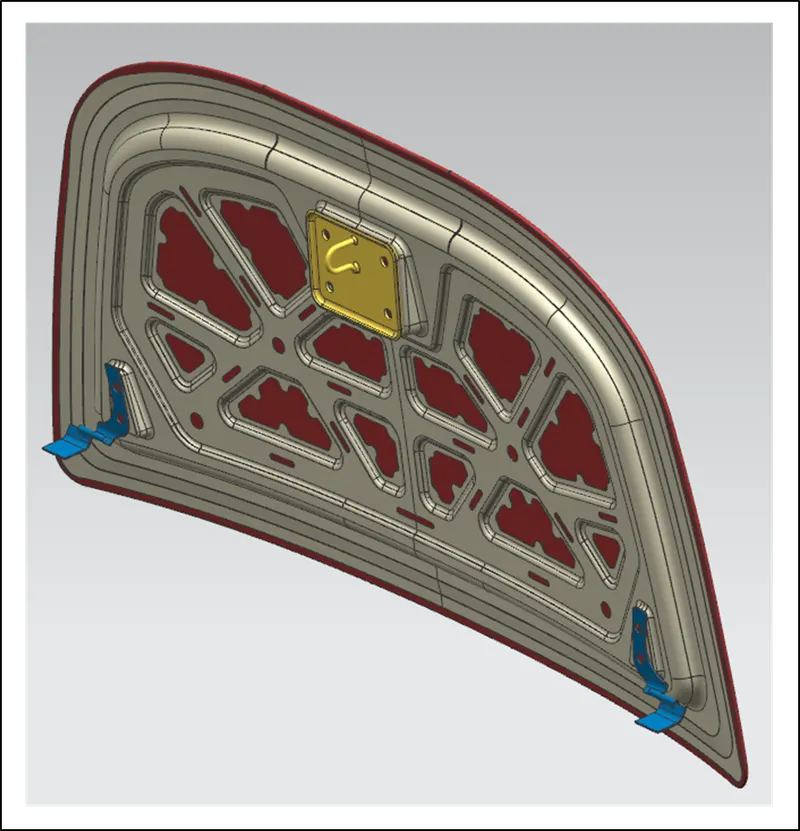
Software Used: Siemens NX CAD