Hood design-Week 2
DESIGINING OF HOOD INNER PANEL, OUTER PANEL AND THE NECESSARY REINFORCEMENT BY FOLLOWING THE MASTER SECTION
OBJECTIVE
The main objective of the project is to designing of hood inner panel, outer panel and the necessary reinforcement following the master section and Euro NCAP standard that satisfies the manufacturing and functional requirements.
HOOD
A car hood also referred to as a bonnet in some other countries is the hinged cover that rests over the engine of a front-engine vehicle. Its purpose is to provide access to the engine for repair and maintenance. Car hoods are typically constructed from steel and sometimes from aluminum. The hood release system is common on most vehicles and typically consists of an inner hood latch/lock handle, a hood release cable, and a hood lock assembly. The hood lock handle is usually located under the steering wheel, next to the driver’s seat, or in the door frame.
Design constrains to be followed: -
- Passenger safety
- Pedestrian safety
- Manufacturing feasibility
- Latch trajectory must be center of hinge axis
- Joining techniques of inner panel and outer panel
Passenger safety
Whenever the frontal crash occurs in a car, hood will be affected first. So, hood must design in such a way that the impact force should be dissipated towards the side panel of the car before reaching the driver’s cabin, thereby deflecting the force on to the body and not the passengers.
Pedestrian safety
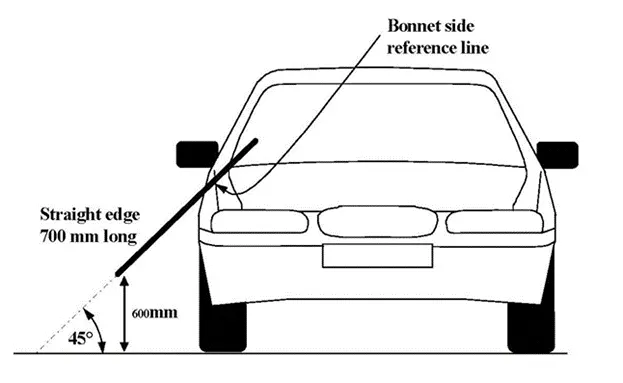
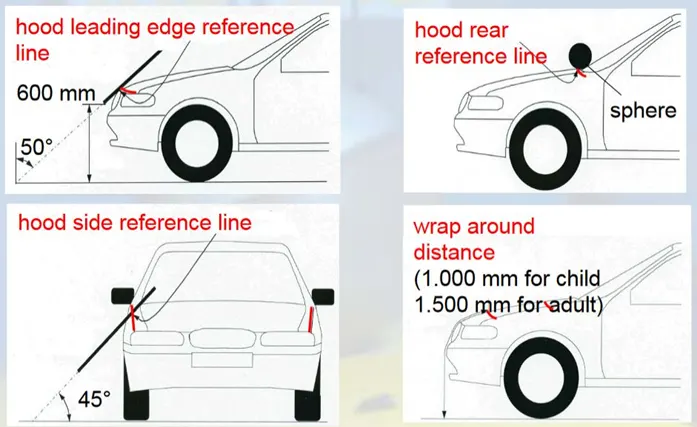
While designing the hood pedestrian safety is also consider as per Euro NCAP standard. Hood is are of two types based on side reference line. "Side reference line" means the geometric trace of the highest points of contact between a straight edge 700 mm long and the sides of the vehicle, when the straight edge, held parallel to the transverse vertical plane of the vehicle and inclined inwards by 45°, is traversed down, and maintains contact with the sides of the front structure. If the line falls in fender, then the hood is inlaid hood, If the line falls on hood, then it is wrap around hood
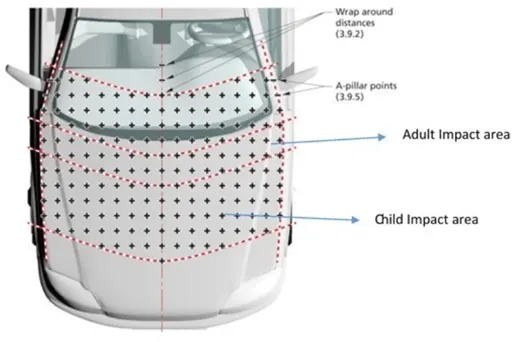
Regarding the safety of the pedestrians. It is of utmost importance that we make sure not to place re-enforcement on the areas prone to high head impact. Also, the child impact area is designed with lesser thickness than the adult impact area so that in the event of a frontal collision where a child is involved, the bonnet will absorb the impact of the crash and crumble to protect the child’s head from absorbing the force.
Manufacturing feasibility
For manufacturing the hood, Stamping, deep drawing and hemming process are required.
Stamping
Metal stamping is a crucial element for various applications in the automotive industry. The metal stamping process produces components with extremely tight tolerances through the use of specialized stamping dies, which shape and cut the workpiece to the desired form and size. Typical stamped parts used in the automotive industry include fenders, hubcaps, and many other critical components.
Deep drawing
Deep drawing is a sheet metal forming process in which a sheet metal blank is radially drawn into a forming die by the mechanical action of a punch. It is thus a shape transformation process with material retention. The process is considered “deep drawing” when the depth of the drawn part exceeds its diameter.
For manfacture these part cetrain guideline to be followed:-
Minimum fillet radius required – 3mm + thickness of sheet
No sharp edges allowed inside the component
No curvature lesser than 5mm
Small embosses should not exceed the maximum depth of 6mm.
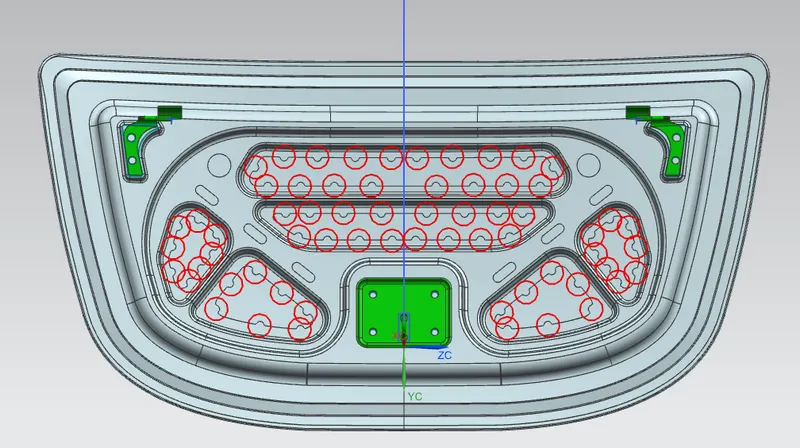
Provide mastic points to reduce NVH
Hemming
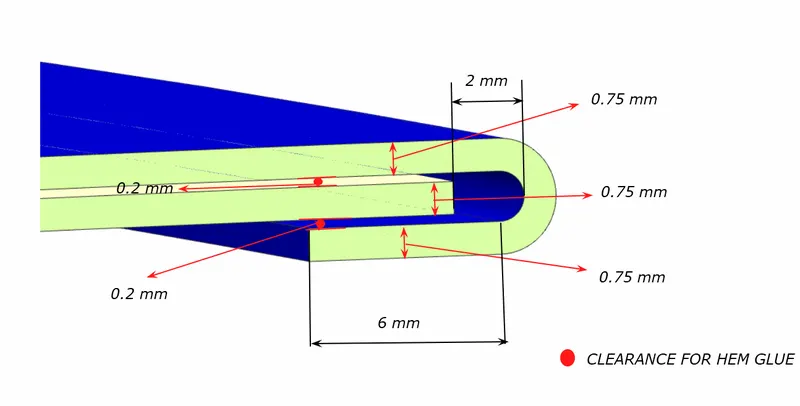
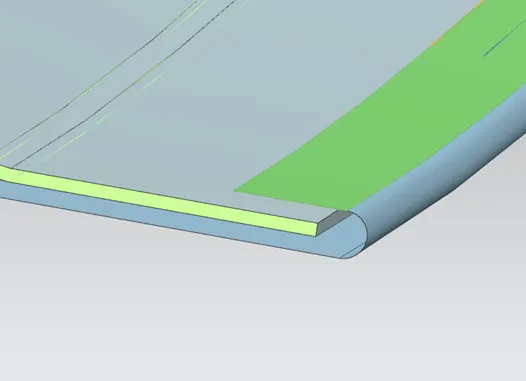
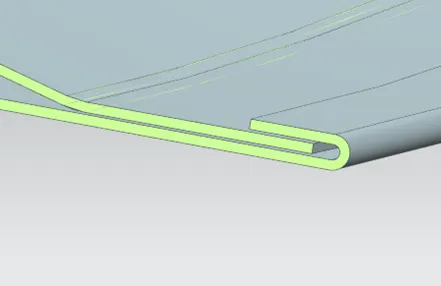
Hemming is a sheet metal forming process in which sheets are joined by bending it usually to 180°. Automotive body panels and automotive parts such as deck-lids, trunk-lids, doors, hoods and tailgates are formed by hemming process.
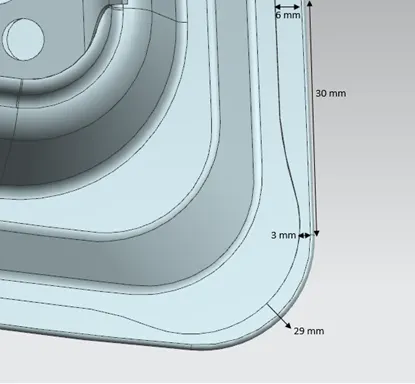
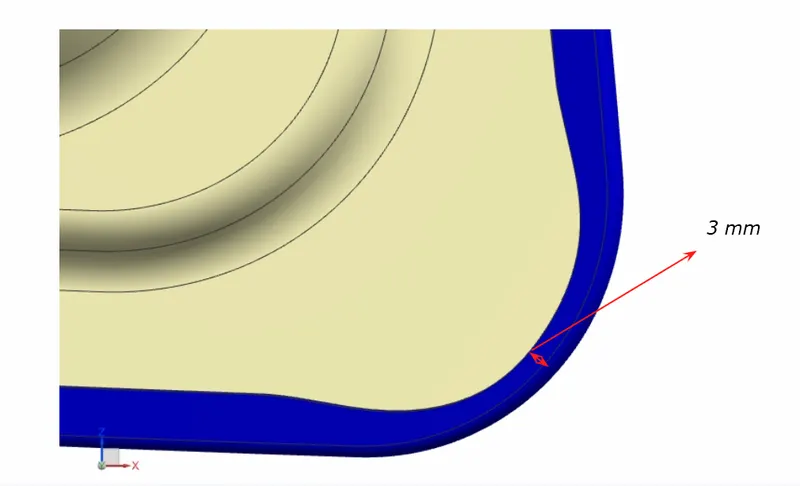
Provide appropriate corner relief along the hemming region.
Positioning of striker along the trajectory of center of hinge axis
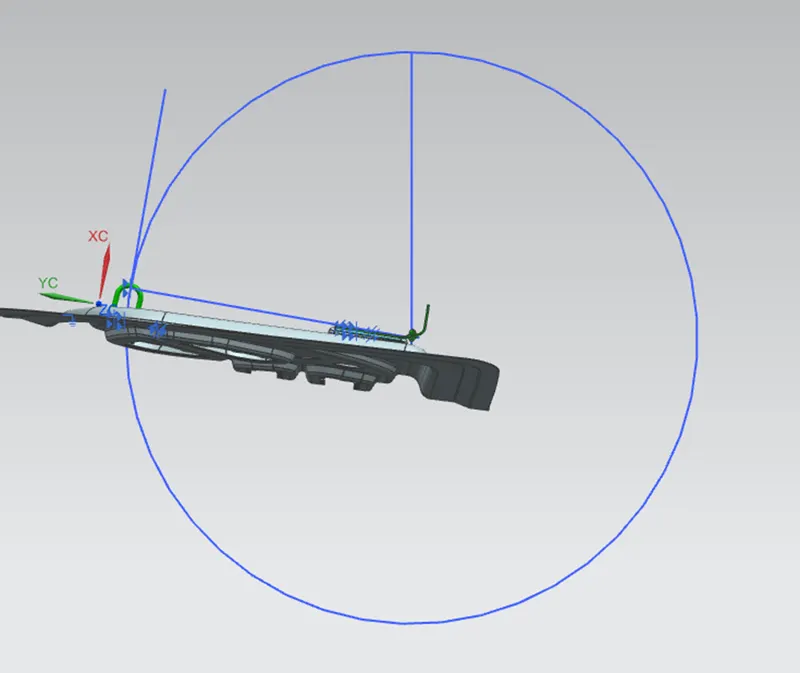
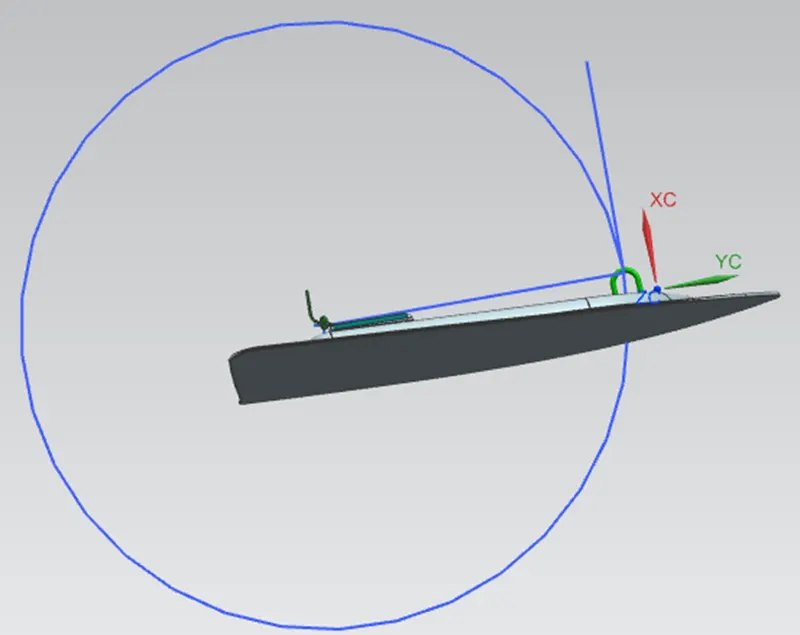
To position the latch and striker effectively, we position the hinge and draw the hinge axis. Now, using the hinge axis as the center we draw a big circle to the position where we need the latch to be placed. Then, we draw a tangent line to the circle at that point and place the latch in that region.
Mastic Sealant:
The Mastic sealant or the Mastic point is an elastic compound that behaves like a rubber. The mastic points are defined on the hood inner panel where the hood can easily deform. They help the hood outer panel to come back to its original shape after it gets deformed. The mastic has an influence area of 80mm
Data given: -
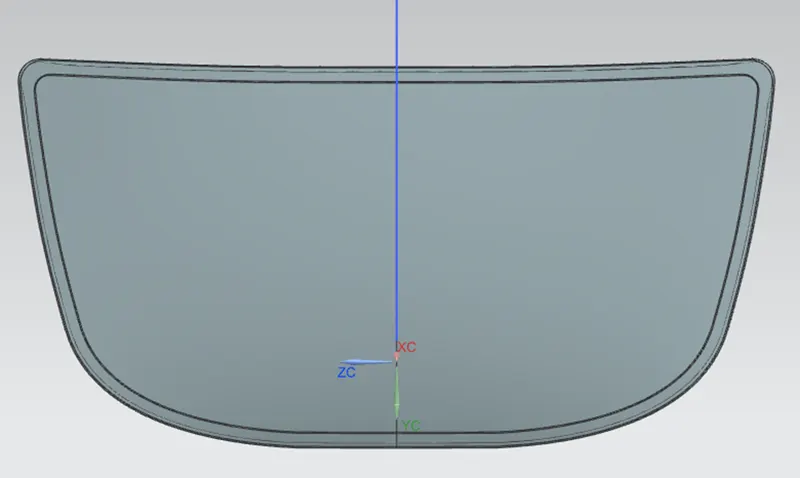
Hood outer panel skin data from the styling team
Hood Thickness Information
Outer Panel Thickness = 0.75mm
Inner Panel Thickness = 0.75mm
Reinforcement Thickness = 1.5mm
Master Section:
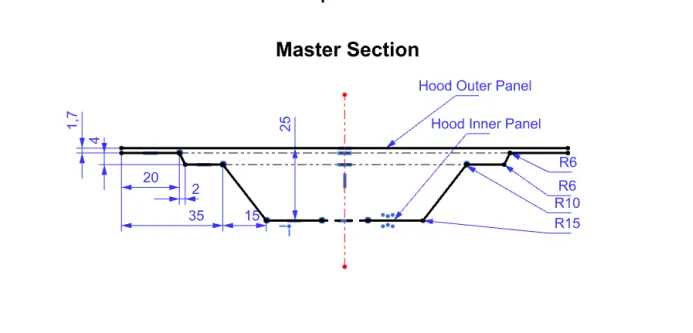
Hemming Data:
Relief rear section:
Design Approach: -
- Creating assembly file for the hood
- Importing the stylish surface, name it as parent body. Make a copy of this start designing inner panel
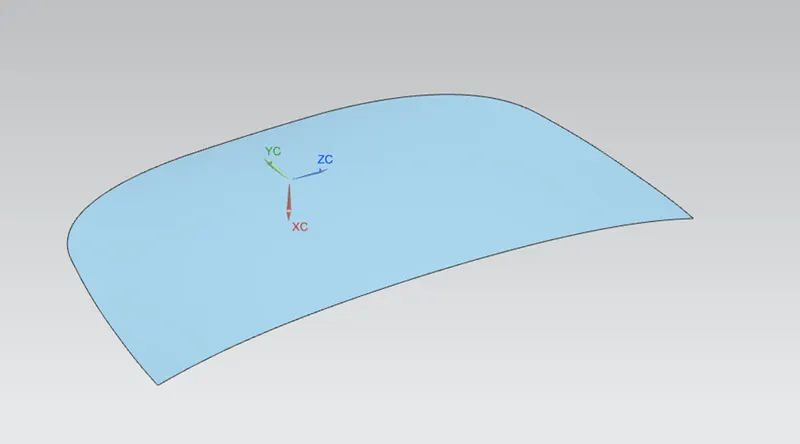
Since it is symmetric in nature, designing off the body is enough. So, trim the surface into half.
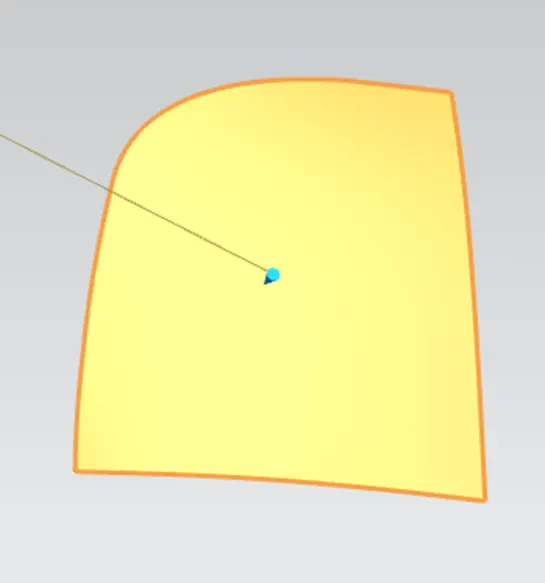
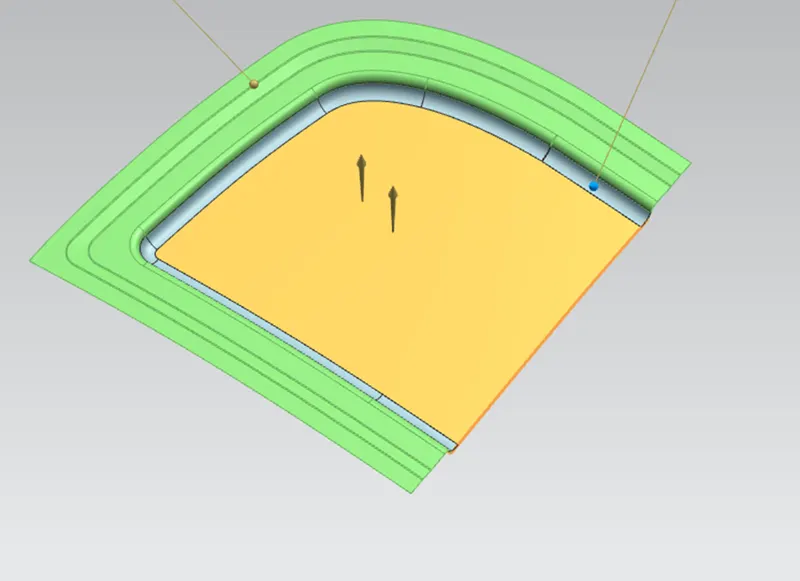
- Design the inner panel based on the given master section
- After performing the initial stages of design, we will provide local embosses to strengthen the component. To join the inner and outer panel mastic paste is provided in-between, so these cutouts are made. Fillet radius of 3.75mm given for the manufacturing feasibility.
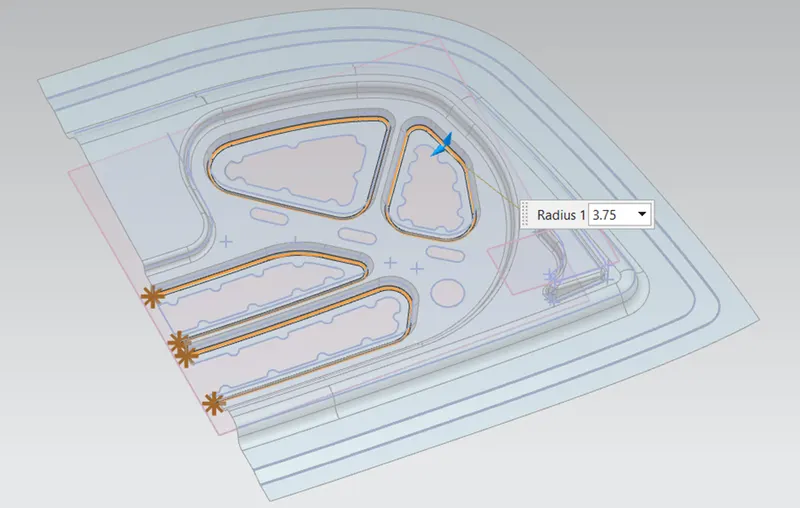
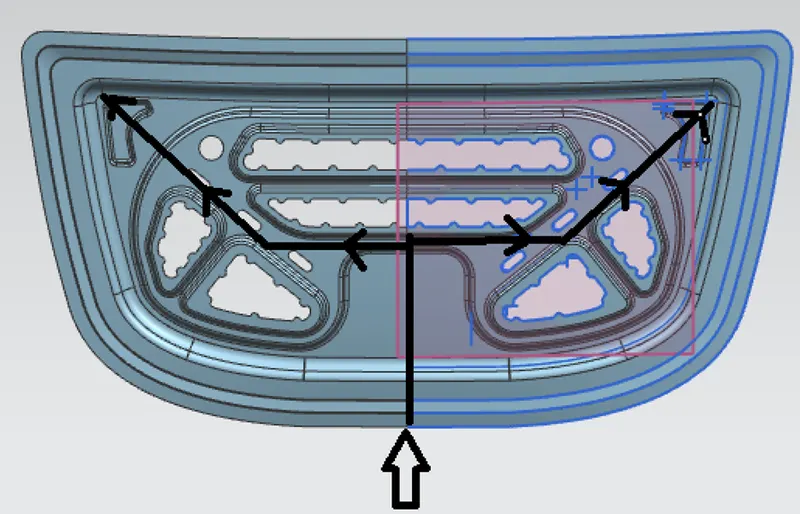
- The component will be strengthened based on the master section. When a force impacts the hood from the front, it travels in an upward direction. The component is designed to divert the force away from the passengers into the hinges, as shown in the image below:
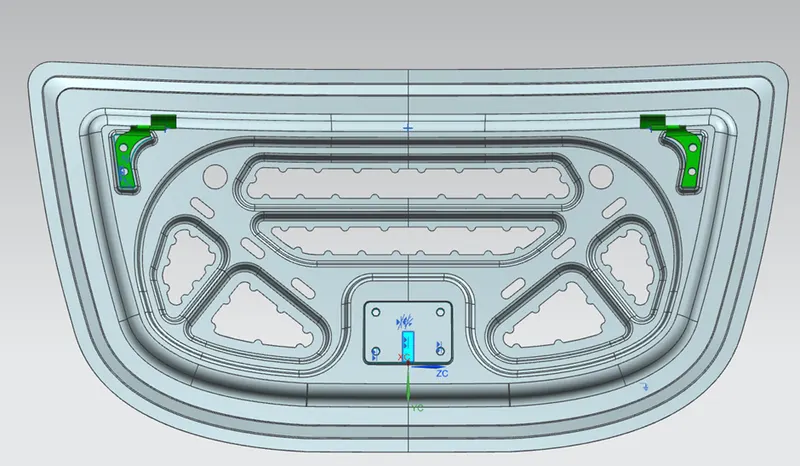
- Assemble the hinge on emboss provide for the hinge.
- To position the latch and striker effectively, we position the hinge and draw the hinge axis. Now, using the hinge axis as the center we draw a big circle to the position where we need the latch to be placed. Then, we draw a tangent line to the circle at that point and place the latch in that region.
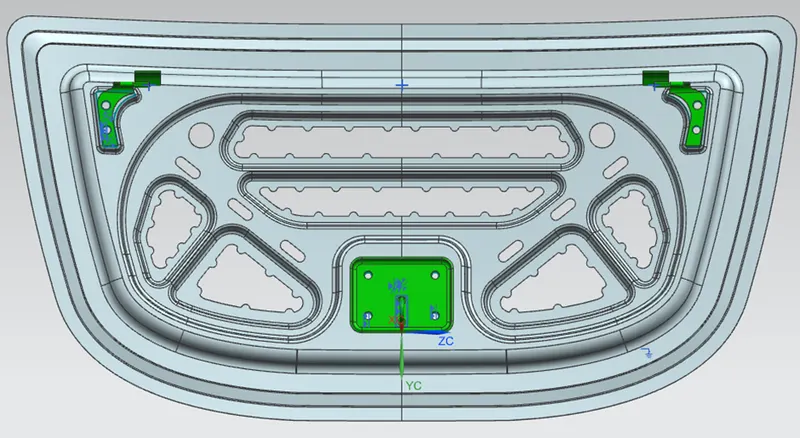
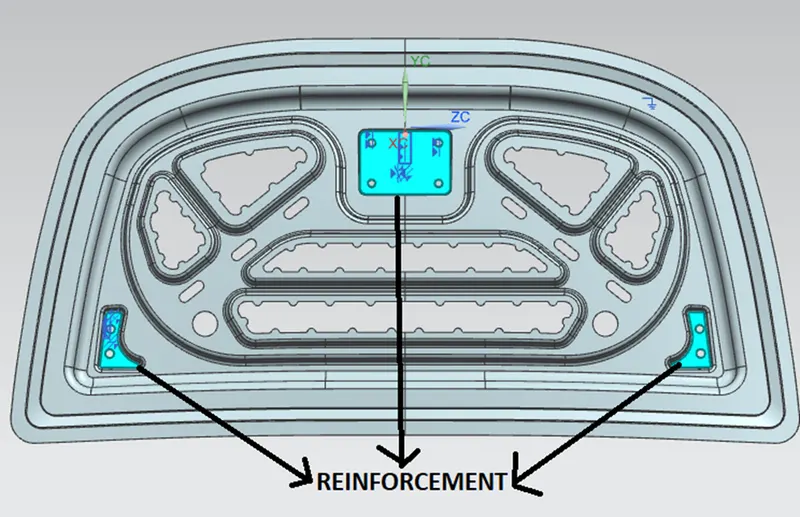
- Since the Hinge and latch assembled on the inner panel, strength on that area are reduced. To regain the strength, add reinforcements.
- Create hemming flange on outer panel based on given data.
Conclusion: -
Thus, the hood inner panel, outer panel and the reinforcements are created following the master section and manufacturing feasibility.
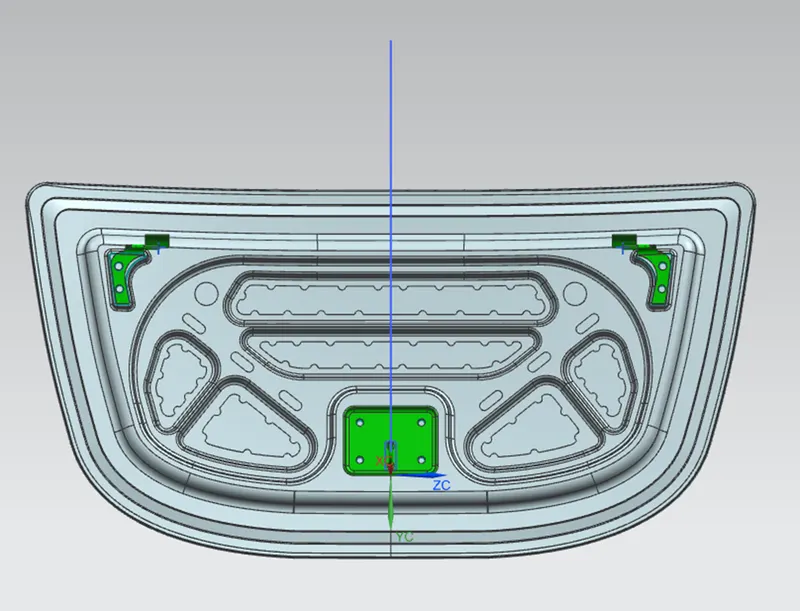
MASTIC POINTS