AIM: DESIGN AND DEVELOPEMENT OF HOOD.
INTRODUCTION TO HOOD:
The hood (American English) or bonnet (Commonwealth English) is the hinged cover over the engine of motor vehicles. Hoods can open to allow access to the engine compartment, or trunk (boot in Commonwealth English) on rear-engine and some mid-engine vehicles) for maintenance and repair.
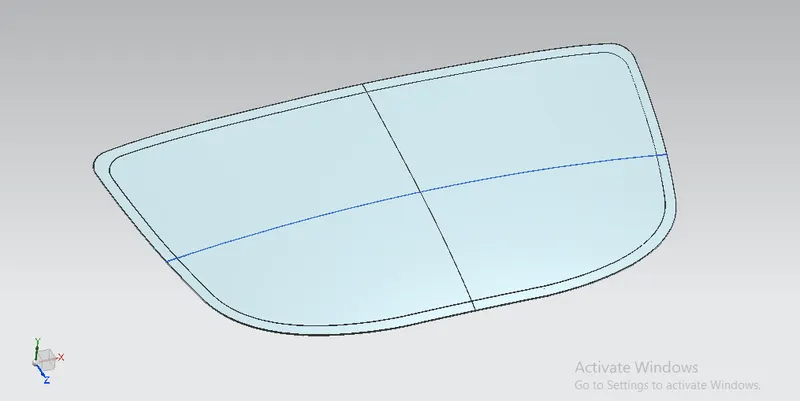
Here we are going to understand and design the concept of front-mounted engine's hood according to the standards. The hood or bonnet is the hinged cover over the engine of motor vehicles that allows access to the engine compartment, or trunk for maintenance and repair.
On front-mounted engine cars, the hood may be hinged at either the front or the rear edge, or in earlier models, it may be split into two sections, one each side, each hinged along the centerline. A further variant combines the bonnet and wheel arches into one section and allows the entire front bodywork to tilt forwards around a pivot near the front of the vehicle.
COMPONENTS:
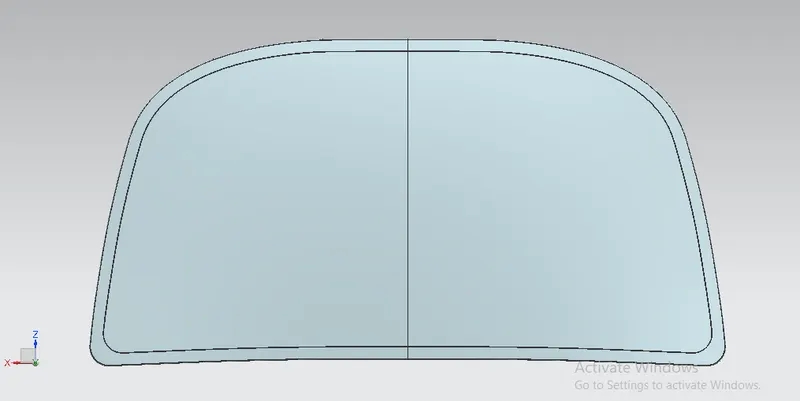
1) HOOD OUTER-PANE: outer hood design that has a potential to improve hood's ability and also to absorb the impact energy of a pedestrian's head.
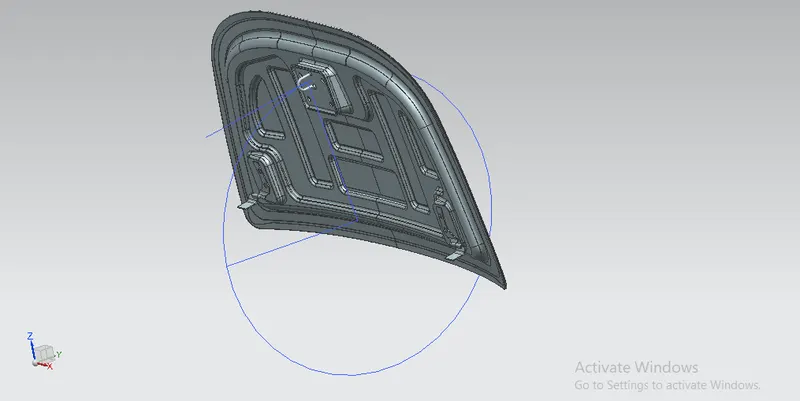
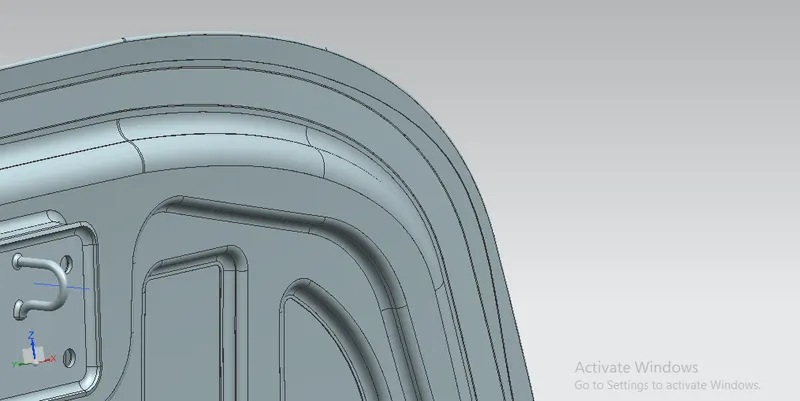
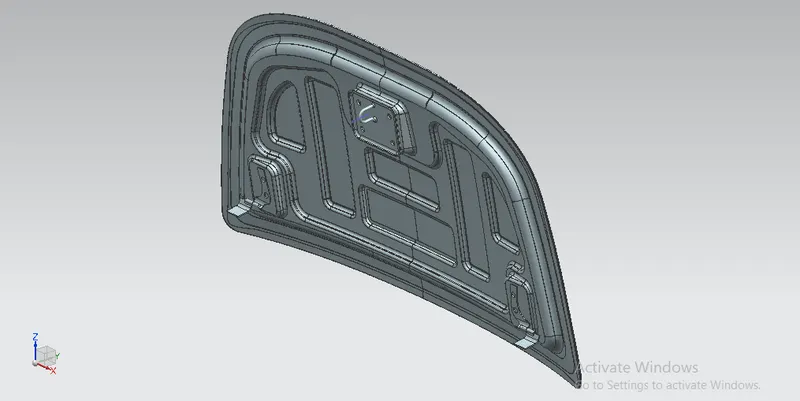
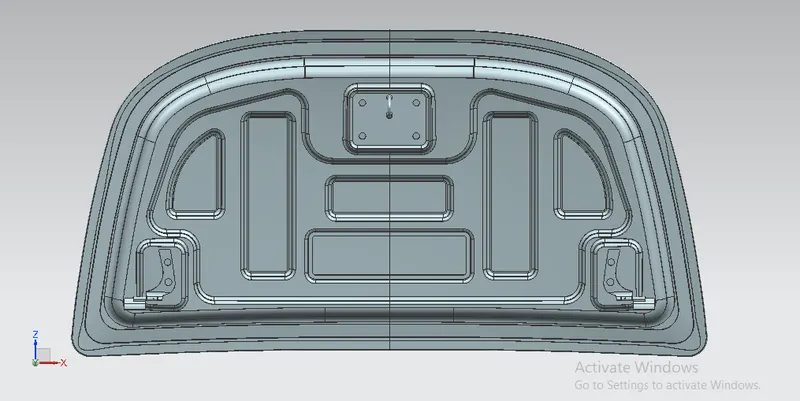
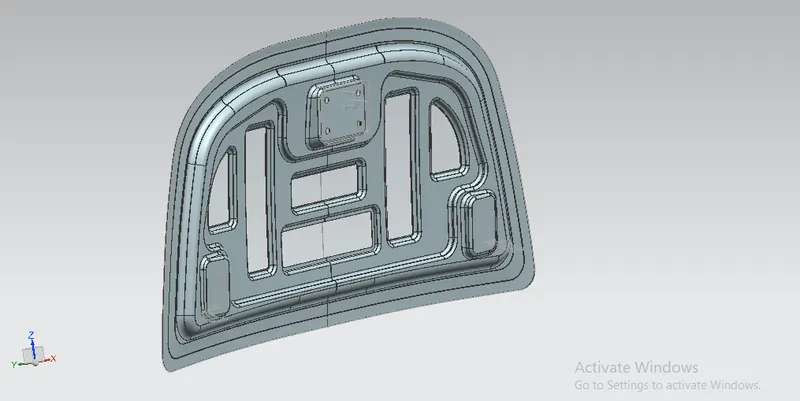
2) HOOD INNER-PANEL: A hybrid hood inner panel for a vehicle is provided to improve rigidity, durability, and pedestrian protecting performance by comprising a composite structure in which a multi-cone structure and a frame structure are individually arranged on the front and the rear.
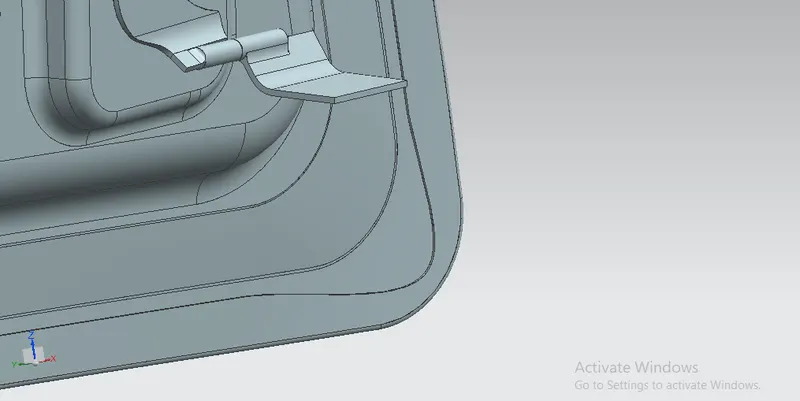
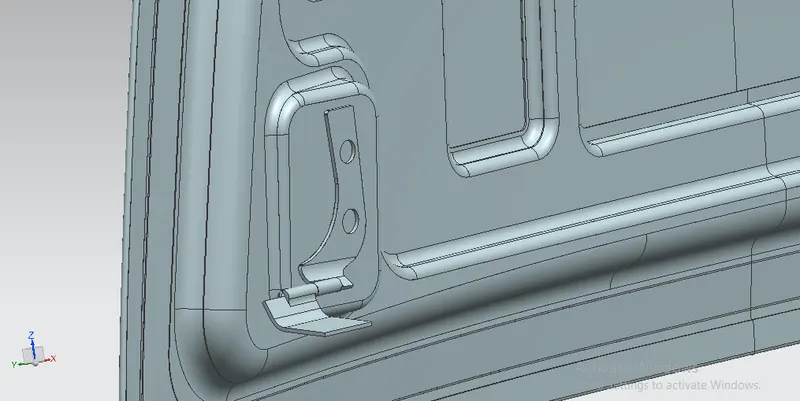
3) HOOD HINGE: Drivers can raise and lower their vehicle's hood thanks to the hood hinges that serve as the body panel's pivoting point. These hinges also hold the hood closed on their end, and most vehicles have two hood hinges, one for each side.
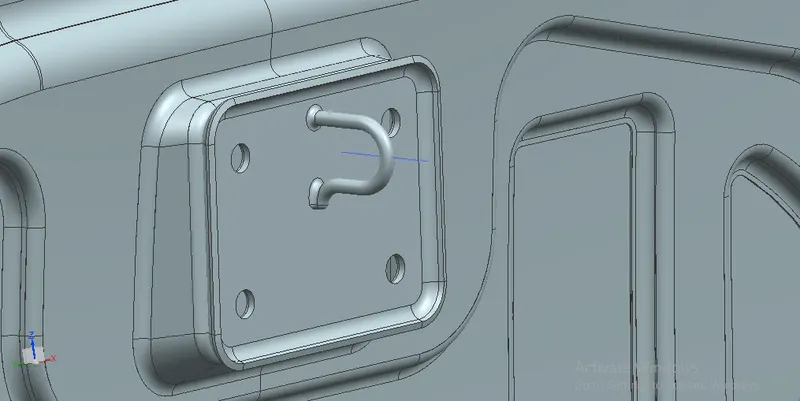
4) HOOD STRIKER: Our Hood Latch Striker is designed for long-lasting use. It's durable steel construction safeguards against body damage, ensuring the vehicle hood won't unexpectedly open while driving. Easy to install - latch restores proper hood functionality.
LATCH TRAJECTORIES:
Hood latches are simple by design but can certainly be tricky at times, especially because every make and model is slightly different.
In general, the hood latch system starts with a release handle located on the left side of the driver’s area. This handle is connected to an insulated cable that runs towards the front of the vehicle. The other side of the cable is connected to a latch under the hood that keeps the hood flush against the car’s body.
Pulling the interior release handle will disengage the latch and open the hood a few inches. Once the latch has been disengaged, and the hood lifts a few inches, a safety latch will stop the hood from being fully raised.
You’ll need to reach under the hood and feel around for a manual release lever to release the safety latch. The placement of the release lever varies by make and model but tends to be towards the center of the vehicle. Pull the safety latch’s manual release to lift the hood up all the way.
Hopefully, understanding how the latch mechanism works will help you access the battery for a jumpstart. If you have trouble, consult the owner’s manual or use a screwdriver to disengage the safety latch.
Fortunately, you were at a friend’s house and didn’t have to use your towing and labor coverage or call for roadside service.
MASTIC DATA: Mastic is commonly used on construction projects as an adhesive and sealant. It is a popular choice where one surface needs to be adhered to another in a durable bond, or where the area needs to be protected.
EMBOSS:
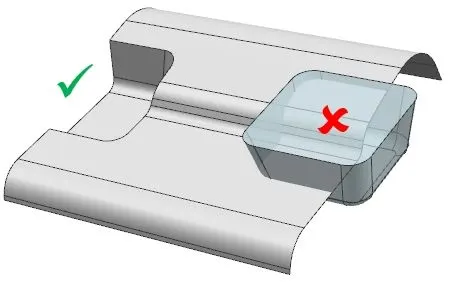
Emboss Body now addresses cases where a solid tool body intersects the boundary of a sheet target body. In the example below, the gray sheet body is the target. The tool body on the left is a sheet, and the tool body on the right is a solid. Each tool intersects a boundary of the target body.
MANUFACTURING PROCESSES:
1) DEEP DRAWING:
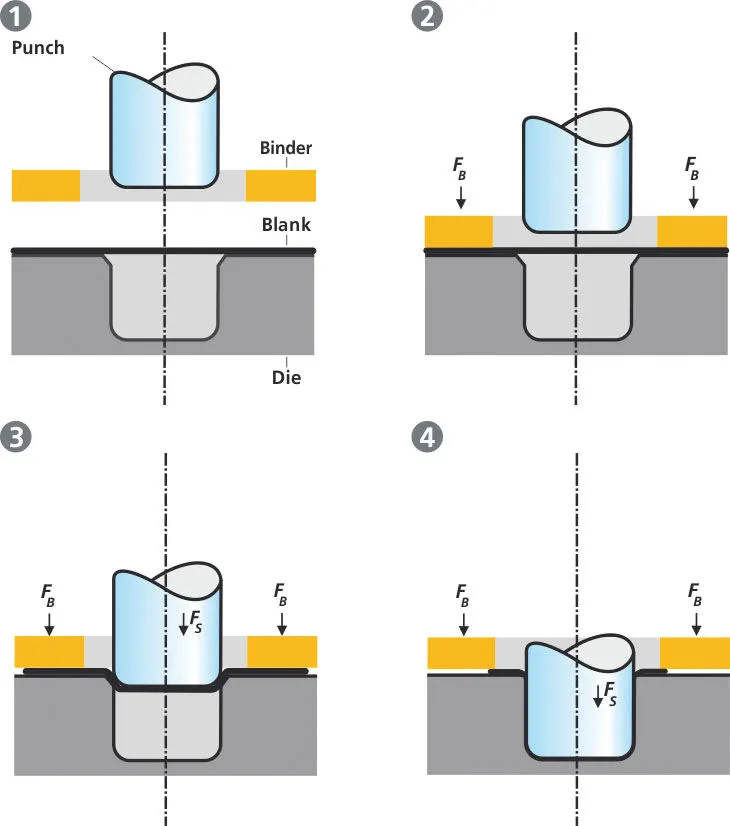
Deep drawing is a sheet metal forming process in which a sheet metal blank is radially drawn into a forming die by the mechanical action of a punch. It is thus a shape transformation process with material retention. The process is considered "deep" drawing when the depth of the drawn part exceeds its diameter.
2) HEMMING:
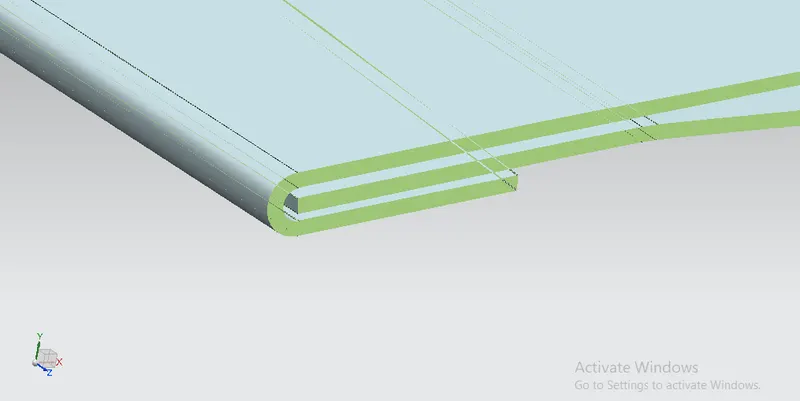
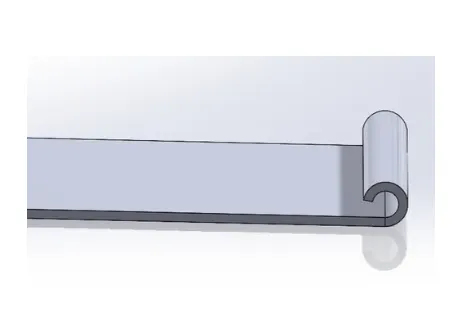
Hemming is a sheet metal forming process in which sheets are joined by bending it usually to 180°. Automotive body panels and automotive parts such as deck-lids, trunk-lids, doors, hoods and tailgates are formed by hemming process.
TYPES OF HEMMING PROCESSES:
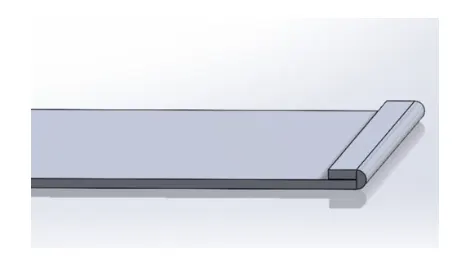
1] CLOSED HEM: Also known as a crushed hem, a closed hem is completely flush (as opposed to an open hem, which allows for a bit of space in the bend).
Closed hems are the most popular type of hem because they’re so easy to make: the sheet metal is simply flattened onto itself. There are, however, some material limitations.
This type of hem works best with material thicknesses of .040”-.125”. We try to avoid forming material over .125” because the sheet metal is likely to fracture. The flat length of the hem must also be a minimum of 4x the material thickness so that it doesn’t break.
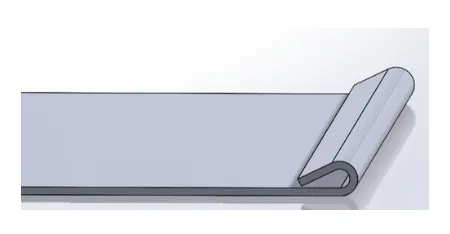
2] TEARDROP HEM: A tear drop hem is a flange that has been bent more than 180 degrees. We use teardrop hems for materials that lack the flexibility required of closed hems. This type of hem is perfect for aluminum and other fragile metals.
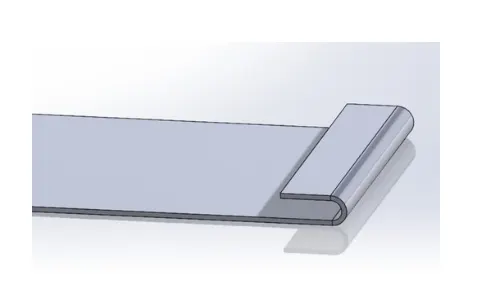
3] OPEN HEM: An open hem features a soft, curved outer edge and an air pocket in its bend. It’s ideal for handles and other applications that come into contact with people. Like a closed hem, an open hem works best with material thicknesses of .040”-.125” and a flat length that’s a minimum of 4x the material thickness.
4] ROLLED HEM: The purpose of a rolled hem is to eliminate raw sheet metal edges from a part. This type of hem is common for door and figure edges. Rolled hems provide a nice clean look and a safe-to-handle part.
RELIEF:
1] FRONT SECTION:
2] REAR SECTION:
HOOD IMAGES:
PEDESTRIAN SAFETY SYSTEM:
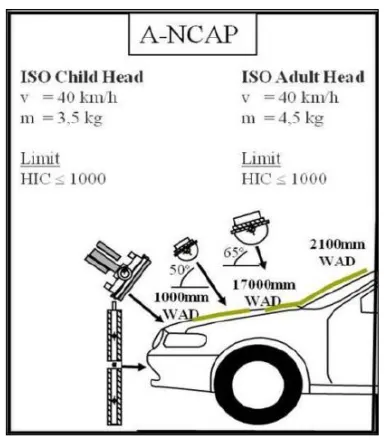
The mechanism of injury is complex. The Head Injury Criterion (HIC) indicates a measure of head injury arising from an impact, which is evaluated by the impactor in terms of the simulation of child head. HIC includes the effects of head acceleration and the duration of the acceleration. The impacts of standard child headform on nine different designs have been
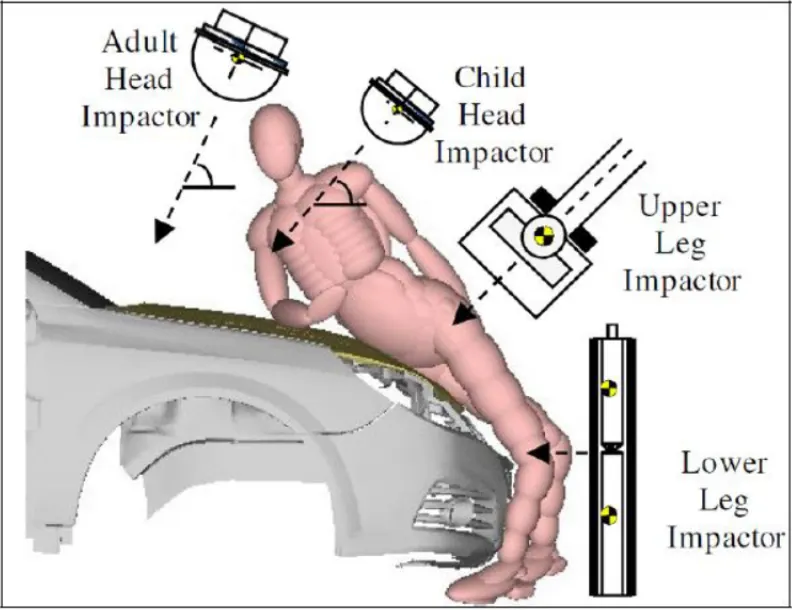
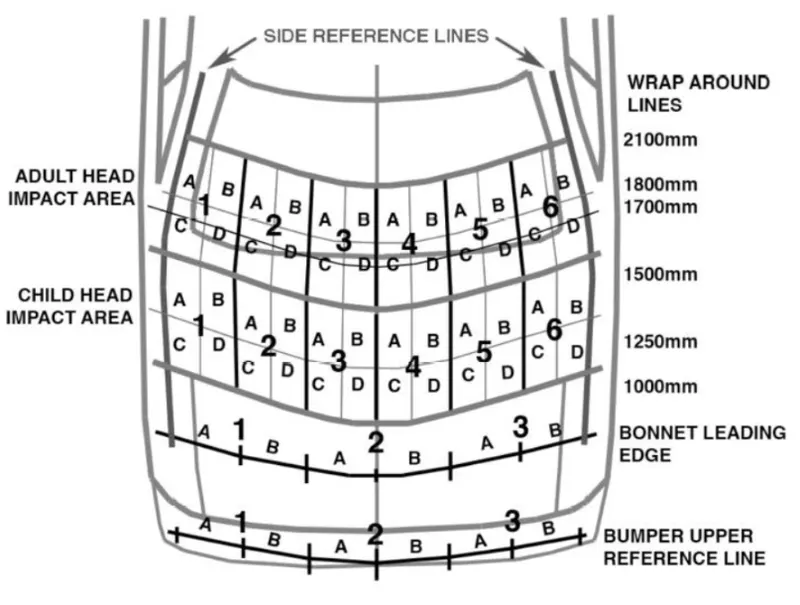
simulated in this study. ANSYS, an explicit finite element code was used to simulate the impacts. At first, the development and validation of numerical child headform impactors based on ANCAP standards are discussed. Subsequently this impactor was used for head to hood impact analysis. In addition, an explicit finite element code was developed to perform analysis for comparing the deformation, equivalent stress and HIC of three different materials. ANCAP (Figure) provides measures for the assessment of pedestrian protection performance of a passenger car experimentally by firing subsystem impactors representing a child head, adult head, upper leg and lower leg at a specified angle and speed to the front end of a stationary vehicle. The resulting injury measures from these physical tests are assessed against the bounds specified by the
protocols shown in Figure. This study focuses only on child pedestrian head impact to the outer hood
panel and do not include inner hood, upper or lower leg impacts defined in these protocols.
Hood of engine design in such a way that reduces air effect and all the maintenance part easy to do and it should also protect from the external disturbance on the engine. When car comes to an accident it must should be impact force and distributed out side so it should be the Y-shape.
While designing Hood should take care of Safety, Quality, Styling and manufacturing. The Most important safety requirement to be consider while designing the Hood is the pedestrian safety from collision from the front side. Pedestrian safety, It's a norm which provides safety feature to body when car get collide from the front side and reduce the injuries to the body.