Hood design-Week 2
ANSWER:
The hood American English or bonnet commonwealth English is the hinged cover over the engine of motor vehicles. Hoods can open to allow access to the engine compartment or trunk (boot in commonwealth English) on rear-engine and some mid-engine vehicles) for maintenance and repair.
A car hood also referred to as a bonnet in some other countries is the hinged cover that rests over the engine of a front-engine
vehicle. Its purpose is to provide access to the engine for repair and maintenance. Car hoods are typically constructed from steel and sometimes from aluminum.
In UK terminology, a hood refers to a fabric covering the passenger compartment of the car (known as the “roof” or “top” in the US). For many motor vehicles built in the 1930s and 1940s, the resemblance to an actual hood is clear when it is opened and viewed from the front; in modern vehicles, it still serves the same purpose, but no longer resembles a head covering.
On front-engined cars, the hood may be hinged at either the front or the rear edge, or in earlier models (e.g. the Ford Model T) it may be split into two sections, one on each side, each hinged along the centerline. A further variant combines the bonnet and wheel arches into one section and allows the entire front bodywork to tilt forwards around a pivot near the front of the vehicle.
Hoods are usually made from the same material as the rest of the body. This can be steel, aluminum, fiberglass, or carbon fiber. However, some aftermarket companies produce fiberglass or carbon fiber steel hood replacements to make the vehicle lighter. The hood release system is common on most vehicles and typically consists of an inner hood latch/lock handle, a hood release cable, and a hood lock assembly. The hood lock handle is usually located under the steering wheel, next to the driver’s seat, or in the door frame.

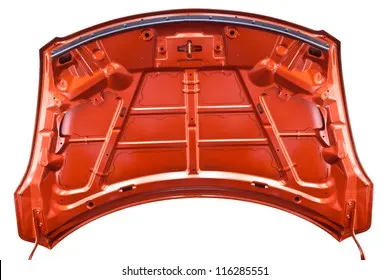
DESIGN OF HOOD:
There lot more things before the hood gets into designing hands that to be considered.
The height of the hood is designed based on the country standards as the height of an average person changes from place to place.
The material consideration is also required that should be cost-effective to manufacture.
The Hood should be designed a lightweight for the pedestrian safety as the person hit to hood there should be minimal harm to the person.
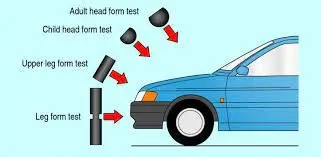
input design for the given surface
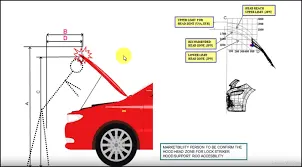
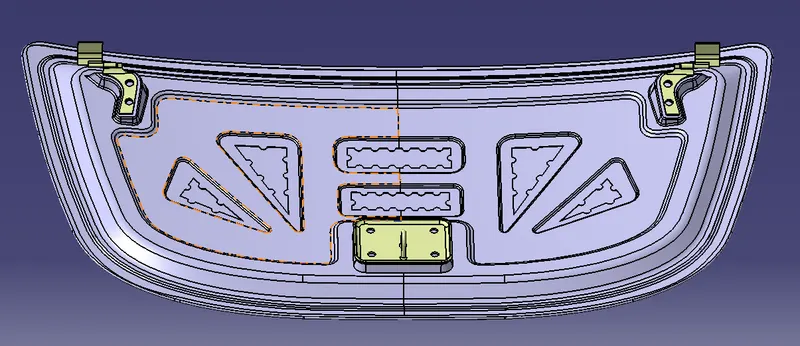
The following parts are used in the hood assembly,
1. Hood outer panel
2. Hood inner panel
3. Hinge assembly
4. Striker assembly
Hemming:
Hemming is the process in which the edge is rolled flush to itself, while a seam joins the edges of two materials. Hems are commonly used to reinforce an edge, hide burrs and rough edges, and improve appearance.
Hemming is a sheet metal forming process in which sheets are joined by bending usually to 180 degrees. Automotive body panels & parts such as deck lids, trunk lids, doors, hoods & tailgates are formed by hemming processes.
Embossing:
The sheet metal embossing operation is commonly accomplished with a combination of heat & pressure on the sheet metal,
depending on what type of embossing is required. Sheet metal is drawn through the male & female roller dies, producing a pattern or design on the sheet metal. Depending on the roller dies used, different patterns can be produced on the sheet metal
Data used :
Outer panel thickness= 0.75 mm
Inner panel thickness= 0.75 mm
Reinforcement thickness= 1.5 mm
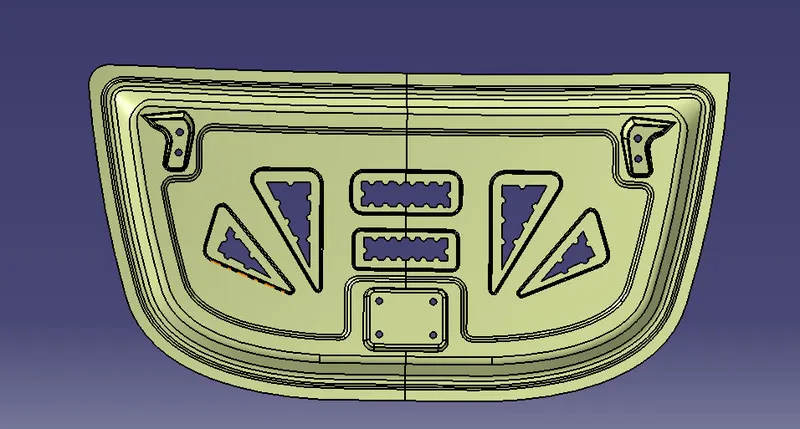
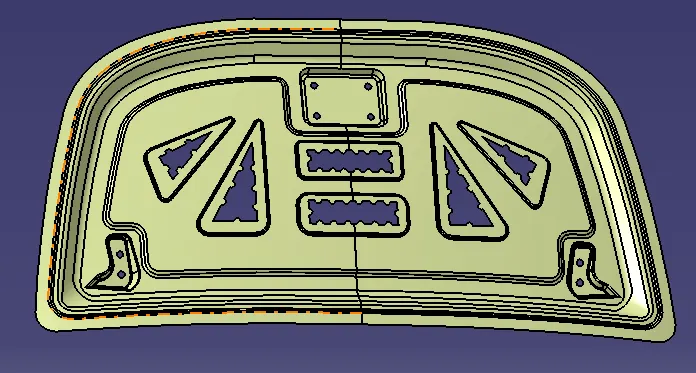
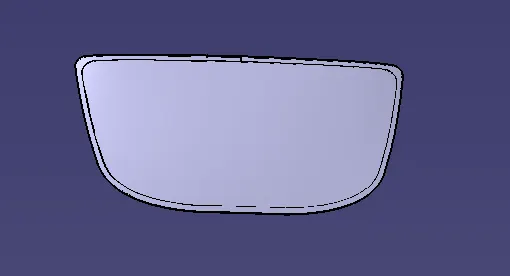
Given the outer hood panel
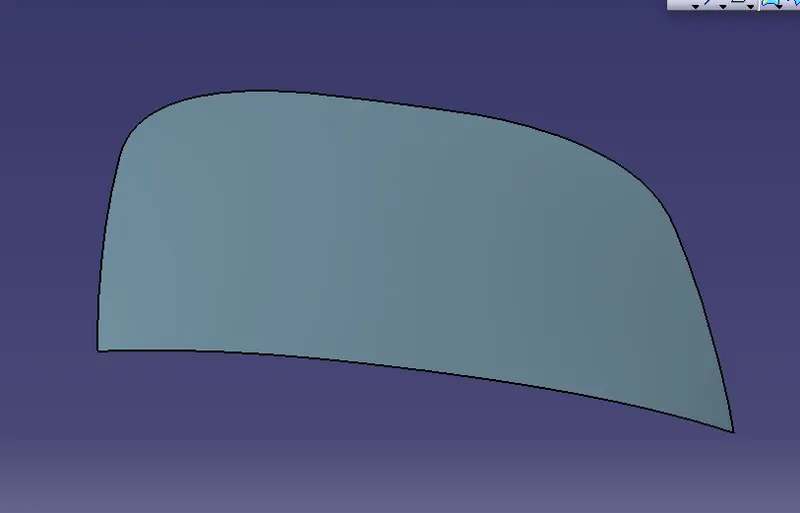
first, offset the surface to the 0mm
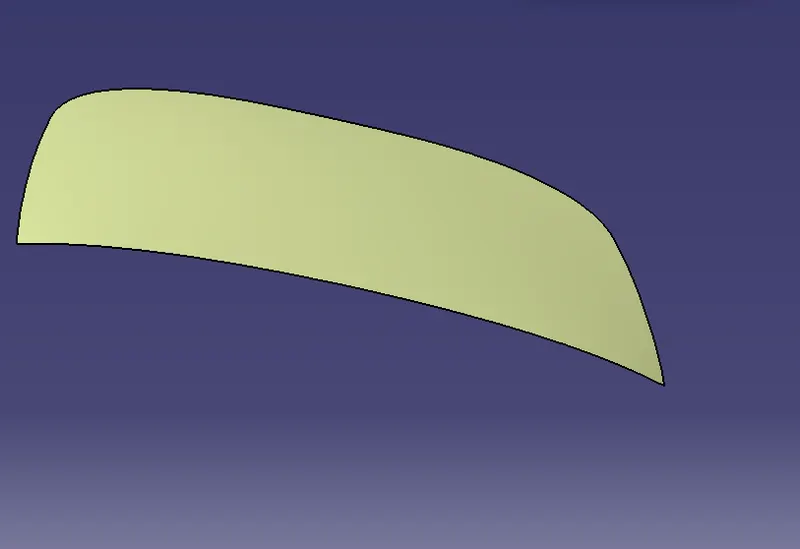
split the surface into two equal parts.
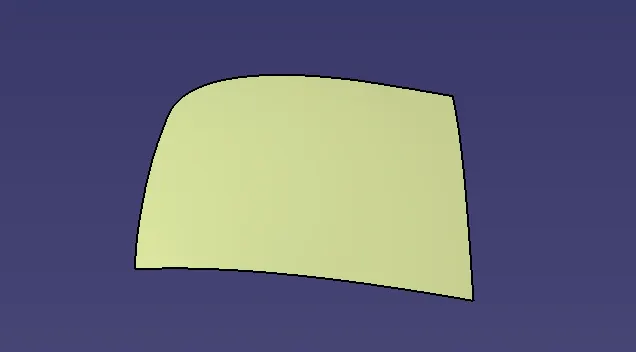
as per the master, the section gives a parallel curve to some value
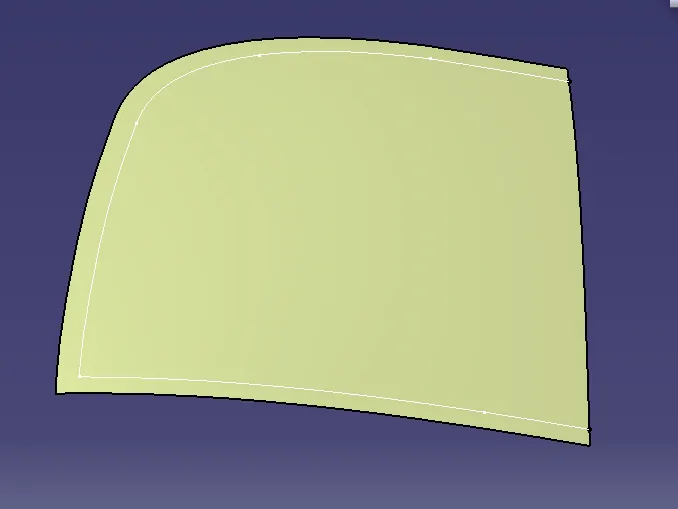
then split the surface
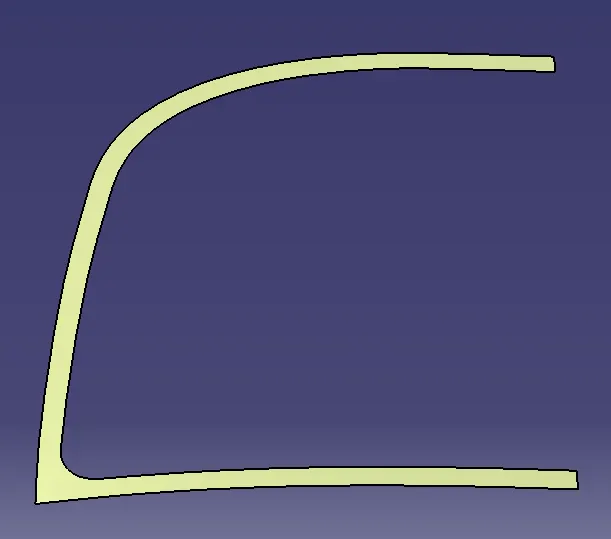
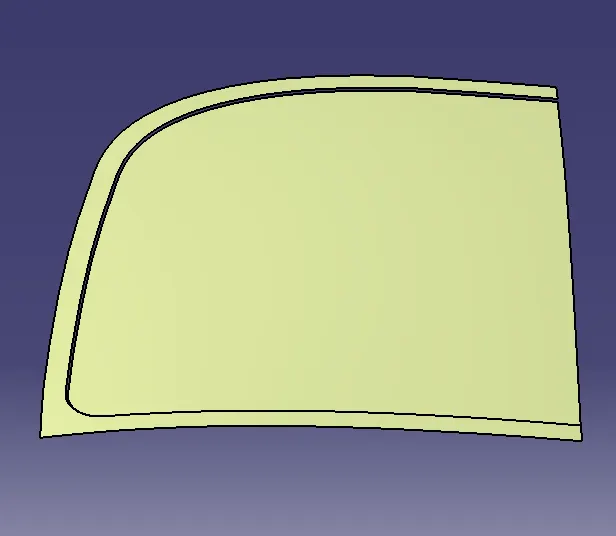
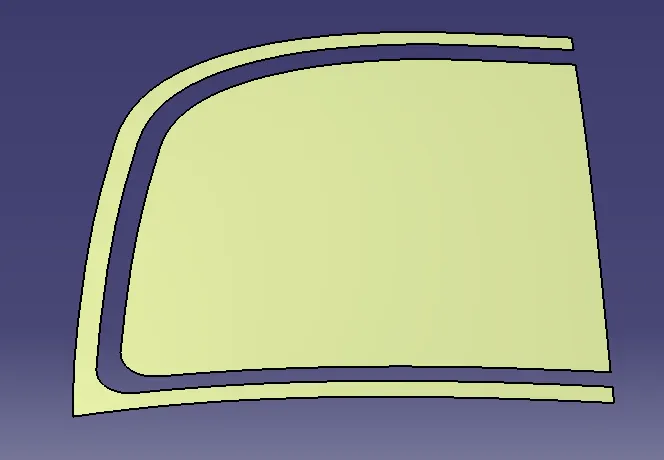
join the surfaces
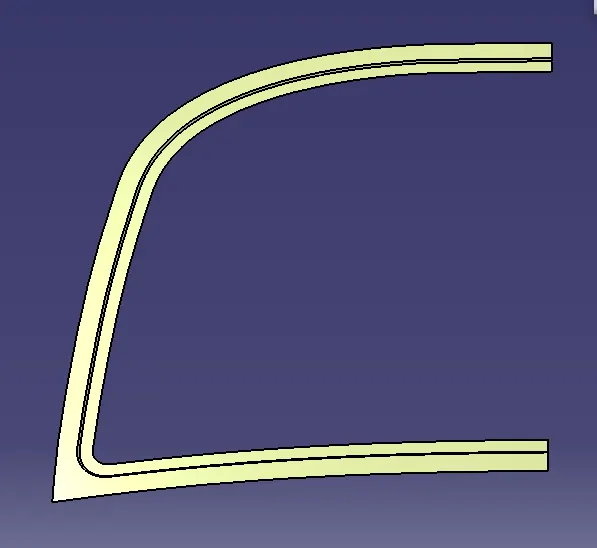
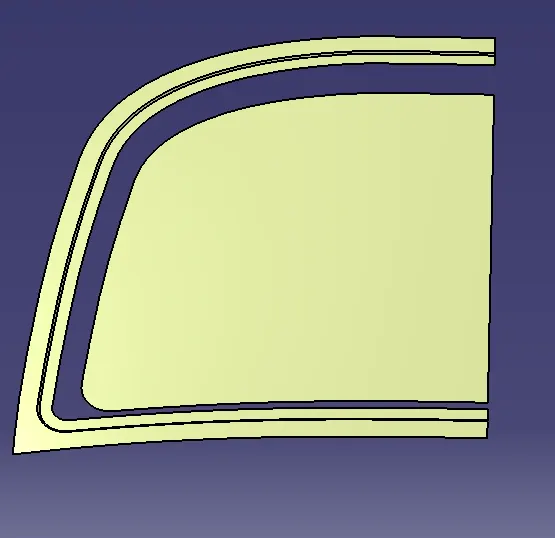
use multisection to fill the gaps
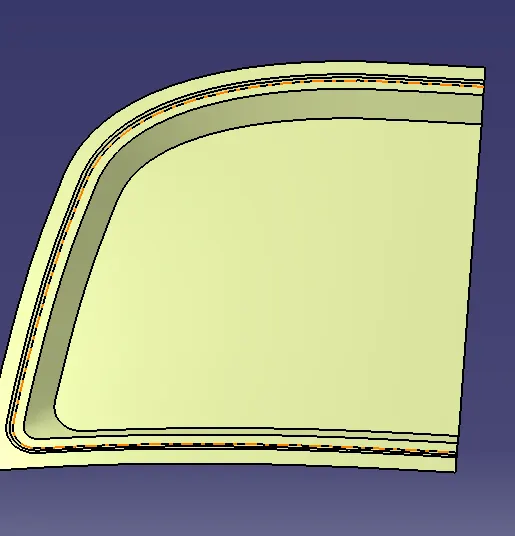
draw a sketch to create an embossing and project it on the surface
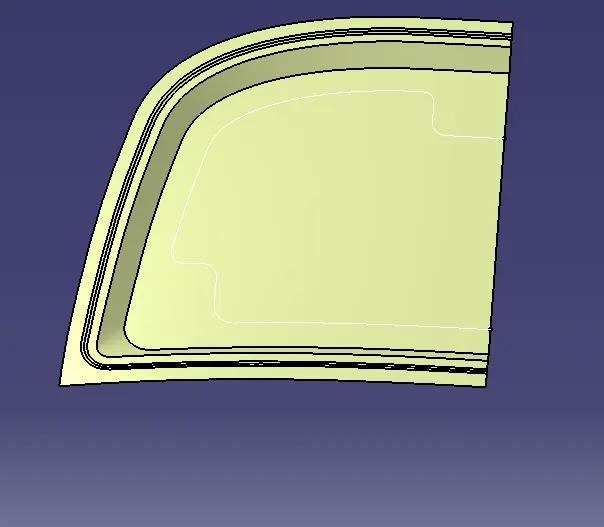
extrude and join give the edge fillets
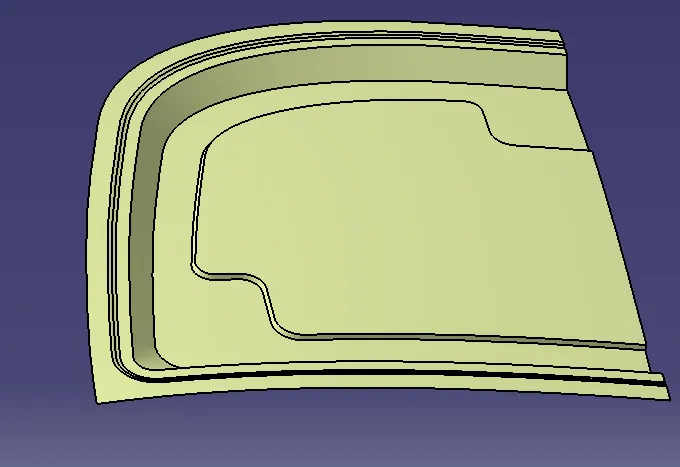
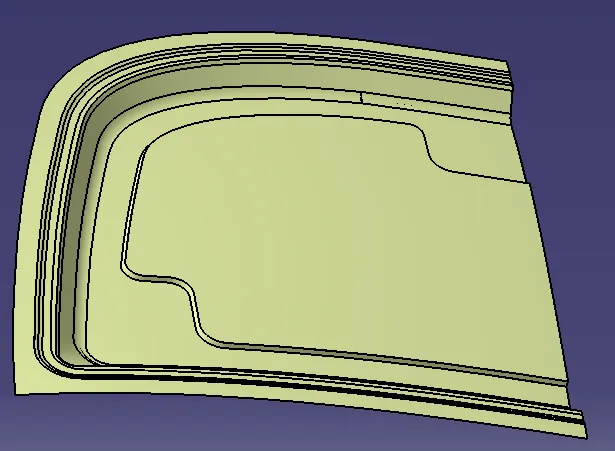
create the embossing and symmetry to the
HINGE PLACEMENT :
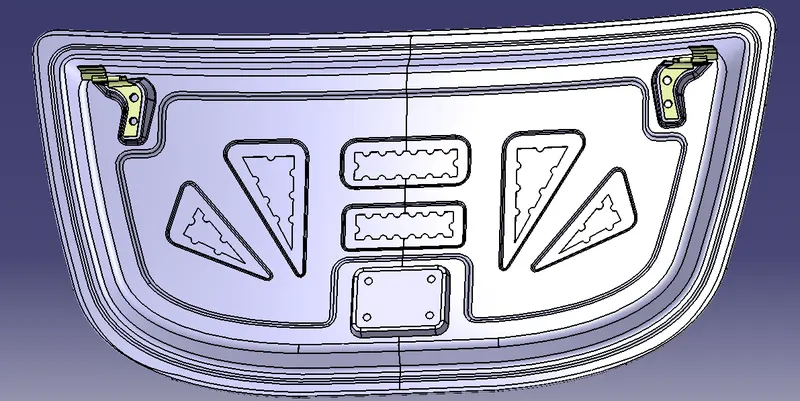
First hinges are placed onto the embosses and as the inner panel is applied with fixed constraint hinge is placed parallel and touched constantly. Then the hinge is mirrored to another side to get the same hinge position on another side of the inner panel.
LATCH ATTACHMENT :
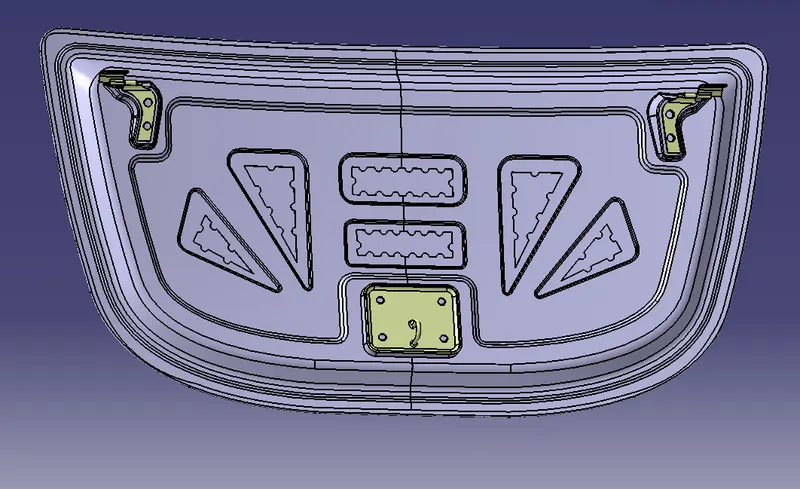
The latch/Striker is positioned from the basis of the hinge's center point.
Two points are marked from the two hinge axis and a line is drawn from the two points.
A midpoint is taken from the line for positioning the latch.
conclusion;
design of the hood inner panel, embossing, hemming, and the attachment creation of hinges and strikes is created got the hood design the hood is designed as per the master section of the given surface.