Hood design-Week 2
Hood Design:
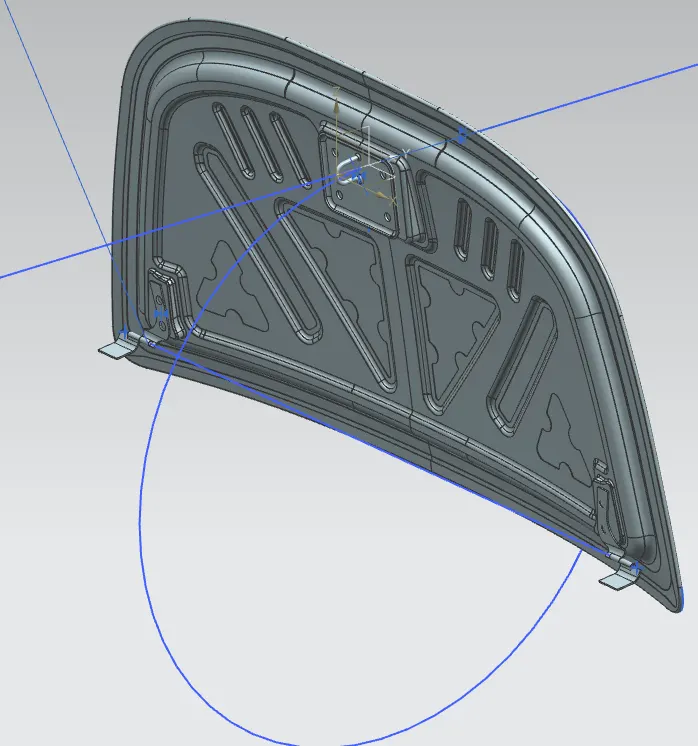
ISO VIEW
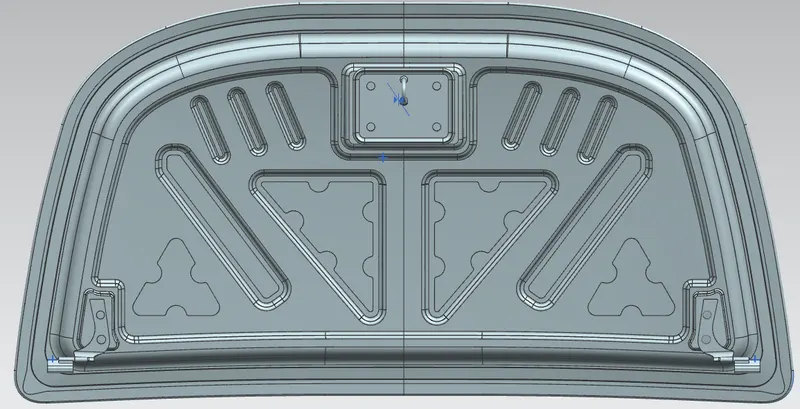
FRONT VIEW
Hood introduction:
- Hood is one of the major components of vehicle body. It mainly covers 2 major power transmitting components i.e.
Engine and Radiator assembly. Along with covering them through its inner panel, hood outer panel also serves major role in aesthetics and ergonomics of vehicle.
- Hood is made aerodynamic in shape to reduce air effected and used to decorate the front portion of the car and To add a luxurious look of cars.
- Hoods are typically made out of the same material as the rest of the bodywork. This may include steel and Aluminium however, some aftermarket companies produce replacements for steel hoods in fiberglass or carbon fiber to make the vehicle lighter.
Purpose of Hood Design:
- Save and safety of purpose inside the car.
- Cover all engine parts and radiators.
- Reduce the air effect due to design aerodynamic shape.
- Provide access to the engine for repair and maintenance.
- Reduces engine noise, providing you with a quieter driver.
- It can also help keep the paint underhood last longer.
It has 3 supportive components:
1.Hinges – for easy opening and closing of hood
2.Latch- to keep hood in correct closed position
3.Support Rod- helps in keeping hood in open position.
Hood manufacturing requiremens:
- Embosses on hood inner panel.
- Mastic data.
- Position of hinges for correct opening and closing of hood.
- Hemming of hood.
Embossing operation:
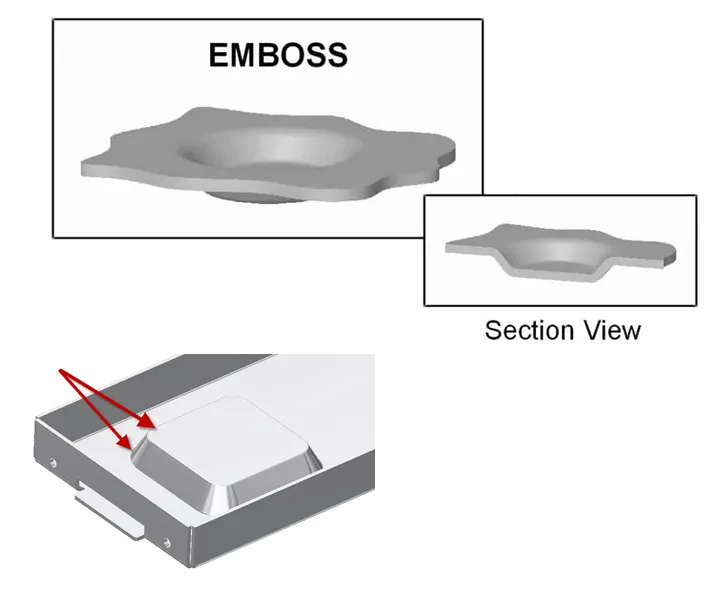
Sheet metal embossing is a stamping process for producing raised or sunken designs or relief in sheet metal. This process can be made by means of matched male and female roller dies or by passing sheet or a strip of metal between rolls of the desired pattern.
Embossing is done by pressing a sheet of paper into s female die, that has a design engraved or etched into it.
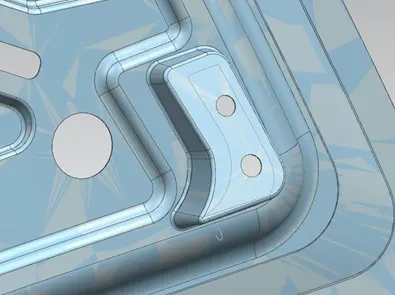
While creating these embosses we have to keep in mind about draft direction and draft angle so that stamping tool will create proper embossed structures on panel. Consider following image for reference of embossed sections on inner panel.
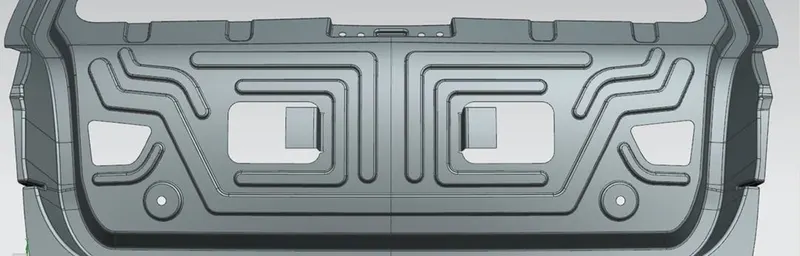
Mastic data
To reduce NVH i.e. noise vibration and harness between hood inner panel and outer one, mastic sealant need to applied.
Every mastic sealant improves the strength locally around 80mm. It joints the inner panel with outer panel also reducing
The vibrating the vibrating noise.
Thus while designing embosses on inner panel we have to design mastic portions where sealant can be applied as
Shown in image: Mastic data.
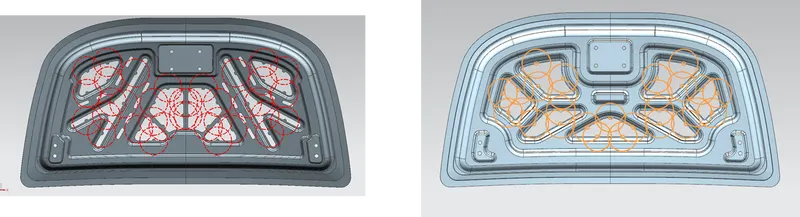
Mastic regions are designed such that these will be closer to outer panel. Rubber sealant is applied on the mastic
Regions of hood inner panel which will glue both panels together.
Hinge positioning:
Hinge positioning is needed to be properly designed so that opening and closing of hood will occur in correct manner.
Also it will decide if latch and sticker get closed correctly or not.
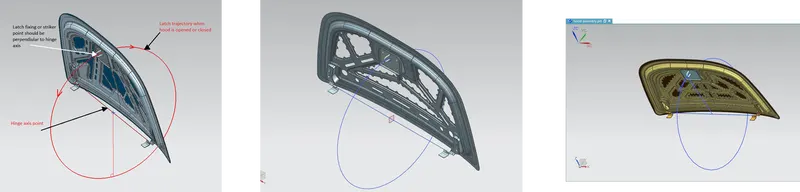
TO have proper hinge location, align hinges on inner panel such that midpoint of axis passing through both hinges with sticker
Centre point be radius which will create a trajectory. This trajectory should be such that it will be perpendicular to sticker.
Refer image: Trajectory.
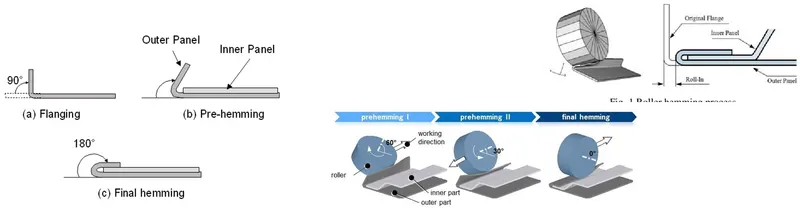
Hemming of hood
Hemming is the process of joining hood outer panel with inner panel by bending and pressing outer edge of
Hood outer panel with inner panel. Hemming of hood keeps both panel together similar to welded components
Thus process spot welding of hood is eliminated. Its specified nomenclature is to provide gap of 0.2mm
between hood outer panel and inner panel at both top and bottom of inner panel is to be maintained.
Purpose of hemming operation:
Hemming is a sheet metal forming operation in which the edge of the sheet is folded back on itself.
It serve several purposes: to fasten two sheet metal parts, to improve the appearance of edges (remove burrs and rough edges)
And to increase the part stiffness.
Purpose of sheet metal operation sequence wise for Hood Design:
- Blanking and punch.
- Deep drawing
- Embossing.
- Hemming.
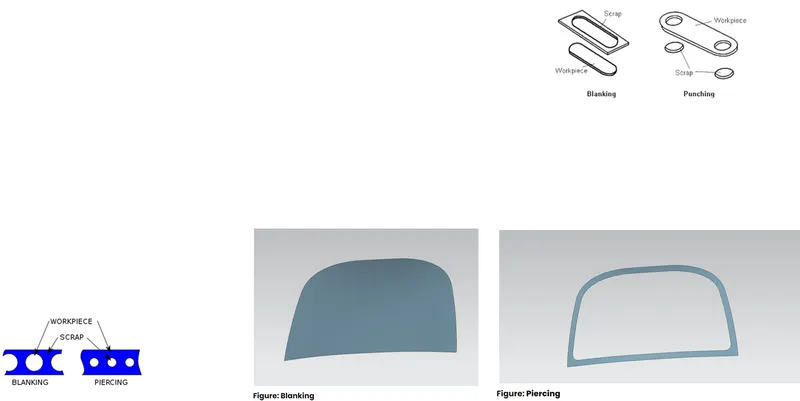
Blanking and piercing operation:
Blanking and piercing are shearing processing in which a punch and die are used to modify webs.
The tooling and processing are the same between the two, only the terminology is different: in blanking the punched out pierce
is used and called a blank; in piercing the punched out piece is scrap. The process for parts manufactured simultaneously with
Both techniques is often termed “pierce and blank”. An alternative name of piercing is punching.
Purpose of Blanking and piercing:
- Reduce the body weight.
- Improve the Strength of the body.
- Distribute impact force.
- Improve mileage of Car.
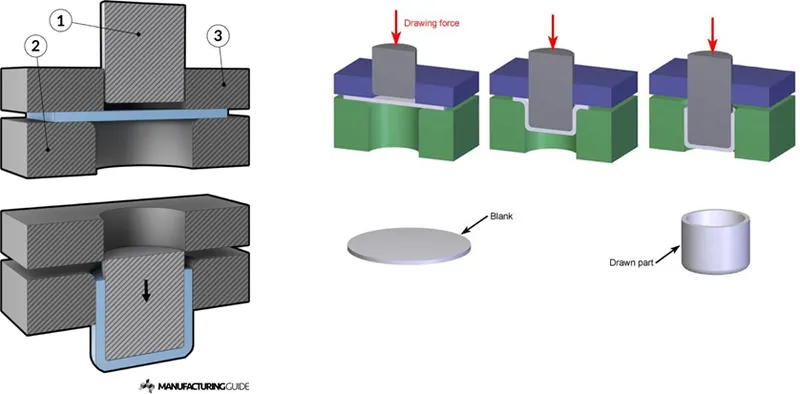
Deep Drawing Operation:
- Deep Drawing of sheet metal is used to form contains or object with depth.
It is a plastics deformation in which a flat sheet or plate if formed into a recessed three dimension part with a
depth several times the thickness of the metal. The process of deep drawing begins with a flat sheet metal blank
held on the upper surface of the die.
- A deep drawing process is used for the manufacturing of the inner panel. The material used is aluminum as it can absorb
Twice the crash energy of mild steel, light, dent free, and can make body panels thicker while still lowering the weight.
Purpose of deep drawing operation:
- Operation in which the which thickness of the shell wall is reduced and it’s surface smooth. When materials get compress b
between the punch and die, which reduce the thickness and increase the height of the cup.