Hood design-Week 2
REPORT OF HOOD DESIGN
AIM: Create the hood inner panel and its assembly as per the given hood outer panel and master-section.
Objective: -
- To create Hood inner panel as per the master section, and design consideration.
- To create complete Hood assembly with proper positioning of Hinge, Latch and Striker.
INTRODUCTION: -
- HOOD:
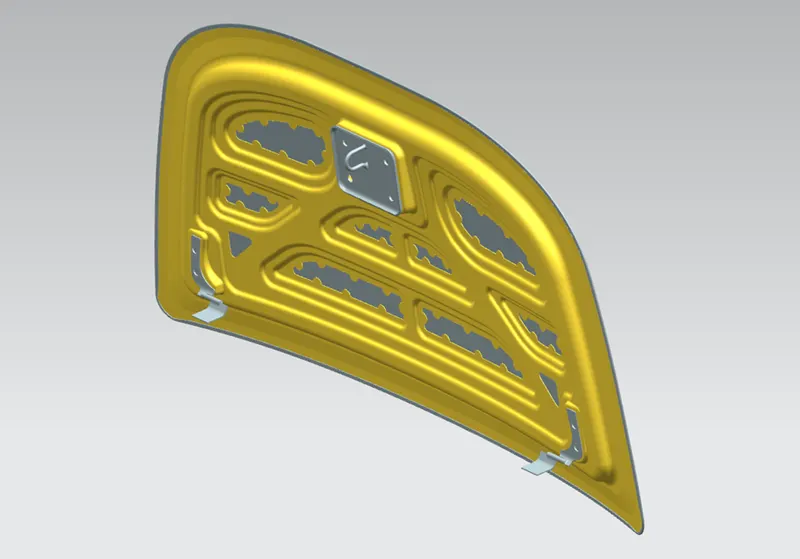
- The Hood or Bonnet is an opening body panel that covers the engine in a front-engine vehicle.
- The hood is also considered as another type of door in a vehicle as it consist of an outer panel and inner panel provides strength while the outer panel function as the metal cover.
- The hood is that part of car or any vehicle that dissipates the energy outside the car body or vehicle body rather than inside car body.
- Hood Opening Angle: -
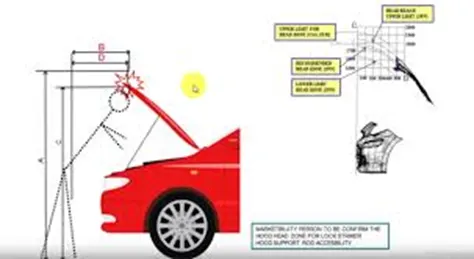
- The Hood opening angle is that angle which define how much of car hood is open. While designing of hood. We have to decide the opening angel of hood. The opening angel of the hood is varies from zone to zone.
- Hood Stay: - A device for supporting the engine hood of a motor vehicle in its open position. There are mainly two type of Hood stay –
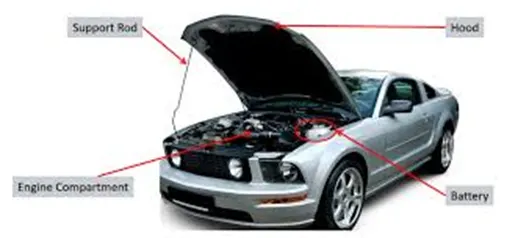
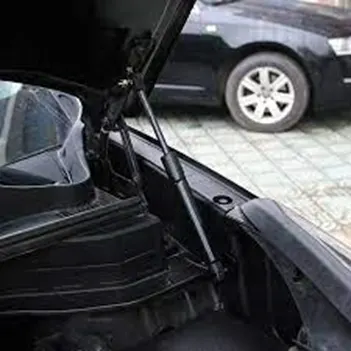
- 1) Support rod 2) Gas stay.
1. SUPPORT ROD: -
2. GAS STAY: -
- Reinforcement: - It is addition of material to improve or compensate the strength of part, which loose in addition of part like striker and hinge.
Guideline for good Manufacturing: -
- Minimum draft of 7 degrees given for sheet metal.
- Sharp edges can avoided for easy manufacturing.
- Complex shape can avoided.
SAFETY CONSIDERATION: -
- Pedestrian safety: - In japan and Europe regulation have come into effect that the place a limit on the severity of pedestrian head injury when struck by a motor vehicle. This s leading to more advanced hood design, as evidence by multi cone hood inner panel designs, other changes are being made to use the hood as an active structure and push s surface several centimeter away from the hard motor component during a pedestrian crash.
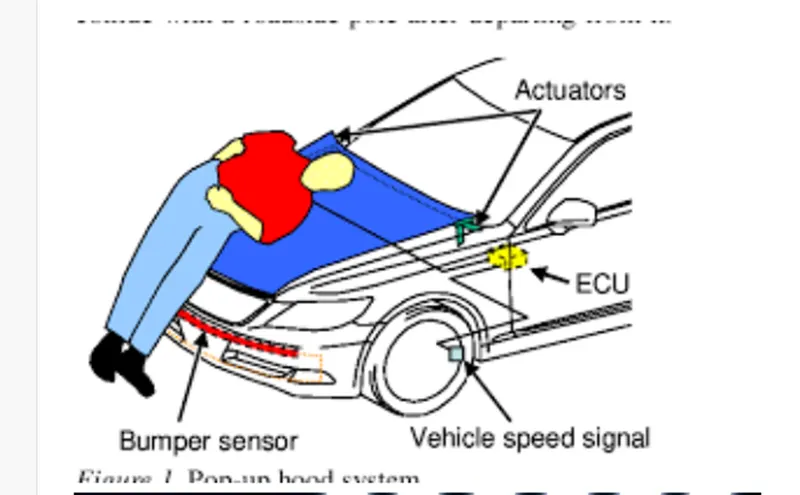
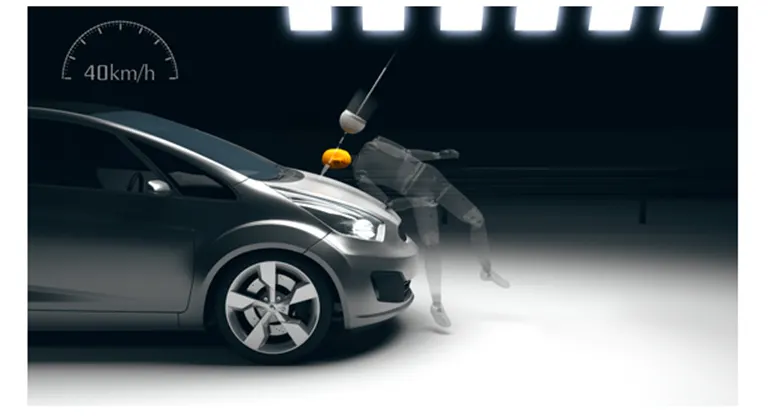
- Protecting Head: - The hood in most vehicle is usually fabricated from sheet metal, which is complaint energy absorbing structure which poses a comparatively small threat. Most serious injuries occurs when there is insufficient clearance between the hood and the stiff underlying engine component. A gap of approximately 10 cm is usually enough to allow the pedestrian head to have a controlled declaration and a significantly reduce risk of death.
- Wrap Around Distance (WAD): - When the car crashes on the pedestrian the whole body wraps around the front shape of the car, and. the head impact on the bonnet or the windscreen. The distance at which the head affect the car from the ground is mentioned as Wrap around Distance (WAD).
NOISE VIBRATION HARSHNESS (NVH): -
Noise Vibration harshness (NVH is the study and modification of the noise and vibration characteristic of the vehicle, particularly cars and trucks. to improves NVH, mastic sealant where provided on the inner panel. Here mastic panel plays a major role to avoid noise and vibration into cabin.
1. Outer panel
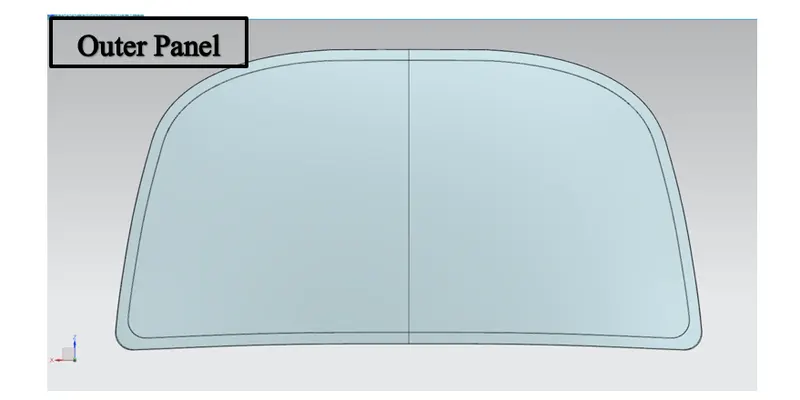
Outer panel used to decorate the car and add luxurious look. The shape of the bonmet is made aerodynamic in order to minimize the air effect.
2. Inner Panel
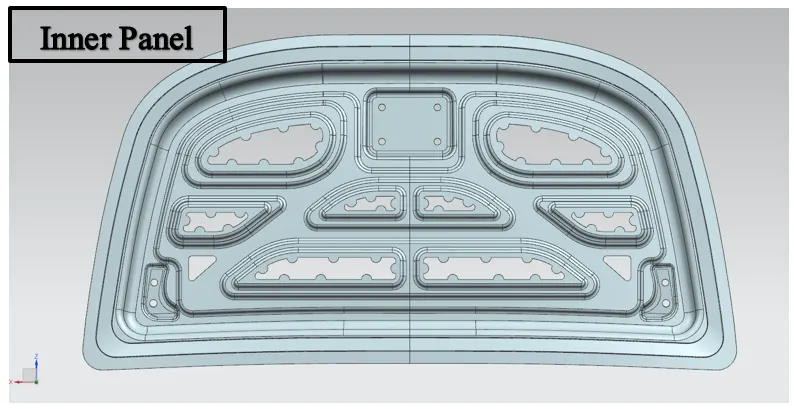
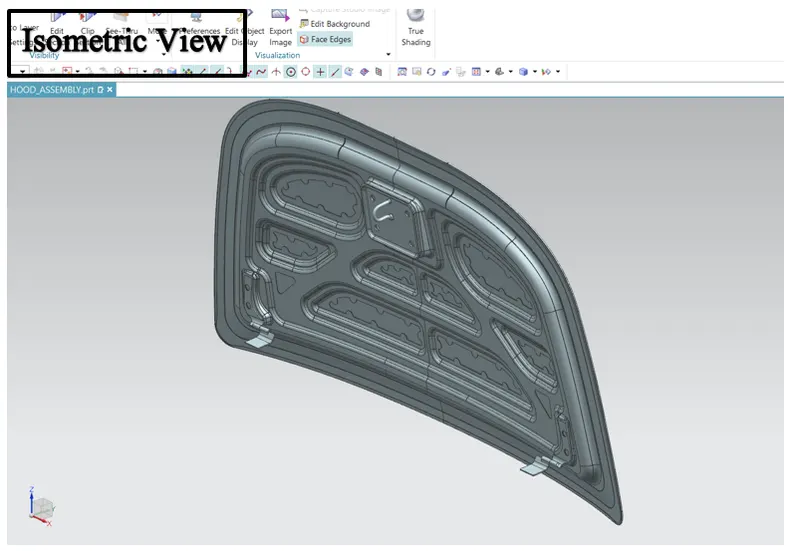
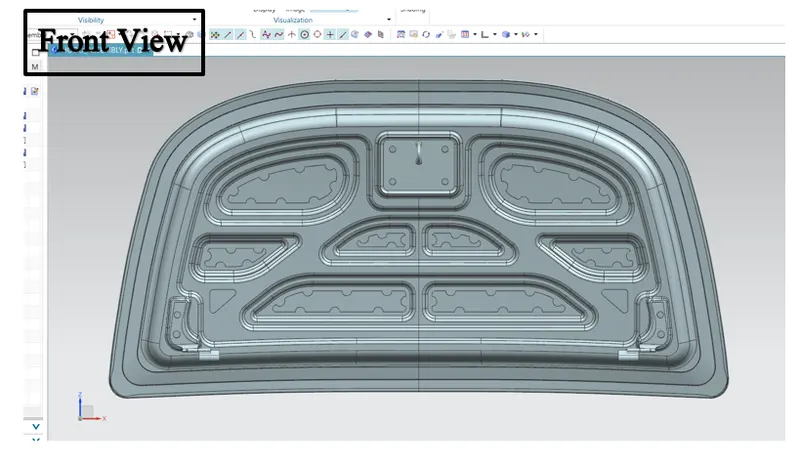
Inner panel is used to make a assembly of striker and hinge with hood also embosses are created on inner panel. Due to inner panel hood make stiffest hood.
3. Hinges
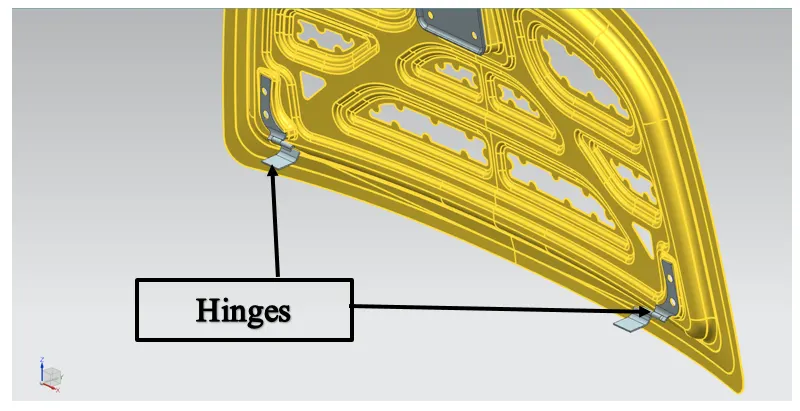
Hinges are used to open and close the hood for maintenance of engine. There is rotary motion in hinge Assembly (Hinge part attached to engine compartment and hinge part attached to hood). Both Hinges are mounted on same axis. And the position of hinges are found by trajectory of striker.
4. Striker
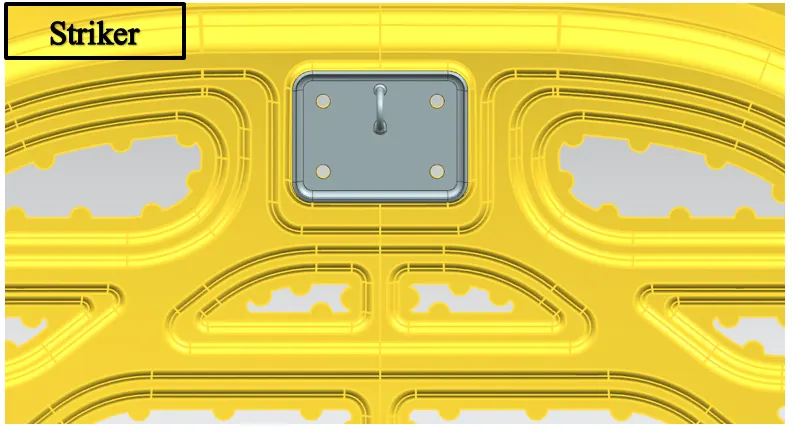
Striker keep the pawl and latch working properly. The striker is a representation of the hood. Itis attached to the hood and is what needs to be locked in order to keep the hood itself locked. Striker has latch which is used to lock the hood with paw.
5. Latch Trajectory
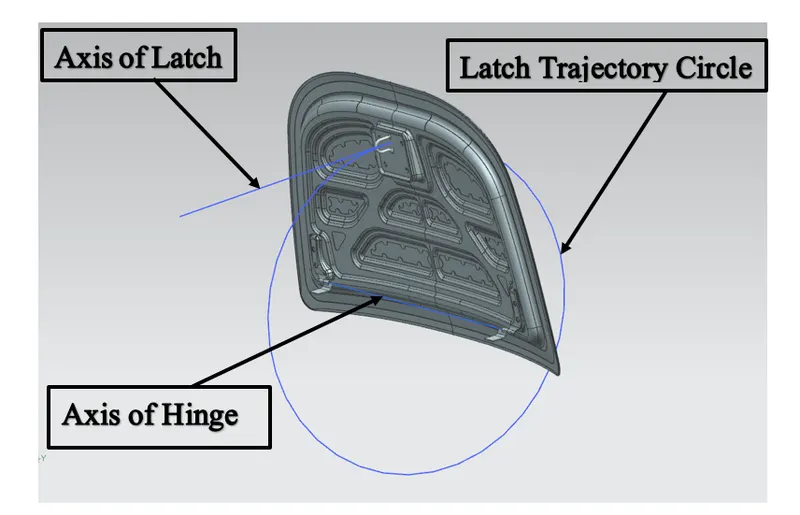
‘The circle showing in the above Image the trajectory of hood opening and closing. If the axis of striker or latch is perpendicular to trajectory circle, then it is known as position of hinges is correct. The radius of trajectory circle is distance between axis of striker or latch and the axis of hinges.
6. Mastics Data
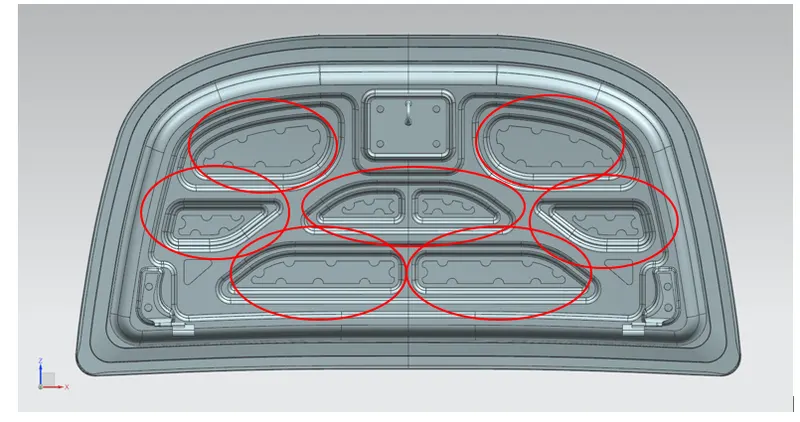
The mastic points can be defined as on the hood inner panel where the hood can easily deform. They help the hood outer panel to come back to its original shape after it get deformed. The mastic sealant are usually made up of elastic material like rubber. The mastic sealant data is use to attach outer panel and inner panel together.
7. Embosses
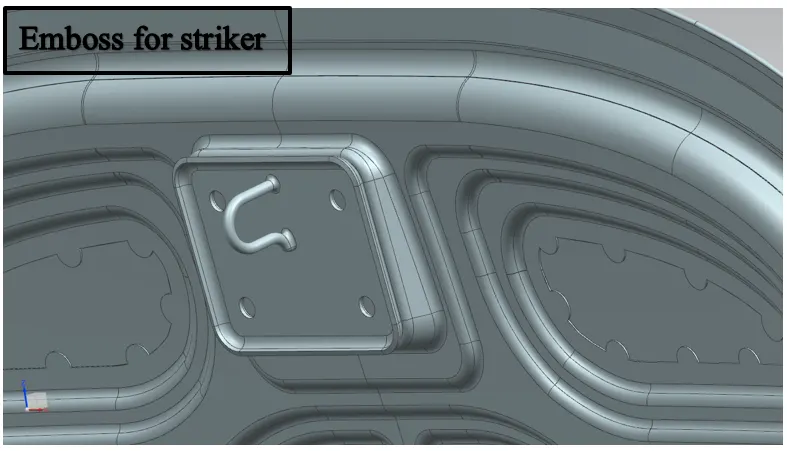
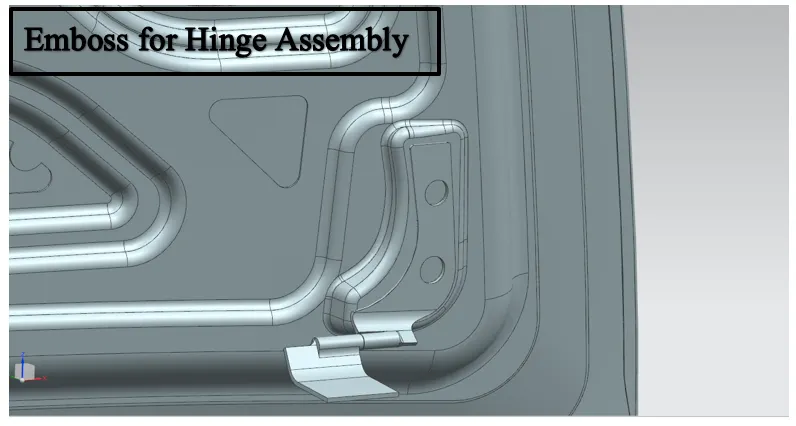
Embossing is a stamping process for producing raised or sunken designs or relief in sheet metal. This process can be made by means of matched male and female roller dies, or by passing sheet or a strip of metal between rolls of the desired pattern. The function of Emboss is to despite the air force out side the vehicle. the force direction changes to words the hinge. The dissipating air force out the vehicle, it will does not go to words driver cabin direction and due to this the passenger will not affected by the energy of air force. It does not mean it will 100% reduces effect of air force. there is no specific criteria for embosses
We also made emboss for mounting of hinge assembly Also for mounting of striker.