Hood design-Week 2
HOOD
The hood or bonnet is the hinged cover over the engine of motor vehicles. Hoods can open to allow access to the engine compartment. It is an opening body panel that convers the engine front part. Hood is the body board that is set over the motor compartment, which can be opened to access for assessment, support and fix. It is likewise called as front cap which has two boards which are inward and external hood.
- The inner panel hood board principle work is to give solidarity to the external board and furthermore to mount it over front motor part with spot welding, sticking or with fasteners.
- Outer panel is to give great style and look to the vehicle front piece and characterizes the streamlined of the vehicle. It goes about as a basic wellbeing part for the vehicle and passer-by. Outer panel got together with internal panel through the hemming
- If any accident occurs on the front side of the vehicle the hood needs to impact and decrease the effect passing to the person on foot.
- Inner panel provides strength whereas outer panel function as the metal cover.
- While opening the hood, to help the opening and opened condition is accomplished by the help support rod and gas stay. Support rod is physically opened and put in the position with the rod embedded in the predefined storage opening, while gas stay in car will automatically open the bar to the predetermined length.
There are three criteria for designing a Hood they are;
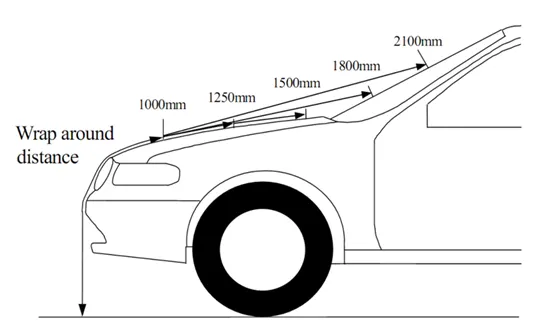
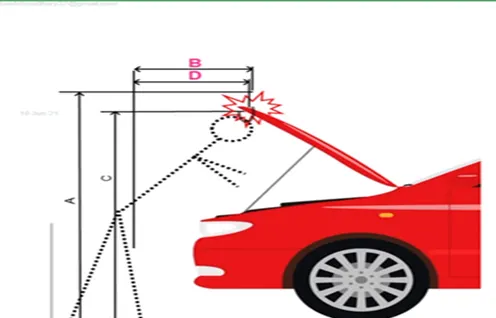
- Head zone criteria: where the company designs the hood based on the average height of the people in that particular country. Pedestrian head impact assessment : based on impact test area on wrap around distance, impact conditions like impact velocity and angle
- How to open and close the hood: Here to hold the hood the 2 types of hood stay are used they are Super rod or Gas stay.
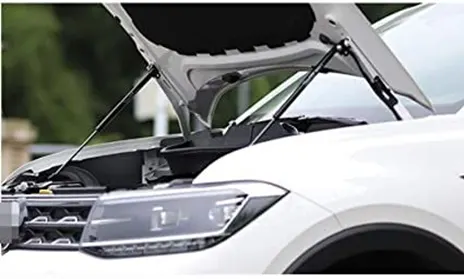
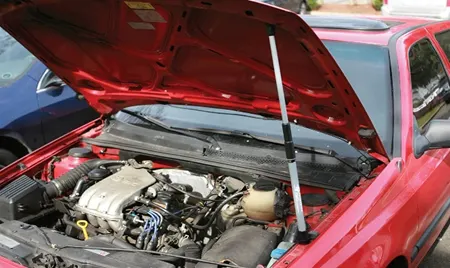
Gas stay Super rod
- NVH: Noise vibration harshness where we use reinforcement to the components to avoid NVH, stiffner pad is been used in between the outer and inner panel to avoid vibration and to improve strength. Noise vibration harshness caused by aerodynamic nature , mechanical components (engine, brake,tire), electrical components (actuators, traction motors)
Components used
The components used in the hood are striker to lock the hood which locks with latch of engine compartment, hinges at both end to join it with the engine compartment and the main outer panel and inner panel.
Hinge:
Hinge is a mounting component which fixes the hood with the fender. The latch must be fixed perpendicular to the hinge axis so that the hood opens or closes properly.
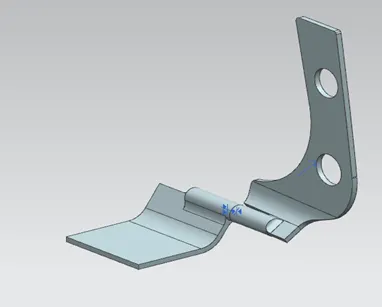
Hinge
Striker
Striker is also called as latch , its function is to lock the hood which locks with latch of engine compartment
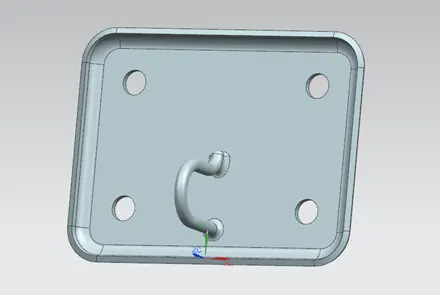
Striker
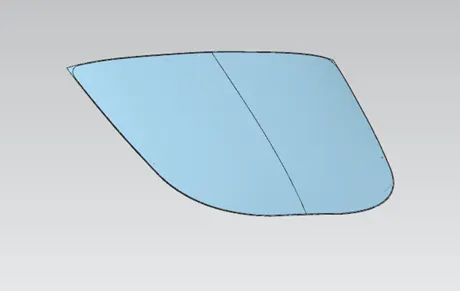
Outer panel :
External panel is the snazzy hat which gives great asthetic search for the vehicle. external hood is furnished with the distance of 0.75mm thickness and furnished with the relief at the corners. It ought to likewise be stooped in view of the fulfill wellbeing standards.
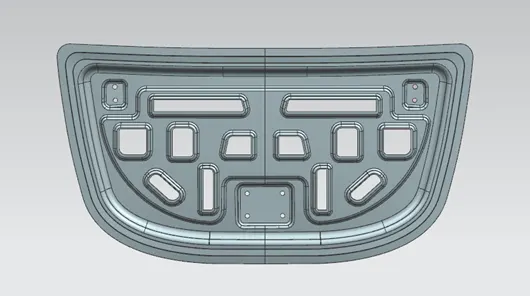
Inner panel :
- Principle purose of the internal hood is to give the strength,rigidity to the externalpanel.
- mounting parts wil be fixed to the inward panel likewise to limit the response power passing to the passerby during crash by going through the disfigurement by impact.
- It is given the uniform thickness of 0.75mm and connection places with the built up thickness of 1.5mm.
Design considerations
- Outer Panel Thickness = 0.75mm
- Inner Panel Thickness = 0.75mm
- Reinforcement Thickness = 1.5mm
- Front and rear relief is applied
Materials suggested:
- Aluminium, steel, carbo fiber reinforced plastic, glass fiber reinforced plastic.
Procedure:
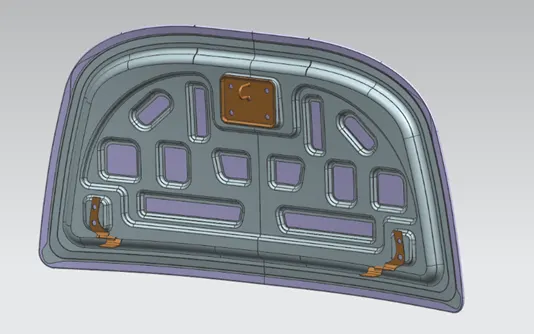
- Hood inner panel is created using the master section provided
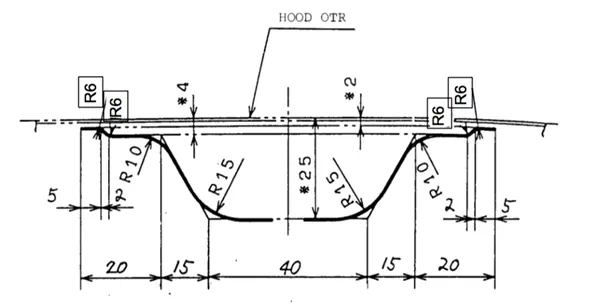
2. Emboss creation:
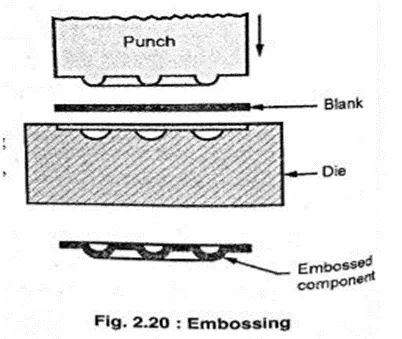
Sheet metal embossing is a stamping process for producing raised or sunken designs or relief in sheet metal.
The metal embossing manufacturing process has these characteristics:
- The ability to form ductile.
- Use in medium to high production runs.
- The ability to maintain the same metal thickness before and after embossing.
- The ability to produce unlimited patterns, depending on the roll dies.
- The ability to reproduce the product with no variation.
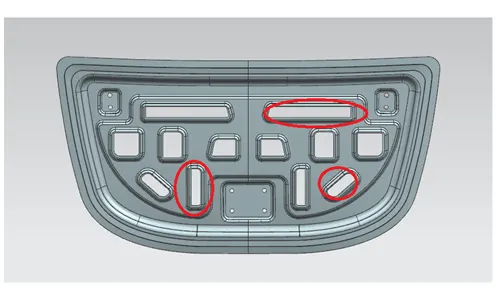
Manufacturing process:
The process involved in designing hood as a sheet metal operation is
- Deep drawing
- Blanking and Piercing
- Embossing
- Hemming
Deep drawing
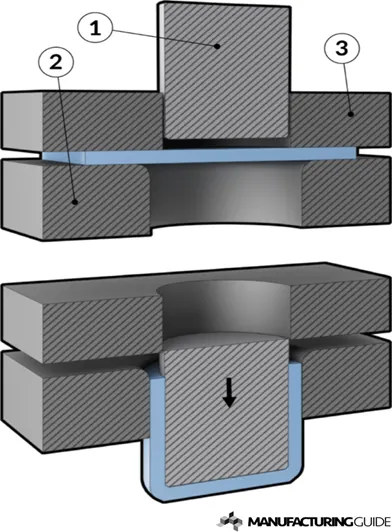
A deep drawing of sheet metal is performed by punch and die. The punch needs to be the shape of the base part. The die cavity should be exactly matching the punch and is a little wider to allow for its passage, as well as clearance of angle seven degree. Thickness is assumed to be uniform for this process.
Blanking and Piercing:
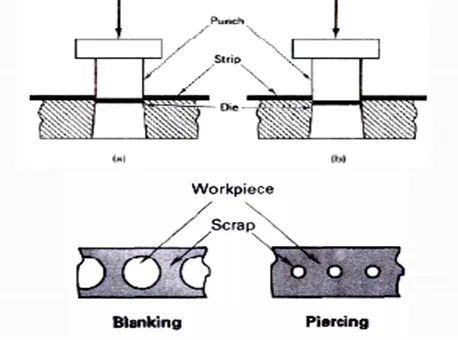
Blanking and piercing both are the sheet metal process in which punch and die is used to produce the parts. Blanking provide the outside features of the part while piercing provides internal profiles or holes.
Embossing:
Embossing is the sheet metal process for producing the sunken design with the relief considerations. This process is carried out by matching the male and female roller dies by passing the sheet between the rolls by desired pattern.
Hemming:
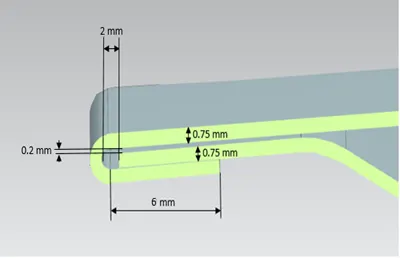
- Hemming is a sheet metal forming process in which sheets are joined by bending like u shaped with an angle usually around 180 degrees as showm in pictures below.
- Hemming is carried out incrementally with a hemming roller of different diameters as well as from different angles.
- Hemming operation will be carried out sub categories with bending, pre-hemming, hemming, finishing and checking process.
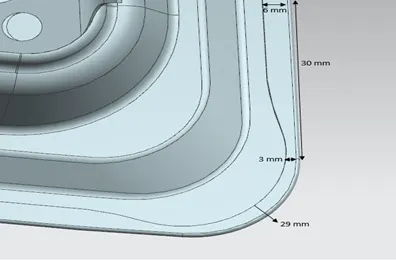
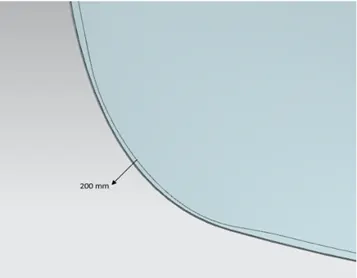
- A relief angle is provided to corner of the sheet metals.
- Reliefs are provided to reduces stress distribution on the corners as well to avoid the wrinkles, wall thinning, ovality and buckling.
Rear relief Front relief
4. Assembly :
- Inner panel is fixed with the process of hemming or seaming covers outer panel sheet over it.
- Using assembly constraints the hood components are aligned.
- Hemming is carried with different rooler passing over it from different angle and carried out in step by step process like bending, pre hemming and then hemming as shown above.
5. Latch Trajectory :
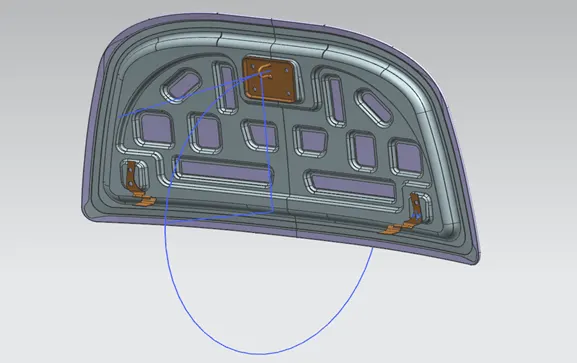
- Latch Trajectory is the formed by circle drawn from the hinge axis to the striker line of axis is matched perfectly.
- Latch trajectory is for alligning the striker in the perfect manner based on the hinge axis
Conclusion:
The hood is designed following all the requirements of the master section and the datas