Hood design-Week 2
INTRODUCTION
Here in this analysis report I need to design the HOOD completely(outer panel,inner panel,enforcements).So I have given the skin data for the hood,hinge assembly & striker to prepare the Hood Assembly & the all the components for the hood assembly & assemble them with assembly Constraints with using the NX CAD software.
ABSTRACT
Body-in-white (BiW) is the name given to a car body’s sheet when all its components—barring moving parts (e.g., hoods, fenders, etc.), trims (e.g., glass, seats, etc.), or chassis subassemblies—have been welded together. Usually, BiW constitutes about 27% of a car’s curb weight, and remains the key determinant of how the car will perform. BiW can be made into two structures: the more common monocoque structure where all body members are carrying load with chassis in-built with BiW and are integrated with each other, and the body-on-frame structure where the frame is the main load-carrying member.
BiW is expected to possess a number of significant properties. It must have high tensile strength as well as high Stiffness-Bending, torsional, static, and dynamic. It must also provide good quality safety both to the car body and to its occupants against crashes of all kinds—front, rear, side, or even rollover, meeting the Federal Motor Vehicle Safety Standards . It should also be able to protect occupants from noise, vibration, and/or harshness (NVH) by absorbing or reducing these conditions. Also, it should be easy to weld and form, as well as be highly paintable and easy to design. It should provide a good surface finish that is smooth, and should also be corrosion resistant. Improvement of fuel economy also necessitates the use of lightweight materials in BiW, as it constitutes a significant share of car’s weight in addition, given environmental concerns in recent times, it is also expected to be recyclable. Given such extensive requirements, only steel and aluminum have been used for making BiW; the former is preferred for its high strength and low cost, while the latter is preferred for its lower density that helps reduce car weight.
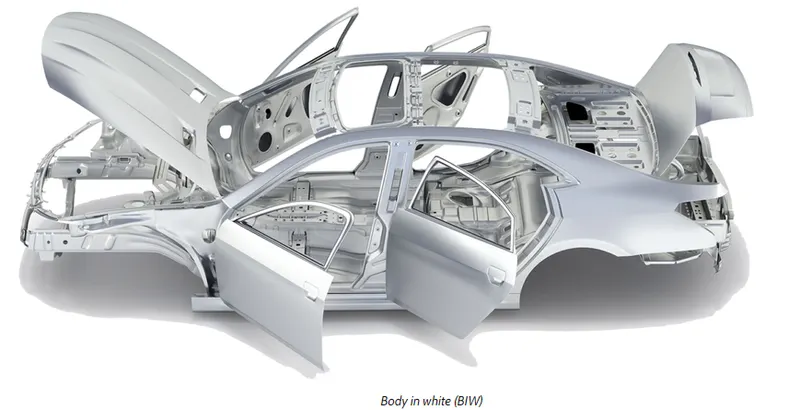
(FIG-1)
The above fig. shows the parts that are BODY IN WHITE in an Automobile.
Here we need to design the HOOD.
HOOD
The hood (North American English) or bonnet (Commonwealth English) is the hinged cover over the engine of motor vehicle. Hoods can open to allow access to the engine compartment, or trunk (boot in Commonwealth English ) on rear-engine and some mid-engine vehicles) for maintenance and repair.Hoods are typically made out of the same material as the rest of the body work. This may include steel , alluminiun, fiberglass or carbon fibre. However, some aftermarket companies produce replacements for steel hoods in fiberglass or carbon fiber to make the vehicle lighter.
Types Of HOOD as Pedestrian Safety
- INLAID HOODS
- WARP AROUND HOODS
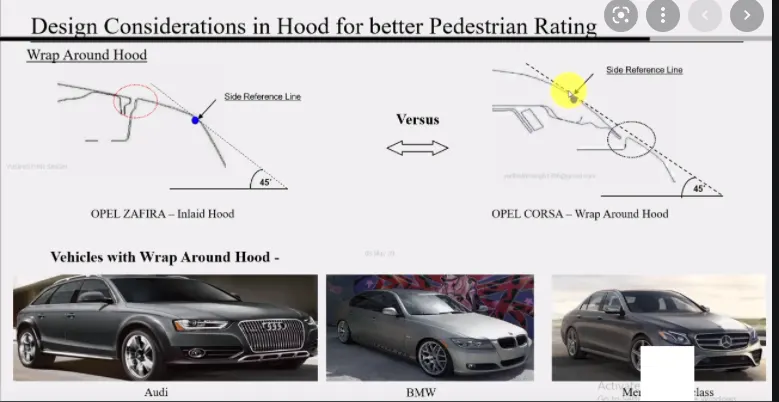
(Above fig. shows the detail about the Inlaid Hood & Wrap Around Hood)
Here are some considerations while designing the Hood
- PEDESTRIAN SAFETY
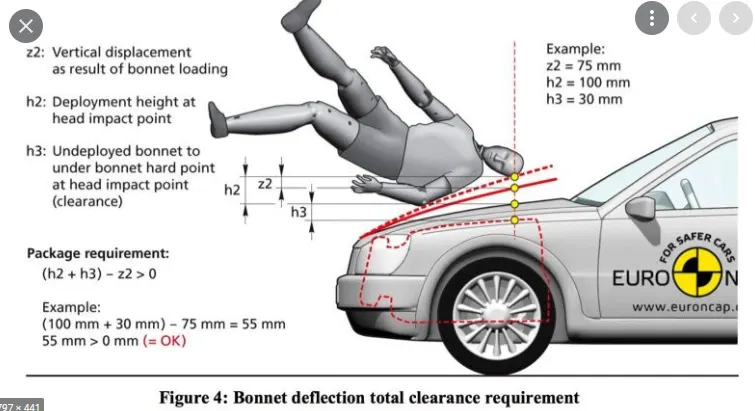
There are actually different different zones for different Age
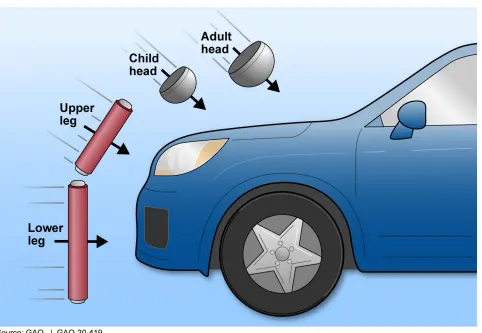
- Opening Angle
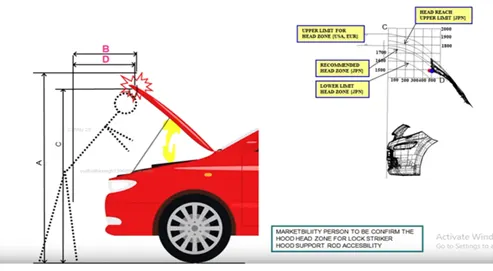
While designing the Hood,we must consider the hood opening angle;That is directly connects with the Persons Height.
- If we are considering the car for European Market then we need to provide more angle for Opening because the Height of the People are more as compared to other Countries.
- If we are considering the car for Asian Market then we need to provide less angle for Opening because the Height of the People are more as compared to other Countries.
- The angle can be altered by altering the height of the Hood Latch Rod.
- Force Distribution
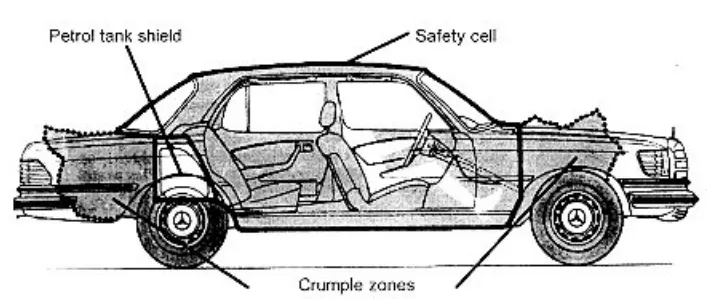
Force is main criteria to look upon because atlast the main agenda is to save the passenger & driver who were sitting inside the Vehicle.So A phenomena called Crumple Zone introduced in Automobiles by Mercedes Benz in the year 1953.
Crumple zones, crush zones, or crash zones are a structural safety feature used in vehicles, mainly in automobiles, to increase the time over which a change in velocity occurs from the impact during a collision by a controlled deformation; in recent years, it is also incorporated into trains and railcars.So the SAFE CARS ARE BUILT WEAKER INTETIONALLY .
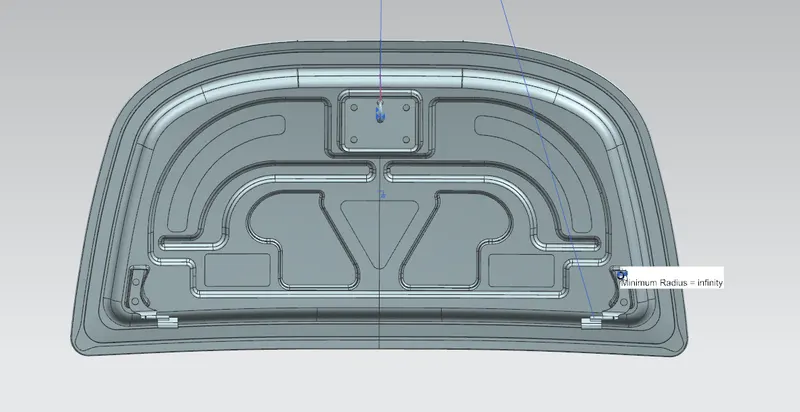
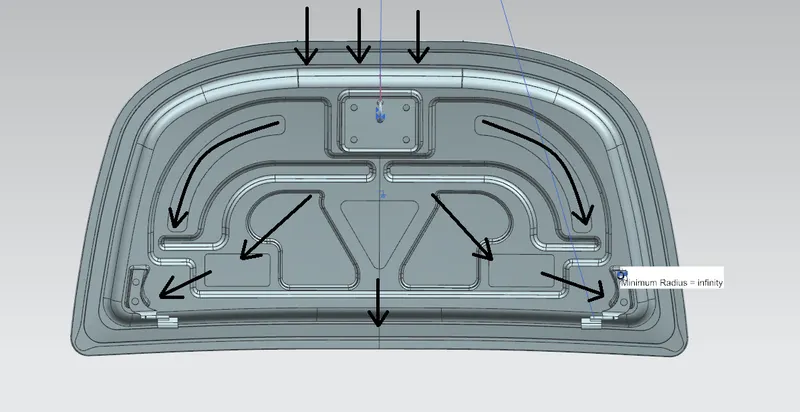
The above fig shows the Force distribution on the hood completely so we need to design the part accordingly.When the sudden force acts on the hood then very less amount of the force need to transfer to the passenger zone.Thats why intentionally the cut-outs are given in the inner panel of the hood so that at the time of accident more damage occurs on the car so that the passengers are safe.
Now the to design this complete part these are the major steps that we need to follow.....
- First of all we need to observe that the Hood is a Symmetry part with respect to the MID PLANE.So we need to first Strengthen the Inner panel by EMBOSSING the back side of the part.While Embossing the back side we need to consider the place for both Hinge-Assembly & Striker.
- Now we will go for designing the Mid cutouts that will prevents the force to tranfer.
- Then we will go for designing the Hinge Emboss.So here we may face the problem of curviness of the inner panel so we will consider that and design the emboss.
- As the one side of the inner panel is ready we need to Mirror the Full part as well as the created features.
- Now As hinge Emboss created we need to Assemble the hinge to the inner pannel.
- After that we need to go for the Latch Emboss.As the lacth moves in a trajectory path so that we need to Create that.
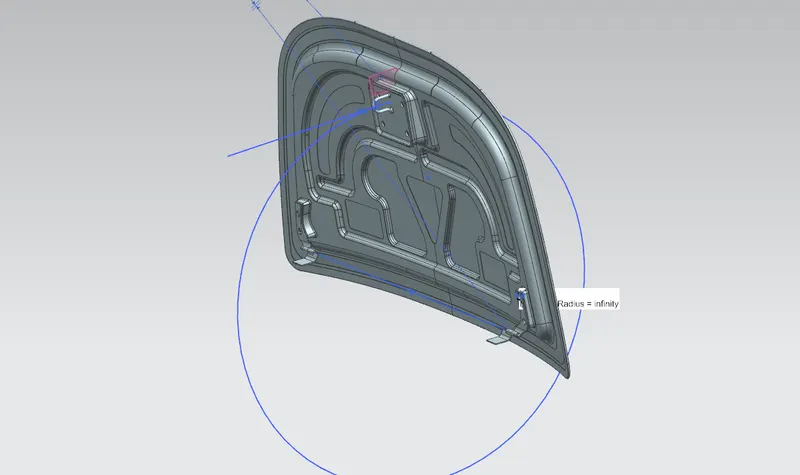
- Now as the trajectory is ready we need to assemble the Latch to the Inner panel.
- After that we need to THICKEN the created part to 0.75mm as the thickness of the panel.
- Now our Inner panel is Ready.So we need to go for creating the Outer Panel.
- For outer panel We need to assemble it to the Inner panel by the help of a process called Hemming.
- For Hemming process we need to Hemming Flange And Then THICKEN the Outer panel to 0.75mm,get our desired part.
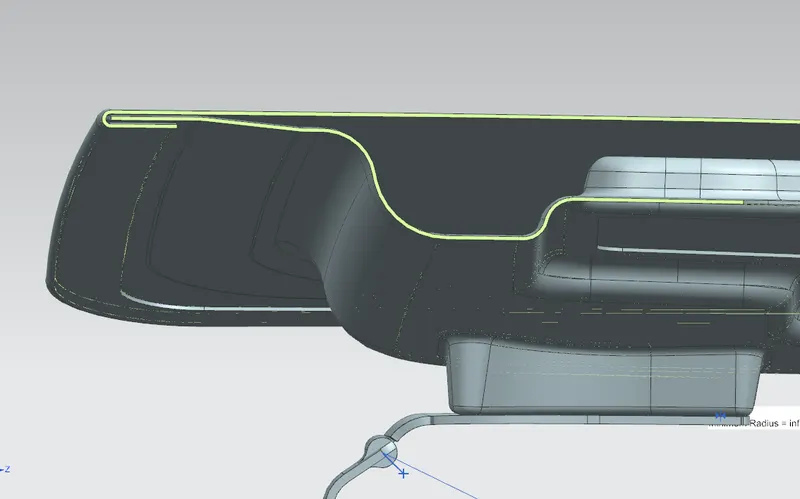
Hemming data---------- 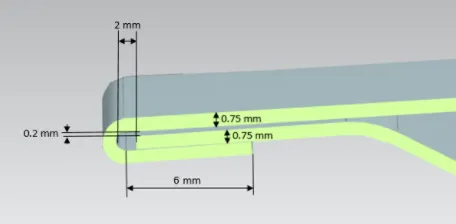
Hemming data---------- 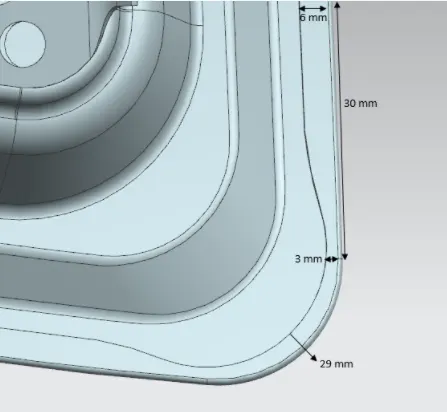
The above fig. shows that these are the minimum data that need to be present there.