Hood design-Week 2
Hood:
It’s a covering part of the engine compartment which is also known as bonnet. Its main function is to cover main parts like engine , battery and other crucial parts from external conditions like dust and sunlight.
Followinf are the design considerations involved in design hood.
- Pedestrian safety
- Occupant safety
- Styling
- Manufacturability
- Vehicle quality
Pedestrian safety: pedestrian safety is achieved by proper selection of material that can readily deform avoiding risk during impact , providing emboss to inner panels etc.
Occupant safety: The design considerations must include the impact caused due to Frontal crash collapse. Under such scenario hood maintains its integrity with hinges and also retains any of the closed components from engine compartments.
Styling: Better surface quality tight radii on hemmed panel edges and low strain between the curved regions of inner and outer panel.
Manufacturability: The design should always be considered for the manufacturability eg; embossing on the inner panel should have sufficient draft angles provided for the punching tool to flow in and flow out.
Vehicle quality: This involves the better quality in terms of torsional stiffness , dent resistance ,corrosion resistance,noise attenuation and weight distribution.
Design Methodology:
Hood thickness information
Outer panel thickness:0.75mm
Inner panel thickness:0.75mm
Reinforcement thickness:1.5mm
Master Sketch
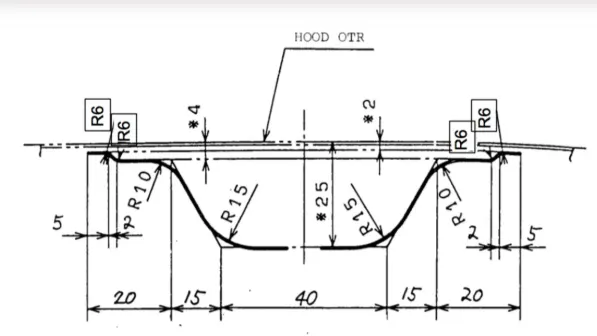
Embossing:
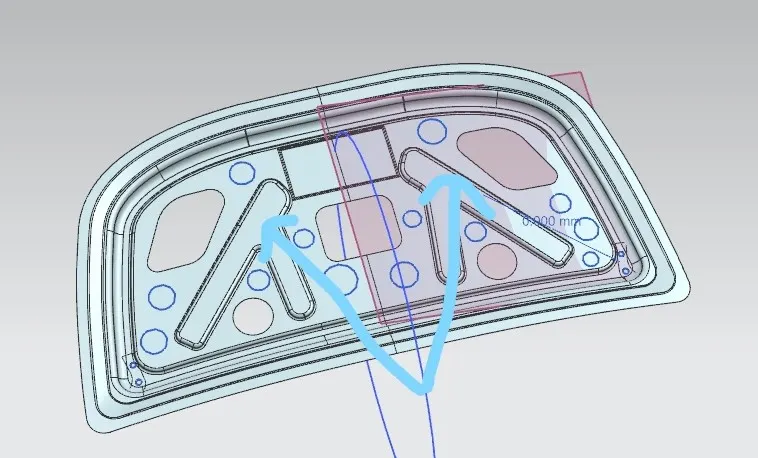
Embossing is the raised projections created on the inner panel for a specific purpose. The major reason is to transfer the load from the striker region to the hinges, in the event of collision .It is the path along in which the load deviates away from the passenger shell to the hinges. Also the cuts provided on the inner panel allows sufficient deformation of the outer panel without any restriction caused during pedestrian impact. This also contributes to an increase stiffness of an overall hood.
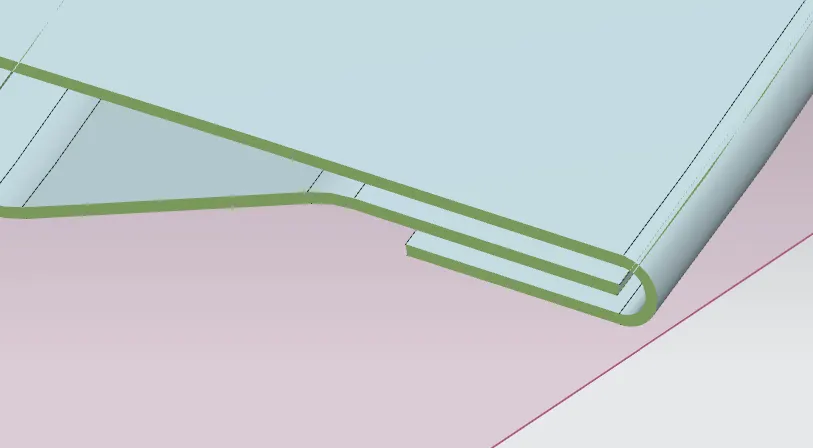
Hemming is a metal working process in which a sheet metal edge is rolled onto itself. This process ensures both inner and outer panels are interlocked together. Corner relief must be provide to avoid local stress generation and tearing of sheet metal.
Mastic sealent: These sealents serve as binding material between inner and outer panel. A single mastic sealent has an different radii of influence, upon subjecting tehse sealents to heat, it solidifies to form a strong bond between the inner and outer panel. These sealents avoid fluttering of the outer panel during high speed. Mastic sealents is used as an alternative to spot weld.
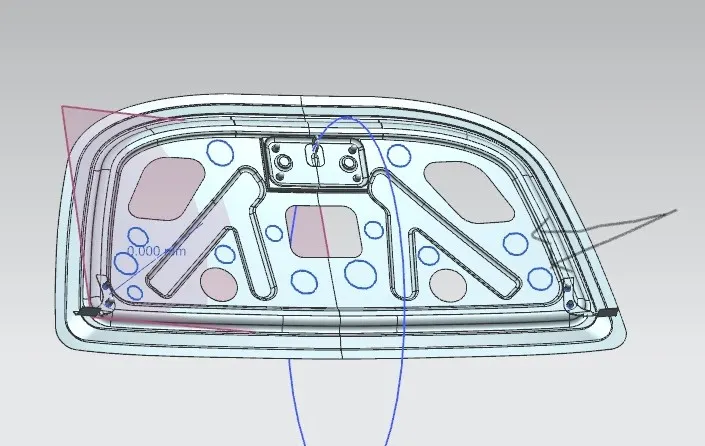
Positioning of hinge: The hood and car body are connected through hinges ,This allows relative motion between these structures. The location of hinges should be chosen such that the energy during impact is dissipated away from the passenger shell to the A pillar of the car body.
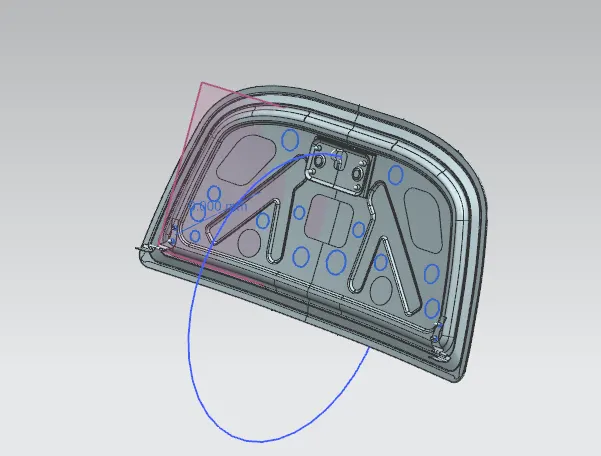
Positioning Latch and Striker: this step includes locating a appropriate position of the locking mechanism between the hood and car body. The location is decided by tracing a circular path with the hinge axis as a center. The point where the path traced intersects with the car body should be the location be the location of placing the latch and striker mechanism.
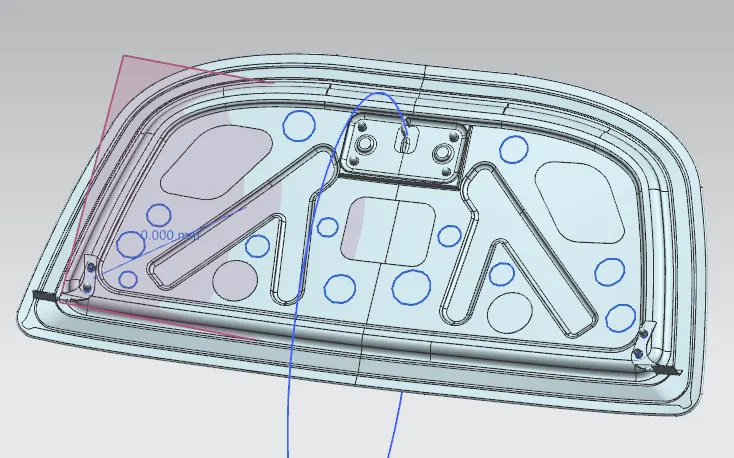
This concludes the design procedure followed in creating the engine hood.