Hood design-Week 2
SHEETMETAL DESIGNING OF HOOD OUTER AND INNER PANEL
AIM :
The main objective of this project is to learn the basic tools, commands, and surface modelling of Hood designing using Siemens NX Cad. This project is come up with a design idea of hood BIW that satisfy the manufacturing requirements functional requirements.
The objective of this project :
- To understand and learn the basic Graphical user interference of NX CAD.
- To learn basic tools, command feature, surface modelling and its application.
- To understand and learn about the industrial approach how to design hood of a car using Siemens NX cad.
- To design the hood using surface modelling feature of NX cad.
INTRODUCTION:
Hood is the engine cover, hinged to the body of car (front engine automobile). It gives you the access to the engine of the car and is also important for the safety against the frontal impact of the car. The hood (North American English) or bonnet (Commonwealth English) is the hinged cover over the engine of motor vehicles. Hoods can open to allow access to the engine compartment, or trunk on rear-engine and some mid-engine vehicles for maintenance and repair. In the generally for passenger car hood may be held down by concealed latch. But in race car or car in aftermarket the hoods may be held down hoods pin. Hoods sometimes also contain a hood scoop, wiper jets, power bulge, and/or hood ornament. Car hoods are typically constructed from steel and sometimes from aluminum. Aftermarket car hoods may be constructed from various other materials, including carbon fiber, fiberglass, or dry carbon. The hood design may vary from one make and model to another SUV. The hood is also designed for several requirement. A car hood is meant to protect the performance parts of your vehicle, including the engine, while also providing easy access for repairs and maintenance. It is possible for the hood to incur damage as well. They serve as a great deal of purpose in protecting the passenger inside the car and the pedestrian in the event of the accident.
Types of hoods support:
There are two types of support available of the hood support:
- Gas Stay
- Support Rod
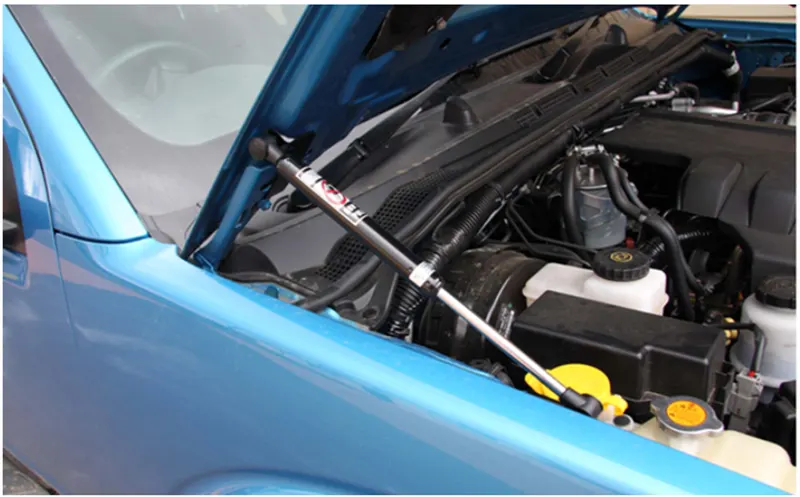
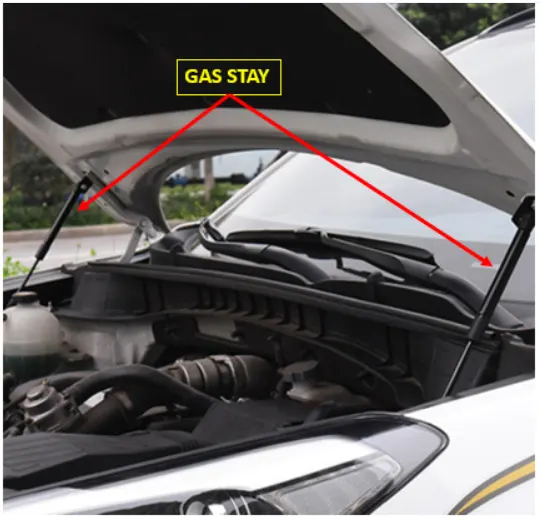
Gas Stay: Gas stay is the device for supporting the engine hood of a motor vehicle in its open position by means of an actuator which is activated by gas. This is mostly used when the car hood is heavy. In this no men power is required. Spring stays are designed to be used on upward lifting doors, once the door is open n slightly the spring will push the door to the fully open position. Euro fits stock various size spring depending on the door size requirement.
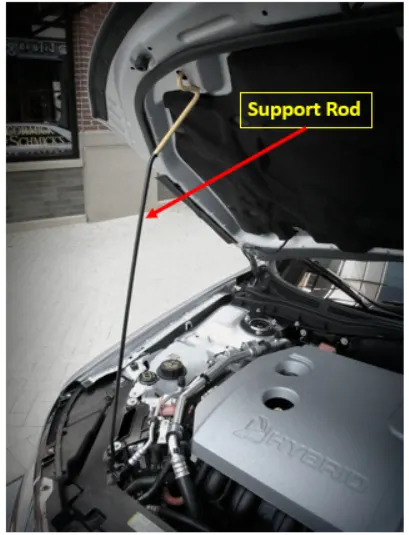
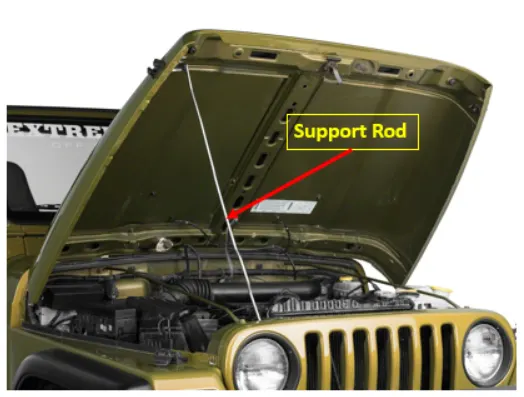
Support Rod: Support Rod is a device for supporting the engine hood of a car in its open position by means of a rod. We have to lift hood by ourselves and place the support provided either in the hood or engine component. This is mostly used where the car bonnet weight is small.
Passenger Safety: Whenever the frontal crash takes place in car the first part which will got affected will be hood. So must be designed in such a way that it should not come off from the body from the car and must absorbs the energy as far as possible ad diverting the force towards the side panel of the car so that the amount of force which is sent to the cabin is lesser since the force lesser the passenger will experience less amount of force so that passenger safety is ensured.
Pedestrian safety: Pedestrians are the most vulnerable road users who are at the high risk of vehicle collisions in traffic. Almost 1.2 million pedestrians are killed annually in road traffic accidents worldwide. The major injuries occur in lower, upper leg and head of the pedestrian, where the fatalities of the pedestrians in the accident is mainly due to head injury resulting from the hard impact of the head against the stiff hood or to the ground. In recent years. engineers are working on the vehicle front end design which includes bumper and hood to reduce the injuries to the pedestrians in the event of pedestrian vehicle collision.
Euro NCAP is a voluntary vehicle safety rating system created by the Swedish Road Administration, the International Consumer Research & Testing, backed by members. and motoring & consumer organisations in several EU countries.They provide consumers with information regarding the safety of passenger vehicles. In 1998, operations moved from London to Brussels.
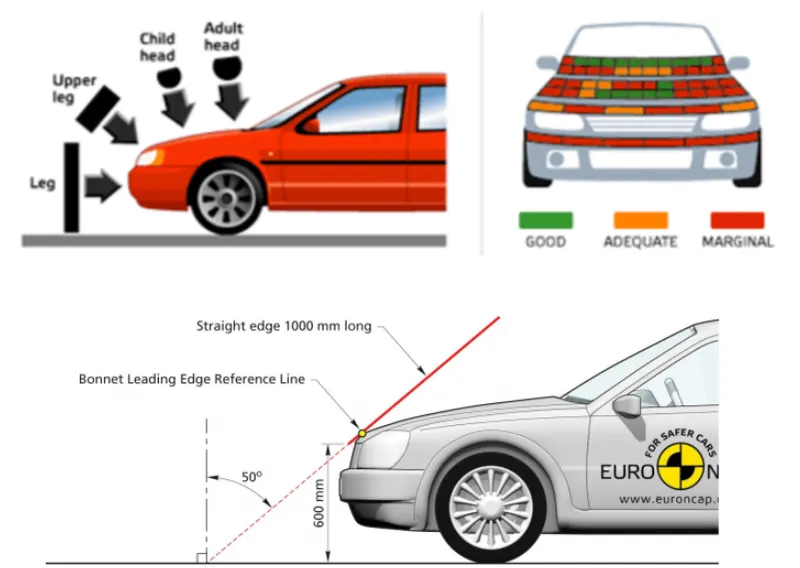
Many pedestrian crashes involve a forward moving car (as opposed to buses and other vehicles with a vertical hood/bonnet). In such a crash, a standing or walking pedestrian is struck and accelerated to the speed of the car and then continues forward as the car brakes to a halt. The pedestrian is impacted twice, first by the car and then by the ground. but most of the fatal injuries occur due to interaction with the car. Vehicle designers usually focus on understanding the car-pedestrian interaction, which is characterized by the following sequence of events: the vehicle bumper first contacts the lower limbs of the pedestrian, the leading edge of the hood hits the upper thigh or pelvis, and the head and upper torso are struck by the top surface of the hood and/or windshield.
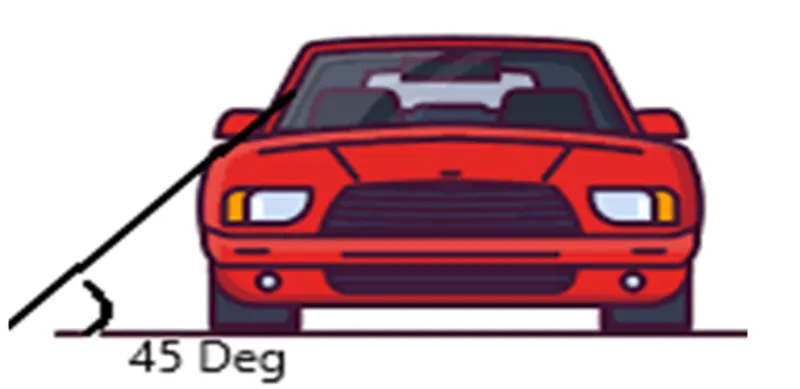
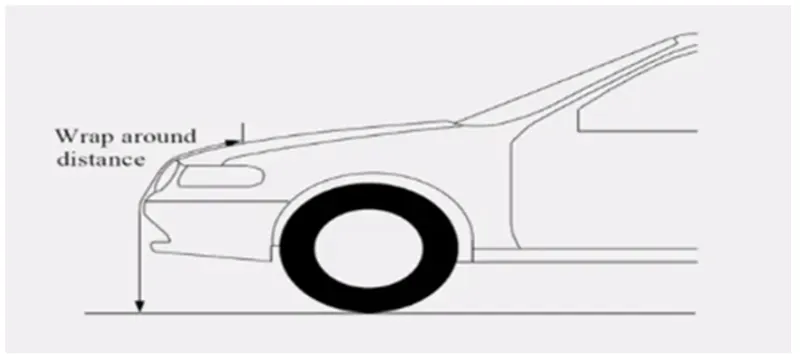
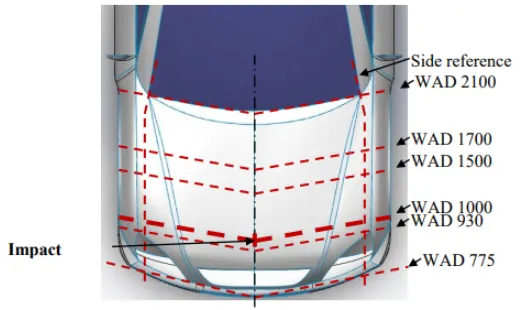
Safety of the pedestrians need to be considered during the design as per the NCAP Euro assessment. Hood is of two types based on the side reference line. Side reference line is an imaginary line drawn from ground at angle of 45degree.lf this line falls on the fender, then the hood is inlaid hood and if the line falls on the hood, then hood is wrap around hood
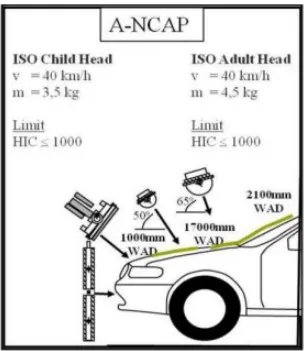
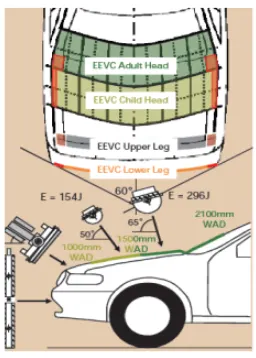
Child and adult impact area on the hood are defined by wrap around distance. Area between the wrap around distance 1000-1500mm in child head impact zone and from 1500-2100 WAD is the adult head impact zone. We now the zone where the pedestrian going to hit, as a design engineer, we must make sure that they are exercising the least force such that they were not getting any serve injury without compromising the strength of hood so that passenger safety must be assured. For this reason, the inner panel kept 25mm from the outer panel and creating the embosses to improve the strength of the hood.
Padestrian safety NCAP (New car assessment program) standards: Globally, various NCAPs are present that carry on the pedestrian safety tests on new vehicles and rate them accordingly.
- Head Impact
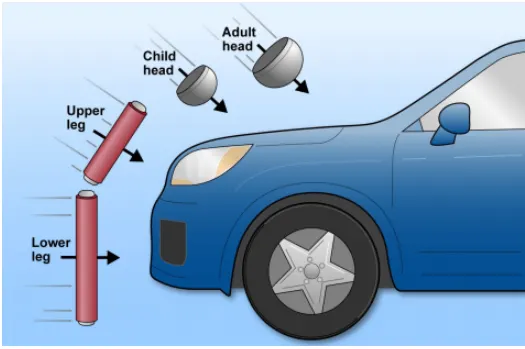
This test is carried out for a vehicle speed of 40 km/h. To have an estimate of the potential head injury in the fateful event of a vehicle striking an adult or a child, a head form impactor is used in a series of impact tests and the impact sites are then assessed for and rated accordingly. This test will give essential information about the deformation clearance, energy-absorbing structures and deployable protection systems such as pop-up bonnets and external airbags in a new vehicle.
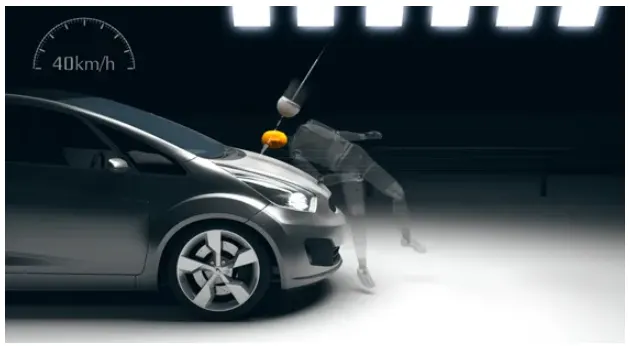
This test is carried out for a vehicle speed of 40 km/h. To have an estimate of the potential head injury in the fateful event of a vehicle striking an adult or a child, a head form impactor is used in a series of impact tests and the impact sites are then assessed for and rated accordingly. This test will give essential information about the deformation clearance, energy-absorbing structures and deployable protection systems such as pop-up bonnets and external airbags in a new vehicle.
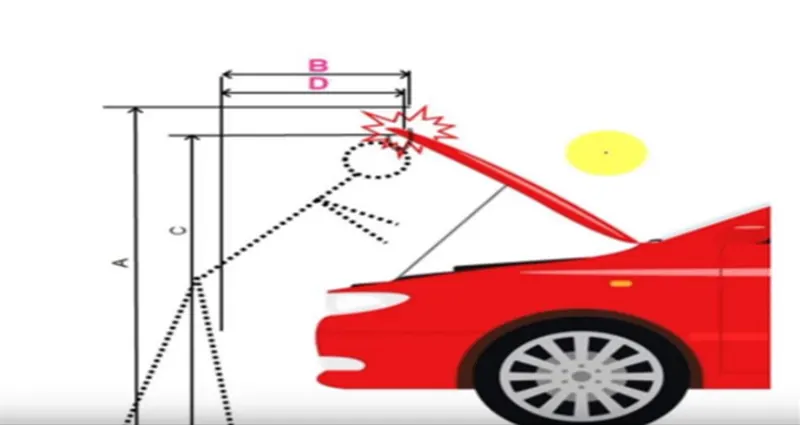
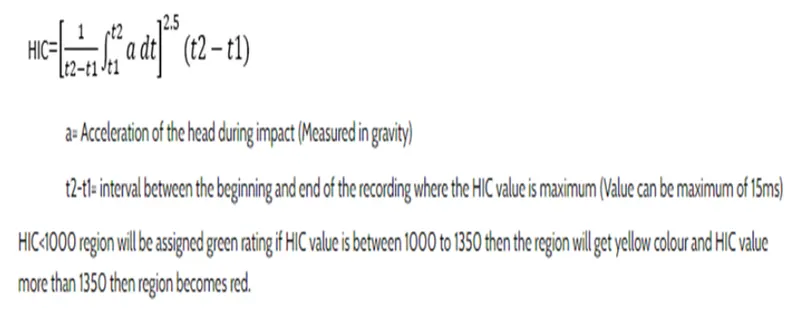
Head impact area is defined the side reference line and wrap around distance. This zone will get red, yellow, green rating using the head injury criteria calculated using the expression.
- Upper Leg Impact
The facility carries out the test at the vehicle speed of 40 km/h. An adult upper leg form impactor is used in a series of impact tests and then the impact sites are assessed. The protection is then rated as good, adequate, marginal, weak or poor. The test procedure allows to check the energy-absorbing capacity of the structures of a vehicle and also check whether the geometry of the vehicle allows mitigation of injuries.
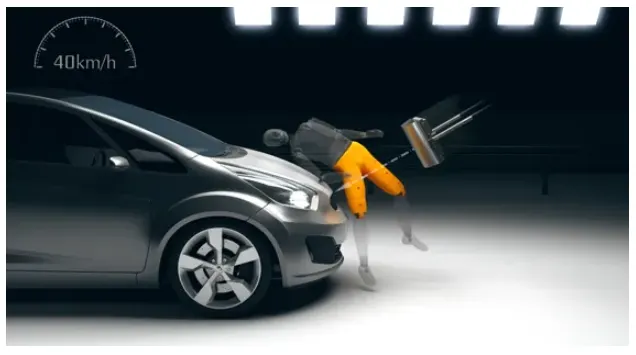
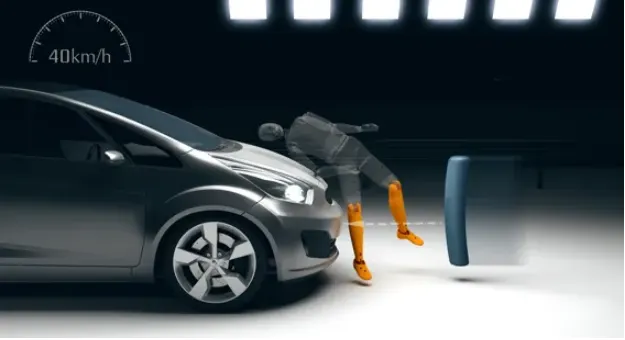
- Lower Leg impact
Euro NCAP carries the test at the same speed standard as the above ones. It uses an adult leg impactor and a series of tests are carried out. Impact sites are then assessed and the protection rating is offered.
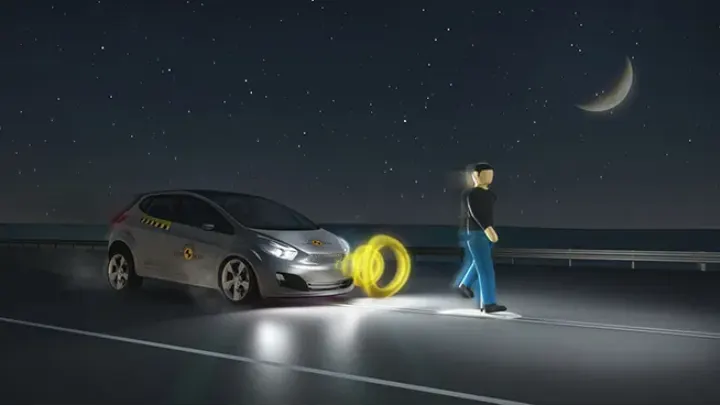
- AEB Pedestrian
For this test, the NCAP uses a specially-designed pedestrian form which has articulated limbs to replicate the walking motion of a human. Cars are assessed on the basis of how forgiving the front-end design is in case of impact. AEB pedestrian tech may not be able to completely avoid a collision in some cases. The tests are done in the day as well as night to ensure vulnerable road users are protected all the time.
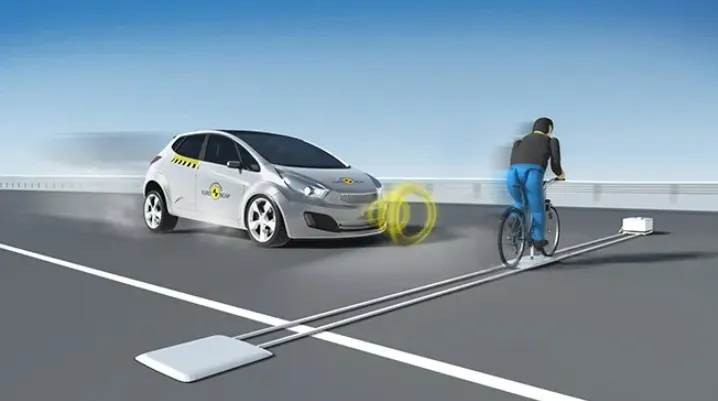
- AEB Cyclist
For this test, Euro NCAP uses a specially designed cyclist form which will replicate the actual cyclist on the road. Euro NCAP offers the highest rating if the collision is completely avoided. The vehicle is also awarded if the speed is reduced as any reduction in speed of impact can significantly reduce the injury to the vulnerable user.
In 2012. EuroNCAP head injury assessment has been revised to be reported as overall performance score value (Euro NCAP Pedestrian Testing Protocol Version 6.0). Based on this new assessment criterion, Manufacturer must provide the head impact test data for all grid points tested and should be presented based on color scheme as:
Green HIC < 6501.00 point
Yellow 650 5 HIC <1000 0.75 point
Orange 1000 5 HIC <1350 0.50 point
Brown 1350 5 HIC < 1700 0.25 point
Red 1700 5 HIC 0.00 point
A maximum of 24 points is available for head impact test zone. Total score of all grid points is calculated as percentage of maximum achievable score and then multiplied by 24. For e.g. if 190 grid points are tested which resulted into total points of 96. Then percentage achievable score is 96/190 = 50.5%, which multiplied by 24 gives 12.12 points. From the above information we can conclude that pedestrian safety has become of the major factors while designing the hood and overall body of the car in order to avoid accidents and deaths that happen on the roads.
NVH (Noice, Vibration and Harness)
Noise, Vibration and Harshness, and is basically a measure of how much unpleasant aural and tactile feedback the car delivers as you drive.
What does NVH actually mean?
The noise is what you can hear, the vibration is what you can feel and the harshness is how much of an effect thumps, bumps, noise and vibration have on the cabin and its occupants. Removing and isolating passengers from NVH is a field that's seen monumental advances over the past few decades. Originally the preserve of the most luxurious marques - and an acronym that was only even discussed by premium brands - NVH reduction is a global push, spurred on by consumers who want increasing insulation from the environment they're driving through.
What causes NVH?
Noise, vibration and harshness are caused by the car's mechanical and electrical systems. as well as the car's interaction with road surfaces and its passage through the air.
The main sources of NVH in a car are its engine, drivetrain and tyres, as well as the sound of airflow along its body. Tyres are a huge source of noise, due to vibrations created by their rotation, which then travel along suspension mounts and into the cabin.
Low-profile tyres. found on sportier cars, tend to transmit more vibration through the suspension because the tighter, stiffer rubber can't absorb as much. Wide tyres are more susceptible due to a larger contact patch. but the soft, wide tread patterns of off-road tyres are the worst offenders.
Airflow over the car's body causes quite a bit of noise, especially at higher speeds and in large cars with the aerodynamic properties of a shipping container. Any interruptions the air faces in its journey across the car — such as aerials, roof racks and door mirrors — are rewarded with howling, whipping or buzzing noises in the cabin.
How to reduce NVH?
Cancelling out NVH comes down to three basic principles — reducing it at the source, isolating it from the car's main structure and absorbing as much as possible before it enters the cabin.
The first — if not the easiest — way to reduce NVH is to curb the number and volume of the sounds, vibrations and shocks produced in the first place. The second and perhaps equally complex way to reduce NVH is to isolate the car's main structure from the source. Complex and expensive suspension tech such as independent, multi-link and hydro-pneumatic systems isolate the chassis and steering column from road surfaces, removing vibration and shocks. To further isolate the sources of noise, engine, suspension and exhaust components are mounted on rubber and polyurethane bushes rather than solid metal: the softer compounds work against the transmission of vibrations.
The last resort in the war against NVH is also the most conventional: absorbing as much as possible. Mechanically speaking, this tends to refer to steering dampers, which absorb the worst of the shocks introduced by poor road surfaces.
Designing of the Hood using NX software :
Input Data
- Outer hood panel thickness = 0.75 mm
- Inner hood panel thickness = 0.75 mm
- Reinforcement thickness = 1.5 mm
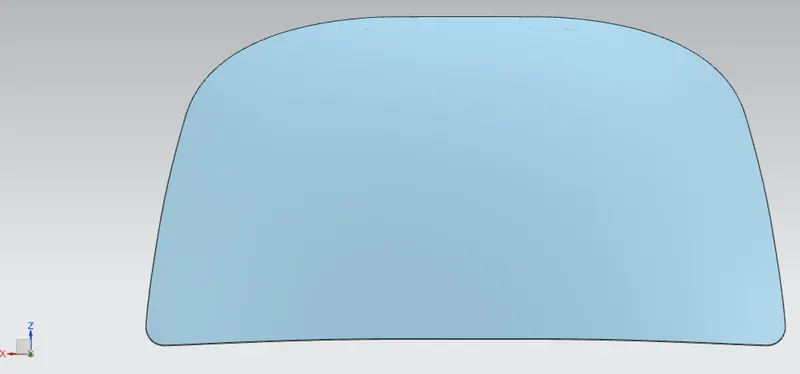
Master sketch that should be used to design the outer and inner hood panel is shown below:
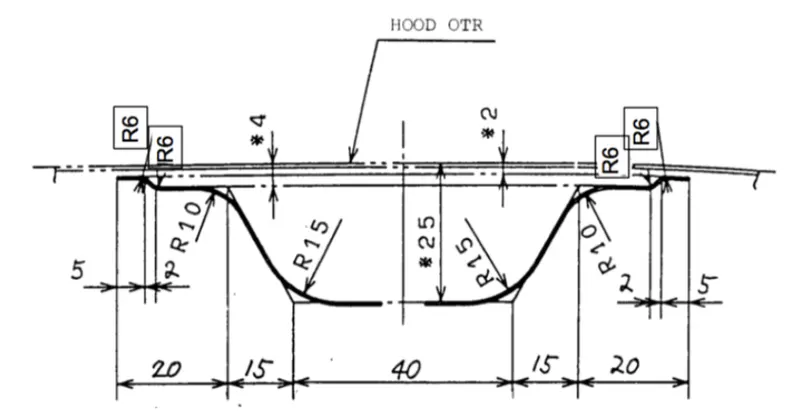
Car Hood Components:
- Outer Panel:
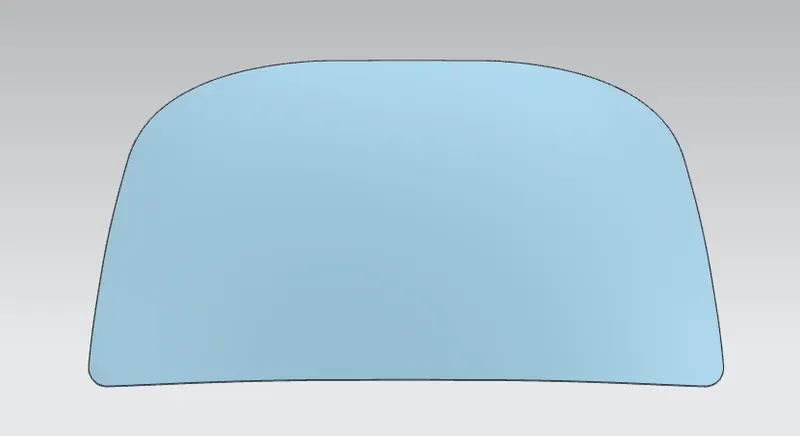
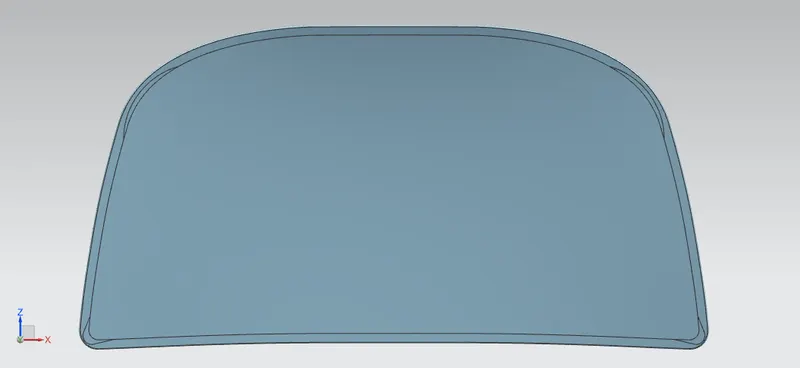
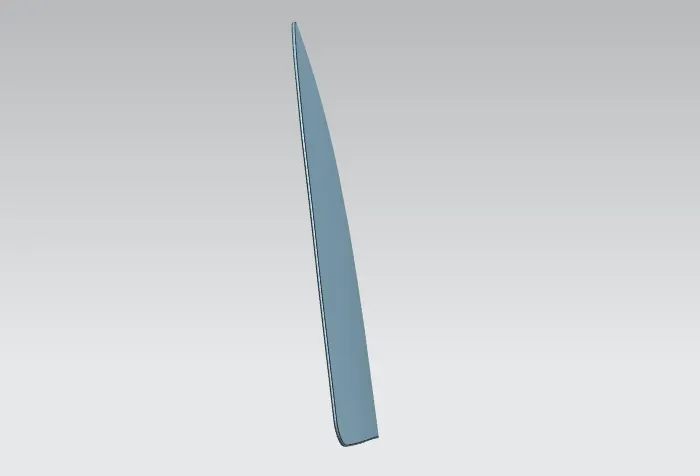
- Outer Panel is the most important part of the hood to makes the car in a very good aesthetic proportion. So, that the Outer panel is perfectly made incense to achieve the aesthetic requirement. So that, the sheet metal operation result which is visible on the outer panel or it reduces the aesthetic value means, those operations are strictly not to be followed to make the outer panel. That's why the hemming process is used to join the outer panel with the inner panel, instead of using welding methods.
- By considering the given Outer Panel thickness(0.75mm) and using the outer panel styling surface the outer panel has been made as below,
- Inner Panel:
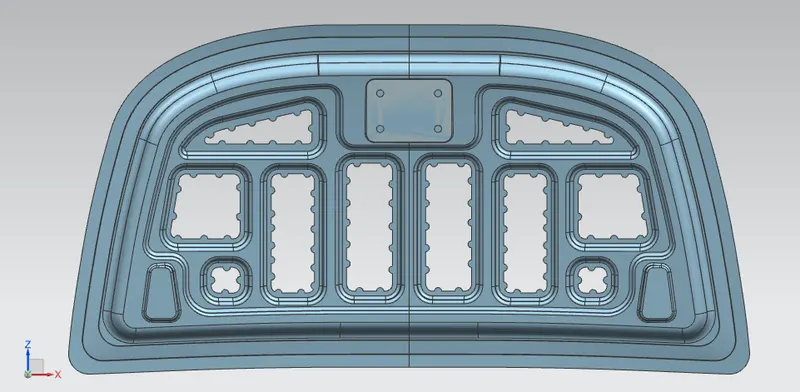
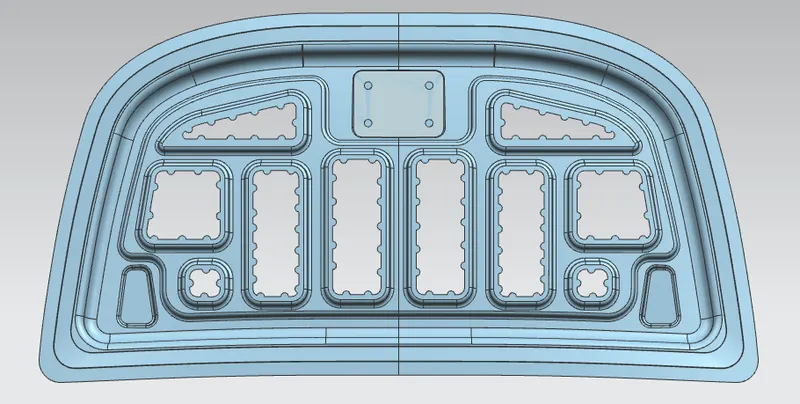
- Inner Panel is the major part that ensures the rigidity of the hood and It is used to diverts the impact to outwards of the hood however possible when the collision occurs. It is can be achieved by the good inner panel design and the emboss direction in the inner panel.
- Lot of design changes and researches are done and being carried out in the inner panel only to achieve the pedestrain safety and the passenger safety to make the standards.
- In this inner panel. the required holes are made to transport the hood from one station to other and fix the hood in fixture by using this hole as budding holes. Also the inner panel has the embosses and mastic points.
- By considering the given Inner Panel thickness(0.75mm) and offseting the outer panel styling surface with the given offset data, the Inner Panel has been made with the embosses and mastic points as shown below.
- Reinforcement:
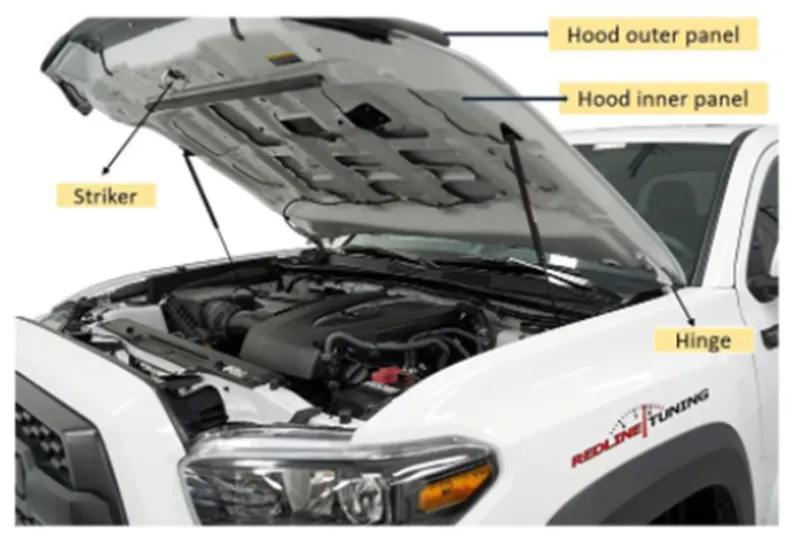
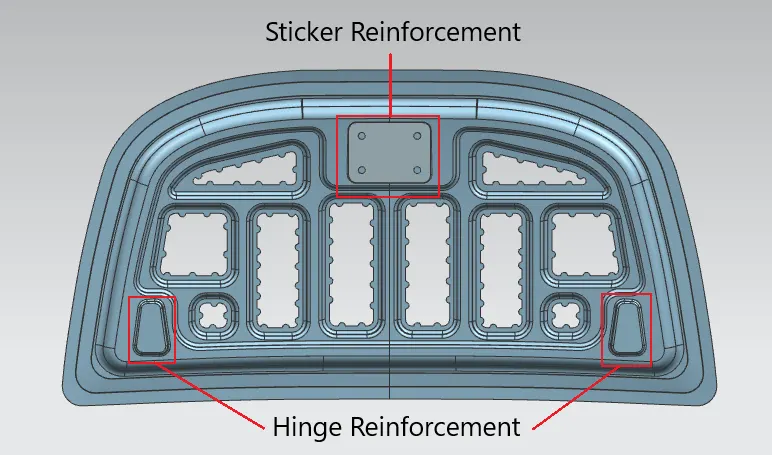
- The Striker and Hinges are attached at the lower side of the inner panel. It can be done by directly then more stress can act at the particular area in the inner panel, it may cause deformation of the inner panel at that particular region. So that the reinforcement comes in and placed between the striker and the hood, hinge and the hood. It can able to reduce to deformation and strengthening the inner panel at that particular region.
- Striker-Latch and Hinge Assembly:
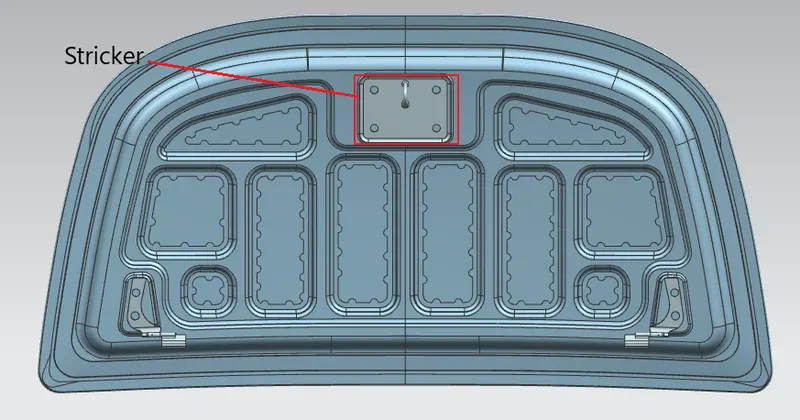
1. Striker-Latch:
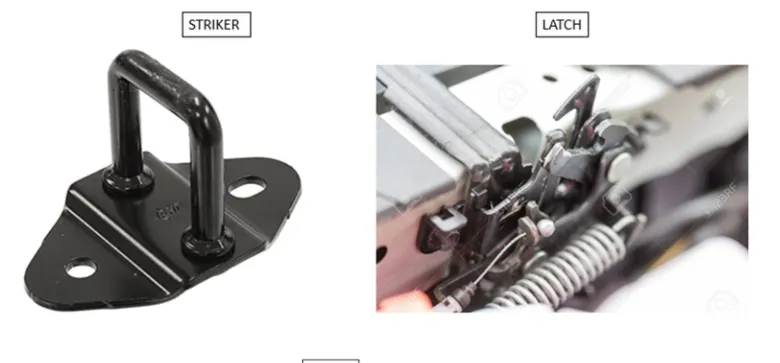
- Striker is the part which is used to hold the hood with the engine compartment by using the latch which it is attached in the engine compartment, when the hood not require to open up. The striker is attached to the bottom of the inner panel and it hits the latch and locked with it, when the hood is dropped down.
- There is lever which is provided inside the cabin to the driver to release the latch pressure. Once it can be done, the hood will opens up in a inch, then we can able to open the hood more.
2. Hinge Assembly:
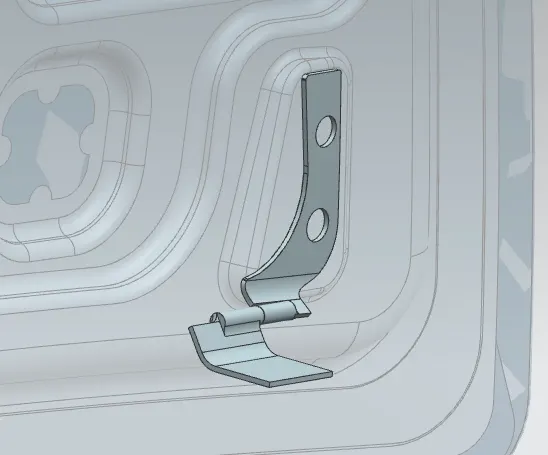
- It is used to fix the hood to the engine compartment.
- For any component has to be open and close with an axis, then hinge plays a major role. It has two simple parts(one is hood side hinge. another one is engine compartment side hinge) and assembled with the single axis.
- Hinge Assembly is attached at the each Outwards end of the hood and the engine compartment.
3. Position of Striker and Hinge Assembly
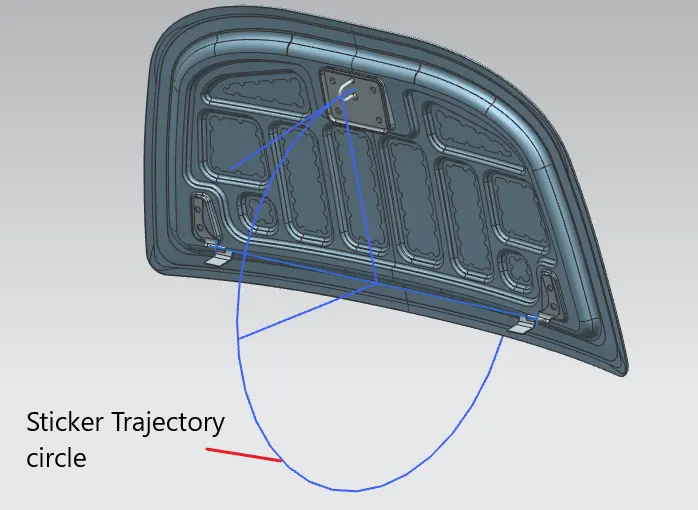
- The attachment of striker to the inner panel of the hood is done by following the certain steps.
- For that Initially the the hinge is roughly attached/assembled to the each outwards end of the inner panel throught the hinge reinforcement. Then a line is created along the axis of the two hinges.
- A circle is created at the midpoint of that line and another line is created tangent to this circle and then the ref line has created within the circle with particular angle. After that based on the required striker position the circle diameter and the tinge angle has been changed. Also an another line has been created parallel to the striker hook from the striking point of the striker.
- Then the assemble the both lines and striker to the inner panel through striker reinforcement using the assembly constraints.
4.Mastics:
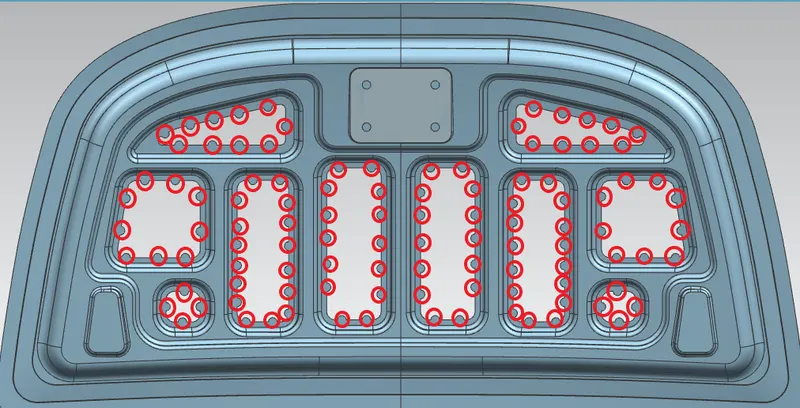
- Mastics are the kind of sealant which is used to combine the outer panel of the hood to the inner panel of the hood by applying between them. When in applying condition it is in the form of liquid substance with high viscosity like paste, then it is placed in worm condition, it turn into rubber like solid state. So that it can be the damping resistance and reduces the noises and all.
Sheet Metal Operations:
- Hemming:
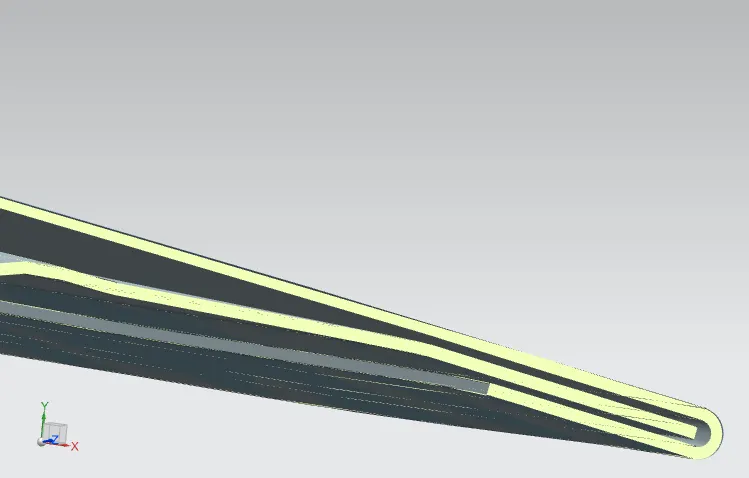
- Hemming is used to fit the parts together. It can be done by the edges of one part is to be folded over the other part to fix within it. This operation is done by using the roller.
- Hoods, Doors, Boot lids of the automobile components are made by the hemming operation.
- There are two types of hemming process are there:
- Conventional die hemming - In this method the hemming process is done by using the hemming die to fold the sheet metal edge by the entire length.
- Roll Hemming - In this method Rollers are used to done the process and at the same time two or more rollers are fold the sheet metal from the different location of the sheet metal edge to achieve the hemming which is close to accurate. Most of the automobile manufacturer are following the Roll hemming method due to its easier method when compare to the conventional die hemming.
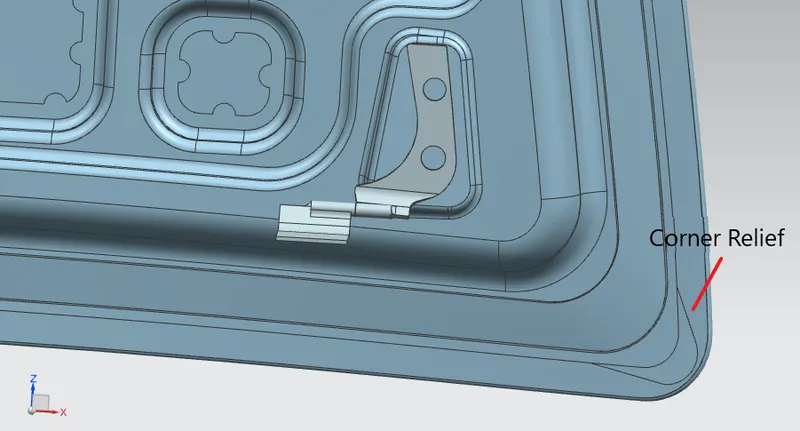
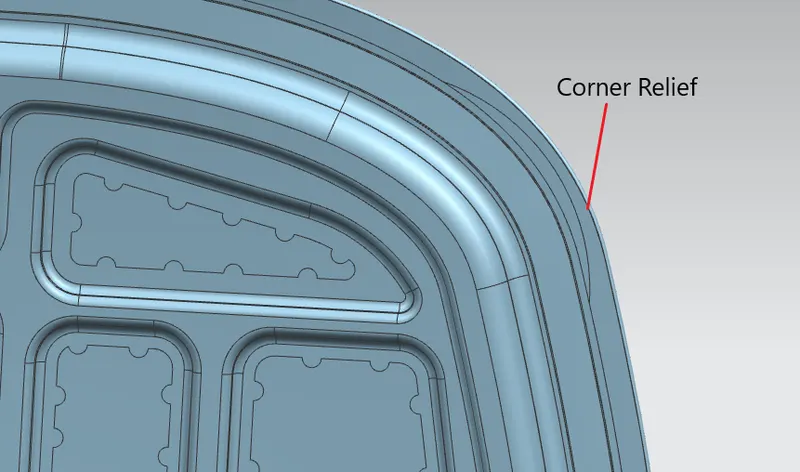
- In Hood, the outer panel is subjected to the hemming operation which means that the outer panel edges is folded and roll it back to the underneath of the inner panel. The corner of the outer panel edge has to be trimmed. Because while hemming process the roller transfer pressure to the outer panel edge to fold it and roll it back, so that it may cause the problem that the sheet metal may break.
- Deep Drawing:
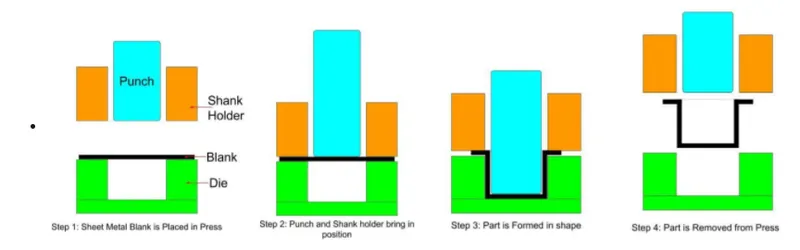
- Deep Drawing is the sheet metal forming process. It is quite similar as punching process.
- Deep Drawing - The required sheet metal is to be clamped and the die with the required shape has to be kept below the sheet metal, then the sheet metal blank is drawn into that forming die by the pressure applied by the punch.
- Embossing:
- Embossing is kind of stamping process. It is the process of appliying the pressure to the flat sheet metal by the forming tool to create the projection on that sheet metal wherever required.
- In Hood design the inner panel of the hood has more embosses to improving the strengthening of the panel. Based on the design structure, the embosses that are created or we can say projected on the inner panel sheet metal.
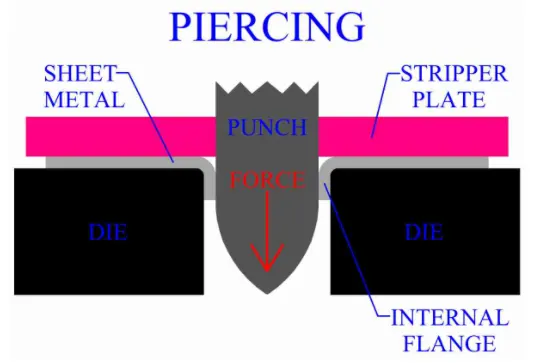
- Piercing:
- Piercing is the kind of shearing process in which the unwanted materials with a particular shape are removed from the sheet metal by using the blanking punch and dies.
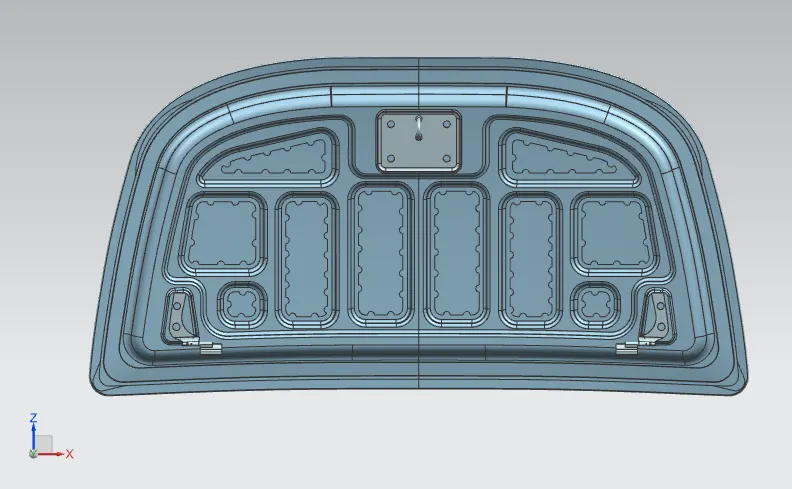
Hood assembly views:
Front view:
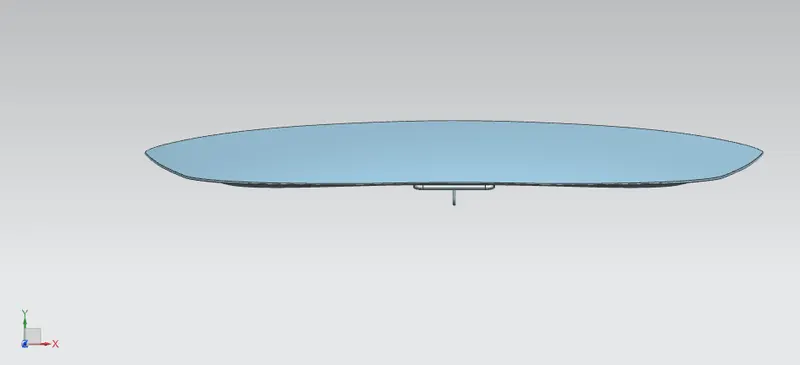
Top view:
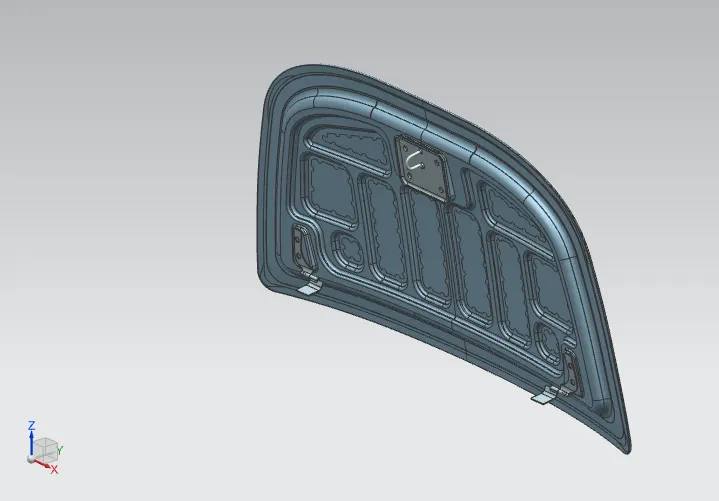
Isometric view:
Right side view:
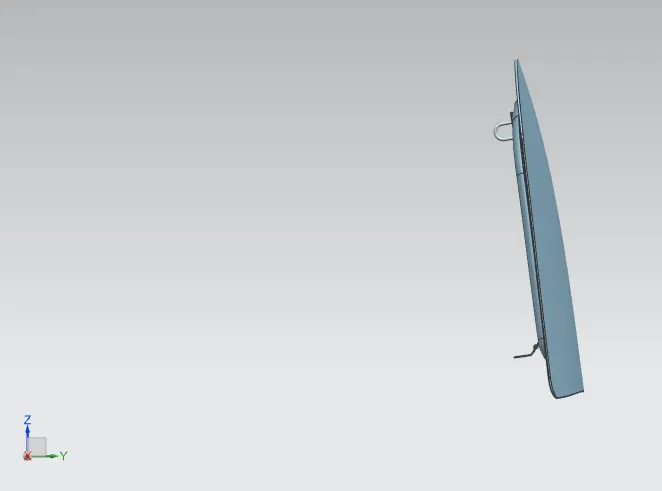
Back side view: