Hood design-Week 2
Objective :-
To Design Hood Outer Panel, Inner Panel, Mastic Surfaces with given reinforcements, Master section and skin data.
Introduction :-
The Hood is an external hinged cover over the vehicle that rests over the engine of a front-engine vehicle. Its purpose is to provide access to the engine for repair and maintenance. A concealed latch is typically used to hold down the hood. On vehicles with an aftermarket hood and on racecars, hood pins may be used to hold down the car hood. Hoods sometimes also contain a hood scoop, wiper jets, power bulge, and/or hood ornament. Car hoods are typically constructed from steel and sometimes from aluminum. Aftermarket car hoods may be constructed from various other materials, including carbon fiber, fiberglass, or dry carbon.
In design perpective we should concern some speific safety conditions like pedestrian safety such as head injury during a collision with a motor vehicle have led to advanced hood designs on many models. Such designs may include a multi-cone inner hood panel design. An active structure that is capable of pushing the surface of the hood away from the vehicle's hard motor components in the event of a pedestrian crash is also in use. Pyrotechnic or spring force designs are often used in active-hood design.
A car hood is meant to protect the performance parts of your vehicle, including the engine, while also providing easy access for repairs and maintenance. The hood is also prone to receiving scratches and dents. Although this might appear to be a minor problem, dents and scratches can lead to depreciation in the value of your vehicle. Scratches and dents can also lead to exposure to the elements that can result in rust and corrosion. This can be a serious problem that can ultimately expose the engine in your car to snow, sunlight, and rain. When this happens, it can impact the performance of your car's engine.
Design Parameters :-
Given Data
Hood Thickness Information
- Outer Panel Thickness = 0.75mm
- Inner Panel Thickness = 0.75mm
- Reinforcement Thickness = 1.5mm
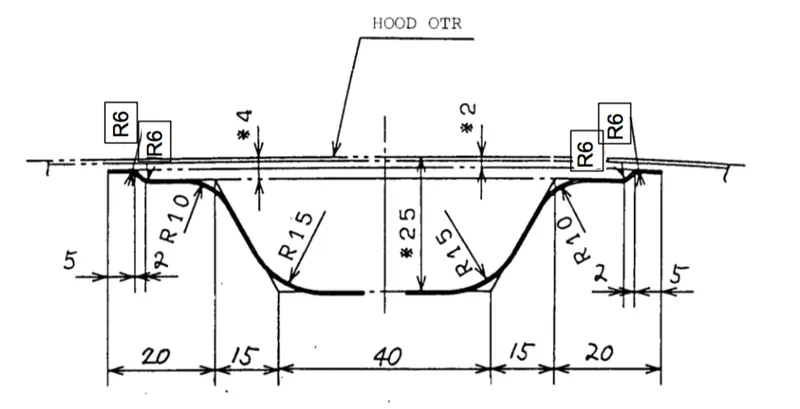
Master Section
Components :-
1. Hood Outer Panel
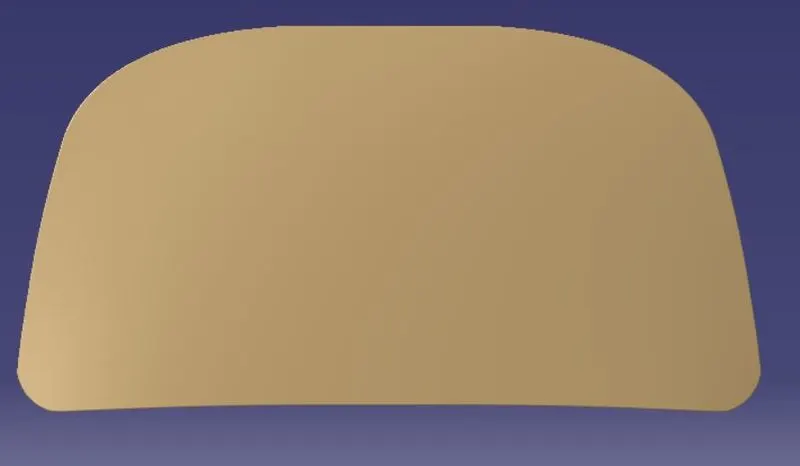
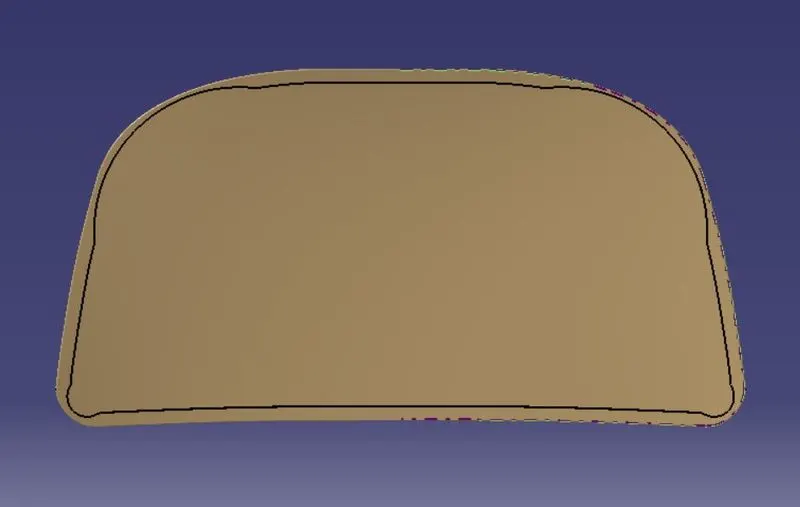
Fig:- Outer panel and Relief outer panel
Hood outer panel is the aesthetic look of a vehicle and it is provided by styling team to design team. The shape and size of a hood should follow the safety norms for the vehicle. The hood outer panel is attach to inner panel through hemming process. So it is required to produce hemming flange and relief for hemming operations. The mastic sealants also provided between outer panel and inner panel to reduce vibrations.
2. Hood Inner Panel
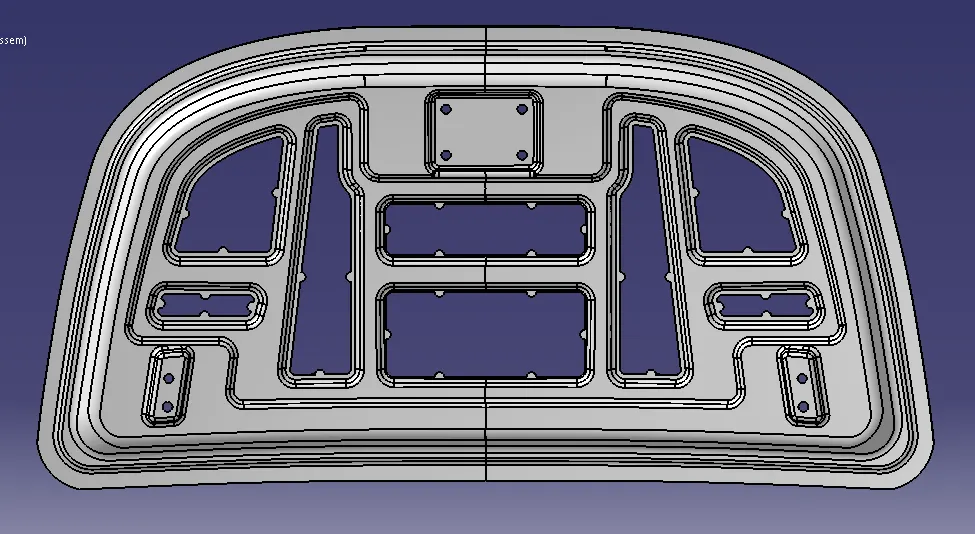
Fig:- Inner Panel
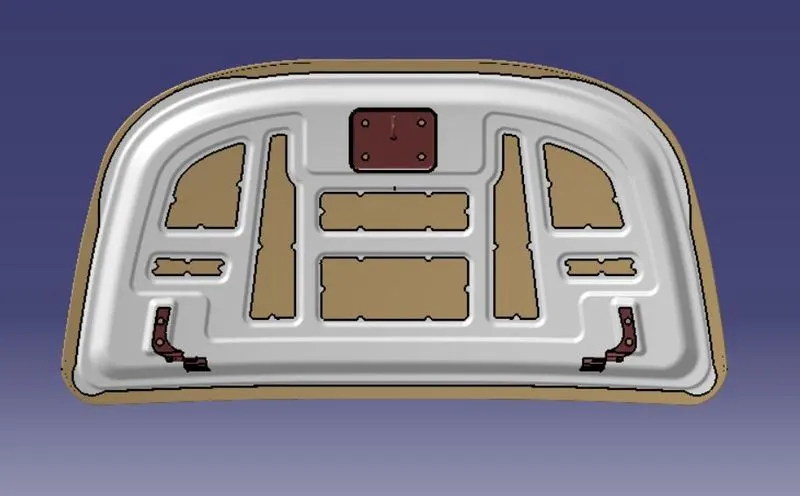
Hood inner panel are done design team from the reference data of styling team, Inner panel is designed in such a way that gives strength to the hood panel and also provide emboss for latch striker and hinge element after fixing the location.
3. Reinforcement
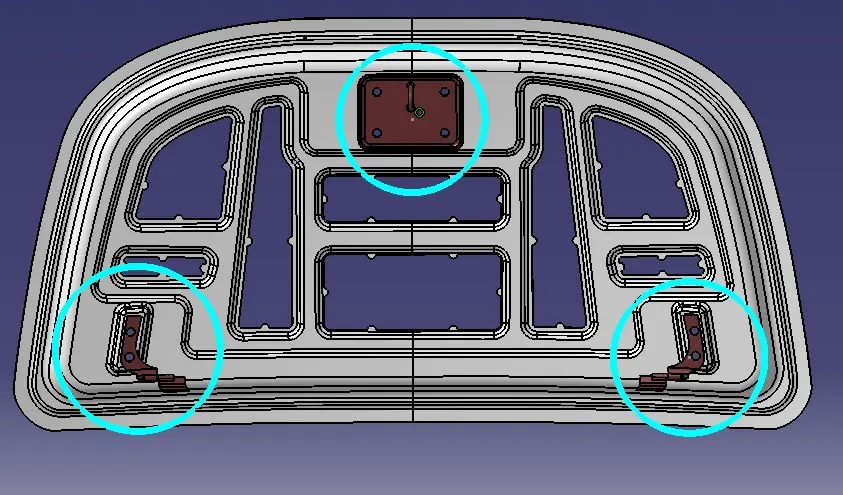
Fig:- Reinforcement
Reinforcement are provided accoring to design requirement. According to our given requirement it is provided at latch and striker region to improve strength locally. According to our given design requirement it is given 1.5mm to both hinge and latch reinforcements.
4. Latch Trajectory
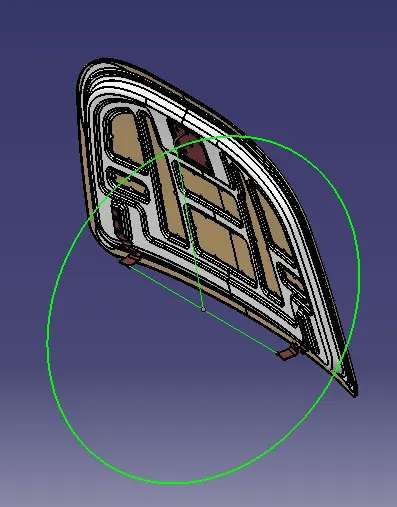
Fig:- latch Trajectory
Latch Trajectory is the given circle drawn from hinge axis point. Hinge axis point is the center point of the hinge axis. First we can fix latch or hinge. if we fix the hinge the hinge position then we should plot the trajectory circle for the latch.
5. Emboss Defination
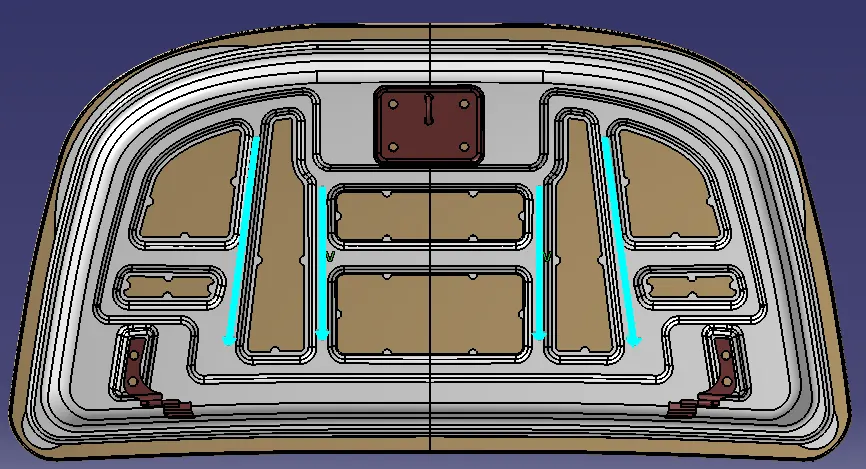
In the inner panel we provide different embosses.The shape and size of embosses also determines the directions of force distributions through frontal collisions. The force should be distributed away from the passengers.
6. Mastic Data
Mastic sealants are used to stick inner surfaces of outer panel and inner panel. Mastic Sealants are elastic compound that behaves like rubber. It is applied at inner and outer panels at specified spots. Hood commonly posses large surface area,so we cannot use joining processes like welding and riveting as they leave marks on outer panel which damages aesthetic appeareance of the panel.
7. Deep Drawing Process
Deep drawing is one of the most widely used processes in sheet metal forming. Apart from its use in many other sectors, it is applied in the automotive industry for the manufacturing of car body parts. The deep drawing process is a forming process which occurs under a combination of tensile and compressive conditions.
8. Hemming
It is the process of bending/folding the flange of the outer panel over the inner one. The accuracy of the operation significantly affects the appearance of the cars outer surfaces and is therefore a critical factor in the final quality of a finished vehicle. Hemming presses are widely used in automotive manufacturing for hemming of sheet-metal body components. The process uses traditional hydraulically operated ‘stamping presses’ to hem closure parts, and, being the last forming process in stamping, it largely determines the external quality of such automotive parts as doors, hood and trunk lid.
There are two types of hemmming operations.
1. Conventional die hemming
2. Roll hemming
- In conventional die hemming, the flange is folded over the entire length with the hemming tool.
- In roll hemming processes roll hemming is carried out incrementally with a hemming roller. An industrial robot guides the hemming roller and forms the flange. Roll hemming operation can also be divided into several pre-hemming and final hemming process steps. Roll hemming is very flexible to use and tool costs are significantly lower as compared to those of conventional die hemming. However, the cycle times are much higher since the hemming is realized using a hemming roller which follows a defined path.
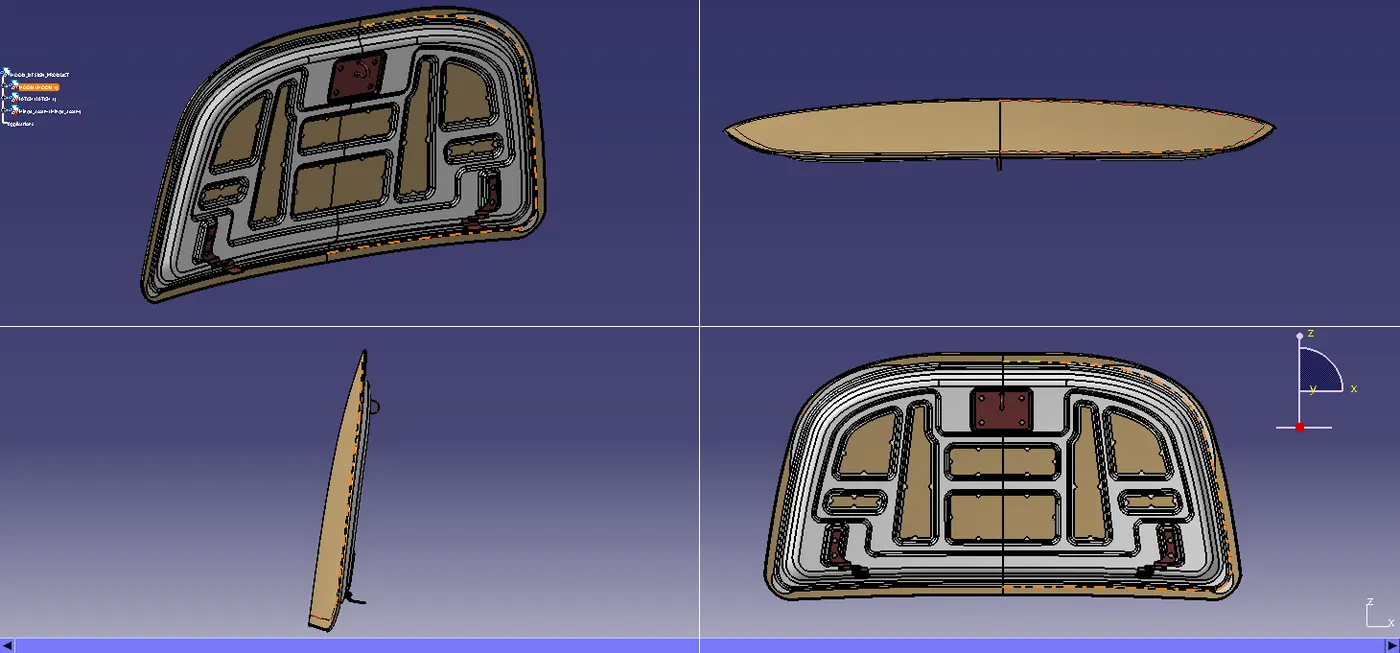
Fig:- Complete Hood Panel Design With Reinforcements
Conclusions :-
The Hood Design is Completed according all safety and design Parameters.