Fender Design Challenge
OBJECTIVE :- To design various mounting points on fender according to given design perimeter.
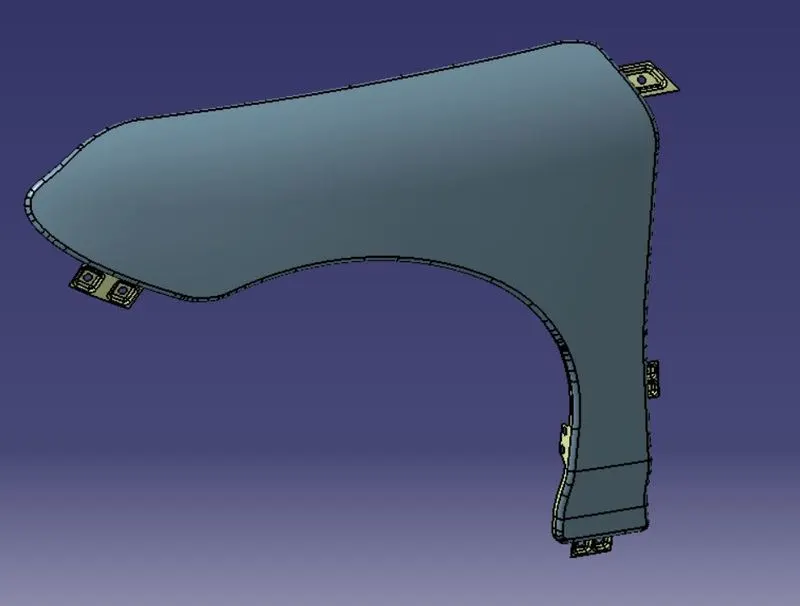
Introduction :- Fender is a part of an automobile, motorcycle or other vehiclebody that frames a wheel well (the fender underside). Its primary purpose is to prevent sand, mud, rocks, liquids, and other road strays from being thrown into the air by the rotating tire. Fenders are typically rigid and can be damaged by contact with the road surface. Sticky materials, such as mud, may adhere to the smooth outer tire surface, while smooth loose objects, such as stones, can become temporarily embedded in the tread grooves as the tire rolls over the ground. These materials can be ejected from the surface of the tire at high velocity as the tire imparts kinetic energy to the attached objects.
To provide this kind of protection, fenders should have a firm and rigid material such as steel. If you use your car every day on rough roads, it will experience a continuous “attack” of all kinds of debris. In this case, you’ll end up with a damaged fender after a while. Mud and other sticky dirt can also adhere to the smooth rubber surface of the tires. Other loose debris, such as stones, can temporarily embed themselves in tire treads or grooves as the tire rotates while driving your car. As you drive your car, these foreign materials will be ejected from the tire surface and tread at high velocity as the tire imparts kinetic energy to them. While your car is running, the tires rotate forward and upward.
These rotary motions, especially at high speeds, will throw these foreign objects into the air. They may fly into the path of pedestrians on the roadside or at the front, or other vehicles on the road or the inner sections and components of your car. Fenders are housings for wheels that contain or control road debris. If there is nothing that covers your wheels, road debris will always fly around when you drive your car.
This is why vehicles with big oversized tires are required by law to install not just fenders but fender flares. Fender flares are body kits that you can attach over the fenders of your vehicle. fenders are generally located at the front, on both the left and the right sides of the vehicle. Some fenders are attached at the rear wheels, also on both the left and the right sides. Specifically, the front wheels are located immediately behind the front fenders. The rear wheels are immediately located in front of the rear fenders. To explain it in a more specific way, the car fenders are the panels located at the vehicle’s front left and front right. At the rear, the panels are called quarter panels which are also sometimes called fenders. These panels cover or contain the rear wheels, both right and left.
There are two types of fenders:-
1. Full bumper type :- It is used in old cars due to its heavy weight and consumption of more raw material now its not used instead we use half bumper type fender
2. Half bumper type :- Half bumper type fenders are mostly used nowadays due its scrapless or low wastage as compared to full bumper fender.
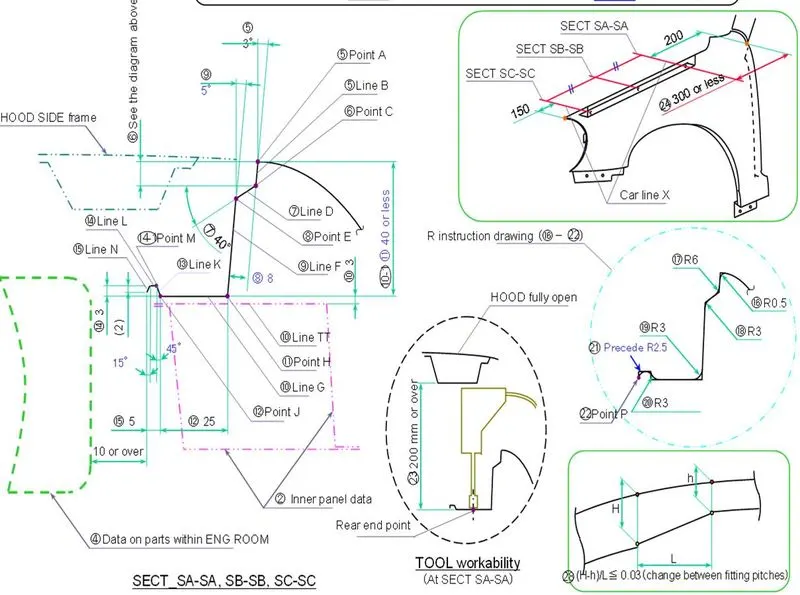
Design Parameters :-
Manufacturing Processes :-
The manufacturing processes mainly involves these operations.
1. Embossing
2. Bending
3. Cutting and Blanking
Embossing :-
Sheet metal embossing is a stamping process for producing raised or sunken designs or relief in sheet metal. This process can be made by means of matched male and female roller dies, or by passing sheet or a strip of metal between rolls of the desired pattern.
Bending:-
Bending is a manufacturing process that produces a V-shape, U-shape, or channel shape along a straight axis in ductile materials, most commonly Sheet metal. Commonly used equipment include box and pan brake, brake presses, and other specialized machine presses. Typical products that are made like this are boxes such as electrical enclosure and rectangular ductwork.
Cutting and Blanking:-
Cutting processes are those in which a piece of metal is separated by applying a great enough shearing force to cause the material to fail.
Blanking is a metal fabricating process, during which a metal workpiece is removed from the primary metal strip or sheet when it is punched. The material that is removed is the new metal workpiece or blank.
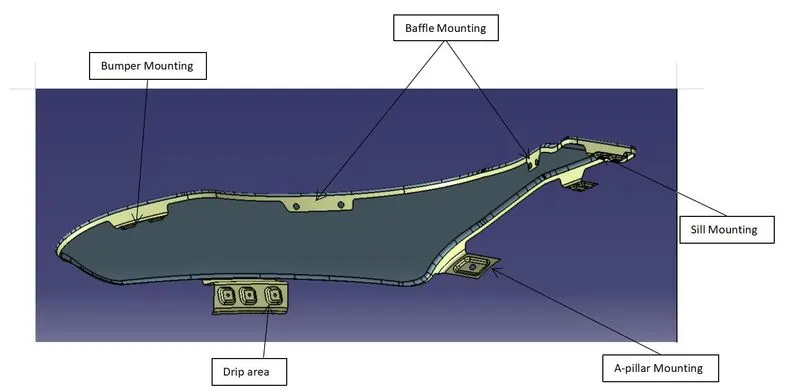
Fender is mounted basically on 5 important regions. They are
1. Drip area
2. A-Pillar Mounting area
3. Still Mounting area
4. Bumper Mounting Area
5. Baffle Mounting area
Drip Area
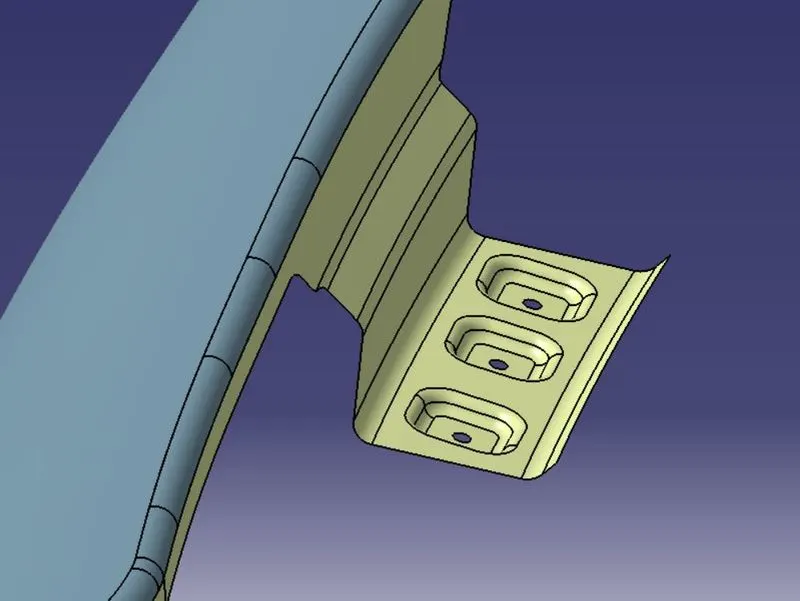
It is the area through which fender is attached to engine housing through fasteners. There should be some consideration followed to design the drip area of fender. From back side of front fender, there will be 200mm clearance for wiper motor mounting area and the clearance of 150mm from the front of the fender for the headlamp housing unit.
A-Pillar Mounting Area
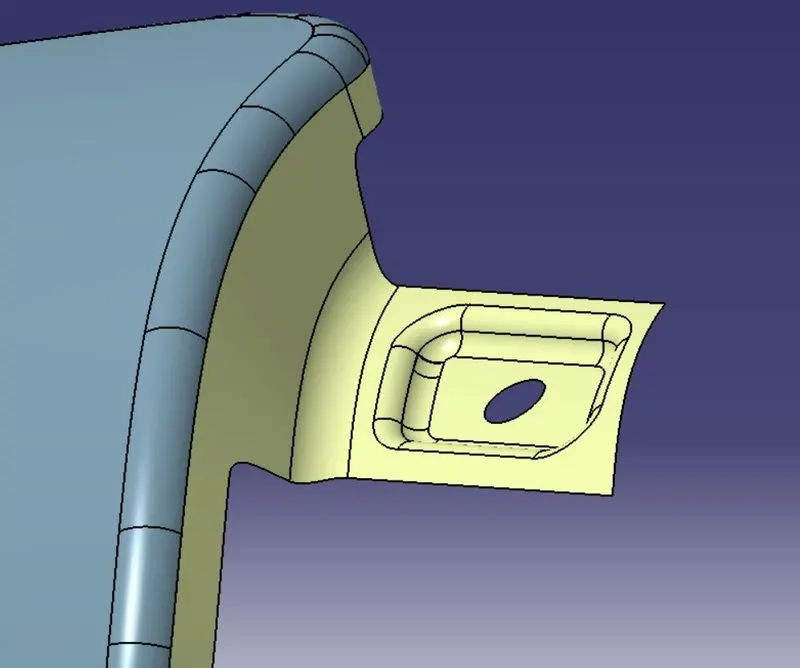
This mounting region is located near the cowl of the vehicle where the fender is fastened with the bottom edge of the windshield. The mounting is covered with rear view mirror.
Still Mounting Area
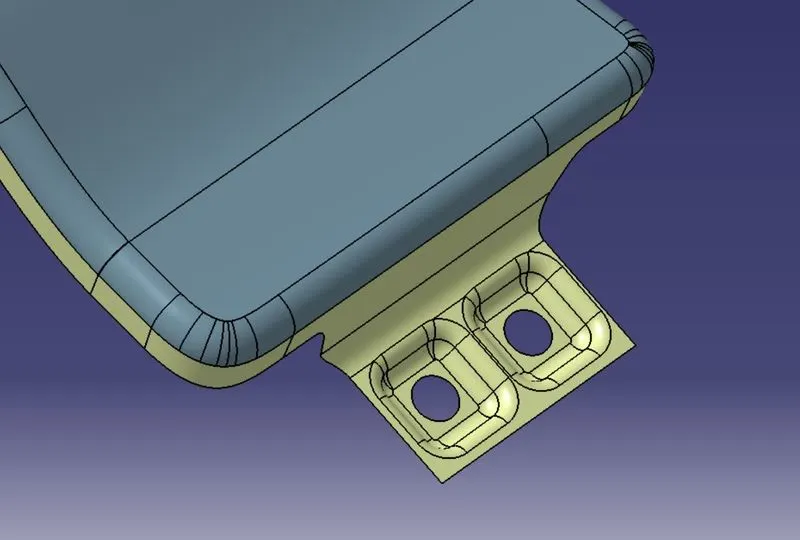
The area at which the bottom of fender gets connected to the floor near the bottom edge of the door. The embossing still mounting of the fender is attached with the fasteners.
Bumper Mounting Area
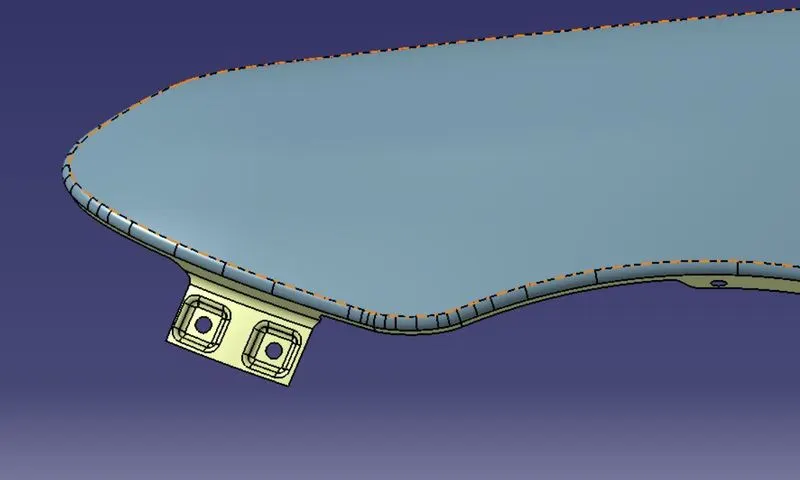
The bumper mounting region is located beneath the bumper. The fender gets attached before the installation of the bumper. After fixing the fender with fasteners the bumper will cover the bumper mounting.
Baffle Mounting area
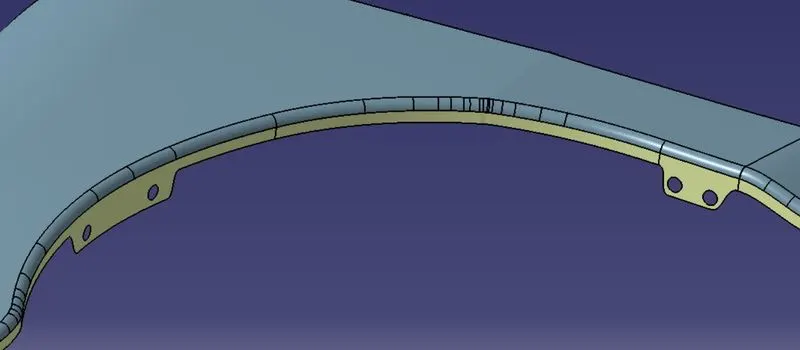
In this region, the baffle gets installed to the fender with the help of clips which holds the baffle with the fender along the wheel arch.
Conclusion
The fender is designed with the necessary mounting points considering the design parameters.