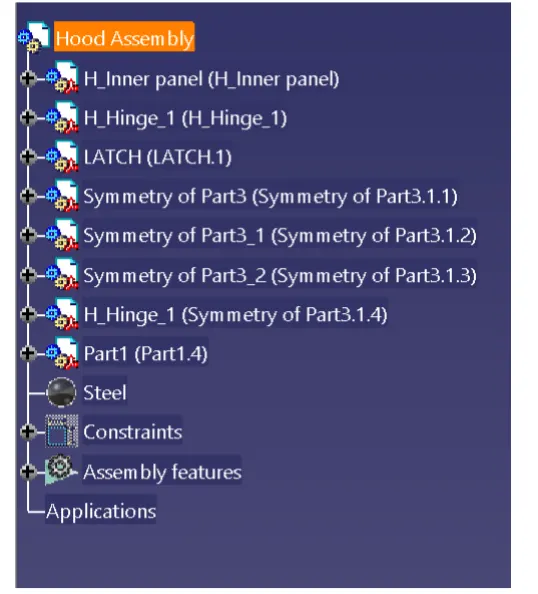
Hood design-Week 2
HOOD DESIGNING
Introduction:
Hood:
The hood or bonnet is the hinged cover over the engine of motor vehicles. Hoods can open to allow access to the engine compartment, or trunk on rear-engine and some mid-engine vehicles) for maintenance and repair.
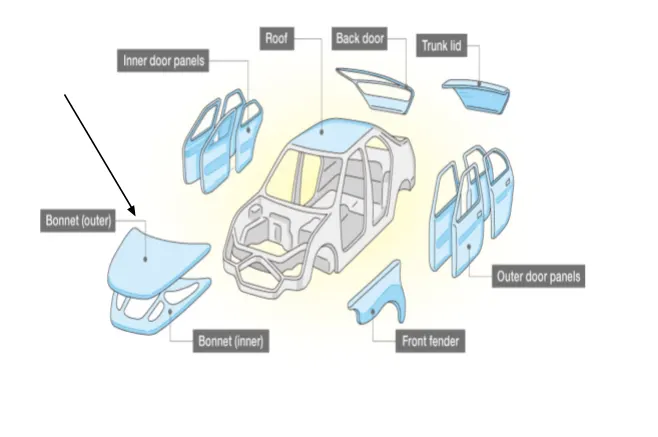
Hoods are typically made out of the same material as the rest of the body work. This may include steel, aluminum, fiberglass or carbon fiber. However, some aftermarket companies produce replacements for steel hoods in fiberglass or carbon fiber to make the vehicle lighter.
Hood Assembly:
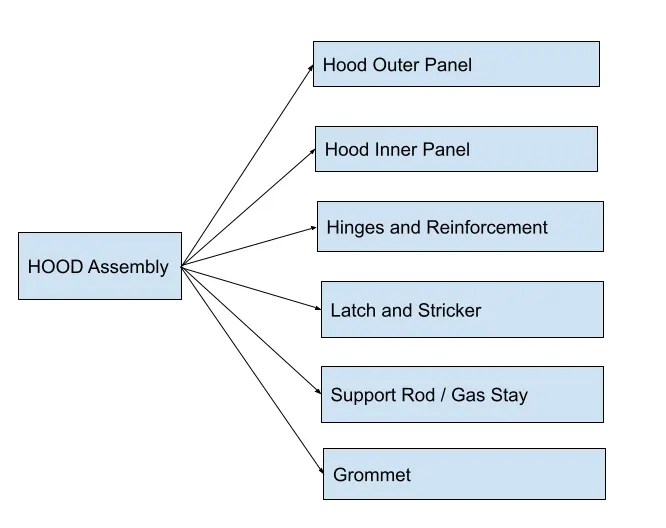
(i)Hood Outer Panel:
We receive an attached file of the outer surface of the hood to design further parts by referencing this file. It is an aesthetic portion for vehicles due to the fact that we should not do any operation on it or create engineering features . It is a showcase to attract customers but to provide strength to it, we create engineering features on the inner panel of the hood.
The thickness of the outer panel varies between 0.65mm - 0.75 mm.
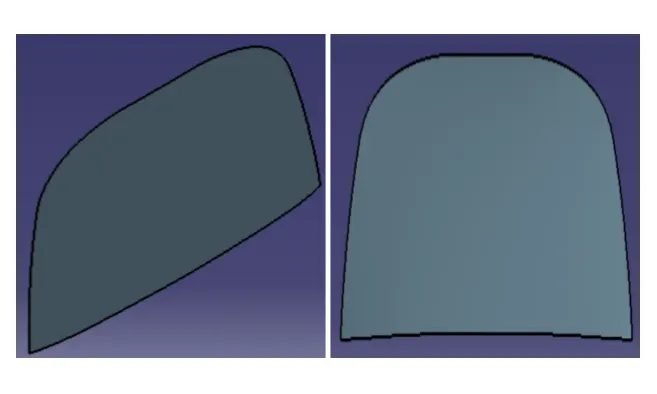
(ii)Hood inner panel:
To create the inner panel of the hood we receive or follow the master section . As shown in the picture below.
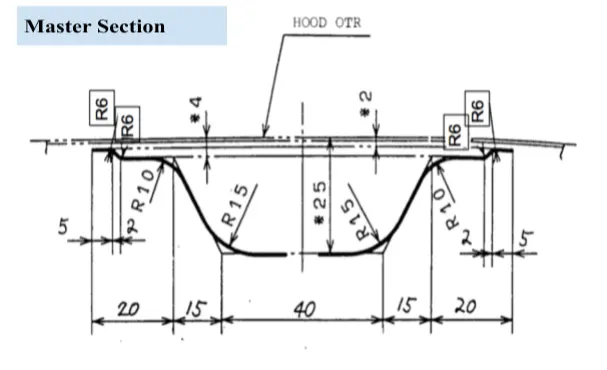
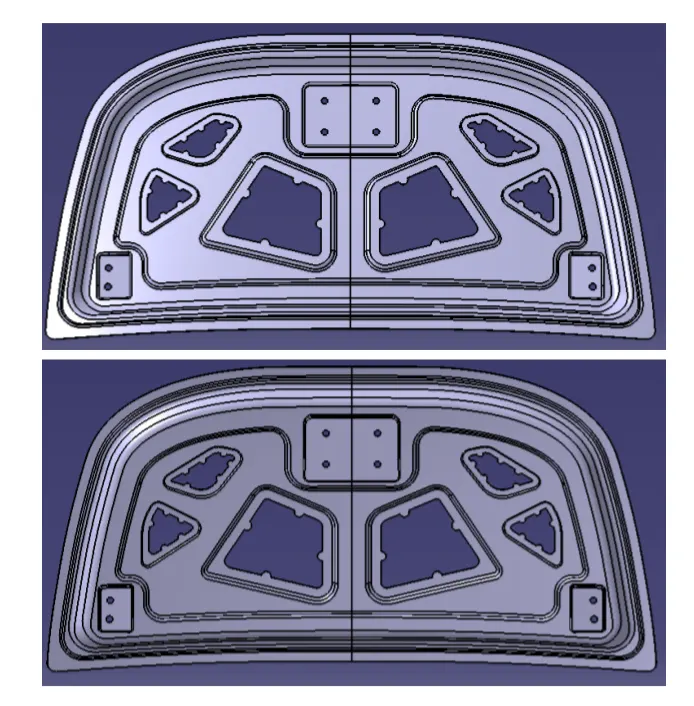
Main part of the inner panel of hood is , when automotive vehicle undergoes frontal crash the more energy should absorbs by it and passes less amount of energy to the passenger cabin. It is possible when the hood is designed in such a way that it emits energy through pillars, roof and sides.
Thickness of the inner panel of the hood varies from 0.65mm to 0.75mm.
(iii)Latch and Striker:
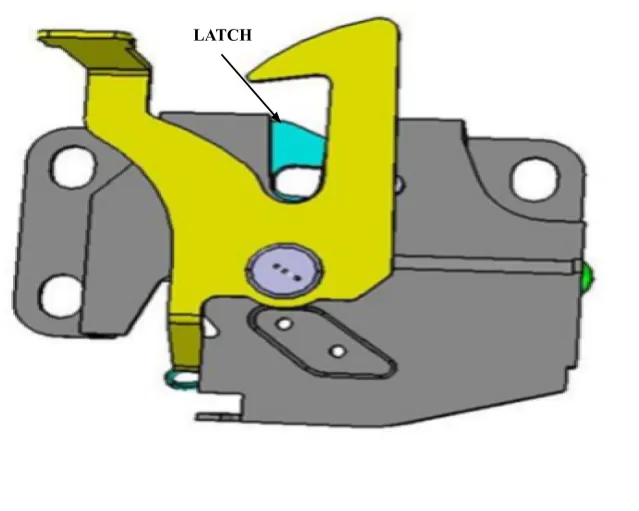
Hood Latch :
It is an important component in every automobile. It has many important functions like it is necessary to keep the engine covered and protected.The hood latch system ensures that the hood stays locked, therefore protecting the engine and many other parts that reside within the hood of the car.
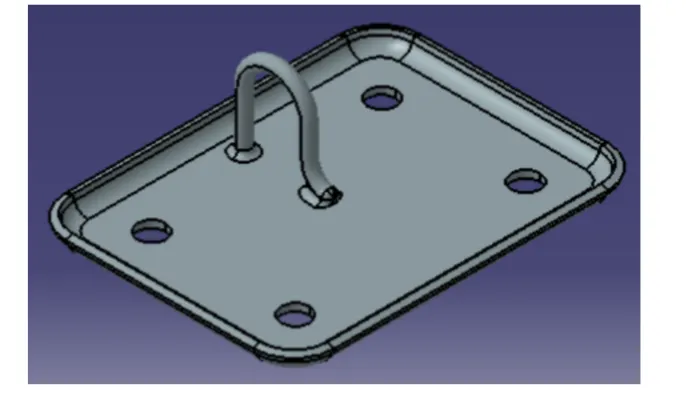
Hood striker:
It is attached to the hood and is what needs to be locked in order to keep the hood itself locked. It engages the hood latch when closed.
(iv)Hood Stay :
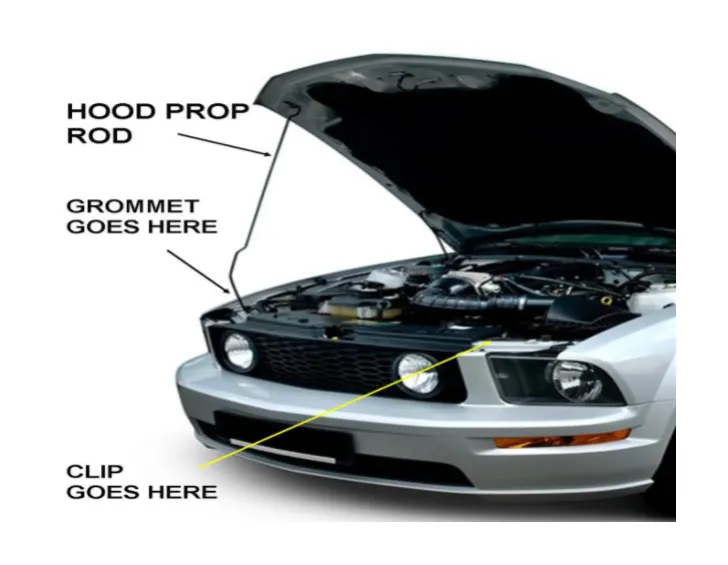
Support rod:
A device for supporting the engine hood of a motor vehicle in its open position by means of a rod.
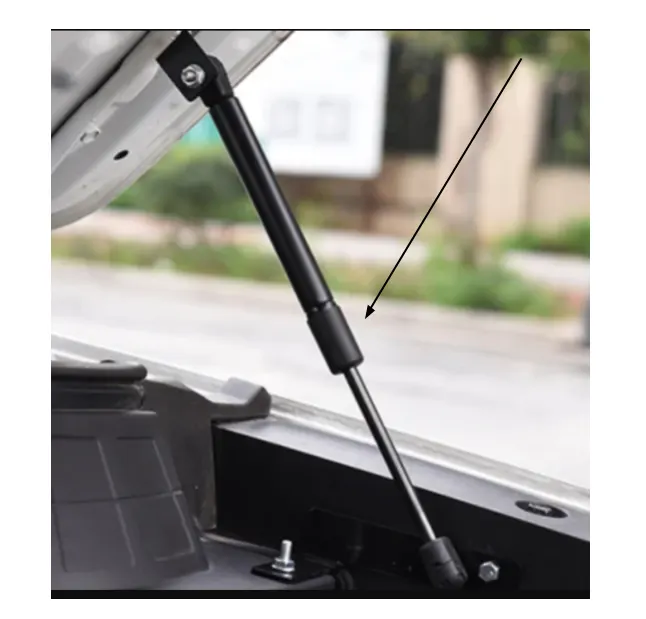
Gas stay:
A device for supporting the engine hood of a motor vehicle in its open position by means of an actuator which is activated by gas.
Design Guidelines while designing hood:
(i)Opening angle / Head zone criteria
(ii) EURO N-CAP crash test
(iii)NVH (Noise , Vibration , Harshness)
(iv) Positioning striker by trajectory of projectile theory
(v)Assembly process
(vi)Materials
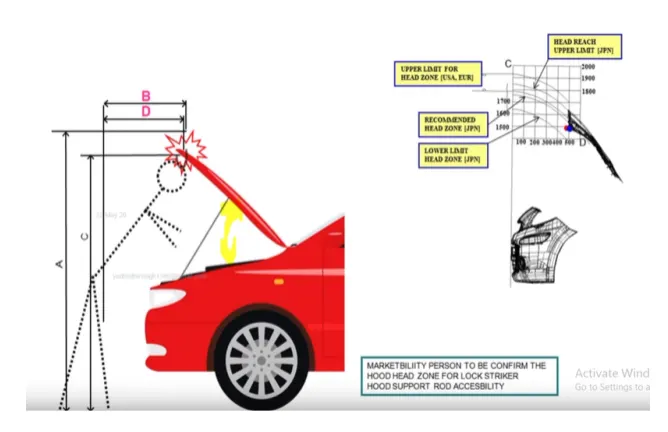
(i)Head zone criteria :
Opening angle or Head zone criteria is the most critical parameter because small mistakes in parameters in angle causes harm to humans like head injuries. Opening angle varies from person to person height and country wise / region wise also.To open hood it requires support stay. We discussed the support stay above.
Follow the below image for opening angle for hood varies by region by region and human height :
(ii) EURO N-CAP crash test:
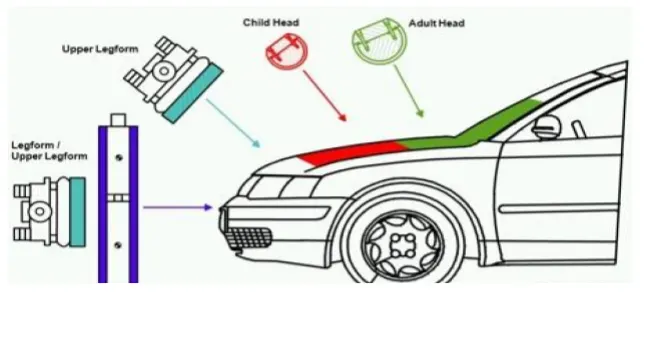
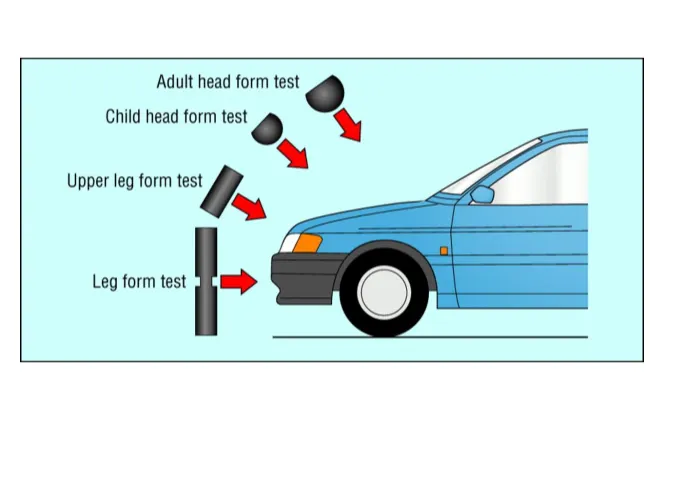
The European New Car Assessment Programme (Euro NCAP) is a European voluntary car safety performance assessment programme.
It was originally started by the Transport Research Laboratory for the UK Department for Transport, but later backed by several European governments, as well as by the European Union. Their slogan is "For Safer Cars".
Follow the below images for pedestrian head impact test :
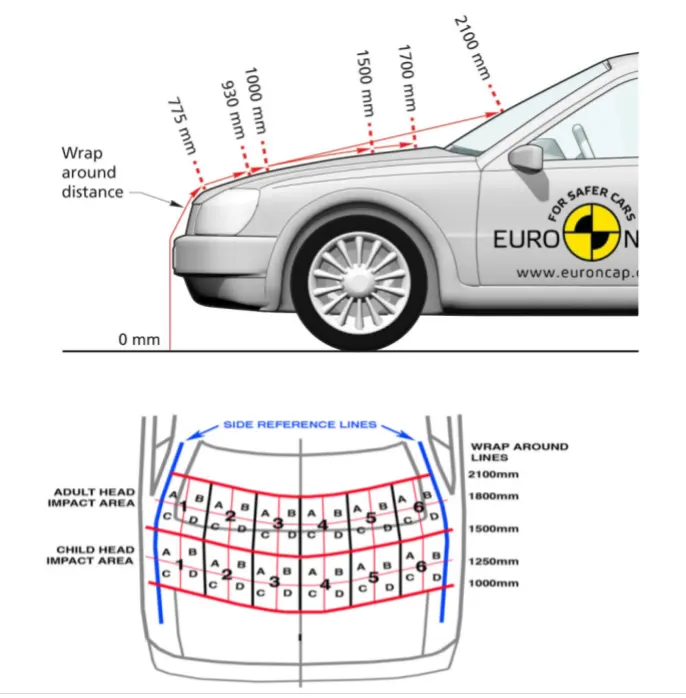
Wrap around distance:
When a car crashes into pedestrians , the whole human body wraps around the shape of the car and head impacts either on the hood or on the windscreen. The distance at which the head impacts the car from the ground is called wrap distance.
Follow the below images for references:
(iii)Trajectory projectile :
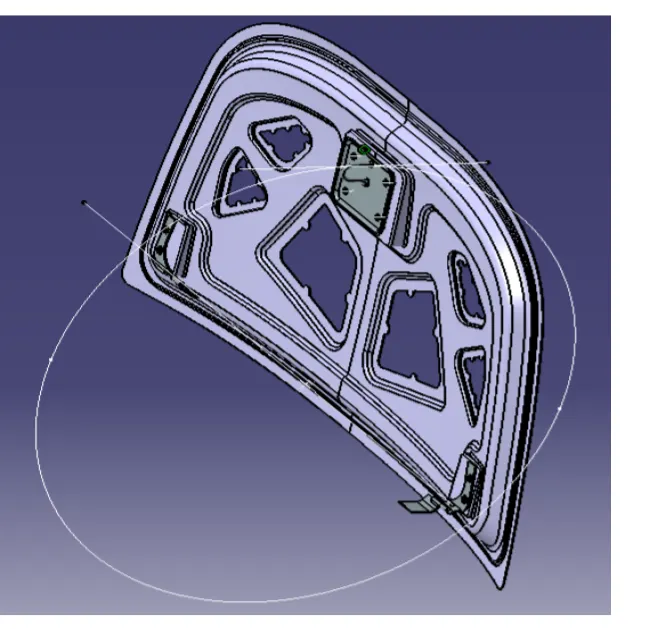
Position for the striker , we need to follow the trajectory projectile theory. It is created by creating an axis for hinges and taking the midpoint to the axis. Create a circle at that point. Make the striker perpendicular to the circle created previously. This exact position helps to proper open and closing as well proper lock with latch to close it.
Follow below image of trajectory projectile:
Rendered Image:
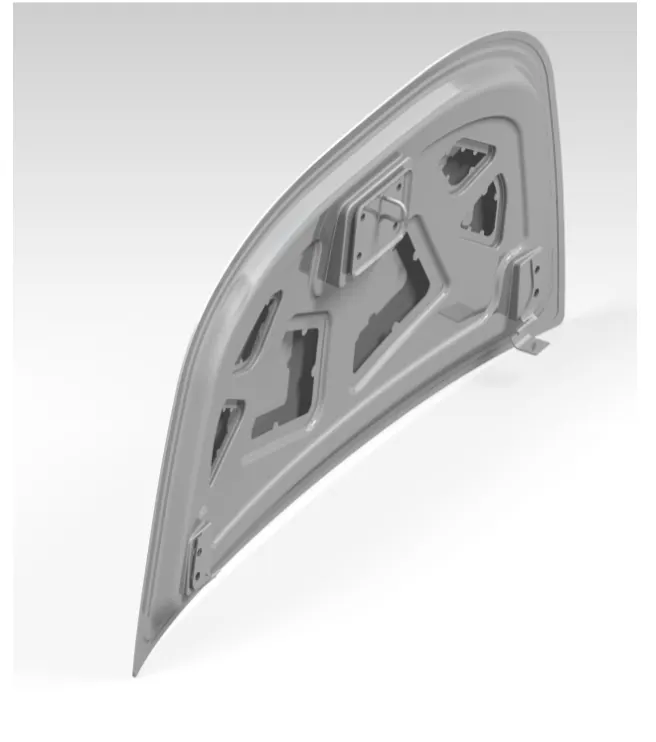
Views:
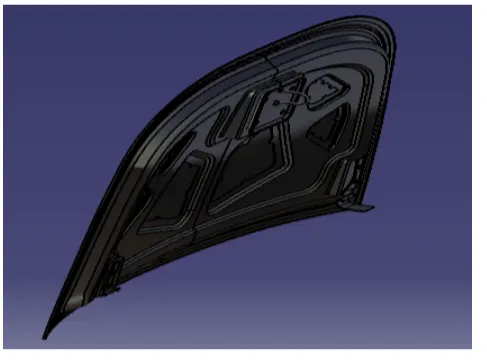
Isometric view:
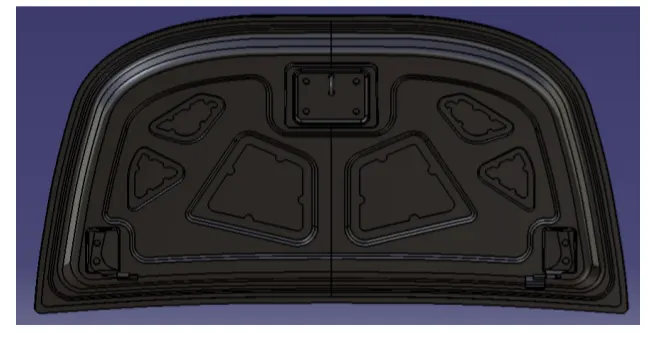
Side view:
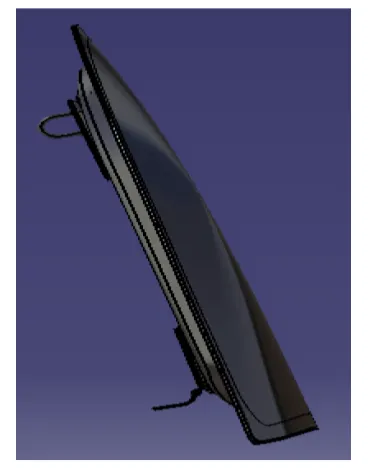
Front view:
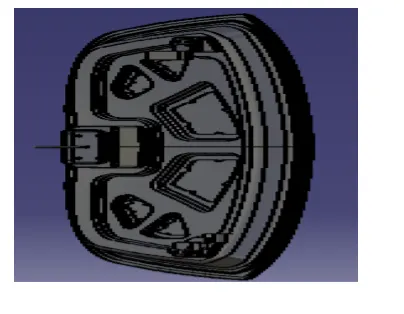
Bottom view:
Tree structure of Hood Assembly: