Hood design-Week 2
Introduction
A car hood also referred to as a bonnet, is the hinged cover that rests over the engine of a front-engine, on a rear-engine, and some mid-engine vehicles. Its purpose is to provide access to the engine for repair and maintenance and provide cover and some aesthetic look to the car.
A hood is made of typically the same material as the rest of the bodywork. This may include steel, aluminum, fiberglass, or carbon fiber. However, some aftermarket companies produce replacements for steel hoods in fiberglass or carbon fiber to make the vehicle lighter.
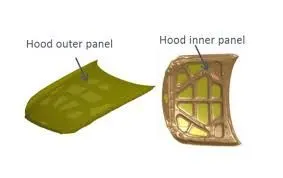
There are two parts in Hood - Hood Outer Panel, Hood Inner Panel
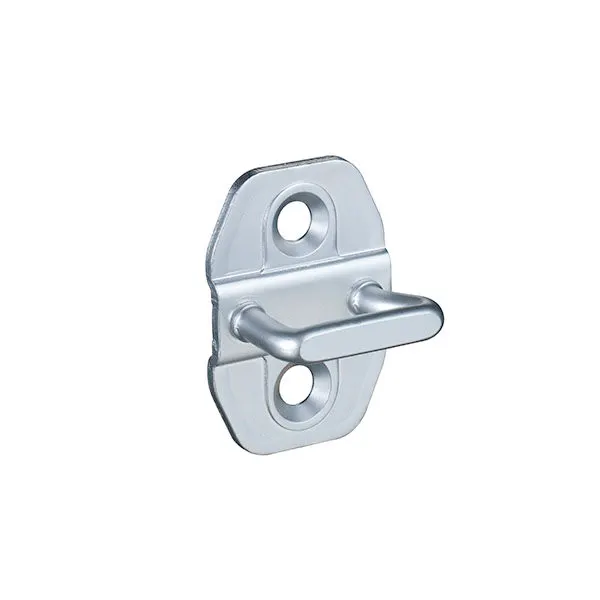
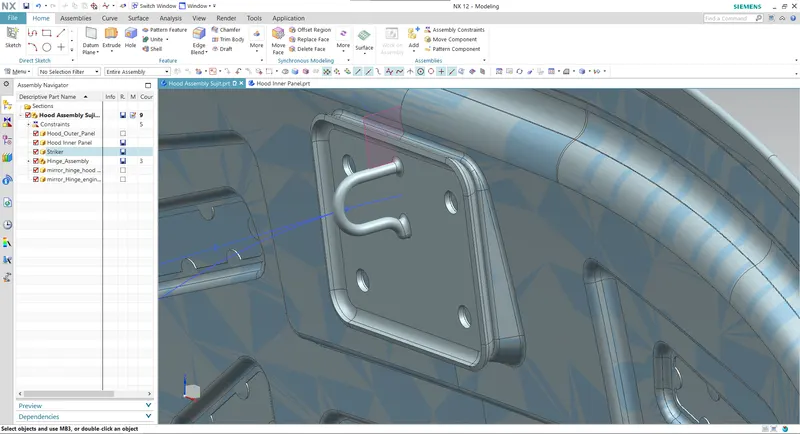
and with that comes the striker
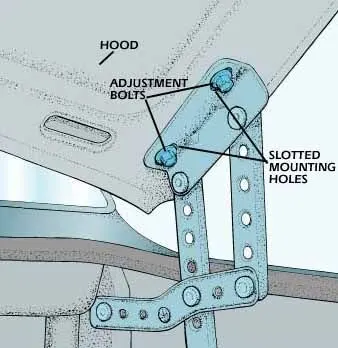
and the hinge attachment
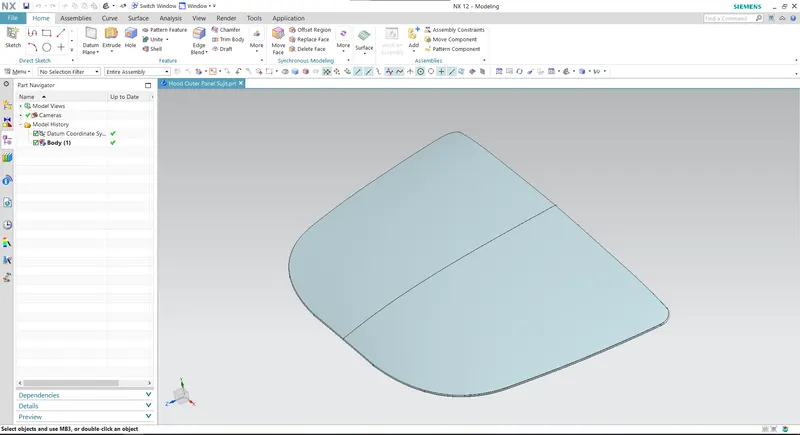
Hood Outer Panel
The outer panel provides a protective surface against foreign particles which can damage the engine and is also used to provide the aesthetic look for the car.
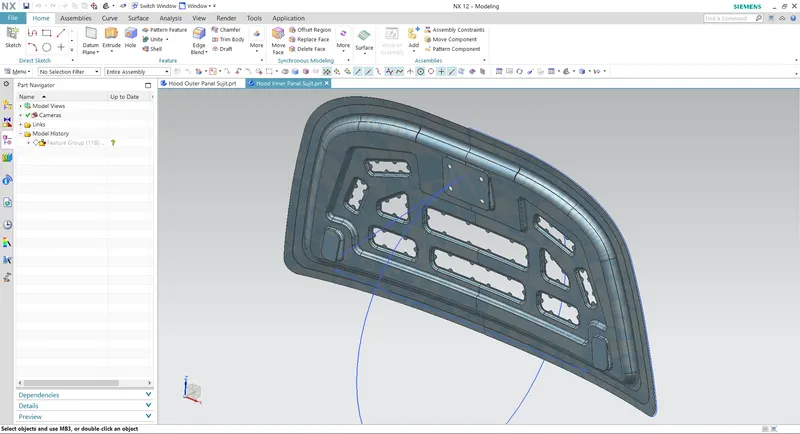
Hood Inner Panel
The hood inner panel has the most important function to carry, it is the main strengthening part of the hood and the most critical one to design. It holds the striker and the hinges and is the main panel of the assembly.
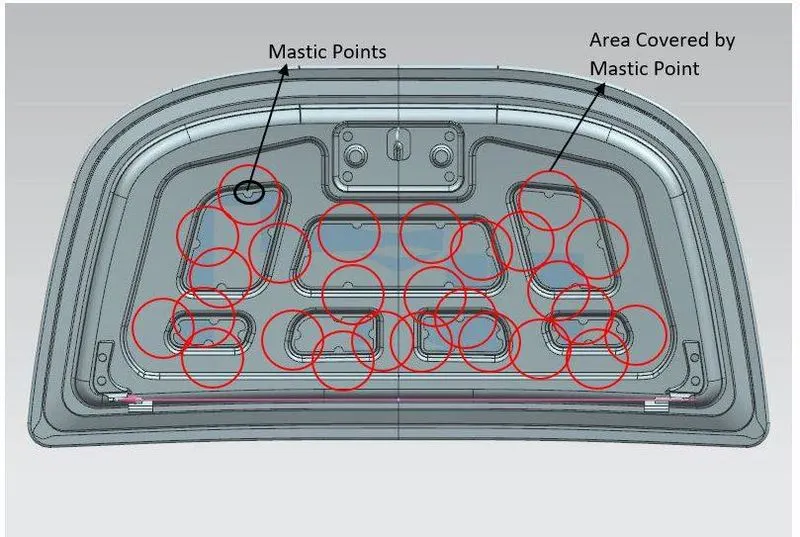
In between the outer and inner panel, mastic sealants are applied which helps in improving the overall strength of the hood up to 80mm in diameter from the point.
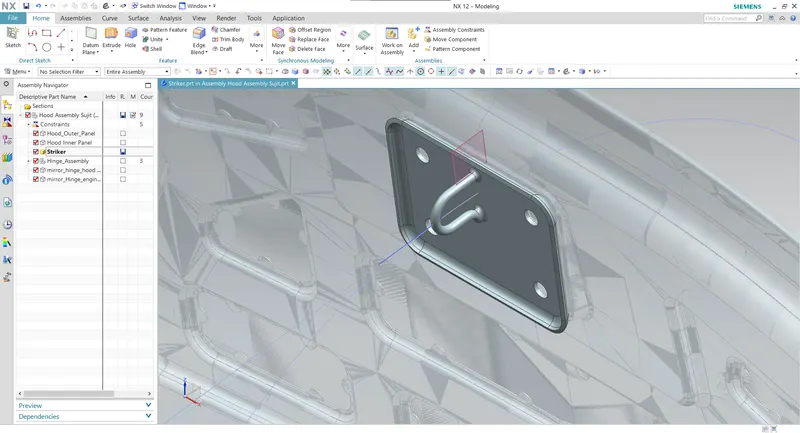
Striker
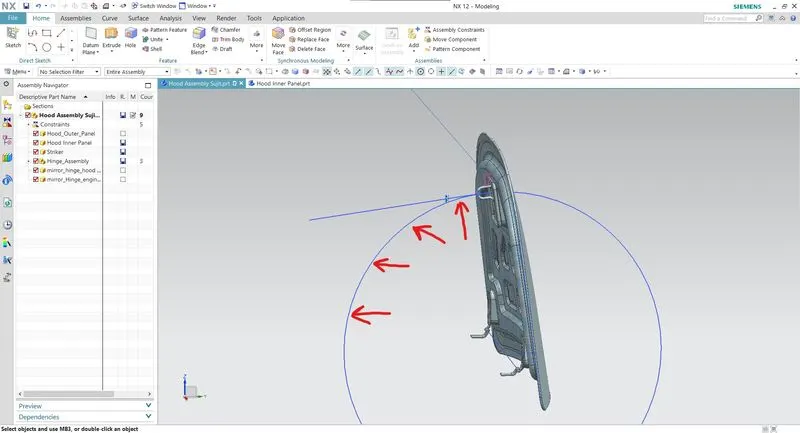
Hood striker provided the locking system with the car body. It ensures that the hood doesn't open unexpectedly while driving.
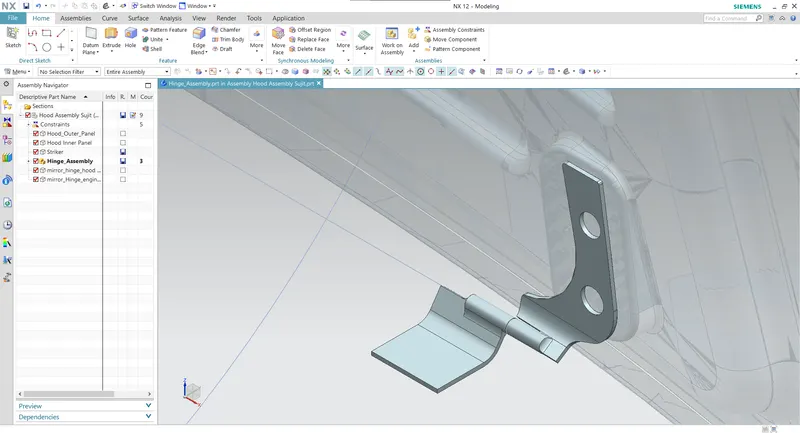
Hinge
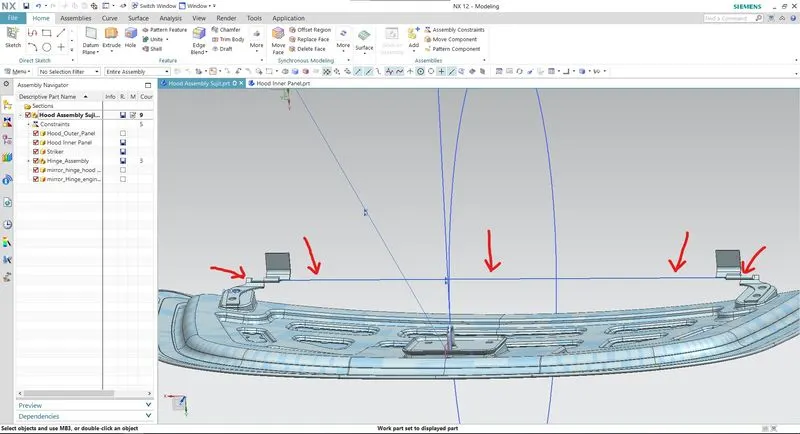
These are the part with helps the hood to stay in position and also provide the angular moment to open and close. There are two on either side of the hood which should always be following the same axis to give proper moment.
Reinforcement - the action or process of reinforcing or strengthening.
It is done on the inner panel, at the location of striker and hinge position to add strength to the part.
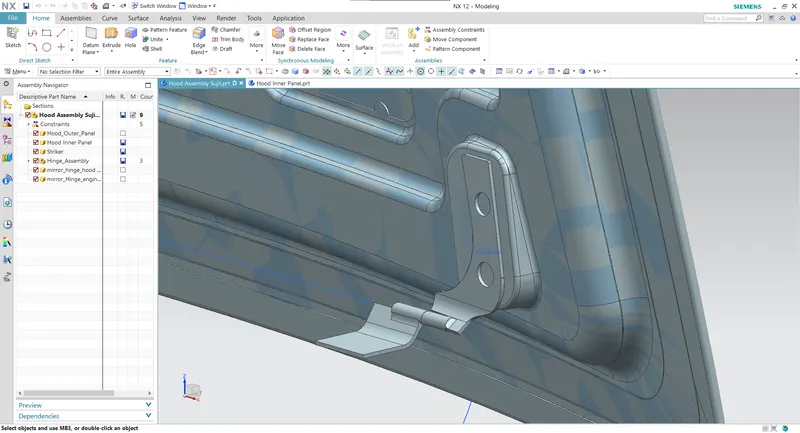
Hinges axis
Trajectory for striker
Outer Panel
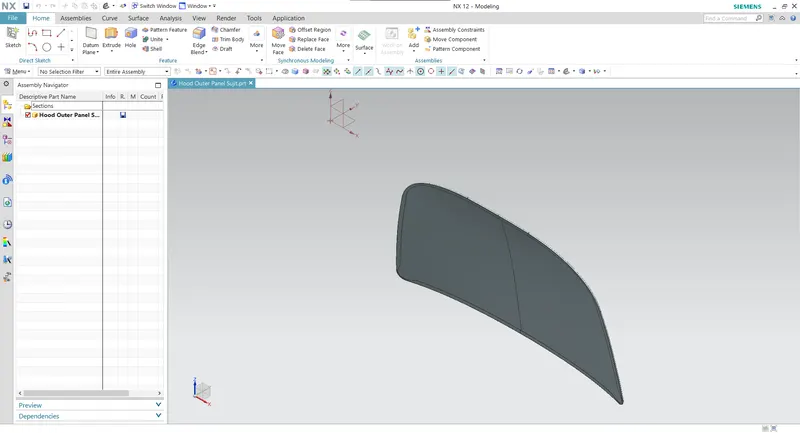 View 1
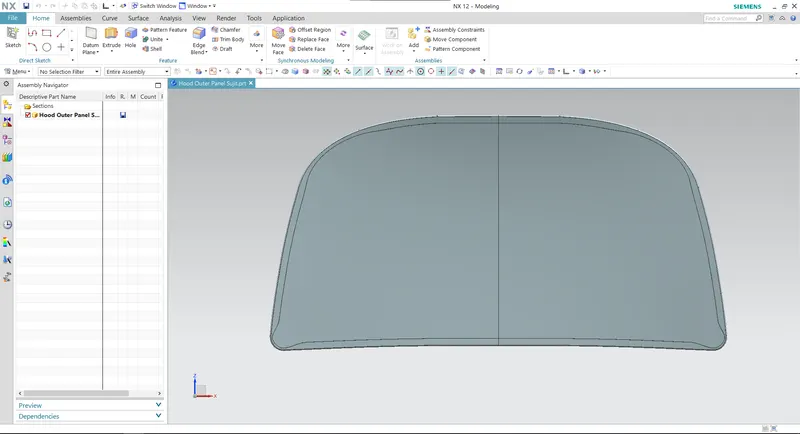 View 2
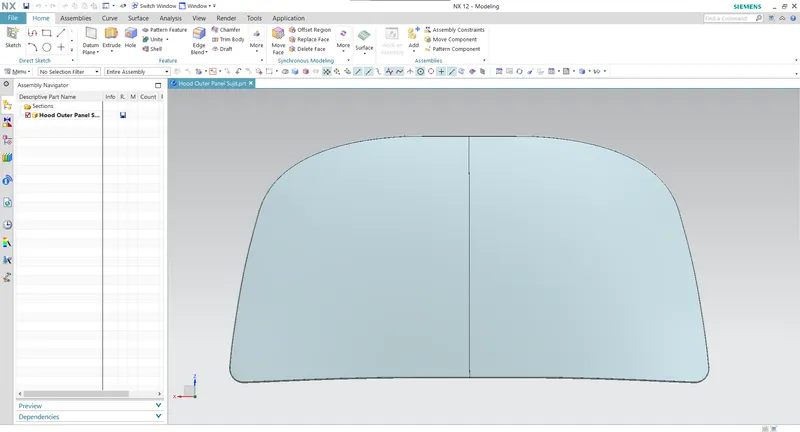 View3
View3
Inner Panel
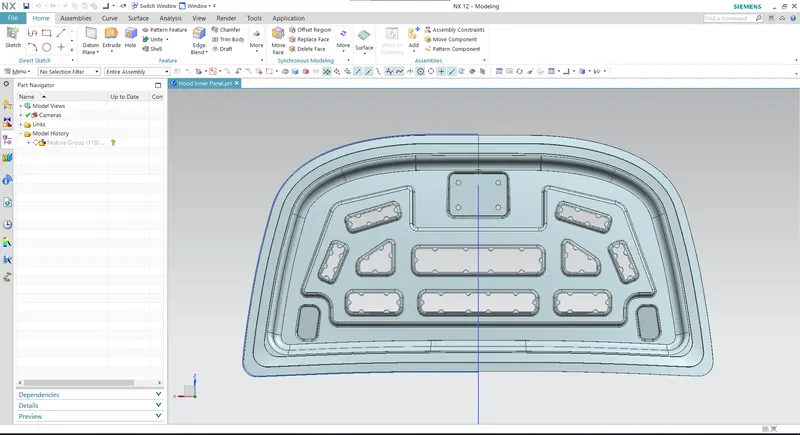 View1
View1
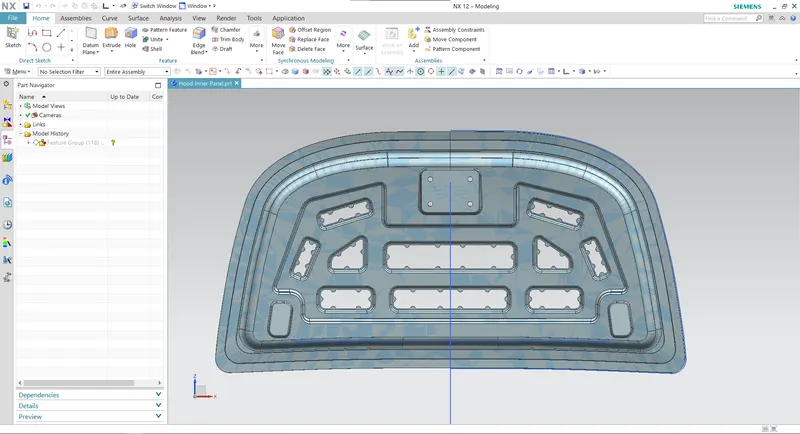 View2
View2
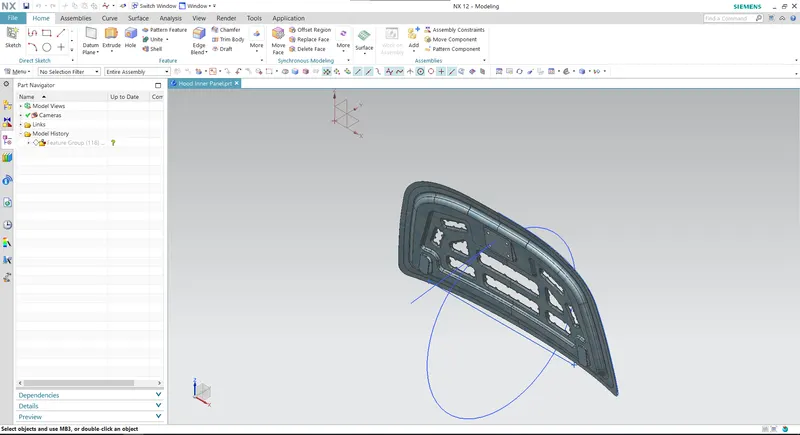 View3
View3
Assembly
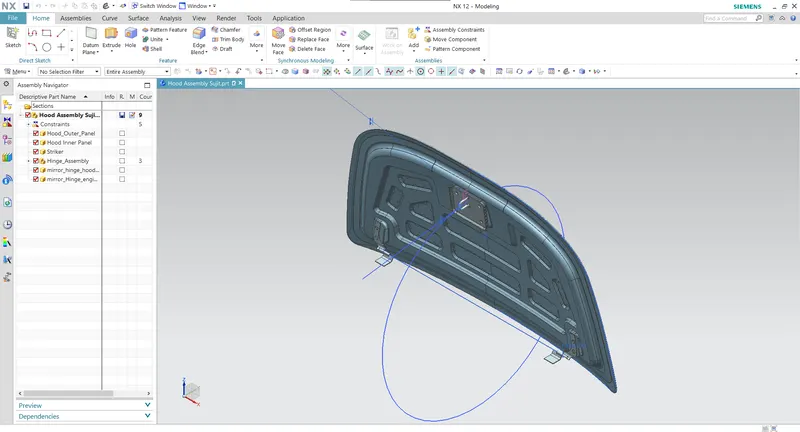 View1
View1
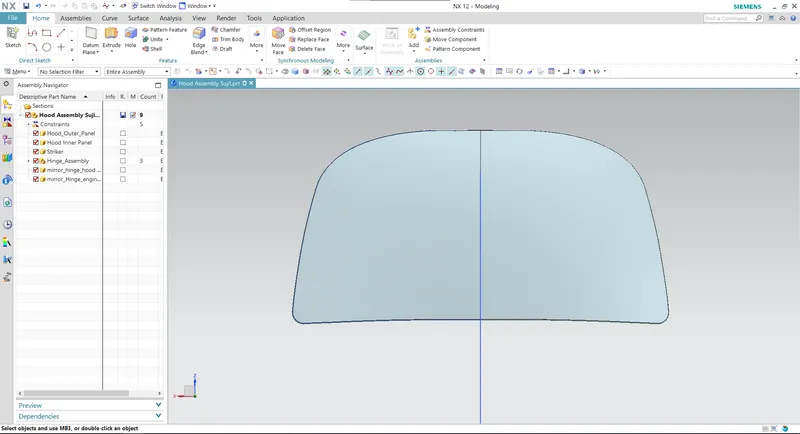 View2
View2
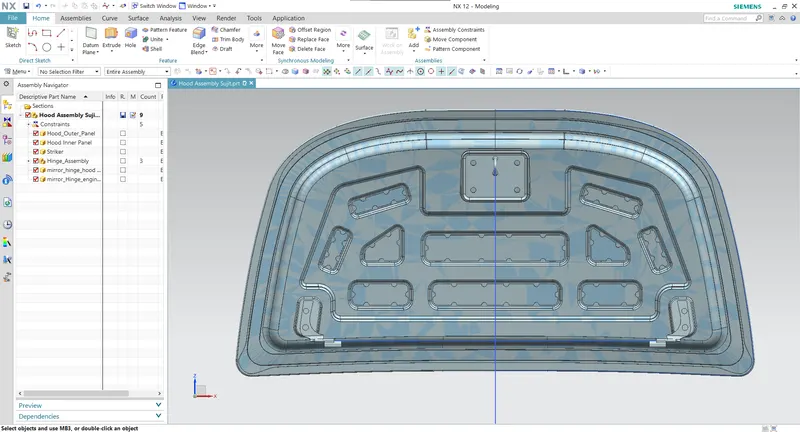 View3
View3
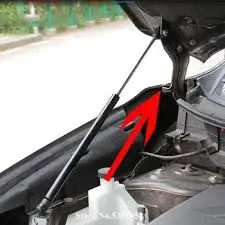
Gas Stay
The hood gas stay holds up the hood of your vehicle. This allows to access the engine compartment without holding the hood up by hand.
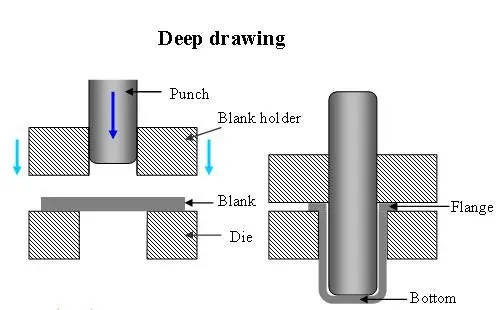
Drawing Process
Drawing is a metalworking process that uses tensile forces to stretch metal, glass, or plastic. As the metal is drawn (pulled), it stretches to become thinner, to achieve a desired shape and thickness. Sheet metal drawing is defined as plastic deformation over a curved axis.
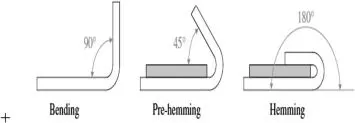
Hemming Process
Hemming is a sheet metal forming process in which sheets are joined by bending it to 180°. Automotive body panels and automotive parts such as deck-lids, trunk-lids, doors, hoods, and tailgates are formed by the hemming process. In this process, usually, a sheet is bent with the help of an inner sheet in three different stages.
NVH in automotive is a term used to describe car noise, vibration, and harshness that result in varying degrees of dissatisfaction. It stands for Noise, Vibration, and Harshness, and is basically a measure of how much unpleasant aural and tactile feedback the car delivers as you drive. Typical instrumentation used to measure NVH includes microphones, accelerometers and force gauges, or load cells.
Design Parameter's
The thickness of the hood inner and outer panel should be 0.75mm each to fulfill the requirements of having good strength and keeping the overall weight of the car in control.
Relief is provided at the corners on the humming sheet (outer panel) which is to make the process smooth and easy for rollers.
Extend and trim sheet feature should be used before using the mirror option to avoid the small overlapping surface.
While using the mirror, check for the options which will provide the same constraints to the mirrored assembly.
Applying the sew function after the mirror will fill the small gaps and make the design one unit.