Hood design-Week 2
PROJECT TITLE : HOOD DESIGN
OBJECTIVE :
To design outern panel, inner panel and create the assembly of hood outer and inner panel with the hinge and striker. Understand the mechanism behind the design of hood, then development and its safety features as per the design consideration.
Data to be used :
Hood Thickness information
- Outer Panel Thickness = 0.75mm
- Inner Panel Thickness = 0.75mm
- Reinforcement Thickness = 1.5mm
INTRODUCTION :
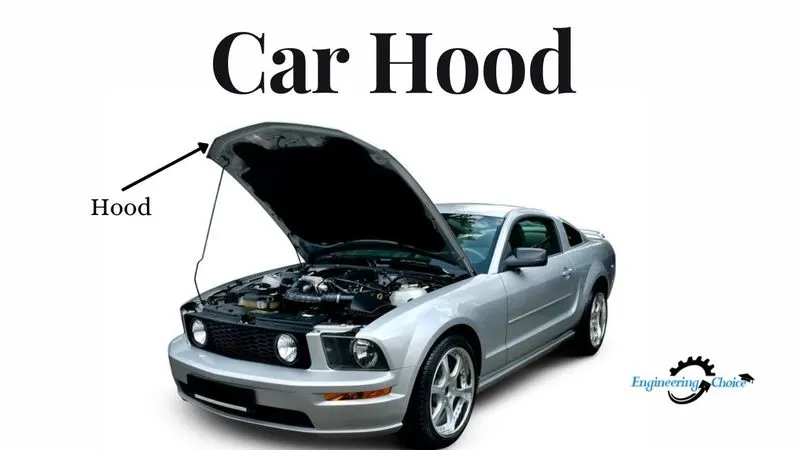
The hood or bonnet is the hinged cover over the engine of motor vechicles that allows access to the engine compartment for maintenance and repair. Hoods are typically made out of the same material as the rest of the body work. This may include steel, aluminum, fiberglass or carbon fiber. However, some aftermarket companies produce replacements for steel hoods in fiberglass or carbon fiber to make the vehicle lighter. Hood generally consist of inner panel, outer panel, hinge reinforcement etc. The outer panel acts as a protective cover of the inner panel. The hood is attached to the car boby using hinges. The hood release system is common on most vehicles and usually consists of an intereior hood latch handle, hood release cable and hood latch assembly. The hood latch handle is usually located below the streering wheel, beside the driver's seat or set into the door frame.
Safety Consideration While Design Hood :- The hood plays a mojor role in pedestrian's safety as well as car safety. It's covers entire engine components and also acts as a shield to the pedestrains from a major injury. The hood of engine design in such way that reduces air effect and all the maintenance part easy to do and it should also protect from the external disturbance on the engine. When the car comes to an accident it must be impact force and distributed outside so it should be the y-shape. While designing hood should take cre of safety, quality, styling, and manufacturing. The most important safety requirement to be considered while designing the hood is pedestrian safety from collision from the front side. Pedestrain safety, it's norm that provides a safety feature to the body when a car gets collides from the front side and reduces the injuries to the body. Safety is the most important criteria in automobile designs which concentrate on both pedestrian and occupant safety. Pedestrians are the most vulnerable road users and are at high risk of traffic accidents. The major reason for the fatality of the pedestrian in a traffic accident is due to the head injury resulting from the hard impact of the head against the stiffer hood or the ground. This leads to the necessity of a new inner hood panel that is less stiff and pedestrian and pedestrian-friendly.
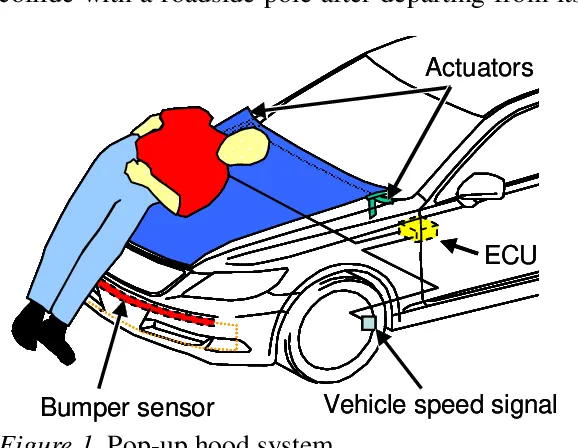
In this study, three kinds of sandwich hood structures are proposed for reducing pedestrian head injuries, including carbon fiber-reinforced polycarbonate.
The finite element method is used to simulate the impact between the vehicle's hood and the headform impactor. The software used in the simulation is LS-DYNA. The resullts predicted by the headform-hood tests show that the hood structure with aluminum-reinforced polycarbonate material provides enough absorption capability to protect pedestrians from the impacts of accidents. It's also stiff enough to keep pedestrian heads away from the inner parts of the engine cavity.
Child Head Impact :
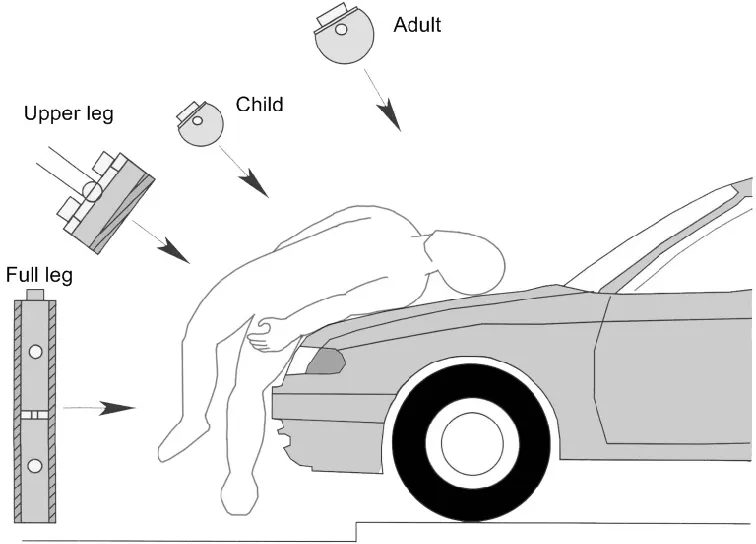
Car-pedestrian accidents account for a considerable number of automobile accidents in industrialized countries. Head injury continues to be more concerned with automobile impacts. Because the head is the most seriously injured part in many collisions including in pedestrian automobile cillisions. To reduce the severity of such injuries international safety committee have proposed subsystem tests in which head form impactors are impacted upon the car hood.
Wrap Around Distance (WAD) :
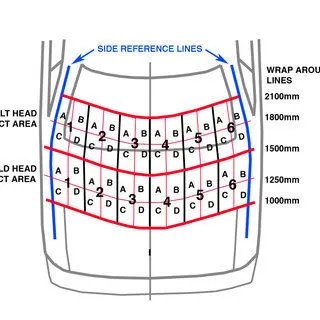
When a car crashes on the pedestrian, the whole human body wrap around the front shape of the car, and the head impacts on the bonnet or the windscreen. The Distance at which the head impacts on the car from the ground is mentioned as wrap around distance (WAD). To be specific the Wrap Around Distance is a measurement of the distance from the ground to the head impact zone over the outer surface of the car. The wrap-around distance is measured longitudinally in the center of the vehicle from the ground.
The severity of the injury caused by the frontal crashy depends on the type and shape of the vehicle, the speed of the vehicle, and the movement of the pedestrian relative to the vehicle. In addition to these parameters, the wrap-around distance plays a major role in the safety measures of a pedestrain. During the crash analysis, based on the wrap around distance(WAD), two test areas will be created namely the child head impact zone and the adult head head impact zone. The child head impact zone is between 1000 to 1700mm WAD and the adult head impact zone ranges between 1700 to 2100mm WAD.
HOOD DESIGNING CRITERIA :
Hood Opening Angle : Its is one of criteria of which designers have to take care of during designing a hood. Hood opening angle varies from country to country because average height varies from country to country.
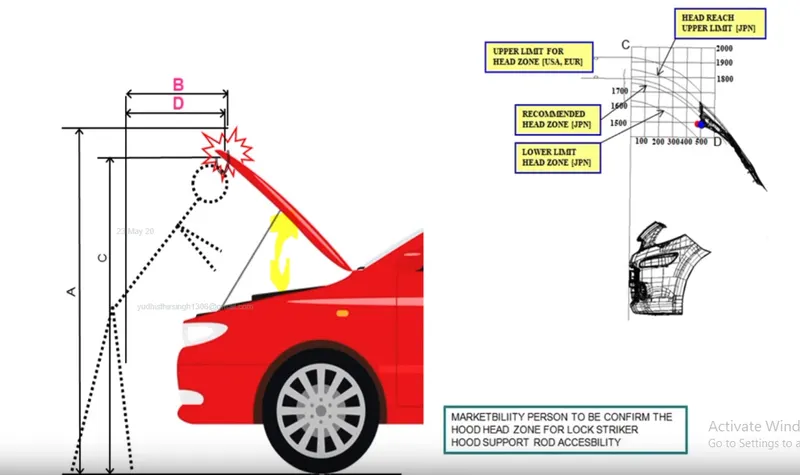
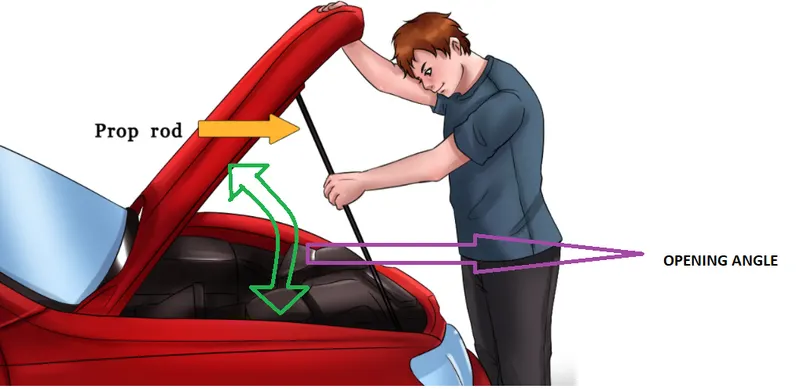
Support Rod Requirements : These are some criteria for support rod like the curvature of the support rod cant be more the 35mm. The support rod mountings must be present in the opposite side of the battery mounting.
Distribution of force in case of collision : The inner panel is designed in such a way that in case of collision, the impact force must goes in outward direction, so that the impact on the driver and front passenger must reduce.
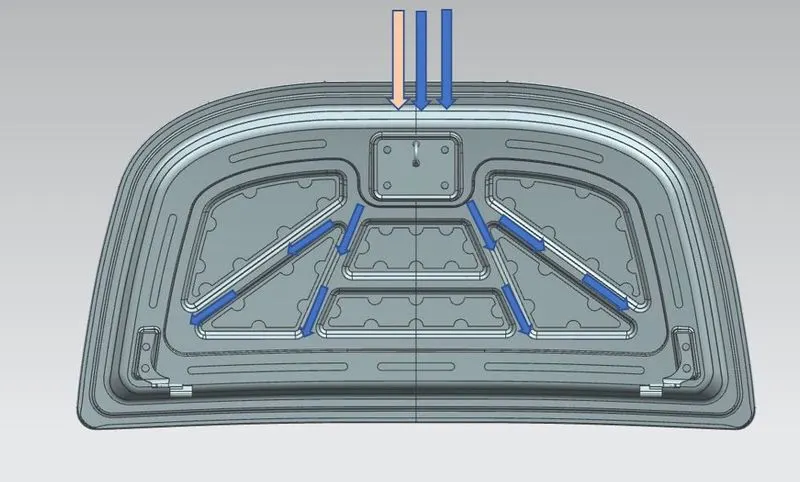
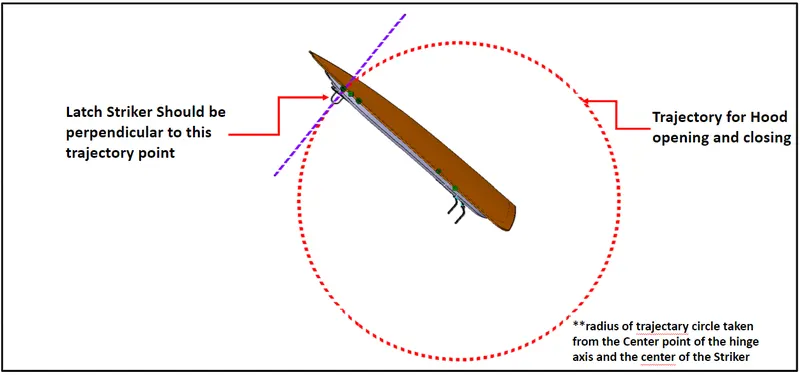
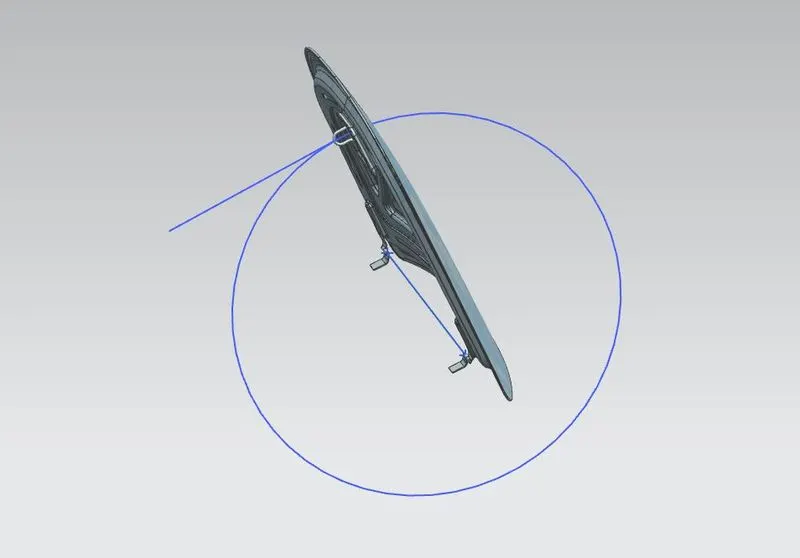
Trajectory of the lache striker : The striker must follow a cricular patch whose centre in present on the axis joining both the hinges and also striker must be always perpendicular to the line joining the striker and the axis joining hinges.
Position of Stiker and Hinge Reinforcement :
For the proper opening and closing of the hood, the striker should be perpendicular to the trajectory of the hood. For this, the hinge is assembled at its position. Onece it is placed, the hinge axis is drawn.
- To check the hinge axis as the center we draw a big cricle to position the latch in such a way that it is perpendicular to the hood trajectory.
- In between the two hinges, the striker is perpendicular to the midpoint of the two hinges, Why because while closing and opening of the latch and the striker the opening position be similar actions.
Striker & Hinge Reinforcement :
Hinge : It is used to mount the hood into the desired position so that it can be easily can close and open when required.
Striker : It is mounted in the inner panel and provides a locking system.
PEDESTRIAN SAFETY : Pedestrian safety is one of the important criteria which must be taken into consideration during designing a hood. Based on the Wrap around distance and pedestrian head impact zone, hood is designed so that during a collision impact on the person must be reduced. Around the impact zone the hood is made softer by removing material.
DEEP DRAWING :
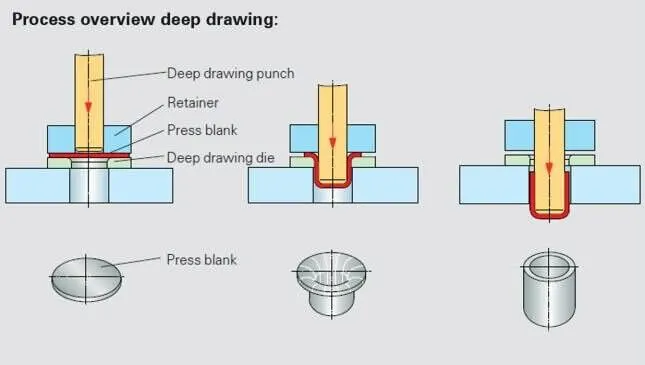
Deep drawing is a sheet metal forming process in which a sheet metal blank is radially drawn into a forming die by the mechanical action of a punch. It is thus a shape transformation process with material retention. The process is considered a "Deep" drawing when the depth of the drawn part exceeds its diameter. We give a positive draft or an angle for a better drawing process.
Process definition :
The deep drawing process is a forming process that occurs under a combination of tensile and compressive conditions. A flat sheet metal blank is formed into a hollow body open on one side or a hollow body is formed into a hollow body with a smaller cross-section
Deep drawing processes are divided into three types :
- Deep drawing with tools
- Deep drawing with active means
- Deep drawing with active energy
In the Automotive industry, deep drawing is usually carried out using rigid tools.
DESIGN REQUIREMENTS :
Software used : SIEMENS NX
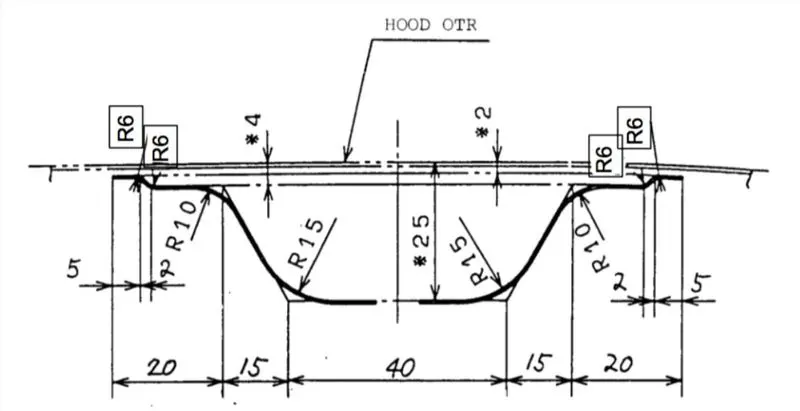
Master Section : Master section are the guides for design requirements which decide the component packaging after technical (Styling, Concept or Class-A) Surfaces.
Hemming : Hemming is the process in which the edge is rolled flush to itself, while a seam joins the edges of two materials. Hems are commonly used to reinforce an edge, hide burrs and rough edges, and improve appearance.
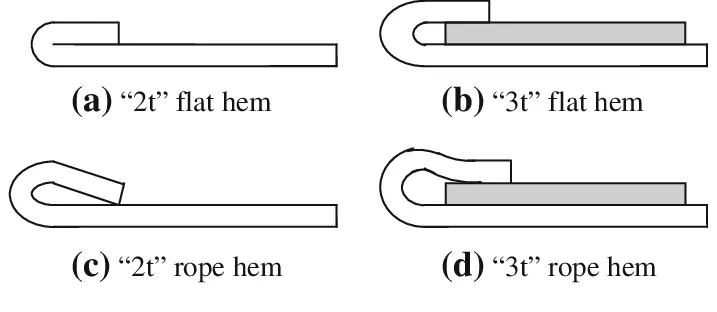
Hemming Parameters :
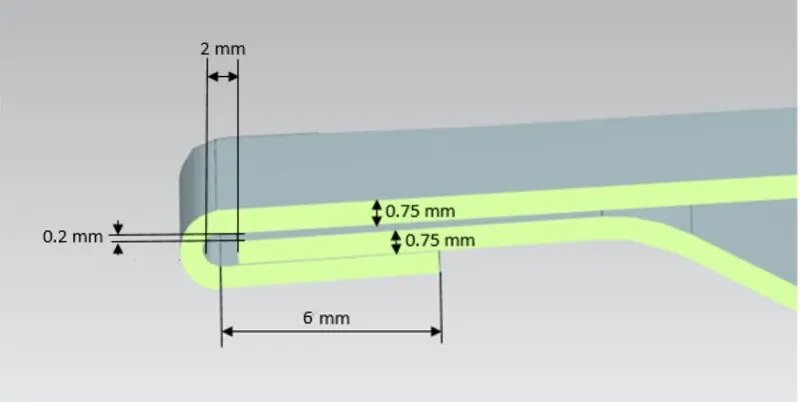
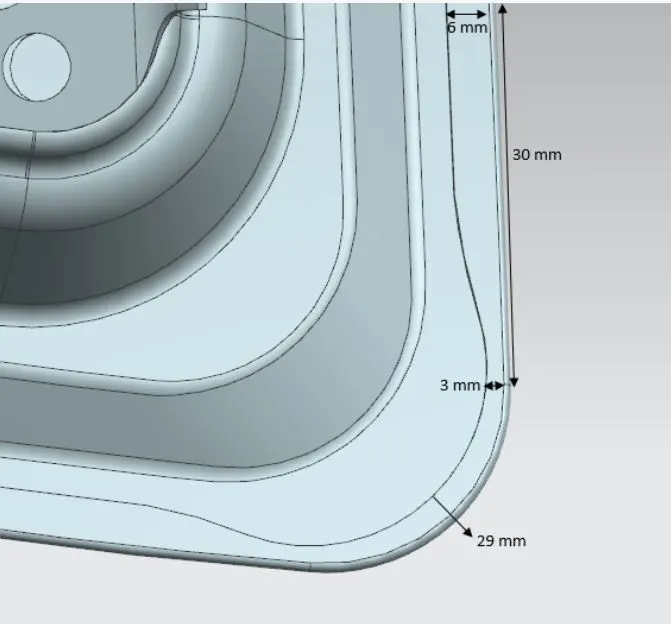
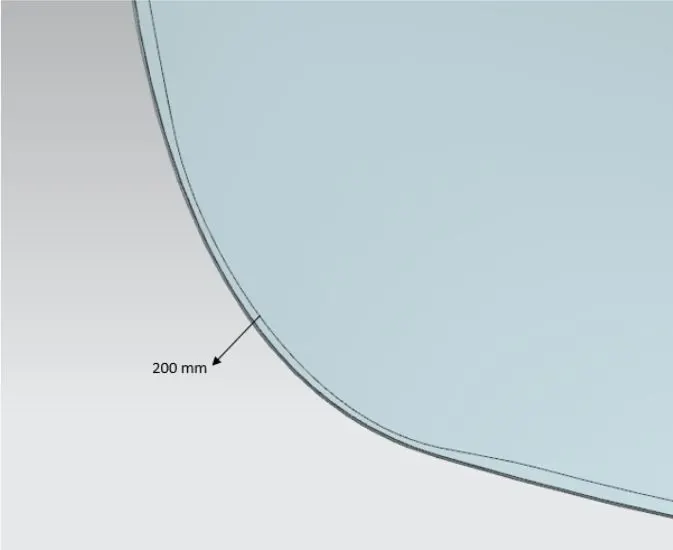
Embosses : Embosses are provided to the hood to increase its strength and it is also used to divert the force when a collision takes place.
Mastic Points : The mastic sealent or the mastic point is an elastic compound that behaves like a rubber. The masstic points are definedd on the hood inner panel where the hood can easily deform. They help the hood outer panel to come back to its original shape after is gets deformed. The mastic has an influence area of 80mm.
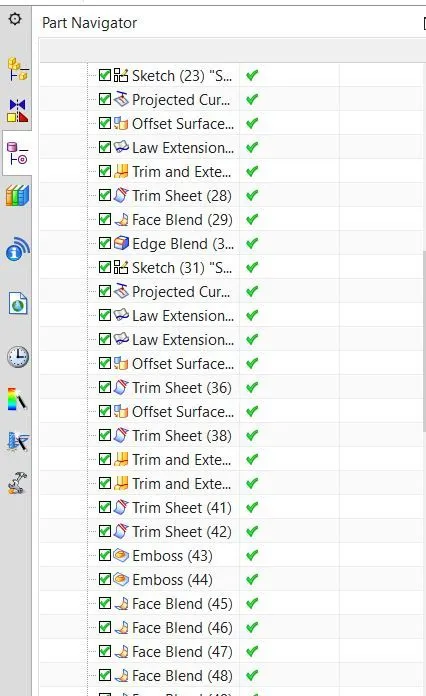
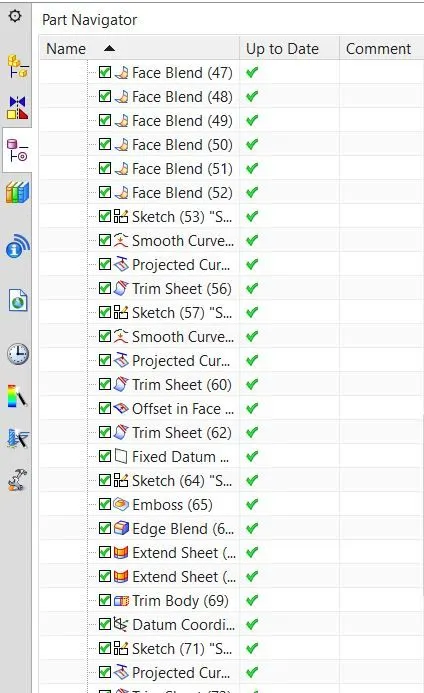
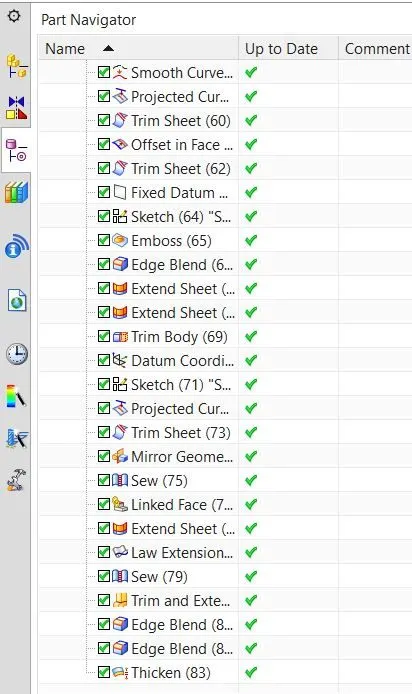
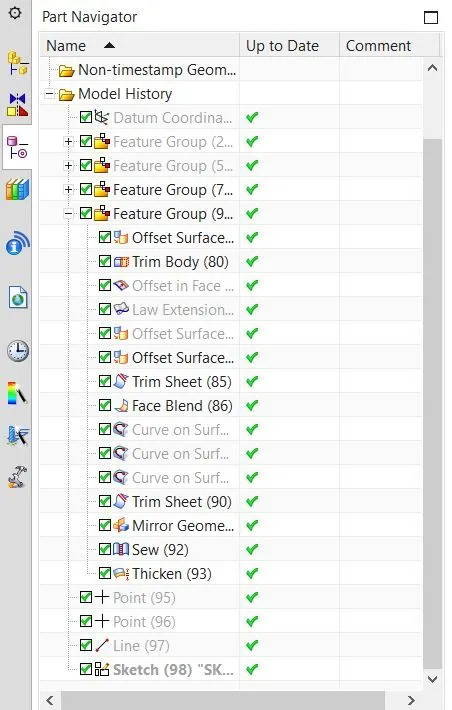
TOOLS USED :
- Offset Surface
- Trim Sheet
- Offset curve in face
- Project Curve
- Edge blend
- Face blend
- Emboss
- Law extension
- Mirror geometry
- Thicken
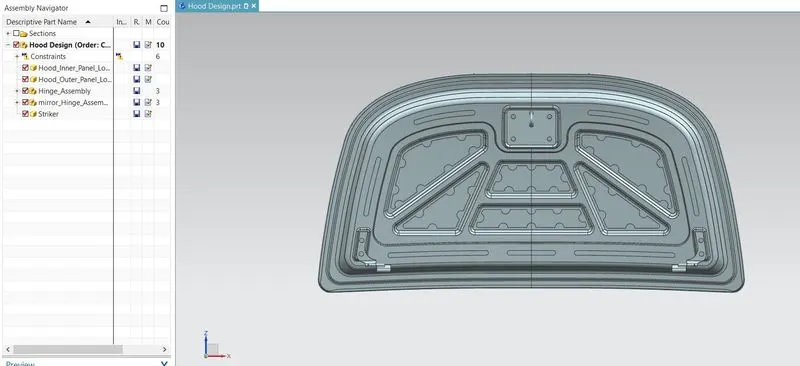
ASSEMBLY IMAGES :
- Front View
- Rightside View
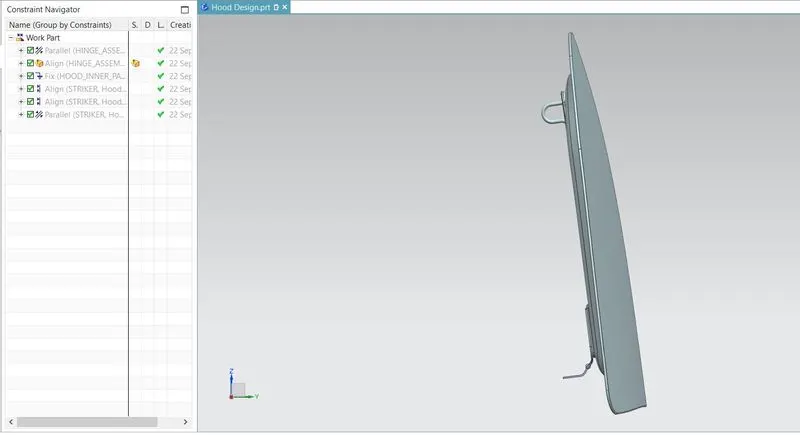
- Top View
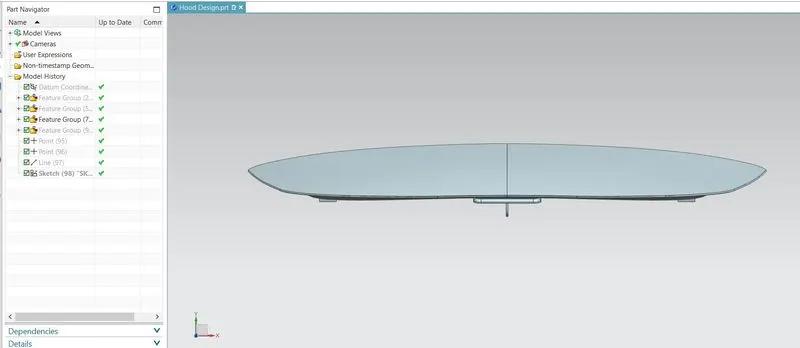
- Isometri View
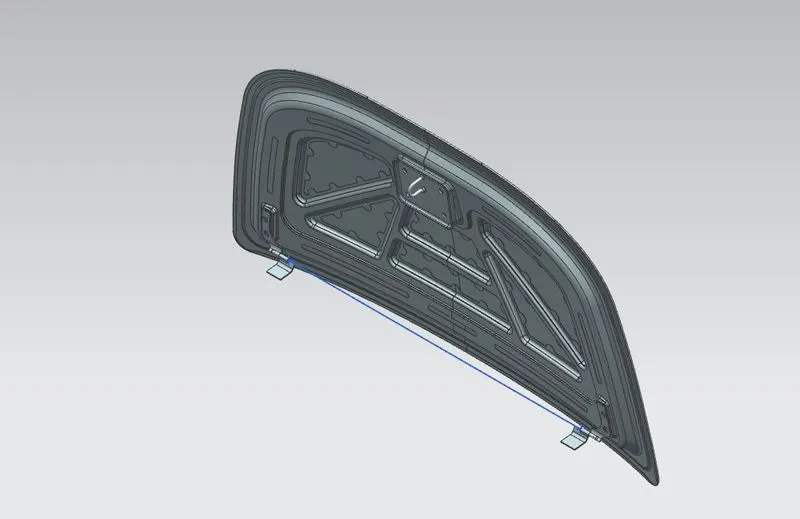
Part Navigator :
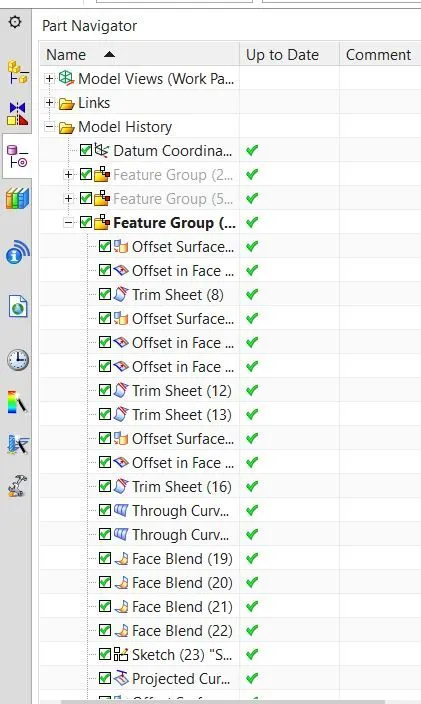
CONCLUSION :
The Hood design successfully completed with help of NX cad tools. By this project i learned various design criteria and requirements for desighing a hood and also learned how to use various surfacing tools in NX.
Hood Part Model Link : https://1drv.ms/u/s!Aly1TzhZu9aOkzjydLSd8ZyRisVr?e=2ab0Cc