Hood design-Week 2
HOOD Design
Objective: To design Hood inner pannel taking into account various design considerations by using the given data and assemble it with Outer panel, Hinge and Latch & striker.
Data to be used:
- Outer Panel Thickness = 0.75mm
- Inner Panel Thickness = 0.75mm
- Reinforcement Thickness = 1.5mm
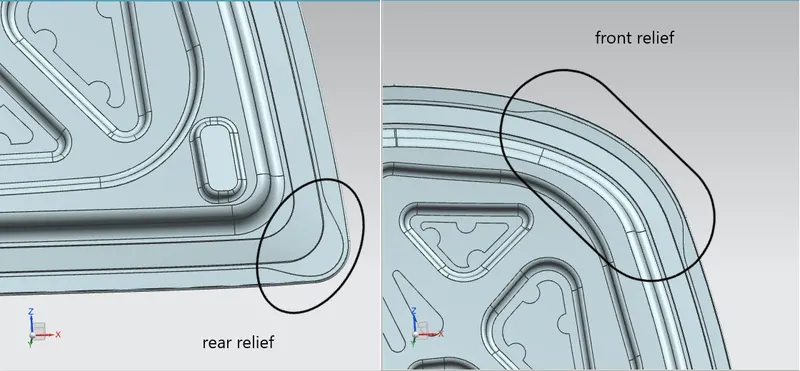
- Provide front & rear reliefs to reduce stress concentration.
- Master sketch
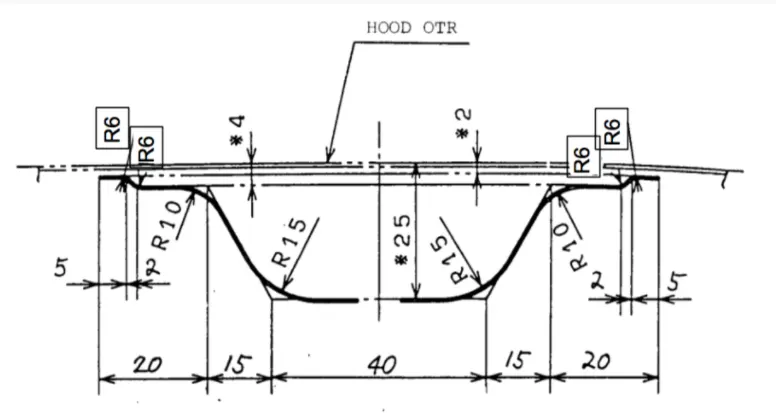
HOOD
A car hood, also referred to as a bonnet in some countries, is the hinged cover that rests over the engine of a front-engine vehicle. Its purpose is to provide access to the engine for repair and maintenance. A concealed latch is typically used to hold down the hood. Hood of a vehicle is a very critical component because of frontal crash and Pedestrian safety requirements. It also allows in dissipating energy outside the car body.
Car hoods are manufactured from steel or aluminium or aluminium alloys. They may be constructed from various other materials, including carbon fiber, fiberglass, or dry carbon etc. The hood design may vary from one model to another.
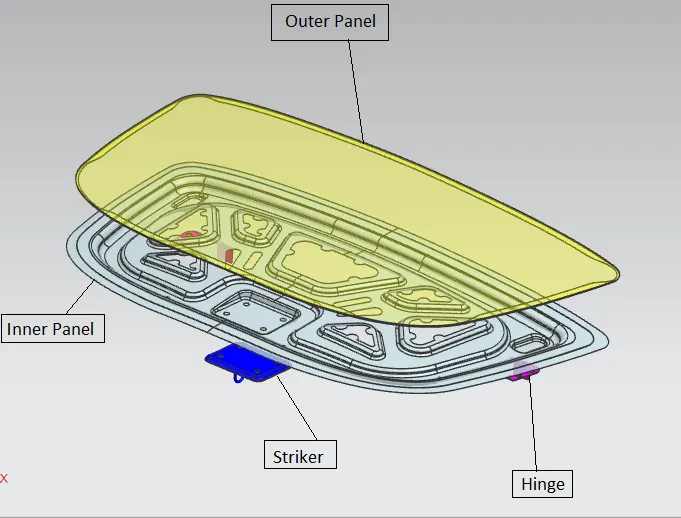
Hood Components:
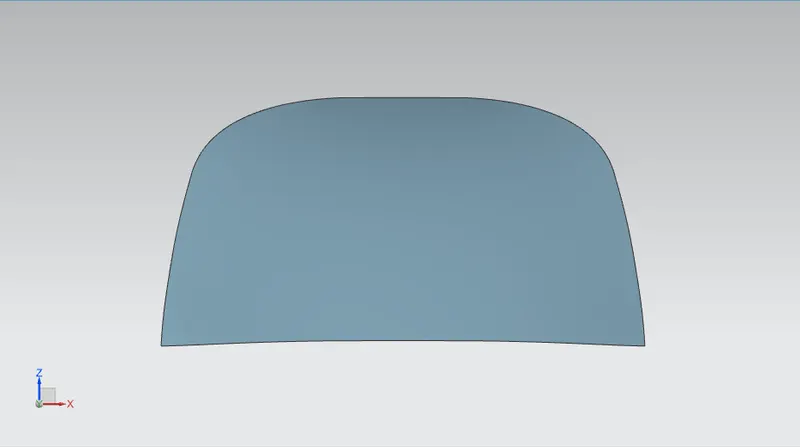
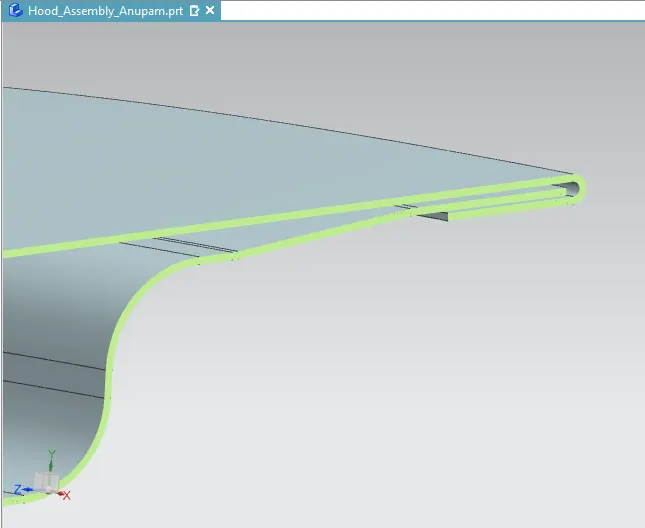
Outer panel: It is the outer styling skin surface of car hood. It is wrapped around inner panel through hemming process.
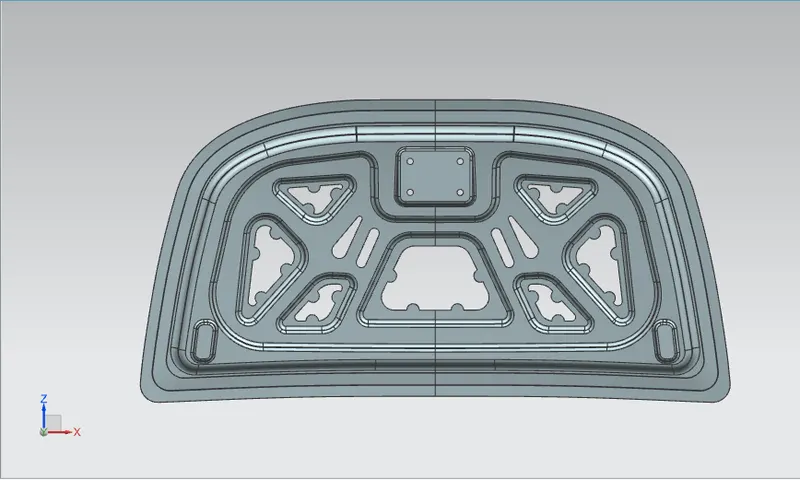
Inner panel: It is the rigid structure which provides strength to the hood.
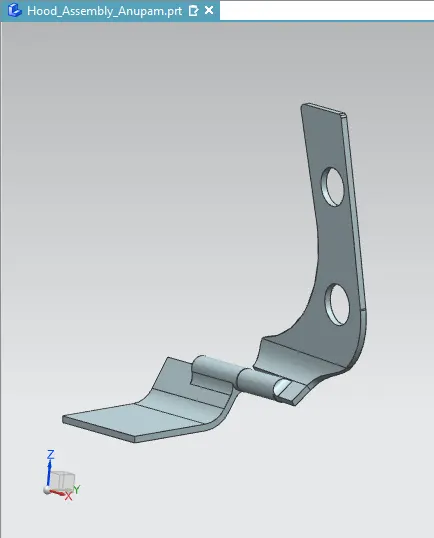
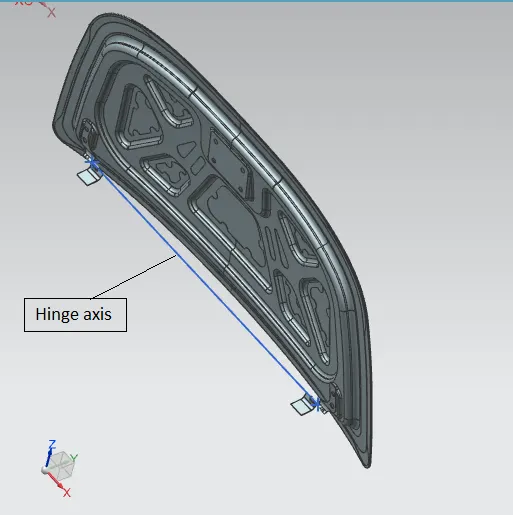
Hinge: It is the part which helps in opening the hood through the hinge axis. One of the part is attached to Inner panel while the other part is attached to the engine compartment of the car.
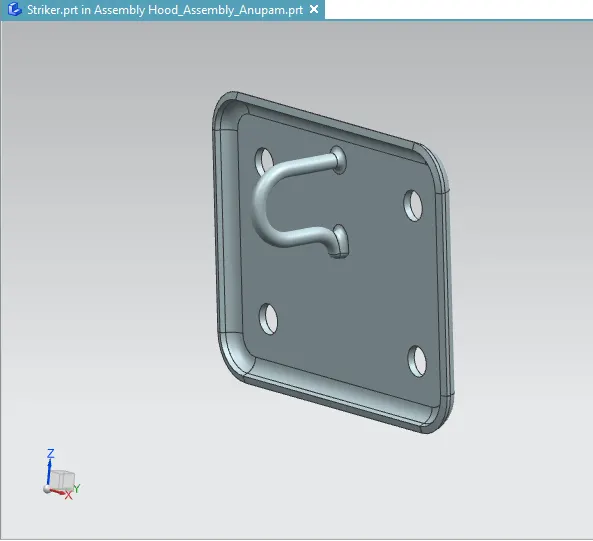
Latch & Striker: Latch and striker are the parts which helps to lock the hood to the engine compartment.
Reinforcements: It is added to compensate for the strength loss due to reduction in area. Here hinge and latch & striker reinforcements are used.
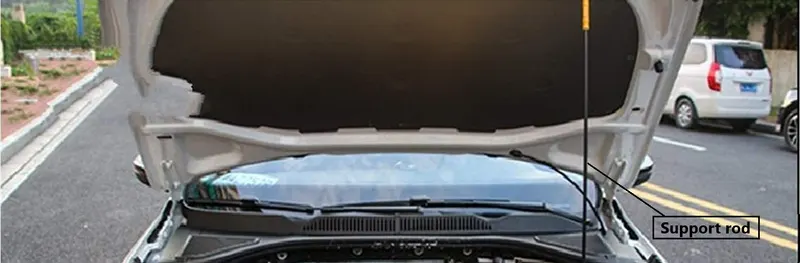
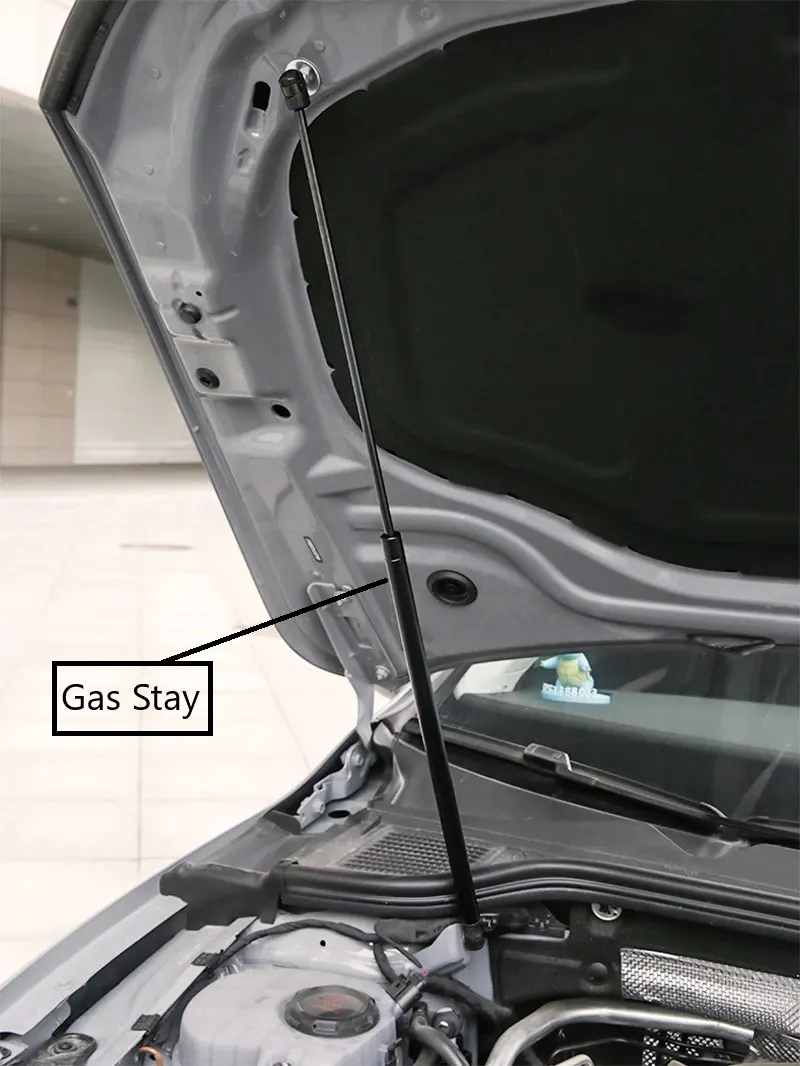
Hood Stay: A device consisting of rod which can safely keep an engine hood in an open state even if an external force is abruptly generated due to vibration, wind and facilitate opening /closing operation of the engine hood for inspecting the engine space, replenishing cooling water and /or engine oil, changing parts , making repairs etc. The Length of the rod mainly depends on the hood opening angle which is nothing but the Hood head zone. It is of two types: Support rod & Gas stay.
Design Consideration
- NVH : During motion of the vehicle, it might wither, to reduce these vibrations stiffener pads, mastic sealants are placed at required positions.
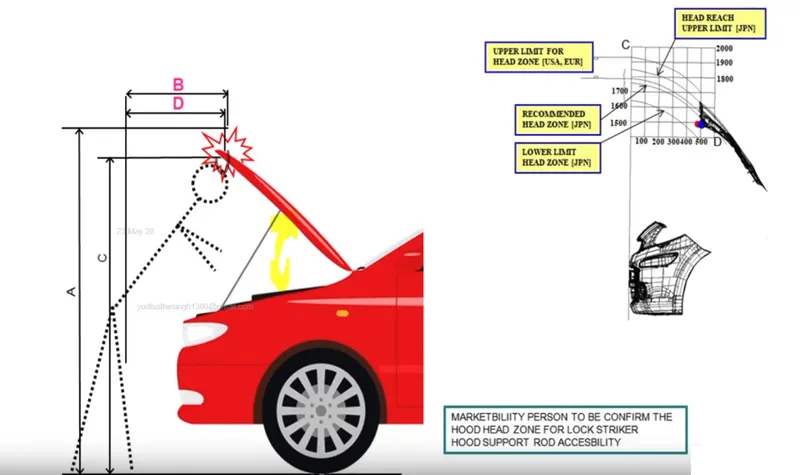
- Hood head zone :The first important design consideration for hood design is hood head zone for lock striker. This parameter of head zone solely depends on the opening angle of the hood which is calculated based on average height of the people of the country where the product is manufactured.
In India the average human height is 5.7ft and in European countries avearge human height is 6ft.
The opening angle is 60 degrees in India whereas in European countries its value is 80 degrees
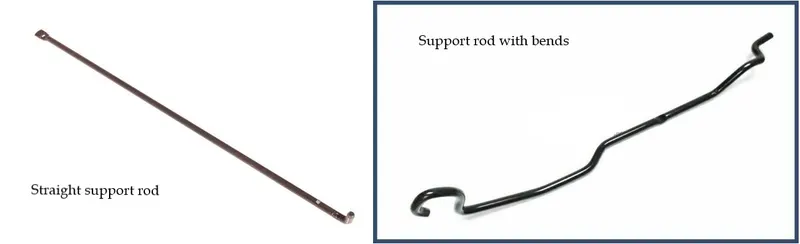
- Hood Stay(support rod): While designing hood it should be decided where the support rod should be mounted or unmounted either in engine compartment or on hood. Hood stay type is decided based on weight of the hood, some bends are added along its length to increase its rigidity.
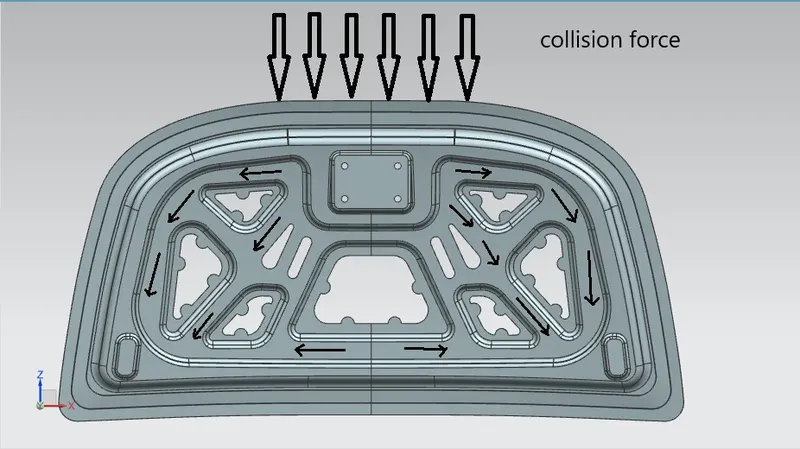
- Emboss Design: Embossing is a stamping process for producing raised or sunken designs or relief in sheet metal. This process can be made by means of matched male and female roller dies, or by-passing sheet or a strip of metal between rolls of the desired pattern. They are created to provide strength to the inner panel and to dissipates the forces outside the car (i.e towards the hinges), resulting in less energy getting transferred towards the cabin during collision. There is no particular design for creating emboss, it should be designed in such a way that the forces are diverted towards the hinge of the panel during collision.
- Pedestrian Safety & Euro NCAP regulations:
Globally various NCAPs are present that carry on the Pedestrian Safety tests on new vehicles and rate them accordingly.
For instance the Euro NCAP has 4-5 parameters for pedestrian safety test for the new vehicles.
Various tests are carried out for a vehicle speed of 40 km/h. To have an estimate of the potential head injury in the fateful event of a vehicle striking an adult or a child, a head form impactor is used in a series of impact tests and the impact sites are then assessed for and rated accordingly.
Similar tests are carried out using upper leg form impactor, leg impactor then impact sites are assessed and rated accordingly.
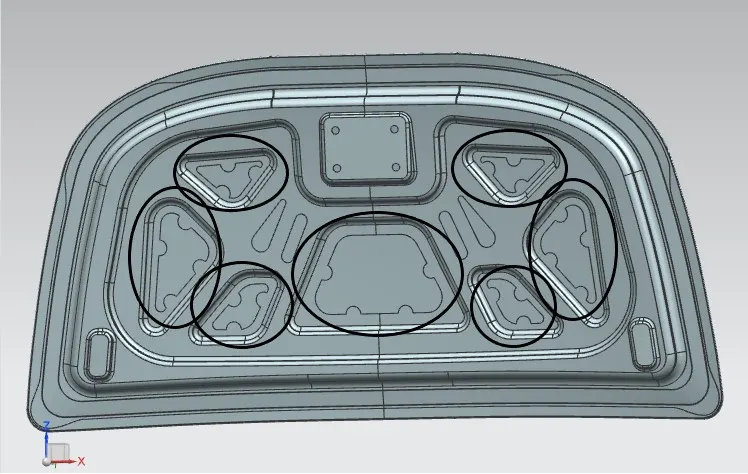
While designing Inner panel empty spaces are provided to reduce the impact on pedestrian. When person gets hit on car hood , the hood deforms beacuse of those empty spaces and the impact on pedestrian is reduced, which helps vehicle in getting better pedestrian rating.
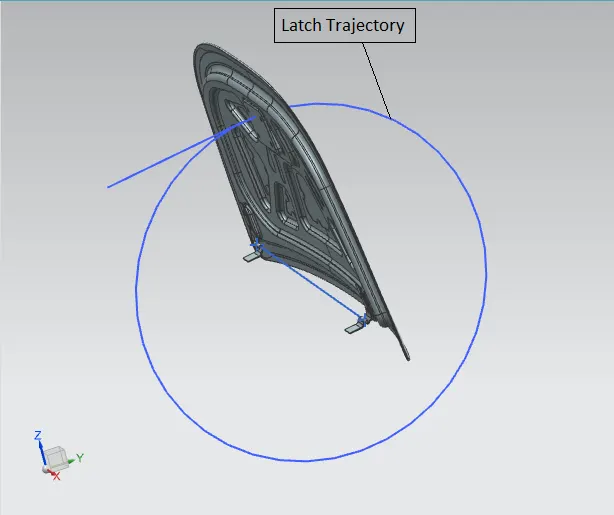
Latch Trajectory: The position and orientation of latch striker is important for proper opening and closing of the hood. The positioning is done by sketching a circle with center as the axis of the hinge which passes through the striker at appropriate position with respect to inner panel. The line drawn on striker must be perpendicular to the radius drawn at that point on the circle.
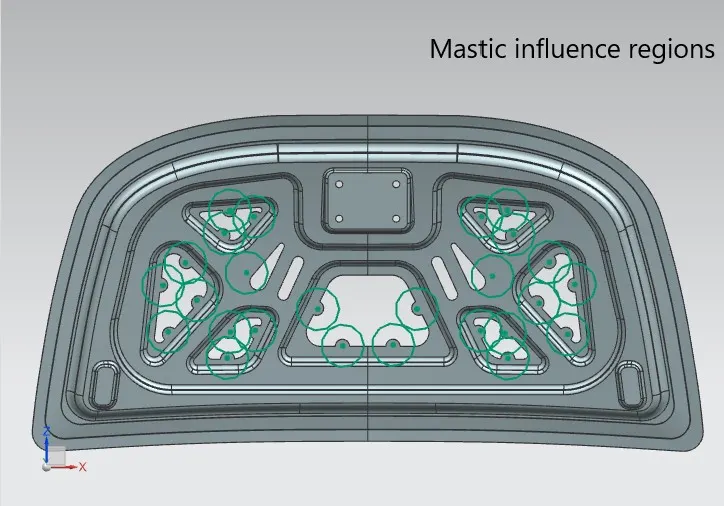
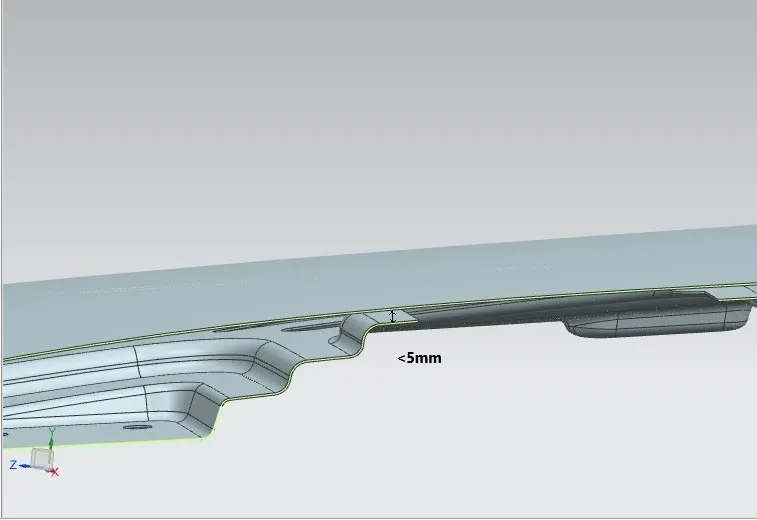
Mastic Data: Mastic points are provided in the panel for applying mastic seal.Mastic seal is a kind of hard rubber glue added between outer and inner panel of hood to join them at different points called mastic points locally around 80mm diameter. The required gap between outer and inner panel varies from 2mm to 5mm to make a proper joint.
Corner relief: During hemming process multiple rollers are used which causes vibrations and stress concentrations at the some locations due to which design intent of the panel shouldn’t be changed(i.e the panel should spring back to original formation after roller is removed). But most of the time that is not the case at corners so to avoid that situtaion reliefs are provided at corners.
Major commands used in NX cad are as follows :
Law-extension: It creates a law controlled extension from a base sheet, dynamically or based on laws for distance and angle.
Face Blend : It adds tangent blend faces between selected sets of faces.
Edge Blend: It rounds sharp edges between faces.
Offset Surface: It creates a body by offsetting a set of faces.
Trim Sheet: It trims off a portion of a sheet body.
Trim and extend: It trims or extends a set of edges or faces to the intersection with another set of edges or faces.
Extend sheet: It extends a sheet body by distance or to the intersection with another body.
Sew: It combines sheet bodies by sewing common edges together or combines solid bodies by sewing common faces.
Thicken: It creates a solid body by adding thickness to a set of faces.
Emboss: It modifies a body with faces made by projecting a section along a vector with options for end cap location and shape.
Offset curve in Face: It offsets curves along the faces on which they lie.
Project curve: It projects curves, edges, or points onto faces or planes.
Curve on Surface: It creates a surface spline feature directly on a face.
Bridge Curve: It creates a tangent blend curve between two objects.
Through curves: It creates a body through multiple sections where the shape changes to pass through each section.
WAVE geometry Linker: It copies geometry from other parts in the assembly into the work part.
Mirror Geometry: It copies geometries and mirrors them across a plane.
Deep Drawing:
Deep drawing is a sheet metal forming process in which a sheet metal blank is radially drawn into a forming die by the mechanical action of a punch.
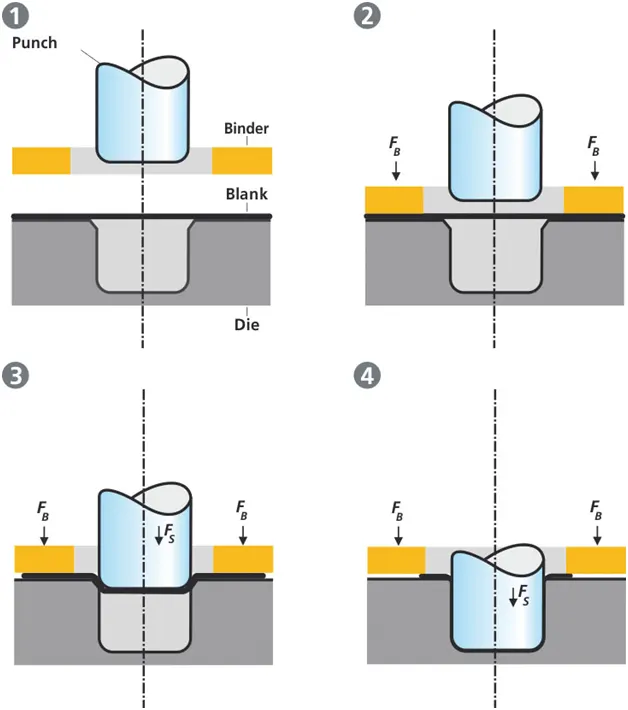
As shown above,
1) The plate holder closes after the metal sheet blank has been inserted.
2) The sheet is clamped between the die and the binder. This process slows down the flow of the sheet while it is being drawn and thereby prevents wrinkles from forming under the binder. 3) The punch stretches the sheet over the die radius and forms it in the die. The amount of punch force necessary for forming is thereby continually increased up to the lower dead center of the punch.
Hemming
Hemming is a forming operation in which the edges of the sheet are folded over another part in order to achieve a tight fit. Usually hemming operations are used to connect parts together, to improve the appearance of a part and to reinforce part edges. In car part production, hemming is used in assembly as a secondary operation after deep drawing, trimming and flanging operations to join two sheet metal parts (outer and inner) together. Typical parts for this type of assembly are hoods, doors, trunk lids and fenders.
Conclusion:
Inner panel is designed with reference to the given styling surface according to the various design considerations and Hinge and latch & striker are assembled appropriately.