Hood design-Week 2
DESIGN OF ENGINE HOOD USING NX-CAD
OBJECTIVE:
- To create an outer and inner hood panel, positioning the striker, hinge, and reinforcements.
- To learn Engineering and Designing standards in designing automotive components.
Introduction:
In this project, a detailed model of an automobile hood is created using Siemens NX in order to understand and familiarize with different tools and methods of modeling. Hood is an important part of an automobile as it provides safety to the passengers. The hood is designed in such a way that an impact on the front of the car would redirect the forces away from the passengers.
A car hood is the metal part that covers the engine of an automobile. The term car hood is a North American term, used primarily in America and Canada. Hood comes from the Old English word hod which means a hood, a soft covering for the head. Interestingly, the hood is used by British English-speakers to refer to the waterproof cloth top covering the passenger compartment of a car or pram.
Uses or Functions of a Hood :
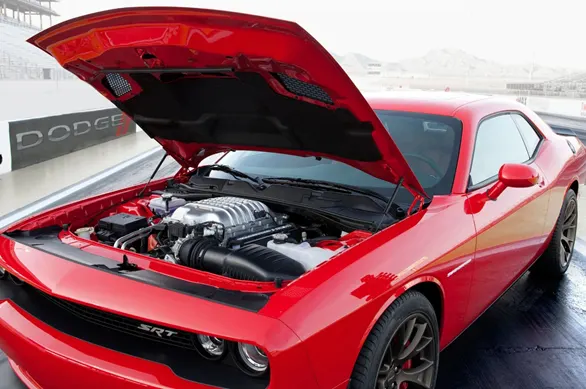
- The main function of the car hood is to protect the components underneath it, for example, the engine.
- Without this protection, small stones kicked up by other cars could puncture a fluid container or damage the engine.
- In addition, most engines are not supposed to be exposed to excess water.
Euro NCAP and Pedestrian safety
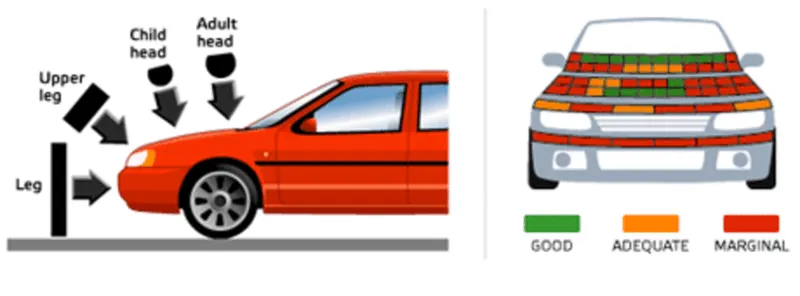
As well as assessing how well cars protect their occupants, Euro NCAP tests how well they protect those vulnerable road users – pedestrians and cyclists – with whom they might collide.
In these tests, the potential risks of injuries to a pedestrian's head, pelvis, upper and lower leg are assessed. Cars which perform well can gain additional points if they have an autonomous emergency braking (AEB) system which recognises pedestrians and cyclists.
A. HEAD IMPACT
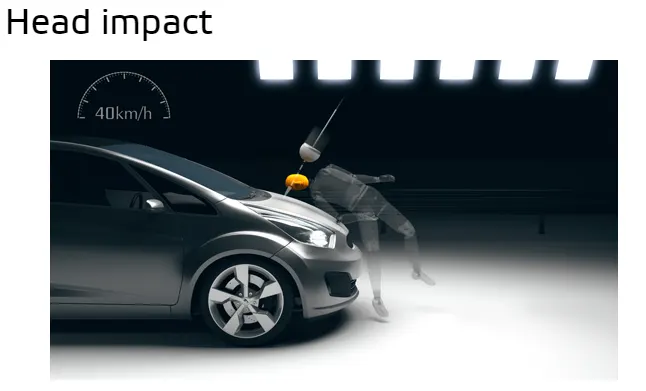
About 14 percent of all road fatalities in Europe are pedestrians, with children and the elderly being at greatest risk. Pedestrians comprise one of the main categories of vulnerable road users, which also include cyclists and motorcyclists.
Most pedestrian accidents occur within city areas where speeds are moderate. The head, the lower body and the legs are amongst the most frequently injured body regions. To estimate the potential risk of head injury in the event of a vehicle striking an adult or a child, a series of impact tests is carried out at 40 km/h using an adult or child head form impactor. Impact sites are then assessed and the protection offered is rated as good, adequate, marginal, weak or poor
B. UPPER LEG IMPACT
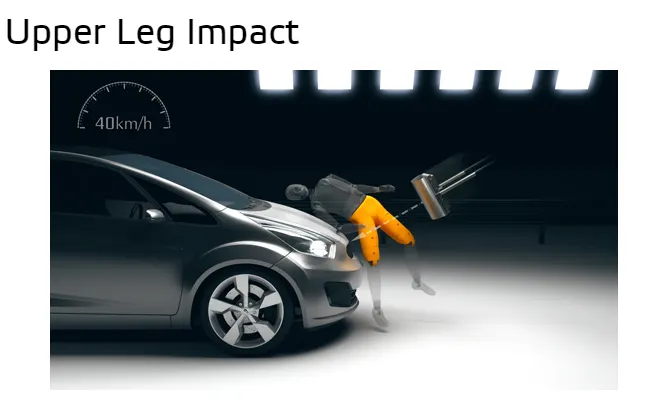
The shape of the hood or bonnet leading edge can play a critical role in the outcome of a vehicle impact with a pedestrian and contribute to injuries to the pelvis and femur.
To estimate the potential risk of pelvis and upper leg injuries in the event of a vehicle striking an adult, a series of impact tests is carried out at 40 km/h using an adult upper leg form impactor. Impact sites are then assessed and the protection offered is rated as good, adequate, marginal, weak or poor.
The procedure promotes energy absorbing structures and a more forgiving geometry that mitigates injuries.
C. LOWER LEG IMPACT
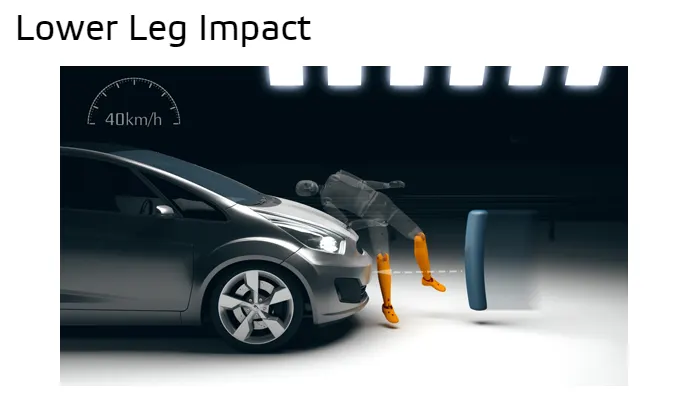
Typical injuries resulting from leg to bumper impacts include fractures to the leg, knee and ligaments. These leg injuries are rarely fatal however are often associated with permanent medical impairment.
To estimate the potential risk of leg injuries in the event of a vehicle striking an adult, a series of impact tests is carried out at 40 km/h using an adult leg form impactor. Impact sites are then assessed and the protection offered is rated as good, adequate, marginal, weak or poor. The procedure promotes energy absorbing structures and a more forgiving geometry that mitigates injuries to the leg.
DESIGNING OF HOOD:
Master section for the design of the hood:
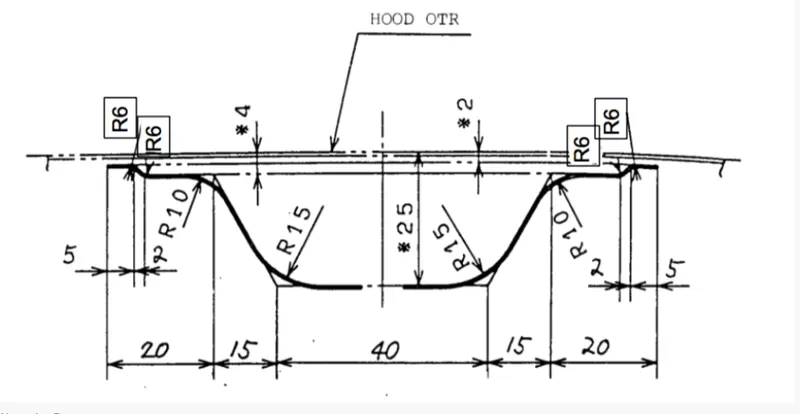
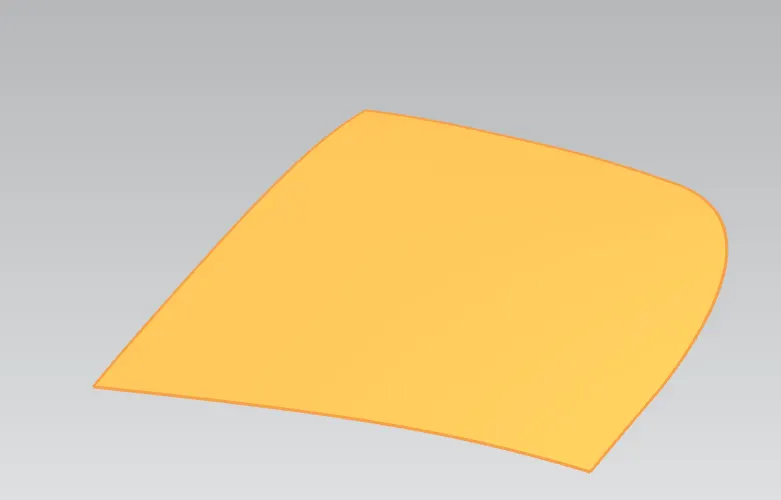
1. Offset is created using Given parent surface
2. Surfaces are created as per the master section reference
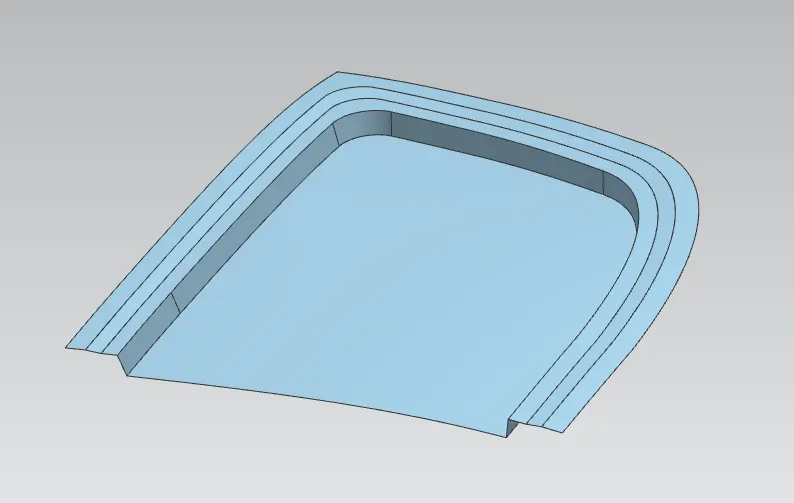
3. Emboss is created
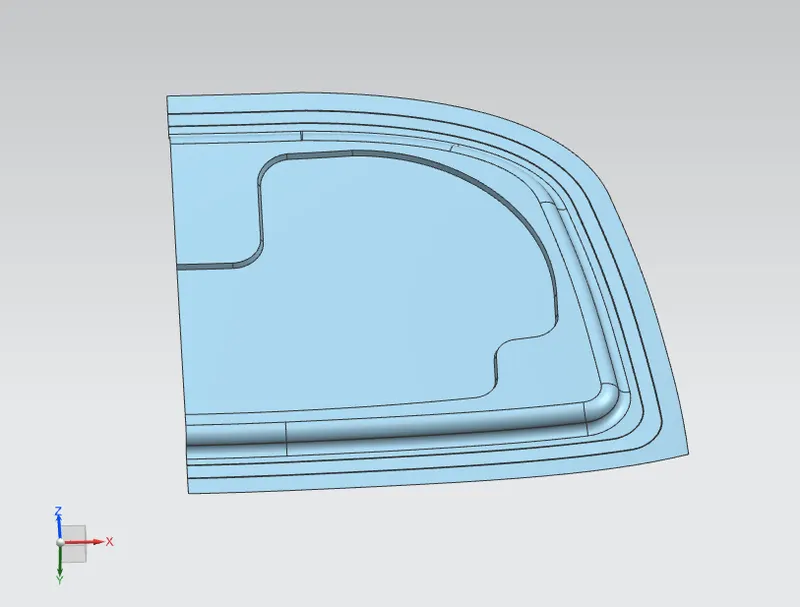
4. Embosses are created
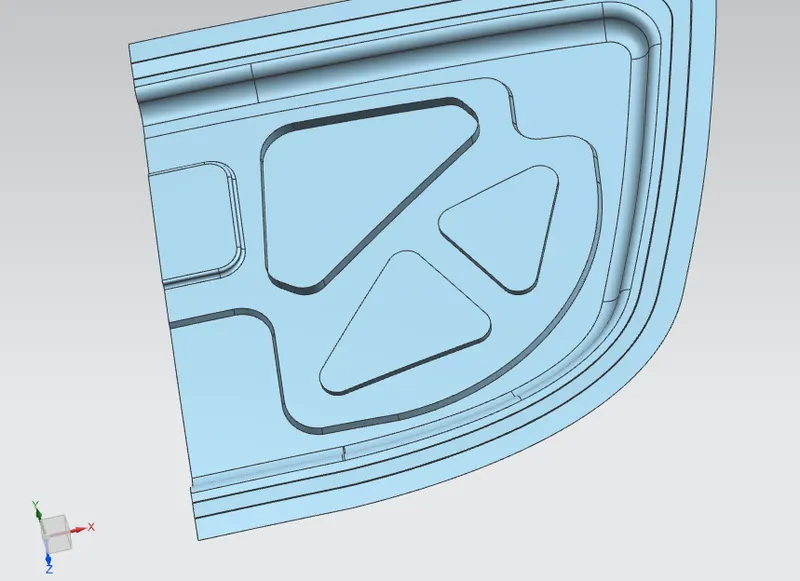
5. Creating mastics
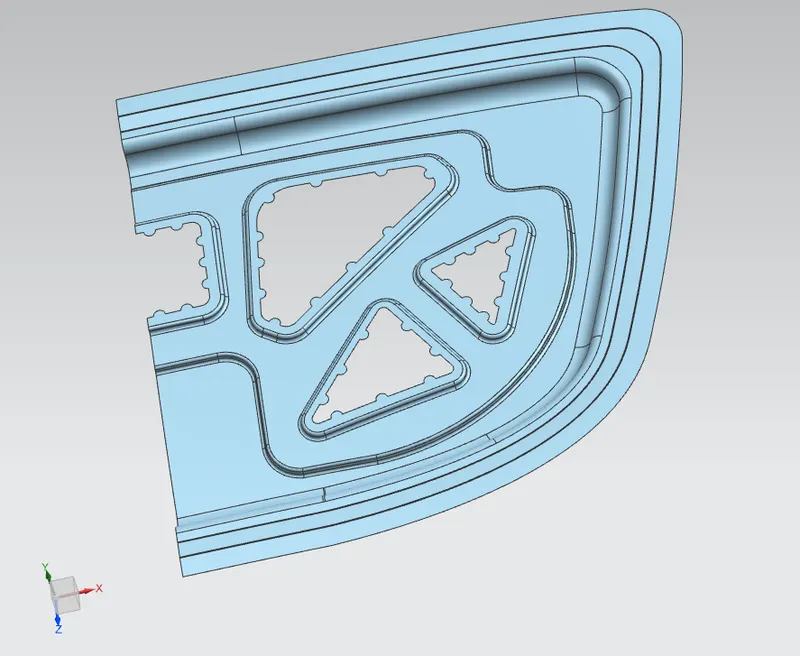
6. Mirror Geometry
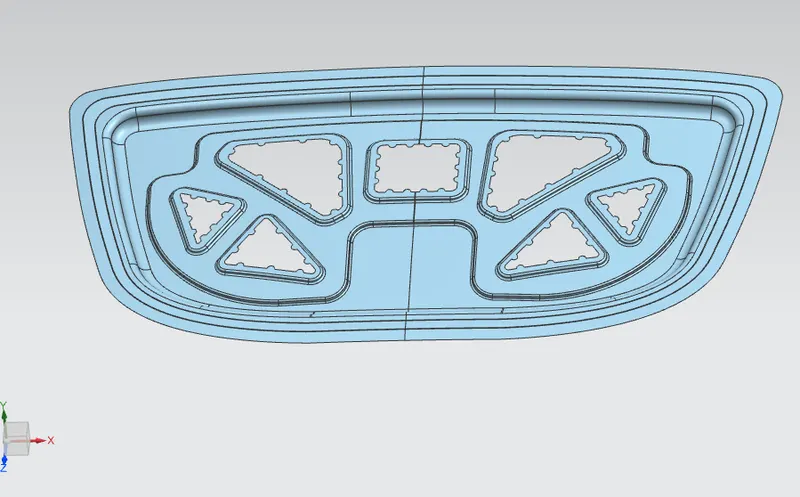
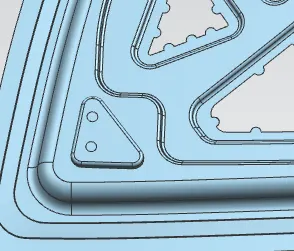
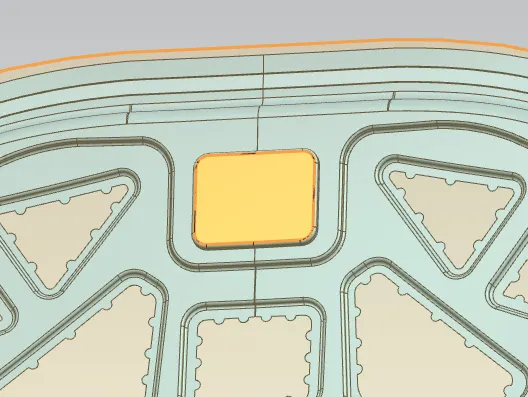
8. Creating Reinforcement for Hinge and Stricker
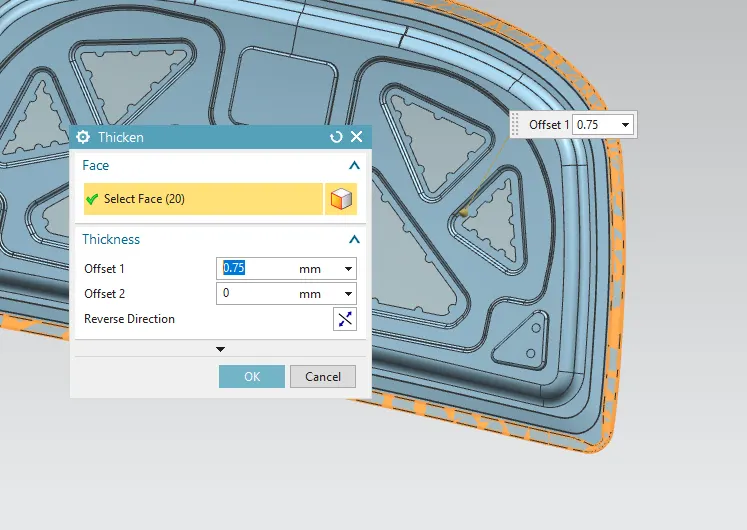
9. Thicken Process is Done
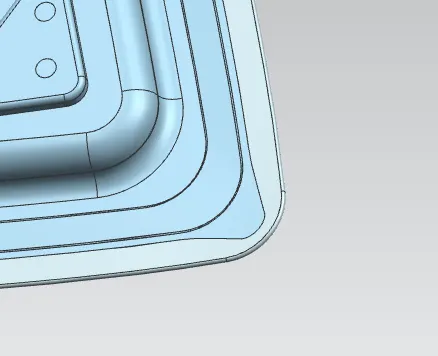
10. Hemming process is complete and corner relief is given
11. Hinge Assembly and Stricker assembly is done by drawing the axis of rotation from the Hinge axis.
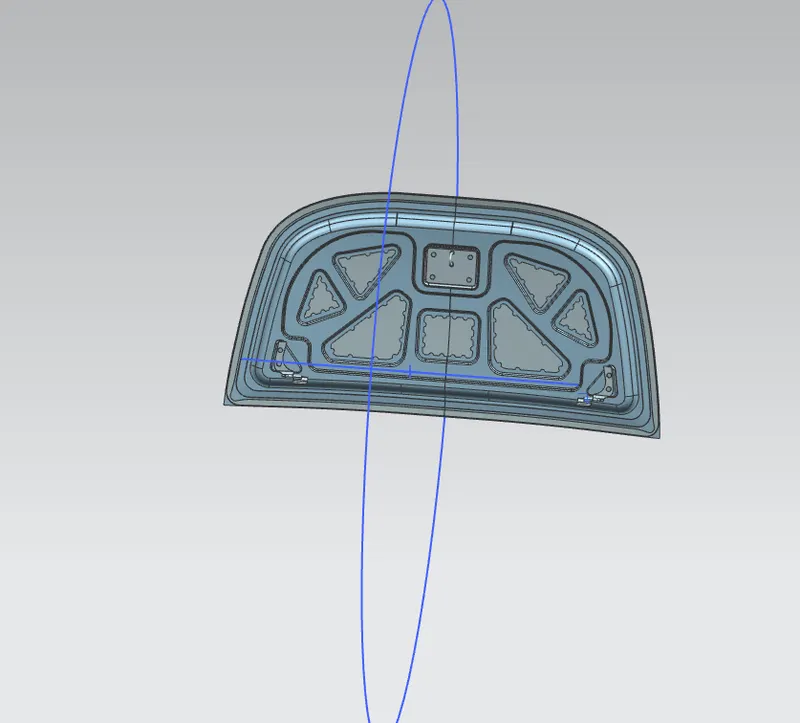
12. Final Hood Assembly
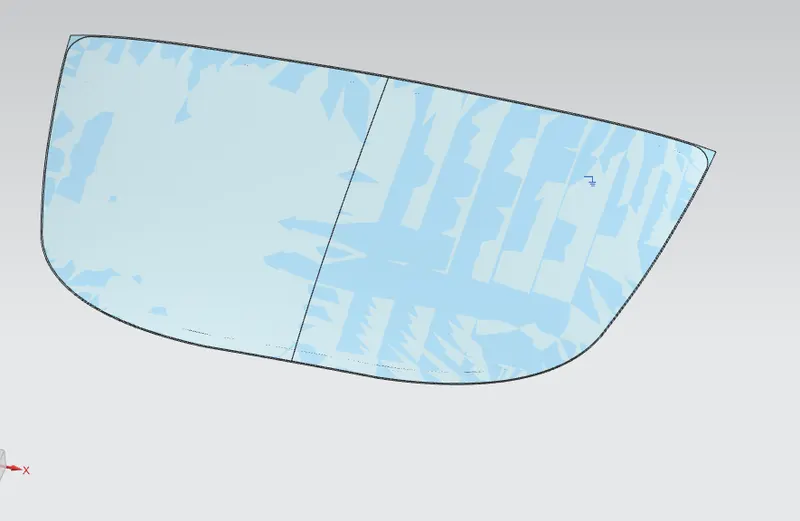
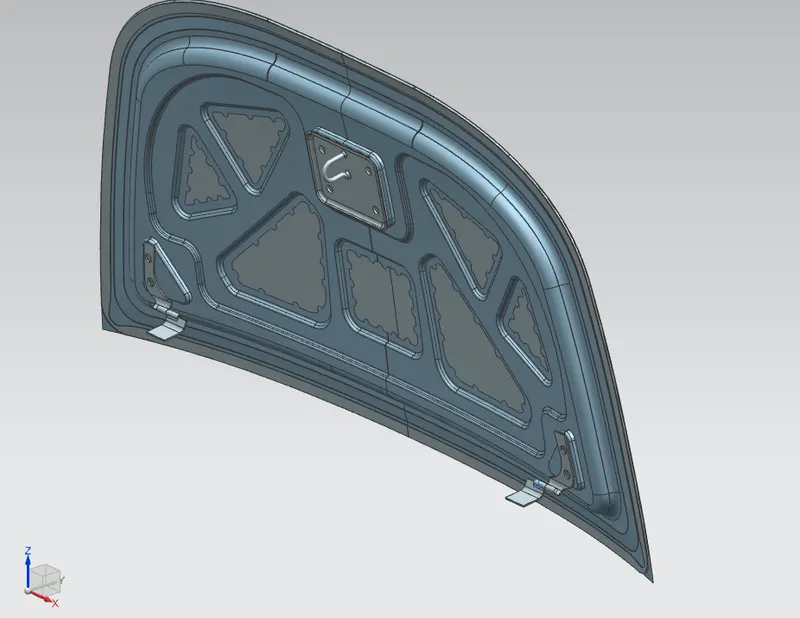
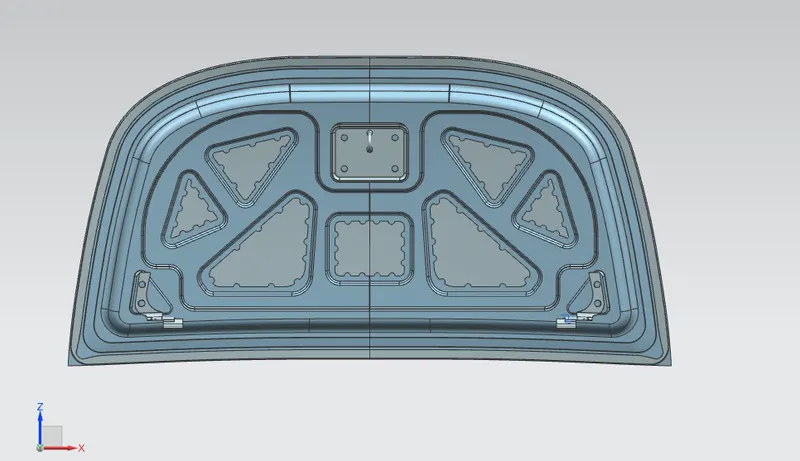
Conclusion :
Design of Engine Hood with complete assembly of Hood inner panel, outer panel, latch, hinge and the reinforcements as been successfully completed.