Hood design-Week 2
Objective:
To create a Hood with Outer and Inner panel along with Hinges and Stricker on it.
Software used:
NX 12.0
The following tasks are performed:
-
Develop the inner panel
-
Develop the outer panel with hemming data.
-
Providing the proper embossing.
-
Providing mastic data
-
Positioning all the reinforcements.
HOOD
A car hood is the metal part that covers the engine of an automobile. The term car hood is a North American term, used primarily in America and Canada. Hood comes from the Old English word hod which means a hood, a soft covering for the head. Interestingly, hood is used by British English-speakers to refer to the waterproof cloth top covering the passenger compartment of a car or pram.
A car bonnet is the metal part that covers the engine of an automobile. The term car bonnet is a British term, used primarily in England, Ireland, Scotland, Wales, India, New Zealand, Australia, etc. Bonnet comes from the Old French word bonet, which means cloth used as a headdress.
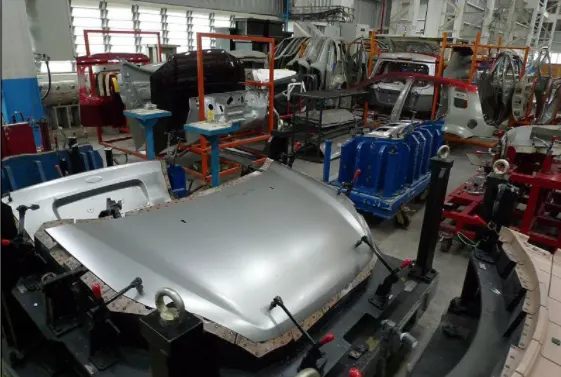
WHY DO WE NEED A HOOD FOR...?
The main function of the car hood is to protect the components underneath it for example, the engine. Without this protection, small stones kicked up by other cars could puncture a fluid container or damage the engine. In addition, most engines are not supposed to be exposed to excess water.
PEDESTRAIN SAFETY
Pedestrians are the most vulnerable road users who are at the high risk of vehicle collisions in traffic, Almost 1.2 million pedestrians are killed annually in road traffic accidents worldwide. The major injuries occur in lower, upper leg and head of the pedestrian, where the fatalities of the pedestrians in the accident is mainly due to head injury resulting from the hard impact of the head against the stiff hood or to the ground. In recent years, engineers are working on the vehicle front end design which includes bumper and hood to reduce the injuries to the pedestrians in the event of pedestrianvehicle collision.

Euro NCAP is a voluntary vehicle safety rating system created by the Swedish Road Administration, the International Consumer Research & Testing, backed by members, and motoring & consumer organisations in several EU countries.They provide consumers with information regarding the safety of passenger vehicles. In 1998, operations moved from London to Brussels.
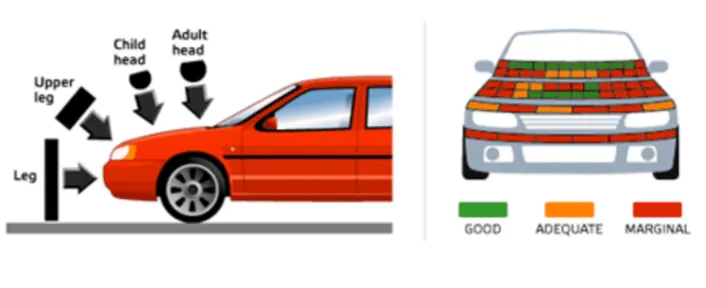
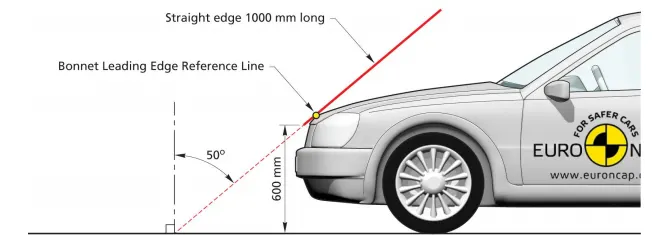
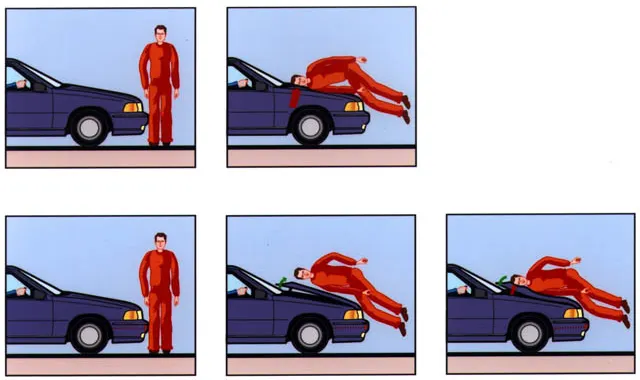
Many pedestrian crashes involve a forward moving car (as opposed to buses and other vehicles with a vertical hood/bonnet). In such a crash, a standing or walking pedestrian is struck and accelerated to the speed of the car and then continues forward as the car brakes to a halt. The pedestrian is impacted twice, first by the car and then by the ground, but most of the fatal injuries occur due to interaction with the car. Vehicle designers usually focus on understanding the car-pedestrian interaction, which is characterized by the following sequence of events: the vehicle bumper first contacts the lower limbs of the pedestrian, the leading edge of the hood hits the upper thigh or pelvis, and the head and upper torso are struck by the top surface of the hood and/or windshield.
Methods to lift hood if required
1.Support rod
A hood rod is designed to hold your hood propped open whenever you need to do some work in your car's engine bay. When used, it must be firmly secured to ensure that it provides a stable hold on the hood. Meanwhile, when not in use, it must be kept stable in place and must not move around. The hood rod clip is the part assigned with that function. This clip clamps onto the rod and ensures that it is firm in its place when not in use. It keeps the rod from moving around under the hood and from causing trouble. 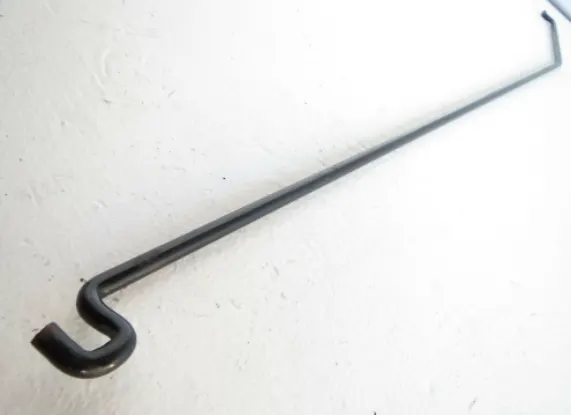
2.Gas stay
A gas stay is a type of spring that, unlike a typical mechanical spring that relies on elastic deformation, uses compressed gas contained within an enclosed cylinder sealed by a sliding piston to pneumatically store potential energy and withstand external force applied parallel to the direction of the piston shaft.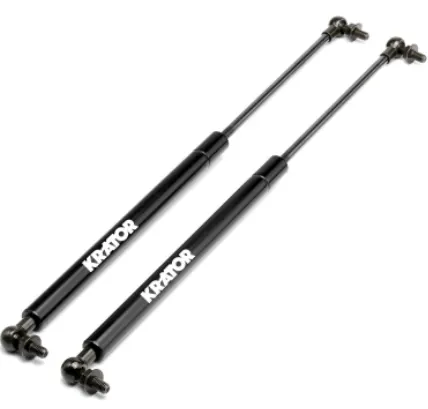
Hemming
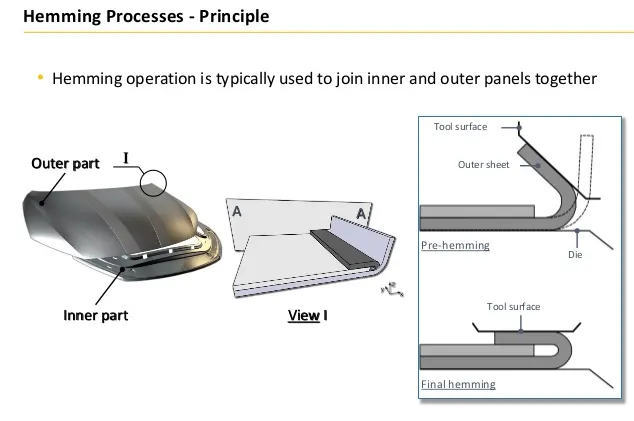
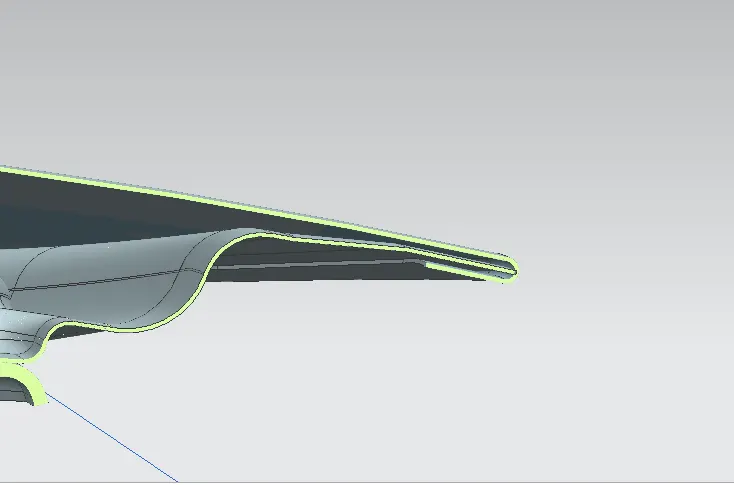
Hemming is a technology used in the automotive industry to join inner and outer closure panels together (hoods, doors, tailgates, etc.). It is the process of bending/folding the flange of the outer panel over the inner one. The accuracy of the operation significantly affects the appearance of the car’s outer surfaces and is therefore a critical factor in the final quality of a finished vehicle.
Benifits of hemming
- Die storage systems
- Fully automatic die-changing systems with parameters that change with each die
- Pressing capacity typically 60 to 180 tons
- Large panel-size capacity
- More than one part can be produced on same line
- Electric hemmers do not need hydraulic oil, are quiet and eco-friendly
Types of hemming
-
Rolled hemming
-
Closed hemming
-
Teared drop hemming
-
Open hemming
Mastic Points:
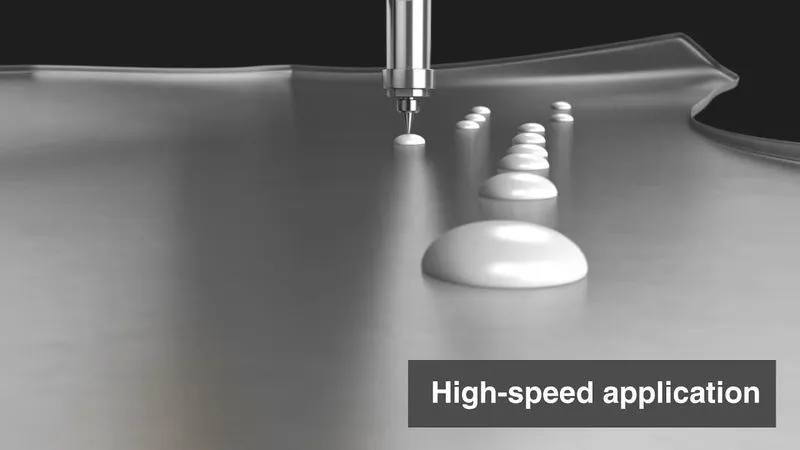
Mastic points are areas where the inner hood panel is joined with the outer panel hem using a mastic glue. This mastic glue keeps the inner panel stuck to the outer panel.
The main purpose of the outer panel is for the aesthetic looks. Thus we cannot use bolts or welding. This has to be done with the help of the hemming and mastic sealants. Mastic sealants are elastic compound that behaves like the rubber. It is placed between the outer and inner panel. Initially is it in paste form, but after the hot furnace bath it gets hardened thus joining the outer and inner panel. Mastic sealant has the tendency to increase the strength of the panel and has influence of 80mm diameter.
Pros
-
One positive characteristic of mastic sealant is that it has a very smooth exterior while keeping its rigid form underneath.
-
Surfaces do not have to be primed when using this type of sealant, and although applied thick, it adheres smoothly to any surface. It is important that the area to be joined or sealed be clean and dry, just like any other sealant on the market.
-
Mastic sealant may be used outdoors as well because of its waterproof quality. It can be applied on rain duct leaks outdoors, for example.
-
It is also favored for areas under high or low temperatures such as heater vents or drier vents and contains ultraviolet inhibitors to make sure that it is protected from damaging effects of the sun that will often weaken other types of sealants. That makes it a good choice for use on roofs, or any surface that is constantly exposed to sunlight. Most mastic sealants will also work well with metal because they do not corrode over time.
-
It functions well in areas with mild vibration and heat, like heating ducts.
Cons
-
Mastic sealant is not recommended for areas that have too much joint movement, or anything that will be moved a long length.
-
It works well with constant pressure on it, but not constant movement.
-
It also works best when applied thickly and is not recommended if only a thin layer is needed such as touch ups. Another sealant is a better choice for those types of repairs
Embossing:
Sheet metal embossing is a stamping process for producing raised or sunken designs or relief in sheet metal This process can be made by means of matched male and female roller dies or by passing sheet or a strip of metal between rolls of the desired pattern.
It is done by pressing a sheet into a female die which has a design attached to it. this is usually done with a male counterpart underneath the paper so that the two and design is transferred to the sheet
Pros
-
Embossing enables us to highlight the important elements of the products .
-
Transfers even the finest details .
-
Permanent design that lasts forever.
Master sketch:
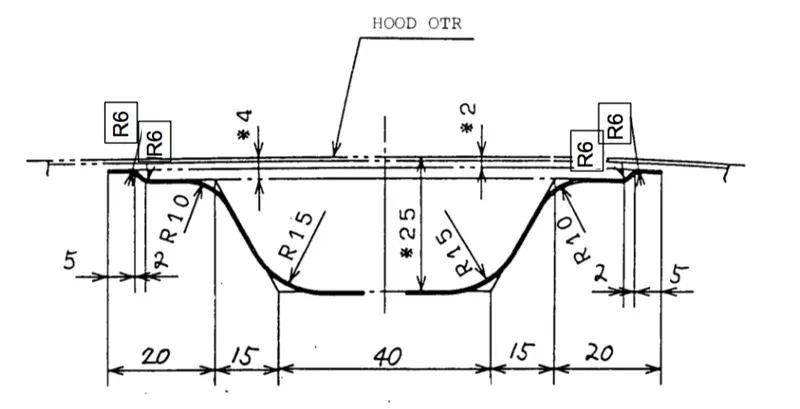
Data to be used:
-
Outer Panel Thickness = 0.75mm
-
Inner Panel Thickness = 0.75mm
-
Reinforcement Thickness = 1.5mm
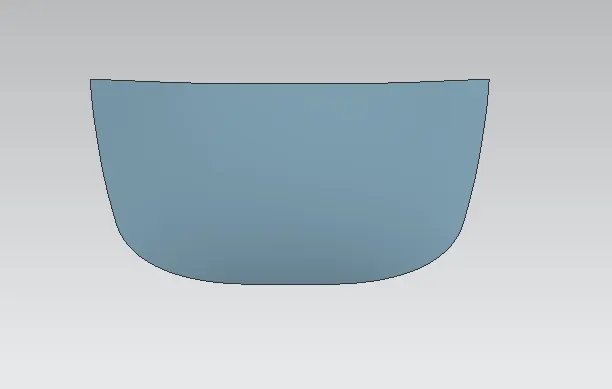
CLASS A SURFACE :In automotive design, a class A surface is any of a set of freeform surfaces of high efficiency and quality. Although, strictly, it is nothing more than saying the surfaces have curvature and tangency alignment – to ideal aesthetical reflection quality, many people interpret class A surfaces to have G2 (or even G3) curvature continuity to one another (see free form surface modelling). Class A surfacing is done using computer-aided industrial design applications. Class A surface modellers are also called "digital sculptors" in the industry. Industrial designers develop their design styling through the A-Surface, the physical surface the end user can feel, touch, see etc.
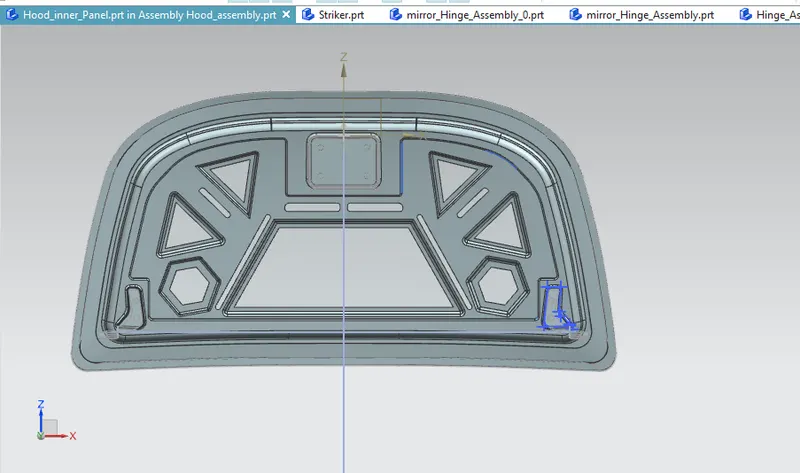
INNER PANEL :
HINGE ASSEMBLY :
Hinges is the assembly of components connected to the door and body of the vehicle, linked to each other and capable of rotating around the same axis. Conventional system consists of two hinges for each door, an upper hinge and a lower hinge.
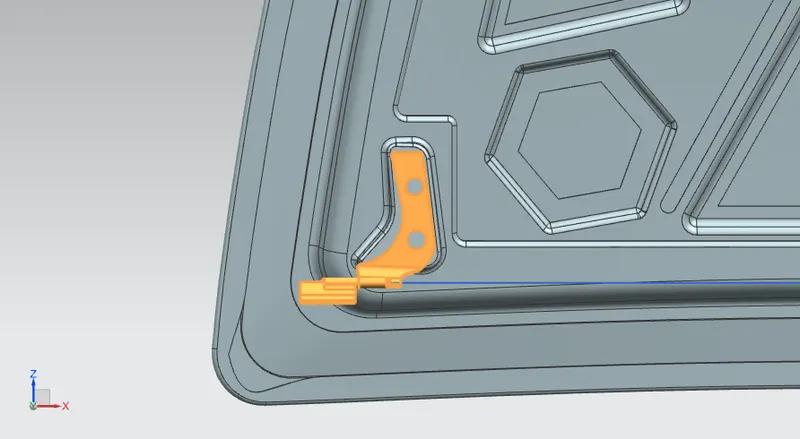
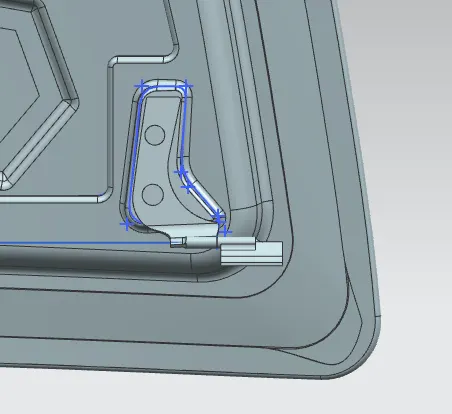
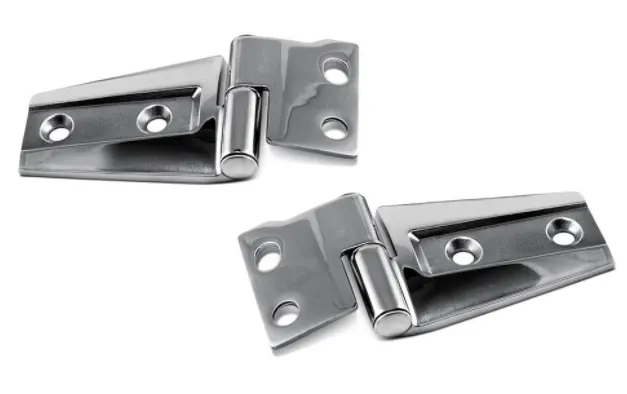
STRIKER ASSEMBLY :
The door striker plates are installed in the door jambs, and precisely aligned with the door latches so that the latches catch onto the striker plate when the doors are closed. The door striker plate is made of hardened steel to resist wear as it is subjected to constant contact with the door latch.
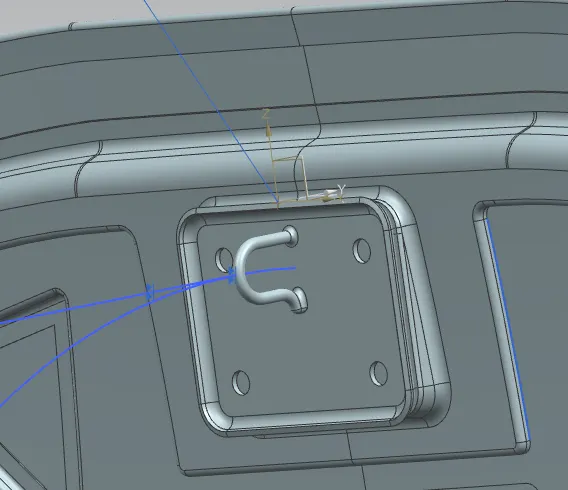
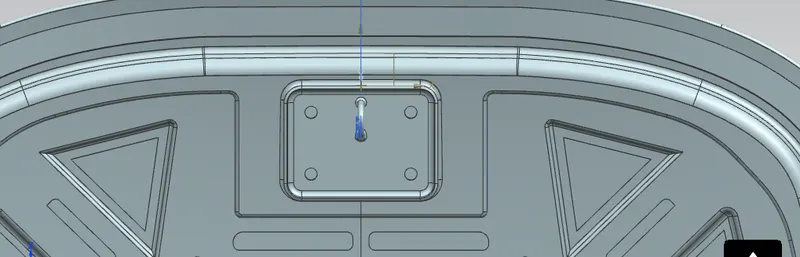
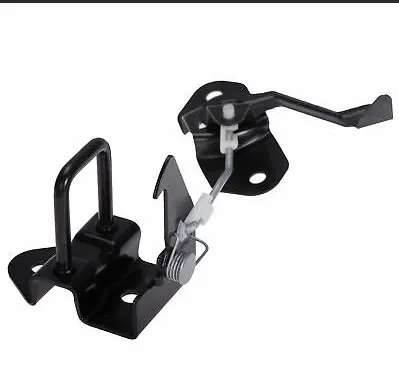
The hood latch system begins inside the compartment of the car. Located on the driver's side (usually on the left-hand lower corner of the dashboard) is the hood release handle. The hood release handle attaches to a cable which then routes through the dashboard towards the front of the vehicle.
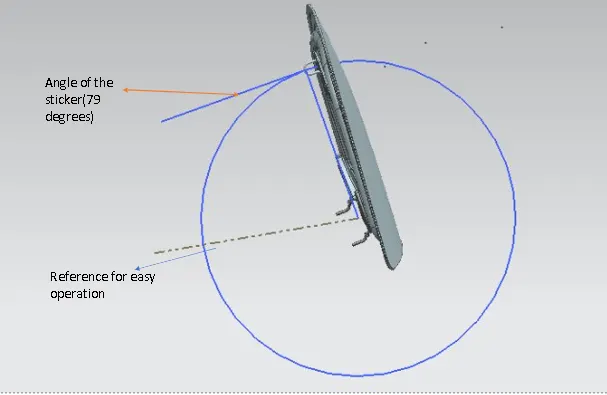
Striker Angle for hood:
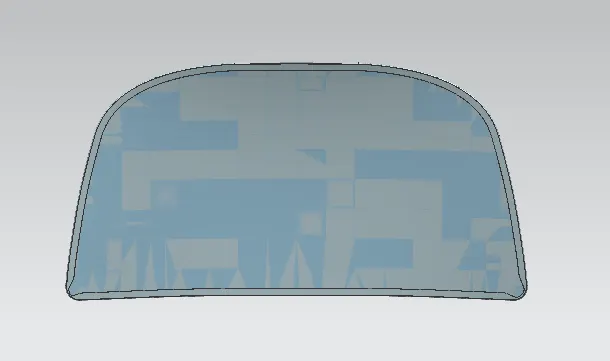
FINAL OUTER PANEL:
HEMMING :
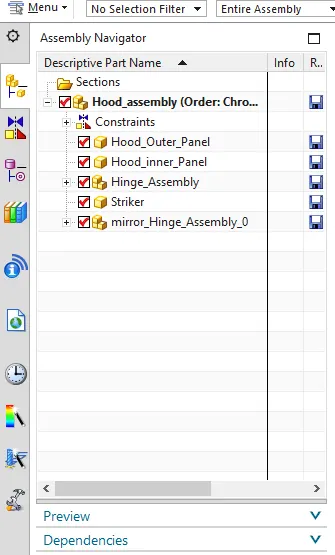
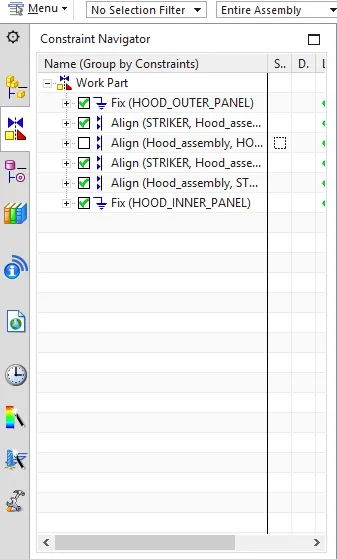
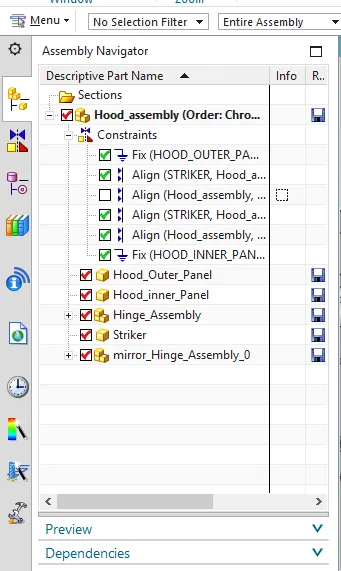
TREE STRUCTURE : ASSEMBLY CONSTRAINTS :
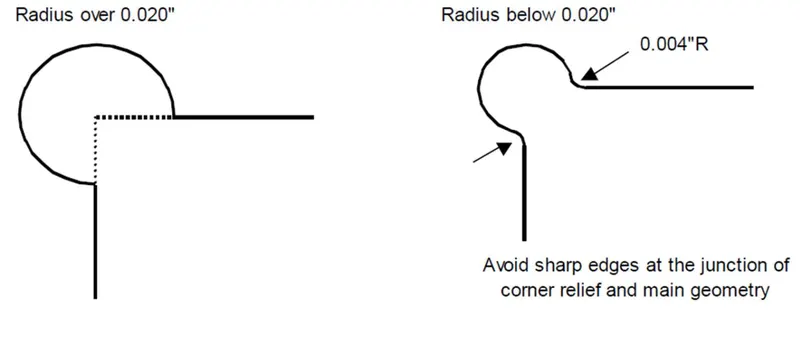
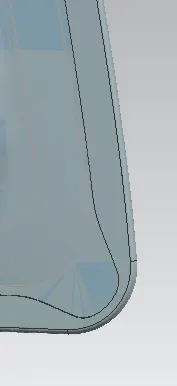
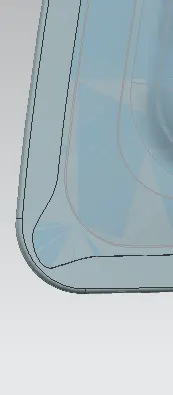
CORNER RELIEF FOR EASY MANUFACTURING :
Bend relief is nothing more than two small incisions cut into a piece of sheet metal to free the metal in between. It separates the material you want to be able to fold from the rest of the part. You only need it when there is material on either side of a bend.
When the sheet metal is put through the process of bending the metal around the bend is deformed and stretched. As this happens you gain a small amount of total length in your part. The Bend Allowance is defined as the material you will add to the actual leg lengths of the part in order to develop a flat pattern.
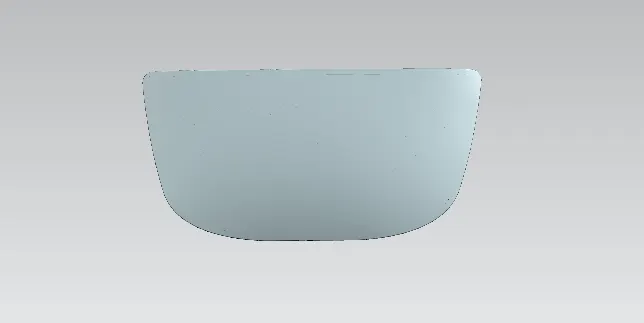
FINAL HOOD ASSEMBLY :
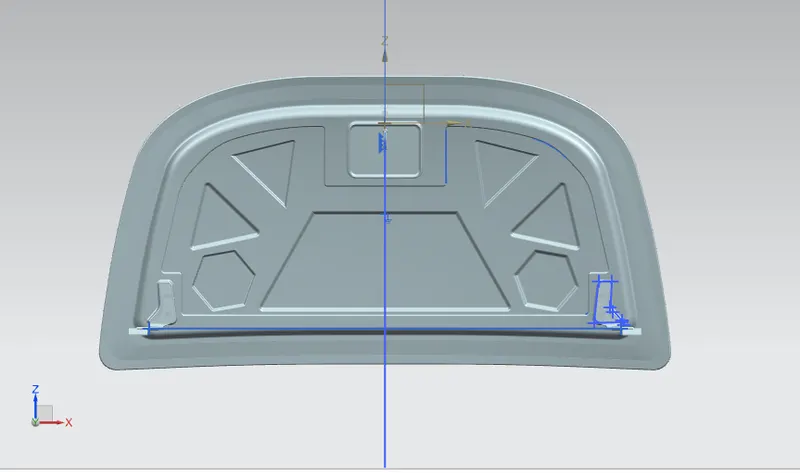
Front view :
Side view :
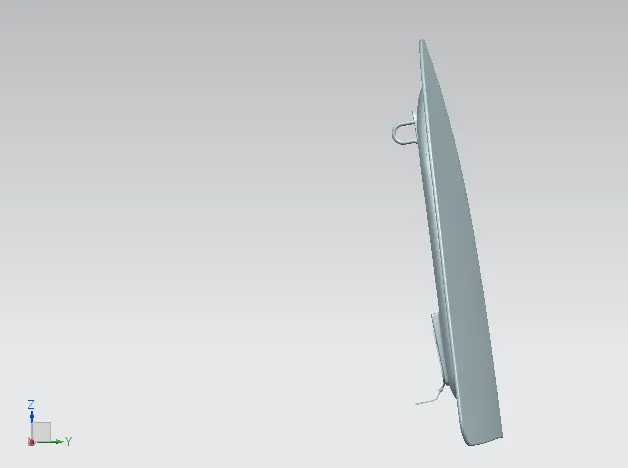
Isometric view :
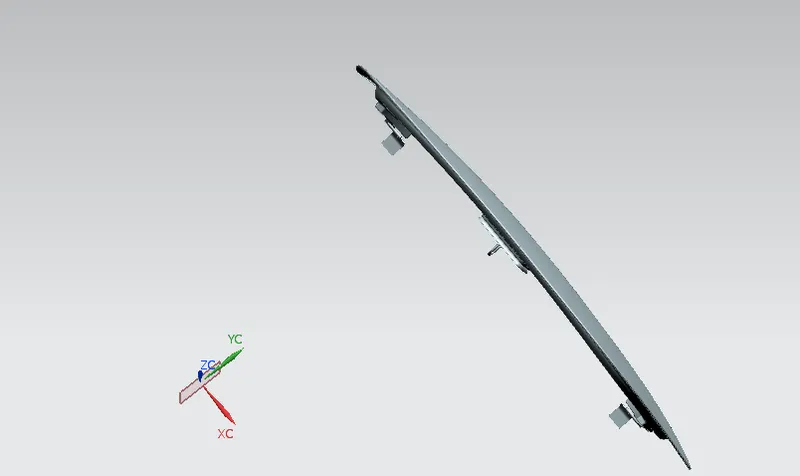
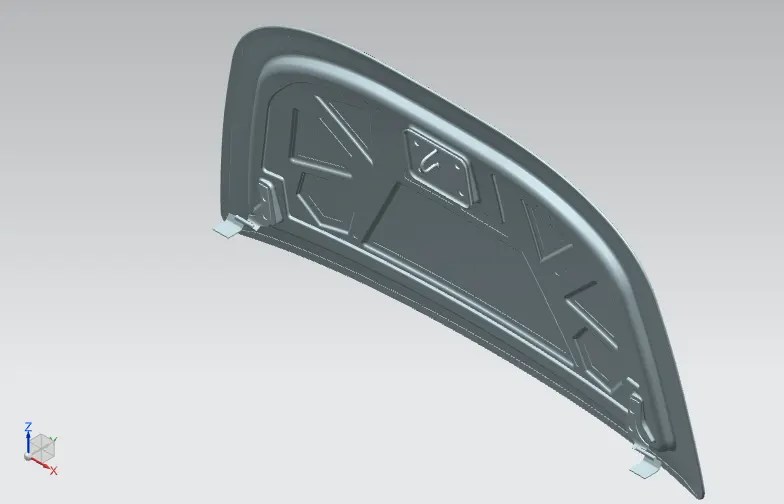
TOP VIEW :
Conclusion:
- The hood panel is designed by Outer and inner panel along with latch and hinge assembly on it.
- The Hemming and sheet metal drawing process is also learned