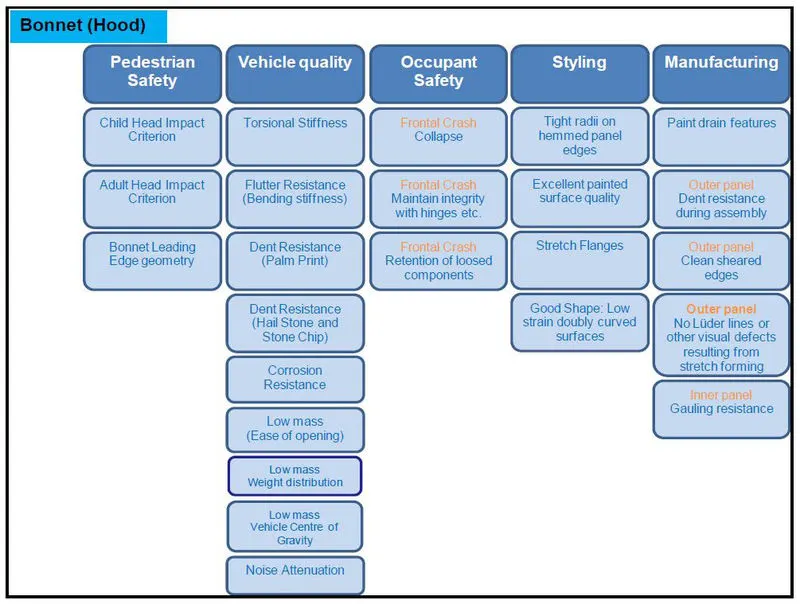
Hood design-Week 2
Automotive Hood Design
Introduction:
The term car hood is a North American term, used primarily in America and Canada. Hood comes from the Old English word hod which means a hood, a soft covering for the head. Interestingly, hood is used by British English-speakers to refer to the waterproof cloth top covering the passenger compartment of a car or pram countries,A Hood or bonnet is an important important component of the front portion of the car and it is most important part in designing BIW (Body in white).it is close to engine compartment.Here some parts under hood they are
- Engine
- Transmission
- Radiator
- AC Compressor, Alternator, Power Steering Pump, and Water Pump
- Brakes
- Windshield Wiper Fluid
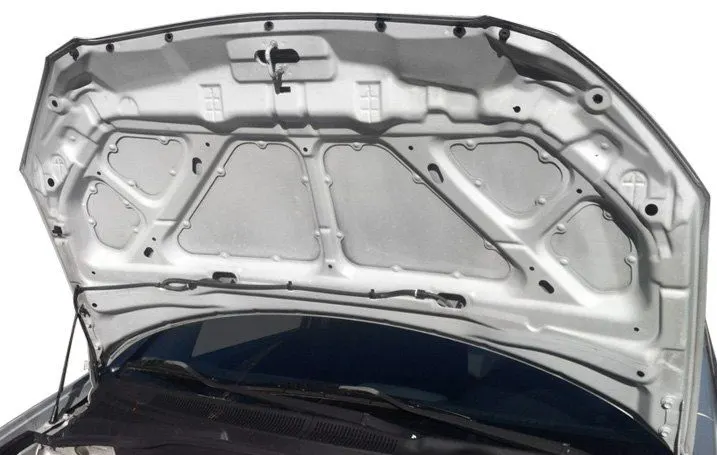
On front-engined cars, the hood may be hinged at either the front or the rear edge, or in earlier models it may be split into two sections, one each side, each hinged along the centre line. A further variant combines the bonnet and wheelarches into one section and allows the entire front bodywork to tilt forwards around a pivot near the front of the vehicle Hoods are typically made out of the same material as the rest of the body work. This may include steel,aluminium,fiberglass or carbon fiber steel. However, some aftermarket companies produce replacements for steel hoods in fiberglass or carbon fiber to make the vehicle lighter.
Release/safety and security mechanism
The hood release system is common on most vehicles and usually consists of an interior hood latch handle, hood release cable and hood latch assembly. The hood latch handle is usually located below the steering wheel, beside the driver's seat or set into the door frame. On race cars or cars with aftermarket hoods (that do not use the factory latch system) the hood may be held down by hood pins. Some aftermarket hoods that have a latch system are still equipped with hood pins to hold the hood buttoned down if the latch fails.
Pedestrian safety:
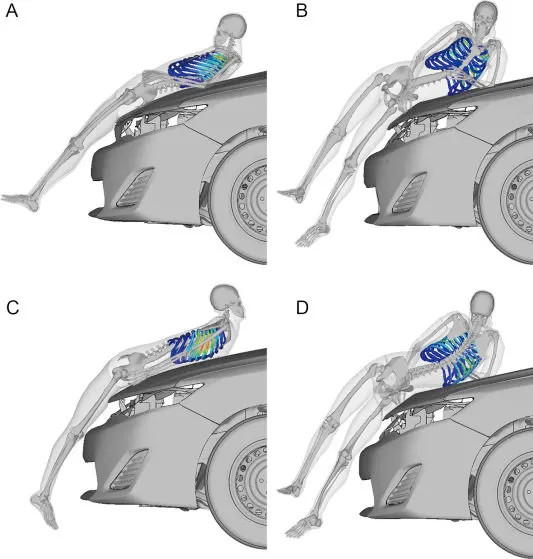
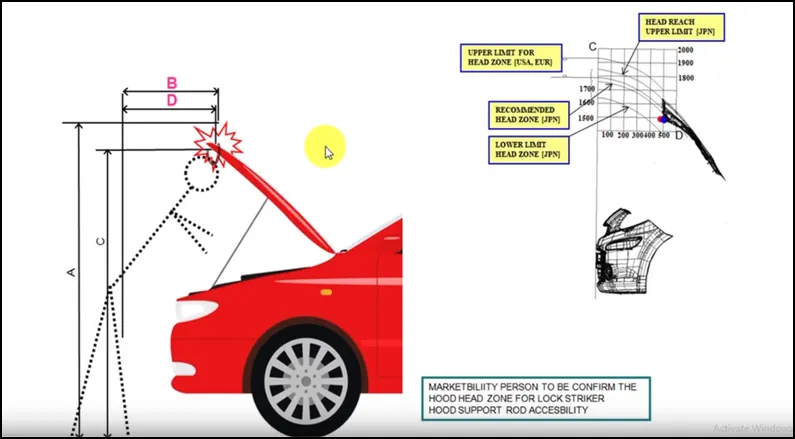
Many pedestrian crashes involve a forward moving car (as opposed to buses and other vehicles with a vertical hood/bonnet). In such a crash, a standing or walking pedestrian is struck and accelerated to the speed of the car and then continues forward as the car brakes to a halt. The pedestrian is impacted twice, first by the car and then by the ground, but most of the fatal injuries occur due to interaction with the car. Vehicle designers usually focus on understanding the car-pedestrian interaction, which is characterized by the following sequence of events: the vehicle bumper first contacts the lower limbs of the pedestrian, the leading edge of the hood hits the upper tight or pelvis, and the head and upper torso are struck by the top surface of the hood and/or windshield.volvo has created a pedestrian and cycle recognition ADAS with automatic braking designed to reduce pedestrian collisions. With pedestrian injuries and fatalities increasing dramatically in the US in 2017, perhaps because of increasingly distracted driving with entertainment and communication systems in cars, pedestrian safety driver support systems may become widespread.
Manufacturing requirement:
- Deep drawing is used for the manufacturing of the inner panel.
- Material used is aluminium,as it can be absorb twice the crash enery of milt steel,ligher,dent free and can make body panels thicker while still lowering weight.
- No sharp corners inside the panel
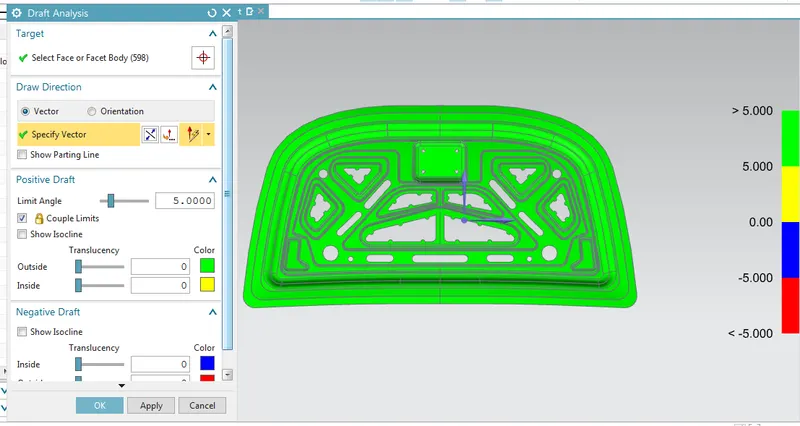
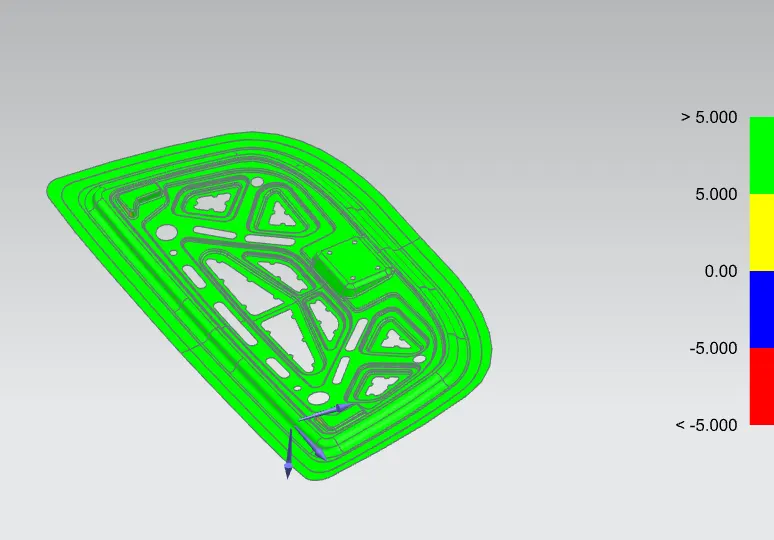
- No negative draft
- Provide appropriate corner relief on the area of curvature
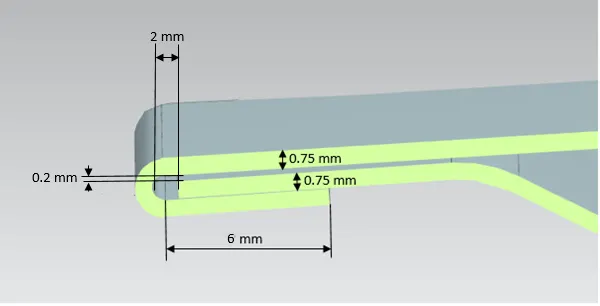
- Outer Panel Thickness = 0.75mm
- Inner Panel Thickness = 0.75mm
- Reinforcement Thickness = 1.5mm.
Inner panel design:
Master section:
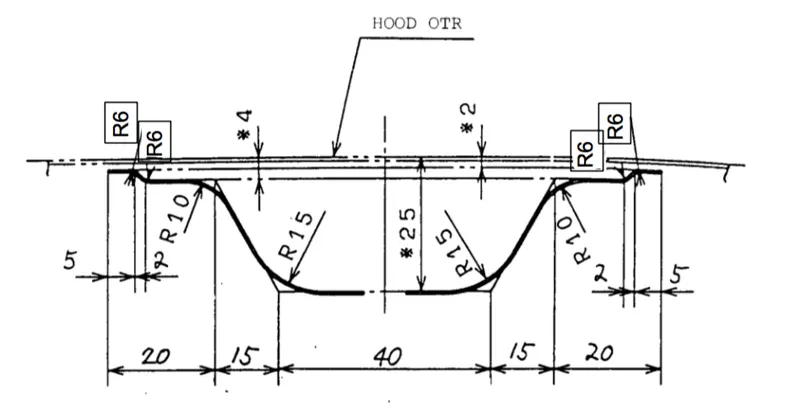
- Master section is already provided by the marketability team and the manufacturing requirements
DESIGN:
Inner panel:
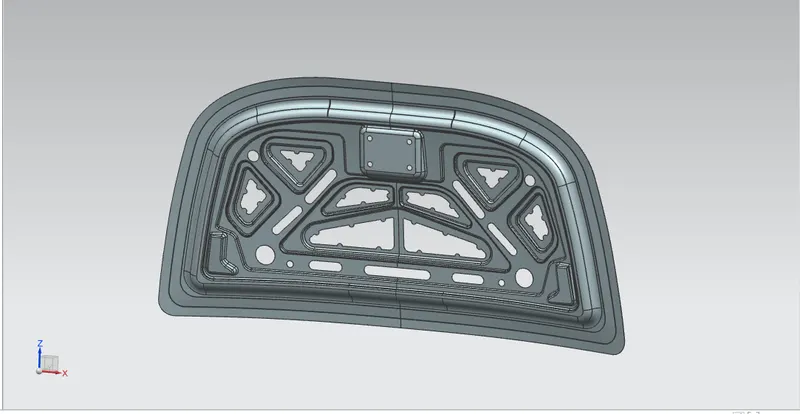
By using the given mastersection design inner panel with the respective given thickeness,Embossing is a metal forming process for producing raised design or relief in sheet meterial by using press method the sheet is cut without no change in metal thickness,emboss provide strength to direct force from the front collision towards the hindge and bodey of the car.
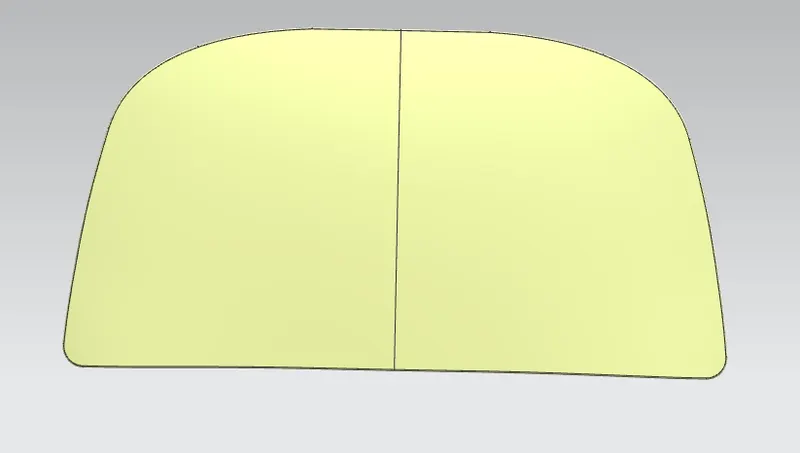
Outer panel:
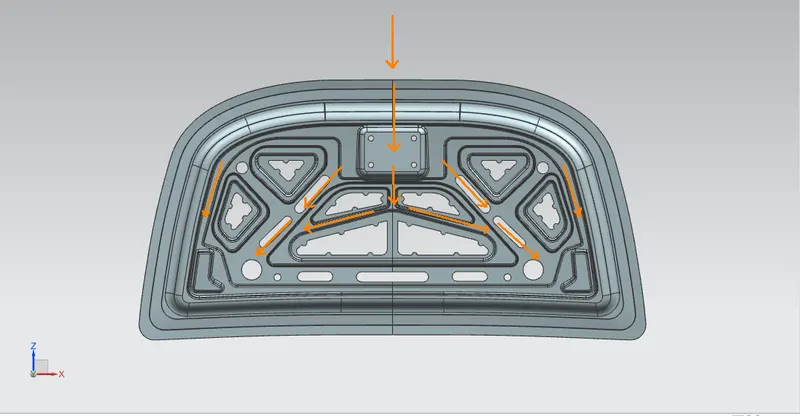
Shock Flow:
The embossed channels were design to direct the impact force towards ouside of the structure
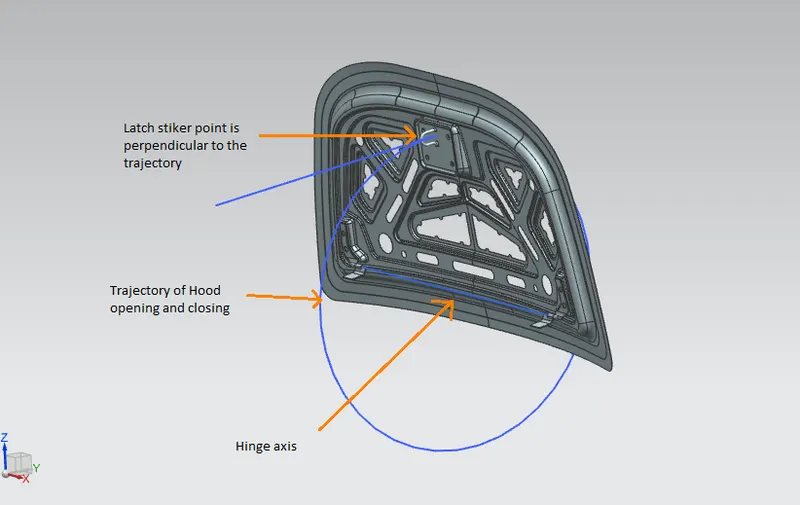
Hood Opening and Closing Trajectory:
Hinge and striker is placed perpendicular to the trajectory for proper opening and closing the hinge and stricker should be place in proper manner if during openning or closing it make some tight will occures if tight occures the customer feal bad and make complaine so to avoid this we have take focues more in this area.once the hinge is placed moirror it and draw axis line from one point to another after that create circle and draw a line by using assembley constraine join it proper.
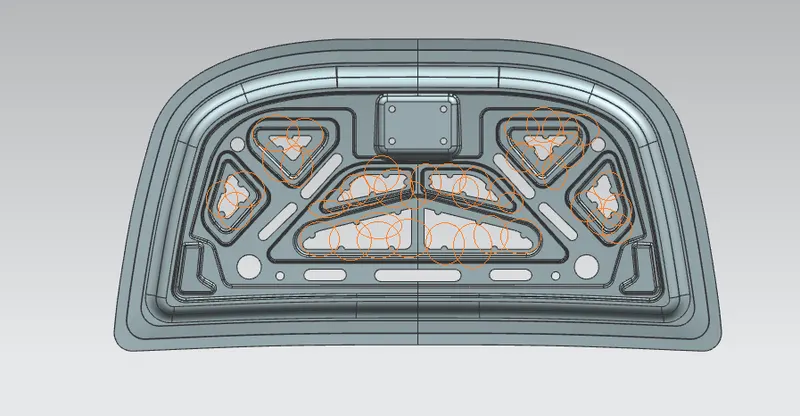
Mastic Sealant Regions:
We know that outer panel is for asethetic looks and we cannot use bolt or welding to avoid thos thing only we use hemming and joint inner panel and outer panel by sealant ,look of the outer should look nice then only customer by if not customer neglate to buy it .mastic sealant are elastic component that behaves like rubber.it is placed between outer and inner panel,its like an liqued form after heating its gets hearded and join both outer and inner panel.
Latch and Hindge Reinforcement:
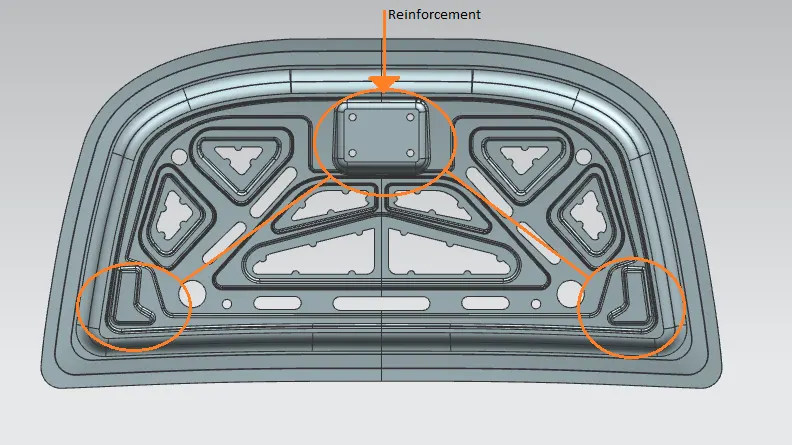
Cross-Section view:
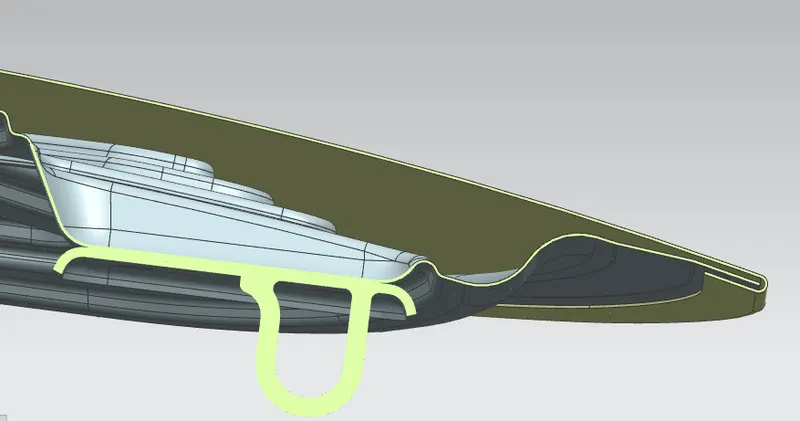
Hemming:
Hemming is a forming operation in which the edges of the sheet are folded or folded over another part in order to achieve a tight fit. Normally hemming operations are used to connect parts together, to improve the appearance of a part and to reinforce part edges.In car part production, hemming is used in assembly as a secondary operation after deep drawing, trimming and flanging operations to join two sheet metal parts (outer and inner) together. Typical parts for this type of assembly are hoods, doors, trunk lids and fenders.
Rear Relief:
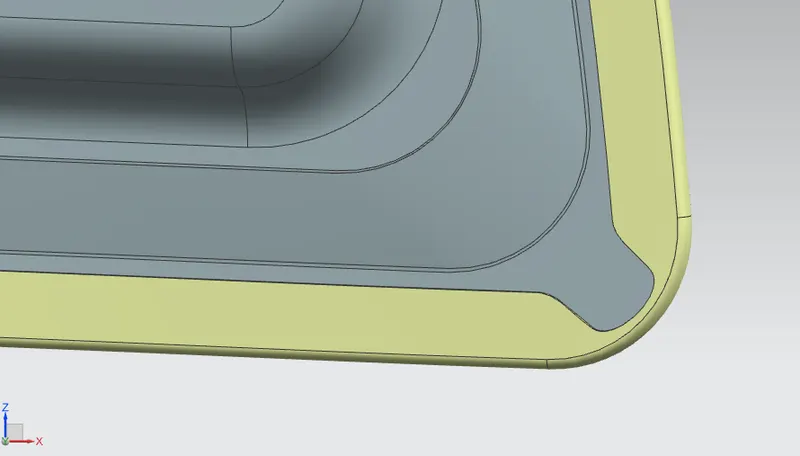
Front Relief:
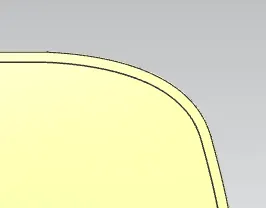
Overall view:
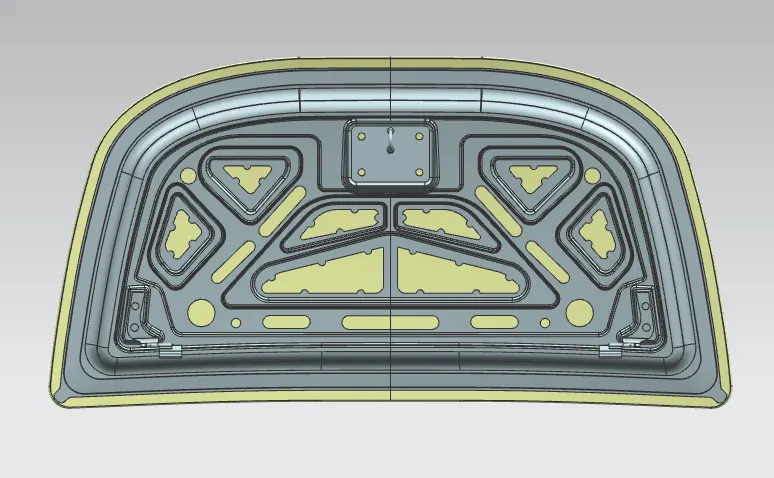
Draft Analysis: