Hood design-Week 2
CAR HOOD DESIGN
Hood:
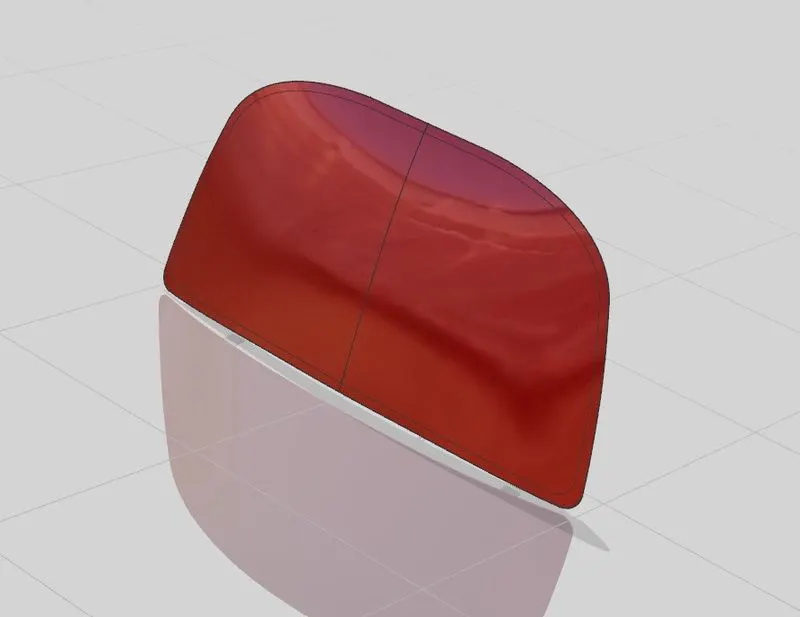
A car hood also referred to as a bonnet. It is hinged to the engine that rest overthe engine of a front -engine vehicle. Its purpose is to provide access to the enginefor repair and maintenance. A conceailed latch is typically used to hold down the hood.Aftermarket and on racecars hood pins may be used to hold down the hod. Hoods also contain a hood scoop,water wiper jets, power bulge,and etc. Hoods typically constructed from steel and sometimes from aluminium. Also some aftermarket and some racecar hoods constructed from various materials, including carbonfiber, fiberglass or dry carbon. The hood design may vary form one make and model to another. Remarkable weight savings can be achived by using light weight materials.
Hood design concerns regarding the severity of a potential pedestrian head injury during a collision. Safety norms incorporated within difrrent core systems of the vehicle are effective in protecting passengers. Pedestrians come contact with the vechilc's outer body , which effectively built can save precious lives.
- Since many crashes involve a forward moving vehicle. In such a crash a pedestrian is impacted twice, first by the car and then by the ground. But a majority of fatal injuries often happend due to the traumatic interaction with the car.
- In an unfortunate scenario of an accident ,the vehicle bumper first hits the lower limbs of the pedestrian.The edge of the hood hits the upper thigh or pelvis,and head and upper troso are struck by the top surface of the hood and or windshield. Therefore manufactures around the globe have incorporated key changes in vehicle design to avert fatal accidents.
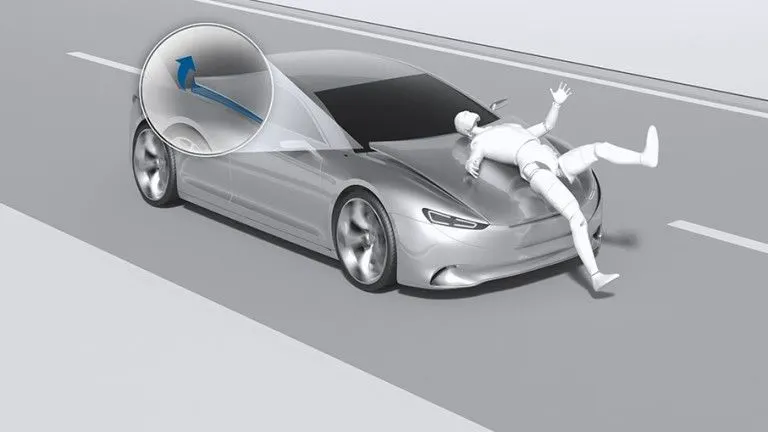
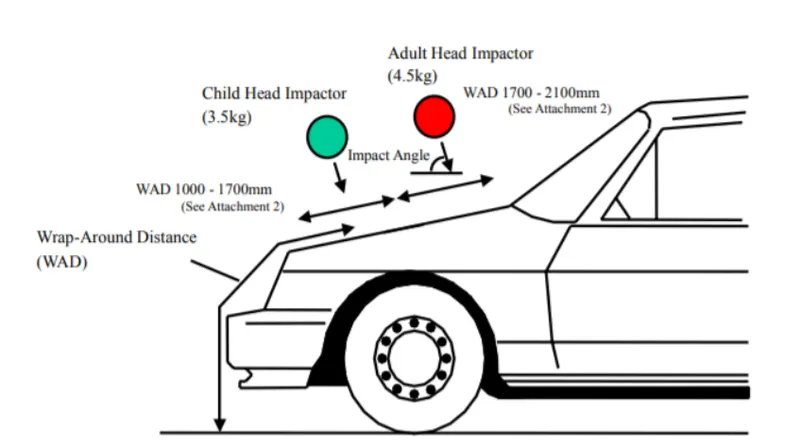
During the development of a safe hood can be designed and manufactured to be pedestrian friendly and effectively decresing injuries. The wrap around distance is distance measured from ground surface to the hood surface.The adult pedestrian when falling on the hood and the wrap around distance is 1700mm-2100mm. This zone is called adult impact zone. For child(hight 154 mm) pedestrian the wrap around distance taken 1000mm-1700mm depending on the hight of the pedestrian.
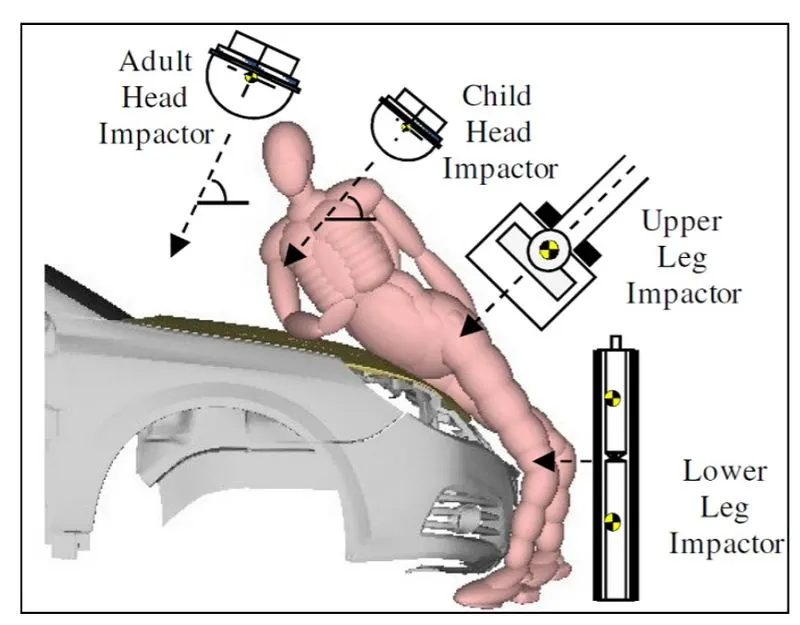
HOOD DESIGN :
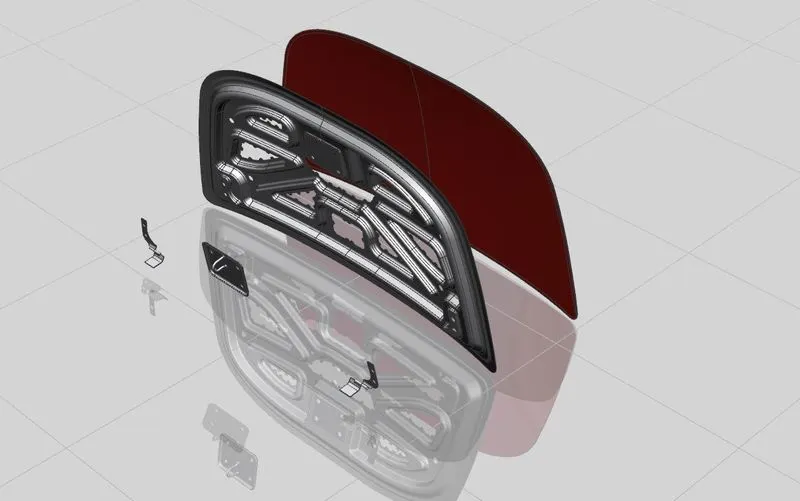
Hood or Bonnet consists of the following parts, such as Hood outer panel, inner panel,latch and sreiker reinforcement, hing and reinforcements.
1.Supporting rod (or) Gas stay: For every automotive repair the first step is to open the hood.Opening the hood is to acces the engine, transmission, and various cooling and ventilation systems so that you can make repairs to the vehicls.To open the hood most of the vehivles have latch inside the passenger cabin. When this is pulled it releases the first part of the hood mechanisum. Two types of devices usually used to support the hood.
- supporting rod :A device for supporting the engine hood of a vehicle in its position by means of a rod. This rod avalible in diffrent sizes depends up on avarage human hight .
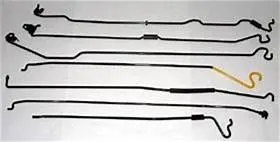
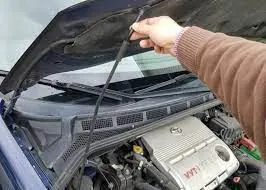
- supporting gas stay (or) hood strut : In most of the cases designers uses hood strut. These struts are similar to the strut's at car suspension in that way there are designed to lift the hood. then keep it open safely.Depending upon the size of the car and weight of the hood this strut may vary in size and strength. A motor vehicle in its open position by means of an actuaror which is activated by gas.Maximum it's lifts 20kg-30-kg of weight.
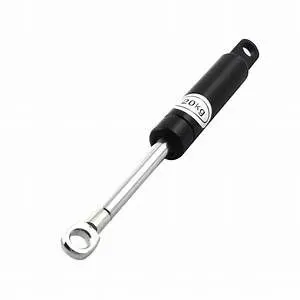
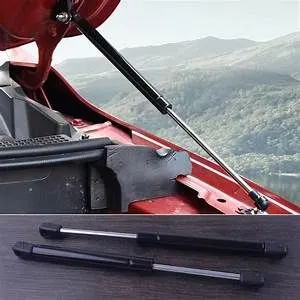
This part placed on the engine and after opening is attached to hood or vice versa. Opening angle is one of the design perameter. The opening angle is being control by Supporting rod or Gas stay. The length of supporting rod controls the opening angle of the hood.
(HOOD DEAIGN: )
Data to be used :
- Outer panel Thickness =0.75mm
- Inner panel Thickness =0.75
- Reinforcement Thickness =1.5mm
Master sketch: Hemming data:
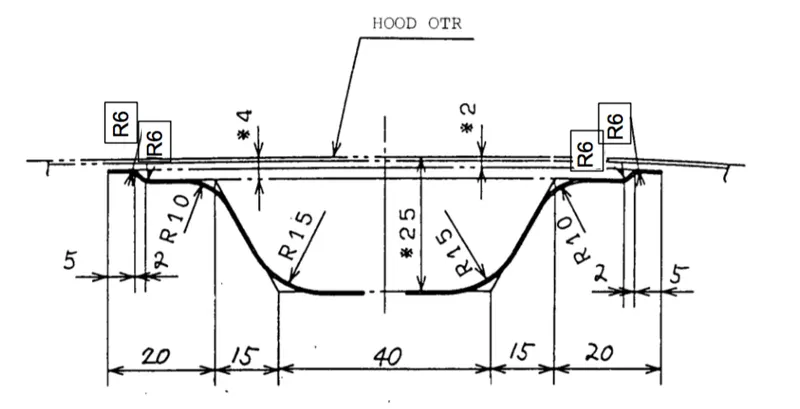
Relief rear section : relief front section :
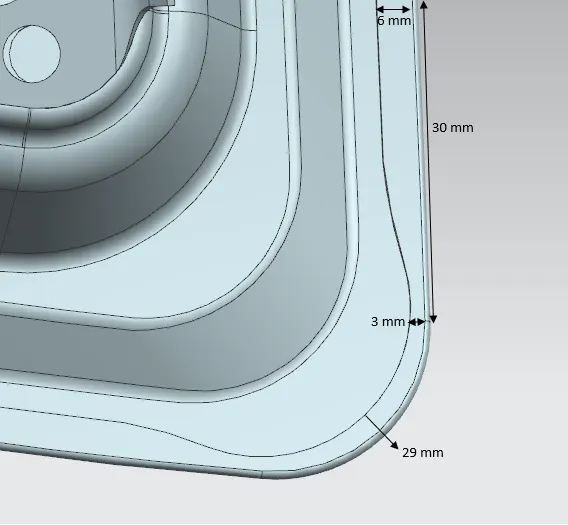
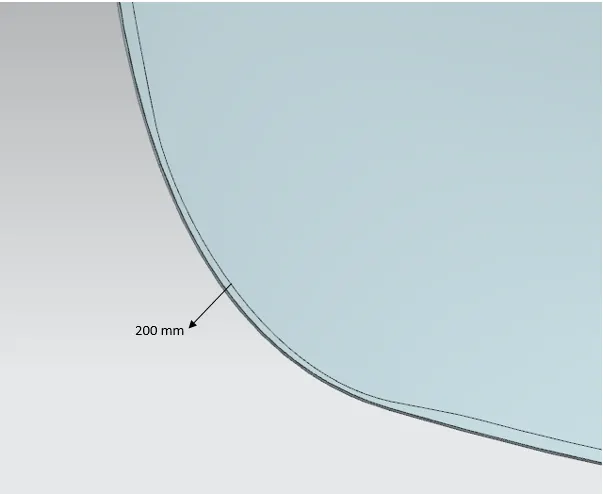
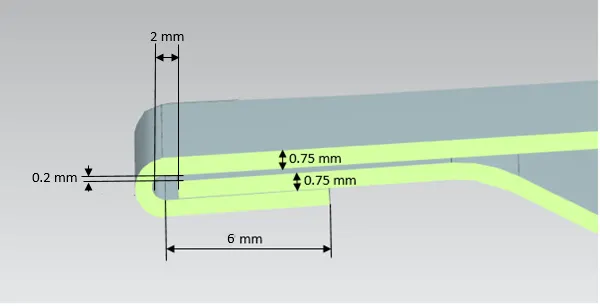
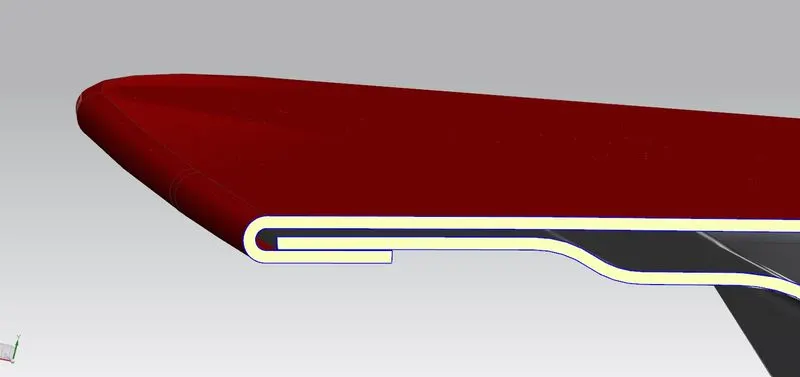
1.Hood outer panel: Hood outer panel decides the shape of the hood according to the design. The outer and inner panel are connected at the front ,back side edges of the hood. The connection of both panels is established by a bending of overlapping sheets. The edges of the outer panel encloses the inner panel. The overlapping of sheets is done through the hemming process.
- Thickness of outer panel is 0.75 mm.
- Gap between outer pannel to Hemming flange 2.80mm.
- width of hemming flange 6mm
- clearence b/w surfaces 0.2mm
Hood outer panel
Hemming edge
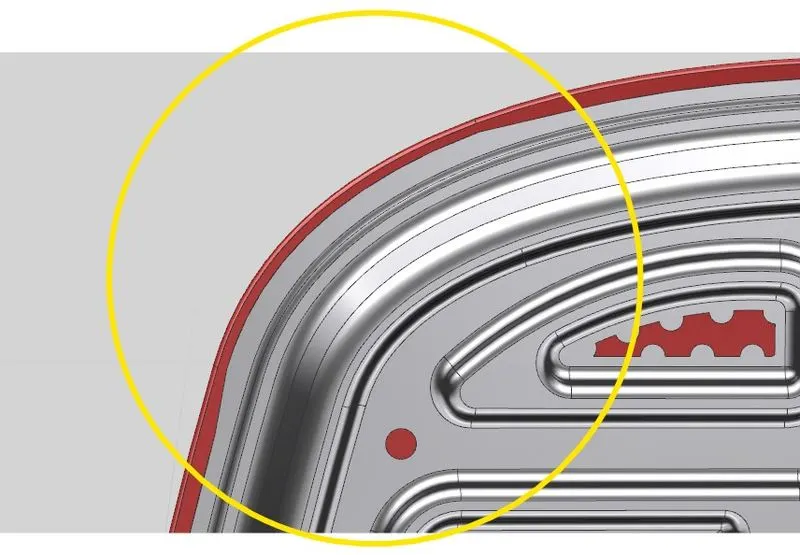
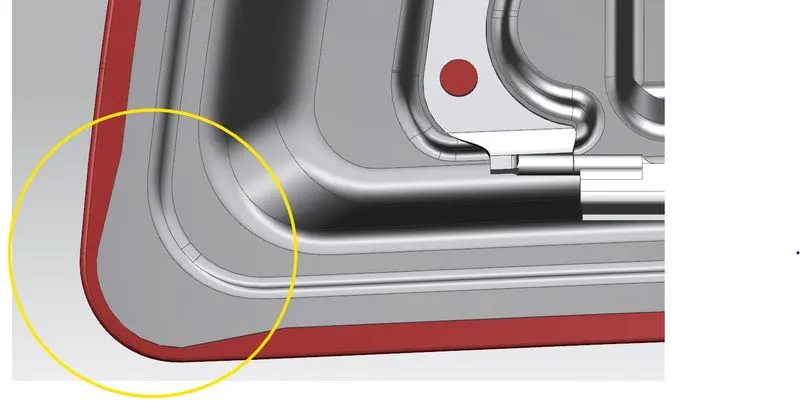
Hem relief section
Hemming :
- Hemming is a forming operation in which edges of the sheet folded or folded over another part in order to achieve a tight fit. Normally hemming operations are used to connect parts together to improve the appearance of a part and reinforce part edges.
- In car part production hemming is used in assembly as a secondary operation after deep drawing ,trimming, and flanging operations to join the sheetmetal parts (outer and inner) together. Typically parts for this assembly are hoods,doors,and fenders.
- The accuracy of hemming is operation is very importent since it affects the appearence of the surface and surface quality.Material deformation which occur during the hemming process, can lead to dimentional variations and orher defects in parts.
- Typical hemming defects are splits in flange, material overlaps in the corner areas or material rool in.
- This is why it is important to use simulation tools in order to , on the one hand, better understanding the hemming process and, on the other hand significantly reduce the number of "trail and error" loops during tryout and production.
Types of hemming:
1.Conventionel die Hemming: Conventional die hemming is suitable for mass production. In die hemming, the flange is folded over the entire length with a hemming tool. Normally the actual hemming is a result of a forming operation

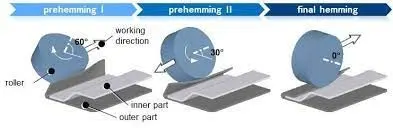
2.Rool hemming: Roll hemming is carried out incrementally with a hemming roller. An industrial robot guides the hemming roller and forms the flange. Roll hemming operation can also be divided into several pre-hemming and final hemming process steps. Roll hemming is very flexible to use and tool costs are significantly lower as compared to those of conventional die hemming. However, the cycle times are much higher since the hemming is realized using a hemming roller which follows a defined path.
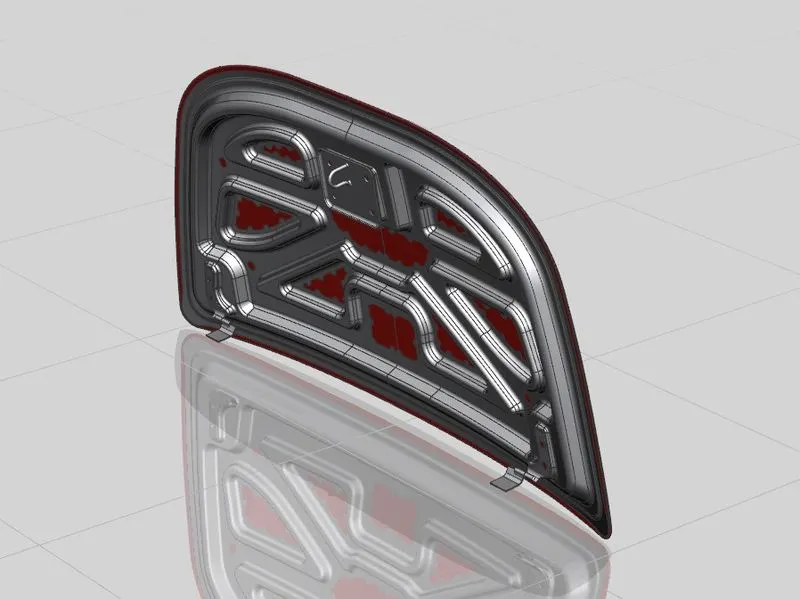
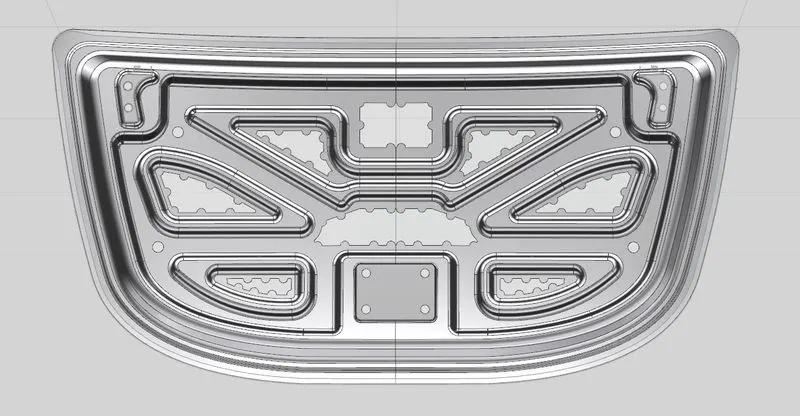
2.Hood inner panel: Hood inner panel for vehicles is to provided to improve rigidity, durability, and pedestrian protecting performance by comprising a composite structure.Inner panel lay under the outer panel and combined each and has frame structure for rigidity reinforcement in order to ensure hood rigidity and durability.Inner panel manufactured with a thickness of 0.75 mm. Hing part and striker part also attached to the inner panel. inner panel provides Mastic points and hinge reinforcements.
Inner panel
- The inner panel is designed based on master sketch given for the design.The geometry of innerpanel is created based on master sketch theat was designed above.
- After performing initial stages of design we will provide local embosses to strengthen the inner panel..
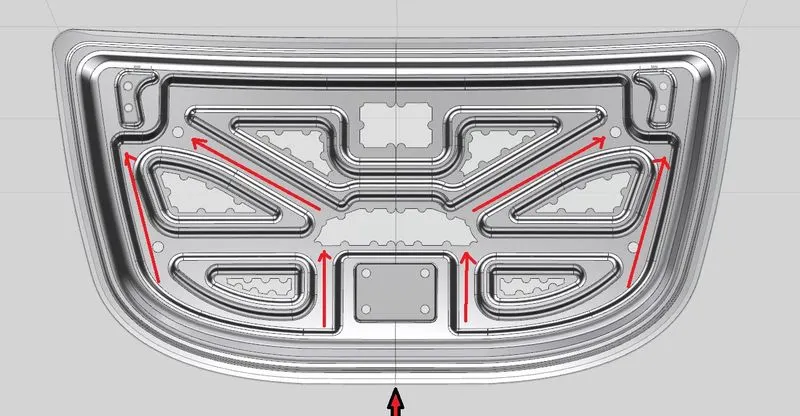
- When a forcce impacts the hood from front the embosses on inner panel distributes the impact forces outside .
- These embosses are designed in particular shape(Y or V shape).
- The component is designed to distributes the force away from the passengers during the crash. The impact forces drrect towards hing reinforcement , which fixed to the hood and engine.
FORCE
Commands used while creating inner panel in NX CAD:
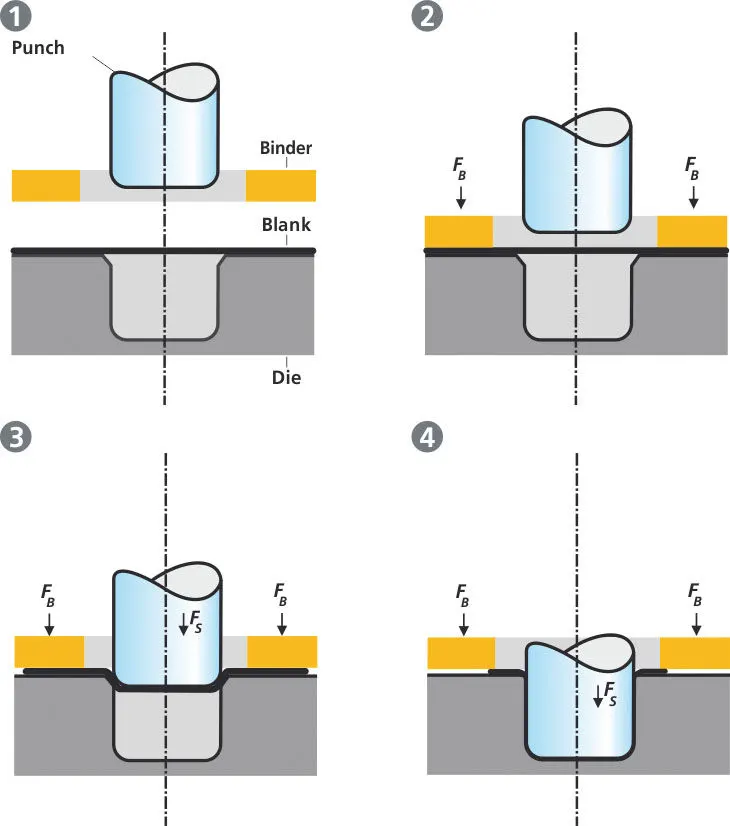
1.Emboss: Modifies a body with faces made by projecting a section along a vector , with options for end cap location and shape.Pressed against the surface to leave an imprint. Embossing is a stamping process. This process can be made by means of matched male and female dies by pressing sheet between dies of the desired pattern.Embosses are created by Deep drawing process.
Deep drawing:
- The deep drawing is a forming process which occurs under a combination of tensile and compressive conditions.
- Deep drawing is the one of the most widely used process in sheet metal forming. It is applied in the automotive industry for manufacturing of car body parts.
2.Offset surface: Creats a body by offsetting a set of faces.
3.Trim sheet: Trims of a portion of a sheet body.
4.Offset curve in face: Offsets curves along the faces on which they lie.
5.Through curves: Creats a body through multiple sections where the shape changes to pass through each section.
6.Law Extension: Creats a law controlled extension from a base sheet ,dynamically or based on law distance and angle.
7.Face blend: Adds tangent blend faces between selected sets of faces. The blend shape can be circular, conic or law controlled.
8.Edge blend: Round sharp edges between faces. The radious can be constant or variable.
9.Thicken: Creats a solidbody by adding thickness to the set of faces.
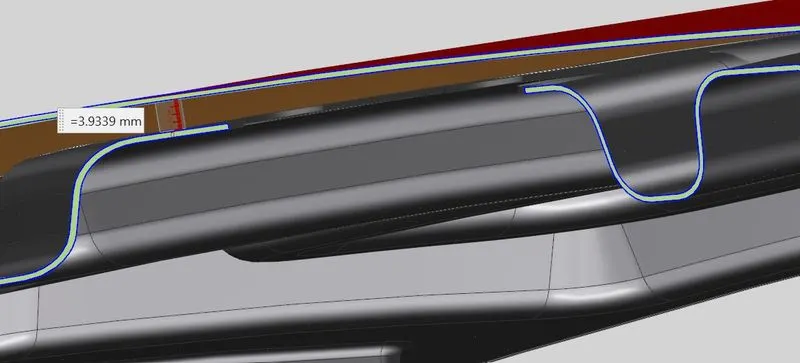
Mstic points: Mastic points are small number of extended portions designed within the inner panel for placing the mastic sealent to fill the gap between outer panel and inner panel of the car hood. Panel surface vibrating while driving the vehicle.This vibration creats noice,to avoid this condition mastic (adhesive) used to bond the inner hood panel to the outerpanel begins to separate.
- The gap between hood outer panel and inner panel at where mastic protions placed is 3mm-5mm.
- Diffrent types of adhesives and sealents are used.They can be acrylic-based, epoxy-based, urethane-based and silicon-based.
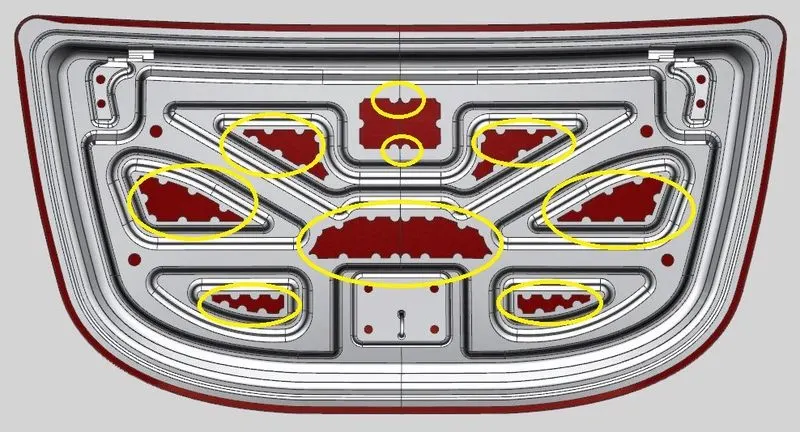
Mastic points
Hing reinforcements: The hood reinforcement attached at underlying hing and striker reinforcement placed between hood outer panel and inner panel.Reinforcement provides better stiffness and impact strength to the inner panel.
- Reinforcement thickness = 1.5mm
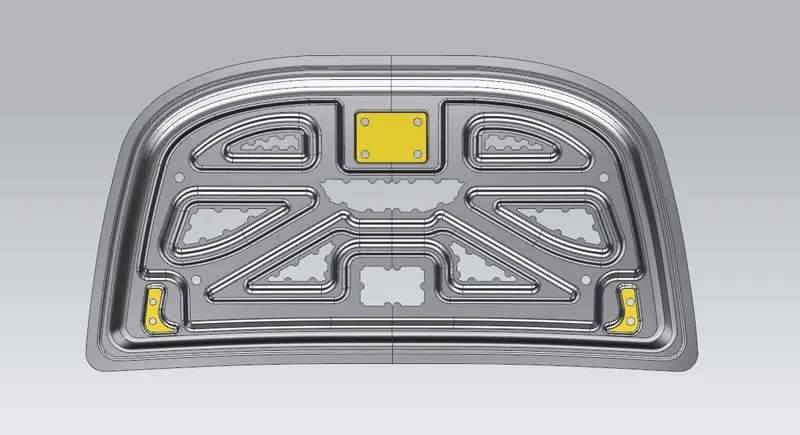
Reinforcements
3.Srtiker: It is attached to the hood and is it needs to be locked in order to kep the hood itself locked. Striker have U-shaped hook,when striker moves down towards the latch the hook arrest the hood with the latch mechanism.
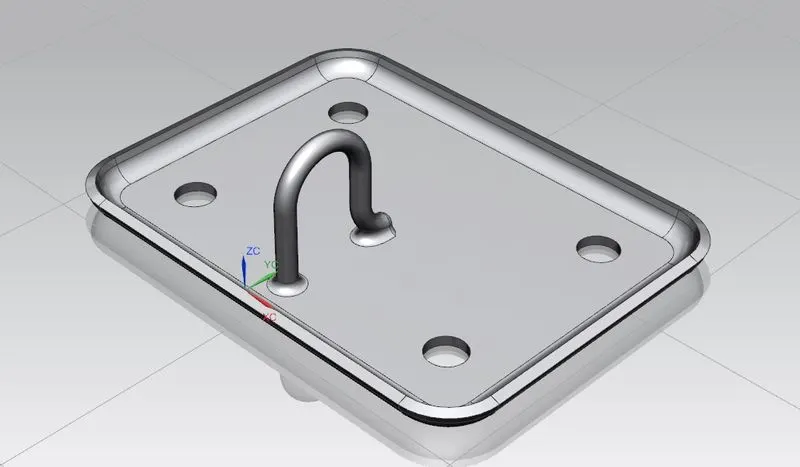
Striker
Hinge assembly: Hinges are used to holds the hood with the engine. One part of the hinge attached to the hood and another one to the engine compartment at fixed positions. Hood will open smoothly and easil
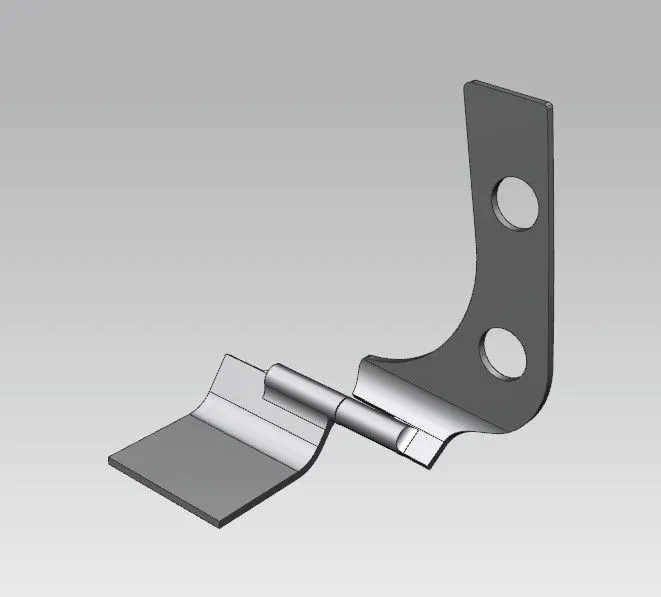
Hinge
Latch and Striker position: The hood latch is vitel component in every automotive.it is located at the engine, directly under the hood striker. Proper alignment of latch and striker is very importent when hood is colosed. If any mistake done in striker placement, the hood was not close properly. For that, we have to draw a latch trajectory w.r.t striker.
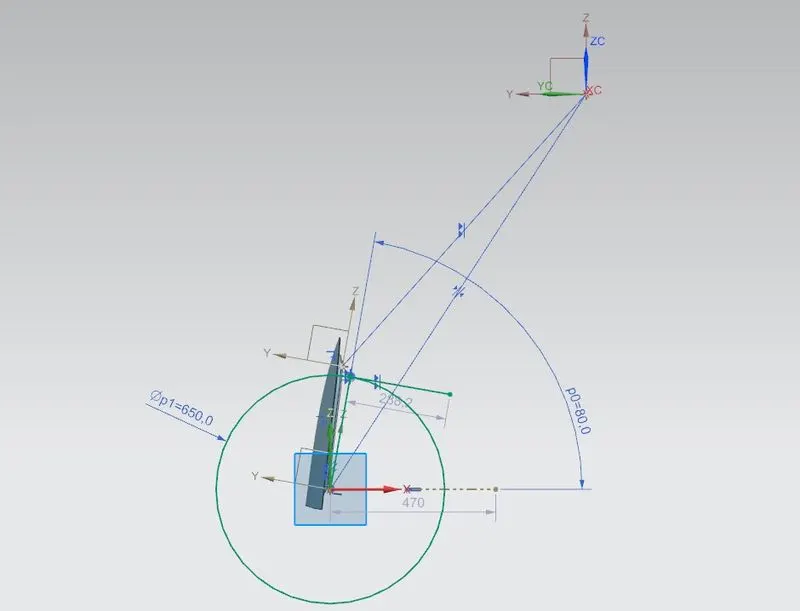
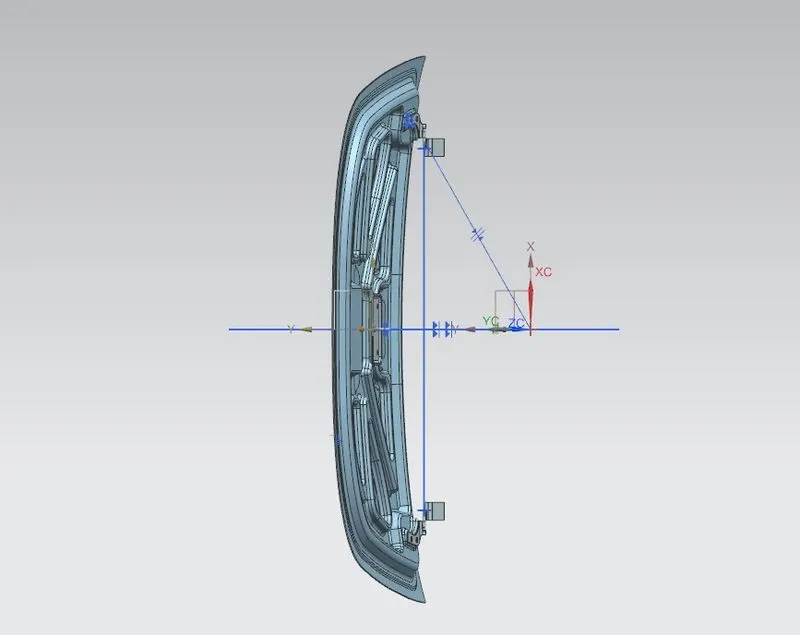
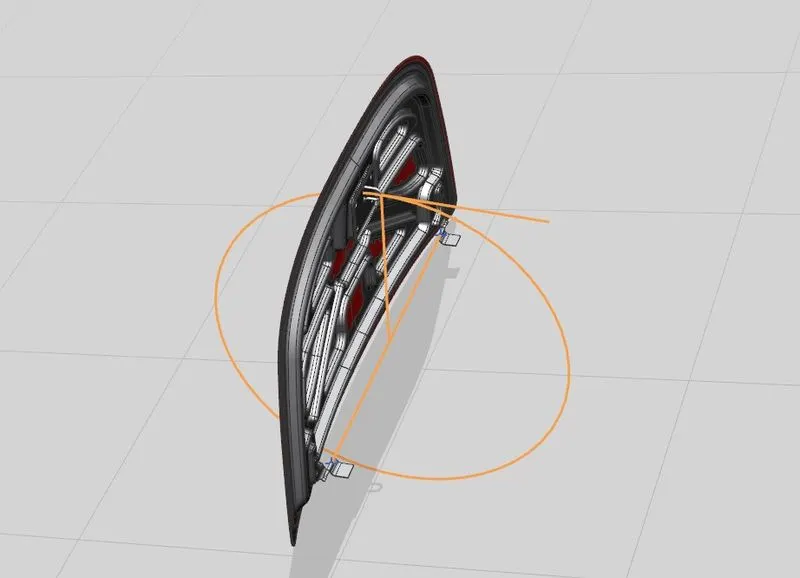
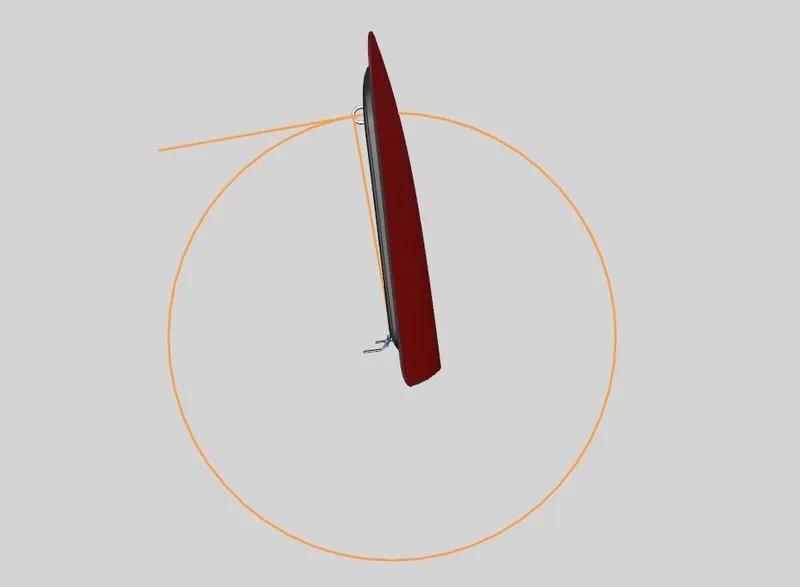
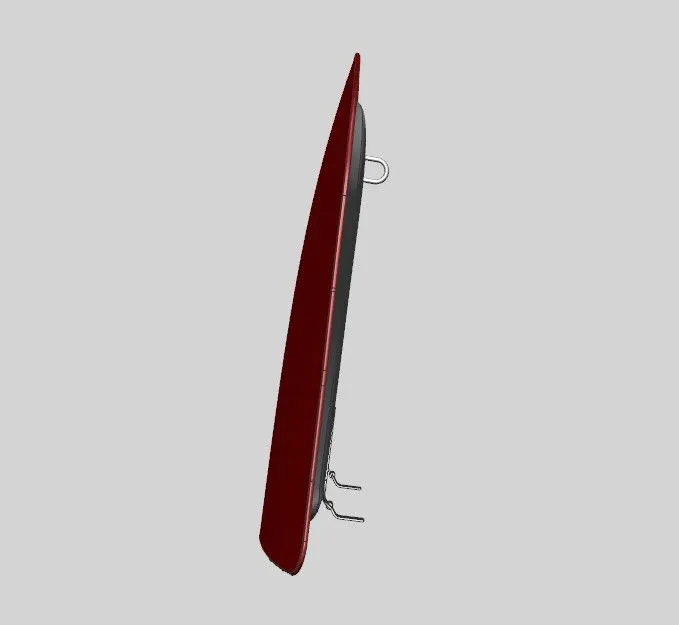
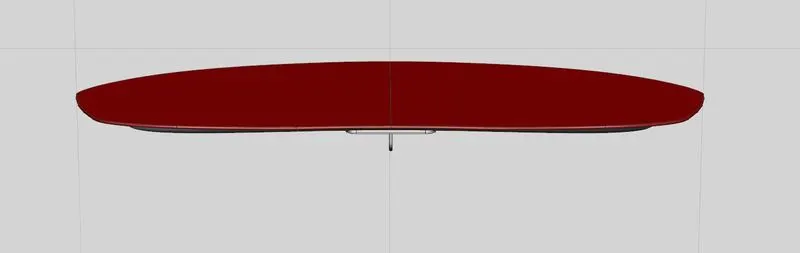
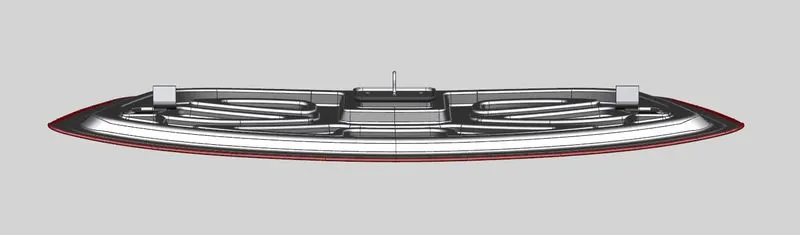
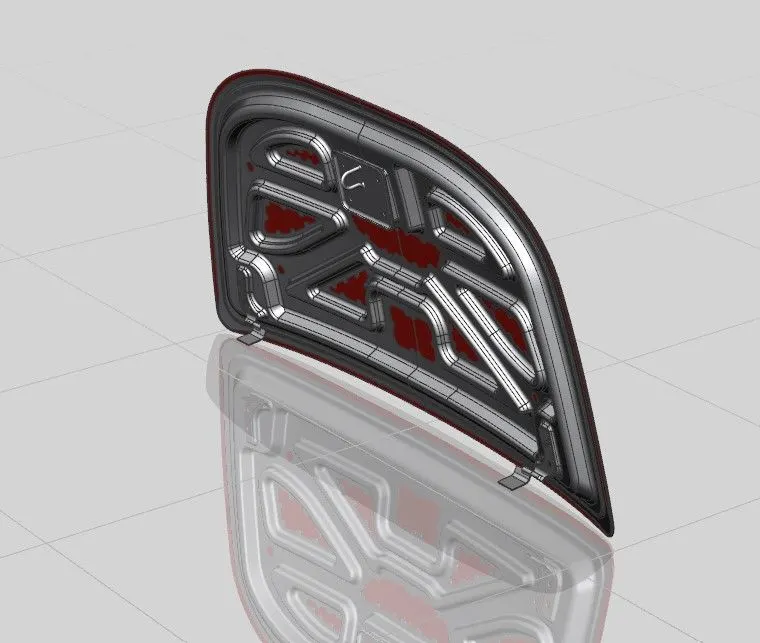
Hood assembly: Hood is formed by assembling all parts together.
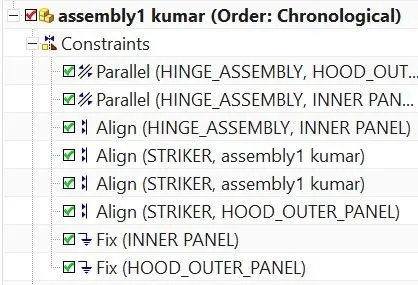
constraints used:
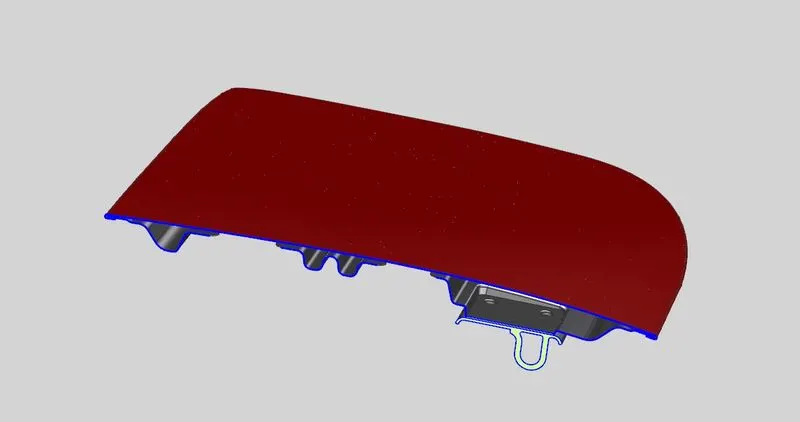
Section :
Left side view:
Top view:
Bottom view:
Isometriv view:
Conclusion: Car Hood is successfully designed by in NX CAD application by following the given data for design.