Hood design-Week 2
Hood Design
Objective
- To Design and assemble the hood outer panel, inner panel and necessary reinforcements by following the master section provided
- To consider the necessary design parameters for safety, DFA and DFM.
Introduction
The Hood/Bonnet is a hinged cover over the engine compartment which can open to give access to engine compartment for maintenance and repair. It is known as trunk/boot in mid/rear engine vehicles. Hoods can be made up of Steel, Aluminum, Carbon Fiber, or Fiber glass and usually the same material used in the body work. It consists of latch and striker mechanism to open and close the hood along the hinge axis.
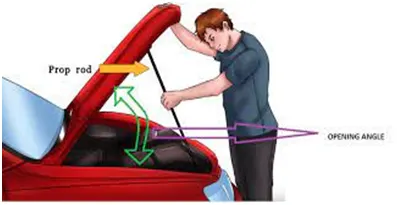
The hood latch handle is located below the steering wheel or beside the driver’s seat for opening the hood. The hood also consists of gas stay/support rod to hold it in open condition. The support rod has to be operated manually and it is comparatively cheaper. It can also be bent to increase the support rod strength. The gas stay is operated automatically when provided little effort providing initial lift force but it is more costly.
The Hood is an important part of a car’s styling and also designed in a way to reduce the air resistance and also provide safety to the passengers and the pedestrians.
Types of hood
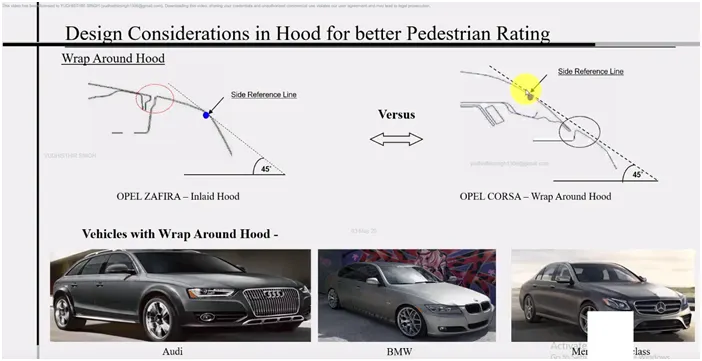
Inlaid Hood
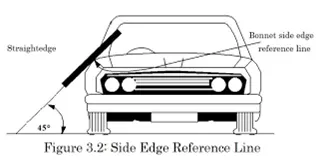
Inlaid hood is also known as Built in type hood. The side reference line of the car lies on the fender, which has more space for head impact. This type of design is can cause more damage to the pedestrians and hence it has lower Euro-Ncap rarings
Wrap around hood
In this type of hood the side reference line of the car lies on the hood and reduces head impact zone and hence has better crash ratings. It most commonly used hood in modern cars.
Design considerations of the hood
- NVH (Noise, Vibration, and harshness)
- Gas stay mount
- Latch and striker mounts and reinforcement
- Hinge mounting and reinforcement
- Pedestrian safety rating
- Euro Ncap regulations (head impact criteria)
Hood Opening Angle/ Head clearance criteria
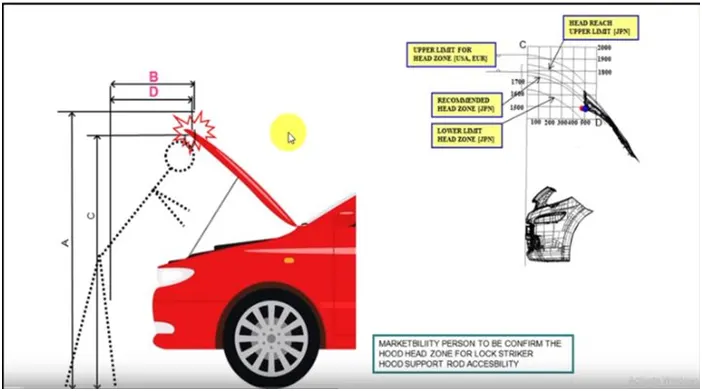
The optimum hood opening angle is essential to provide sufficient open space for engine oil or coolant replenishment. The opening angle is controlled by the length of support control rod and opening angle of hood. The support rod is placed on the engine compartment and after opening is attached to hood or vice versa. It is provided either manually using support rod or automatically using gas stay. The proper opening angle is provided based on the height of the people in the particular region or a country to prevent the head injury from striker while opening the hood. The gas stay/support rood must be placed opposite to the battery for easy installation of battery and other components.
Pedestrian safety
The pedestrian safety is one the main aspects considered while designing the hood. Most of the countries have their own safety regulations based on their average height and their road and climatic conditions. The hood is designed in such a way that if a collision happens the force is distributed towards outside the hood and minimizing the damage to the passenger and the pedestrians.
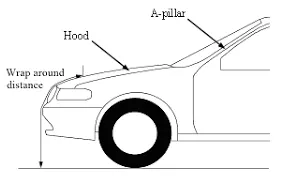
Wrap around distance
It is a measurement of distance from the ground to the head impact zone over the outer surface of the car. It is measured longitudinally from the center of the vehicle from the ground.
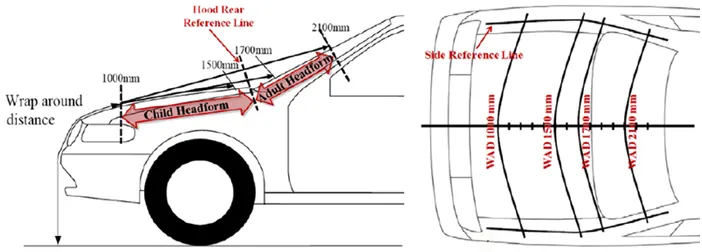
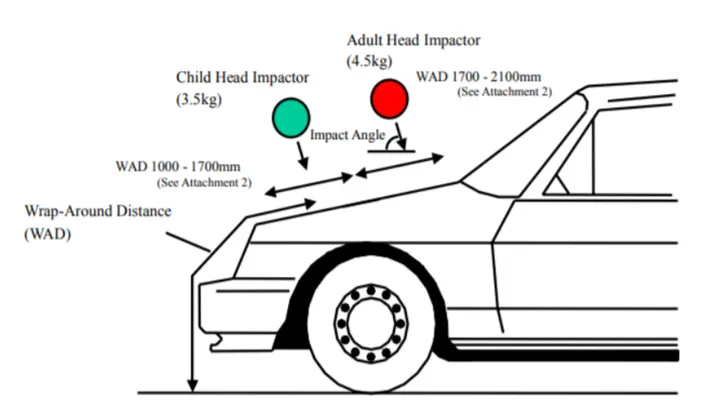
Head impact zone
These are the zones to which head of the pedestrians gets impacted in the event of collision. The child head impact zone is between 1000 to 1700 mm WAD and the adult head impact zone ranges between 1700 to 2100 mm WAD. The equation used for the measurements of the head injury of the whole model for the pedestrian head impact was head injury criteria

Shock Dissipation
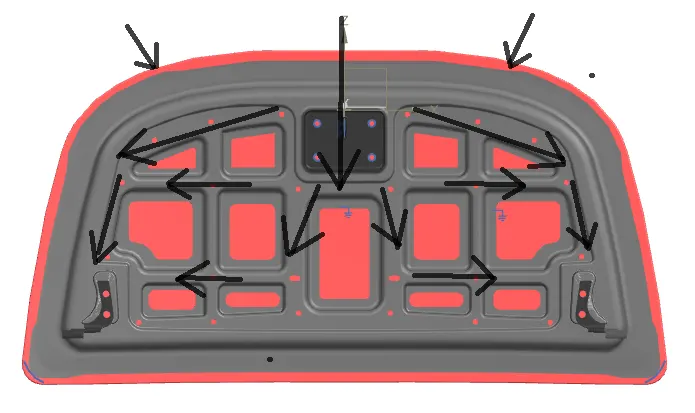
The hood is designed in such a way that the impact force during the collision is dissipated towards the outer part of the hood which minimizes the injury to the pedestrian.
Design input data
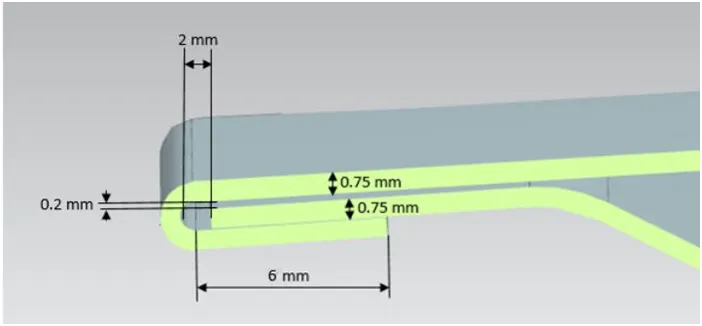
Outer panel thickness = 0.75 mm
Inner panel thickness = 0.75 mm
Reinforcement thickness = 1.5 mm
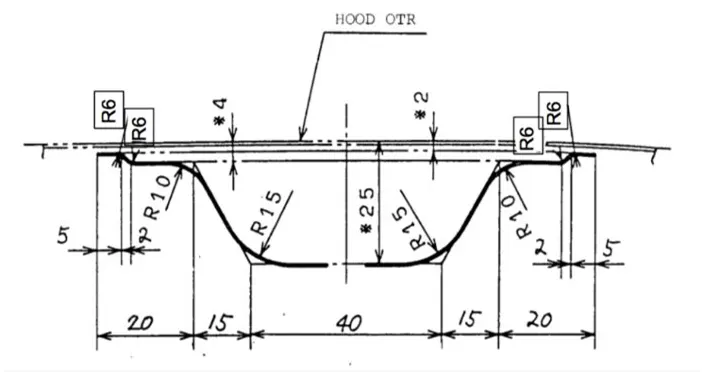
Master sketch
Hemming data
Relief at corners
Front
Rear
Components and their description
Hood outer panel
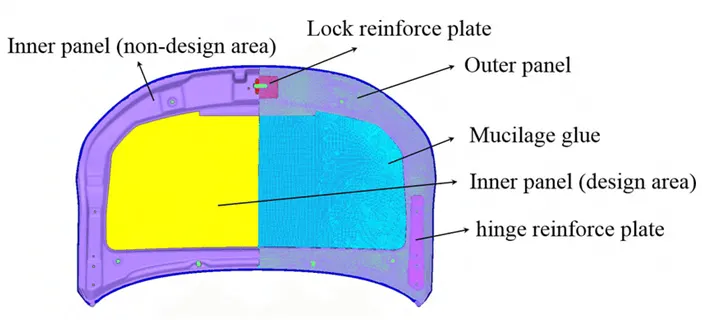
The outer panel is the outer skin of the hood which determines the styling of the car. The input skin for outer panel is provided by the styling team. The major considerations while designing the outer panel is the pedestrian and passenger safe along with NVH considerations. Hemming process is used to join the inner and the outer panel. It is a sheet metal forming process in which the sheets are joined by bending. the outer panel is a class A surface and it is provided by the styling team.
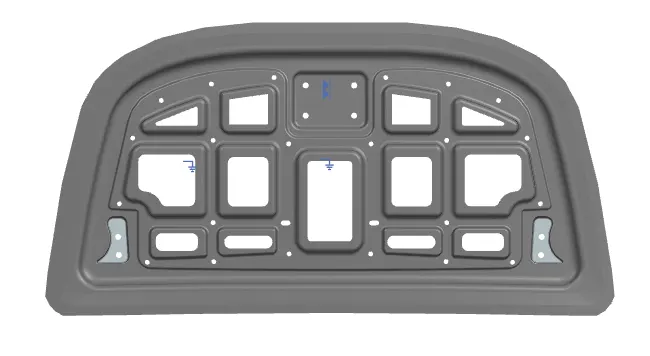
Hood inner panel
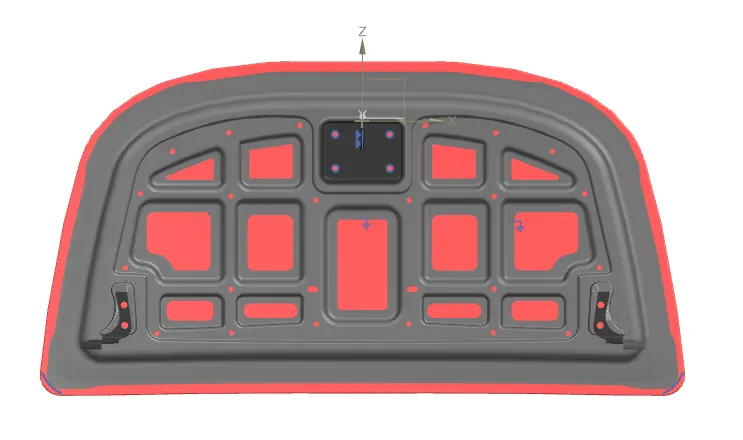
The hood inner panel is used to reinforce the outer panel and add structural rigidity to the hood. Embosses are provided in the inner panel to add strength and also provide safety during the head impact of the pedestrians. The cut out can be made for safety during head impact and also to reduce the weight of the hood. The embosses must be made considering its drawability.
Reinforcement
The reinforcements are provided at some critical areas to increase the strength locally in areas where material is removed for mounting brackets/hinges. Normally the reinforcements are made with thicker materials. It is provided at the hinge and striker mounting.
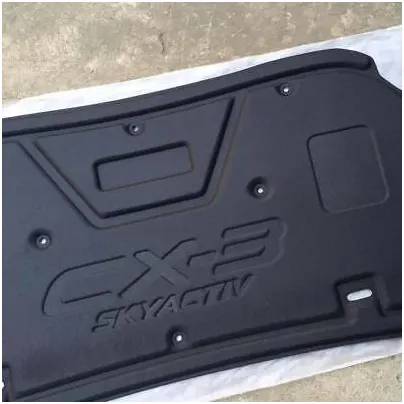
Stiffener pads
the stiffener pad is placed between the outer and inner panel of the hood to improve strength and also reduce the NVH levels. This is generally made of rubberized or spongy materials.
Latch trajectory
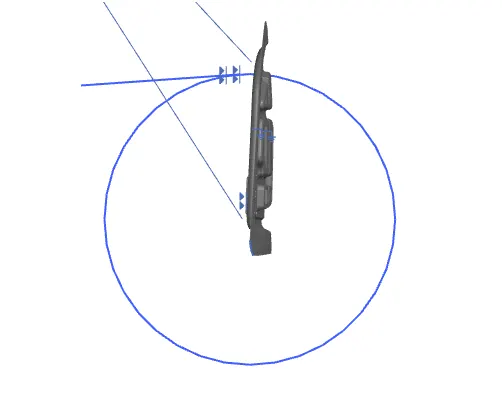
It is the trajectory by which the hood opens, it is represented by drawing a circle from the hinge axis and to the striker. For proper opening and closing of hood the striker axis should be perpendicular to the hood trajectory.
Mastic Sealants
The outer panel is one of the major styling surfaces, so the traditional fastening or joining techniques like welding or nuts and bolts cannot be used. As they could reduce the cosmetic looks, hence a epoxy based adhesives are used for joining the outer panel to the inner panel. This can be used to bond steel and aluminum sheets. They provide increased stiffness and enhanced corrosion protection of hem flange. The applied mastics sealants have strengthening or bonding influence up to 80 mm diameter.
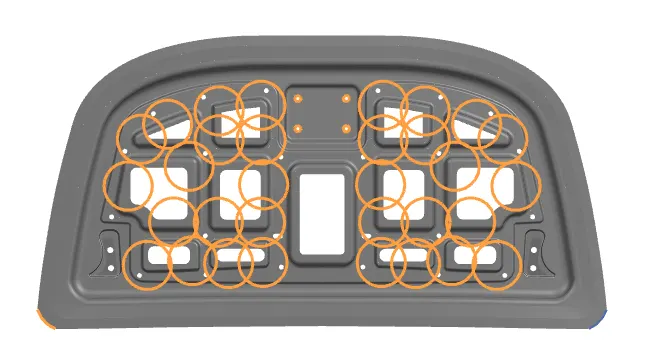
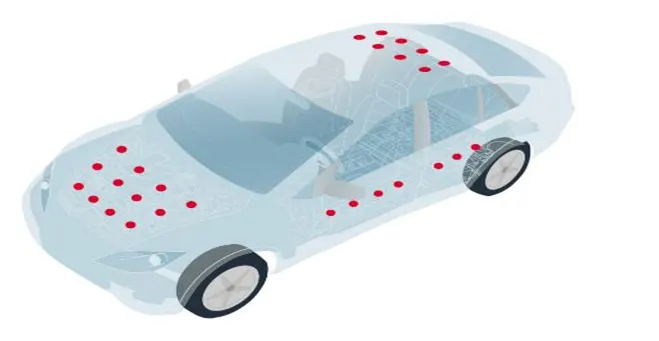
mastics application points
Relief
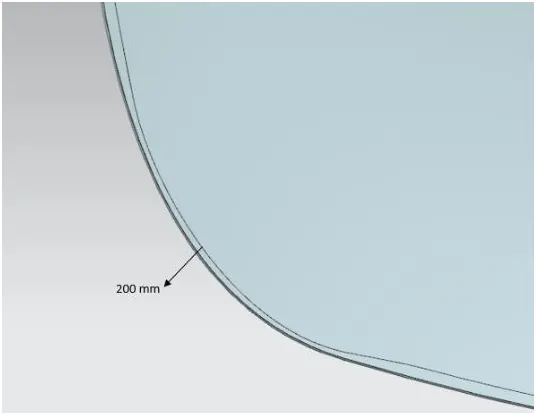
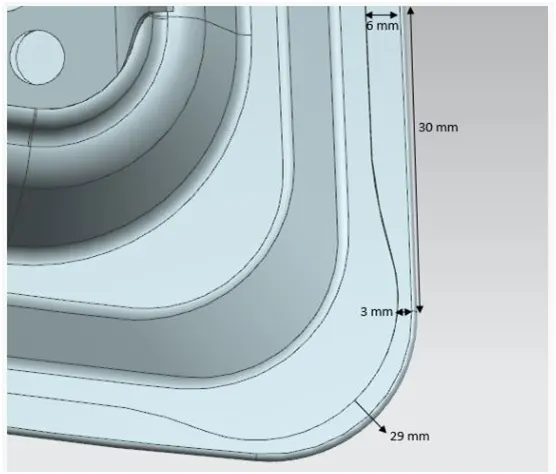
Relief is provided at the edges to prevent spring back effect.
Manufacturing Processes
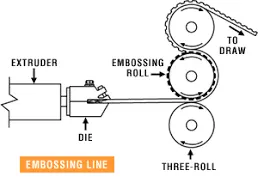
Sheet Metal Embossing
It is a stamping process for producing raised or sunken design in sheet metal. It is done by stamping through male and female dies or passing a sheet of metal through the rollers to get the desired pattern. It is accomplished with combination of heat and pressure.
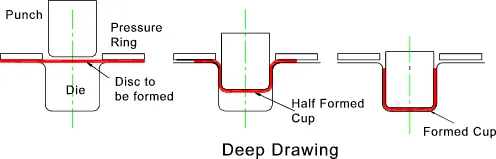
Deep Drawing
It is an sheet metal forming process in which the blank is radially drawn into forming die by the mechanical action of a punch. When the drawing depth of the drawn part exceeds its diameter it is called as deep drawing. This is achieved is achieved by passing through the series of dies. The shape of the sheet metal blank is transformed with material retention.
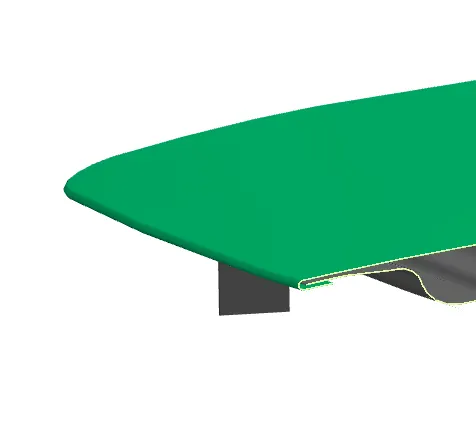
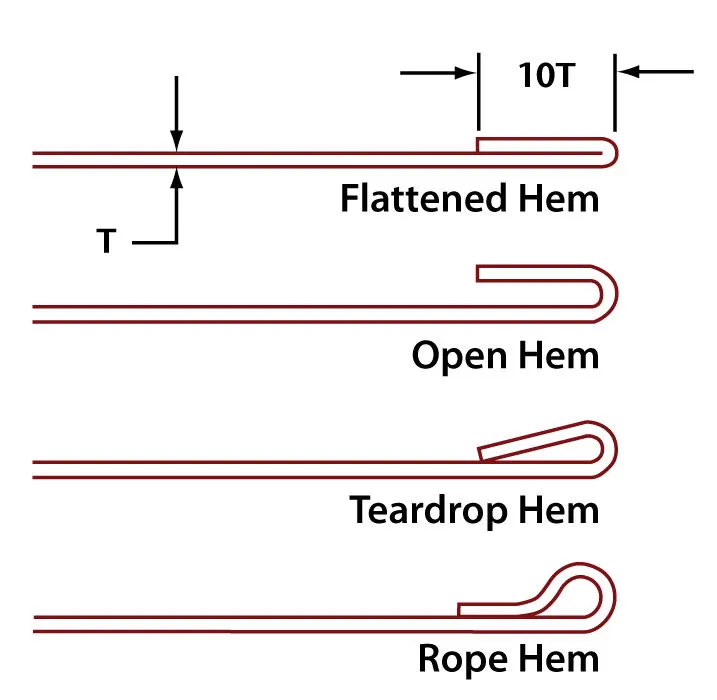
Hemming
Hemming is a sheet metal working process in which a sheet metal edge is rolled over into itself, while a seam joins the edge of two materials. Hems are used to reinforce an edge, hide burrs and rough edges and also improve appearance. In automotives like car the inner and outer panels/closure are put together. The flange of the outer panel is bent over the inner panel.
Types of hemming
Press hemming
Press hemming used hydraulic stamping presses. It can be used to produce more than one part in the same line, but they are restricted to flat panels and are costly
Table top hemming
Table top hemming is used for medium to high production volumes, with very short cycle times. It gives good quality but one panel at a time with relatively high cost
Robot/Roller hemming
Robot hemming is used for low production volumes. The industrial robot is integrated with roller hemming head to provide a flexible method for forming closures in progressive steps of bending. It is low in cost, simple and quite in operation
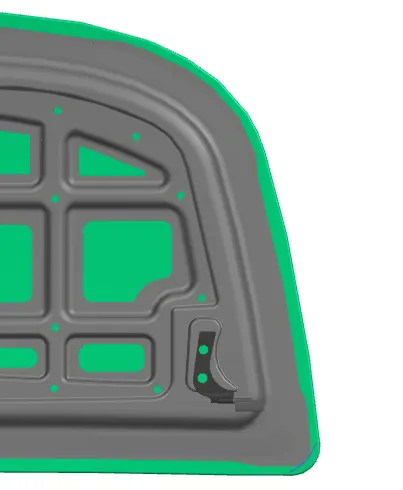
Draft Analysis
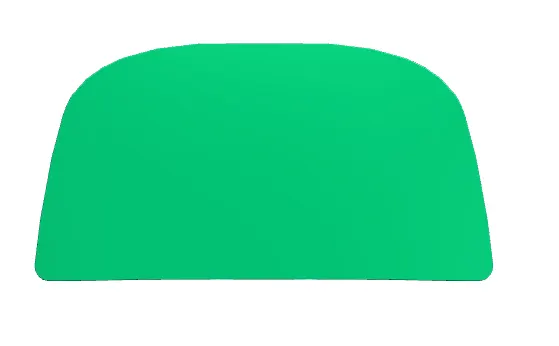
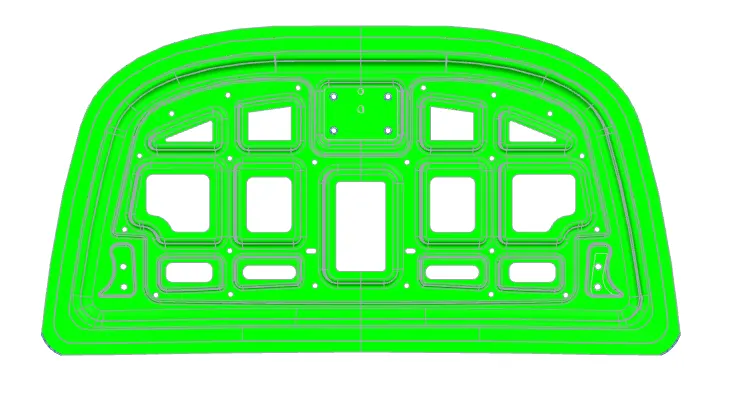
Draft Analysis is done to check the negative or back draft in he model. Since the faces are shown in green color the part is suitable for manufacturing.
Assembly Images
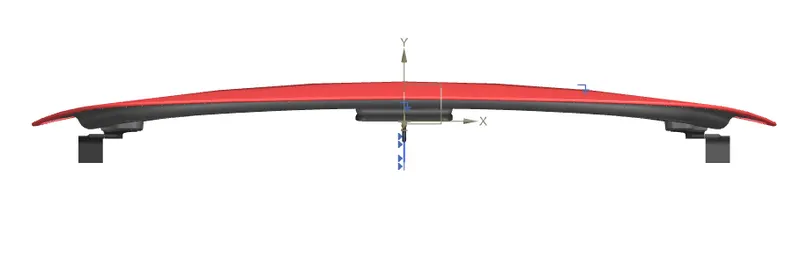
Conclusion
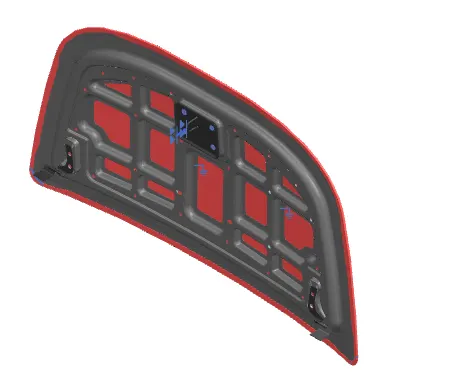
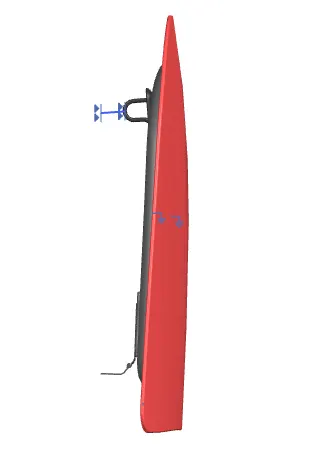
Thus the complete hood assembly containing inner and outer panel is completed by designing with considering the manufacturing possibilities with reference to the master sketch. The reinforcement and embosses were provided to reduce weight and improve the strength of the hood. The Euro Ncap safety regulations for pedestrians were also learned.