Hood Design
HOOD DESIGN
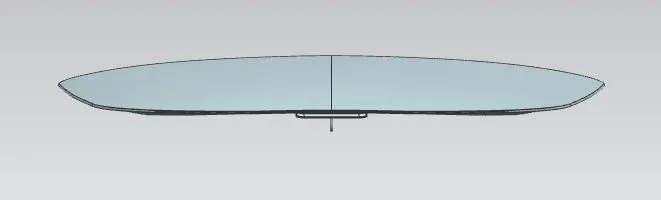
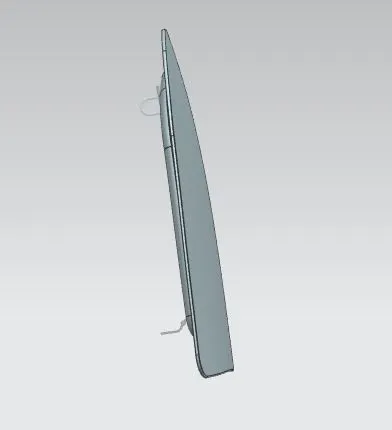
The hood is the hinged cover over the engine of motor vehicles. Hoods can open to allow access to the engine compartment for maintenance and repair. The support for the hood is provided by support rods or gas stays.
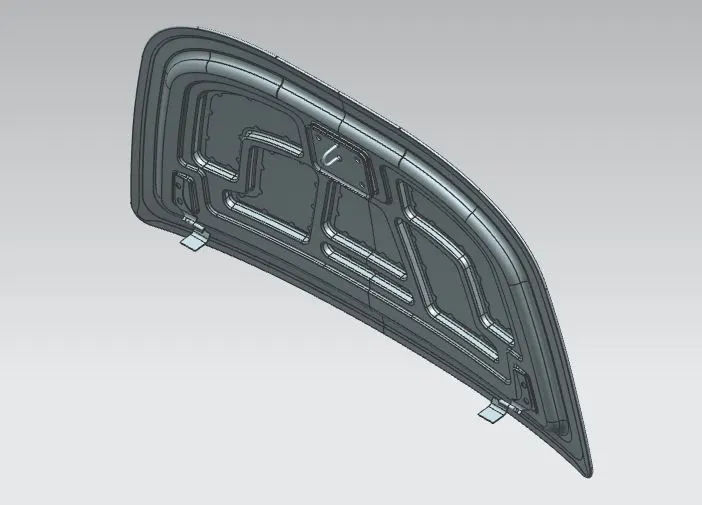
Components of Hood:
- Outer Panel
- Inner Panel
- Latch & Striker
- Hinge
Thickness Used:
- Outer Panel Thickness = 0.75mm
- Inner Panel Thickness = 0.75mm
- Reinforcement Thickness = 1.5mm
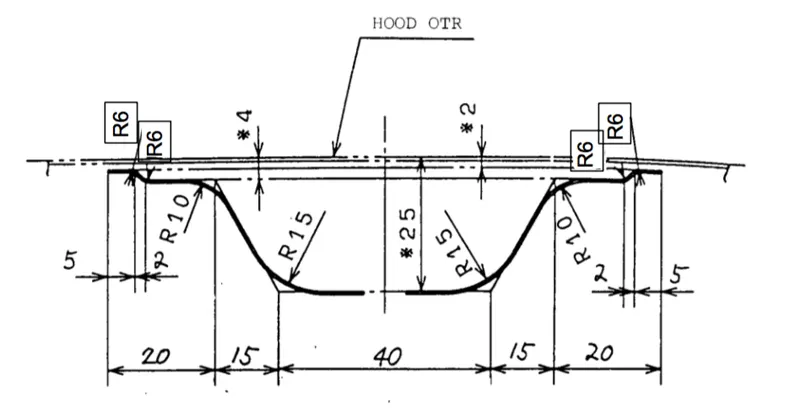
Master Sketch:
Wrap Around Distance:
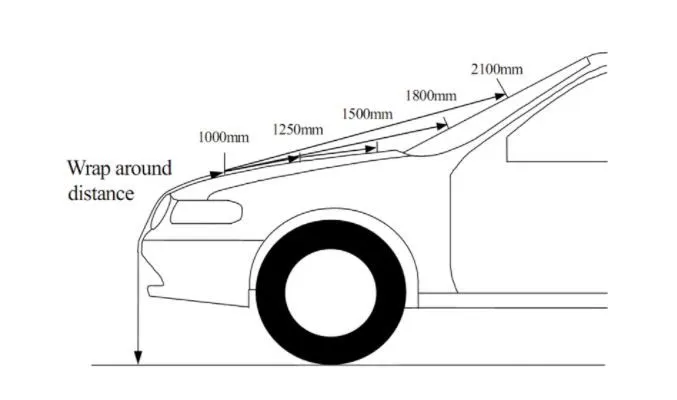
When a car crashes on a pedestrian, the whole body wraps around the front shape of the car and the head impact occurs on the windscreen. The distance in which the head impacts the car from the ground is called (WAD).
Child's head impact zone-1000mm to 1700 mm (3.5 kg)
Adult head impact zone = 1700mm to 2100mm (4.5 kg)
Outer Panel:
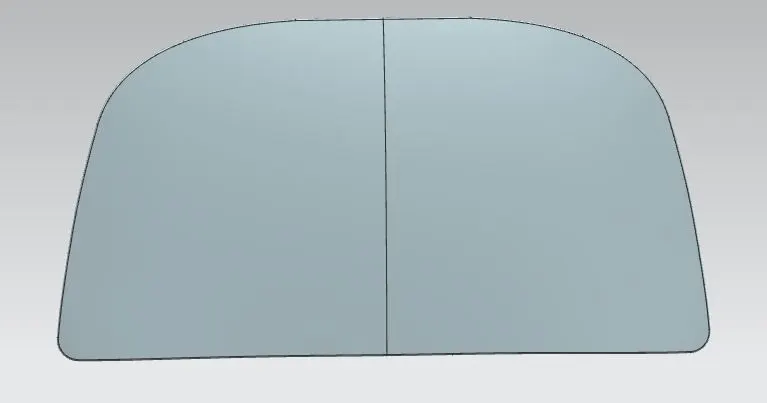
The outer panel serves more as an aesthetic for the automobile overall presentation and to channel airflow over the vehicle. It is very thin to provide flexibility for safety during collision with pedestrians. The outer panels are made of steel or aluminium.
Inner Panel:
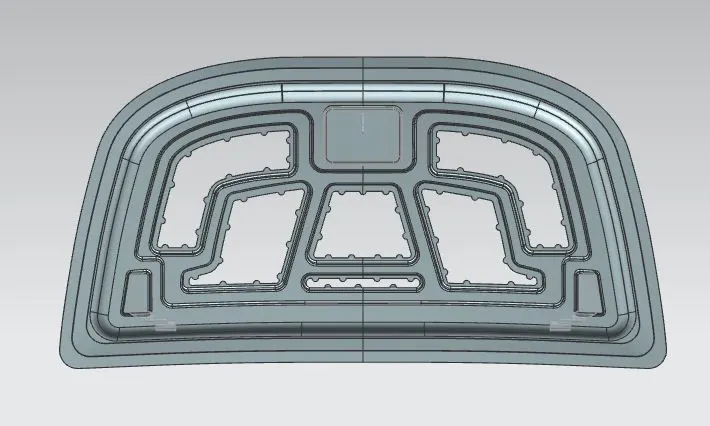
The inner panel lies hidden below the outer panel. The inner panel is comparatively thicker than the outer panel. The inner panel needs to be designed properly to provide safety to the passengers of the car as well as the pedestriants on the road. The inner panel serves as a structure for the vehicle to dissipate and channel shock waves at the event of crash.
Mastic Data:
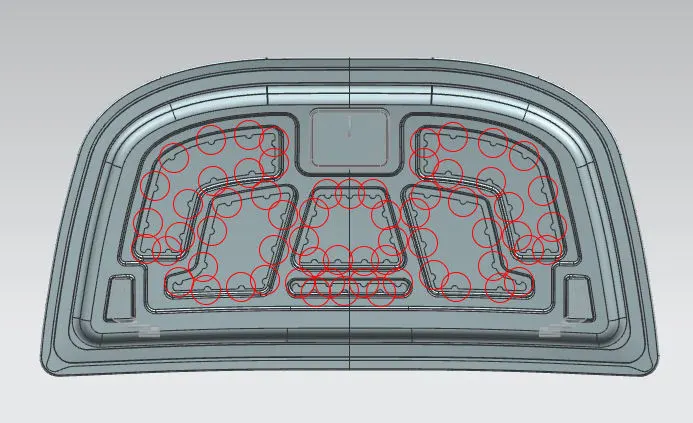
Mastic sealants are used as a gluing agent between the inner and outer panels. It is also used to improve the stiffness of the area. It plays a vital role in reducing the NVH. The gap between the inner and outer panel is 4.5 mm. So, the mastic sealant will occupy 4.5 mm gap. Mastic sealant will cover 80 mm diameter area from the centre of the mastic point. Stiffness will be increased in this circular zone.
Reinforcements:
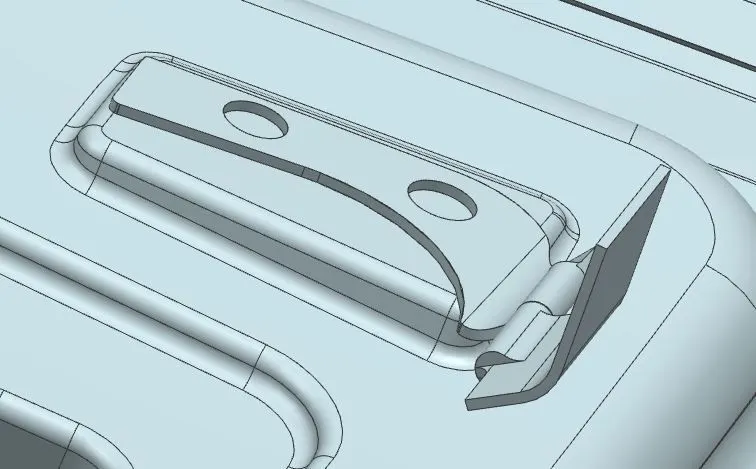
The hood possesses some added weights like hinge, latch and striker. When extra weight is added to the inner panel, it loses some strength locally. To compensate this loss, reinforcements are added.
Latch Trajectory:
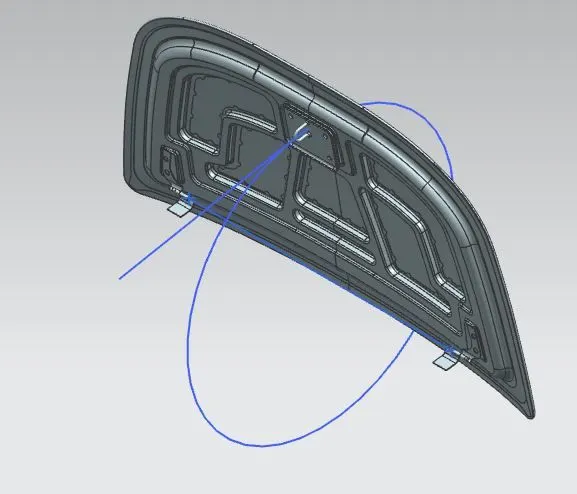
Latch trajectory is used to position the striker and find a suitable opening angle for the hood. The latch and striker has to be positioned tentatively, with the help of hinge axis taken. Whenever e swinging part is designed its trajectory and positioning of components have to be checked. The hinge is positioned on the emboss surface using assembly constraints. By using mirror assembly tool the other side of hinge is placed exactly same the before. Thereby sketch a hinge axis which is co-axial for both the hinges. Mark the middle point of the hinge axis. This hinge axis point is zero weigh point. Now the striker is already positioned in the pre-determined area, this idea of placing can be capitalized from a previous car. This method is going to validate whether the position is correct or wrong. Now the radius is taken as the distance between the hinge axis point and the striker midpoint. After drawing a circle two things can be inferred from the circle. The circle is the trajectory of the hood opening and closing. By drawing a line tangent to the point normal o the midpoint of striker and inferring whether the striker is locally normal to the tangent. If it possess local tangency then the latch and striker arrangement is validated to be correct.
Shock Flow:
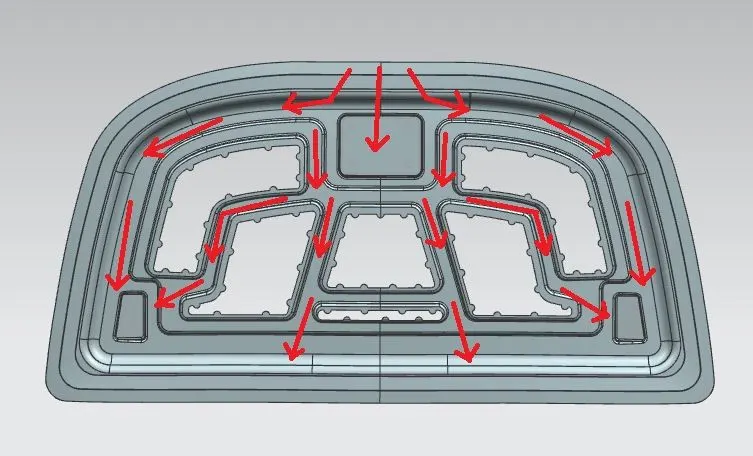
The inner panel of the hood is designed in such a way that the shock waves are dissipated to the sides of the inner panel. This prevents possible damage to the passengers during a collision by allowing the force to act along the shock flow.
Manufacturing Process:
1.Hemming:
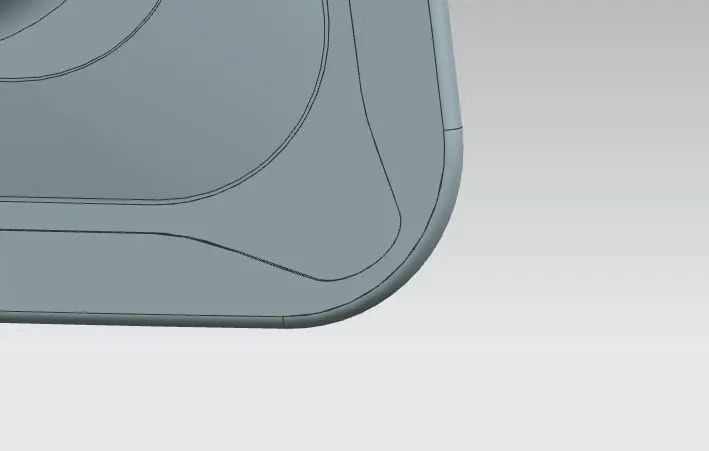
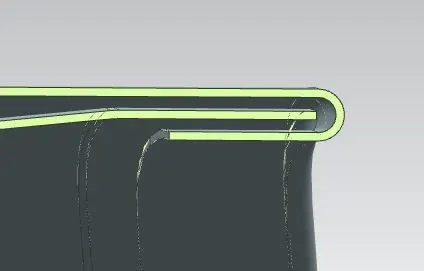
Hemming is a technology used by the automotive industry to join inner and outer closure panels together (hoods, doors, tailgates, etc.). It is the process of bending or folding the flange of the outer panel over the inner one. The accuracy of the operation affects significantly the appearance of the car’s outer surfaces and is therefore a critical factor in the final quality of a finished vehicle. There are 3 steps in hemming. They are as follows.
- Flanging
- Pre- Hemming
- Final Hemming
Hemming is performed in order to:
- Achieve a better final geometry in the vehicle's part
- Add resistance and rigidity to the part
- Allow a safe handling of the part
Relief is given on the corners of the hood to avoid springback issues.
2.Embossing:
Embossing is a metal forming process for producing raised and sunken design or relief in sheet material by means of matched male and female roller dies, theoretially with no change in metal thickness or bypassing sheet or a strip of metal between rollers of the desired pattern. Embossing is generally used to increase the stiffness of the sheet metal part and to transfer the shock towards the hinges using embosses.
3.Deep Drawing:
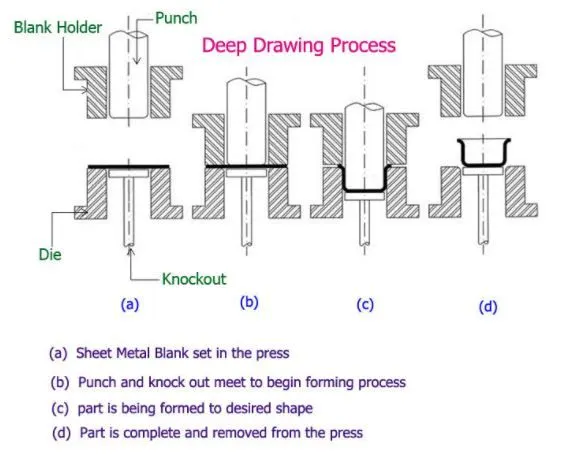
Deep drawing is a formation process that occurs under a combination of both tensile and compressive conditions. A flat sheet metal blank is formed into a hollow body open on one side or a hollow body with smaller cross section. Deep drawing is popular among companies which aim for higher precision at larger volumes.
Front View:
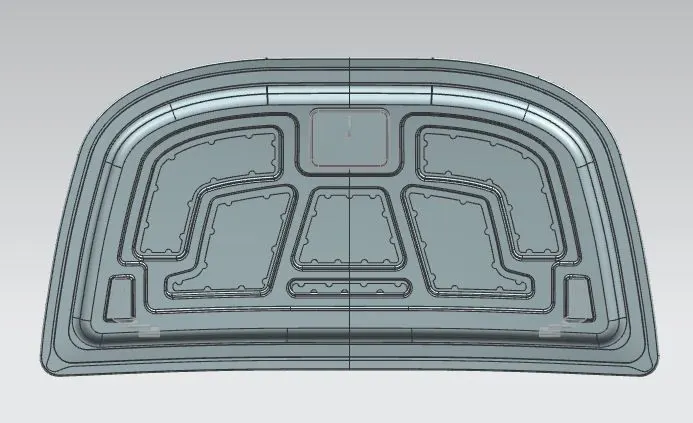
Top View:
Side View:
Isometric View/ Hood Assembly:
Conclusion:
Thus a detailed report on the design of hood is done based on the given design parameters.