Hood design-Week 2
Hood Design
- What is a "Hood"?
Hood (as per North American English) Or Bonnet (as per Commonwealth English) is the hinged cover over the engine of motor vehicles. Hoods can open to allow access to the engine compartment, or trunk (Boot in Commonwealth English also called Dickey in Indian English) on rear-engine and some mid-engine vehicles) for maintenance and repair.
OR
The Hood is an opening body panel that covers the engine in a front-engine vehicle. The hood is also considered as another type of door in a vehicle as it consists of an outer panel and inner panel. The inner Panel provides strength and outer panel functions as Metal cover.
Hood covers the engine compartment and protect it from direct external atmosphere.
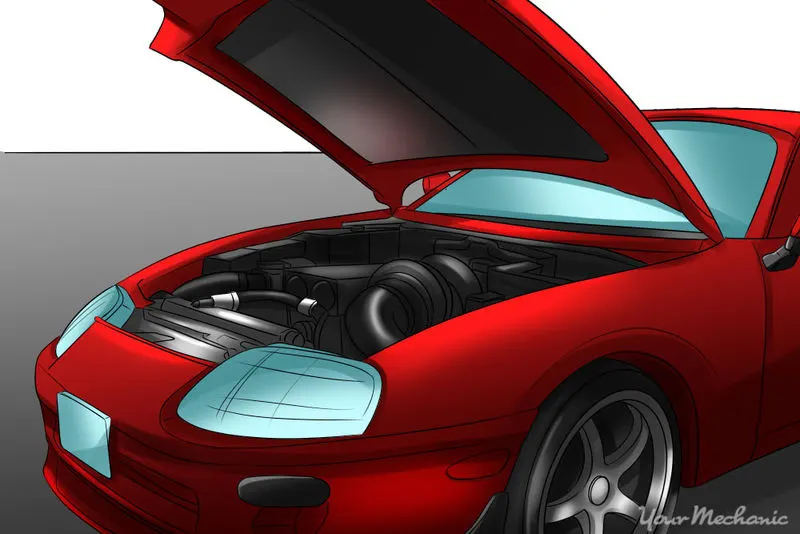

Hood is arguably the most important BIW component of a car when safety is concerned. It plays a major role in the aftermath consequences of Pedestrian accident and frontal Cash as it is the part that directly comes in contact with either Pedestrian or Another vehicle during an accident and is responsible for transmission of forces created due to strike or collision. Hood of a car dissipates the forces outside the car body rather than sending them inside the body to prevent damage to car and injuries to humans. As there is solid engine compartment below the hood its designing criteria becomes of much more importance because If there are no consideration in design of Hood regarding the parts of engine compartment than specially pedestrian can get severe injuries if he/she collides with a running car and solid parts of engine compartments transmitting forces through a simple hood metal skin which is not more than 4-5 mm at max (including the hood inner and outer panel, reinforcements ). That is why many modifications are made in hood design such as distance between hood inner panel and outer panel, embosses etc.
There are head impact zones in car hood (Child Head Impact zone and Adult Head Impact zone) having certain ranges. To estimate the potential risk of head injury in the event of a vehicle striking an adult or child Impact tests are carried out using an adult head impactor. Impact sites are then assessed and the protection offered is rated as good, adequate, marginal, weak or poor. The procedure promotes Energy absorbing structure, deformation clearance and deployable protection systems such as pop up bonnets and external airbags.
To prevent head injuries from impacts of the occupants ' heads on vehicle interior parts, these parts need to be designed in a away that allows sufficient deformation space to reduce the loads on the heads.
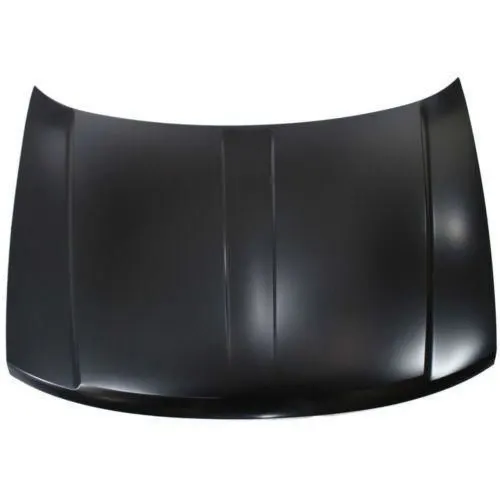
- Hood Outer Panel:- It is the metal covering of a hood. Generally Structural steels are used as a material for hood outer panel but now Aluminium alloys are also used because Alluminium alloys have a medium maximum stress which is very recommended for main hood material in order to minimise head injury and also aluminium is lighter in weight. It is situated above Hood Inner panel and Engine Compartment.
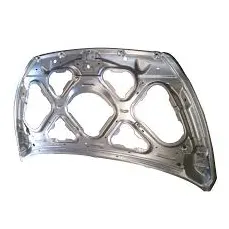
- Hood Inner Panel:- It is the most important part of hood assembly. It is situated between the hood outer panel and the engine compartment. Basically It is like a shadow of Hood outer panel but before it attached to the hood outer panel or applied to the location lots of operations are done on it to bring some definite changes in order to get the desired effect. In most of the cases its material is same as that of hood outer panel such as Structural steel, Aluminium, Carbon Fibre etc. The distance between Hood inner Panel and outer panel is not uniform throughout its length. Its minimum around <5 mm where the mastic sealants are to be applied in order to Keep them together. and as far as 25 mm ( mostly in the middle above the engine of the car) so that during an accident hood have enough space to deform and prevent the injury.
- Note:-Thickness may vary from Car to car but mostly Thickness of Hood Inner Panel and Hood Outer Panel is below 1mm (0.75 mm mostly) while the reinforcement thickness may exceed to 1.5 - 2 mm to provide that extra strength. Reinforcements are used to provide the extra strength to any area or part. When we add some weight to a particular part then that area loses strength locally so to compensate that strength Reinforcements are introduced intentionally. In Hood When Hinge and Latch are added over the embosses on Hood Inner Panel that area loses strength so Reinforcements are used with Hinge embosses and Striker Emboss as separate part. Hinge Reinforcement have Thickness around 1.5 mm while striker reinforcement have thickness around 1mm.
* Why does Inner Panel have holes?
Reason :- Trimming the sheet and scraping some metal away reduces the weight of the metal component which is one of the design intention of BIW Engineer and a global demand too. These holes have intricate shapes. There is no standard for the shape of these holes in hood inner panel. Mostly we find different different shapes of inner panel among different cars. But one consideration is taken that there should not be sharp corners which might cause injury. These holes provide passage area for draining of E coatings, paints , primers etc. (Holes are made intentionaly all over the BIW of a car for this purpose and then closed by aplying sealants). After Trimming the sheet the hood Inner panel retains nearly the same rigidity.
* Why does Inner Panel have Embosses?
Reason :- Emboss is a raised design or mark on the surface of Hood Inner Panel. On the inner panel of hood we add more embosses to enable the stiffness of the car. Wheneve a collision happens force wil go straight to the cabin. So to educe the force Embosses are employed.Embosses dissipates that force outside the car the design and shape of embosses are such that the direction of force changes towards the hinge. So due to this the driver and the person sitting in the cabin will experience a drastically reduced energy which is produced from the collision. There is no specific criteria for these embosses
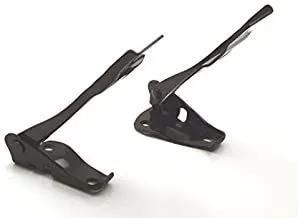
- Hinge:- The Hood Hinge is a mechanism that makes it possible for us to open and close the hood. This part is similar to hinges of doors and windows which allows their movement. Similarly hinge allows Hood panel to move up and down. There are always to hines in Hood assembly. Hood assembly has bilateral symmetry along the centre line of hood. It is essentially a pivot and bracket mechanism that attaches the hood panel to the body of car.
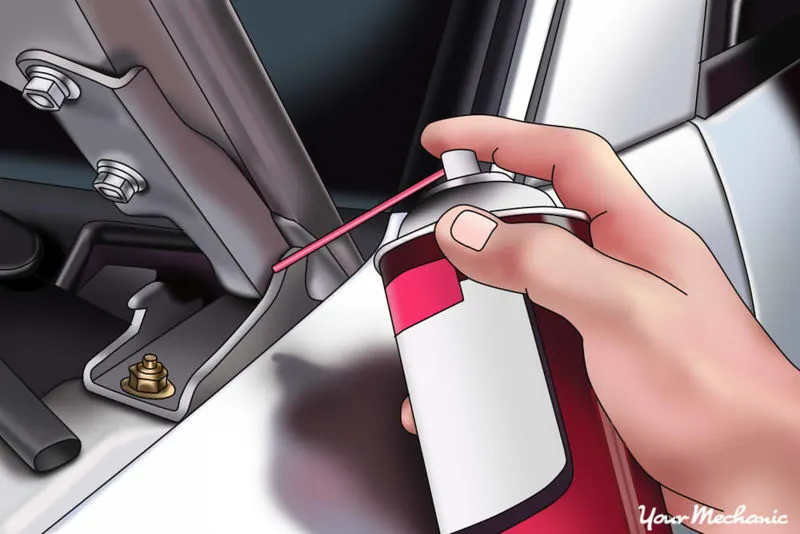
- Latch and Striker:- Hood Latch is a catch that holds the hood of a car and catch is a fastener that fastenes or locks the hood. A vehicle hood latch and release mechanism is latched when the hood striker engages the latch portion of the mechanism as the hood is moved to its closed position.
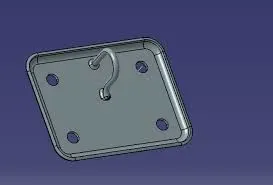
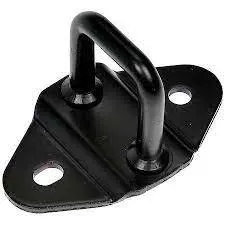
The hood release handle inside the vehicle is made of plastic and is attached directyly to the hood latch cable. The cable has a protective lining to prevent corrsion of the cable where it is exposed to the elements. The cable is designed to move inside the lining back and forth to accomodate the pulling and releasing motion of the handle and secondary latch. The opposite end of the cable is attached to the secodary latch near the bottom. When the tension is applied to the cable from the hood release handle, it pivots the secondary latch, which pulls away from a retaining seat located under the hood. By design the seconday latch then releases the hood a few inches before a safety latch takes over. The safety latch is integrated in the hood latch system in case of accidental release of the handle inside the passanger compartment during operation of the vehicle.
When the driver releases the hood latch (typically controlled by pressing a button from inside the vehicle), the hood is popped open and the driver then can raise the hood. The hinges control the up and down movement of the panel limitig how far it can a swing open while also supporting the weight of the hood when it is proppedopen for a longer period.
We tentatively position the hinges then we get a center hinge axis point. WE have a predefined area (carryover study from parent vehicle) where we fix our Latch and striker to Hood inner panel then we have to validate that this area is right or wrong. Then the radius is between the center point of striker and the center point of hinge axis and with that radius we draw a CIRCLE . Then this circle will be the Trajectory of Hood Opening and Closing. Also at this position if the striker is exactly perpendiculat to the Trajectoryat this reason locally then the Hinge Position is correct. If not we need to move the center axis of hinge to get the proper position.If the perpendicularity is not achieved with the trajectory then the proper closing of hood will not be possible.
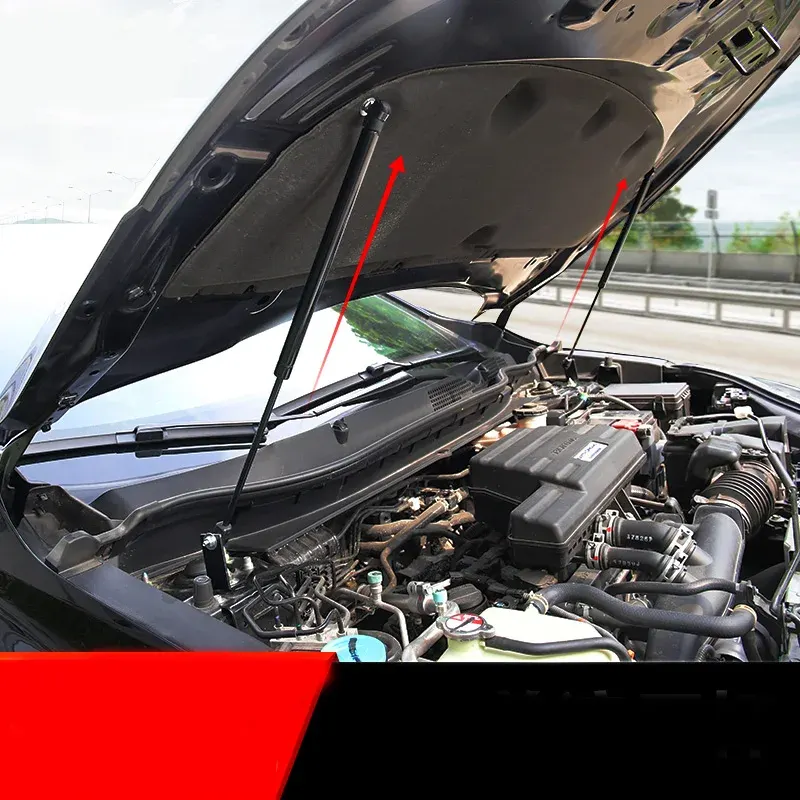
- Hood Stay:- An automotive engine hood is arranged to be open for the purpose of inspescting the the engine room, replinishing the cooling water and / or engine oil, changing parts, making repairs etc. A hood Stay is used for this purpose to keep the hood in its open position even if external force is abruptly generated due to vibration, wind and can facilitate the opening and closing operation of engine hood. Its mainly of two types :-
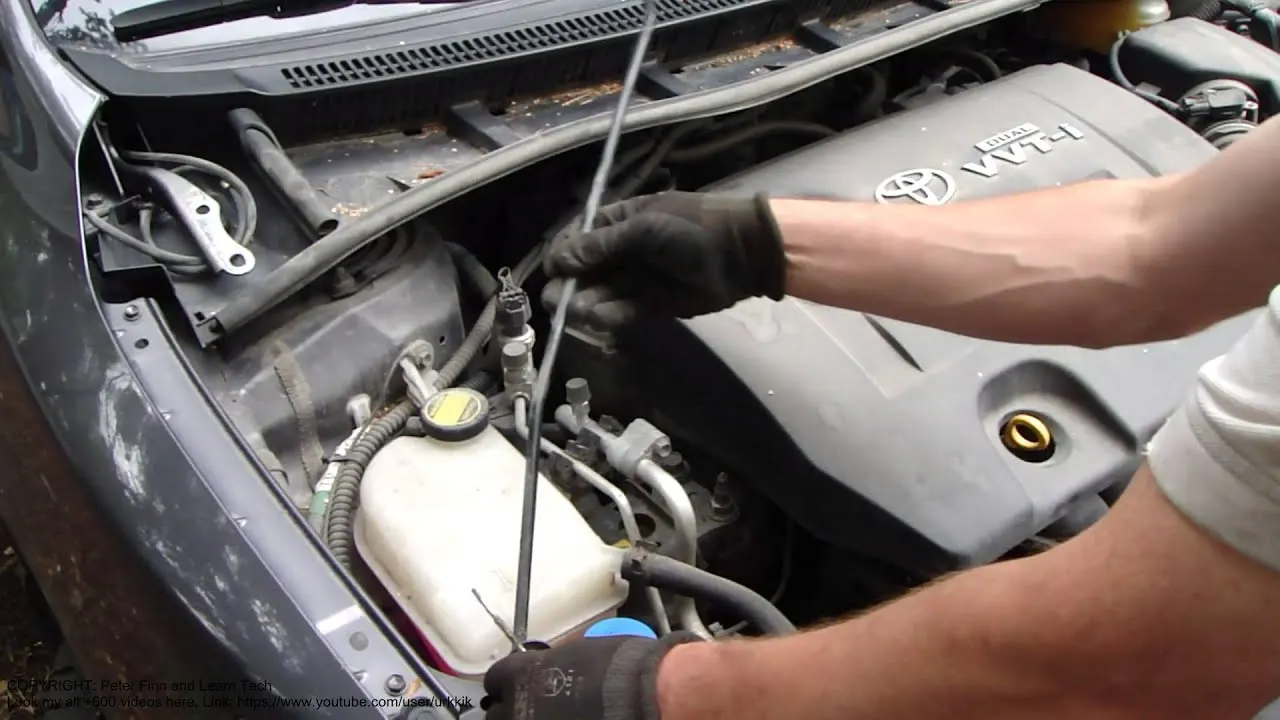
1. Support Rod:- A device for supporting the engine hood of a motor vehicle in its open position by means of a rod. It is simple and have moderate cost. it is generally employed when the weight of hood is less than 8kg. Its own weight is around 150-300gm. But its disadvantage is when striking to the automotive body panel, to leave scars which are very likely to cause rust. Also the metal rod becomes too hot sometimes due to the heat of the engine compartment and becomes difficult to grip it with bare hands.
2. Gas Stay:- A device for supporting the engine hood of a motor vehicle in its open position by means of an actuator which is activated by gas. Its cost is more as compared to Support rod. No man power is required in this case . It is mostly used when the weight of the hood is more than 8 kg . Its own weight lies between 750-1000gm. After releasing the hood latch the hood is popped open and just a small push will open the hood completely. Even in cars with a support rod as hood stay we can see a Gas Stay at back door of a Car.
- Mastic Sealants :- Sealants are materials (that can have little or no flow characteristics and stay where they are applied or thin and runny so as to allow two materials or joints.
- It fills a gap between two or more substrates.
2. It forms a barrier through the physical properties of the sealant itself and by adhesion to the substrate.
3. It maintains sealing properties for the expected lifetime, service conditions and environments.
Mastic sealant is an example of a sealant usually in liquid, if not in thick glue, or paste form. Mastic sealant can be used to either join one surface to another, or protect the area to which it is applied (cars and boats). And because it stays flexible even after it cured, it is ideal for projects requiring the joined materials (surfaces) to have some movement. It is used for joining the hood inner panel with the outer panel due to its heat resistant properties and the ability to seal and form and a strong bond, applied using a mastic sealant gun.
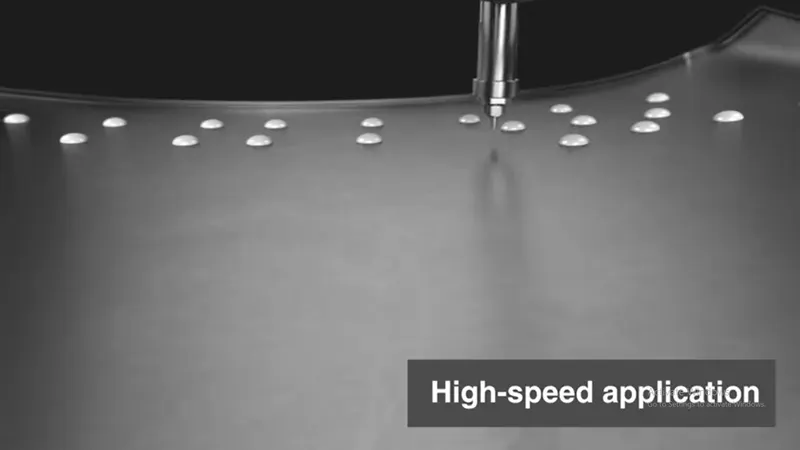
Every Mastic Sealant has the tendancy of improving the strength locally at around 80 mm dia. Mastics are positioned in such a way that most of the hood area is covered. To improve NVH (Noise Vibration Harshness) criteria Mastic Sealants and Stiffner Pad are introduced in between the hood panels. Mastic Sealants are kindof hard rubber which are introduced as a paste between the panelsand when it gets in hot bath furnace it gets hardened and facilitates the joining of hood panels.
Note :- We introduce Stiffner Pad ( a kind of sponge) between Hood Inner and Outer Panel to improve the strength locally. During motion the hood vibrates, To avoid this vibration we use stiffner pad.
- Deep Drawing :- Deep drawing is one of the most widely used processes in sheet metal forming. Apart from its use in many other sectors, it is applied in the automotive industry for the manufacturing of car body parts. This process is used to give the desired shape to the Hood Inner Pannel to create the space for deformation in case of accident also once the part is deep drawned embosss are created towards the hood outer panel which are needed for dissipating the force or energy outside the body or towards the hinges rather than cabin. The deep drawing process is a forming process which occurs under a combination of tensile and compressive conditions. Deep drawing is a Sheet metal forming process in which a sheet metal blank is radially drawn into a forming die by the mechanical action of a punch.[1] It is thus a shape transformation process with material retention. The process is considered "deep" drawing when the depth of the drawn part exceeds its diameter. In the automotive industry, deep drawing is usually carried out using rigid tools.
Illustration of the deep drawing process
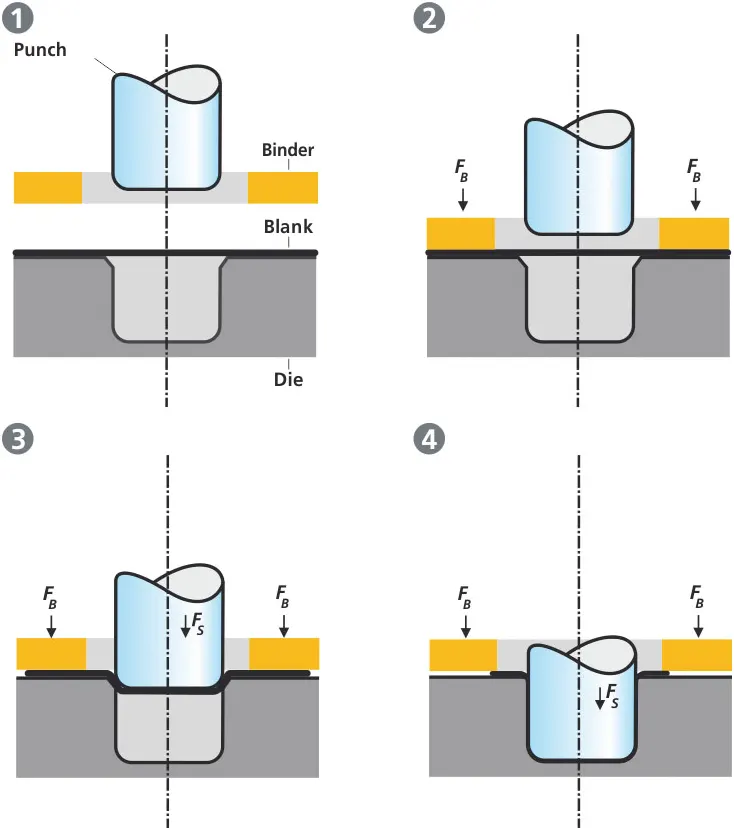
The figure illustrates the deep drawing process. The rigid tools consist of a punch, die and binder. In deep drawing, the plate holder closes after the metal sheet blank has been inserted.
Next the sheet is clamped between the die and the binder. This process slows down the flow of the sheet while it is being drawn and thereby prevents wrinkles from forming under the binder. The punch stretches the sheet over the die radius and forms it in the die. The amount of punch force necessary for forming is thereby continually increased up to the lower dead center of the punch.
Whereas in pure deep drawing there is no reduction of sheet metal thickness, forming is achieved in stretch forming purely as a result of a decrease in sheet metal thickness.
- Hemming :-
Hemming is a forming operation in which the edges of the sheet are folded or folded over another part in order to achieve a tight fit. Normally hemming operations are used to connect parts together, to improve the appearance of a part and to reinforce part edges.
In car part production, hemming is used in assembly as a secondary operation after deep drawing, trimming and flanging operations to join two sheet metal parts (outer and inner) together. Typical parts for this type of assembly are hoods, doors, trunk lids and fenders.
The accuracy of the hemming operation is very important since it affects the appearance of the surface and surface quality. Material deformations, which occur during the hemming process, can lead to dimensional variations and other defects in parts. Roll hemming is carried out incrementally with a hemming roller. An industrial robot guides the hemming roller and forms the flange. Roll hemming operation can also be divided into several pre-hemming and final hemming process steps. Roll hemming is very flexible to use and tool costs are significantly lower as compared to those of conventional die hemming. However, the cycle times are much higher since the hemming is realized using a hemming roller which follows a defined path.
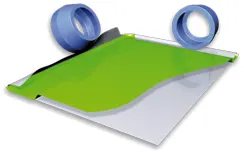 In roll hemming, the hemming roller is guided by an industrial robot to form the flange.
We join Hood Inner Pannel and Hood Outer Pannel by this hemming operation. We create multiple flanges in Hood Inner Pannel. Top Flange of Hood Inner Pannel Becomes the part of this hemming process. The hemming edge of Hood outer pannel after bending exceeds towards center of hood and overlaps the Hood Inner Panel flange till 6 mm. Reliefs are also created at corners of flange. Definite gap needs to be achieved between the edges.
Hemming and Mastic Sealants combinedly reduces the need of spot welds between the hood inner and outer panels. Spot welds does not give aesthetic appearance to the car body while Mastic Sealants and Hemming serves this purpose greatly.