Fender Design Challenge
Fender
Fender is the US English term for the part of an automobile (vehicle body) that frames a wheel well (the fender underside). Its primary purpose is to prevent sand, mud, rocks, liquids and other road spray being thrown into the air by the rotating tyre.
When a vehicle is moving tyres pick stones and other things and hurl them in all directions. Fenders are basically present to prevent any injuries to pedestrians and contain the motion of these particles.
Most Passenger automobiles have four fenders, one over each wheel. For vehicles with a narrow car body that exposes the tyre, the fender is an exposed curve over the top of the tire. For wide body vehicles that cover the tyre, the fender forms the wheel well surrounding the tyre, and is not directly visible from above the car body.
Wheel Wells tend to be much larger in diameter that that of the tyre's diameter, because they do not move with the tyre suspension and consequently must be large enough to allow full range of tyre motion on the suspension without touching the interior of the wheel well.
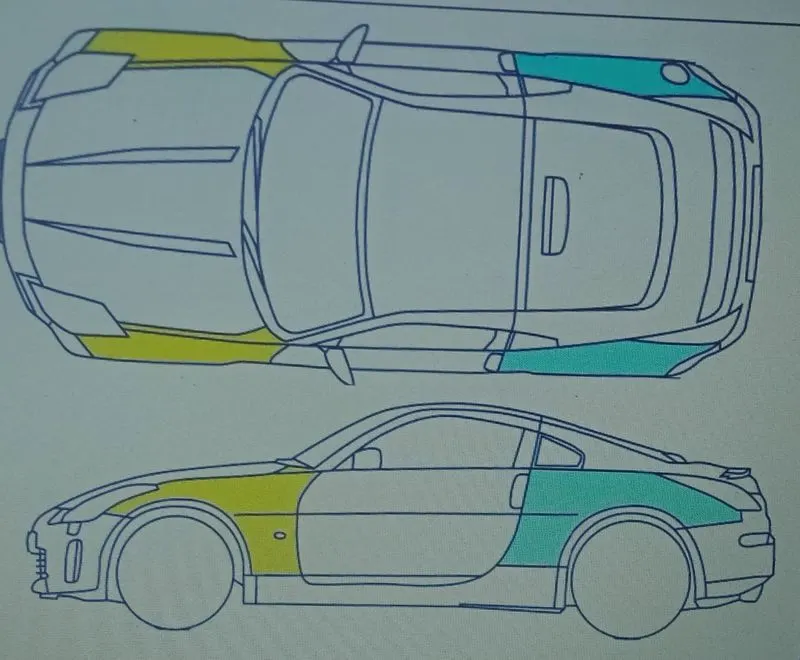
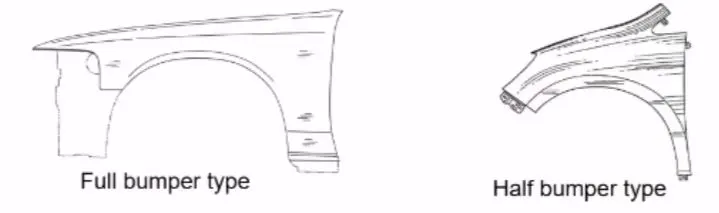
Types of Fender
- Full Bumper Type :- This is made of sheet metal as whole. It shelters a large part of wheel from above. This has been used in almost all type of cars untill the substitute was introduced. Now generally these are not used due to specific reasons. Whenever we use full bumper type the blank we use to create this full bumper type is really big and there is a lot of wastage around in order to give the desired design.
- Half Bumper Type :- Basic type of fender what we are using now is half bumper type. In half bumper type we have a high possibility to reduce the scrap which means by slightly increasing the blank size we can produce 2 fenders at the same tim this is called as scrap management. Half bumper type is chosen because we are reducing the material usage as every inch of a steel or sheet metal component adds upto the cost and this method reduces the cost drastically that too without even compromising to the desired intention of the fender. A lot of plastic can be used on the bumper area to compensate for the fender sheet metal this reduces the particular weight of steel which increases the performance of vehicle. Also reducing metal weight in BIW is one of the design intention.
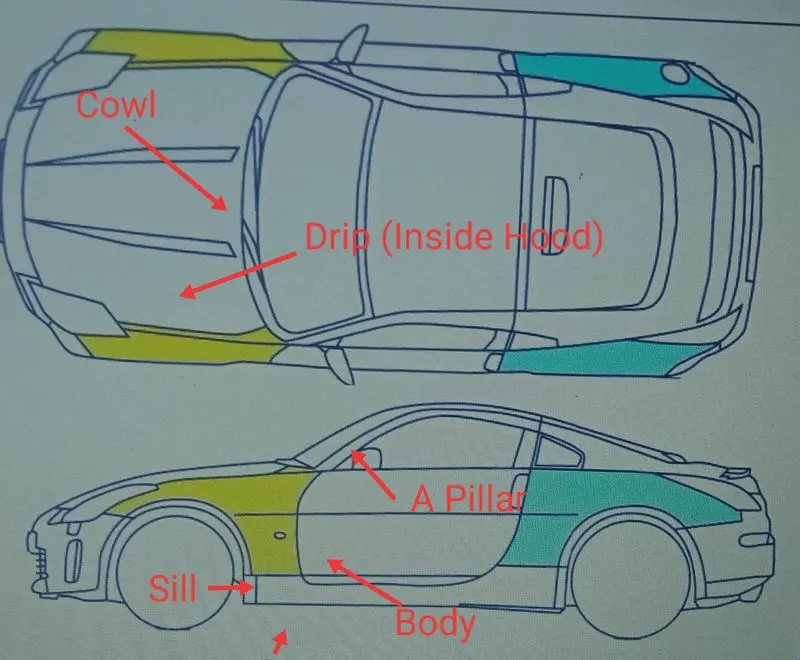
Mounting points on Fender
There are 5 mounting points on Fender which are as follows:-
1- Body
2- A Pillar
3- Sill
4- Drip Area
5- Cowl
Apart from these points there is a Baffle mounting region too which is also known as Splash Cover mounting which is facing towars the tyre and near to engine compartment too. Bumper Mounting region is also there to assemble bumper alongside Fender.
Fasteners are used to join fender with other vehicle parts through mounting regions. After the vehicle is manufactured completely the fasteners get hide inside other body parts are not visible from the outside so using fasteners proves to be an easier way with no compromise with the aesthetic outside appearance of the car.
Lights can also be mounted on the fender.
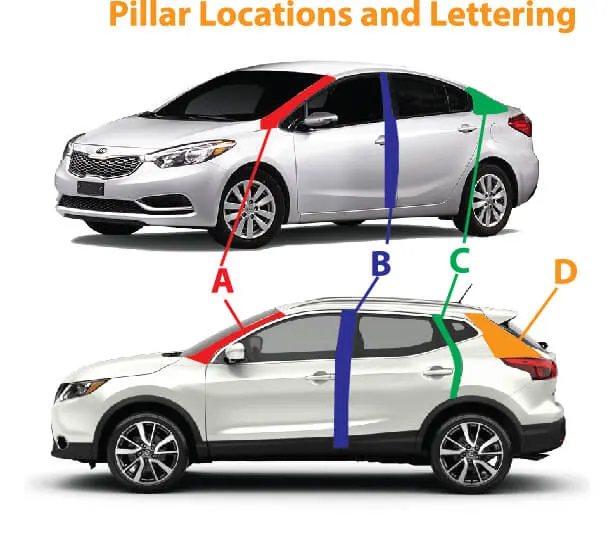
Cowl is the plastic part where we have our wiper mountings installed. Body part is the car's Front Cabin Door region, while Sill region is below to these doors. Drip Area on the other hand is the region where the fender comes in contact with the engine compartment and is most important mounting region which has a lot of specifications and design features that needs to be followed. A Pillar is the roof support structure on both side of vehicle's windshield, they are important for holding glass in place and adding structural integrity to a vehicle, primary the roof, it holds the windshield in place too.
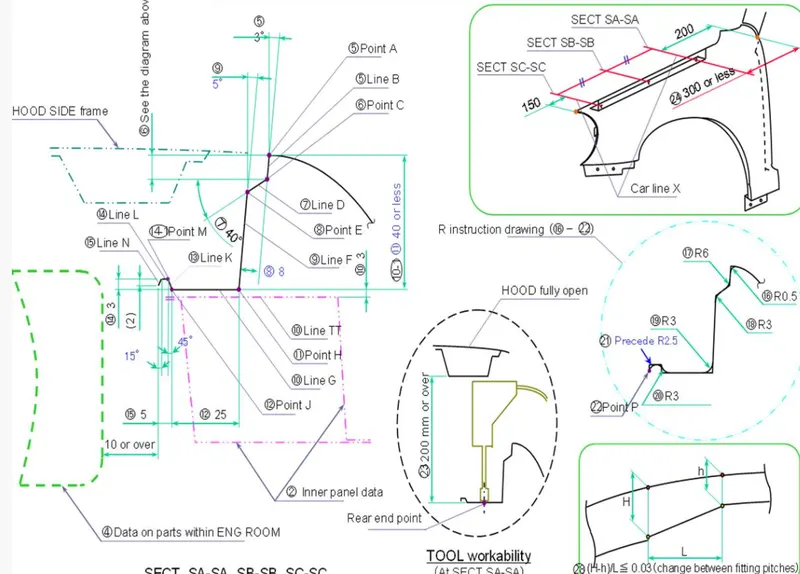
- Fender Drip Area:- Most important mounting region as it comes in contact with the engine compartment. The design specification for this region does not vary greatly between different different cars. We have a master section which we follow while designing mounting regions. The below figure shows the mounting region master section for drip area design. We need to have sufficient clearance space from Front most edge and rear most edge of fender to enable enough space for Bumper/Headlamp and Cowl region. As the cowl region houses the motor system for wiper the clearance from the rearmost region is around 200mm. It can vary depending on the size of the cowl region but mostly it never exceeds 300mm. From front edge the clearance is around 150mm. The remaining length is the length of the drip area which is not fixed for all vehicles but depend on the size of car, fender, other parts.
Master Section for Design
The 3degree opening angle we see in the master section is for the drawing prupose because having no or 0 opening angle will make the drawing process difficult to get the punch back after drawing. We prepare a flange here at 40 degrees (8mm in length in master section) in order to prevent a human eye to see the wellnuts or the fasteners through the small gap between the fender and hood. Aesthetic appearance of the car goes for a toss when we can see engine compartment or the fasteners just alongside the stylish car outer body with smooth and aesthetic paints so design of fender drip area manages to stop that particular view. Fender drip area distance is between 25-40mm so that the tool can come and work perfectly. Assembly sequence is such that we mount the hood then keep the hood in open condition with the help of hinges then mount the fender and then fix it with the help of wellnuts. The Verrtical gap for the tool to come and work perfectly is around 200mm which is easily achieved when the hood is in open condition. then we create an emboss towards the engine compartment because a straight component is more witherable so mboss add strength there. There should be atleast 10 mm gap between drip area and engine compartment parts so that the assembly of fender area can be easily done with providing enough space for the tools to work. The depth is generally around 40 mm because most of the tools find it difficult to more deeper than 40 mm for punching purpose. Also increasing the depth more than 50-60 mm will cause the spring back effect on the sheet which is not good. We define this distance by experience or by referring to the parent car.
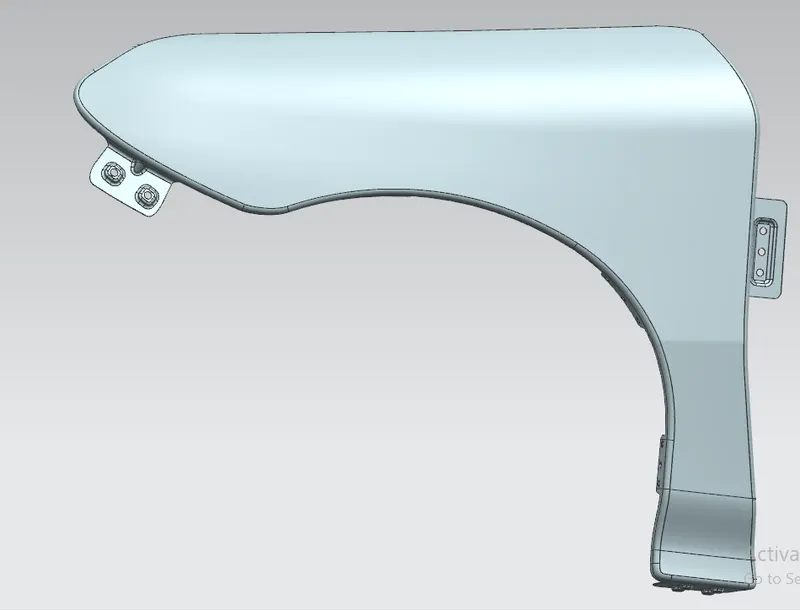
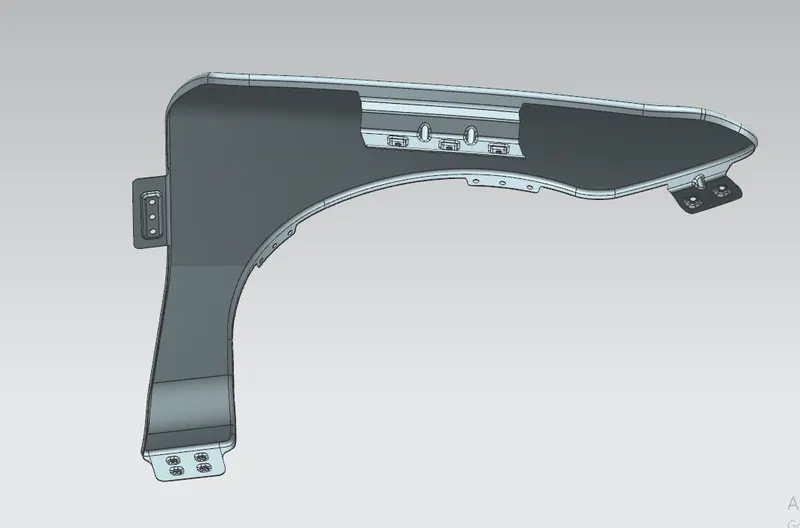
Fender
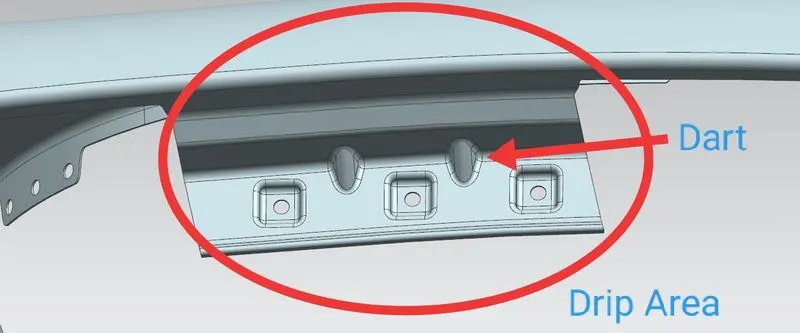
Drip Area
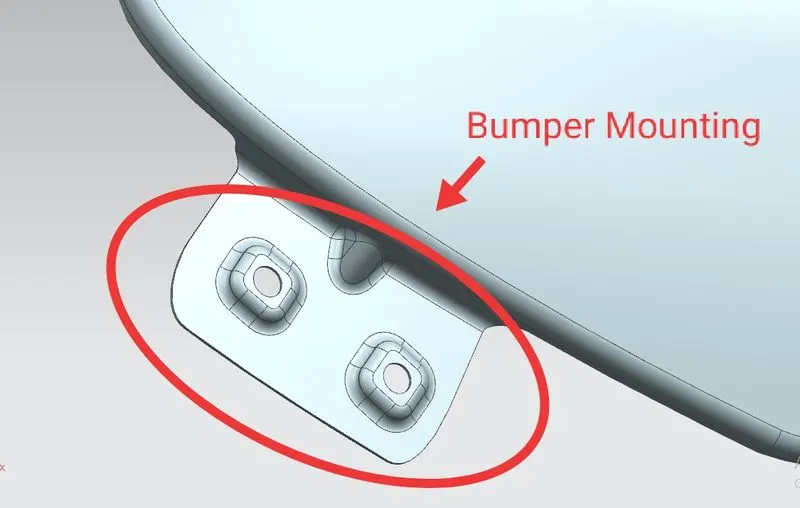
Bumper Mounting Area
Note - We create Darts to strengthen the mounting region as the mounting region kind of hangs from the fender flange. It might need extra support or strength to retain its position under the action of forces or while motion.
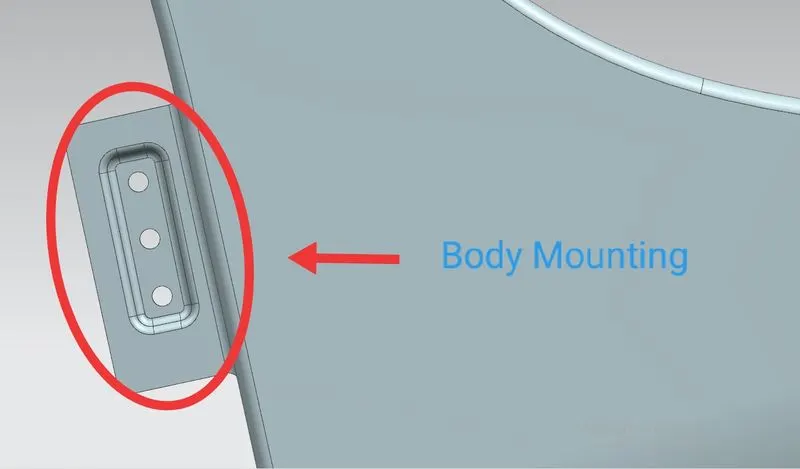
Body Mounting Area
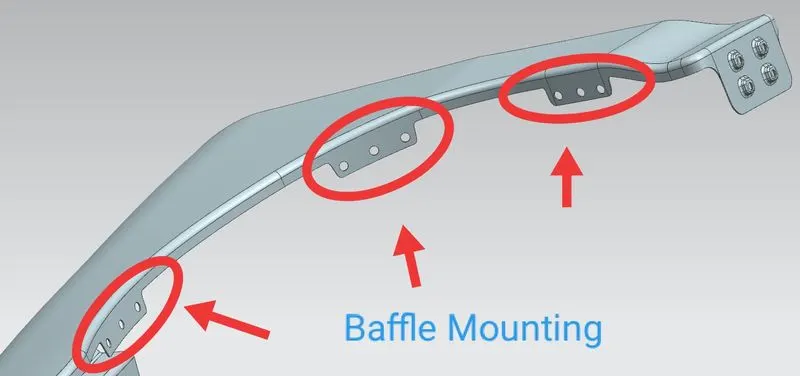
Baffle Mounting Region
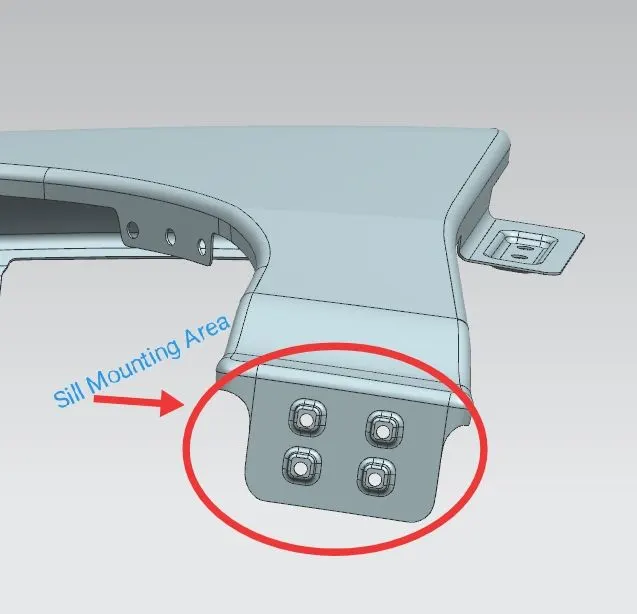
Sill Mounting Region