Hood design-Week 2
Hood design
AIM:
To design the Hood or Bonet of the front driving car by using the master section and standard procedure which is used in the OEM Manufacturer's.
- Car Hood Components.
1. Hood Outer Panel:
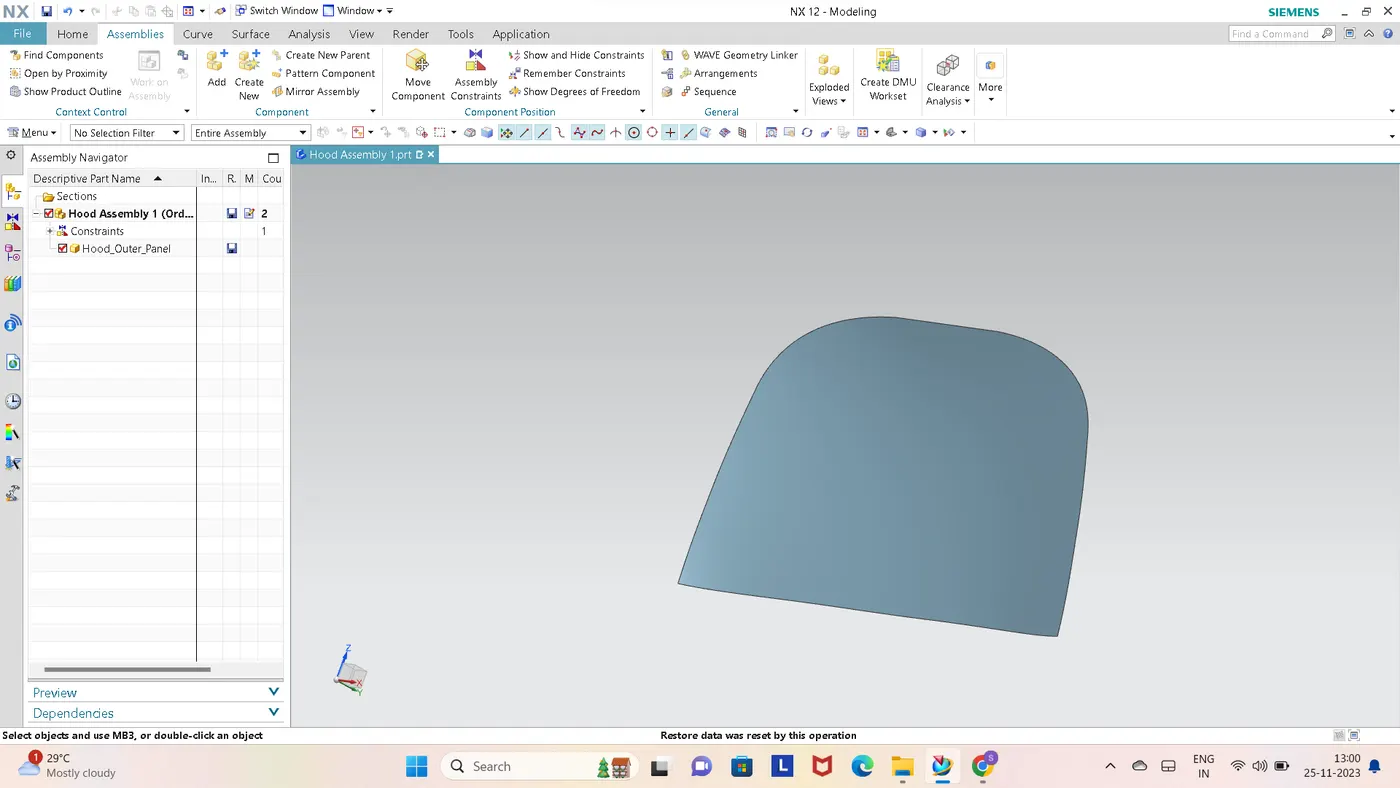
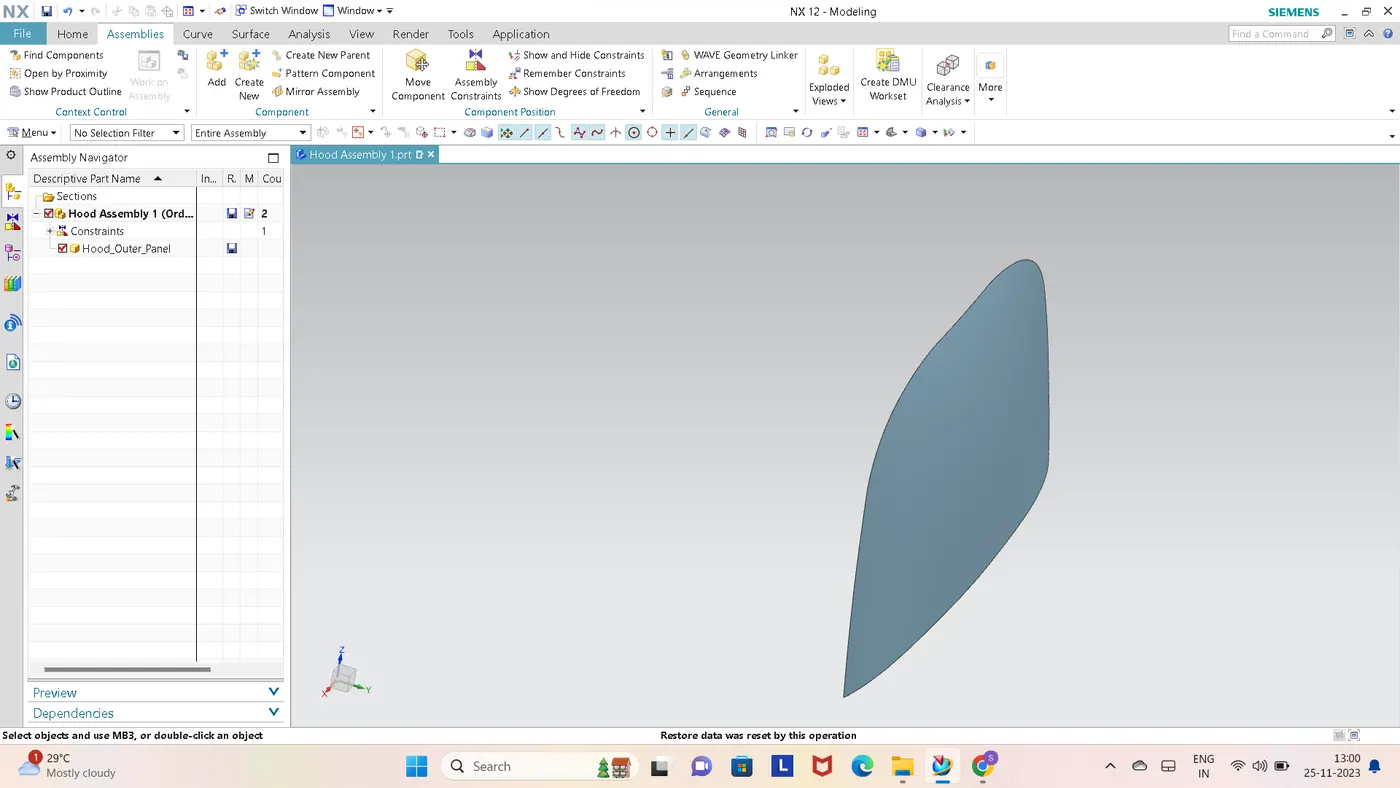
- The outer Panel is the most important part of the hood to make the car in a very good aesthetic proportion. So that the Outer panel is perfectly made insense to achieve the aesthetic requirement. So that, the sheet metal operation result is visible on the outer panel or it reduces the aesthetic value means, those operations are strictly not to be followed to make the outer panel. That's why the hemming process is used to join the outer panel with the inner panel, instead of using welding methods.
By considering the given Outer Panel thickness(0.75mm) and using the outer panel styling surface the outer panel has been made as below.
2. Inner Panel:
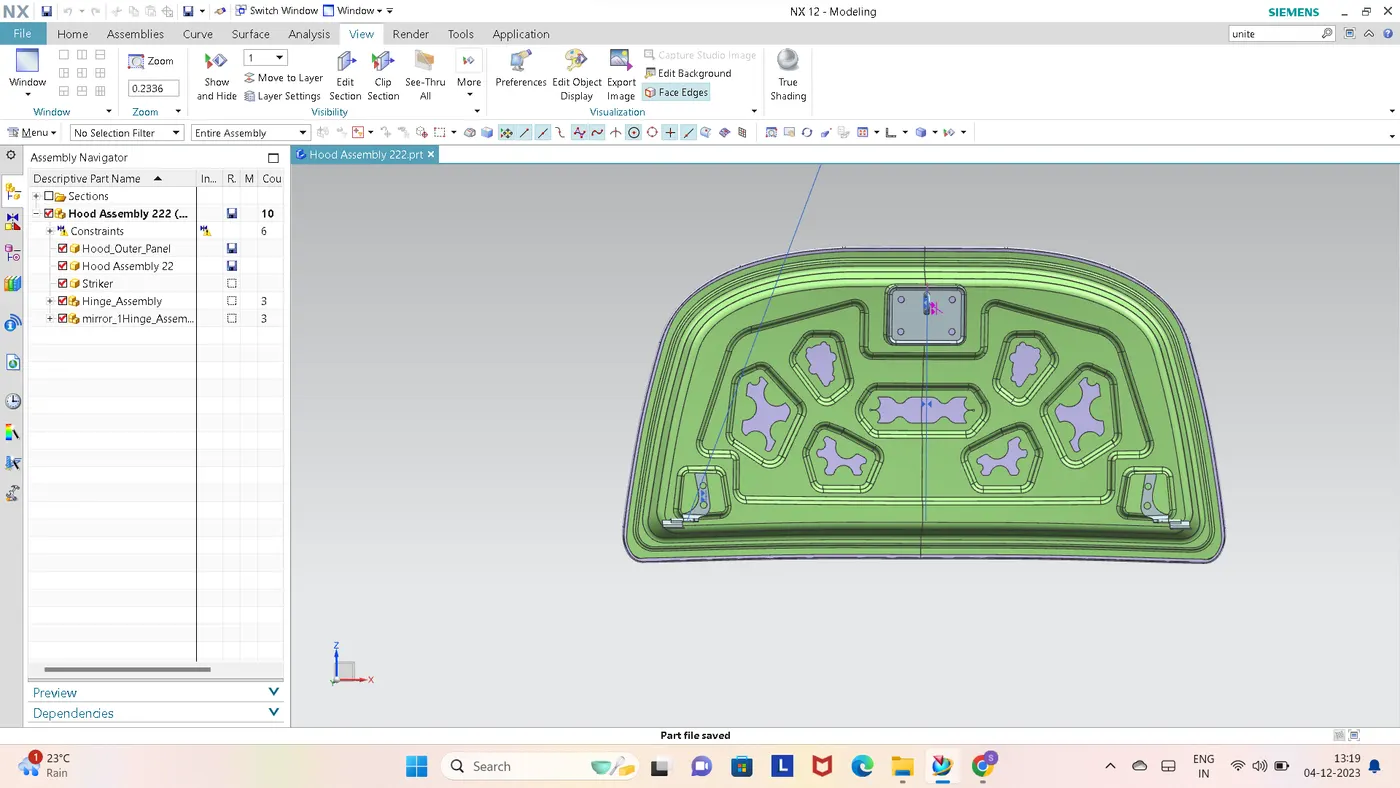
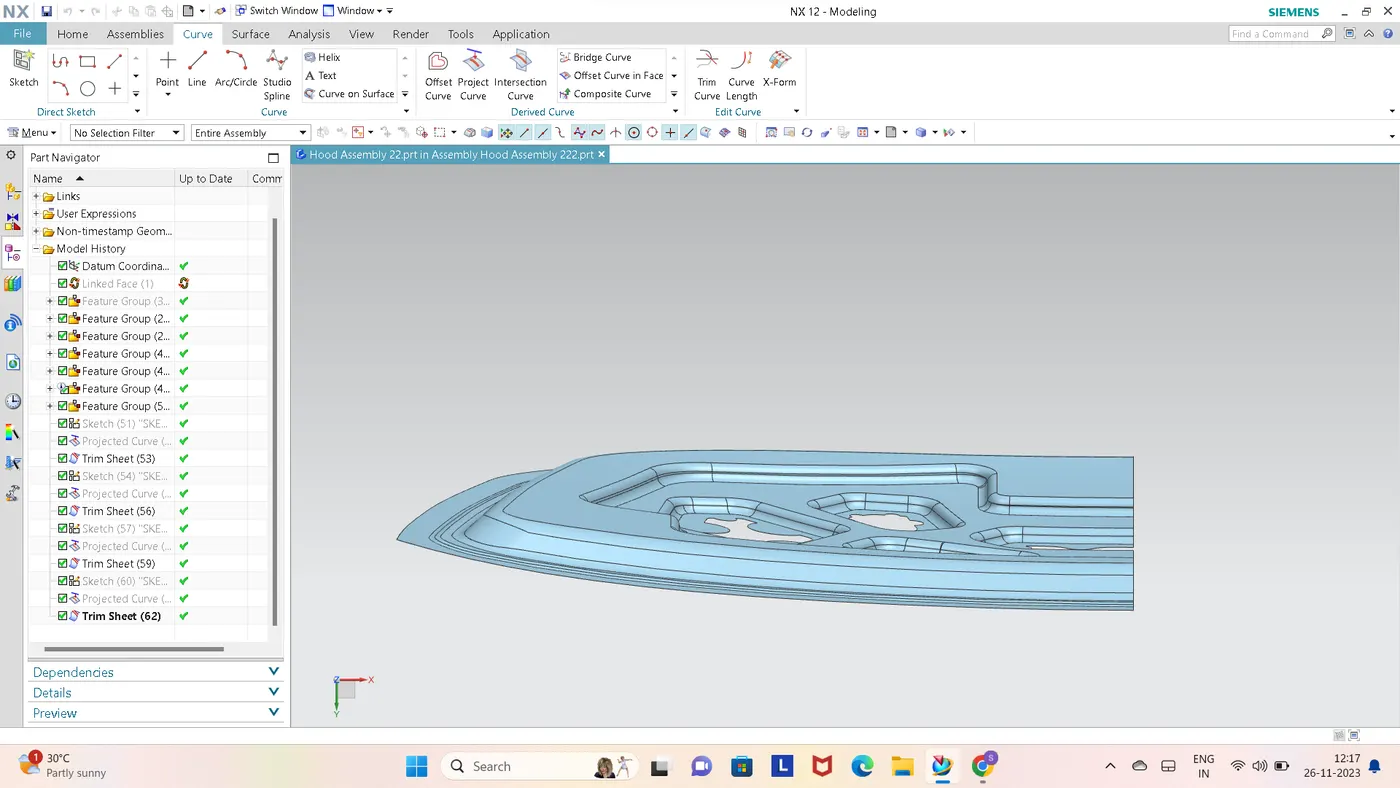
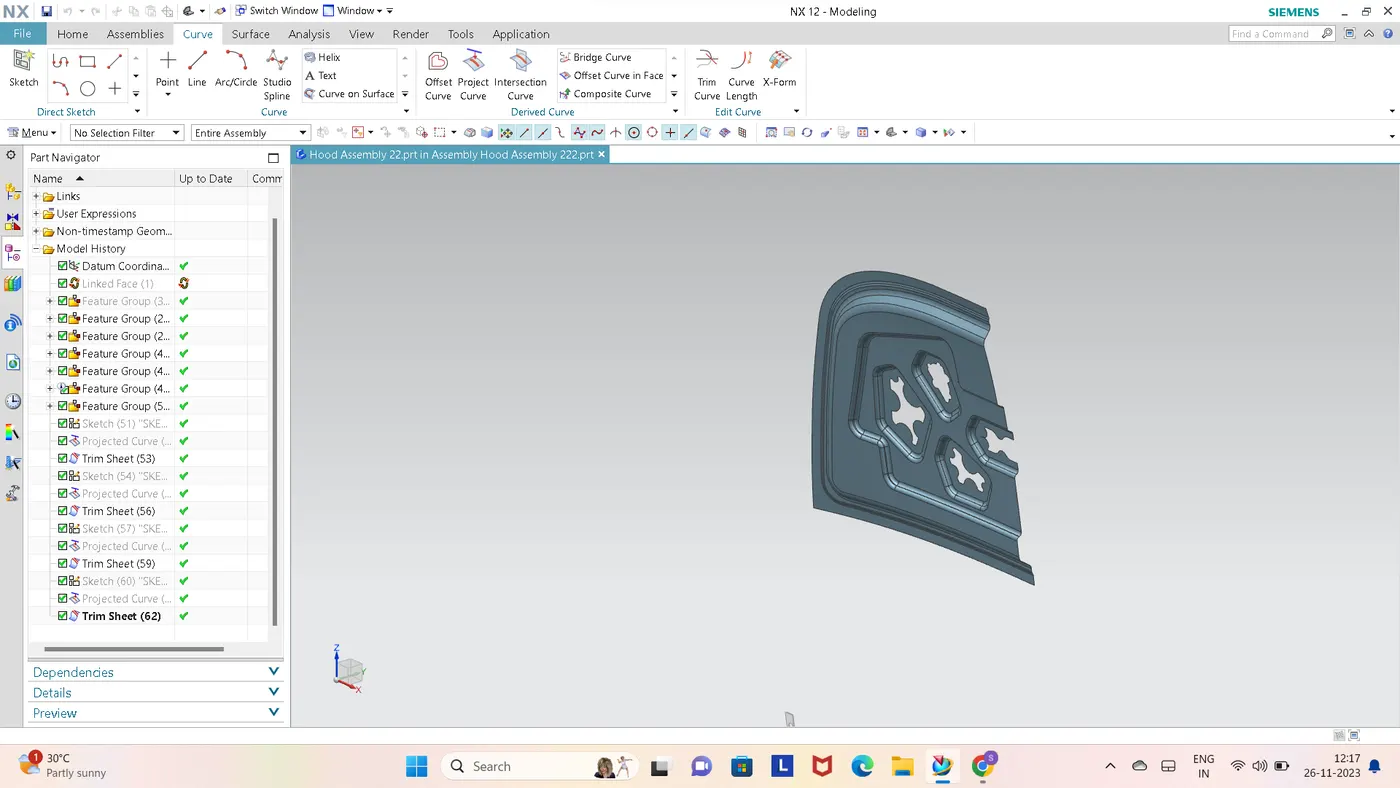
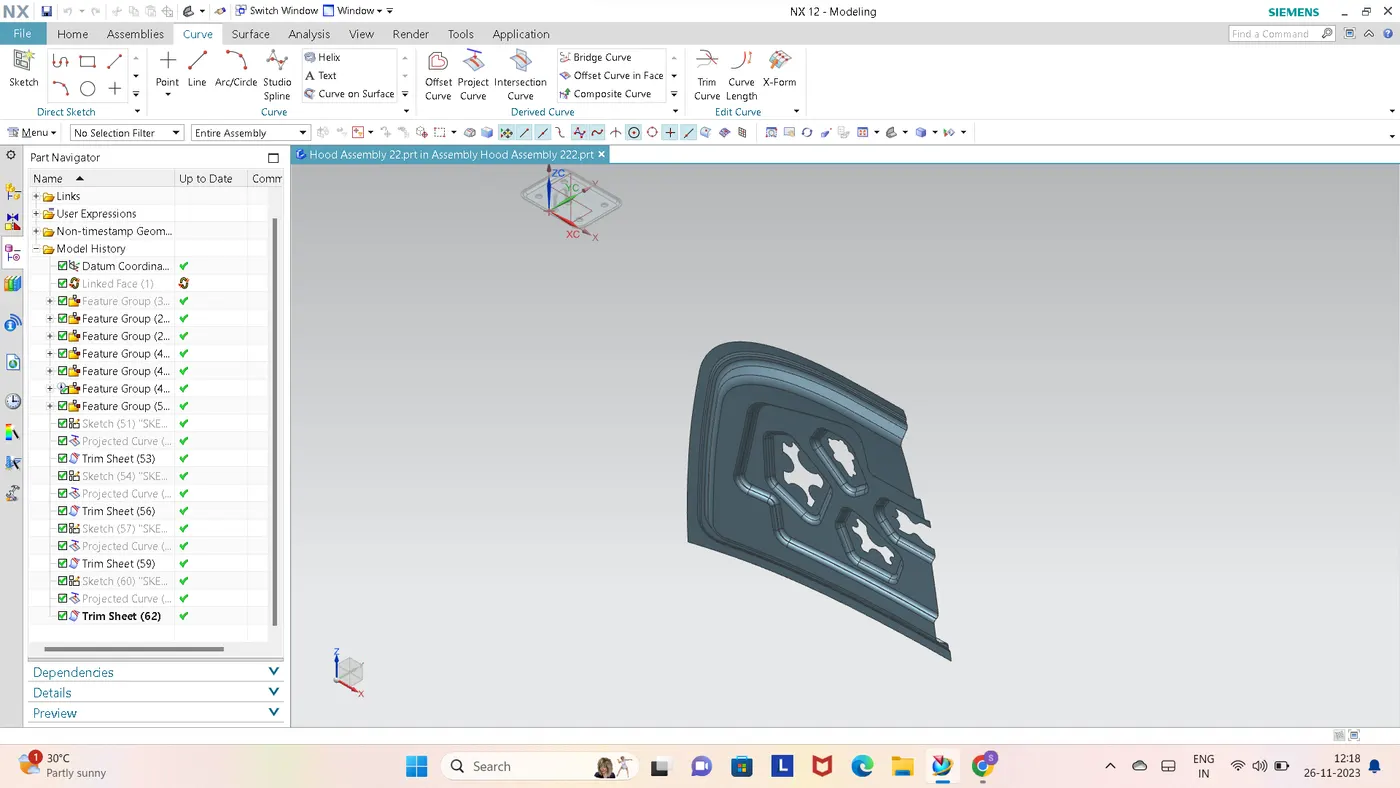
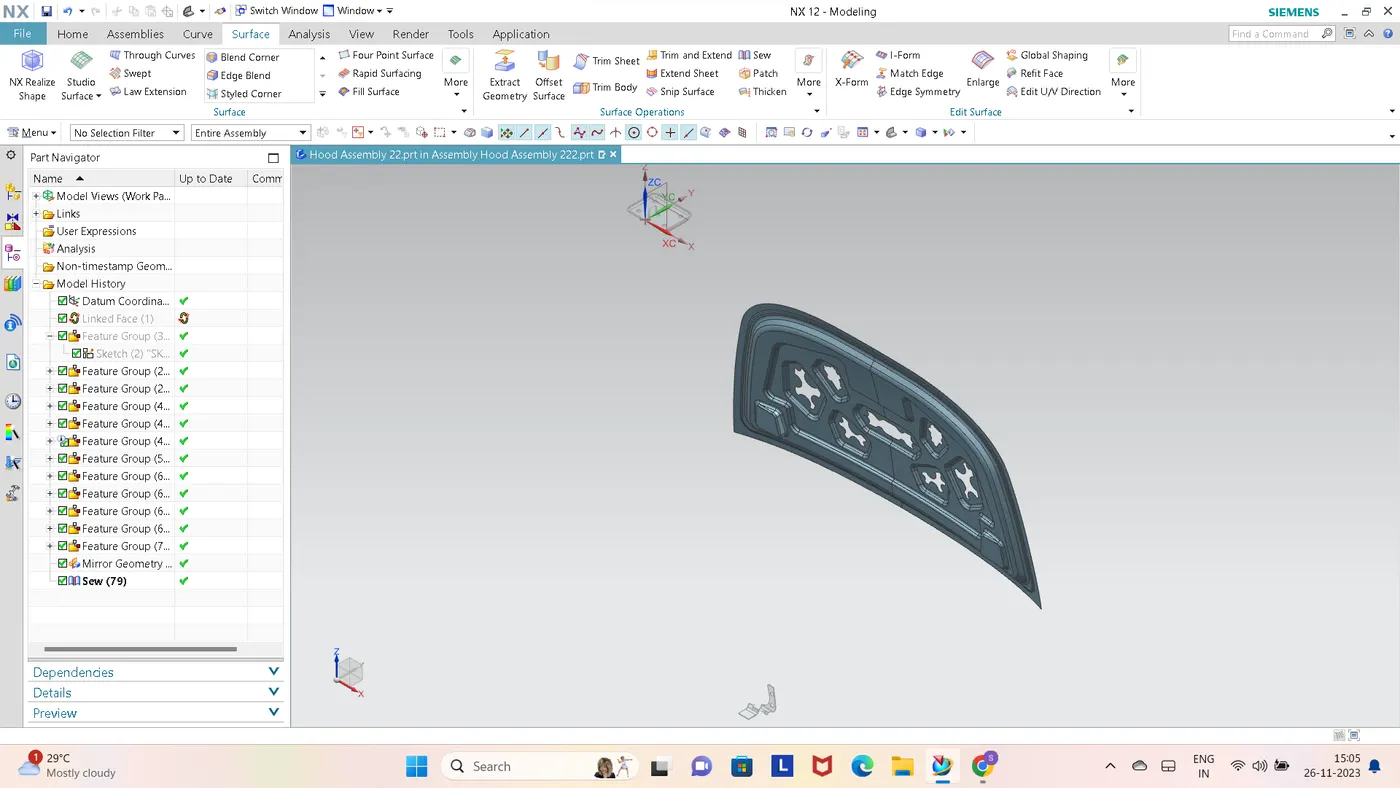
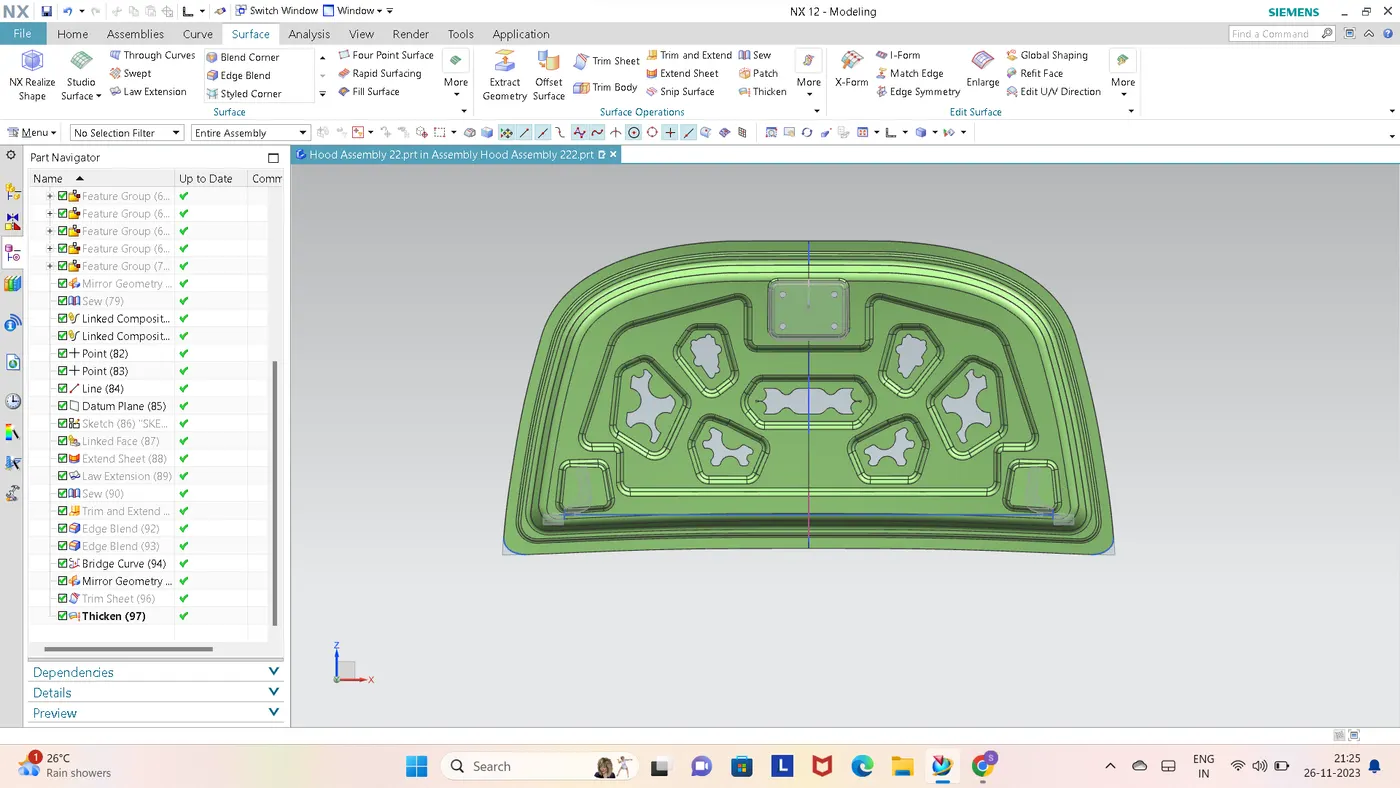
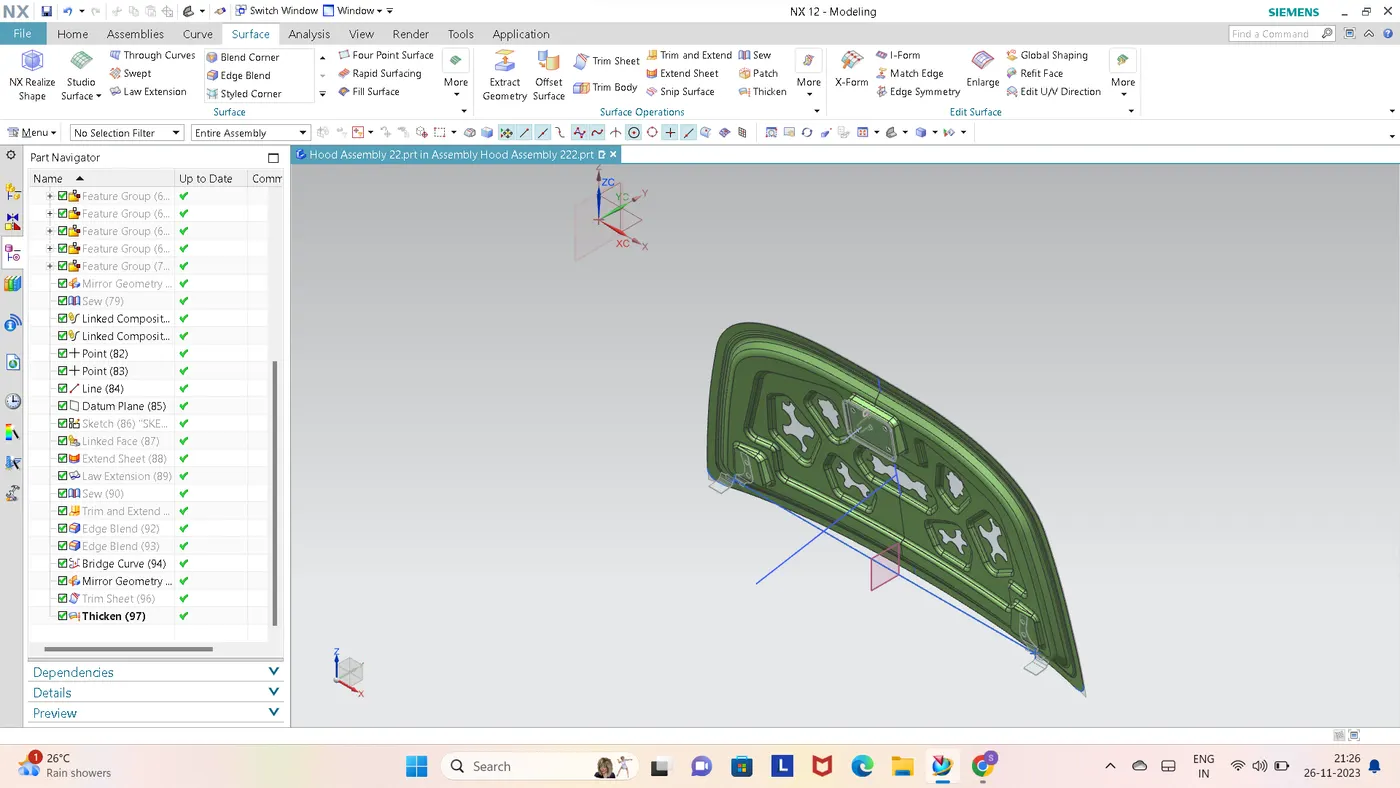
- The inner Panel is the major part that ensures the rigidity of the hood and It is used to divert the impact outwards of the hood however possible when the collision occurs. It can be achieved by the good inner panel design and the embossing direction in the inner panel.
- A lot of design changes and research are done and being carried out in the inner panel only to achieve pedestrian safety and passenger safety to make the standards.
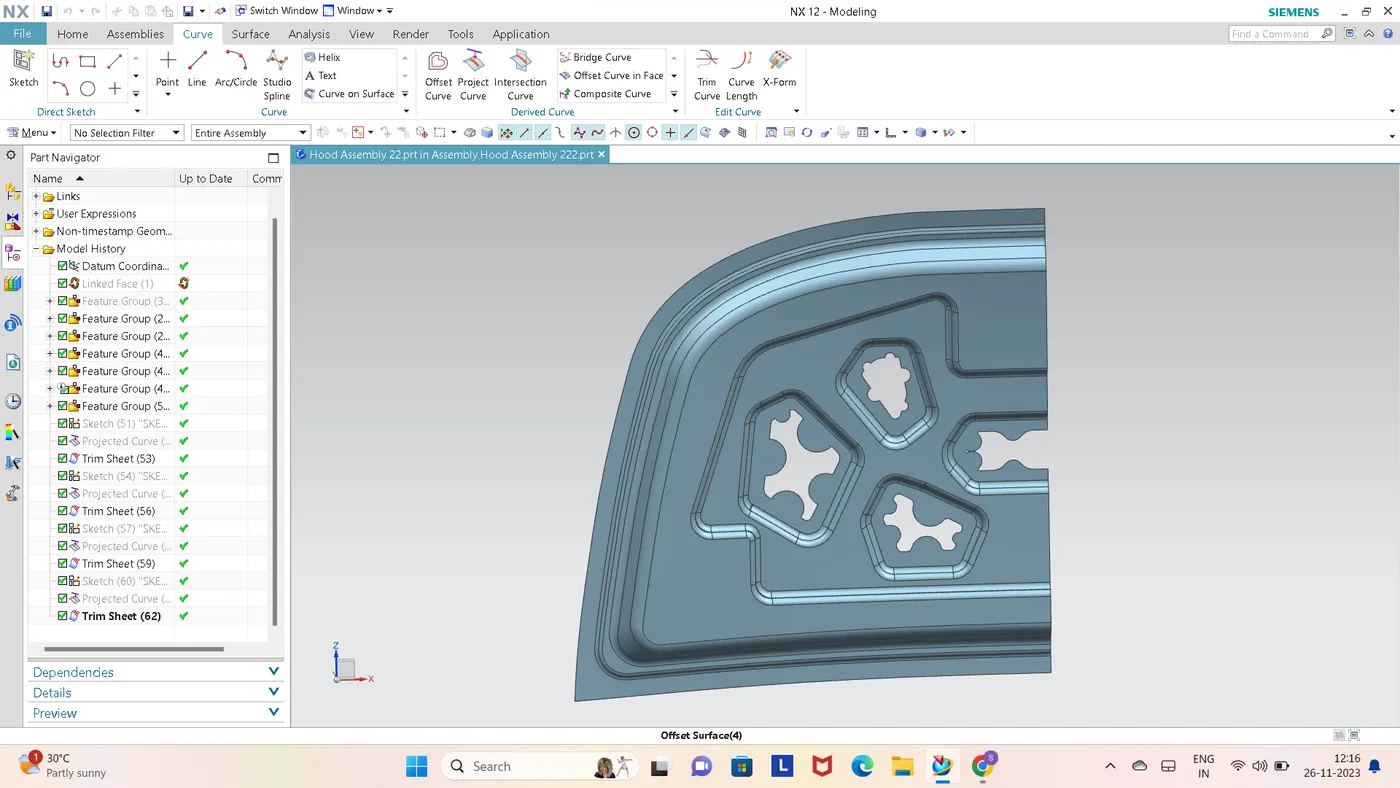
- In this inner panel, the required holes are made to transport the hood from one station to another and fix the hood in the fixture by using these holes as budding holes. Also, the inner panel has embossed and mastic points.
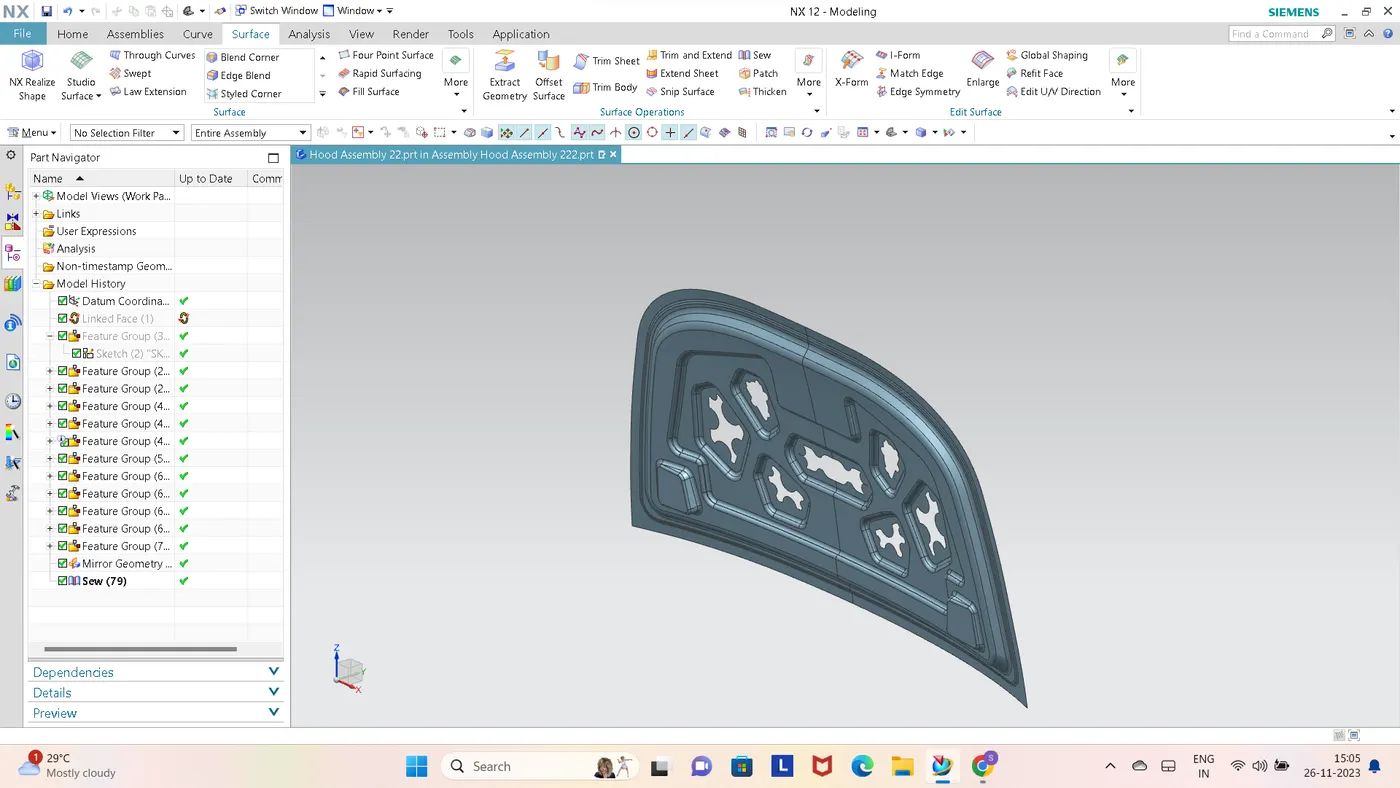
By considering the given Inner Panel thickness(0.75mm) and offsetting the outer panel styling surface with the given offset data, the Inner Panel has been made with the embosses and mastic points as below,

3. Hinge Assembly
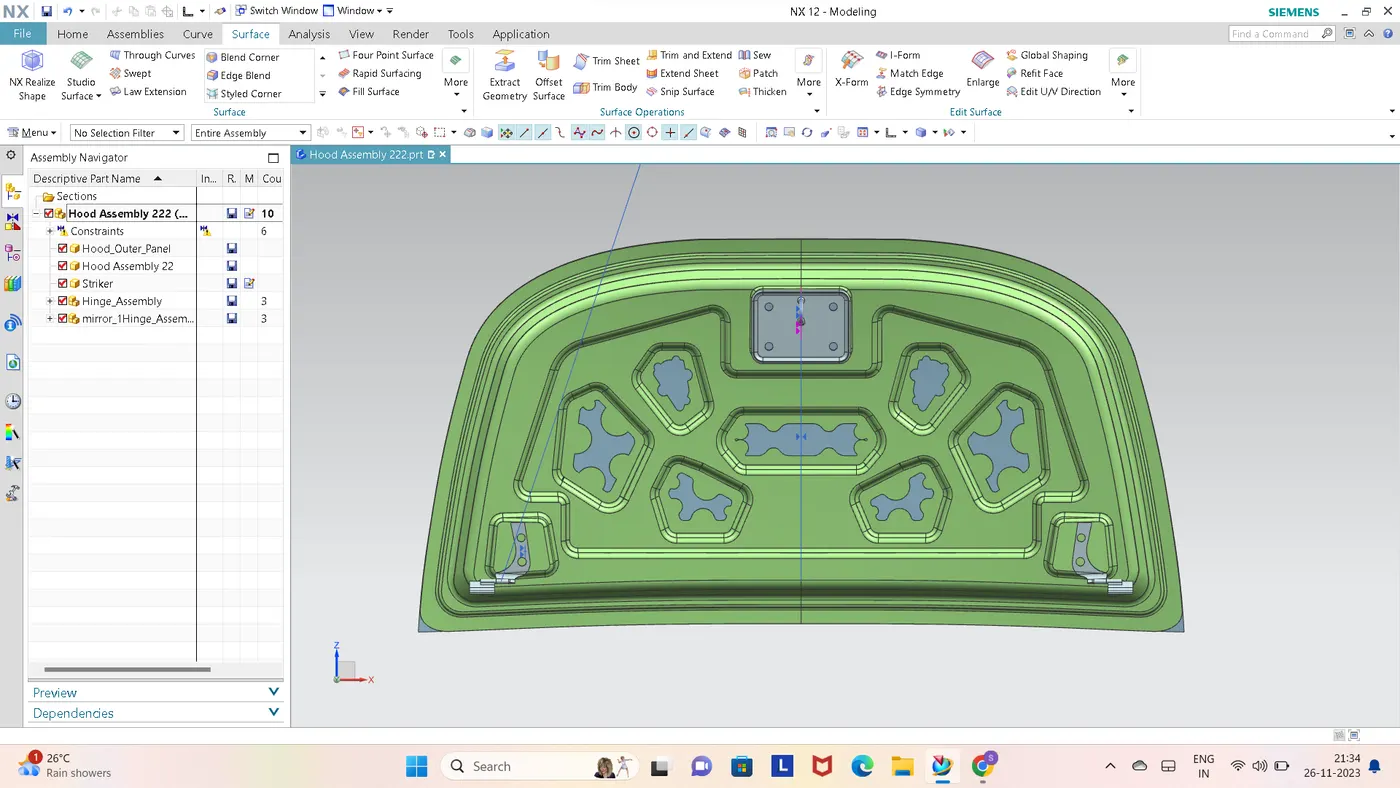
- It is used to fix the hood to the engine compartment.
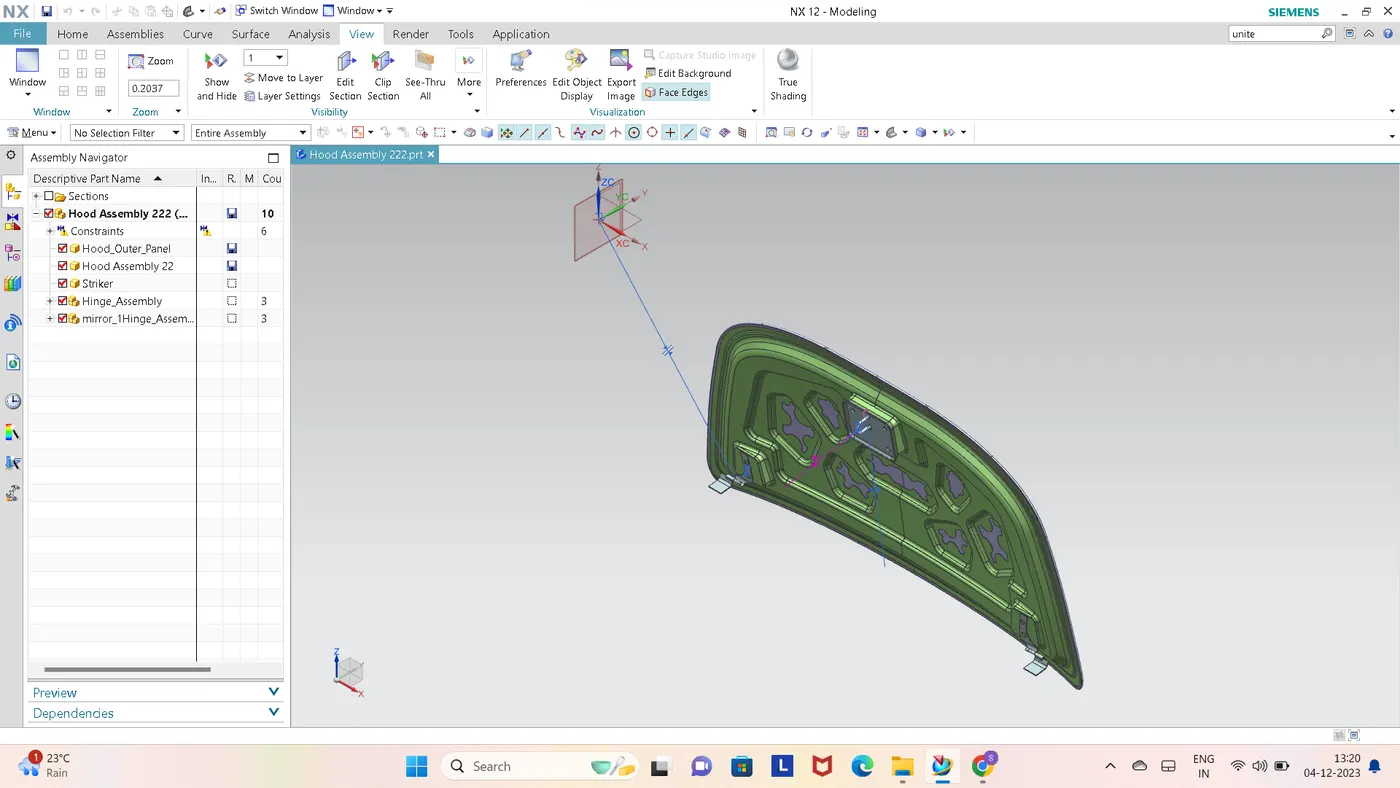
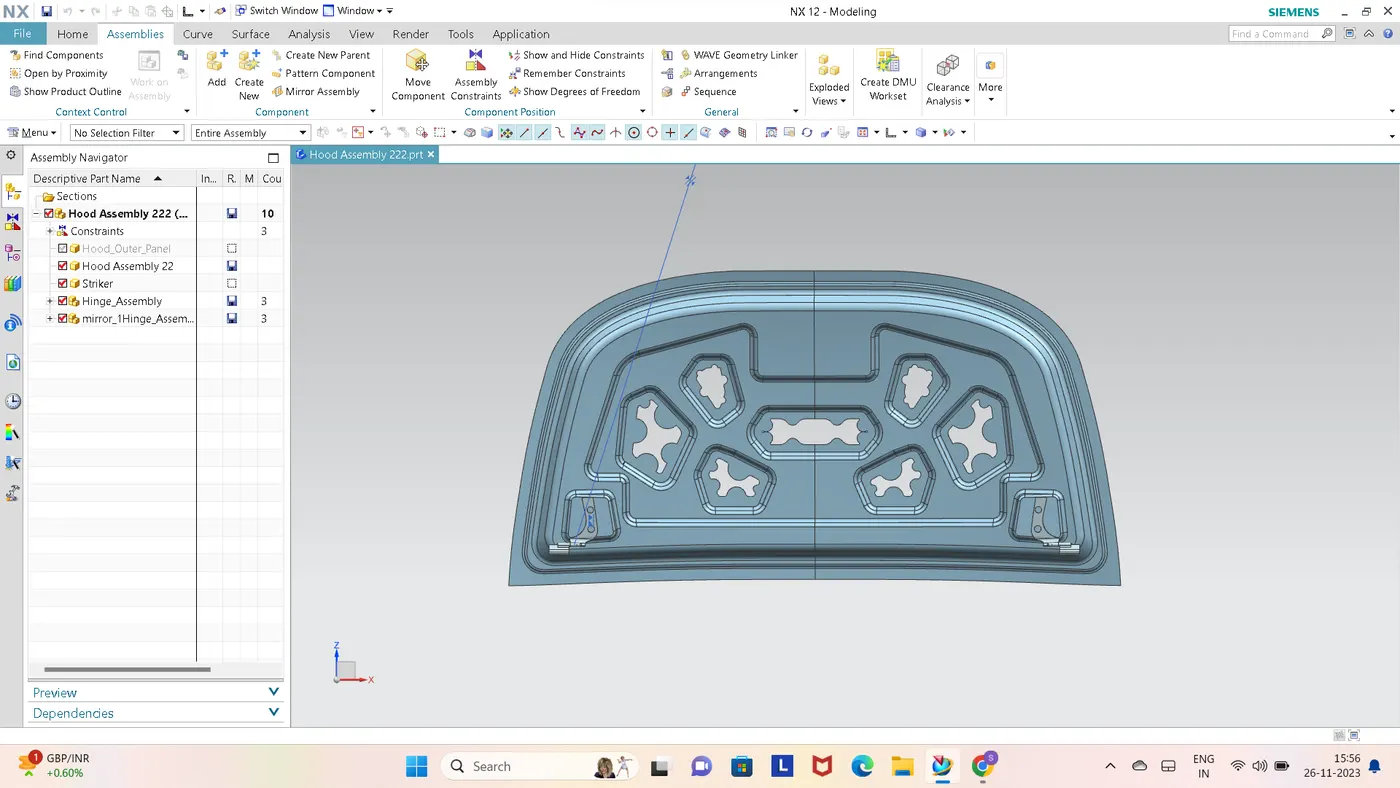
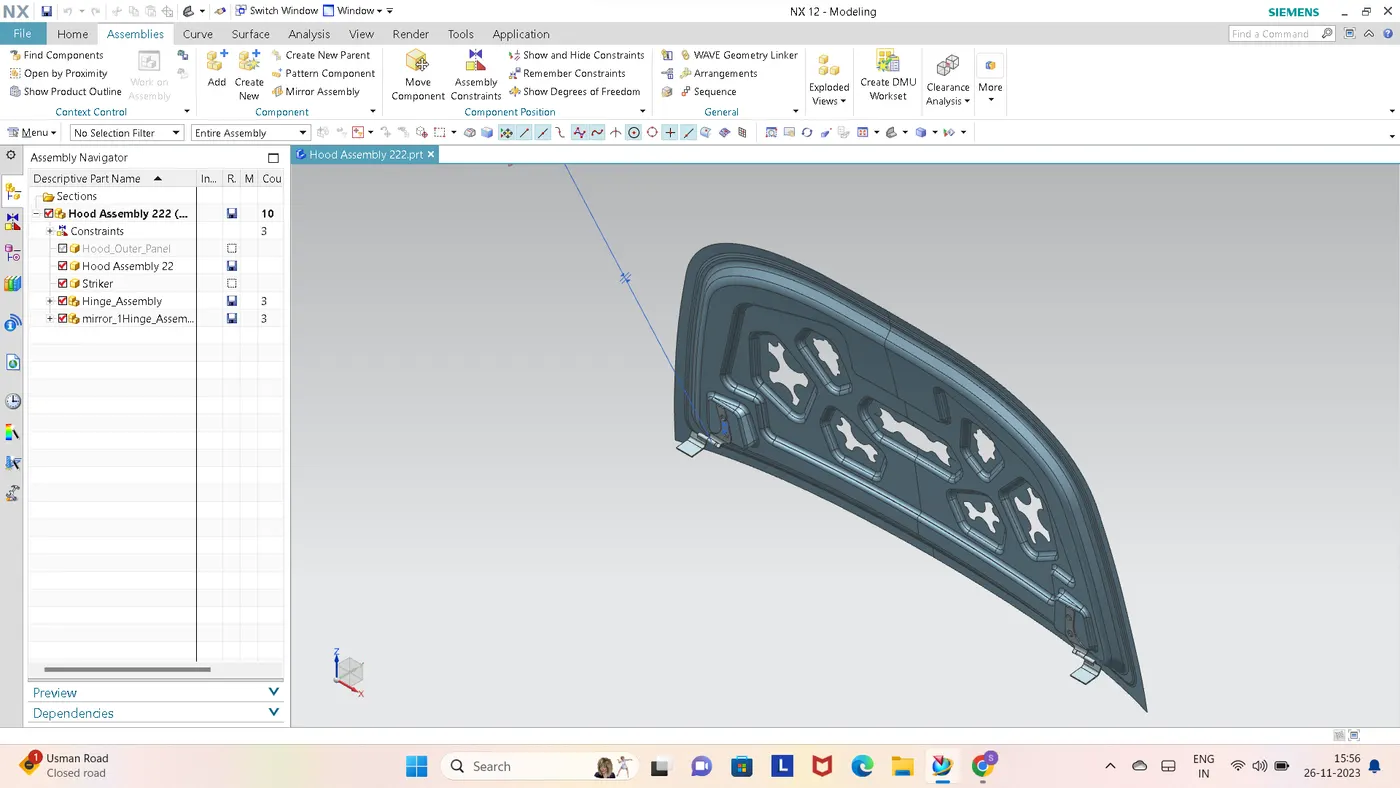
- For any component to be open and close with an axis, the hinge plays a major role. It has two simple parts(one is the hood side hinge, and the other one is the engine compartment side hinge) and is assembled with a single axis.
- Hinge Assembly is attached at each outward end of the hood and the engine compartment.
4. Latch Trajectory
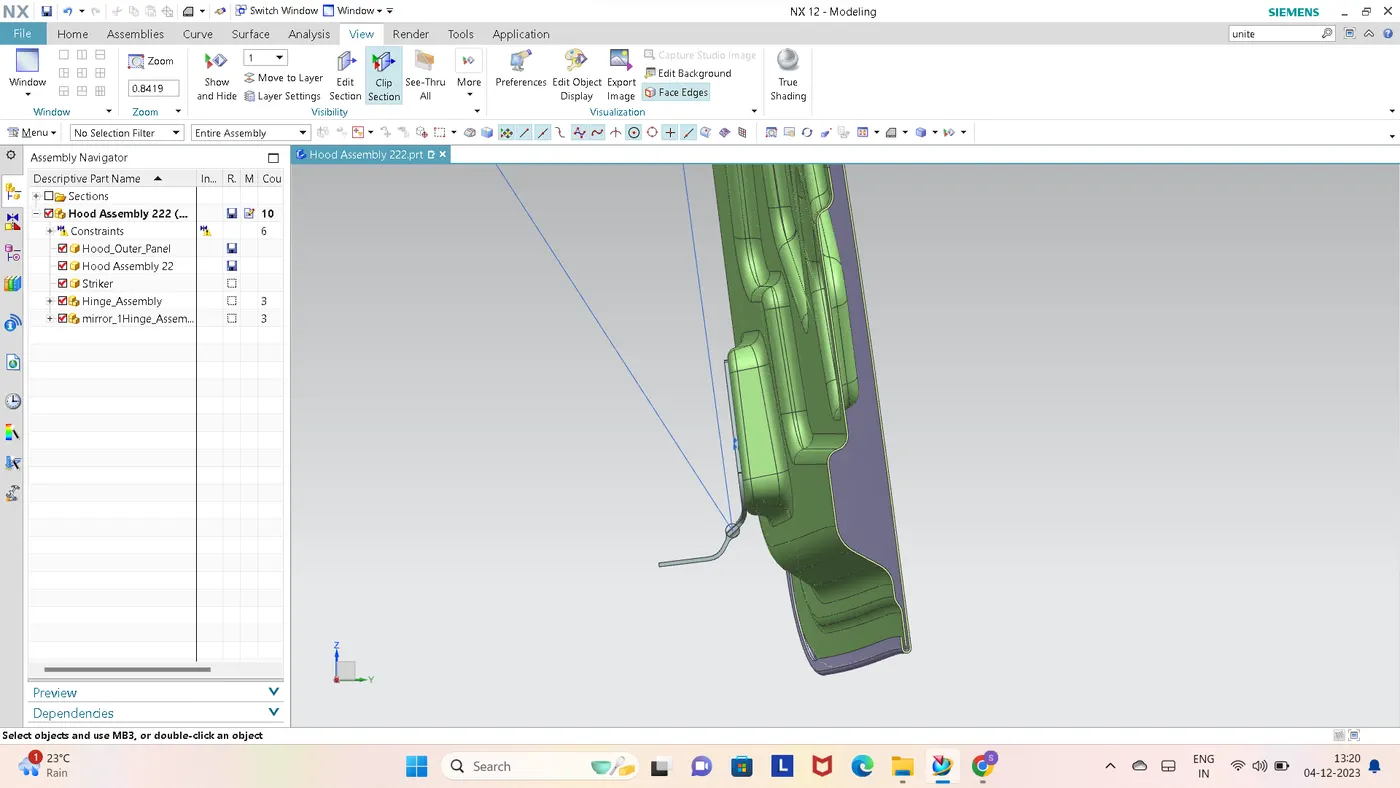
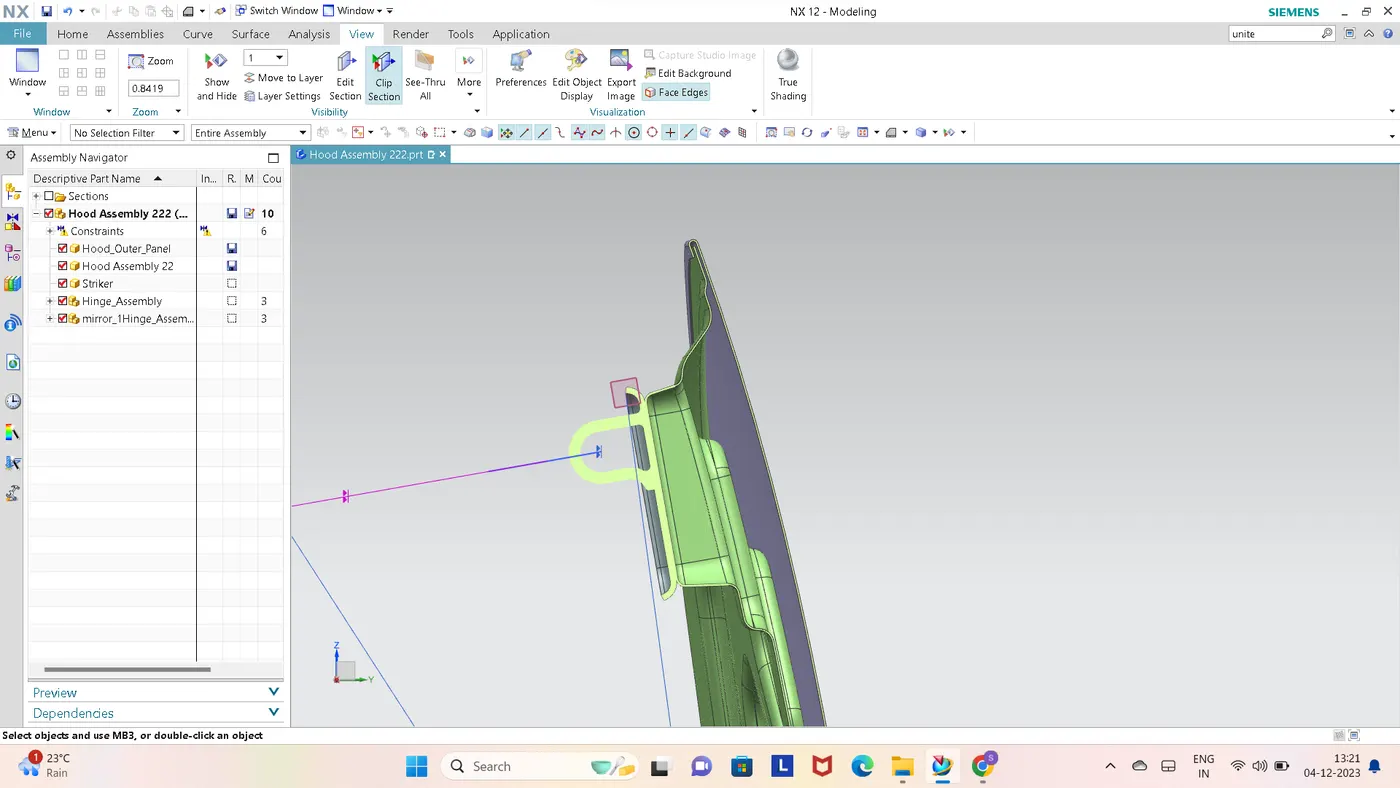
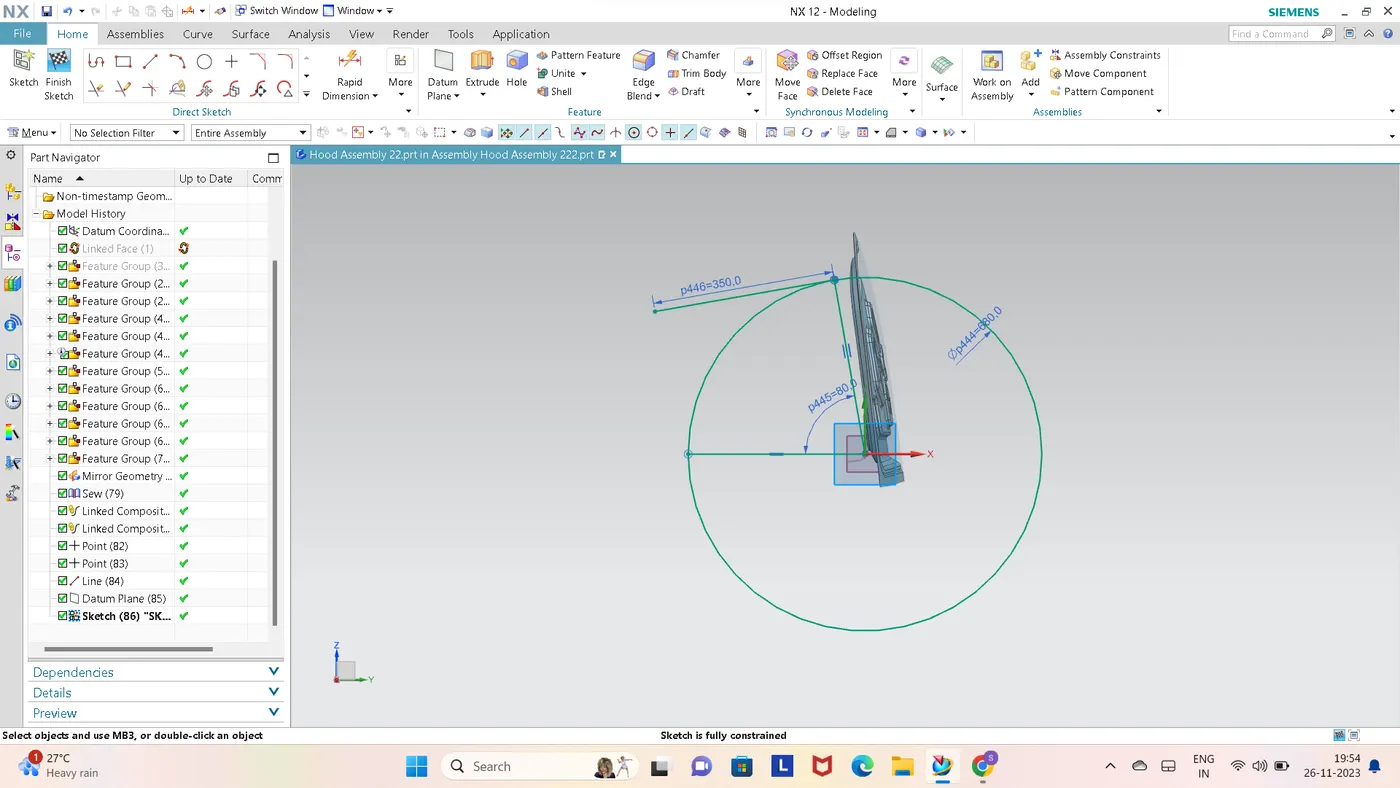
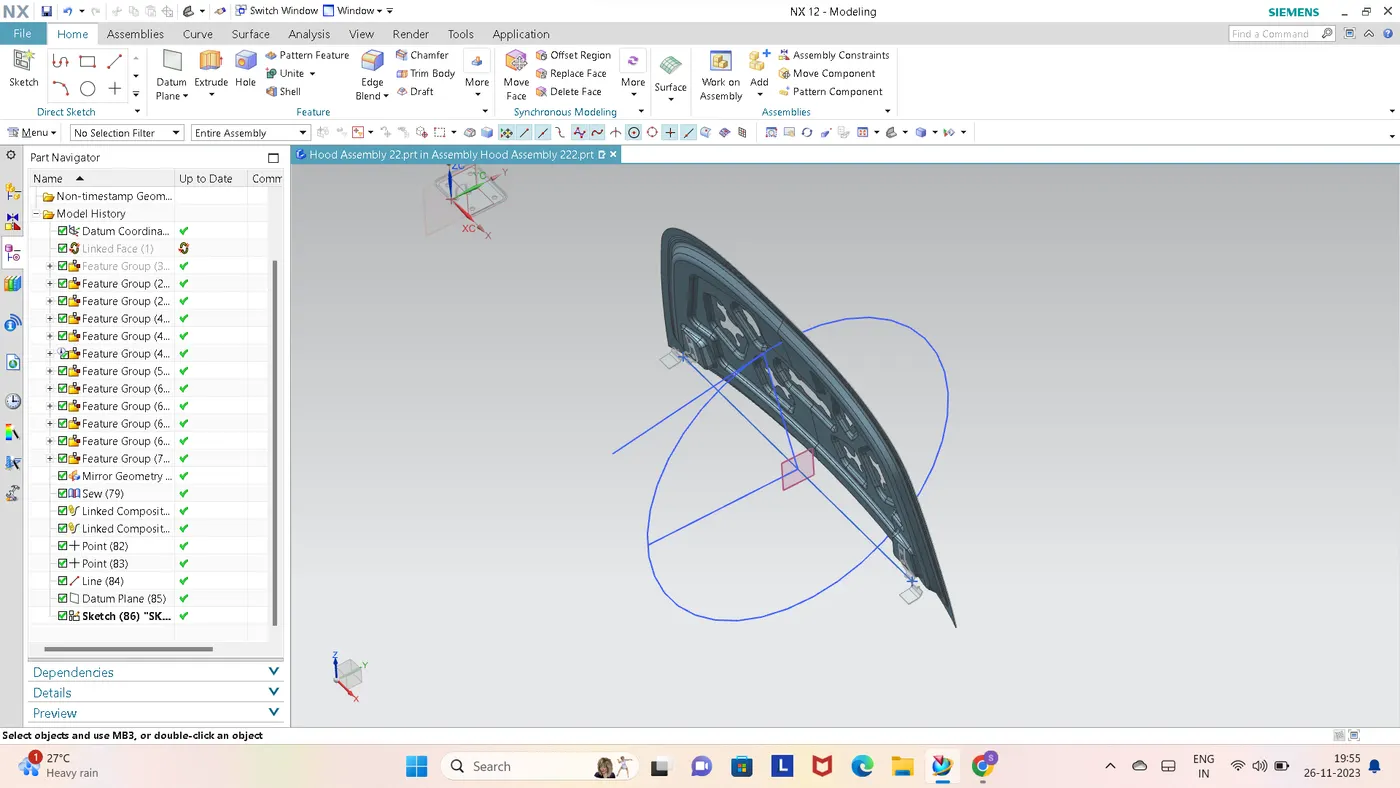
The latch trajectory shows the striker's way when the hood is opened and shut on a vehicle. The range of the round Trajectory is controlled by the set standard dependent on the typical stature of an individual. The range is estimated from the pivot hub up to the Latch. It is the Trajectory on which the movement of the hood (opening and closing are dependent). This circular Trajectory has a radius equal to the length from the center point of the center axis of the Hinge to the striker point on the Latch. The striker point is also tangent to the Trajectory.
5. Hood Inner Panel Thicken Element
6. Position of Striker and Hinge Assembly
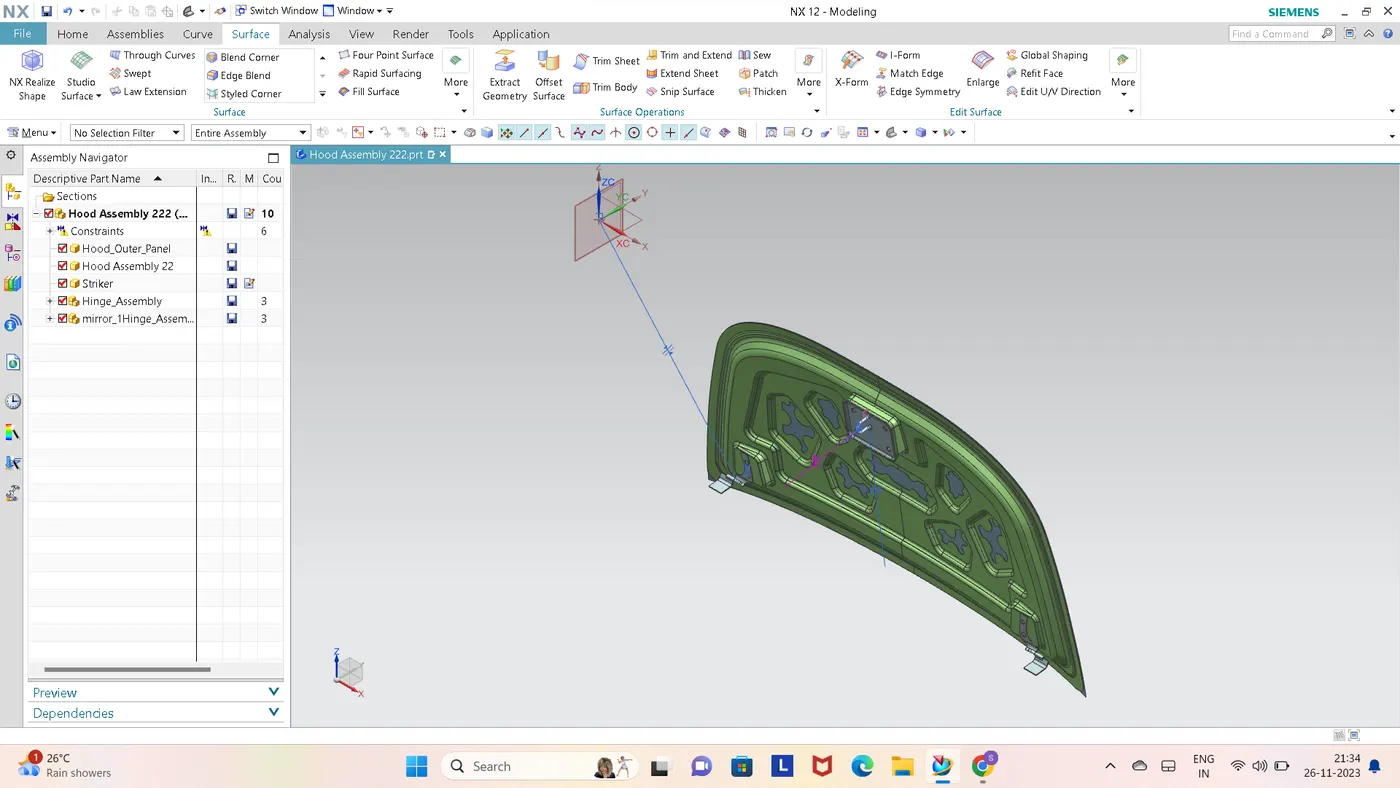
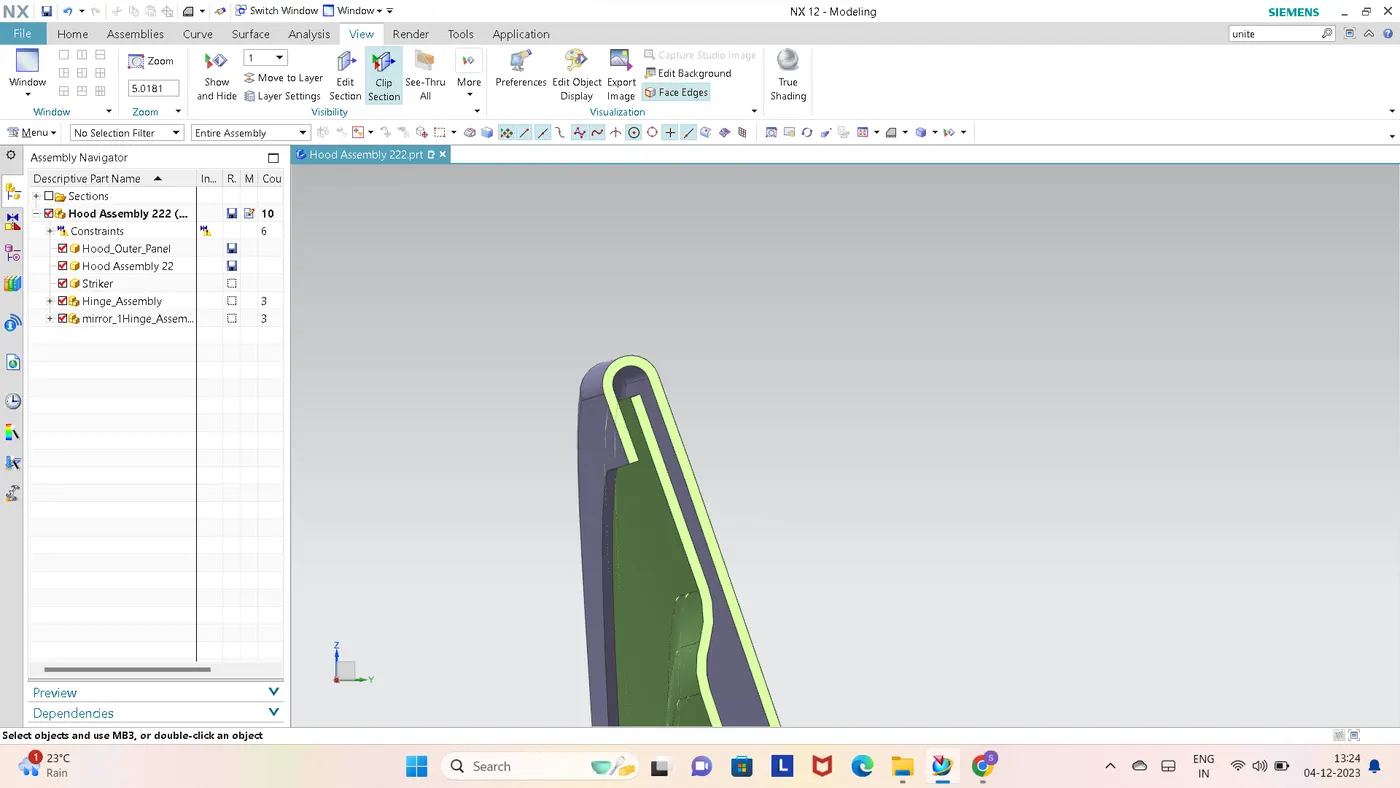
7. Hemming Process: -