Hood design-Week 2
HOOD DESIGN
(NOTE: Magna steyr training)
HOOD DESIGN:
The car hood is an essential part of the vehicle. It protects the engine and connected parts from the elements while providing easy access for repairs and maintenance.
Materials:
Steel, Aluminium, and Carbon fiber are commonly used materials for car hood manufacturing. At the same time, Carbon fiber is used in high-end luxury sports cars to reduce the vehicle mass on tracks.
Mechanism used in car hood:
The latch and striker mechanism is the commonly used mechanism in the automotive hood. A system for releasing and lifting an automobile hood includes a sensor located proximate to a front location of an automobile that detects impact with an object. Also included is a hood having a striker pin operably connected to the hood for engaging a rotatable latch, wherein such engagement places the hood in the secured position. Further included is a releasing mechanism operably connected to one of the striker and the latch for lifting a front region of the hood in response to a signal from the sensor.
Components of a hood:
This includes the hood's inner panel, outer panel, latch and striker, reinforcements (reinforcements are used to strengthen certain parts of the hood, especially where there is a weld or connecting two parts), and mastic points (mastic is a type of adhesive used to seal the hood's inner and outer panels together).
Manufacturing process:
Manufacturing of the hood is done by two processes hemming and deep drawing. Hemming is the process of Hemming presses are widely used in automotive manufacturing for hemming of sheet metal body components. The process uses traditional hydraulically operated ‘stamping presses’ to hem closure parts, and, being the last forming process in stamping, it largely determines the external quality of such automotive parts as doors, hoods, and trunk lids.
Deep drawing is a sheet metal forming process in which a sheet metal blank is radially drawn into a forming die by the mechanical action of a punch. It is thus a shape transformation process with material retention. The process is considered a deep drawing when the depth of the drawn part exceeds its diameter. This is achieved by redrawing the part through a series of dies.
Safety features:
Most pedestrian deaths occur due to traumatic head injury resulting from the hard impact of the head against the stiff hood or windshield. In addition, although usually non-fatal, injuries to the lower limb (usually to the knee joint and long bones) are the most common cause of disabilities. A Frontal protection system (FPS) then can be a device fitted to the front end of a vehicle to protect both pedestrians and cyclists in the event of a front-end collision. Car design has been shown to have a large impact on the scope and severity of pedestrian injury in car crashes.
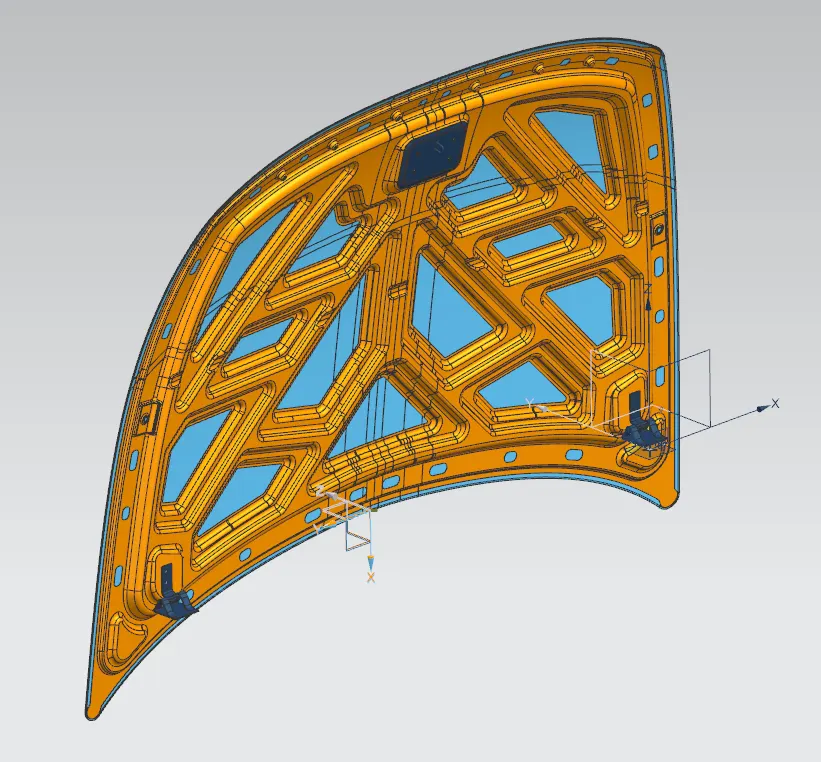
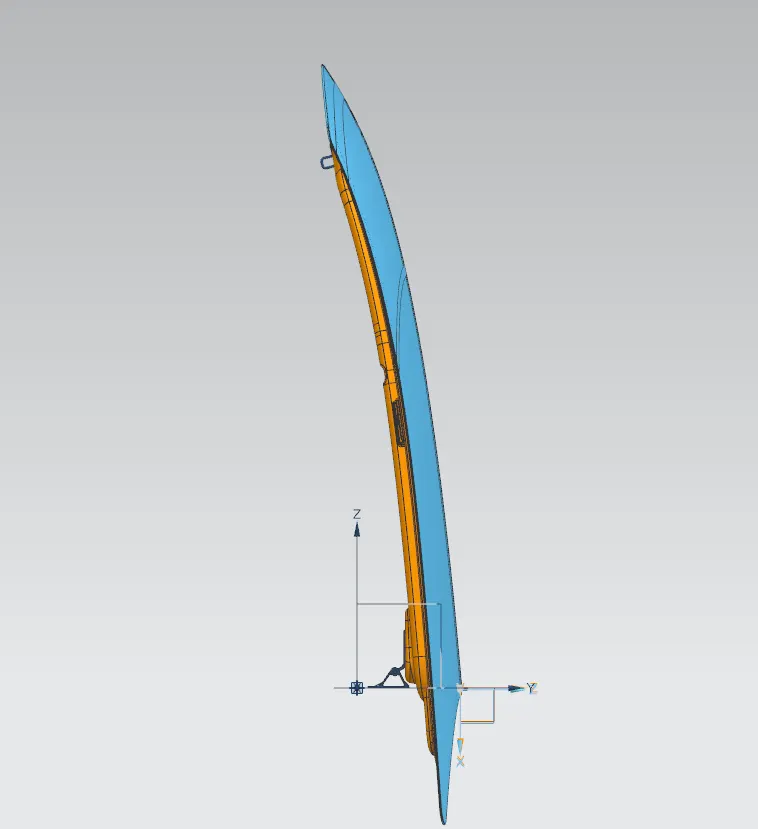
Hood 1 (images):
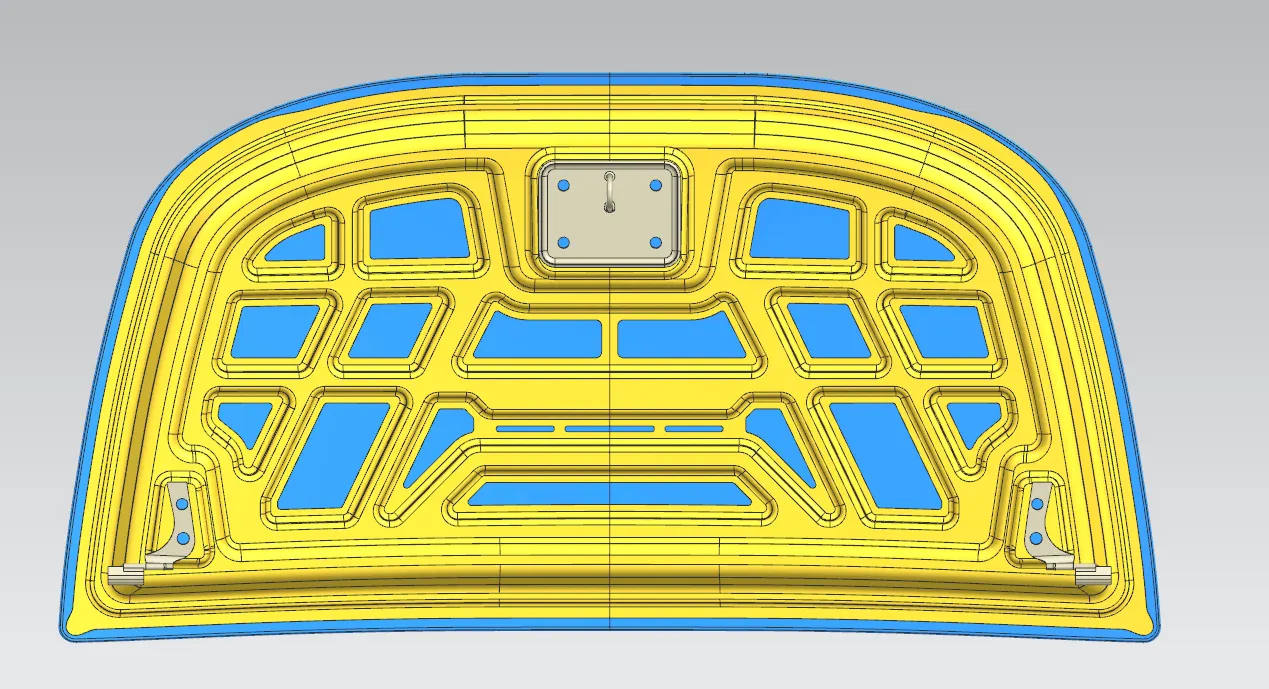
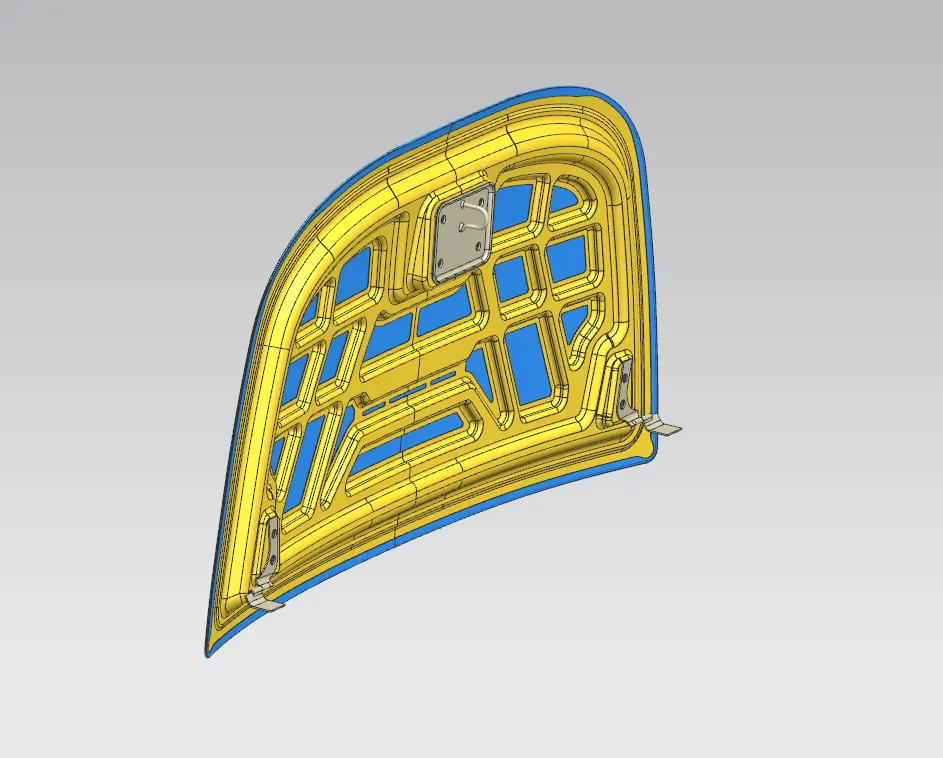
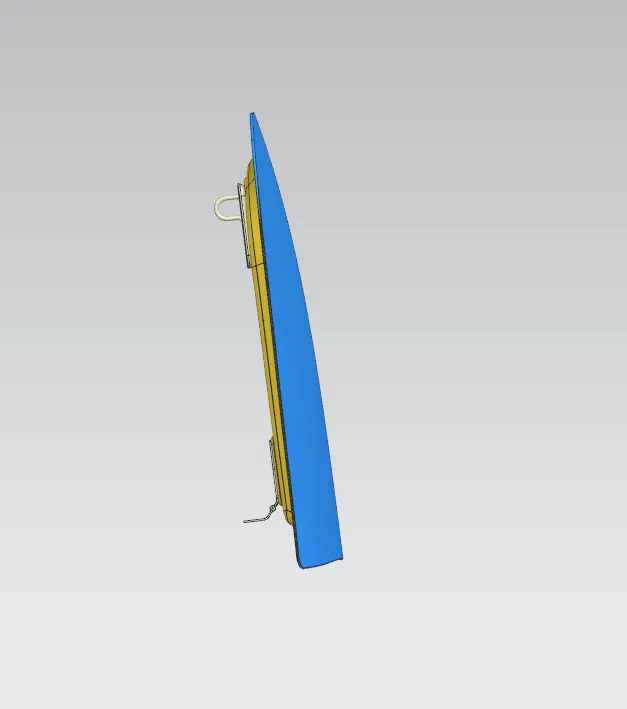
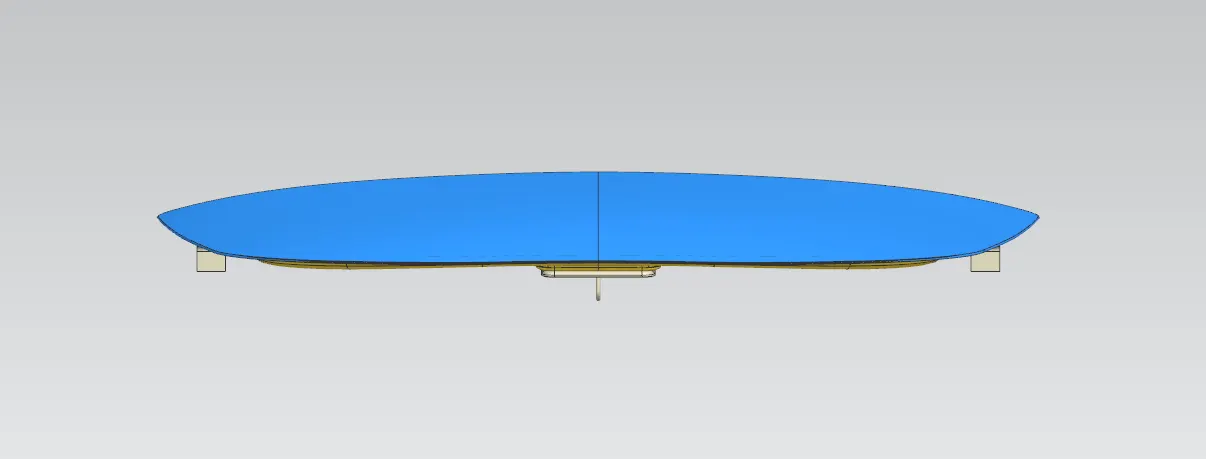
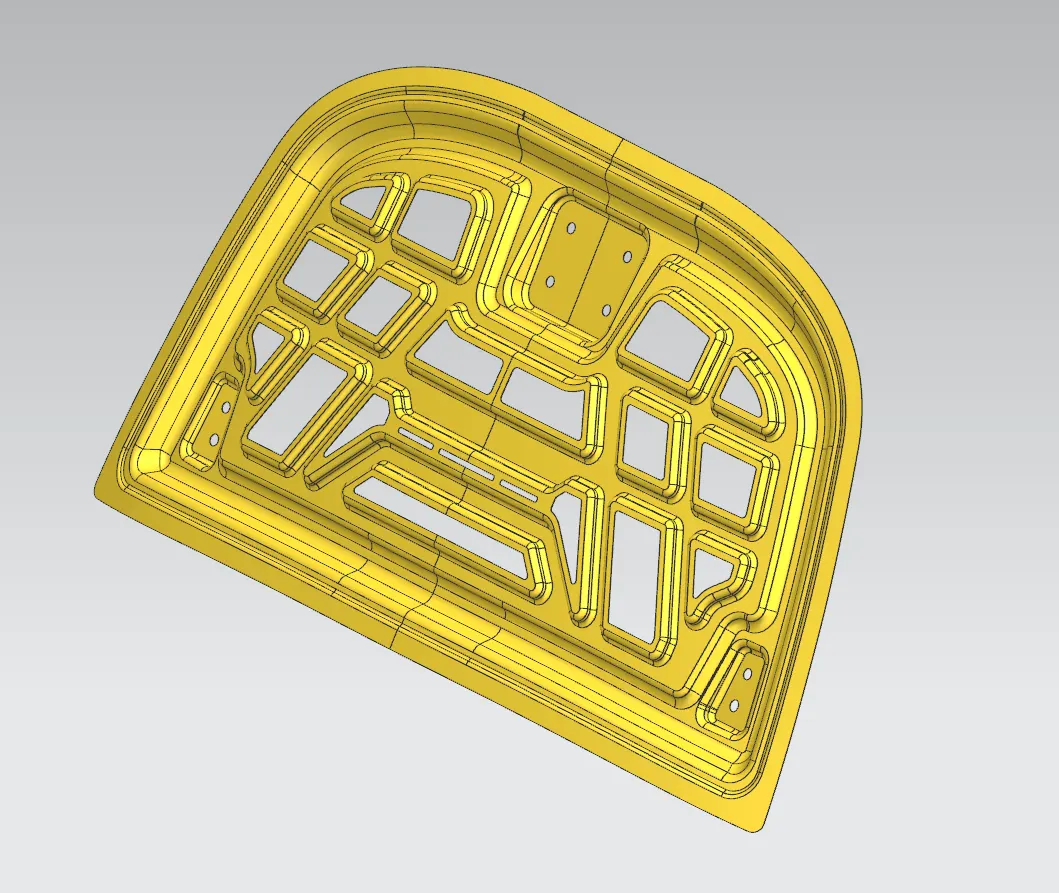
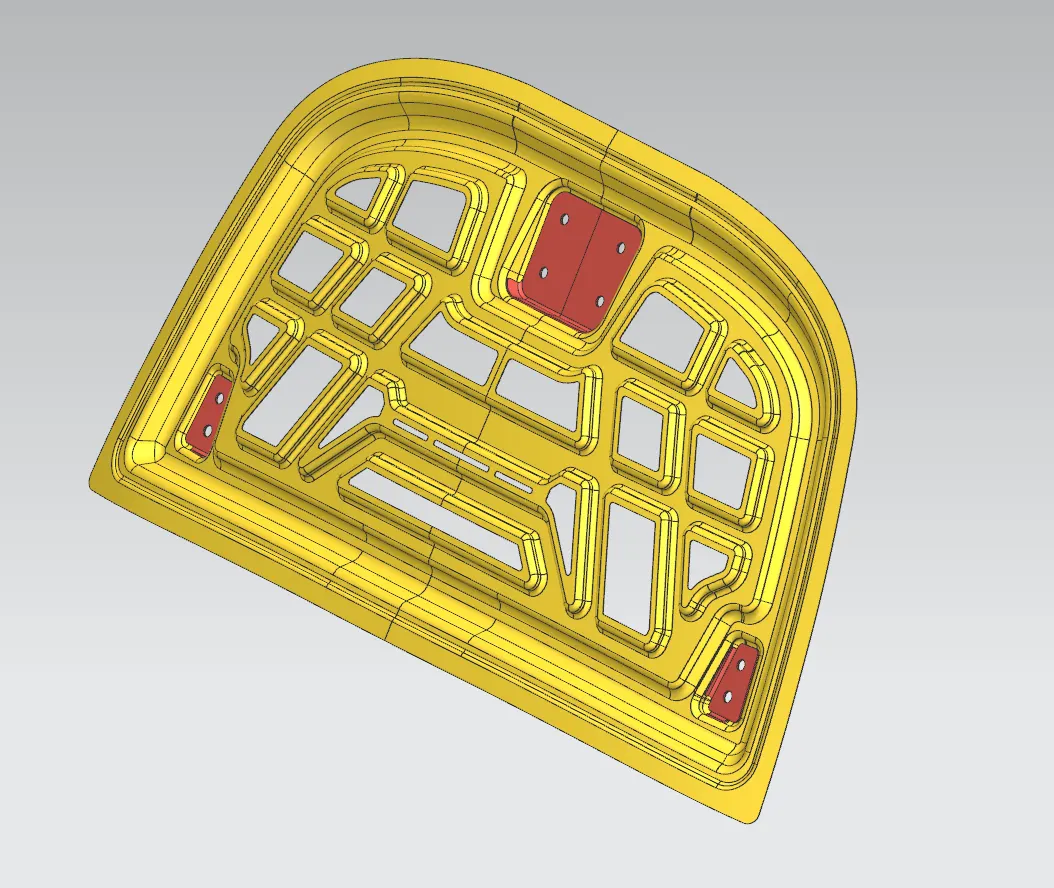
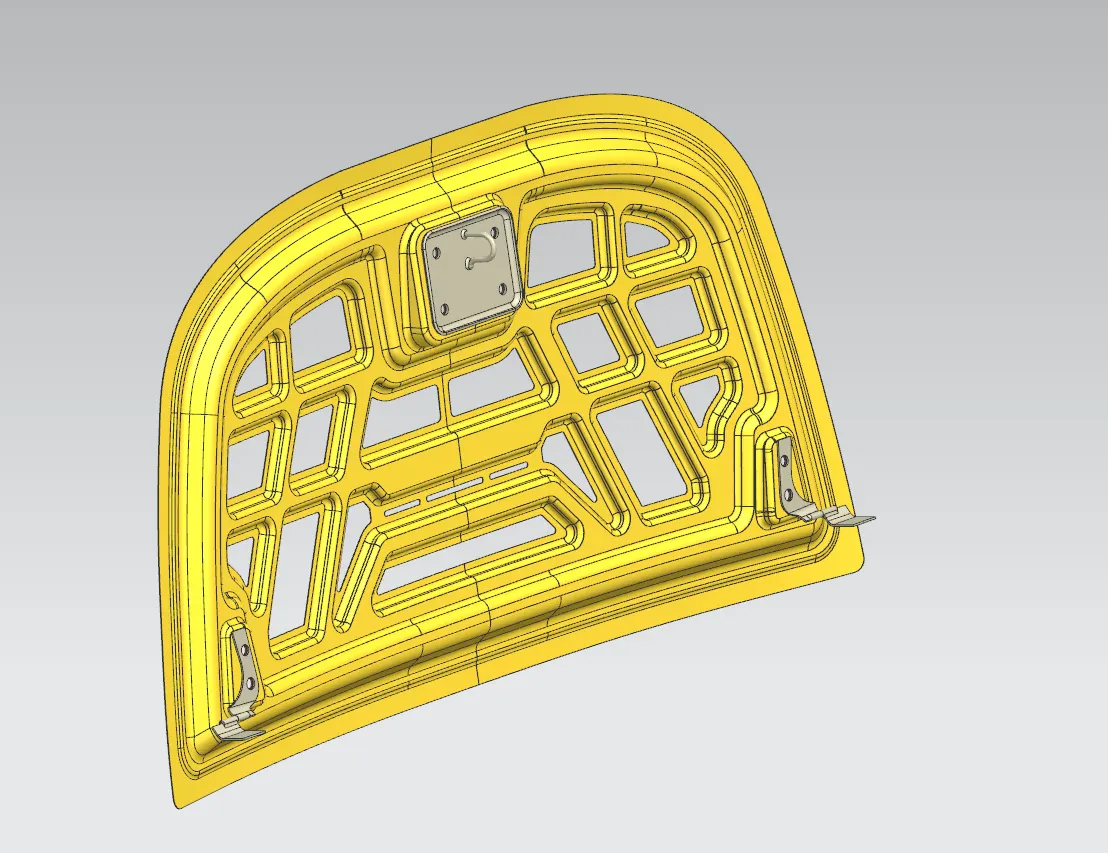
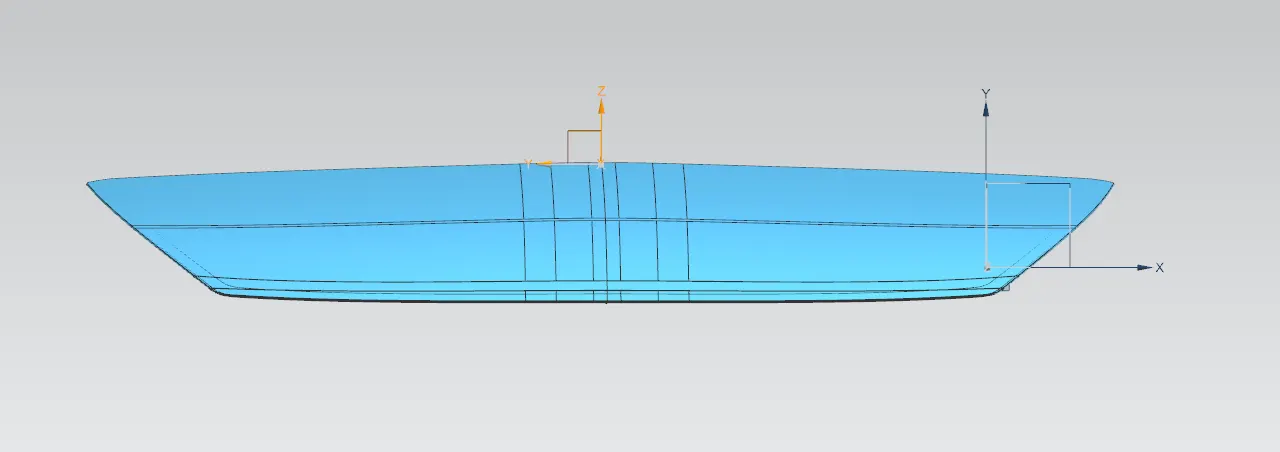
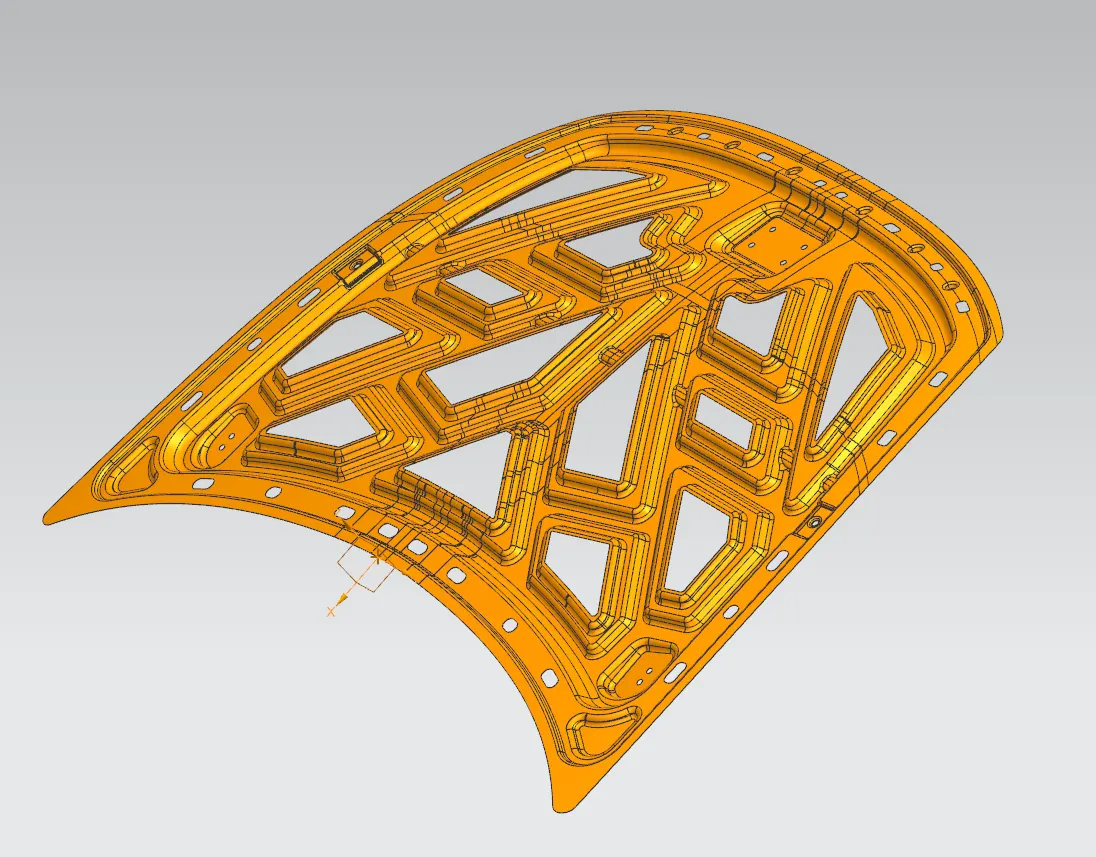
Hood 2:
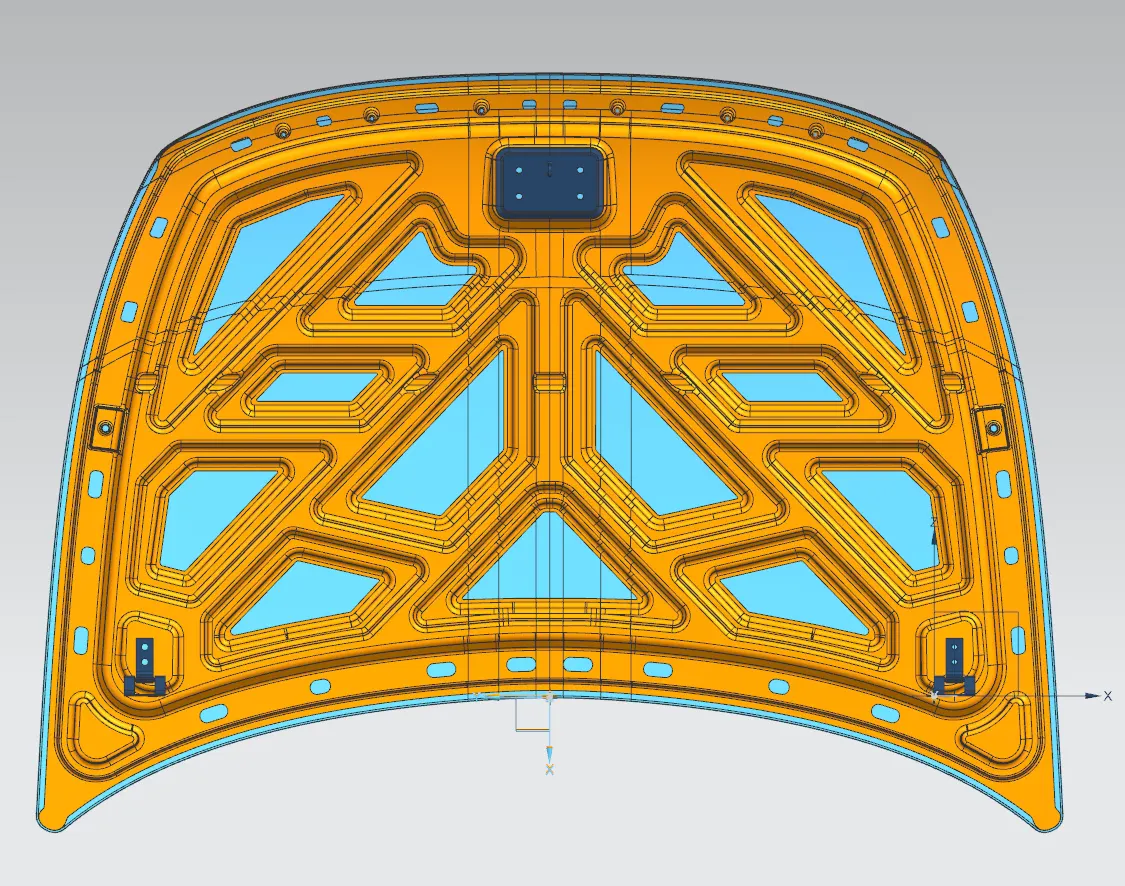
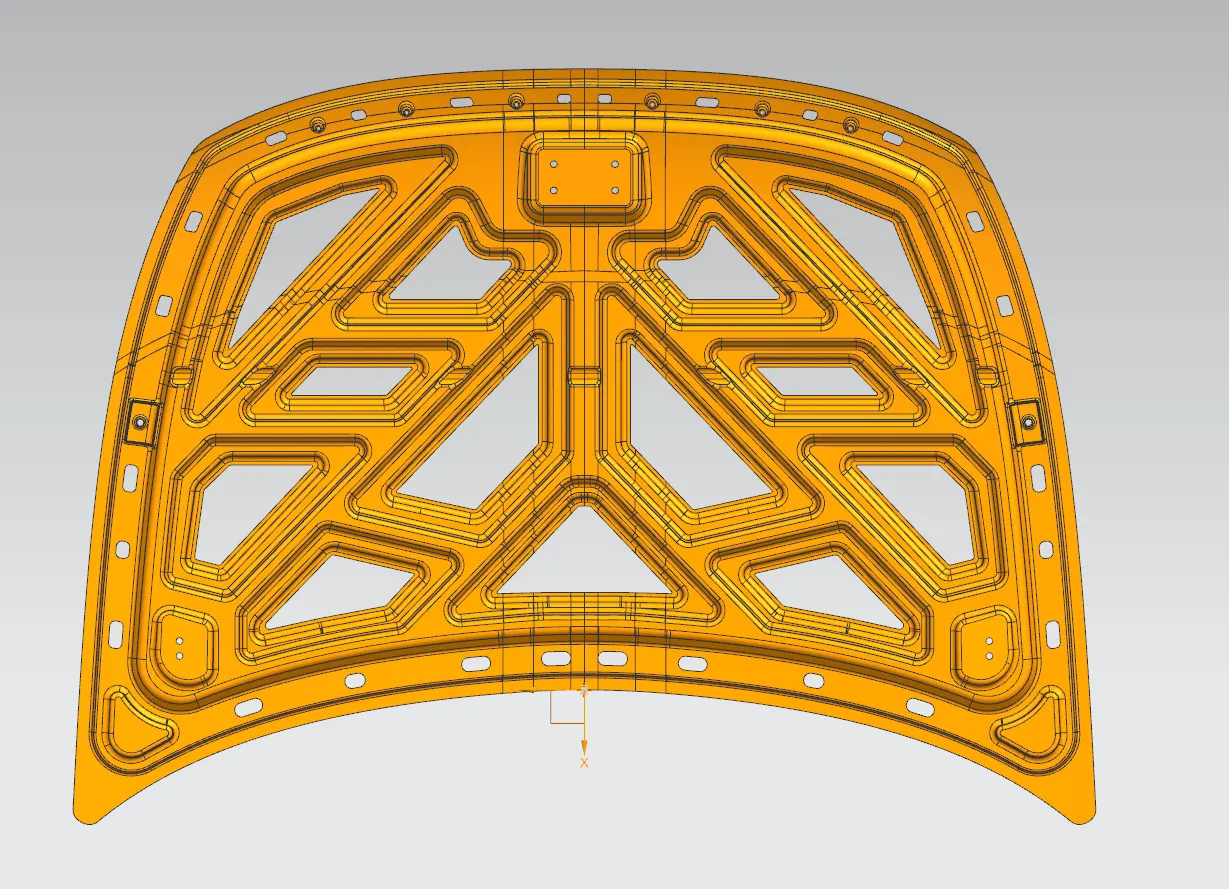
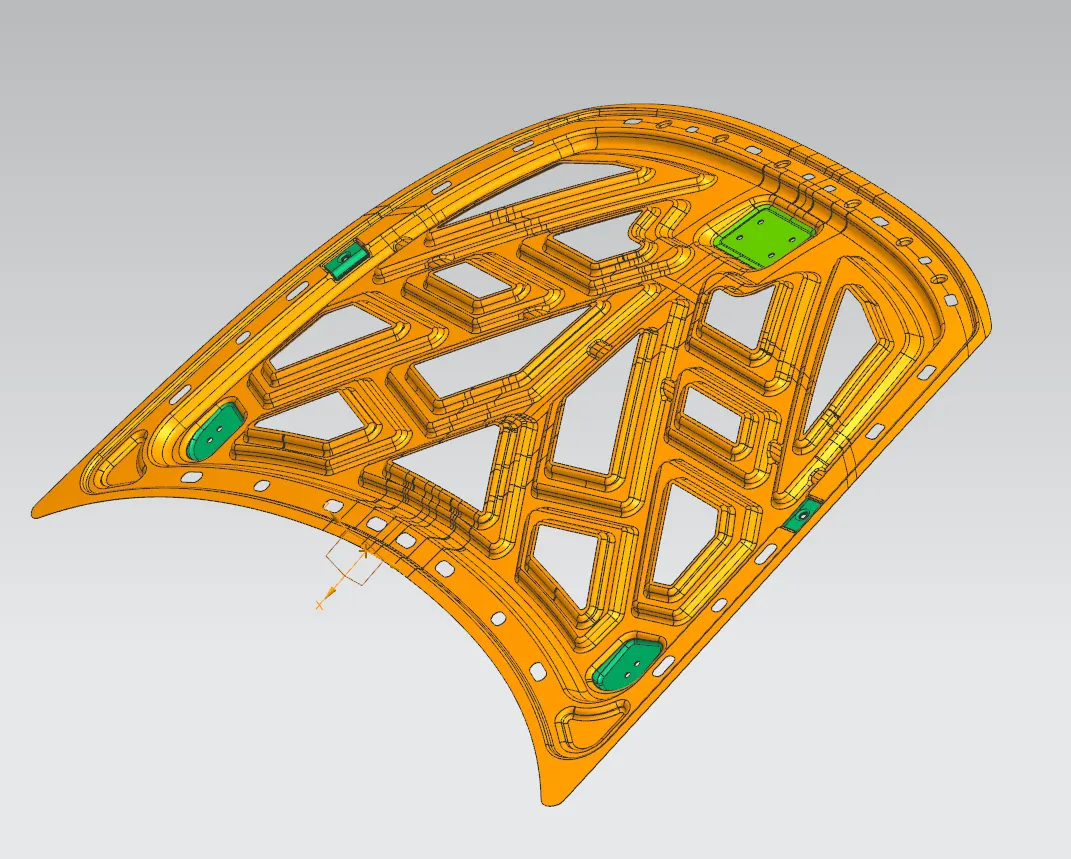
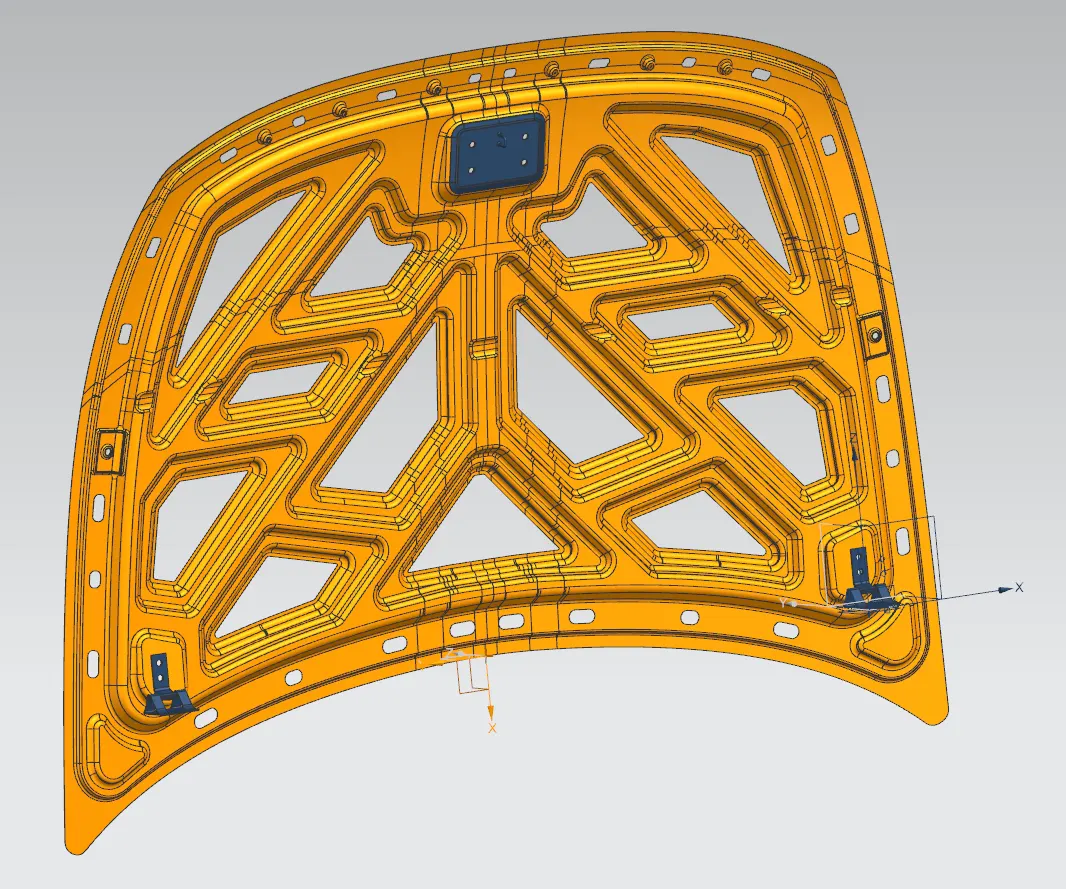
(NOTE: The output files are above 140 mb I cannot upload the files below)