Hood design-Week 2
Hood Design:
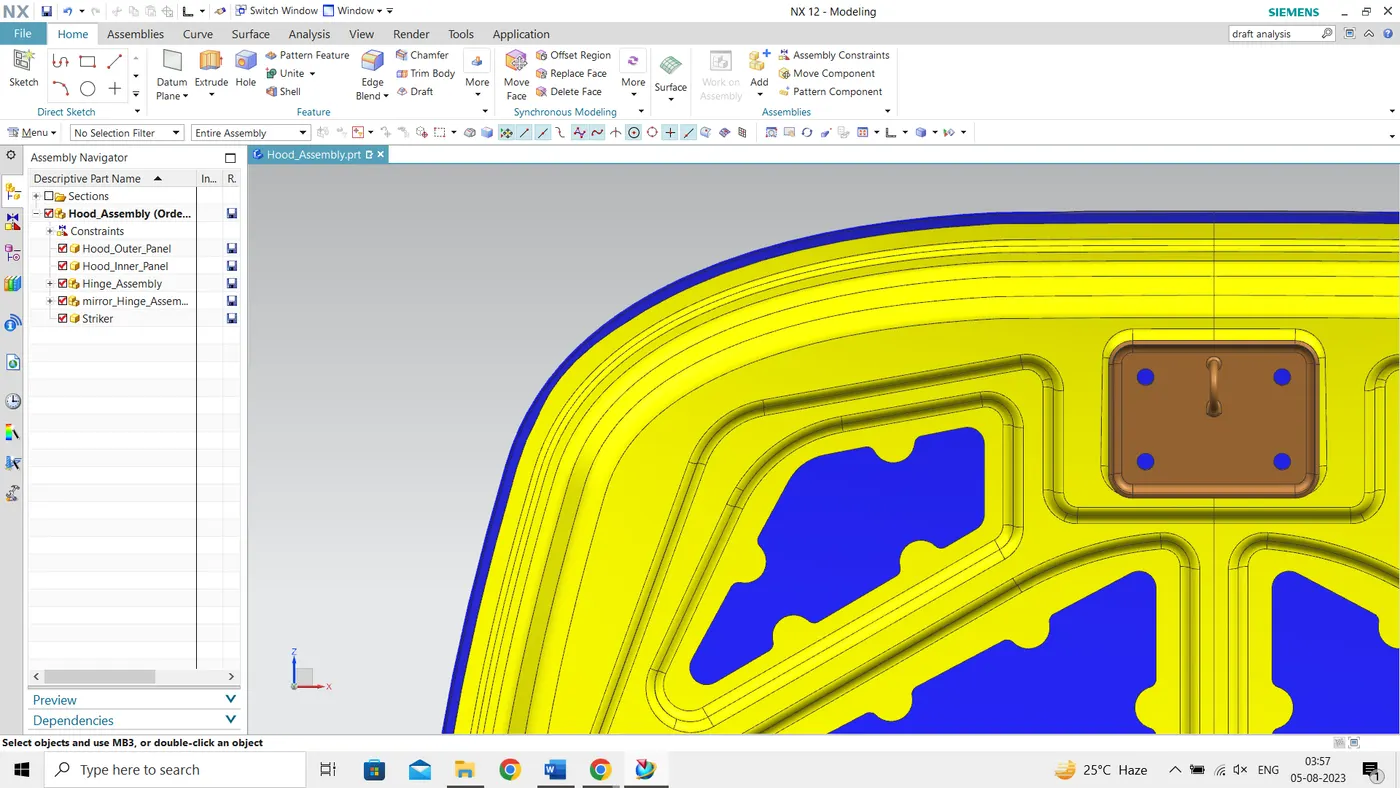
The car hood, sometimes referred to as the bonnet, in areas plays a role, in the structure of a vehicle. It serves as a protective metal panel that encloses the engine compartment, where the engine and other important components are housed. Typically the front of the hood is hinged, enabling it to be lifted or raised for maintenance and repairs to the engine bay.
Hood mainly consist of 4 components:
- Outer panel,
- Inner panel,
- Hinges and
- Latch striker.
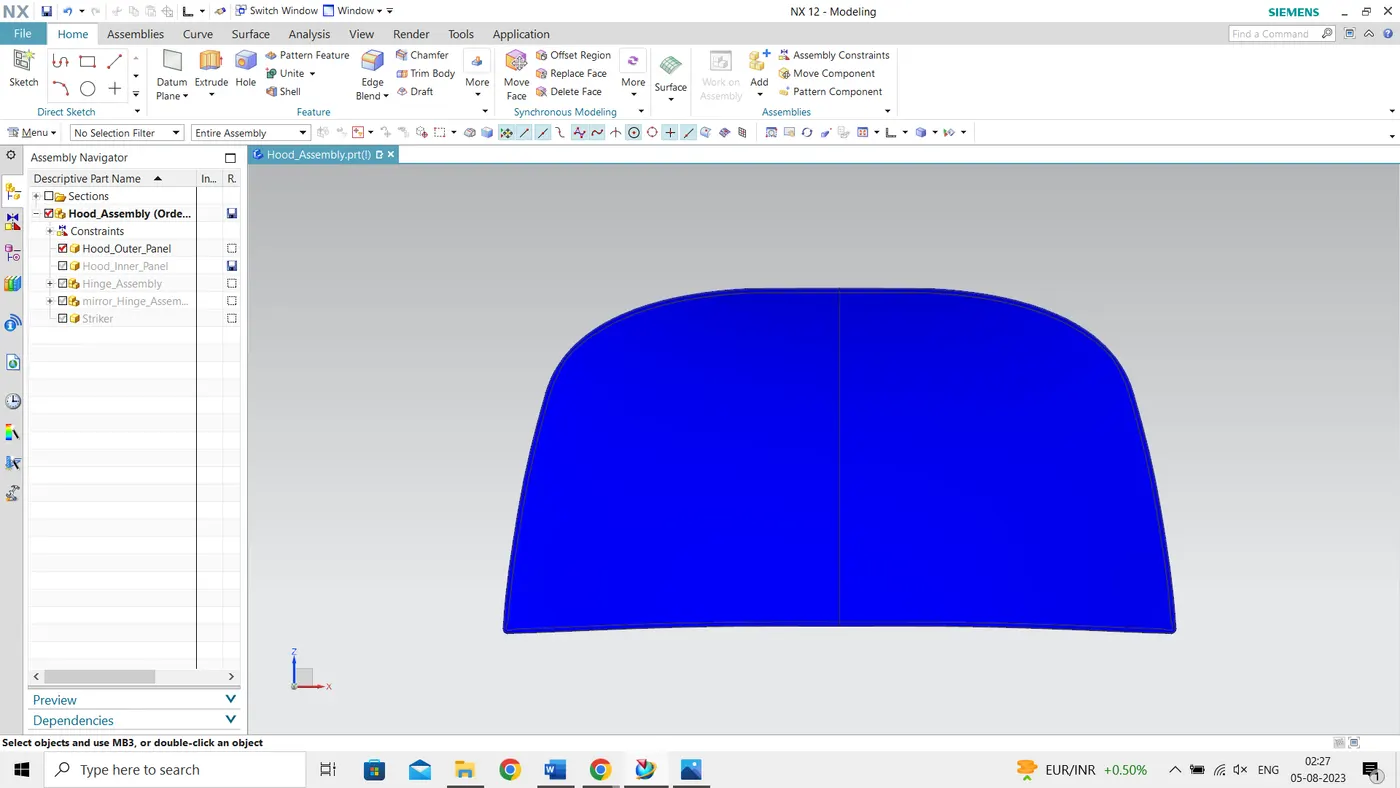
1. Outer Panel:
The outer panel of the car hood serves both functional and aesthetic purposes, contributing to the overall design and appearance of the vehicle while also protecting the engine compartment from various environmental elements
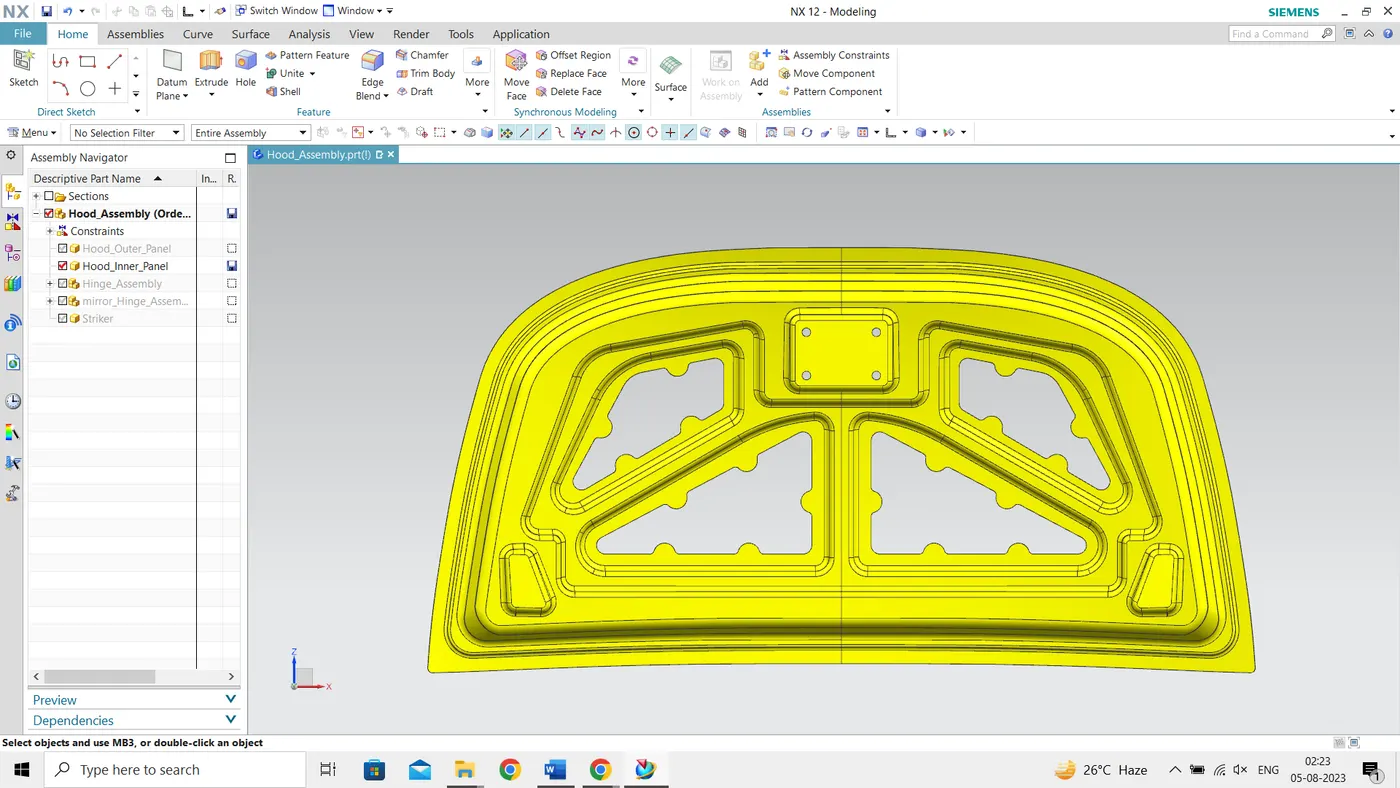
2. Inner Panel:
The car hood's inner panel, also known as the hood liner or inner structure, is the part of the hood that faces the engine compartment. It is not visible when the hood is closed and is hidden beneath the outer panel. The inner panel plays a crucial role in supporting the outer panel, providing structural integrity, and offering additional functional benefits.
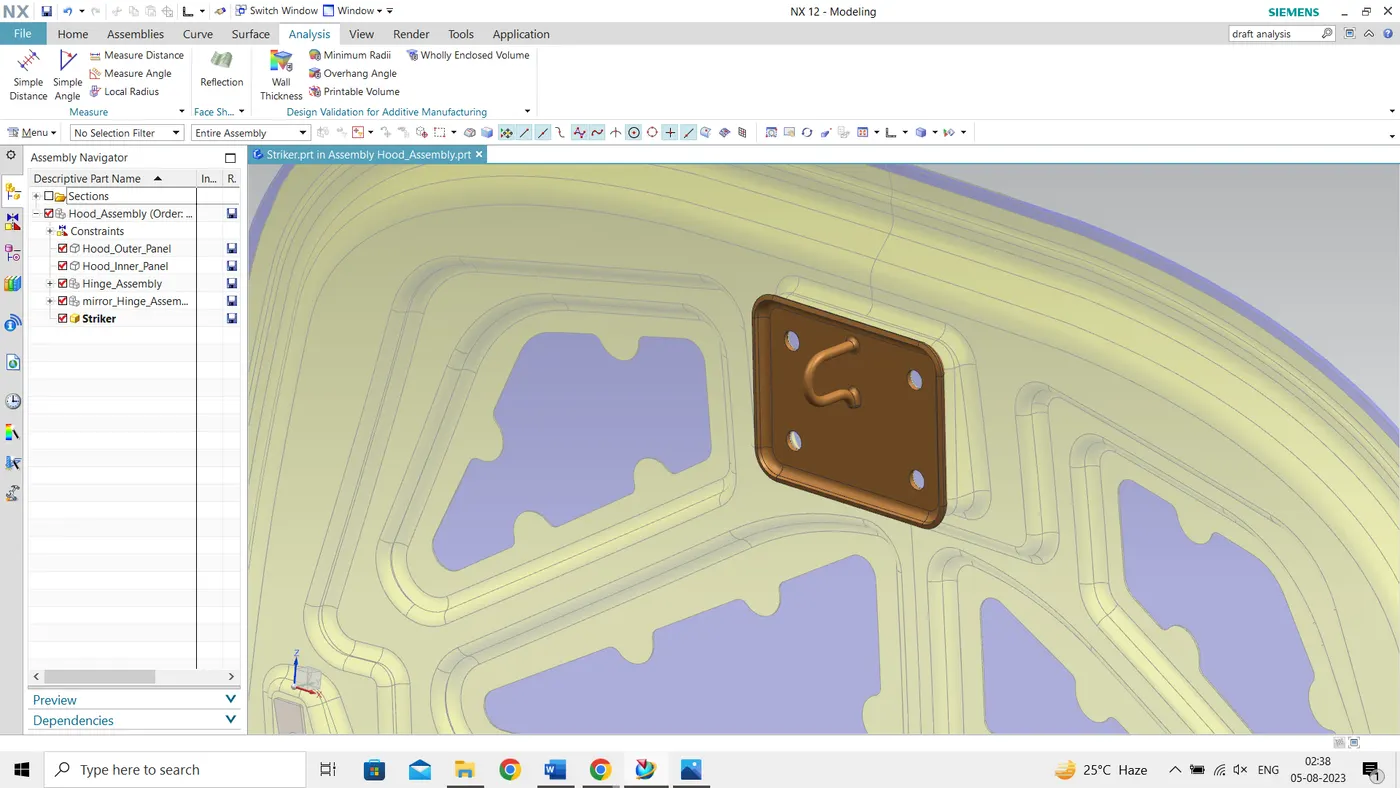
3. Latch:
A hood latch is a very simple component. It's basically the fastener that keeps your hood closed shut. This latch ensures that your hood is securely connected to your vehicle and that it doesn't pop open unexpectedly
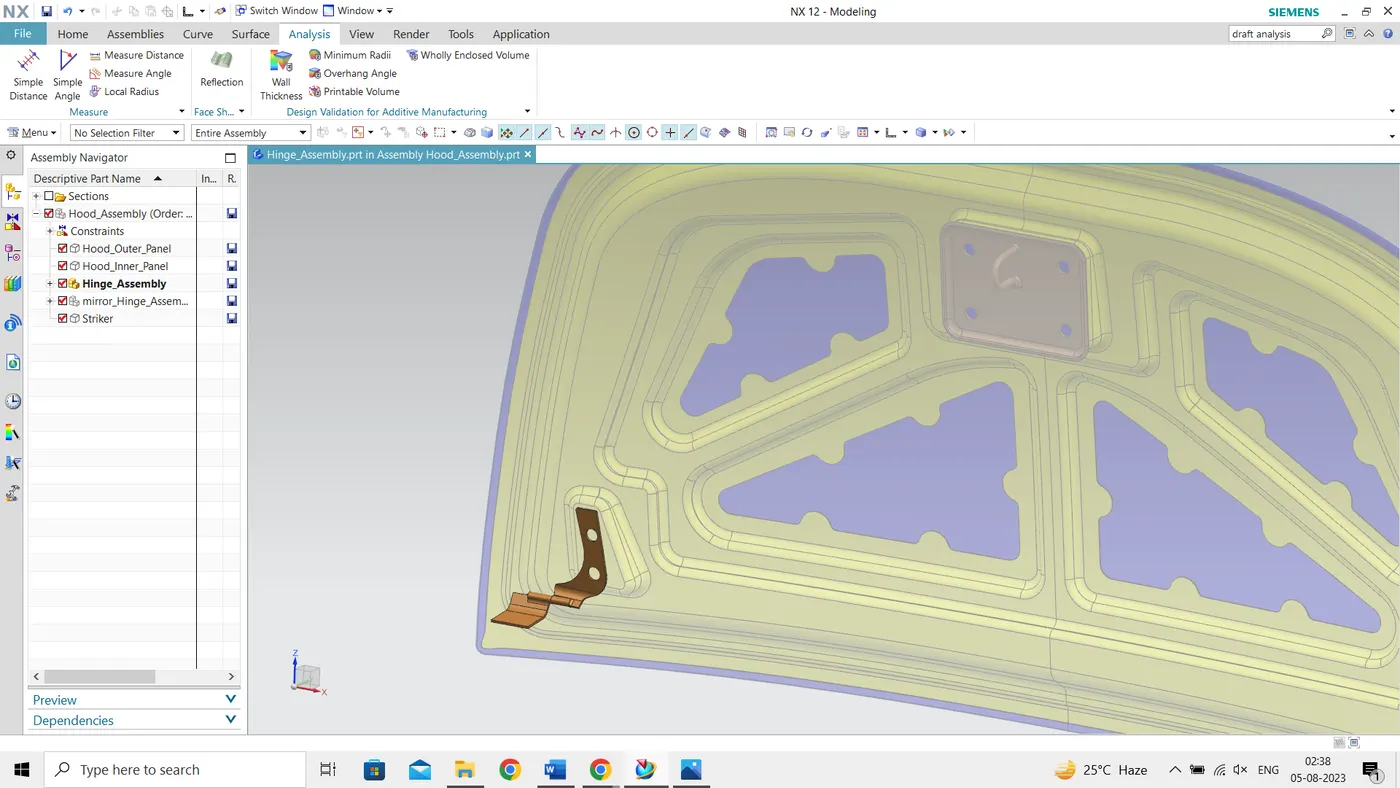
4. Hinge:
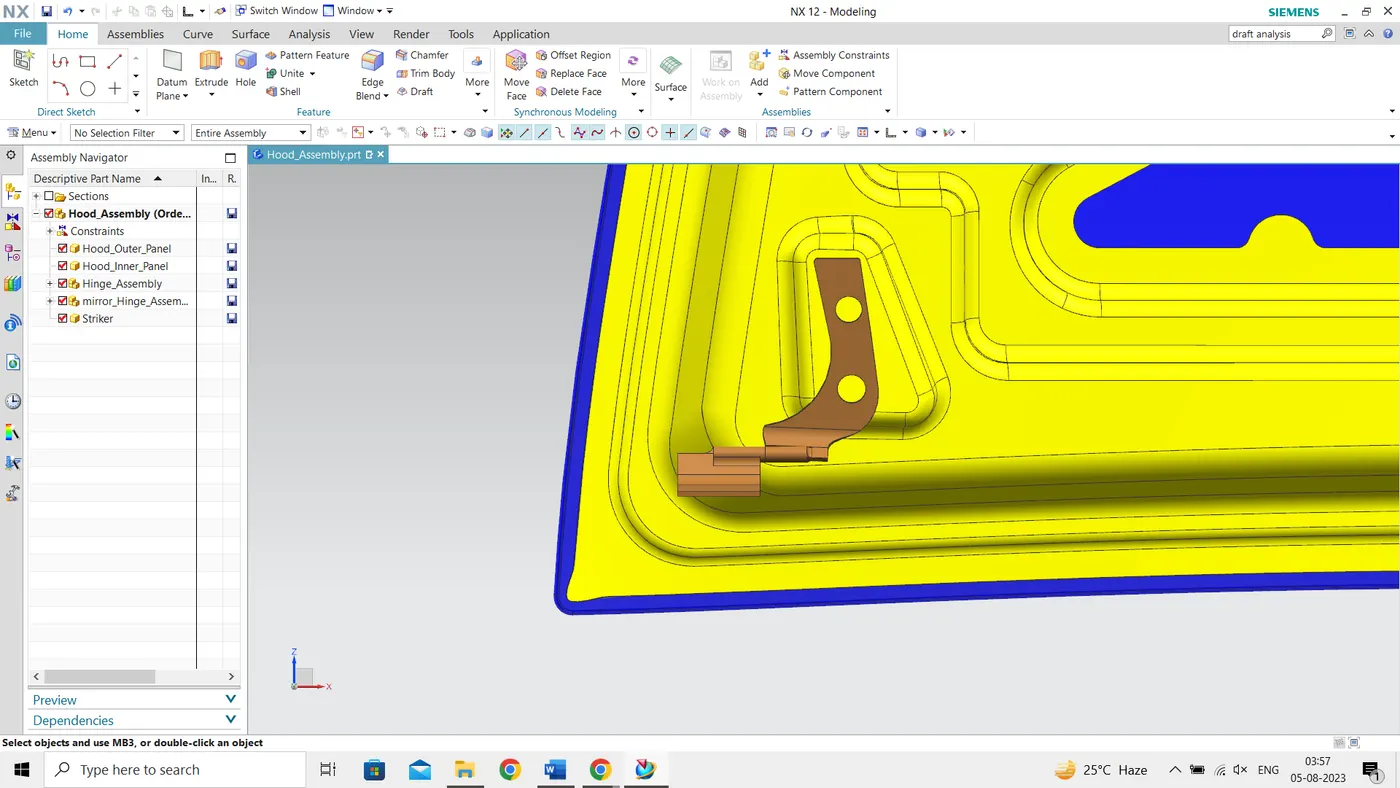
Hinge is a component that fixes the hood to the fenders of the car. The latch must be fixed perpendicular to the hinge axis so that the hood opens or closes properly.
Latch Trajectory:
Latch trajectory is used to position the striker and find a suitable opening angle for the hood. The latch and striker has to be positioned tentatively, with the help of hinge axis taken. Whenever e swinging part is designed its trajectory and positioning of components have to be checked.
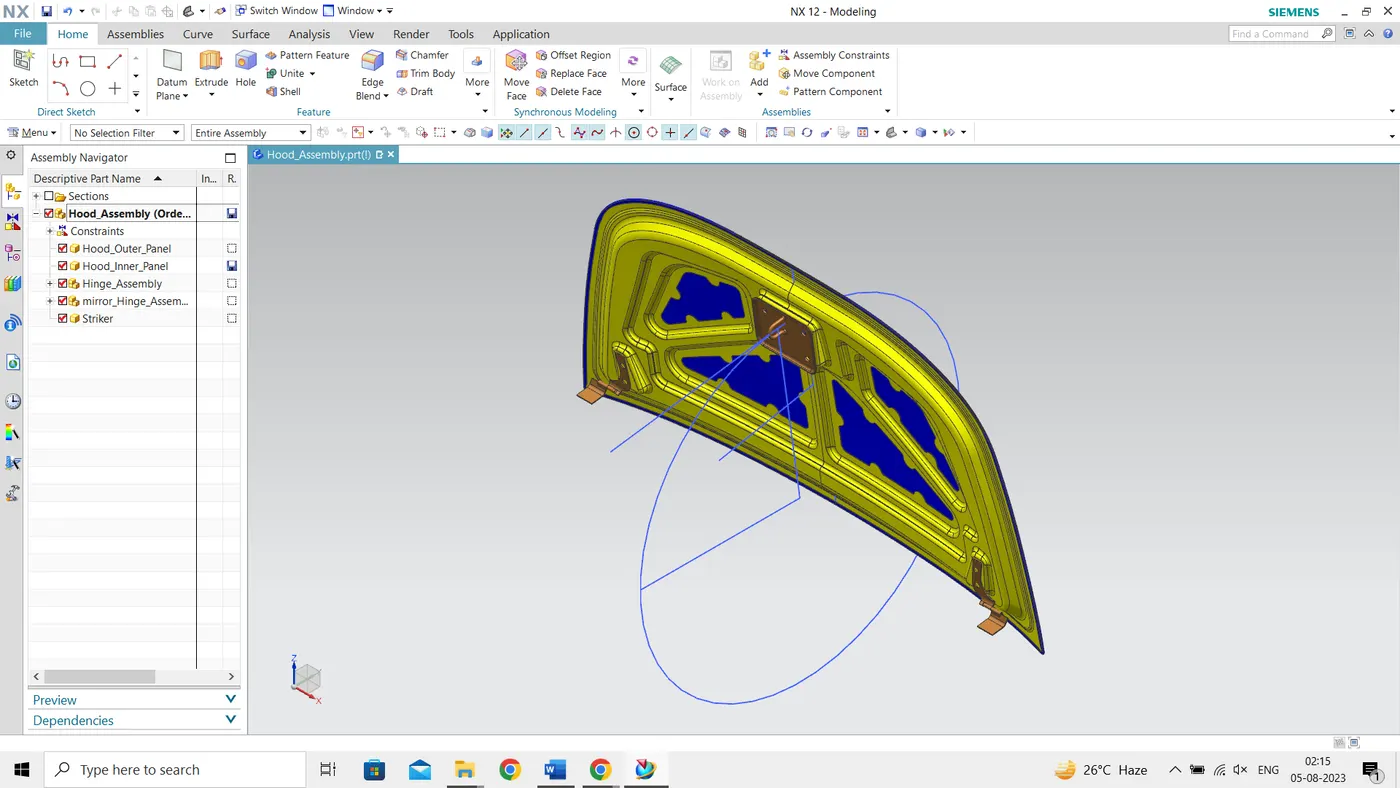
Mastic Data:
Mastic sealants are used as a gluing agent between the inner and outer panels. It is also used to improve the stiffness of the area. It plays a vital role in reducing the NVH. Mastic sealant covers the area from the centre of the mastic point. Stiffness will be increased in this circular zone.
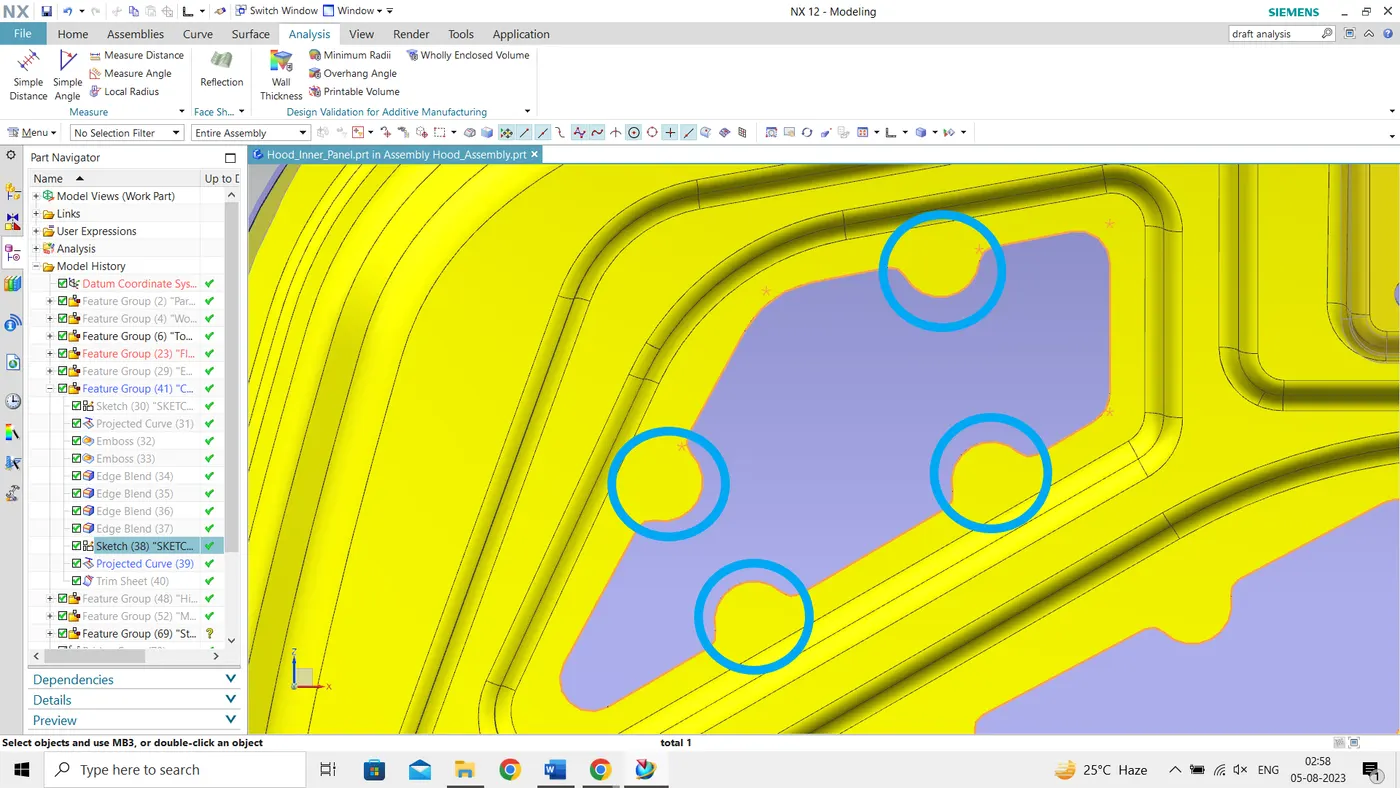
Manufacturing Processes
Embossing:
We provide different embosses throughout the inner panel . We can increase the stiffness of the inner panel through these embosses. The shape and size of the embosses also determines the direction of the force distribution resulted from frontal collision. The force should be always distributed away from the passengers
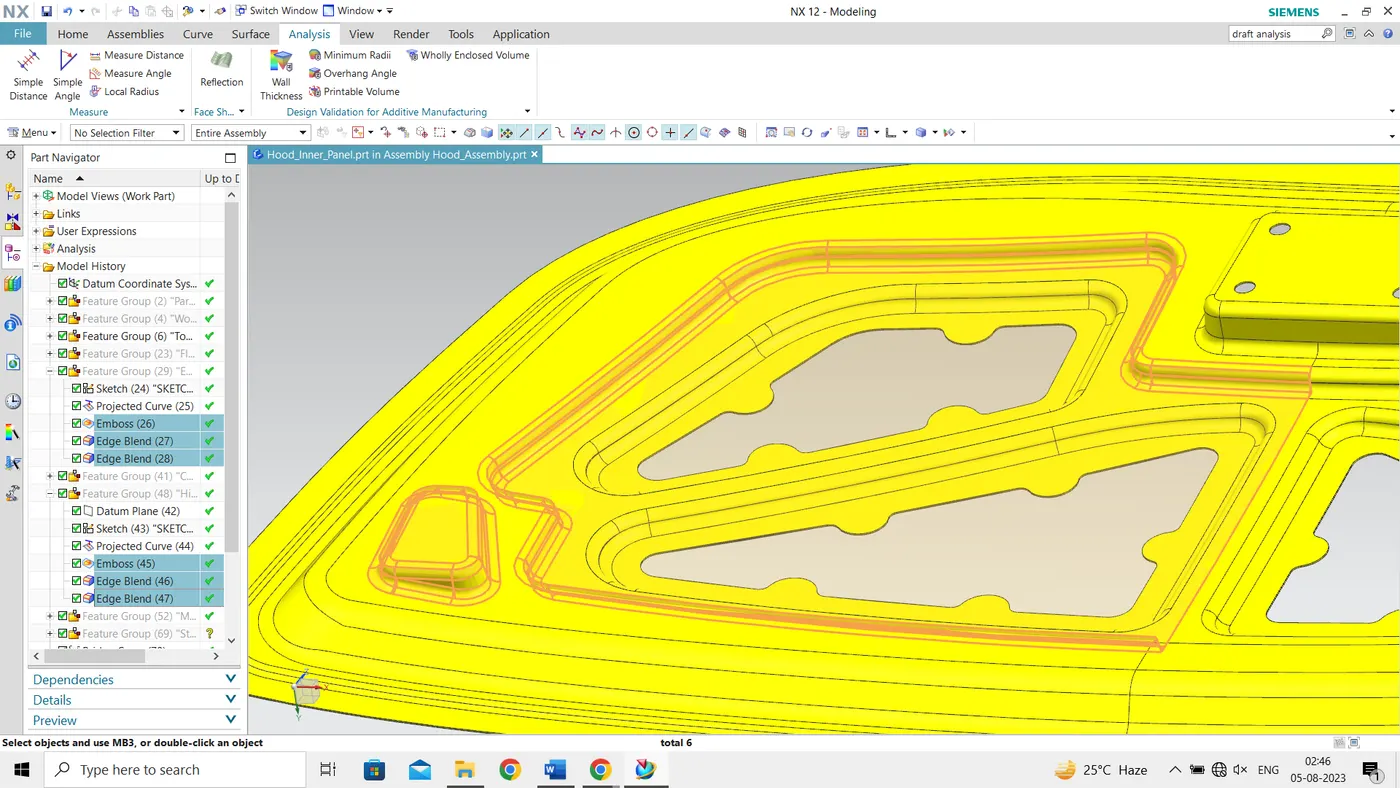
Hemming:
Hemming is a technology used by the automotive industry to join inner and outer closure panels together (hoods, doors, tailgates, etc.). It is the process of bending or folding the flange of the outer panel over the inner one. The accuracy of the operation affects significantly the appearance of the car’s outer surfaces and is therefore a critical factor in the final quality of a finished vehicle. There are 3 steps in hemming. They are as follows.
- Flanging
- Pre- Hemming
- Final Hemming
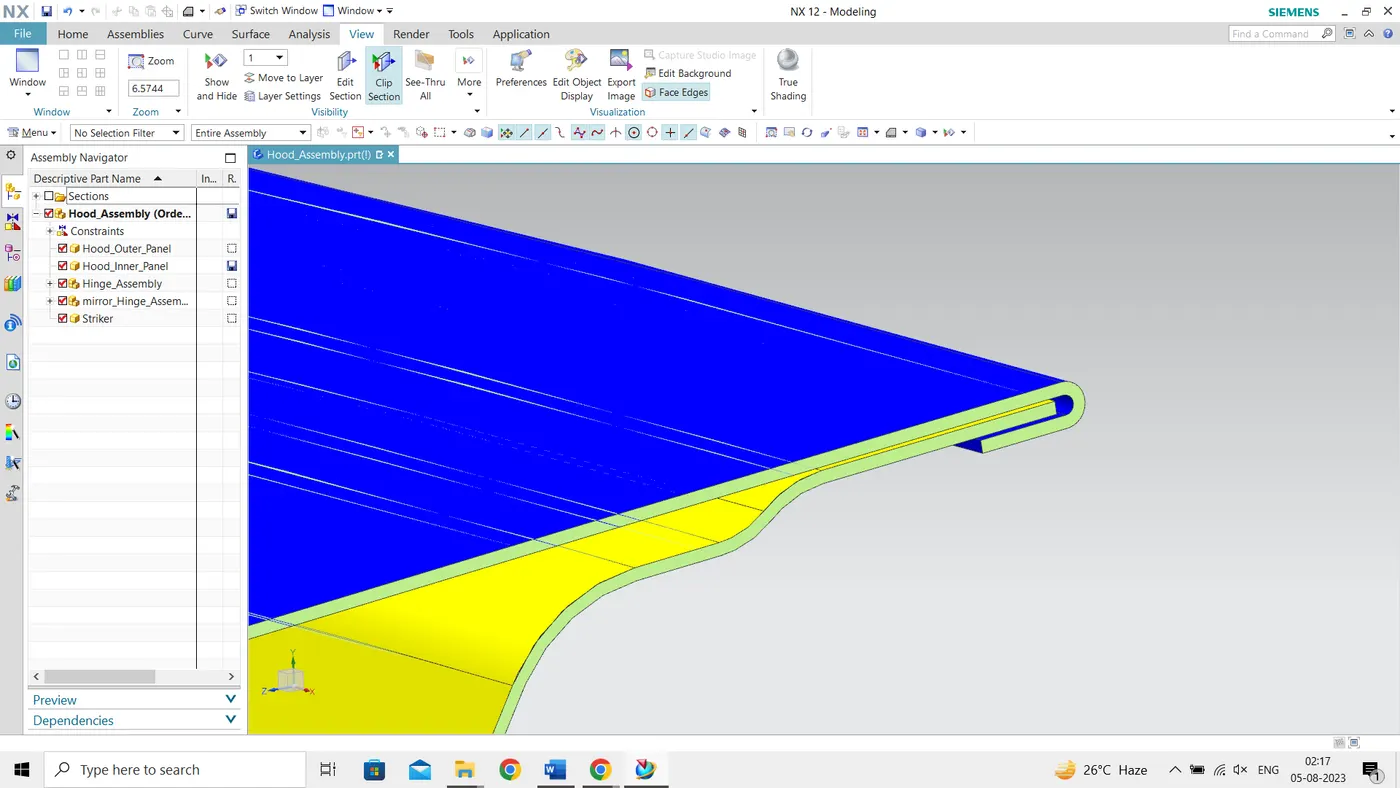
It is necessary to provide required hemming flange and reliefs for the hemming operation. We also provide mastic sealants between outer panel and inner panel to reduce vibration.
Draft Analysis:
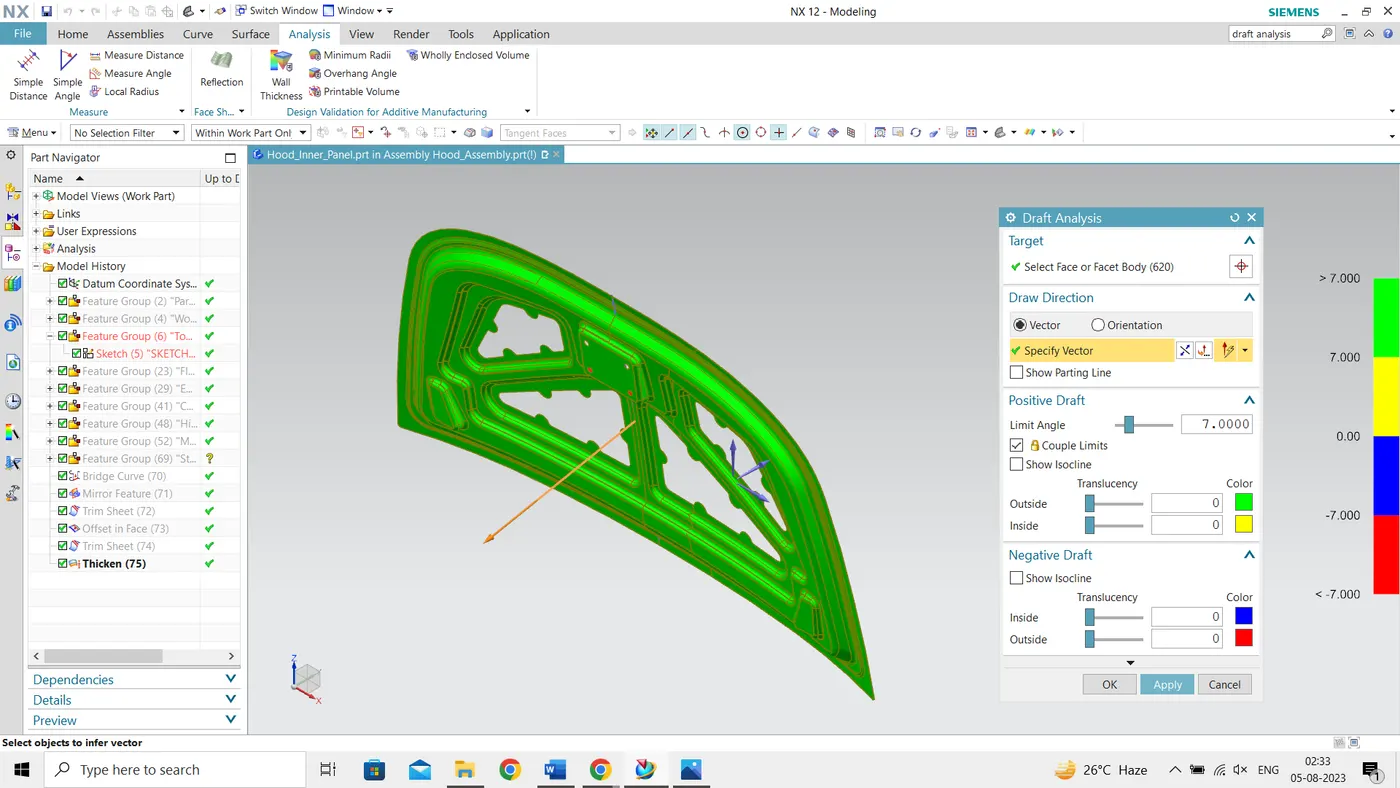
7 degrees of draft analysis is made to the inner panel along the tooling axis to find any negative draft, it is done to develop and submit a positive design to the manufacturers.
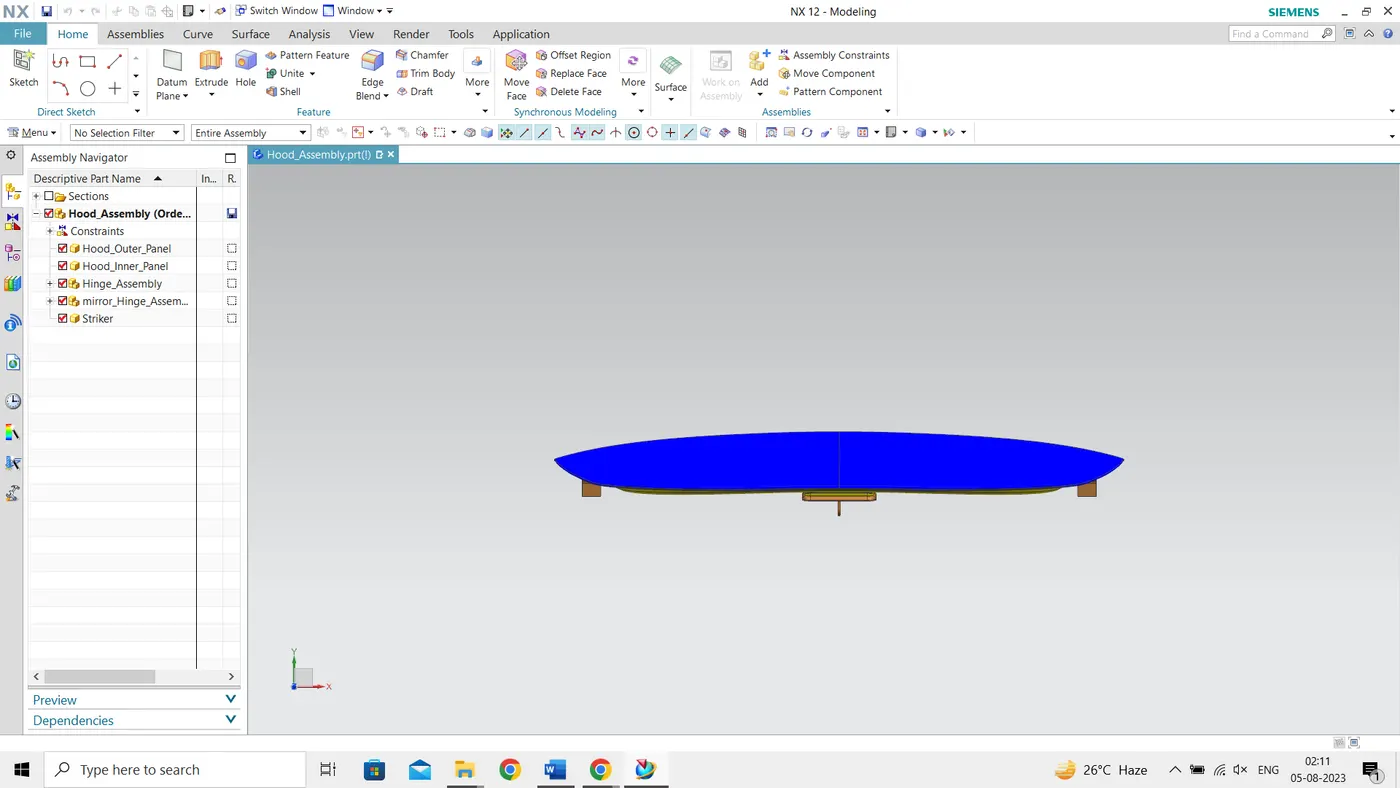
Hood Assembly Views:
Front View:
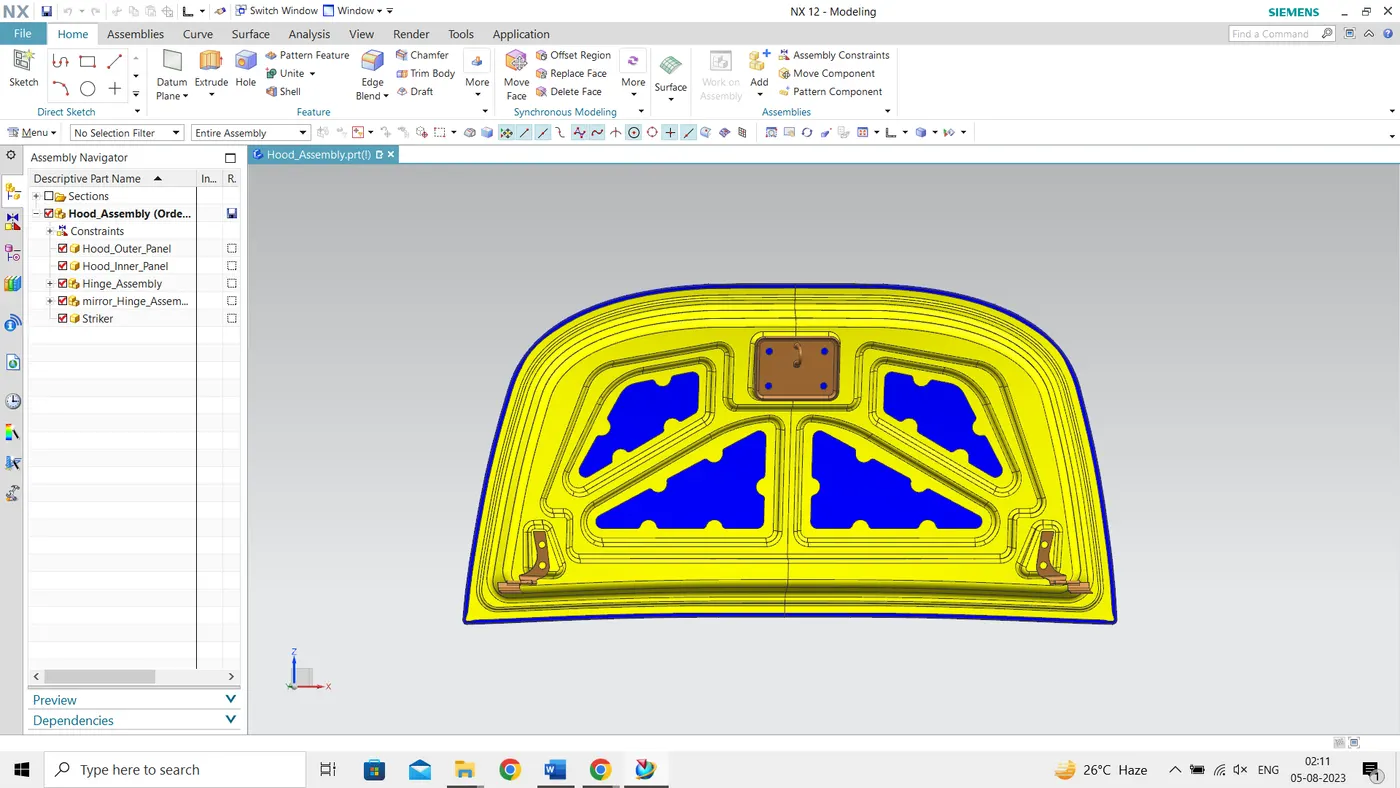
Top View:
Isometric View:
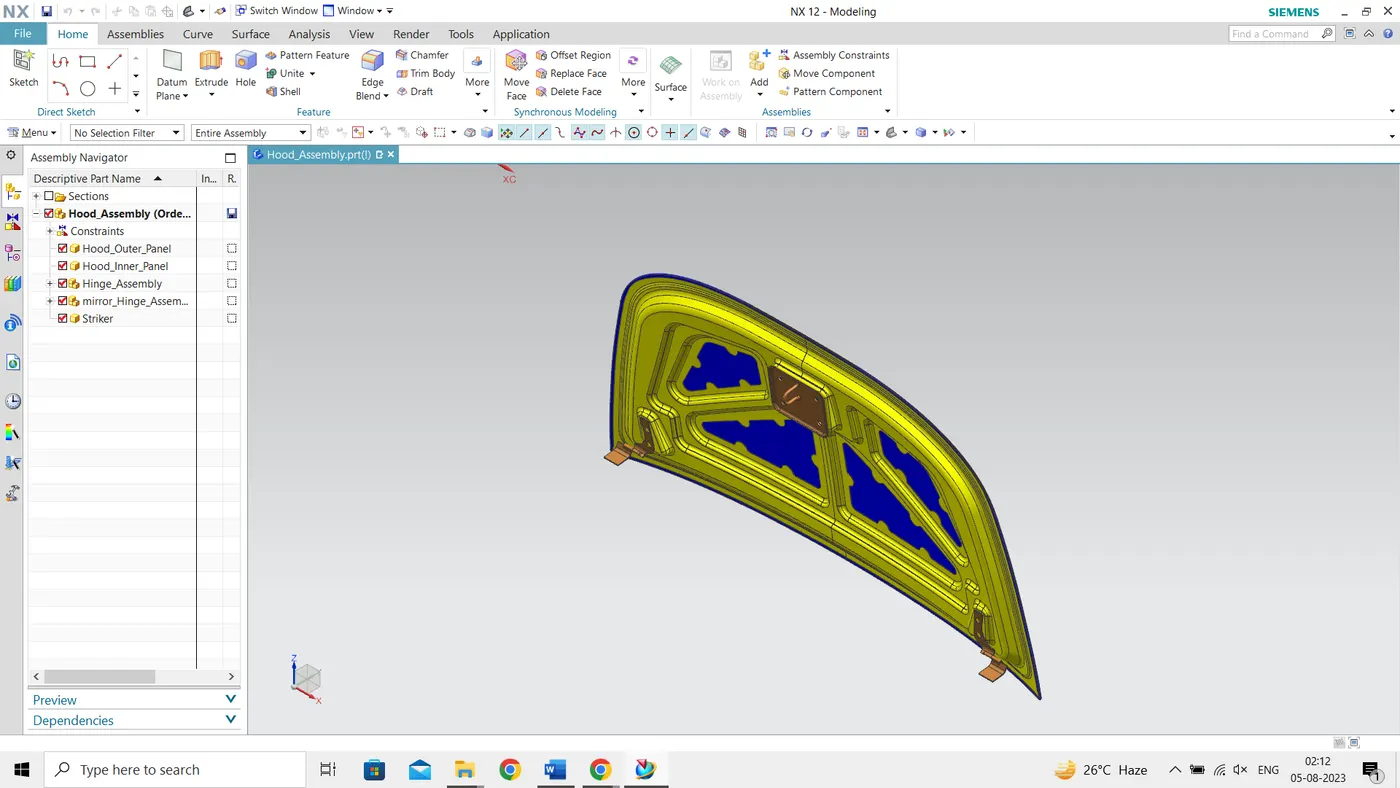
Therefore, designed a hood based on the following Master Section mentioned and submitted assembly, part files including Step(.stp) file in the below "Hood Design Challenge by A.Venkatasrinu" Zip folder