Hood design-Week 2
Abstract:
A detailed report about the Hood Design which includes a detailed explanation about hood and its components, Latch Trajectory, Mastic Data, Emboss Definitions, Manufacturing process like Deep-Drawing and Hemming, and all the parameters followed in the design.
What Is Hood of Car?
A car hood also referred to as a bonnet in some other countries is the hinged cover that rests over the engine of a front-engine vehicle. Its purpose is to provide access to the engine for repair and maintenance. Car hoods are typically constructed from steel and sometimes from aluminum.
Commonly Used Materials for Hood Manufacturing
Because the hood is usually detachable from the rest of the frame with relatively minimal effort, vehicles may sport hoods made from different materials than the rest of the body.
1. Steel
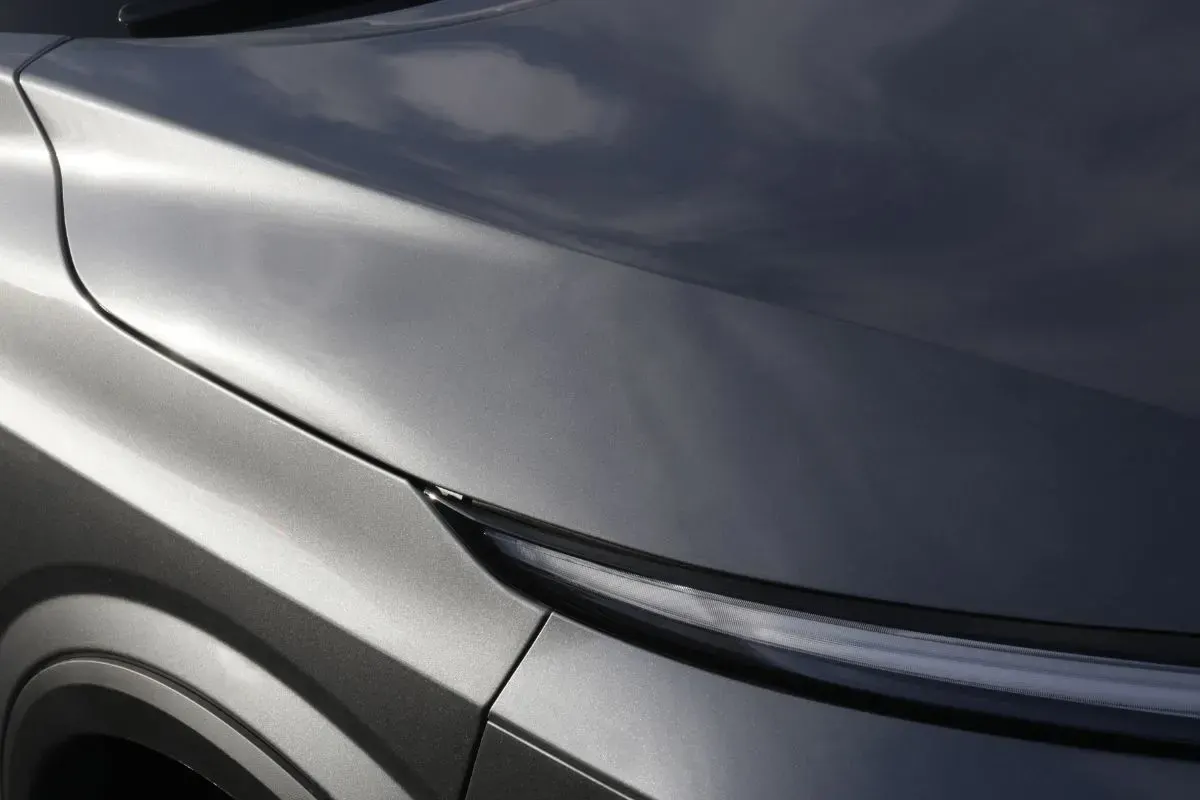
Steel is synonymous with strength and durability. It has been the go-to metal for engineering needs, including automobiles.
The varying formulas for steel have a large impact on its performance, so the standard form of steel used for cars has a higher weight than the alternative hood materials. Its low price is still a major reason for its continued usage as the standard hood material.
2. Aluminium
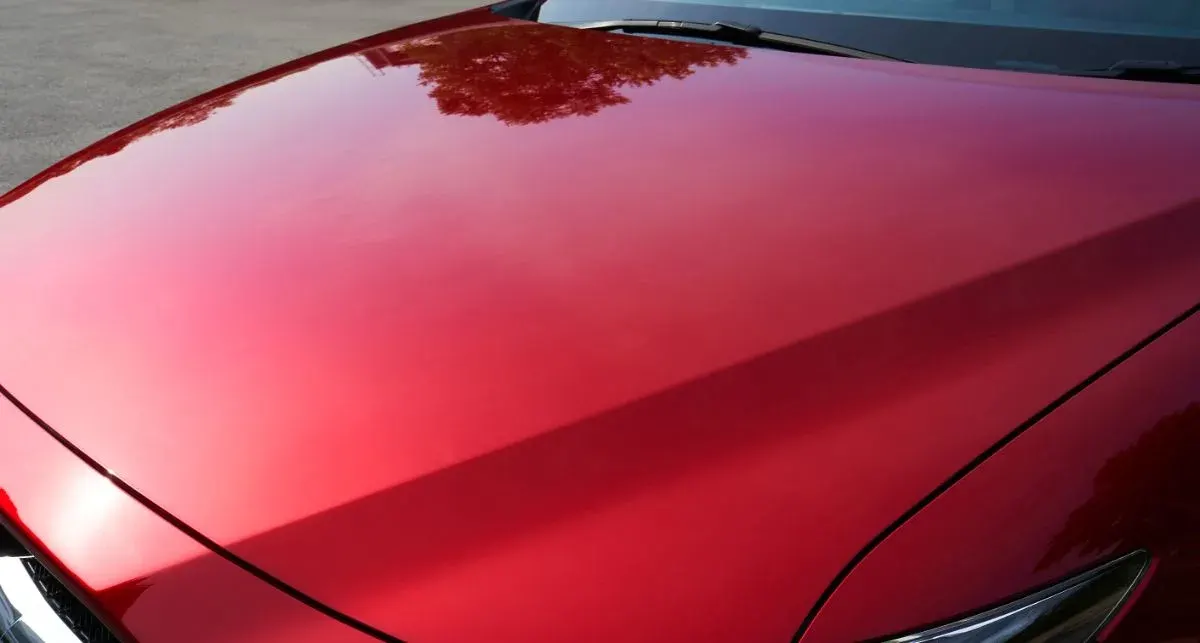
Aluminum isn’t quite as strong as steel, so these hoods can be dinged and dented more easily. The durability isn’t as significant in a crash where the vehicle will be reliant on crumple zones and other safety features more than the strength of the hood.
3. Fiberglass

That offsets some of the price reduction, but a good fiberglass hood will cut vehicle weight without sacrificing much safety or durability.
4. Carbon Fiber
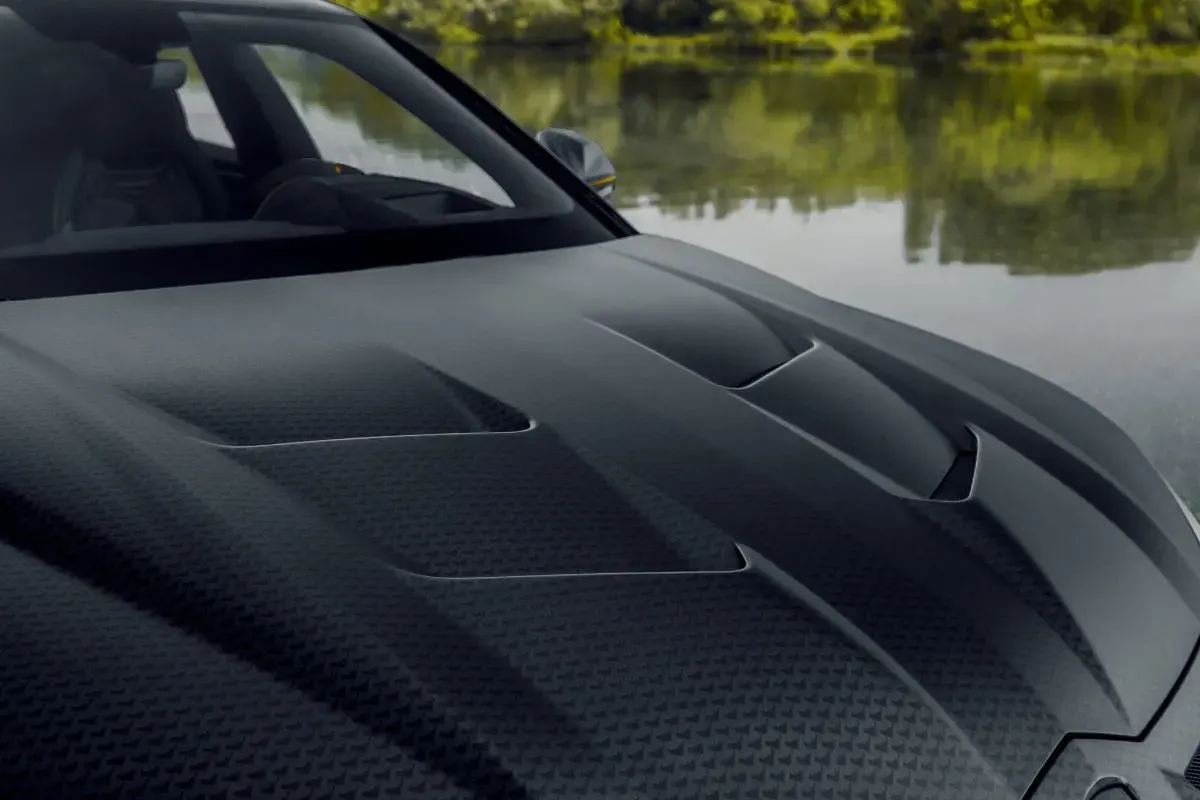
Specially engineered strands of carbon can be turned into a light yet incredibly durable material. The extra chemical and mechanical processing does make it the most expensive option, but using it can easily shave up to half of the hood’s weight.
It’s not a major cut off of the overall weight, but it can add up with other weight reduction measures when trying to maximize performance.
Fiberglass weighs about the same while being cheaper, but you can make the majority of a car out of carbon fiber without sacrificing structural integrity or safety.
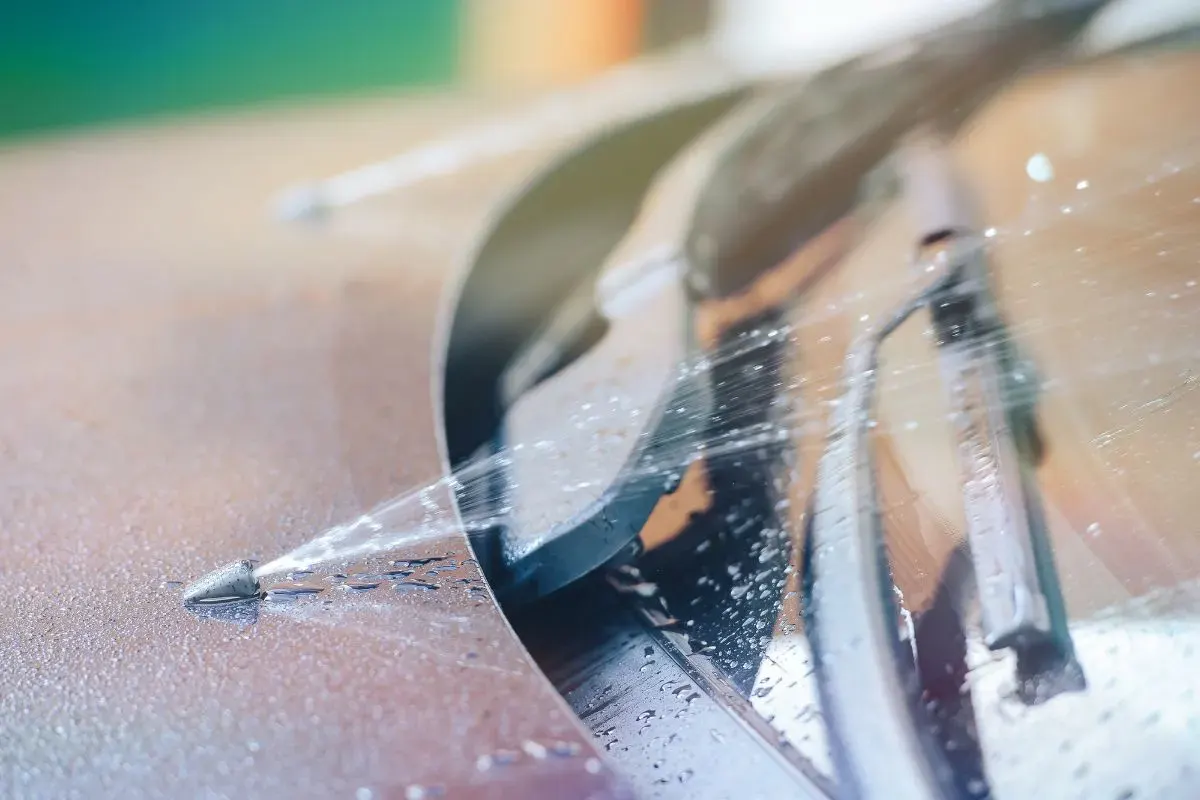
They are fairly cheap and easy to install if your vehicle lacks nozzles.
2. Scoop
Combustion engines rely on the interaction between fuel, heat, and oxygen to create power. They also use the surrounding air to cool down the engine.
Hood scoops alter the airflow in ways that can help one or the other, depending on the style of scoop. The extra openings allow more sound to escape the bonnet, so the noise level of the engine may be a concern as you add scoops of any type.
a. Ram Air Intake Scoops
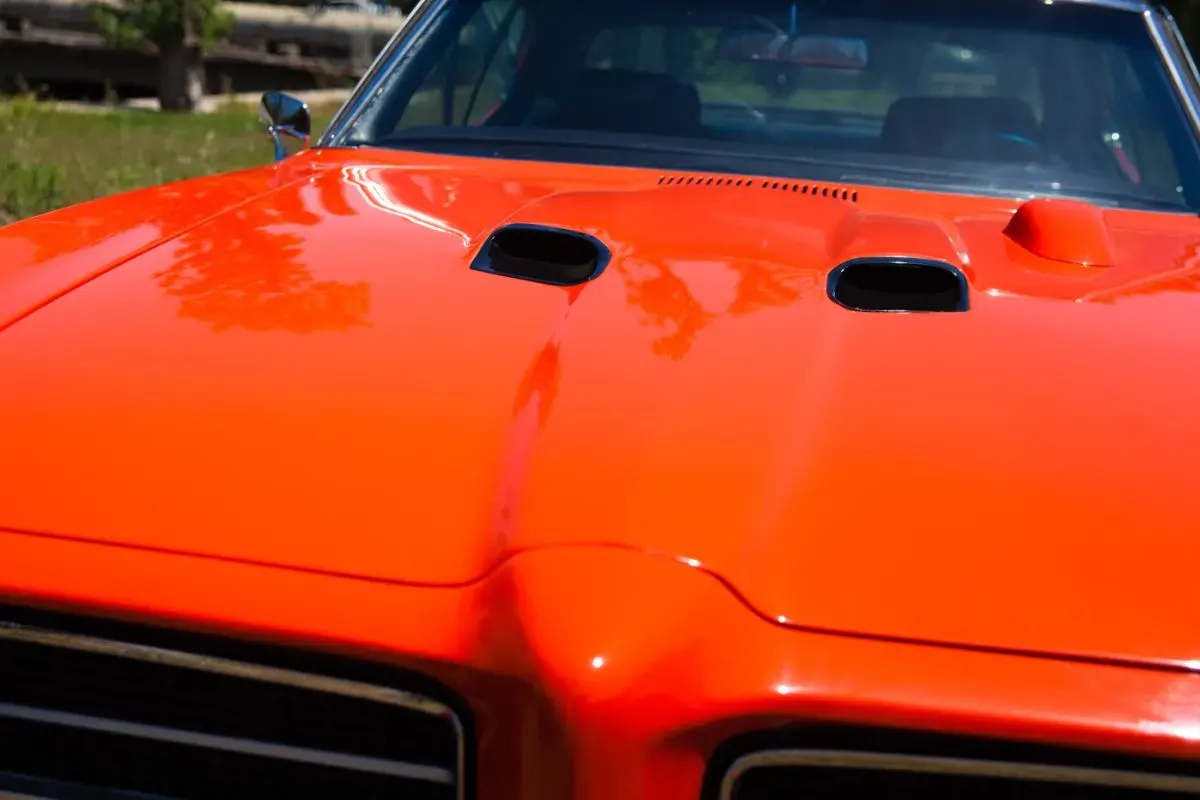
Even with protected openings, the additional front-facing vents of these scoops will allow more dirt into the engine and can become blocked by larger debris.
b. Shaker Scoops

Even the best shaker scoop is incredibly noisy, though, and larger ones may obstruct a bit of your view.
c. Cowl Induction Scoops

Unlike other scoops, cowl induction scoops are definitely better to purchase as part of the core design than to install as a modification.
It’s not impossible, but the savings become less attractive when you add in the extra time to modify the hood and weld the scoop into place. Ordering a new one is just much easier unless the part simply isn’t available.
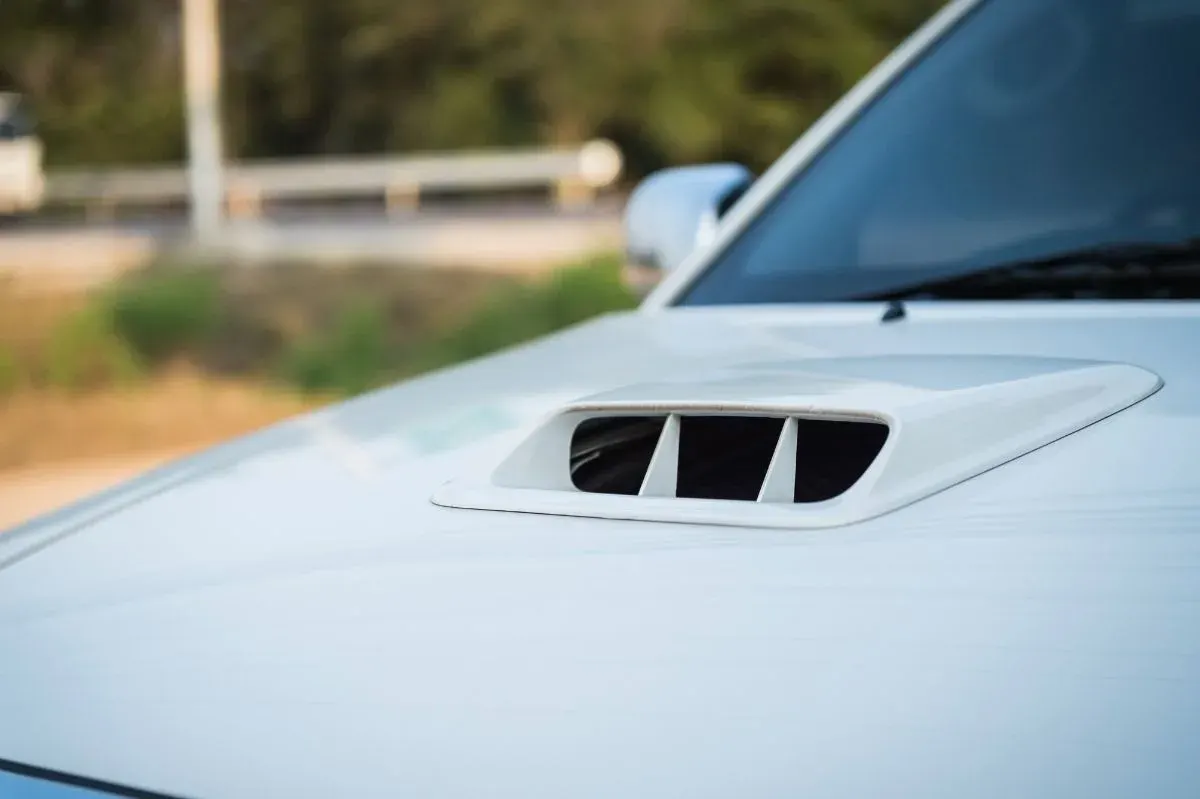
Turbochargers allow vehicle designers to either improve overall performance or get the same performance out of a smaller engine. The extra oxygen along with the fuel creates a more powerful explosion with a lower quantity.
An intercooler scoop is similar to a ram air scoop, but the air is directed to the turbocharger to cool it down from the hot gasses that power it.
3. Louvre Vents
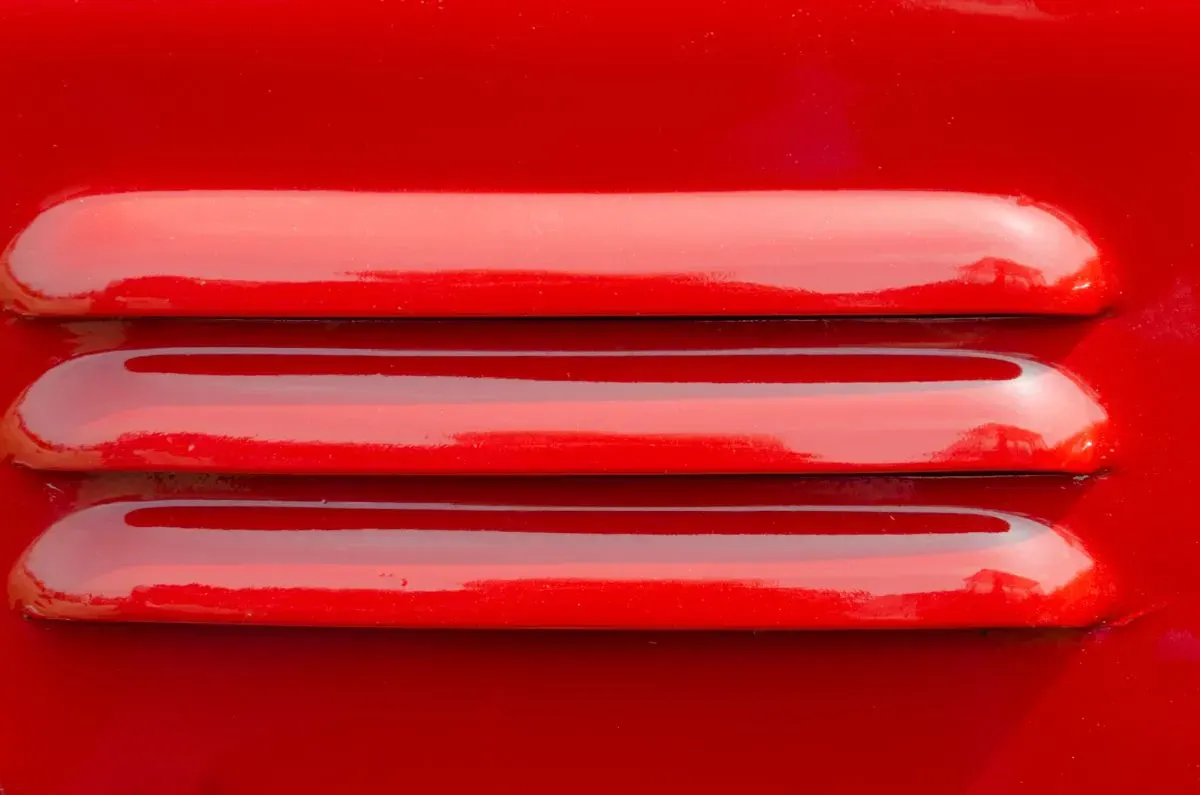
They also keep any debris from falling into the engine through the opening. Installing them does require permanent hood modification, similar to installing smaller scoops, but it can be done with minimal cost or experience.
4. Hood Pins
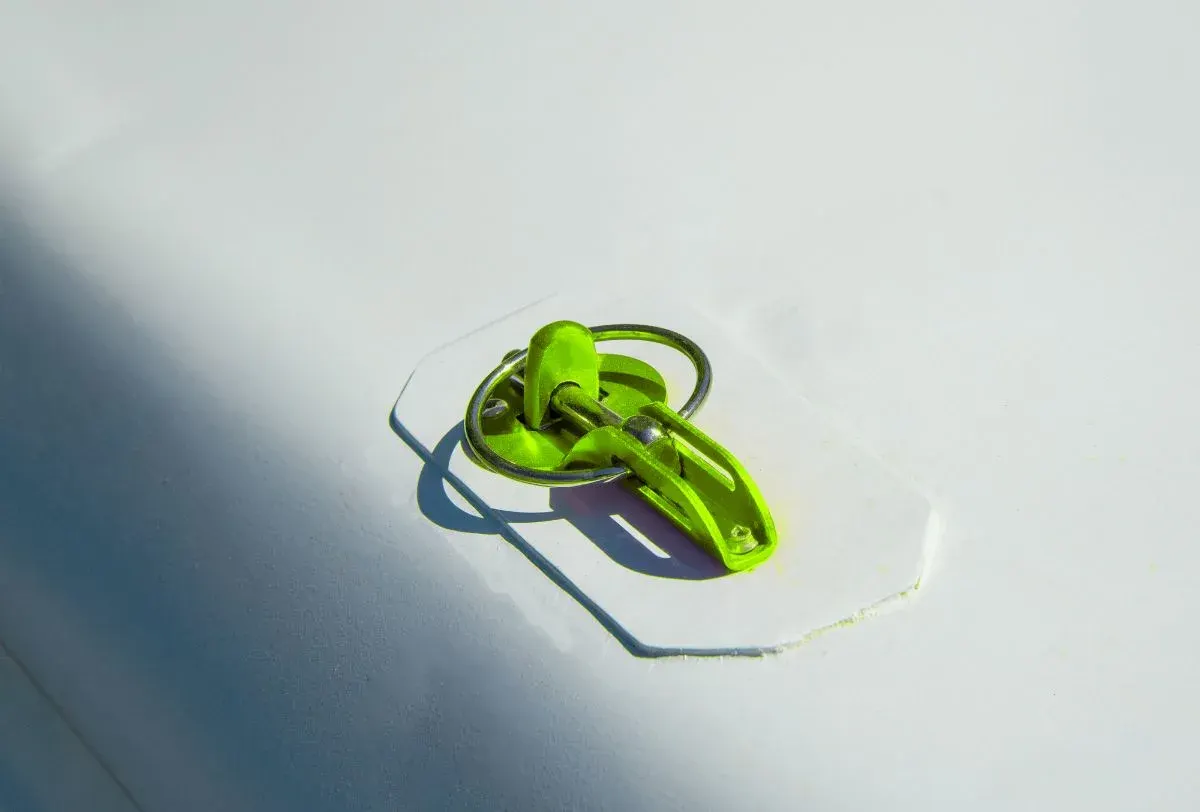
A single latch that is properly used is secure enough for most vehicles. A double latch is even more secure. Still, if a driver wants to be absolutely sure that the hood stays in place, pins are the most reliable method.
Proper hood pins require holes drilled through the hood, so installing them makes a permanent modification to it. Since they are typically an aftermarket addition, making sure they are properly installed is important for safety purposes.
Some people really enjoy the appearance of hood pins, but they don’t want to put holes in their hood. For those people, stick on hood pins mimic the appearance without permanent damage to the hood.
5. Hood Locks
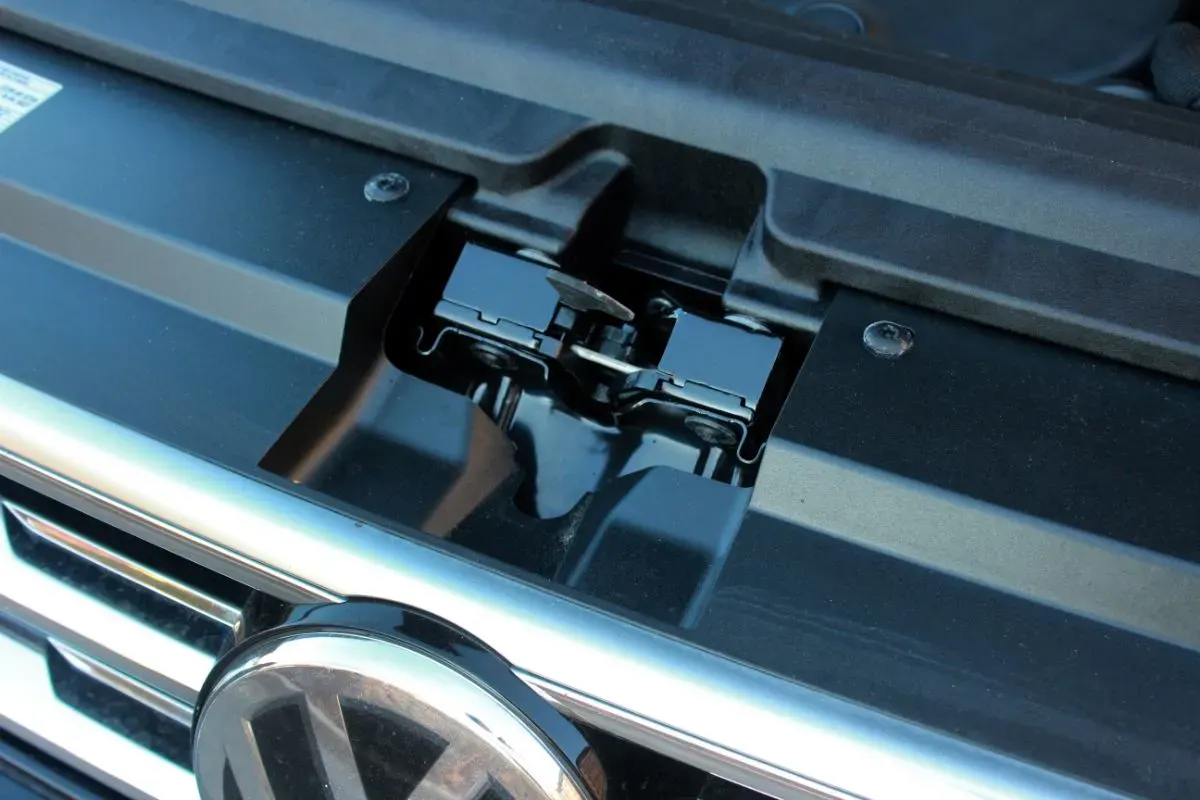
A car that looks like it’s seen a lot of care and attention will indicate to potential thieves that there might be something valuable under the hood.
Still, hood locks add an extra sense of security and an indication to potential thieves that you are likely to have other security methods, stopping them from even trying.
6. Hood Ornaments

Stiff ornament stands can cause additional damage in the case of an impact, so opt for a collapsing stand, check your local regulations, and use common sense before sticking extra dangerous options on the front of your vehicle
Nomecluture of Car Hood
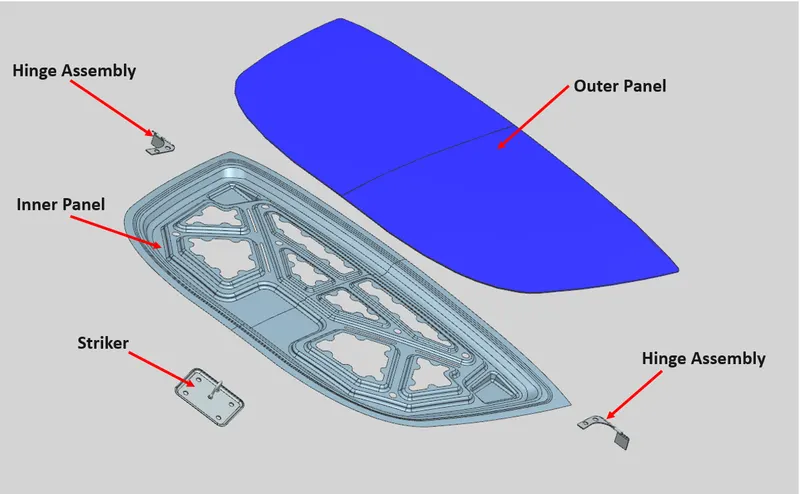
Hood Inner panel
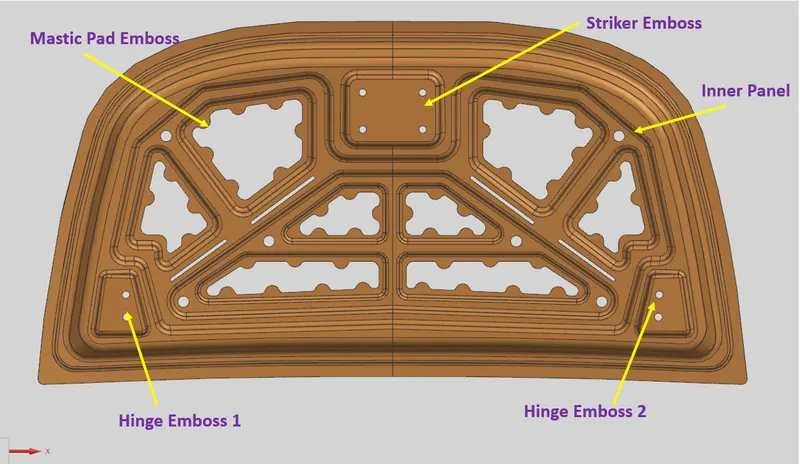
MANUFACTURING PROCESS
Point Considered For Feasible Manufacturing
- Minimum Draft of 7 Degrees given for sheet metal - For easy removal of component from tool(Die)
- Sharp edges are avoided for easy manufacturing
- Complex shape is avoided.
Sheetmetal operations
- Deep Drawing
- Embossing
- Hemming
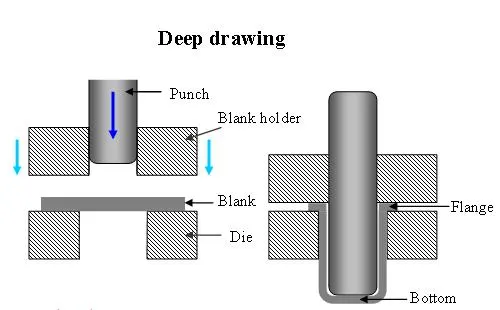
DEEP DRAWING:
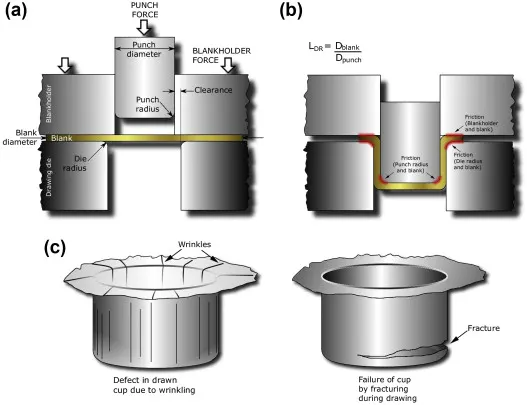
- Deep drawing is a sheet metal forming process in which a sheet metal blank is radially drawn into a forming die by the mechanical action of a punch. It is thus a shape transformation process with material retention. The process is considered "deep" drawing when the depth of the drawn part exceeds its diameter. This is achieved by redrawing the part through a series of dies. The flange region (sheet metal in the die shoulder area) experiences a radial drawing stress and a tangential compressive stress due to the material retention property. These compressive stresses (hoop stresses) result in flange wrinkles (wrinkles of the first order). Wrinkles can be prevented by using a blank holder, the function of which is to facilitate controlled material flow into the die radius.
EMBOSSING
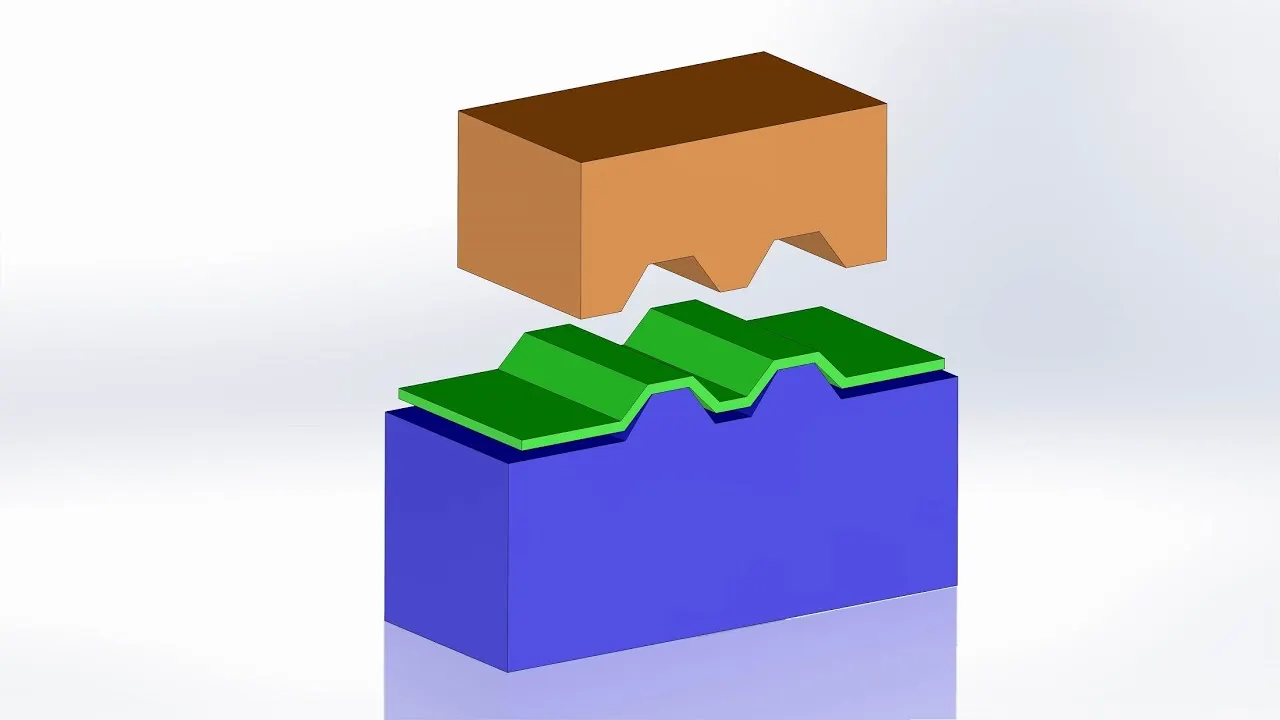
Embossing is a stamping process for producing raised or sunken designs or relief in sheet metal. This process can be made by means of matched male and female roller dies, or by passing sheet or a strip of metal between rolls of the desired pattern, theoretically with no change in metal thickness, or by passing sheet or a strip of metal between rolls of the desired pattern.
- Metal sheet is drawn through the male and female roller dies producing a pattern or design on the metal sheet. Depending on the roller dies used, different patterns can be produced on the metal sheet.
- Emboss should be in 7 degree to 25 degree inclinte in angle and it should not be in 90 degree angle,why because when we do stamping in manufacturing the stamping tool fits the sheet metal hence it will not come out of that sheet metal,So this is the main reason why the emboss face is in angle.
Characteristics of the metal embossing process include:
- Its ability to form ductile metals,
- Its use in medium to high production runs,
- The ability to maintain the same metal thickness before and after embossing,
- The ability to produce unlimited patterns, depending on the roll dies, and
- The ability to reproduce product with no variation.
HEMMING
Hemming is a forming operation in which the edges of the sheet are folded or folded over another part in order to achieve a tight fit. Hemming is a technology used in the automotive industry to join inner and outer closure panels together (hoods, doors, tailgates, etc.). It is the process of bending/folding the flange of the outer panel over the inner one. The accuracy of the operation significantly affects the appearance of the car’s outer surfaces and is therefore a critical factor in the final quality of a finished vehicle.
- In hood design, hemming is used in assembly as a secondary operation after deep drawing, trimming and flanging operations to join two sheet metal parts (outer and inner) together.
Roll hemming - In roller hemming process, a robot guides a small roller across the flange to fold a sheet onto itself or onto another sheet. The process is oriented to low volume automotive applications, providing a distinct advantage in manufacturing closures and subassemblies with developed flanges.
MASTIC SEALANT
A mastic sealant is a type of liquid sealant that cures in an elastic state, thus making it flexible while holding the bond of the surfaces that has attached together. It adheres to just about any material making an all-purpose type of sealant.
- The main purpose of the outer panel is for the aesthetic looks. Thus we cannot use bolts or welding. This has to be done with the help of the hemming and mastic sealants. Mastic sealants are elastic compound that behaves like the rubber. It is placed between the outer and inner panel. Initially is it in paste form, but after the hot furnace bath it gets hardened thus joining the outer and inner panel. Mastic sealant has the tendency to increase the strength of the panel and has influence of 80mm diameter.
PROS
- One positive characteristic of mastic sealant is that it has a very smooth exterior while keeping its rigid form underneath.
- Surfaces do not have to be primed when using this type of sealant, and although applied thick, it adheres smoothly to any surface. It is important that the area to be joined or sealed be clean and dry, just like any other sealant on the market
- Mastic sealant may be used outdoors as well because of its waterproof quality. It can be applied on rain duct leaks outdoors, for example.
- It is also favored for areas under high or low temperatures such as heater vents or drier vents and contains ultraviolet inhibitors to make sure that it is protected from damaging effects of the sun that will often weaken other types of sealants. That makes it a good choice for use on roofs, or any surface that is constantly exposed to sunlight. Most mastic sealants will also work well with metal because they do not corrode over time.
- It functions well in areas with mild vibration and heat, like hood, heating ducts.
CONS
- Mastic sealant is not recommended for areas that have too much joint movement, or anything that will be moved a long length.
- It works well with constant pressure on it, but not constant movement.
- It also works best when applied thickly and is not recommended if only a thin layer is needed such as touch ups. Another sealant is a better choice for those types of repairs
Please see the below image for the location of the mastic pad in hood assembly.
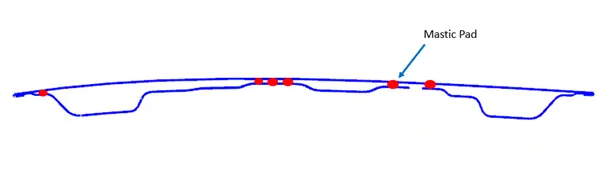
While vehicle is moving condition there is some noise & vibration happen. The rubber pad is reduced the noise & vibration between inner & outer panel.
Design Considerations For Hood Design
- Opening Angle of Hood
- NCAP Crash Test Ratings For Strength
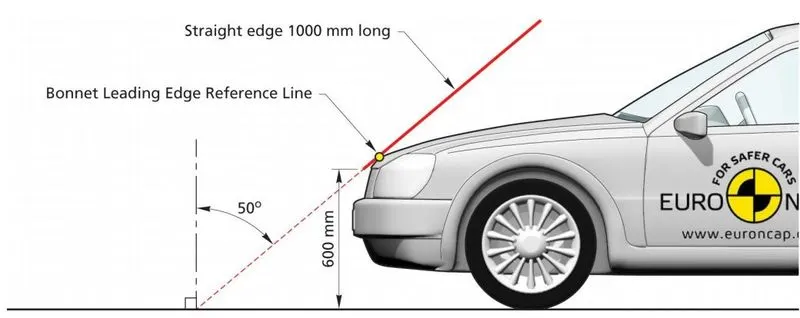
- Wrap Around Distance (WAD) for Pedestrian Safety
- NVH (Noise, Vibration, Harshness) For Consumer/Customer/User/Buyer
Opening Angle.
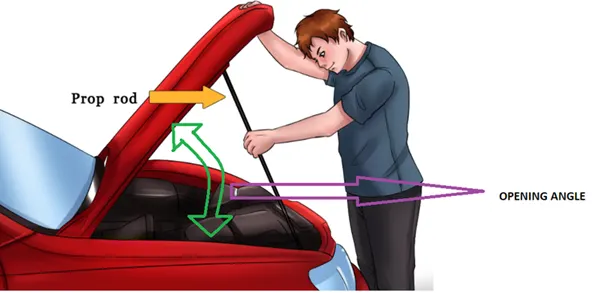
The opening factor is very important factor in hood design. While accessing the engine compartment hood will be open at desirable angle.it did not strike with the driver head. Opening angle is varying with region to region. Person from the Japan region having small height and person from USA is having longer in height. Opening angle is considering in the early stage of the project.
Required Space for access for secondary latch.
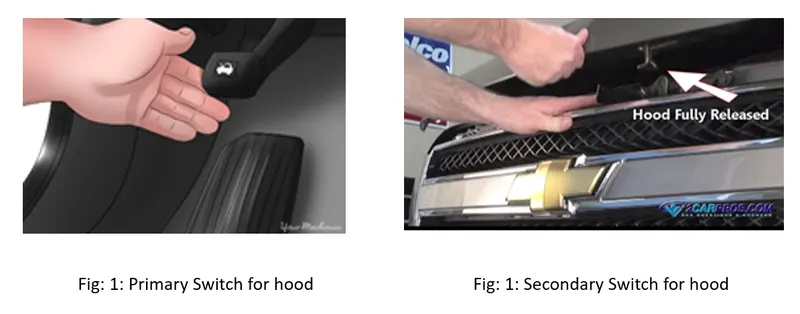
Opening of hood there are two latch are provided in the car. One is primary latch is provided inside the car and second is secondary latch is provided outside of car.
After pushing the primary latch hood is unlocking partially and for full unlocking for accessing the secondary latch minimum 10 to 15mm gap is required between hood and bumper.
Types of Hood Support
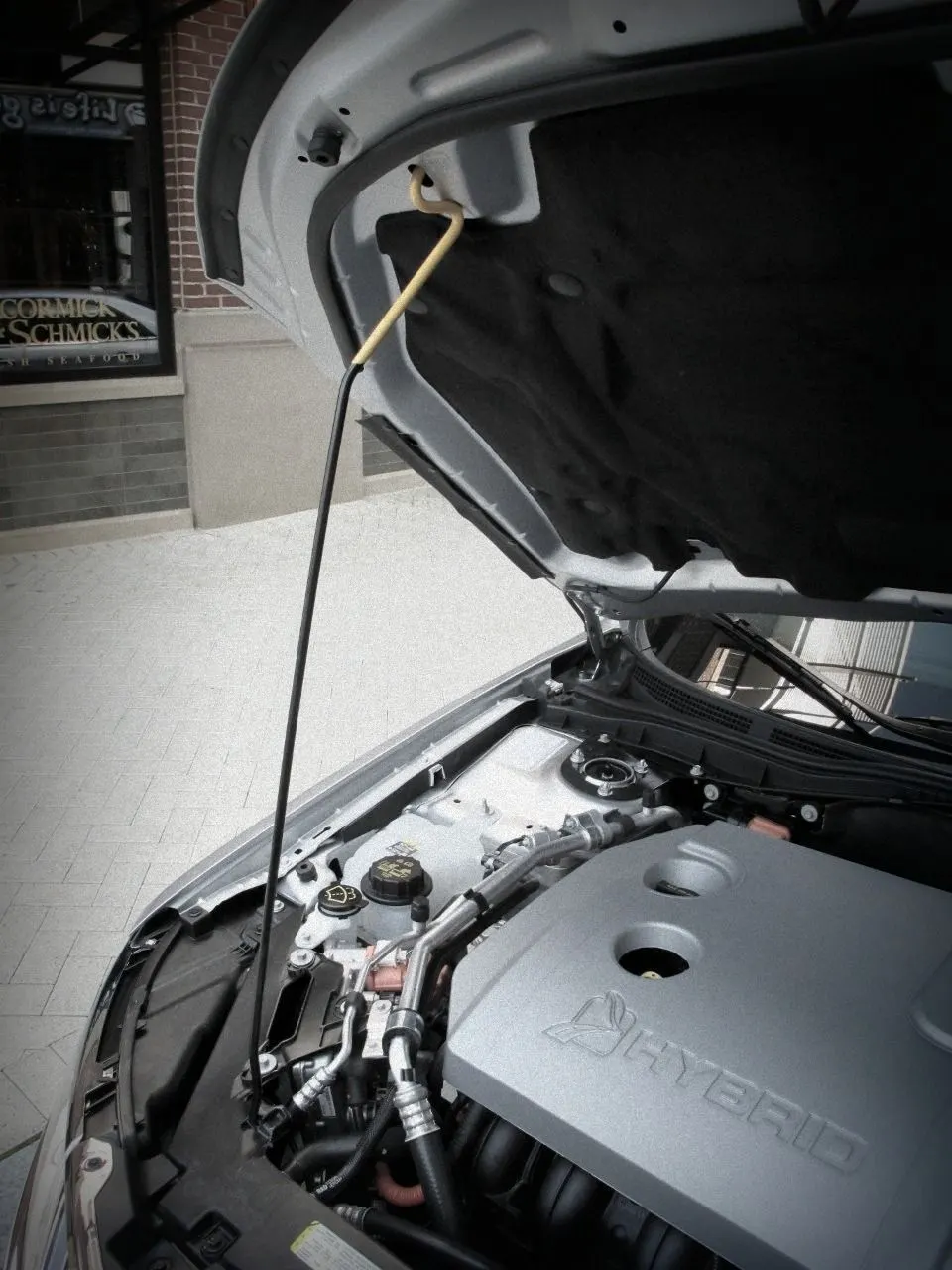
1. Support Rod-
To keep hood in open condition support rod is used. The support rod is mounted on engine compartment or on hood. It will on engine compartment when it is close condition & it is fixed on hood in open condition when it is mounting on engine compartment. It is always opposite to the battery compartment for easily installation of battery.
The support rod is always having some bends for more rigidity. But the bend value did not more than 35mm. grommet Is provided for the locking purpose when hood is in open and close condition. support rod design should be in such a way that there is no any interference between the engine compartment and rod.
For the support rod more energy is required for the opening the hood
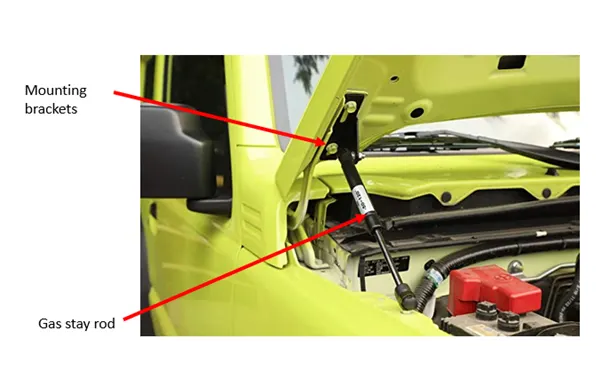
2. Gas Stay -
These Gas stay are type of support rods which is used for heavy weight hoods. In these gas stay rods, pressurized gas is filled which helps to hold the hood in open position. Gas stay just needs the initial force to open the hood. Gas stays are convient to use but these are expensive when compared to support rods.
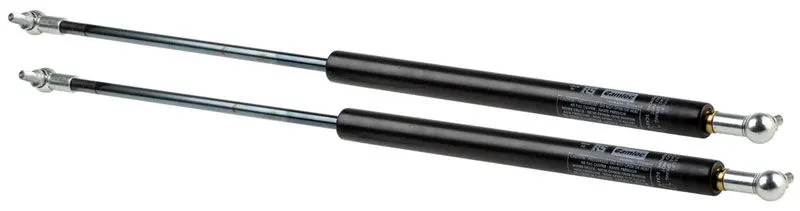
Gas stay Holding Hood Open
EURO NCAP TEST
A wide range of front and side impact tests, plus whiplash tests, are carried out to evaluate the level of protection for adult drivers and passengers. Each is designed to assess the performance of a car in the event of an accident, using crash test dummies to record how well passengers are protected in variety of types of incident.
Head-on crashes
To simulate the most common form of fatal impact, a front-on crash, the so-called Offset-Deformable Barrier impact is used. In the test the car is driven at 39.7mph with 40% of its nose impacting into a deformable barrier, which is designed to simulate an oncoming vehicle.
Side impacts
The second most common form of fatal accident involves a side impact. To test a car's strength in a conventional side impact accident, a deformable barrier representing another car is driven at 31mph into the car's side, revealing how safe occupants are in both the front and rear seats.
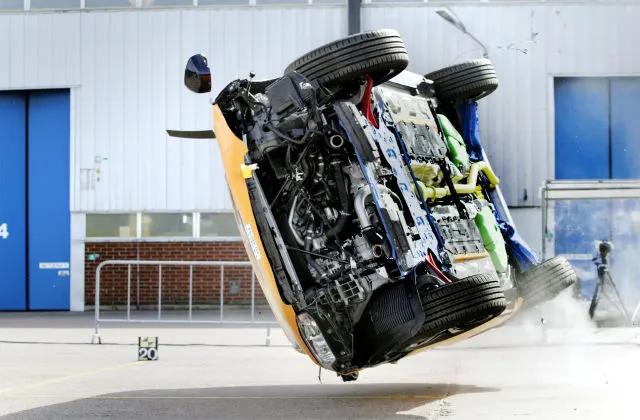
Another common form of side impacting accident can involve a car sliding into a tree or lamp post-like object. To test this, Euro NCAP propels a car sideways at 20mph and impacts it into a solid pole. This test is often considered to be one of the hardest, because the full brunt of the impact is concentrated on such a small area of the vehicle.
Key safety features that have been introduced to production cars since the introduction of these side tests include seat-mounted and head-height side-impact airbags. The thickness of the pillars supporting the roof has also grown substantially to add protection.
Whiplash
Additionally, NCAP tests evaluate how effective a car's safety systems are at preventing whiplash injuries. Although these types of injuries are often not life-threatening, they are among the most common in an accident.
Other tests
An increasing number of new cars are fitted with some form of automatic braking system, which uses sensors to monitor the road ahead and can automatically apply the brakes to avoid a potential accident. Euro NCAP assesses these systems in its tests to determine their effectiveness at a variety of speeds.
Euro NCAP also tests the level of child impact protection in its car crash evaluations, as well as giving marks for the compatibility of the car's fixings for child seat restraint systems such as ISOFIX and i-Size.
Euro NCAP also tests what level of pedestrian impact protection is on offer from the car if it hits someone. The latter tests have encouraged the use of softer bonnet materials and external airbags that can cushion an impact.
A recent addition to the Euro NCAP tests is the safety assist score, which focuses on autonomous features of a car such as adaptive cruise control and lane departure control and which can automatically avoid accidents by controlling the car for the driver. The Volvo XC90 - What Car?'s 2016 Safety Award winner - is an example of a car to score well in this area. It received a 100% rating.
Wrap Around Distance (WAD)
When a car crashes on the pedestrian, the whole human body wraps around the front shape of the car, and the head impacts on the bonnet or the windscreen. The distance at which the head impacts on the car from the ground is mentioned as wrap around distance (WAD).
To be specific the Wrap Around Distance is a measurement of the distance from the ground to the head impact zone over the outer surface of the car. The wrap around distance is measured longitudinally in the centre of the vehicle from the ground.
The severity of the injury caused by the frontal crash depends on the type and shape of the vehicle, the speed of the vehicle, and the movement of the pedestrian relative to the vehicle. In addition to these parameters, the wrap around distance plays a major role in the safety measures of a pedestrian.
During crash analysis, based on the wrap around distance, two test areas will be created namely the Child Head Impact Zone and the Adult Head Impact Zone.
Test Area
- The child and adult head impactor test will be considered for the regulation.
- Test area for child head impactor: 1,000mm ≤ WAD ≤ 1,700mm
- Test area for adult head impactor: 1,700mm ≤ WAD ≤ 2,100mm
Impactor
- Child head impactor: Diameter 165mm, weight 3.5kg
- Adult head impactor: Diameter 165mm, weight 4.5kg
Noise, Vibration, Harshness (NVH)
Noise, Vibration and Harshness (NVH) is the study and modification of the noise and vibration characteristics of vehicle, particularly cars and trucks. To improve NVH, mastic sealants were provided on the inner panel to attach with outer panel. Here mastic points on the inner panel plays a major role to avoid Noise and Vibration into the cabin. NVH is measured by the instruments, namely microphones, accelerometers and force gauges, or load cells. Component and subassembly NVH tests are most commonly performed using a vibration shanker while entire vehicles usually on the test track or road stimulator testbeds.
NVH Test system (With Microphones,etc.)
NVH Road Test Track (Live Conditions)
DATA TO BE USED FOR HOOD DESIGN
Master Section:
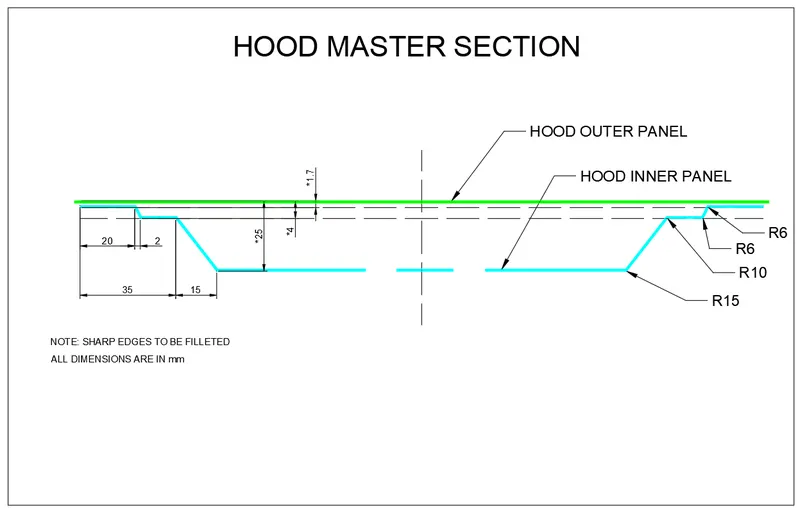
Hood Thickness Information
- Outer Panel Thickness = 0.75mm
- Inner Panel Thickness = 0.75mm
- Reinforcement Thickness = 1.5mm
Hemming Data:
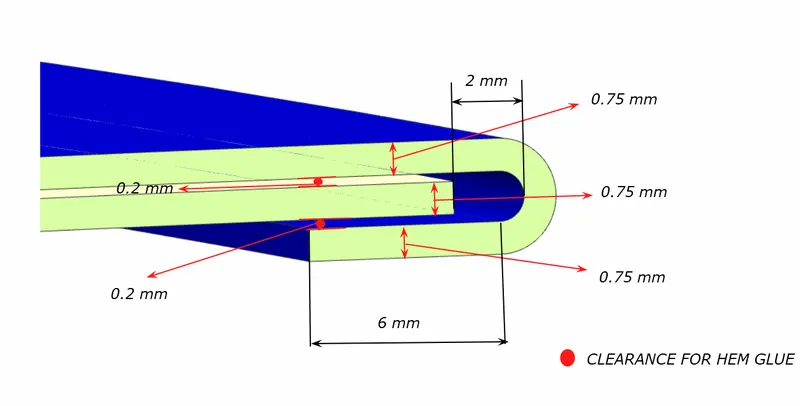
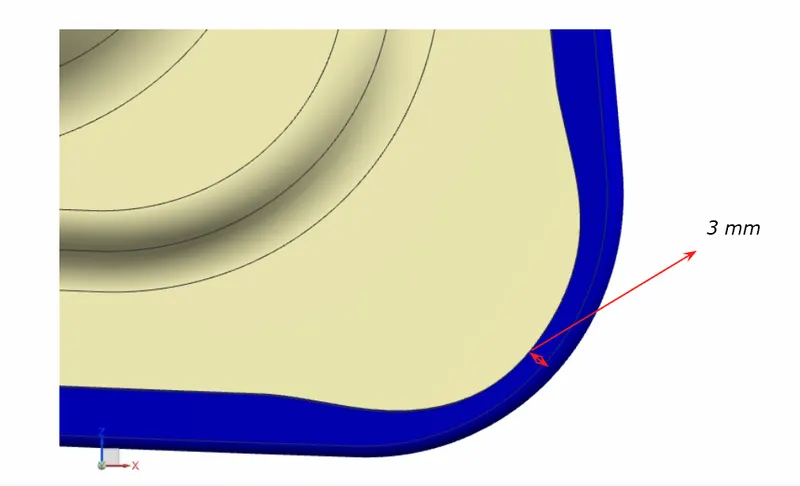
Relief rear section:
Front relief:
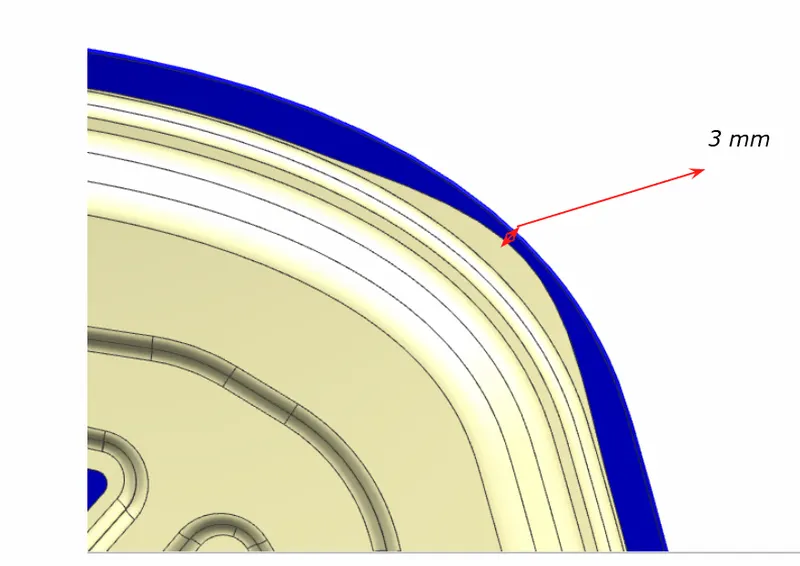
- Relief is provided onto the part or component in order to remove any stresses developed in a particular area i.e sharp corners that takes place during the hemming process is carried out. Thus corners are rounded or chamfered.
- Relief of 3 mm from sheet metal for Roll hemming process
LATCH TRAJECTORY
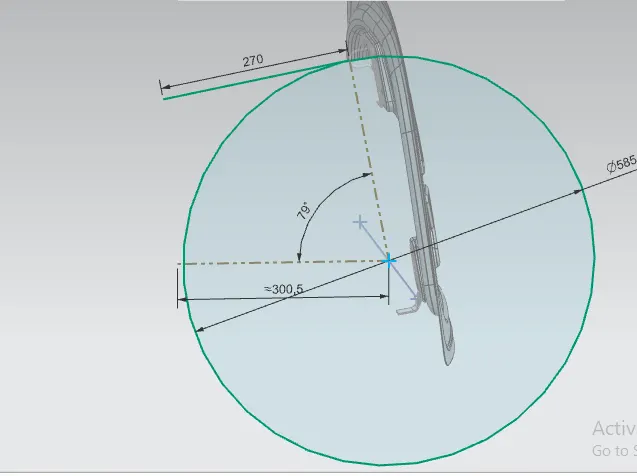
The latch trajectory shows the path of the striker when the hood is opened and closed on a vehicle.
The radius of the circular trajectory is determined by the set standard based on the average height of a person. The radius is measured from the hinge axis up-to the latch.
HINGE ASSEMBLY
Hinges is the assembly of components connected to the door and body of the vehicle, linked to each other and capable of rotating around the same axis. Conventional system consists of two hinges for each door, an upper hinge and a lower hinge.
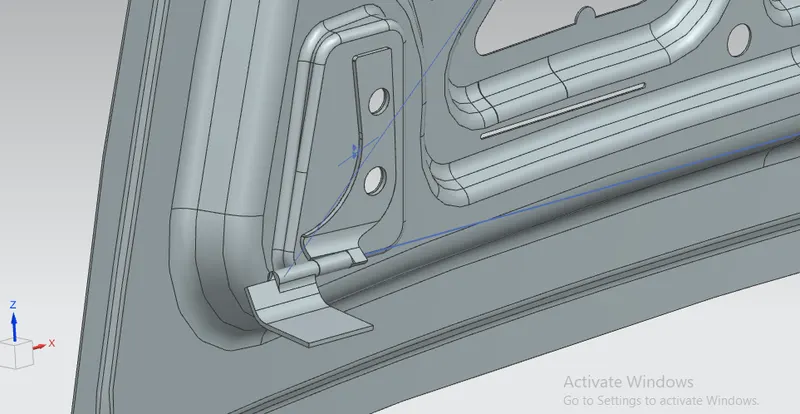
STRIKER ASSEMBLY
The door striker plates are installed in the door jambs, and precisely aligned with the door latches so that the latches catch onto the striker plate when the doors are closed. The door striker plate is made of hardened steel to resist wear as it is subjected to constant contact with the door latch.
The hood latch system begins inside the compartment of the car, hood release handle located onthe driver's side. The hood release handle attaches to a cable which then routes through the dashboard towards the front of the vehicle.
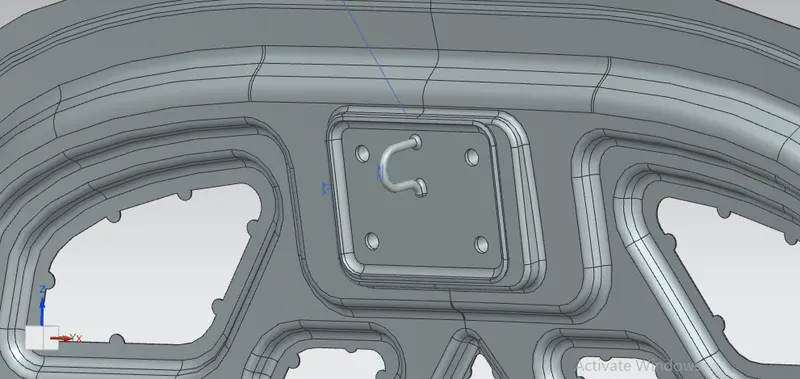
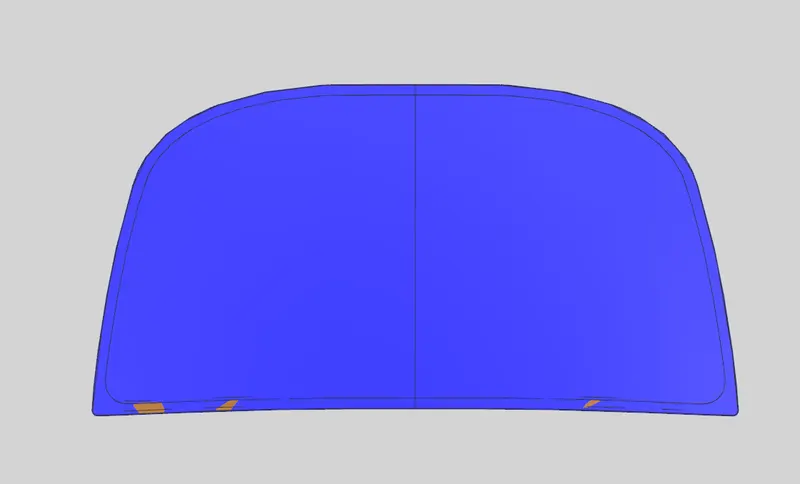
Diffrent Views of Hood
Top View
Side View
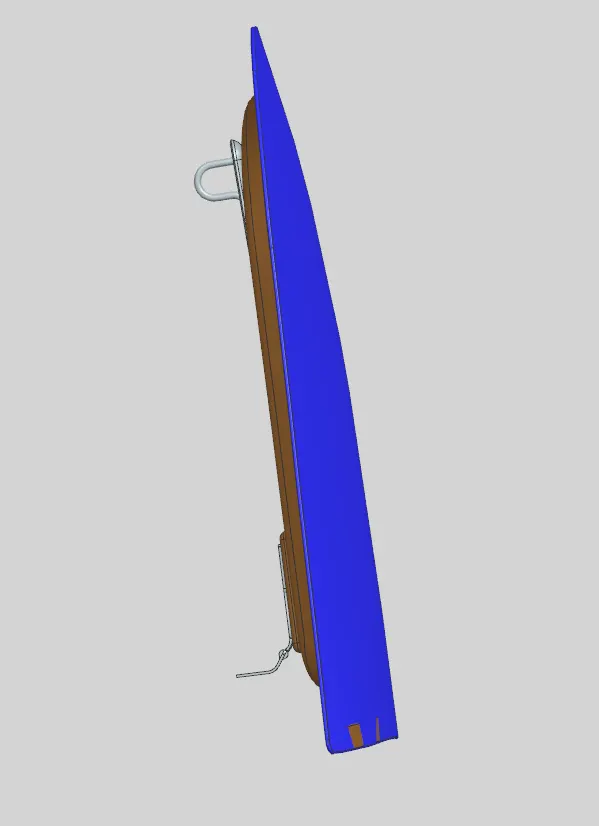
Front View
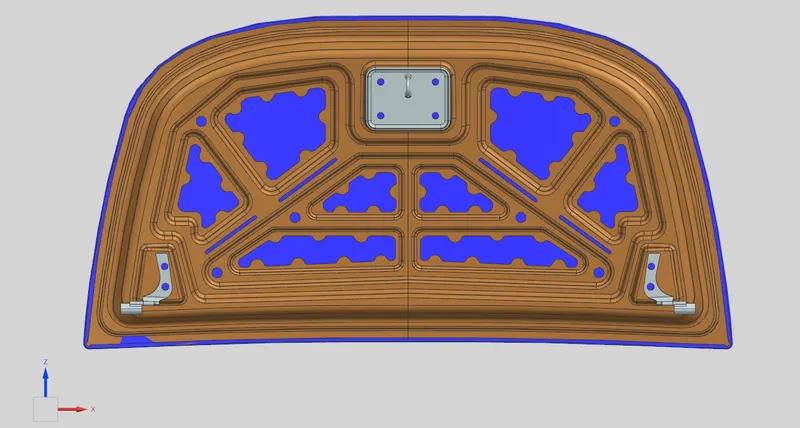
Isometric View
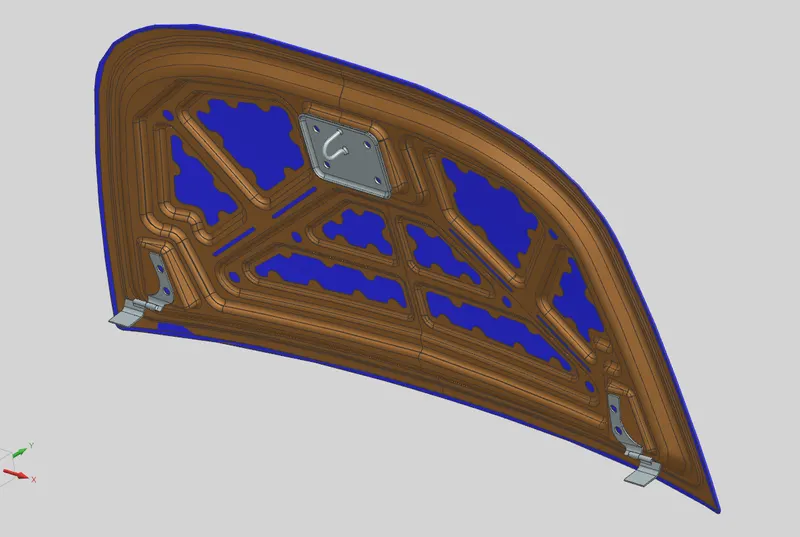
Conclusion:
In this way, Hood was designed in Siemens NX Student Version software with given and required design guidelines for hood design and manufacturing.