Hood design-Week 2
Automotive industry is the fastest growing industry today. In the competitive business, the automotive companies have to take care the market demand. The customer choice is changing from day to day, hence the vehicle must be upgraded as per requirement. Now a day the sport utility vehicle is in demand. Every vehicle manufacturing company like Mahindra, Tata, Honda, Hyundai, VW, etc are upgrading the vehicles as per customer demand. The theme of vehicle is mostly changed as per market requirement. Theme is mainly depending upon the hood assembly, bumper assembly, fender, side panel and front light assembly of vehicle. Vehicle manufacturer changed theme of car by changing the closer style. Customers demanding the luxuries look of car with high efficiency and low prize. Hence the research work is in the progress of making light weight vehicle with better stiffness. The major challenge for automotive industry is to make light weight components and improving the other efficiency parameter.
Introduction :
The hood or bonnet is the hinged cover over the engine of motor vehicles. Hoods can open to allow access for maintenance and repair of power trains, drive belts, batteries, fluid levels, and lamp units. It is also used to decorate the car and add a luxurious look. The shape of the bonnet is made aerodynamic to minimize the air effect.
Major Components present under the hood:
- Engine
- Transmission
- Radiator
- AC Compressor, Alternator, Power Steering Pump, and Water Pump
- Brakes
- Battery
- Windshield wiper fluid
In recent years, work has been done on the bumper and hood design of the vehicle front-end to reduce the injuries to the pedestrians in the event of a pedestrian-vehicle collision. The front portion of the vehicle gets damaged including the bonnet when met with an accident. So there is a need to change the existing design of the bonnet or by changing the material.
The objective of these measures is to reduce the number of road accident fatalities and the severity of injuries sustained by pedestrians involved in a collision. Impact frequency and seriousness of injury have been studied for many years, resulting in rating systems and improved design.
Data used:
Hood Thickness Information
- Outer Panel Thickness = 0.75mm
- Inner Panel Thickness = 0.75mm
- Reinforcement Thickness = 1.5mm
Master section and Other requirements (Hemming data, Rear relief, and front relief) :
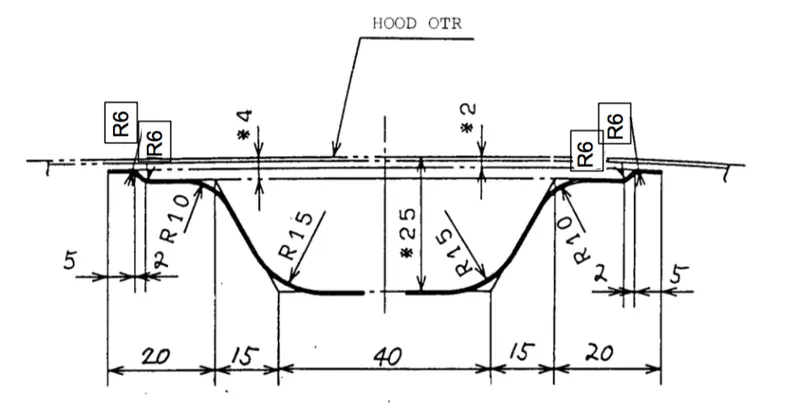
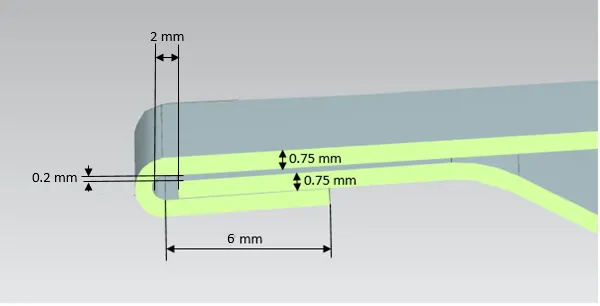
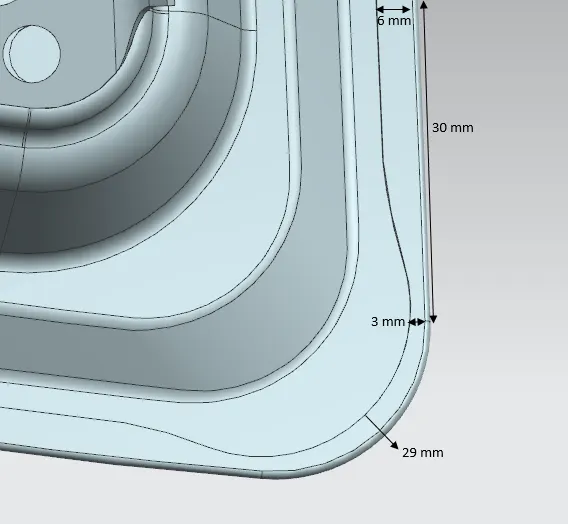
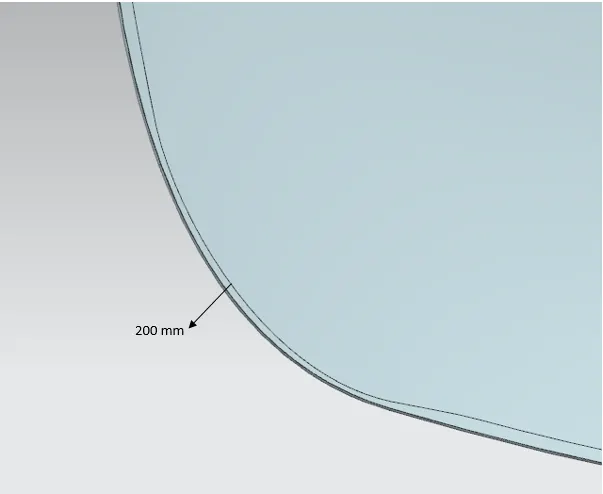
Some important Manufacturing processes followed for making Hood assembly are :
Hemming :
Hemming is a forming operation in which the edges of the sheet are folded or folded over another part in order to achieve a tight fit. Normally hemming operations are used to connect parts together, to improve the appearance of a part and to reinforce part edges.
In car part production, hemming is used in assembly as a secondary operation after deep drawing, trimming and flanging operations to join two sheet metal parts (outer and inner) together. Typical parts for this type of assembly are hoods, doors, trunk lids and fenders.
The accuracy of the hemming operation is very important since it affects the appearance of the surface and surface quality. Material deformations, which occur during the hemming process, can lead to dimensional variations and other defects in parts. Typical hemming defects are splits or wrinkles in the flange, material overlaps in the corner areas or material roll-in.
There are various types of hemming operations:
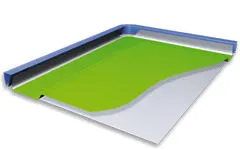 Conventional die hemming
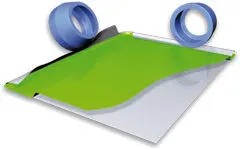 Roll hemming
Deep drawing :
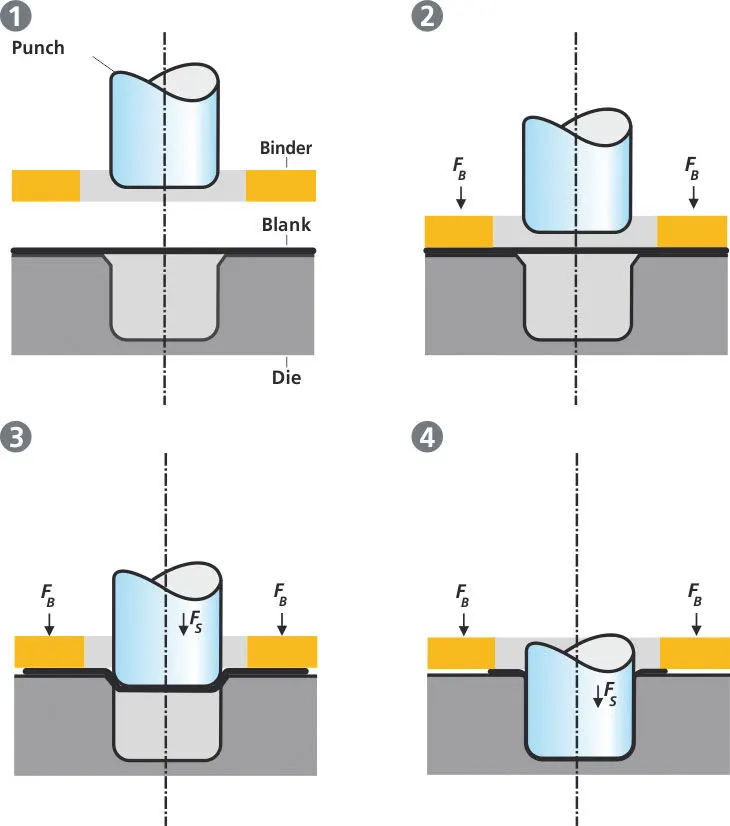
Deep drawing is one of the most widely used processes in sheet metal forming. Apart from its use in many other sectors, it is applied in the automotive industry for the manufacturing of car body parts.
The deep drawing process is a forming process which occurs under a combination of tensile and compressive conditions. A flat sheet metal blank is formed into a hollow body open on one side or a hollow body is formed into a hollow body with a smaller cross-section.
Embossing (Manufacturing)
Sheet metal embossing is a stamping process for producing raised or sunken designs or relief in sheet metal. This process can be made by means of matched male and female roller dies, or by passing sheet or a strip of metal between rolls of the desired pattern. It is often combined with foil stamping to create a shiny, 3D effect.
Modeling :
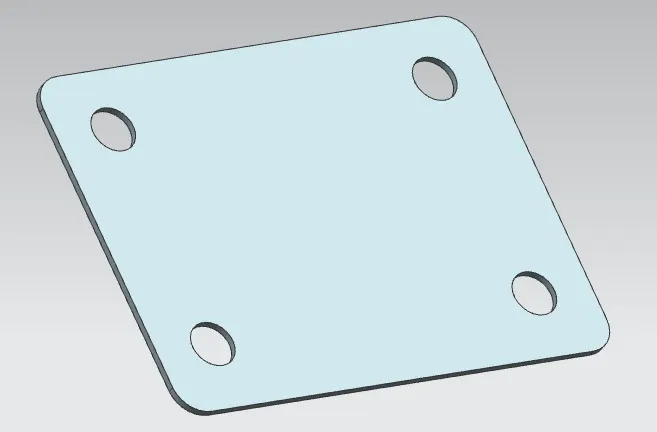
Mainly, there are four parts in hood assembly. They are outer panel, inner panel, latch system and hinge system. Outer hood panel follow the aerodynamic criteria. Hood inner is the main functional part in hood design. It is the most complicated and weight consuming part in hood assembly. In the vehicle development process, the hood inner was designed to meet the standard load cases. The hood latch system is vital to all cars, trucks or other vehicles. This system is the attachment of hood assembly and vehicle body. The hinges also guide and hold the hood when open & close. Outer panel is joined with inner panel using mastic sealant and, at the outer periphery, they are joined with hemming.
- Hood Outer panel
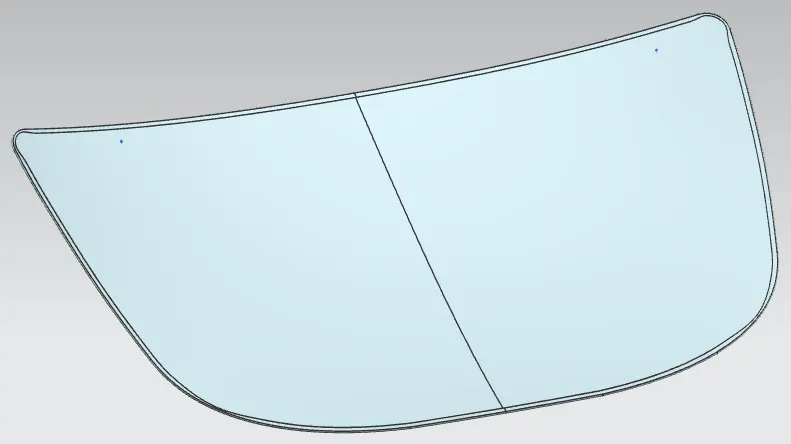
- Hood Inner panel
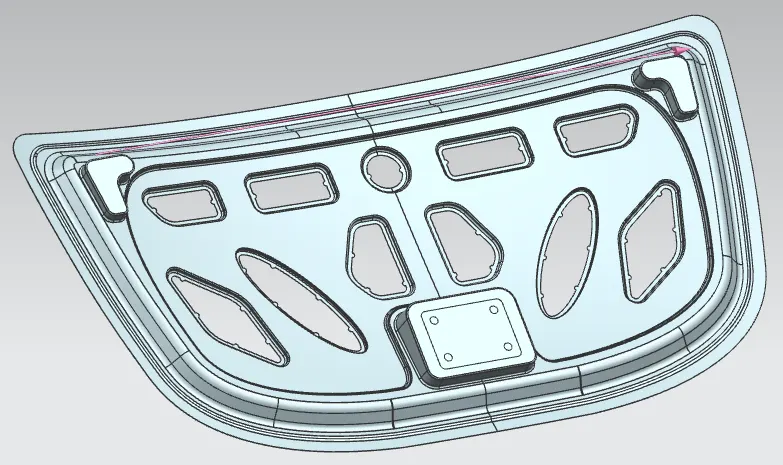
- Assemblies
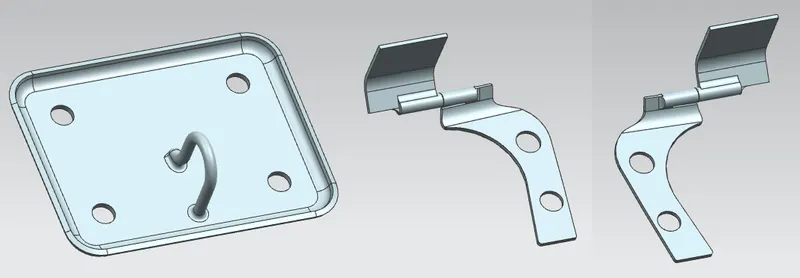
- Reinforcements
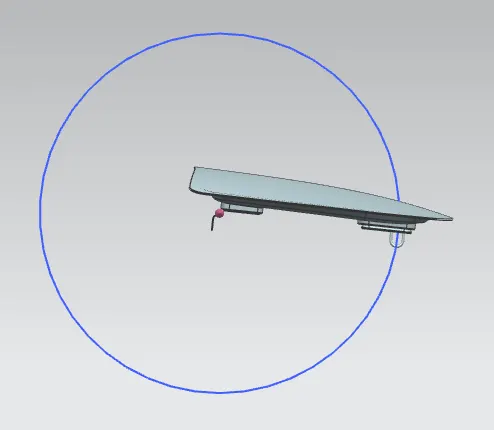
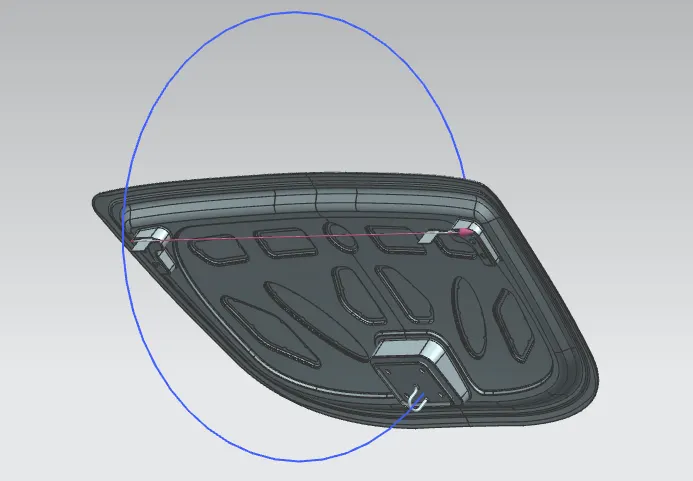
- Positioning of Hinge and Striker:
Taking centre of axis of hinge as centre of the circle drawn through the striker distance as the radius. It is positioned tangent, so that perpendicularity is obtained.
Commands used in NX CAD for designing :
- offset surface
- trim body
- offset in face
- trim sheet
- through curves
- law extension
- trim and extend
- face blend
- edge blend
- bridge curve
- trim curve
- emboss
- sketch
- project curve
- datum plane
- datum coordinate system
- mirror geometry
- mirror feature
- fill surface
- move face
- sew
- thicken
- split body
- datum axis
Conclusion :
Hood design with reinforcements by following the given master section is completed using NX CAD
Link: https://drive.google.com/drive/folders/1H0YC8Ma54dOLzOV-PpyXSnb5gzdsnnfq?usp=sharing