Hood design-Week 2
Hood design
Aim: To Design Hood outer panel, inner panel and the necessary reinforcements by following the Master section with the design parameter
Introduction: Hood is the main component of a car at the front portion. It is used to decorate the car and add a luxurious look. The shape of the Hood is made aerodynamic in order to minimize the air effect. Hood is generally used to access the parts easily such as radiator, engine and many other parts. A car hood, also referred to as a bonnet in some other countries, is the hinged cover that rests over the engine of a front-engine vehicle. Its purpose is to provide access to the engine for repair and maintenance. A concealed latch is typically used to hold down the hood. On vehicles with an aftermarket hood and on race cars, hood pins may be used to hold down the car hood. Hoods sometimes also contain a hood scoop, wiper jets, power bulge, and/or hood ornament. Car hoods are typically constructed from steel and sometimes from aluminum. Aftermarket car hoods may be constructed from various other materials, including carbon fiber, fiberglass, or dry carbon. The hood design may vary from one make and model to another.
The hood or bonnet is the hinged cover over the engine of motor vehicles. Hoods can open to allow access to the engine compartment (or trunk on rear-engine and some mid-engine vehicles) for maintenance and repair. In design perspective hood should meet some specific conditions like pedestrian safety, hood head zone for the lock striker, force distribution when subjected to frontal collision (occupant safety), manufacturability etc.
A typical hood assembly consist of hood outer panel, inner panel, latch and striker, hinge, hood stay. Hood stay is an apparatus for supporting the engine hood of a moto vehicle in its open position. The purpose of opening the engine hood is for inspecting engine room, replenishing cooling water and engine oil, changing parts and making repairs etc. Common types of hood stays are Support Rod and Gas Stay. Support rods are manually operated and they are cost effective and simple to design whereas gas stays require no man power but they are costly. Hood are typically made out of the same material as the rest of the bodywork. This may include steel and aluminium. Deep drawing, hemming, blanking and piercing are the common sheet metal operations that are used in manufacturing hoods in automotive industries.
while access for repairs and maintenance Hood can fix by two methods
1. Support Rod
2. Gas Stay
In the fig 1.1 shown Support Rod and Gas Stay
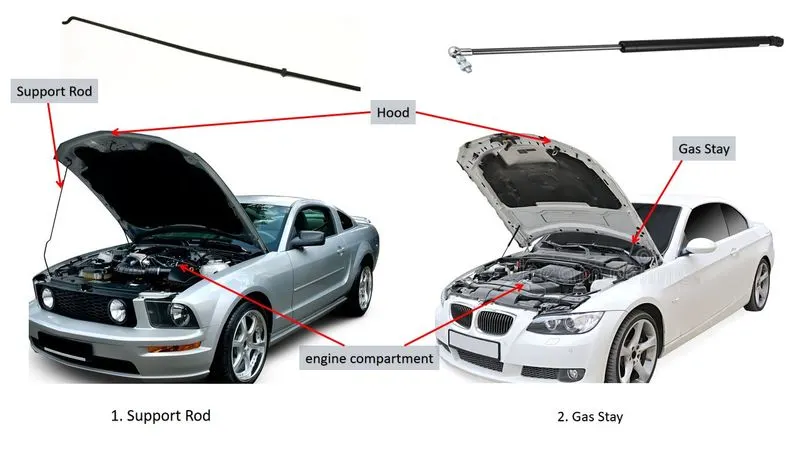
Fig.1.1: Support Rod and Gas Stay
In the fig 1.2 shown Hood and its parts
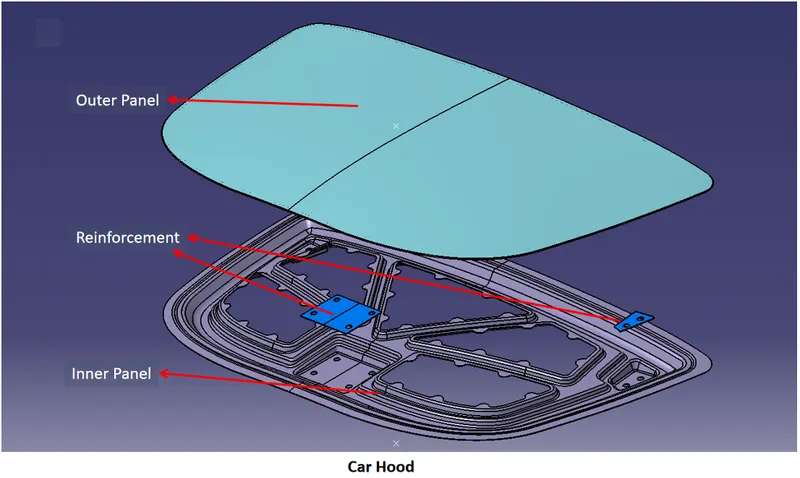
Fig.1.2: Outer Panel, Inner Panel & Reinforcement
Design requirements for Car Hood
1. Hood Head zone for lock striker: In the fig 2.1 shows Hood Head zone for lock striker
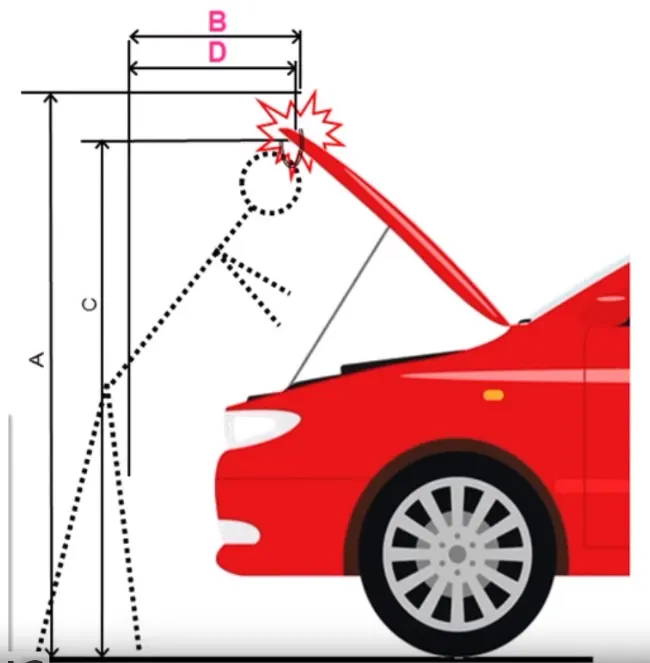
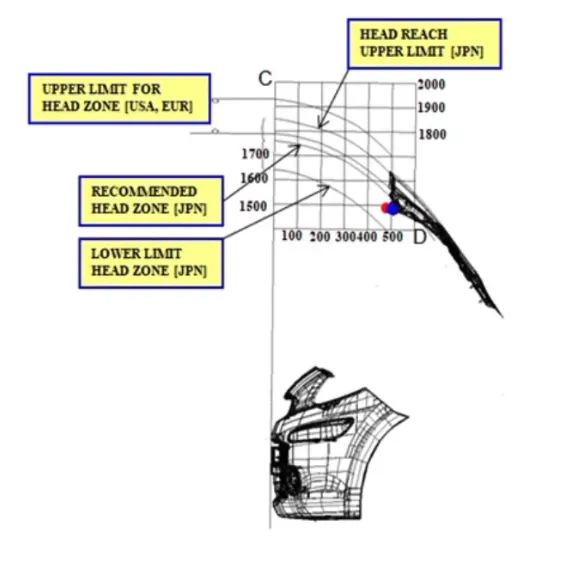
Fig.2.1: Hood Head zone for lock striker
From the Fig. The opening angle of hood will give A, C, B And D with respect to the ground. those A, B, C & D are decided in the head zone. Opening angle varies from region to region depending on average human weight. Depending on the standards we are deciding the angle. So from the angle data, Support rod or Gas stay is designed. The position of Support rod is on the other side of the battery which is shown in the fig. below.
2. Adding latches and stiffener pad: Latches are added where and all the weight is added. On the inner panel we have Hinges and striker, which are attached to the inner panel so due to this attachment the strength of the inner panel is going weak. In order to strengthen the inner panel Latches will play a very important role. Stiffener pad is the sponge-like material place b/w Inner and outer panel to reduce vibrations.
3. Mastic Seals: Mastic Seals place b/w Inner and outer panel to reduce Noise, vibration, and harshness. Every Mastic will have an effect of 80mm Dia locally. shown in the fig 3.1. Inner and outer panel gap is 2 to 5mm
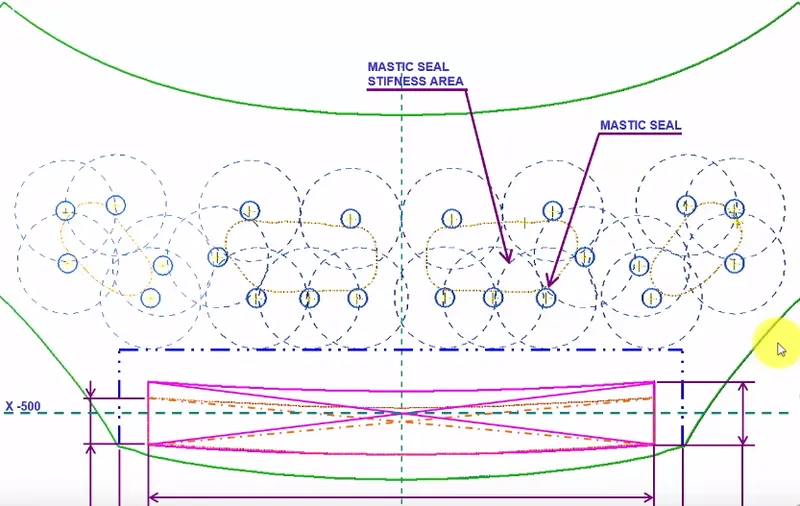
Fig.3.1: Mastic Seals
4. Emboss definition: Emboss are provided in the inner panel of the hood assembly. This helps in weight reduction of the hood and also to dissipate the force during collision. Force dissipate is shown in the fig. 4.1 this project design.
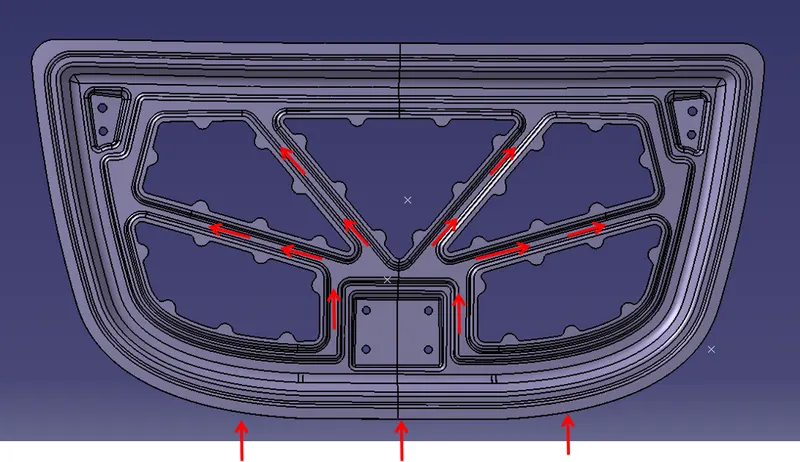
Fig.3.1: Force dissipate
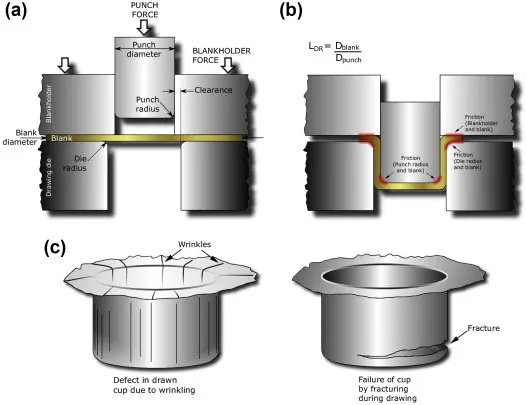
a. Deep Drawing: Deep drawing is a sheet metal forming process in which a sheet metal blank is radially drawn into a forming die by the mechanical action of a punch. It is thus a shape transformation process with material retention. The process is considered "deep" drawing when the depth of the drawn part exceeds its diameter.
Deep drawing is one of the most widely used processes in sheet metal forming. Apart from its use in many other sectors, it is applied in the automotive industry for the manufacturing of car body parts. The deep drawing process is a forming process which occurs under a combination of tensile and compressive conditions.
Sheet metal blank is radially drawn into a forming die by the mechanical action of a punch. It is thus a shape transformation process with material retention. The process is considered "deep" drawing when the depth of the drawn part exceeds its diameter. This is achieved by redrawing the part through a series of dies. The flange region (sheet metal in the die shoulder area) experiences a radial drawing stress and a tangential compressive stress due to the material retention property. These compressive stresses (hoop stresses) result in flange wrinkles. Wrinkles can be prevented by using a blank holder, the function of which is to facilitate controlled material flow into the die radius.
b. Hemming:
Hemming is a forming operation in which the edges of the sheet are folded or folded over another part in order to achieve a tight fit. Normally hemming operations are used to connect parts together, to improve the appearance of a part and to reinforce part edges.
In car part production, hemming is used in assembly as a secondary operation after deep drawing, trimming and flanging operations to join two sheet metal parts (outer and inner) together. Typical parts for this type of assembly are hoods, doors, trunk lids and fenders.
The accuracy of the hemming operation is very important since it affects the appearance of the surface and surface quality. Material deformations, which occur during the hemming process, can lead to dimensional variations and other defects in parts. Typical hemming defects are splits or wrinkles in the flange, material overlaps in the corner areas or material roll-in. This is why it is important to provide required reliefs at the corners.
There are two types of hemming operations,
- Conventional die hemming
In conventional die hemming, the flange is folded over the entire length with a hemming tool.
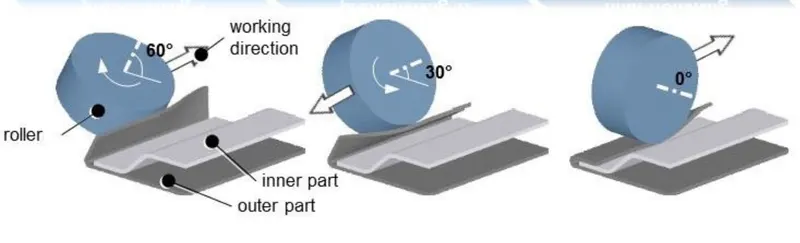
- Roll hemming
It is the roll hemming process that is used for automotive sheet metals. Roll hemming is carried out incrementally with a hemming roller. An industrial robot guides the hemming roller and forms the flange. Roll hemming operation can also be divided into several pre-hemming and final hemming process steps. Roll hemming is very flexible to use and tool costs are significantly lower as compared to those of conventional die hemming. However, the cycle times are much higher since the hemming is realized using a hemming roller which follows a defined path.
5. Hood For Better Pedistain Rating:
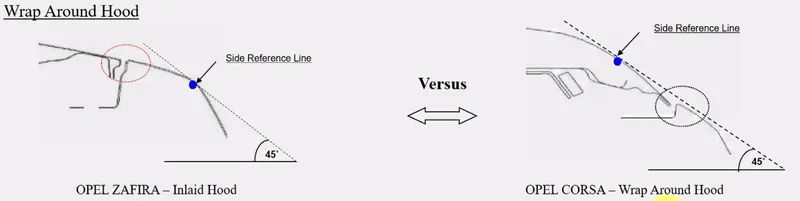
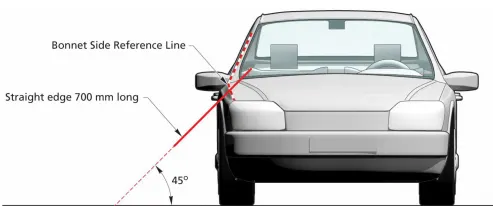
Inlaid Hood:The line which is drawn 45 deg. from ground to Side Reference of carand which is meeting point on fender is called Inlaid Hood.
Wrap Around Hood: The line which is drawn 45 deg. from ground to front surface of the Hood and which is the meeting point on the outer panel is called Inlaid Hood.
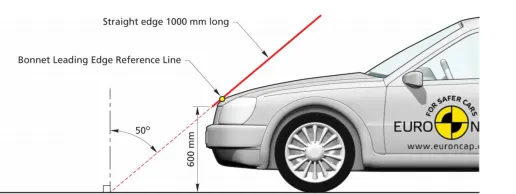
Depending on the Inlaid Hood & Wrap Around Hood we can design hood for head impact in the fig 5.1 shown position of head impactor.
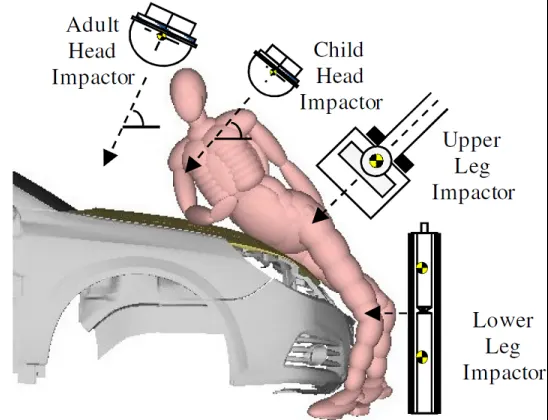
Fig.5.1: Position of head Impactor
Applicable document or norms:
FMVSS:
- FMVSS 113: HOOD LATCH SYSTEM
This standard establishes the requirement for providing a hood latch system or hood latch systems. The purpose of this standard is to prevent the front-opening hood from flying open and obstructing the driver’s view while the vehicle is moving forward.
European standard:
- Euro NCAP Pedestrian safety:
This standard covers all the Pedestrian safety points while collision on vehicles.
Construction:
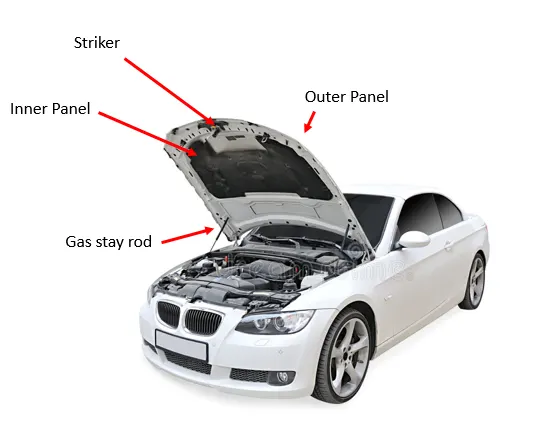
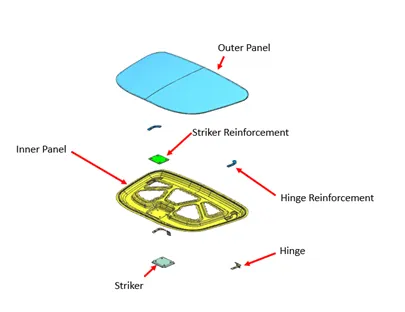
Fig: 1.4: Nomenclature of Hood Fig 1.3: Nomenclature of Hood
Hood Outer Panel:
Outer panels are the aesthetic elements of a car. It is the styling team who provides the skin for the outer panel. The shape, position and size of the hood should satisfy the safety norms. So while designing the hood we should give more importance to pedestrian safety. The outer panel is attached to the inner panel by hemming. So, it is necessary to provide required hemming flange and reliefs for the hemming operation. We also provide mastic sealants between outer panel and inner panel to reduce vibration.
Fig 1.4: Hood Outer panel
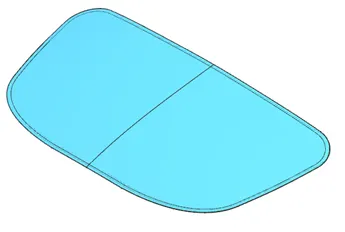
Hood Outer cover is nothing but the door for the engine compartment.
Material:
Aluminium Alloy, Steel
Thickness:
0.6 to 0.75mm
Manufacturing method:
Blank, Draw, Trim
Outer Panel Relief:
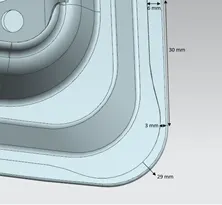
Relief is provided at the corner for the reducing the spring back effect while doing the hemming operation.
Striker reinforcement:
Reinforcements are provided according to the design requirements. Mainly it is provided at the hinge and latch regions to improve the strength locally. Usually thickness of reinforcements will be higher than that of the inner panels and the value varies according to cost and requirement. According to the design requirement here it is given 1.5mm thickness to both hinge and latch reinforcements.
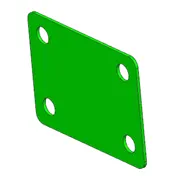
Material: Steel
Thickness: 1.5mm
Manufacturing process: Blank or laser cut
Hinge Reinforcement:
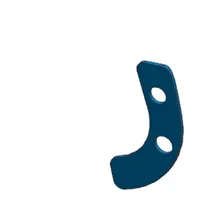
Material: Steel
Thickness: 1.5 to 2mm
Manufacturing process: Blank or laser cut
Hood Inner panel:
Inner panel is the part that gives strength and rigidity to the outer panel. The master section represents the initial emboss shape and size. Then we provide the emboss for the latch and hinge elements after fixing the location.
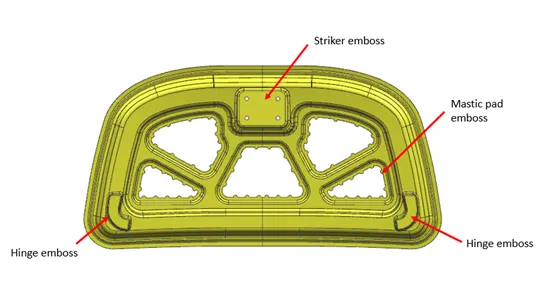
Material:
Aluminium Alloy, Steel
Thickness:
0.6 to 0.75mm
Views:
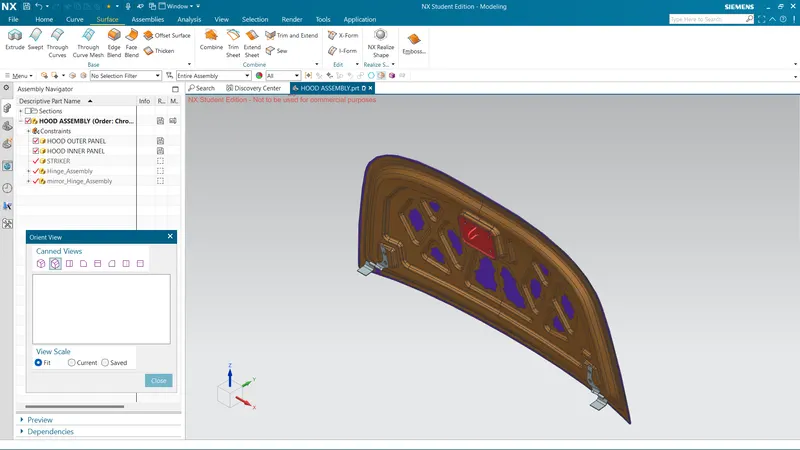
Isometric View:
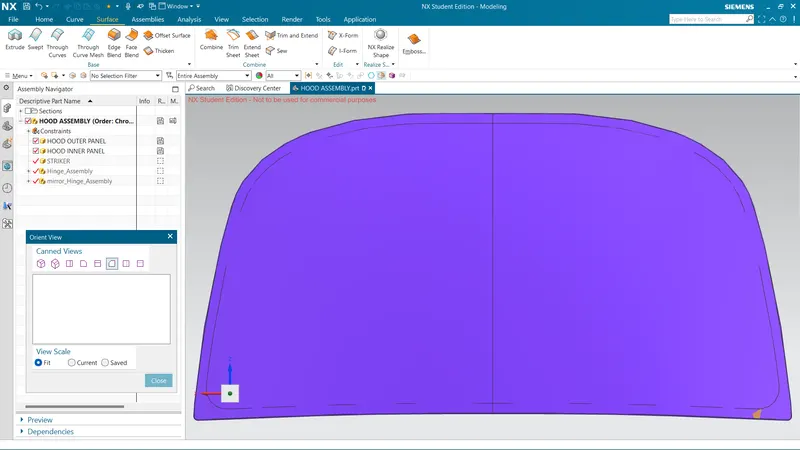
Top Viwe:
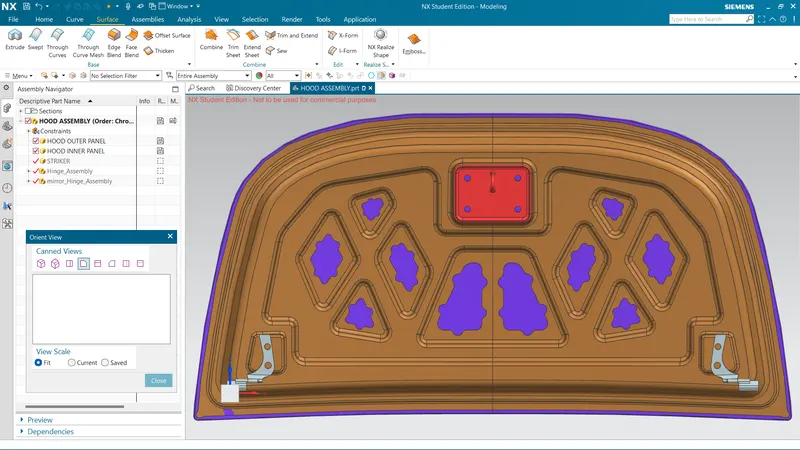
Bottom View:
Front View:
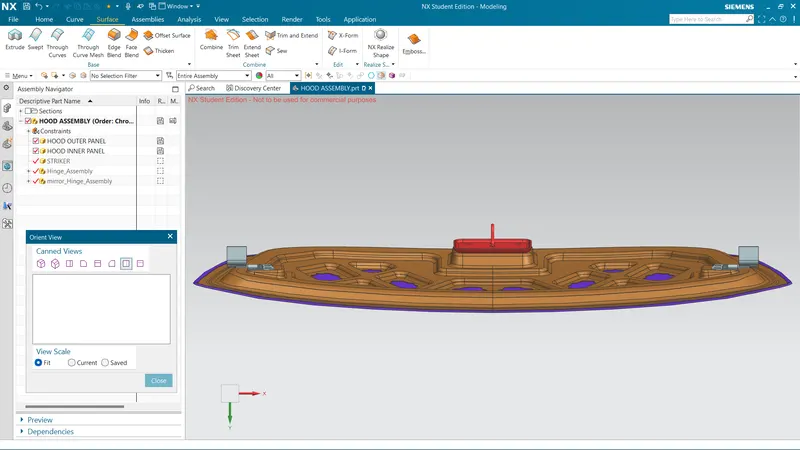
Side View: