Hood design-Week 2
Designed the Hood Outer Panel, Inner Panel and the necessary reinforcements by following the Master Section also applied checked the all Design parameters and designed according to the data given and followed the hood chalenge help videos.
Bellow attached the hood Assembly file and Part files are in the same folder as an attachment. Also, attached the STEP (.stp) file of the assembly.
HOOD :
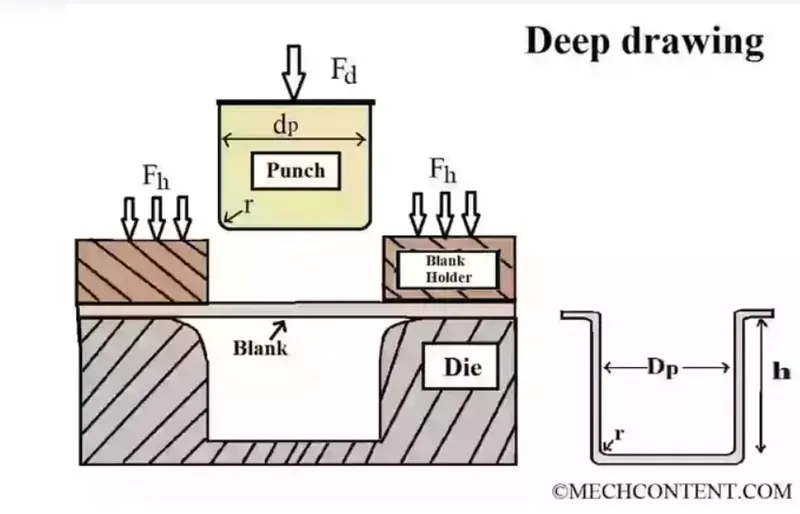
Hood is the opening body panel which covers the engine in front engine vehicles. it is one type of door which is having inner panel , outer panel. inner panel provides strength whereas outer panel is metal cover. it is having many components as listed below and explained in detailed. hood is also called as bonut. it covers the eninge compartment of the car body. hood is vey important of car body because it helps in crash and pedestrian safety requirements. so hood design is very important. hood is manufactured using difrent maufacturing process such as deep drawing, hemming to produce the hood.
i) Hood components :
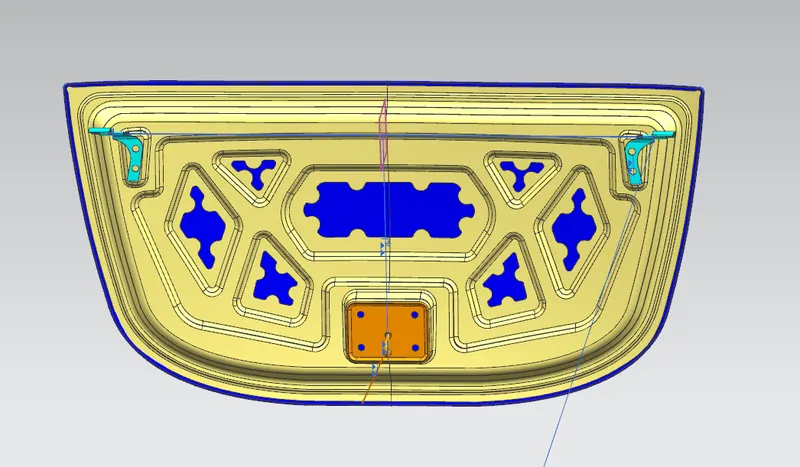
1) Inner panel : Hood having two panels that are hemmed together to form the automotive hood assembly. inner panel of hood is not vissible but it is covered by outer panel. inner panel provides strenght to hood body and it is engineeing part of the outer panel and hood. The outer panel has the aesthetic look to it but on its own is very weak and not capable of handling force during impact. so the designing of inner panel is very important. its vaule mostly 0.75mm and in some case 0.65mm thickness. inner panel looks as shown in below.
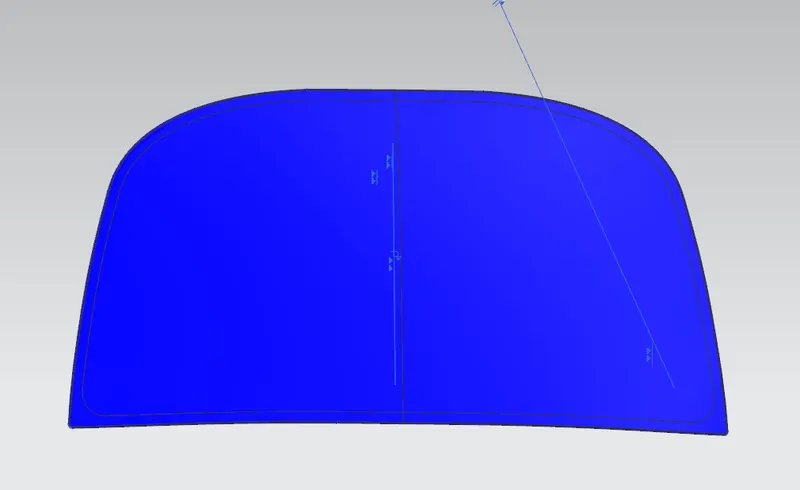
2) Outer panel : outer panel is part of hood asembly that is vissible to customers and that covers the inner panel. it is mainly provides decorate front portion of hood. and also it prevent the other inner parts of cars from direct exposure to the environmental effects such as rain, dust particles. its vaule mostly 0.75mm and in some case 0.65mm thickness. outer panel looks as shown in below.
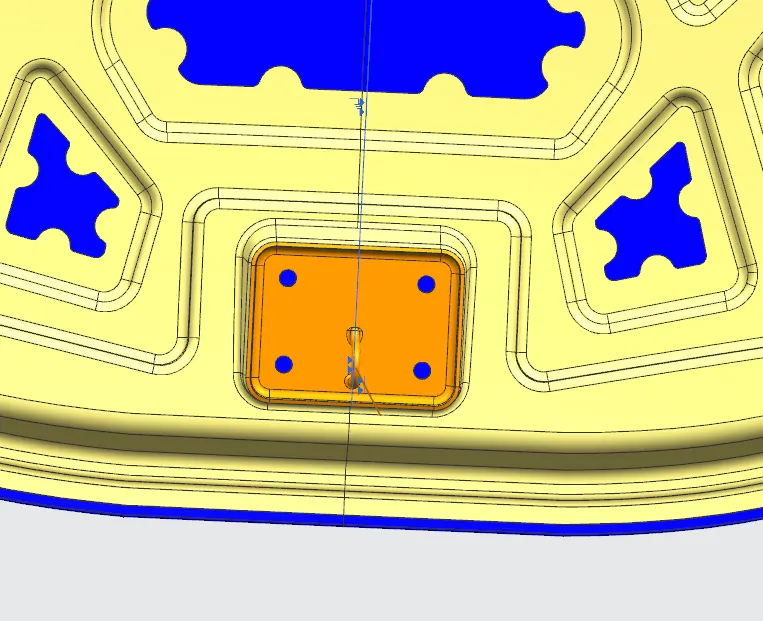
3) Striker
reinforcement lancher striker is provided to increse the strenght of the hood. Sriker mount is always tangential to the trajectory of the hood about the hinge axis. and is as shown below in the figure
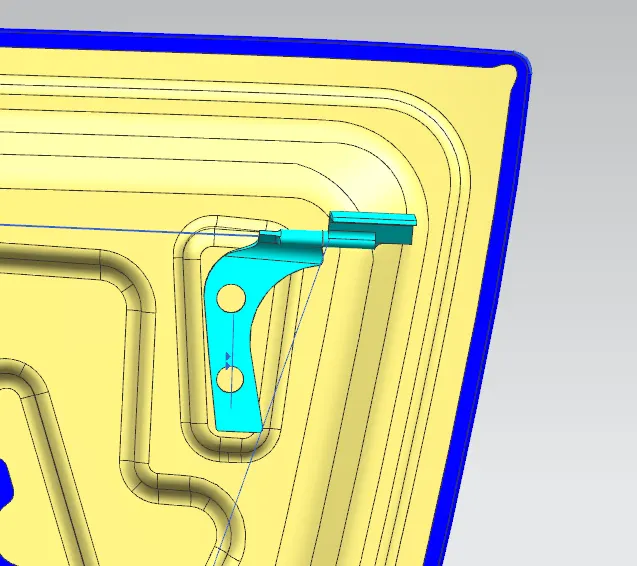
4) Hinge assembly
hinge is provide for the opening and closing of the hood. hinge assembly is provided on the inner panel and inner panel is rotates about the hinge axis for the opening closing of hood. hinge assemby is the one about which the hood is opened and closed.
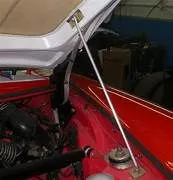
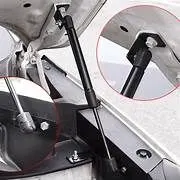
5) Hood stay or Support rod
a hood stay is an appartas for an engine room of a car, which keeps hood in open state. Gas stay is costlier and helps or supports the engine hood of motor in its open position with help of actuater which is actuated bt gas so there is no man efforts. gas stays also helps in opening and closing of less effort. wheras the support rod are cost effective and simple but it requires rod to support the hood with some effort to work from mans. support rod are used with some bends so that they can get some sthrenth. support rod and gas stays are as shown in below figures.
6) Mastics :
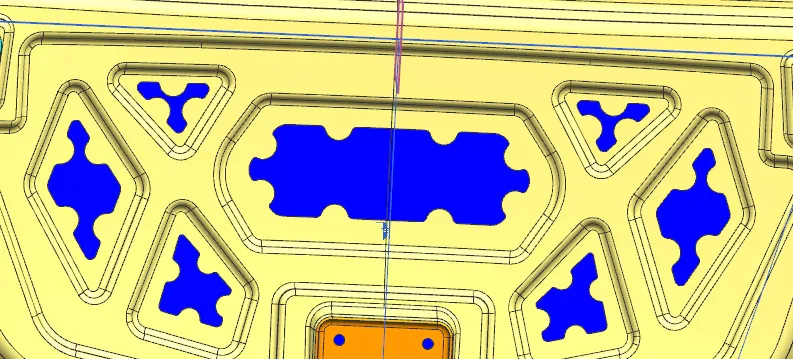
Mastic is a semisolid or semiliquide kind of material upon exposure to temeprature it will be expanding and gets hardened. between inner panel and outer panel there are mastics. mastics reduce the NVH ( noise vibration and hardness ). most of mastics sealant have tendency improving sthrenth through the of radius 80mm. to improve stregnth we add the mastic sealant and mastic points. its kind of hard rubber which is introduced as paste between the inner and outer panel to reduce the NVH. which also joins outer and inner panel and which gets hardened after exposing to heat. gap between the inner and outer panel of 5mm is filled by mastics. mastic is somekind of joining process. mastics points are as shown below,
7) Stiffner pad : stifener pad is kind of sponge which not have a predifend shape. which is introduced between the inner and outer panel to avoide the noise and vibeation which occurs during the movemets. stifner pad is used to rduce the NVH (noise vibration and hardness ).
8) reinforcement : reinforcement are the ones which are additionally given to compensate the loss which happened on local area. reinforecement are intentionally given to improve the strenth on that area. hinge reinforcement is small reinforecemnt so vaule is 1.5mm thickness. lanchen reimforcement is big kind of reimforcement we can give upto 1mm compensation.
9) embosis :
embosis is added to reduce the effect of the force while collision by minimal entry of force to pasengers. embosis distributes the force in such a way that it get reduced. embosis can be done in the y or v direction. embosis also helps in the pedestrian safely creterion.
10) latch trajectory :
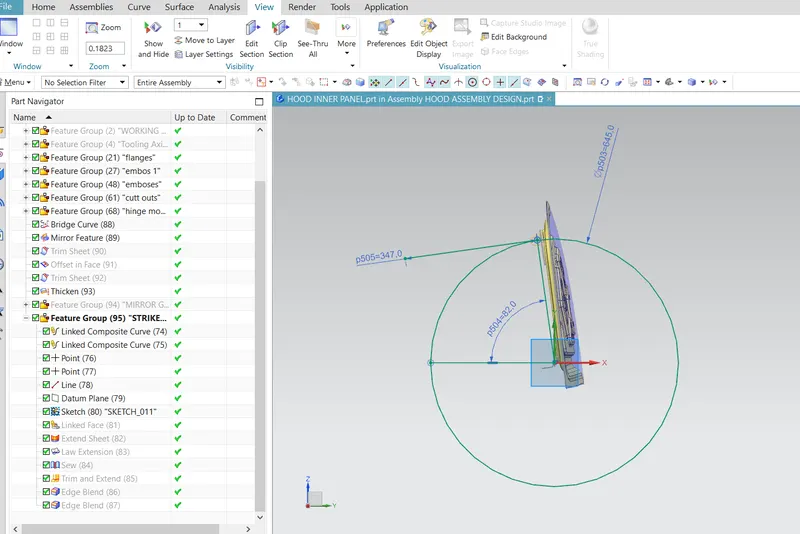
The path followed by the hood about hinge axis while opening and closing of hood is called as latch trajectory of hood. and it is a circular in shape. the normal of c hook is coincide with the tangent of circle which is drawed about hing axis as center. it is very important because while opening and closing the c hook must be properly fit inside the latch. c hook must be properly fit and porperly match with latch thats why the latch trajectory is very important. striker mount is always tangential to the trajectory of hood about hinge axis. latch trajectory is as shown in below figure.
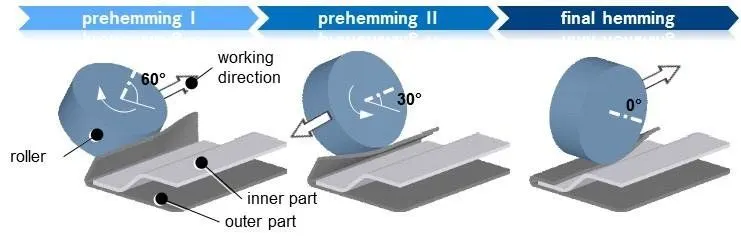
11) Hemmimg : hemming is maanufacturing process used to join the two components of the hood such as inner and outer panel. hemming is process in which roller is rolled over the sheet that bends the sheets and joins the two sheets of inner and outer panel. it is rolled over three diffrent steps each step it rolled with some more angle. hemming is as shown in bellow figure. hem reliefs are provided at the corners of the sheets so it can be properly hemmed.
12) deep drawing :
Deep drawing is the process of converting blank of sheet metal into a cylindrical containers with a flat or hemispherical base. It is combination of metal forming process & sheet metal process.
ii) All the parameters followed :
a) Hemming data:
as per given in the question figure master section i have designed. inside the master section it said that outer panel thicknes is 0.75 mm and inner panel thickness is 0.75mm. and gap betwwen inner and outer panel sheets is 0.2mm for the glue. outer panel dounside length is 6mm and clearence between inner and outer is maintained 2mm. all the data mentioned is well maintained inside my nx cad assemby ( HOOD ASSEMBLY DESIGN )folder. the bellow photos shows the data is maintained.
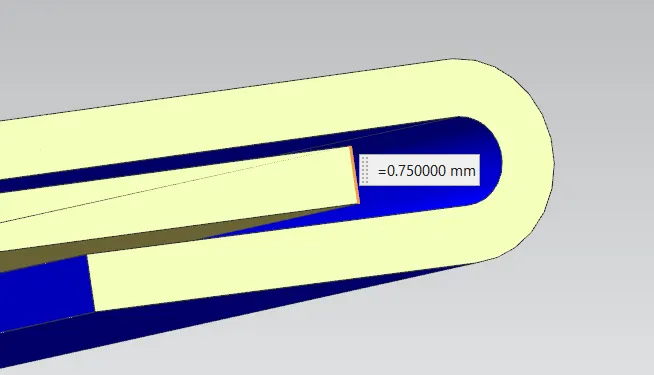
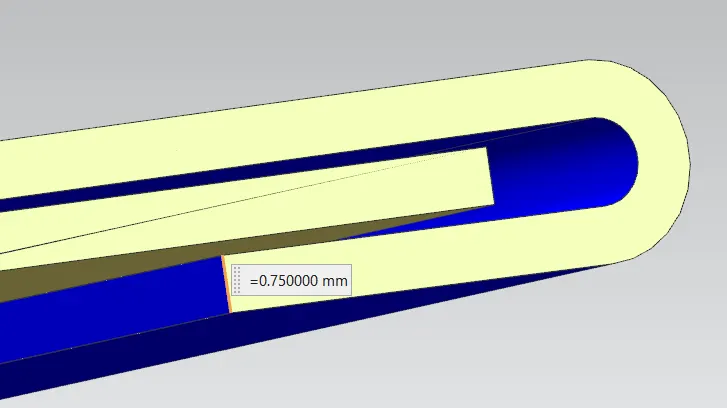
inner panel thickness as 0.75 mm outer panel thickness as 0.75 mm
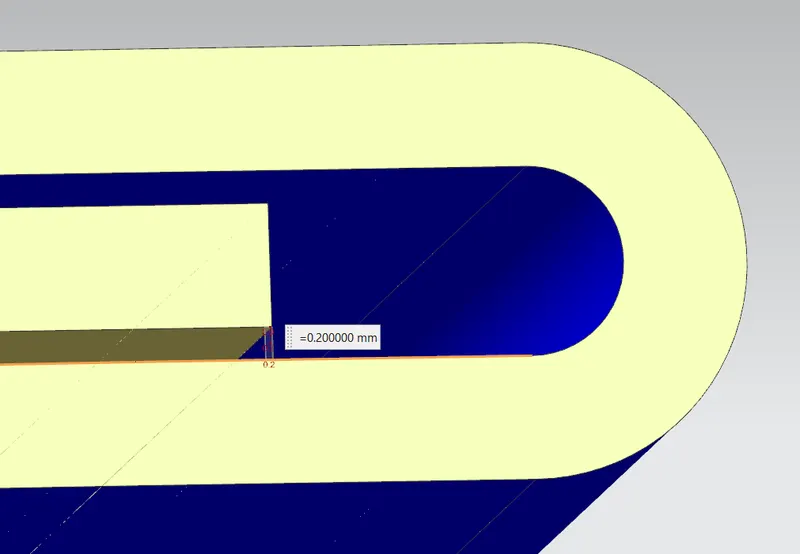
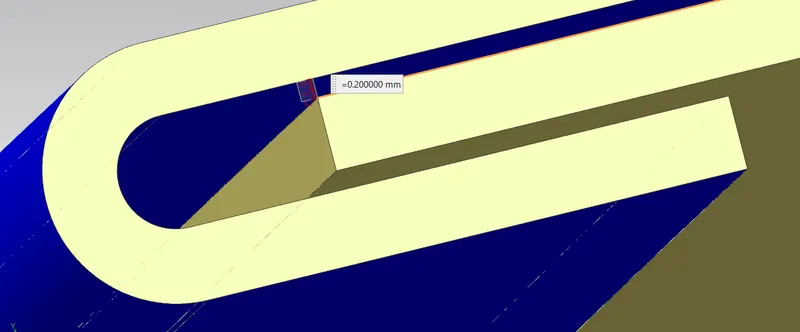
gap betwwen inner and outer panel 0.2mm maintained
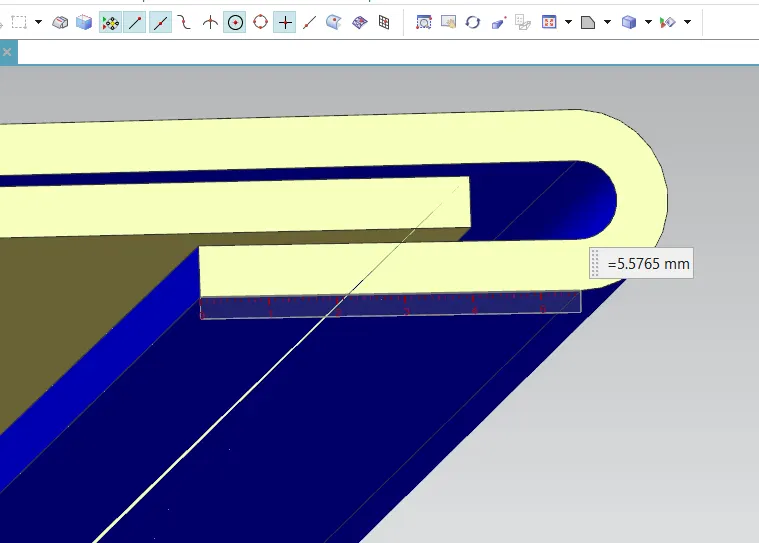
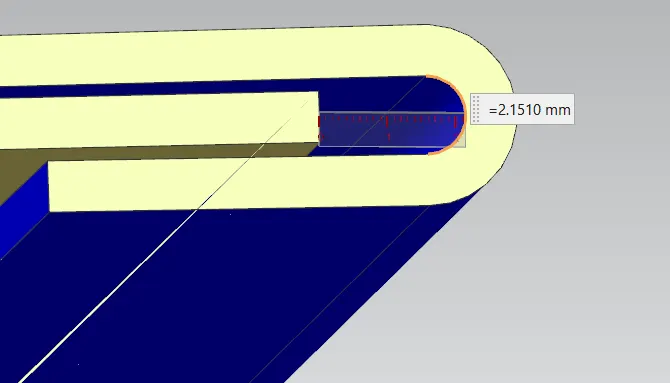
flange legth mainatined aproximate 5.57mm. gap is maintained aproximate 2mm. around 2.15mm
b) Relief rear section:
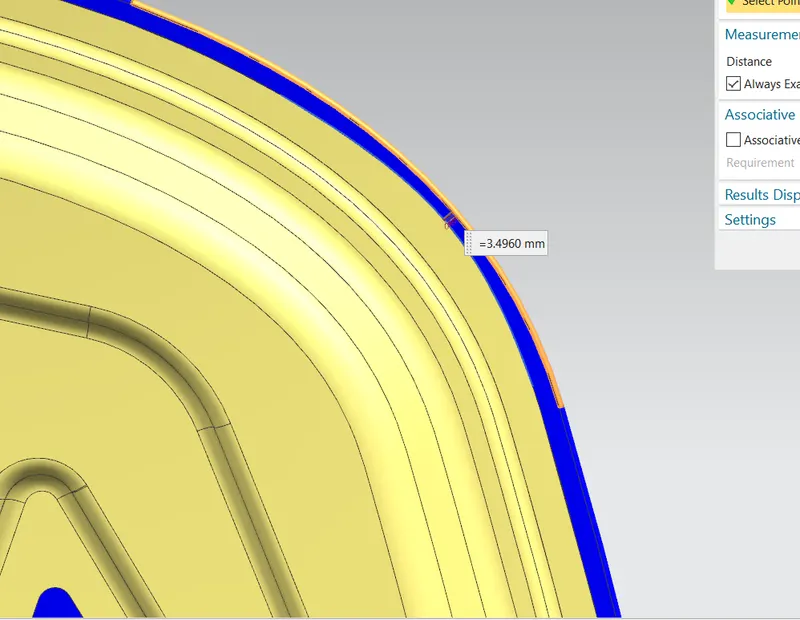
Relief for rear section is maintained around more than 3mm as 3.49mm. is as shown in above figure relief is shown as 3.49mm.
c) Front relief:
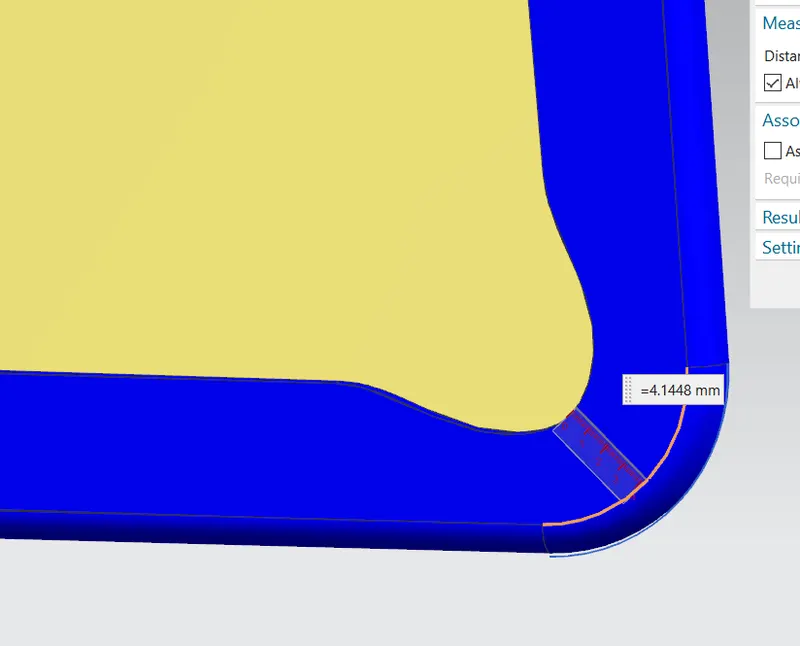
front relief is maintained around more than 3mm as 4.148 mm. is as shown in above figure relief is shown as 4.148mm.
Data to be used:
Hood Thickness Information
- Outer Panel Thickness = 0.75mm
- Inner Panel Thickness = 0.75mm
- Reinforcement Thickness = 1.5mm well maintained in the desined assembly.
hood assemby is uploaded as zip file including all the part files as zip file. and also the step file (.stp) file of hood assembly is attched below.