Hood design-Week 2
Hood is main component of a car at the front portion. It is used to decorate the car & add luxurious look. The shape of the bonnet is made aerodynamic in order to minimize the air effect.
Hood design consideration:-
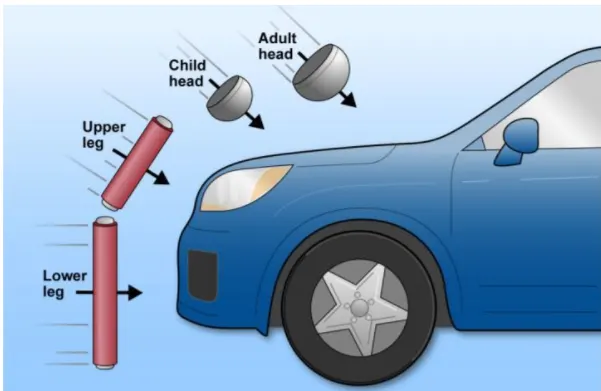
The hood of a car is considered as the frontal BIW enclosure component. Bonnets are designed to reduce air resistance as the air flows around the car. Apart from this, bonnets are also designed to meet several other requirements. They serve a great deal of purpose in protecting the passengers inside the car & the pedestrians in the event of an accident. It also acts as the cover for the engine.
Here are some Points why hood is used:-
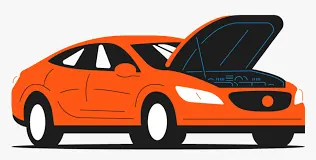
Engine Compartment Access: The primary purpose of the hood is to provide access to the engine compartment. It is hinged at the front of the vehicle and can be opened to allow mechanics or vehicle owners to access the engine for maintenance, inspections, and repairs.
Engine Protection: The hood acts as a protective cover for the engine, shielding it from external elements such as debris, dirt, water, and extreme weather conditions. It helps to prevent contaminants from entering the engine bay, which can potentially damage critical engine components.
Aerodynamics: The shape and design of the hood contribute to the overall aerodynamics of the vehicle. Automakers pay attention to aerodynamic considerations when designing the hood to minimize drag and optimize airflow around the vehicle, which can improve fuel efficiency and reduce wind noise.
Crash Safety: In the event of a collision, the hood is designed to crumple and absorb impact energy, serving as a safety feature to protect the occupants. This helps to mitigate the force of impact and reduce the risk of intrusion into the passenger compartment.
Aesthetics: The hood is a prominent visual element of a car's exterior design. Automakers often incorporate styling elements, contours, and character lines on the hood to enhance the overall aesthetic appeal and create a distinctive look for the vehicle.
Sound Insulation: Some vehicle hoods are designed with additional sound insulation materials or layers to reduce engine noise and vibrations, enhancing the comfort of the driver and passengers inside the cabin.
As a design engineer we should consider some of the factors that could make a hood proper hood design.
1)Structural Integrity:
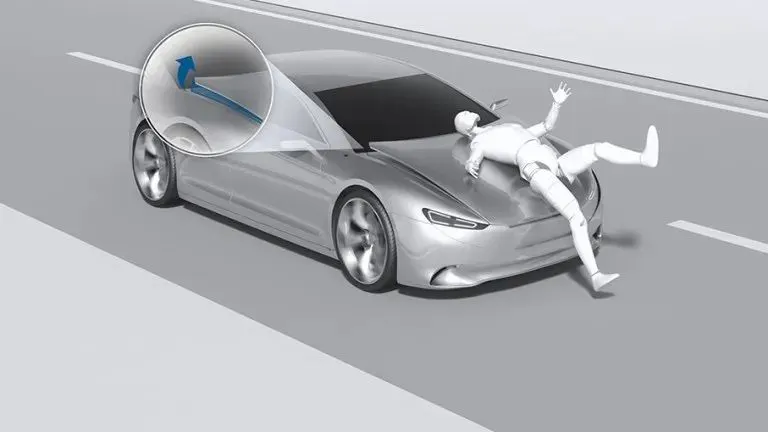
The hood should be designed with sufficient structural integrity to provide protection for the engine and occupants in the event of a collision. It should be able to withstand impact and deformation while maintaining its integrity to prevent intrusion into the passenger compartment.
2)Aerodynamics:
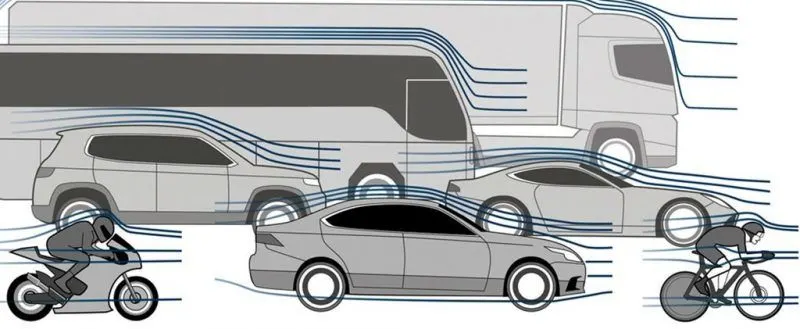
Consider the aerodynamic properties of the hood design to minimize drag and optimize airflow around the vehicle. This can help improve fuel efficiency and reduce wind noise. Smooth contours and careful integration with other body panels can contribute to better aerodynamic performance.
3)Weight Optimization:
Balancing weight and strength is crucial for efficient vehicle performance. Design the hood with lightweight materials and innovative construction techniques without compromising structural integrity and safety. Lighter hoods can improve fuel economy and overall vehicle handling
4)Clearances and Accessibility:
Ensure sufficient clearance between the hood and engine components to allow for proper installation, maintenance, and repairs. Accessibility to critical components, such as the engine, fluid reservoirs, and electrical systems, should be considered to facilitate routine maintenance and servicing.
5)Hood Latch and Safety Mechanisms:
Design an effective hood latch and safety mechanisms to secure the hood in the closed position and prevent accidental opening while the vehicle is in motion. Adequate attention should be given to latch design, materials, and durability to ensure proper functioning and reliability.
6)Material Selection:
Choose suitable materials for the hood that provide the desired balance of strength, weight, and aesthetics. Common materials used for hood construction include steel, aluminum, carbon fiber composites, and fiberglass. Each material has its own advantages and considerations, such as cost, manufacturing processes, and repairability.
7)Safety Standards and Regulations:
Ensure that the hood design meets applicable safety standards and regulations, such as pedestrian safety requirements, hood deformation characteristics, and crash safety regulations. Compliance with these standards ensures the hood provides the necessary protection for both occupants and pedestrians.
8)Manufacturing Feasibility:
Consider the manufacturing processes and feasibility of the hood design. Evaluate factors such as tooling requirements, manufacturing costs, and production volumes to ensure the design can be efficiently produced within the desired budget and timelines.
9)Testing and Validation:
Conduct thorough testing and validation of the hood design to ensure it meets performance, safety, and durability requirements. Testing may include structural analysis, impact testing, latch mechanism functionality, and other relevant evaluations.
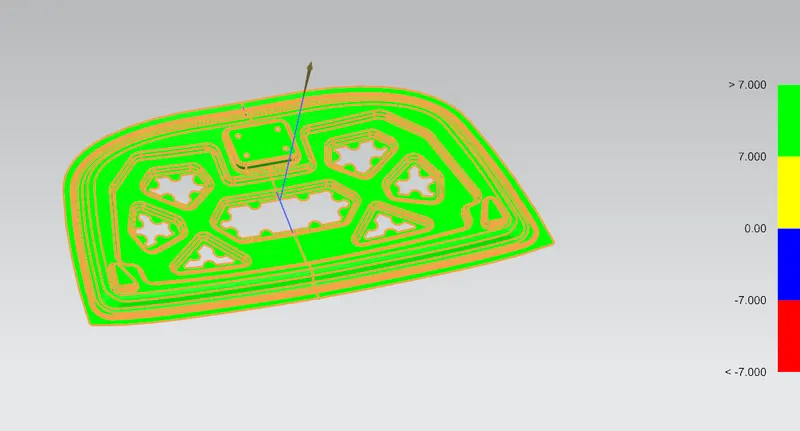

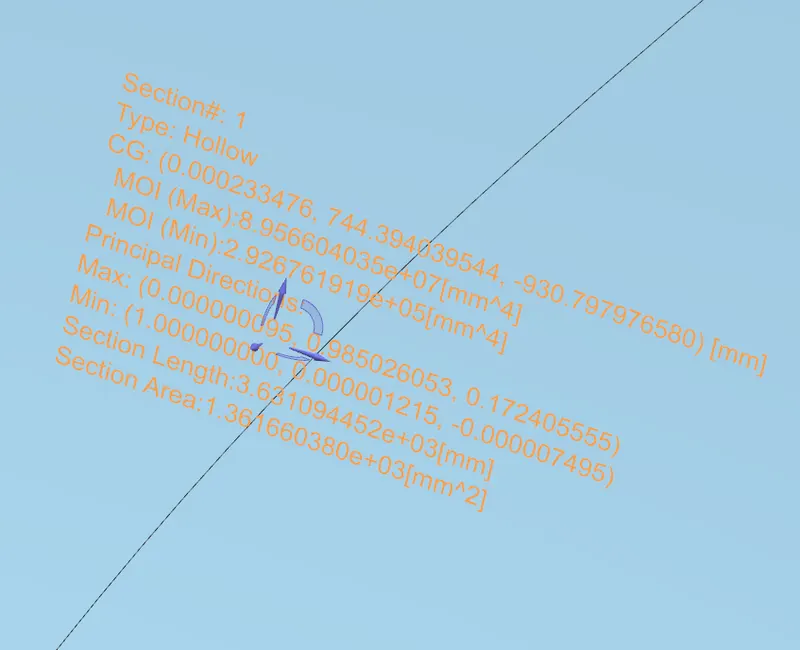
Following parts are using in hood assembly for this report,
- Hood outer panel
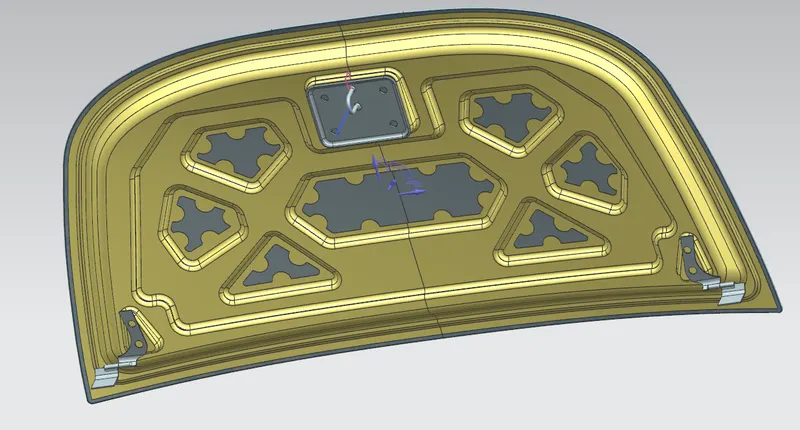
- Hood inner panel
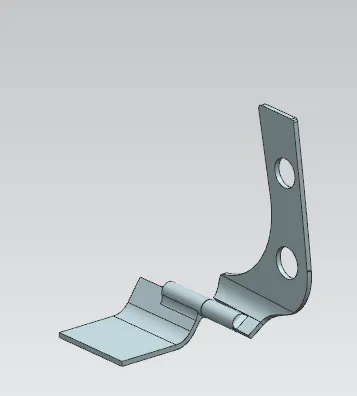
- Hinge assembly
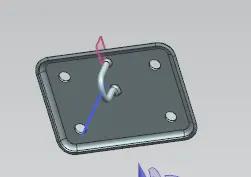
- Striker assembly
Hood thickness-
Outer panel thickness= 0.75 mm
Inner panel thickness= 0.75 mm
Reinforcement thickness= 1.5 mm
Hood Inner Panel-
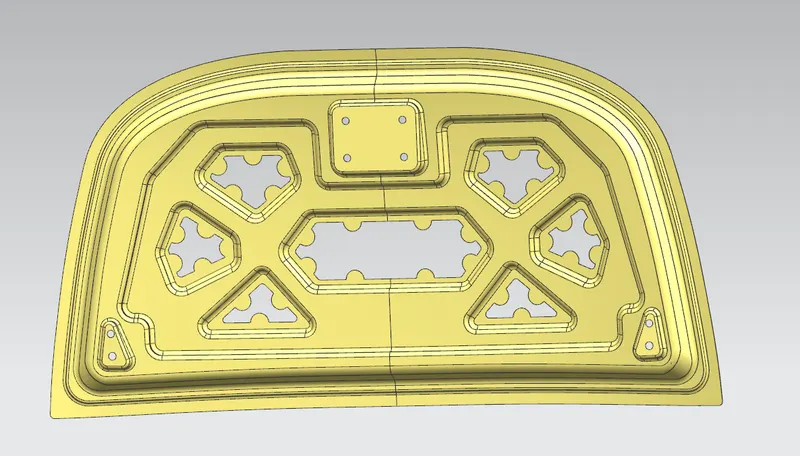
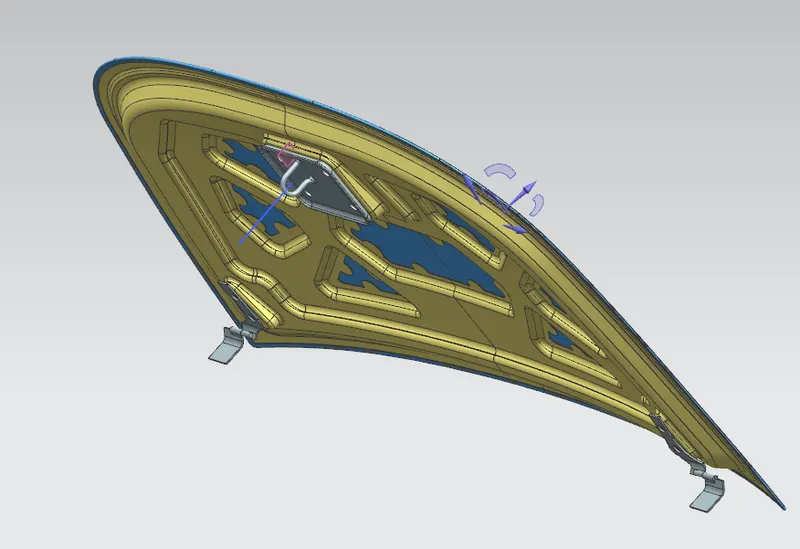
- In the inner panel only we can research & implement the safety of pedestrians & as well as the driver. In this panel only we can attach the reinforcement, embossed, mastic points etc.
- It is an object of the present invention to provide a hood inner panel capable of reduction of a reaction force of the hood inner panel even if a level of deformation of a hood of a vehicle increases, & ensuring a sufficient energy absorption capacity.
- for creating hood inner panel irst of all we have to use wave geometry linker to get the desired face on the inner panel after that we vcan trim surfaces into 2 parts.
- After creating that we can create offset and embosses accordingy using emboss option. then we have to give cutouts to embosses in order to reduce the impact of anu child or adult happens at that time the harm will be low.
- then we will create embosses for hinges and we should always make sure that the surface for attaching hinges should be flat always.
- thus we can now mirror the created surface along the parallel plane.
- then we will create base to attach striker. with the help of extracting the face and also using law extension and then with the help of sew and trim option we can create base for striker.
- once everything is done we can provide thickness ofn 0.75mm along the upper direction.
- then we have to provide a sketch to position the striker along the required angle
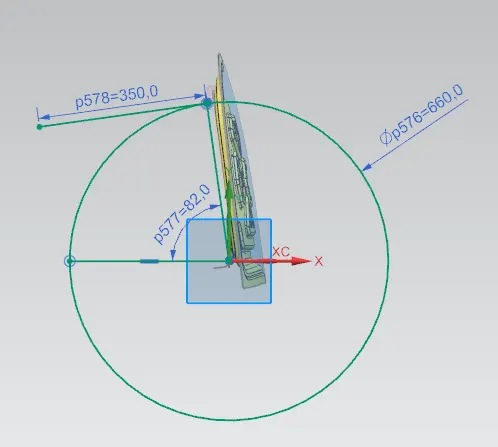
- after creating the sketch we can give constraints to the striker along with the sketch to define striker along its position.
Hood Outer Panel:
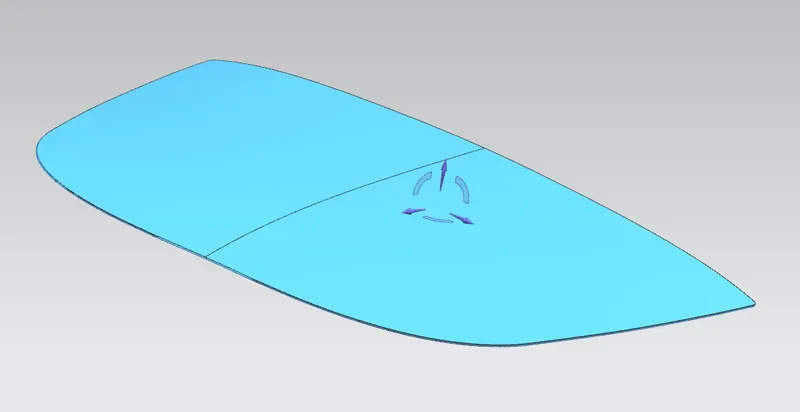
We can also call it as cover for engine and other parts. It is the part, which gives luxurious look to the hood or bonnet. Outer & inner panel can not join by any welding process like spot welding or rivet, which spoil the outer look of a car. The outer panel is generally extracted model from the prototype design.
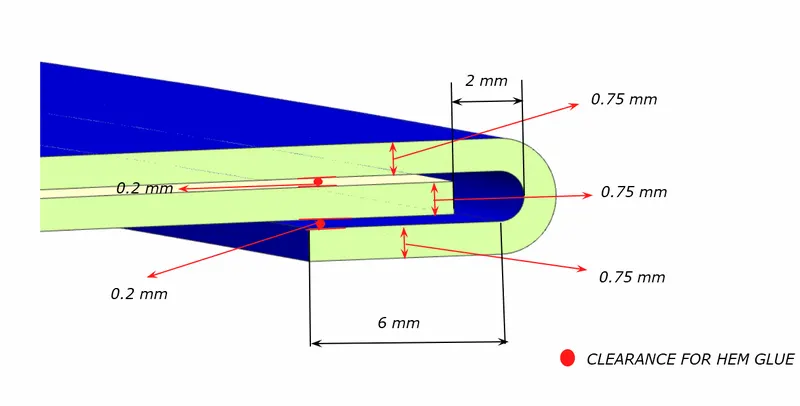
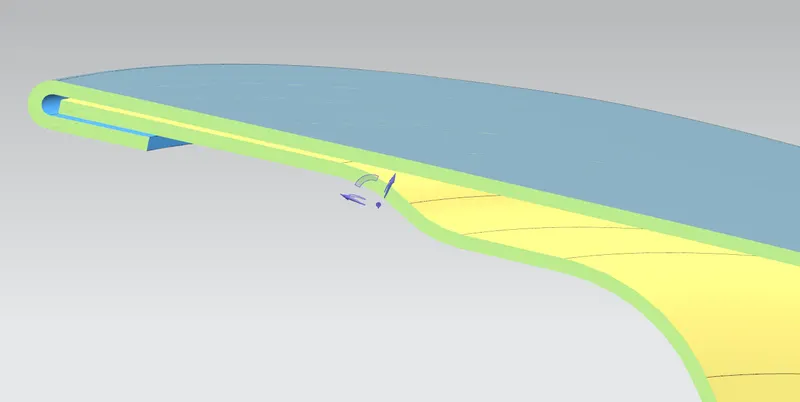
- for creating a outer panel we should create offset for 2.65mm to create hems
- after getting offset we can create curve at offset of 7 mm to a face and then we should have to trim the surface along the face to get the requird face
- then we have to extract the face using Law extension and then we can use face blend along three faces to create hem we have to consider all the normals should face each other.
- after creating hems we have to give reliefs to the bending which could be around 3mm.
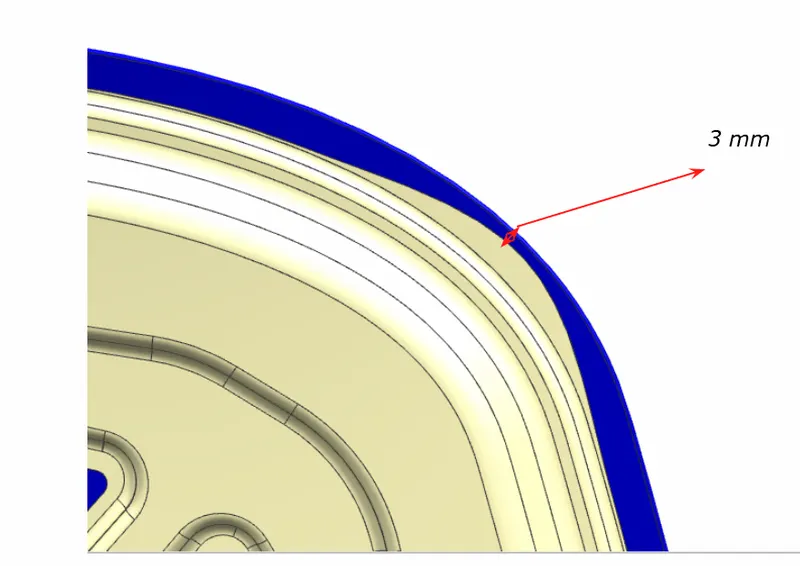
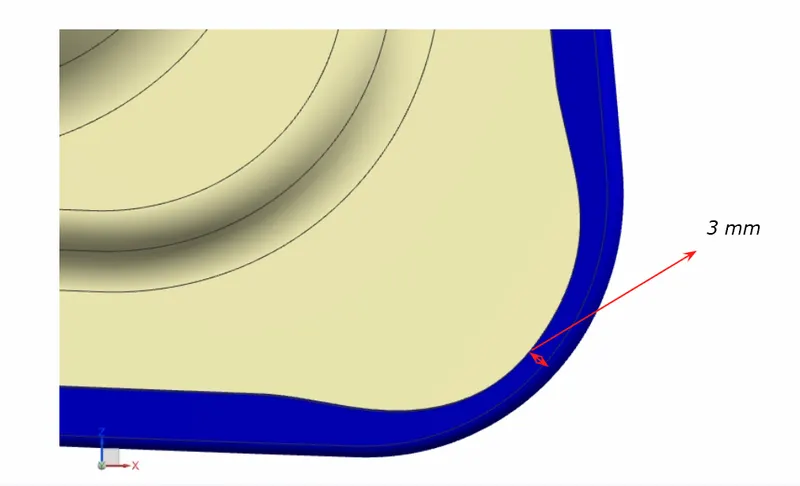
- once everything is done we can give thickening to the surface which will be around 0.75mm in the inner direction.
Assembly:
- after Completing with the part creation we can now assemble the striker and hinges with the help of assembly we can use touch constrais, or parallel or anything according to use.
now we have the final Assembly along with Strilker and hinges.
Latch Trajectory:
While opening or closing the hood, the latch must be perfectly aligned to the fixing or striker point. For that, the latches trajectory must be perpendicular to the hinge axis.
Mastic Data:
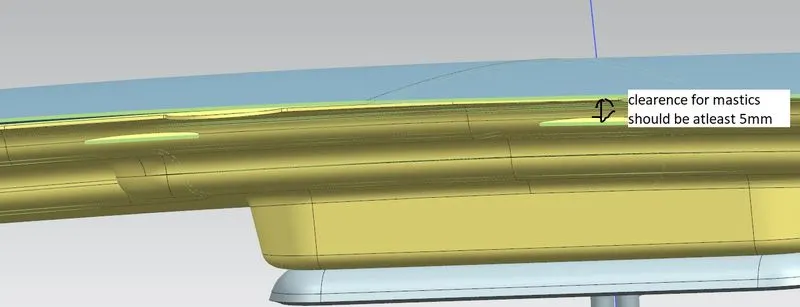
for creating mastic definition we can give embosses in such a way that the minimum distance between the inner and outer hood shound be around 5mm so that the mastics should be assembled accordingly and we have to provide roundings to the embosses to attac the mastics.
Embossing:-
- The sheet metal embossing operation is commonly accomplished with a combination of heat & pressure on the sheet metal, depending on what type of embossing is required.
- A sheet metal is drawn through the male & female roller dies, producing a pattern or design on the sheet metal. Depending on the roller dies used, different patterns can be produced on the sheet metal.
- embosses will help to increase the safety of car.
Hemming:-
- Hemming is a sheet metal forming process in which sheets are joined by bending it usually to 180 degree. Automotive body panels & parts such as deck-lids, trunk-lids, doors, hoods & tailgates are formed by hemming processes.
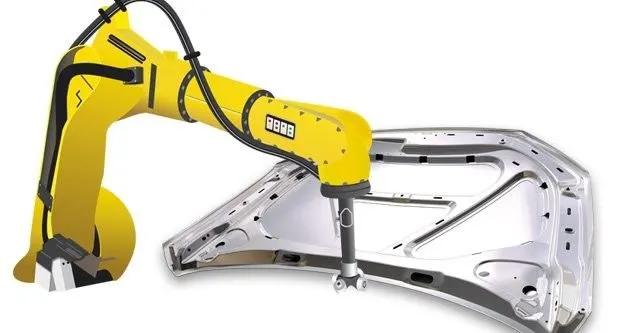
- Roll hemming is carried out incrementally with a hemming roller. An industrial robot guides the hemming roller & forms the flange. Roll hemming operation can also be divided into several pre-hemming & final hemming process steps.
- Coventional die hemming is suitable for mass production. In die hemming, the flange is folded over the entire length with a hemming tool. Normally the actual hemming is a result of a forming operation in which the flange is formed with a hemming tool after the drawing & trimming operations have been completed.
Conclusion-
We have designed a hood that follows all the rules & regulations of the manufacturer's standards.