Hood design-Week 2
HOOD DESIGN using NX
In this report the flow of information will be as follows:-
1. What is Hood?
2. Data
3. Design
4. Analysis
5. Conclusion
What is Hood?
- The primary function of a car hood is to protect the engine and other vital components underneath it. It acts as a shield, guarding against debris, water, and other elements that could potentially damage or affect the engine's performance. The hood also helps to reduce noise and heat generated by the engine.
- The hood is attached to the car body through hinges at the rear, allowing it to be opened and closed easily. It is secured in the closed position by a latch mechanism at the front, ensuring that it remains securely shut while the vehicle is in motion.
- Opening the car hood provides access to the engine bay, where various components, such as the engine itself, battery, air filter, and fluid reservoirs, can be inspected, serviced, or repaired. The hood may also feature insulation or sound-deadening material on its underside to reduce engine noise and heat transfer into the passenger compartment.
- Overall, the car hood plays a critical role in protecting the engine, providing access for maintenance and repairs, and contributing to the vehicle's overall design and functionality.
DATA:
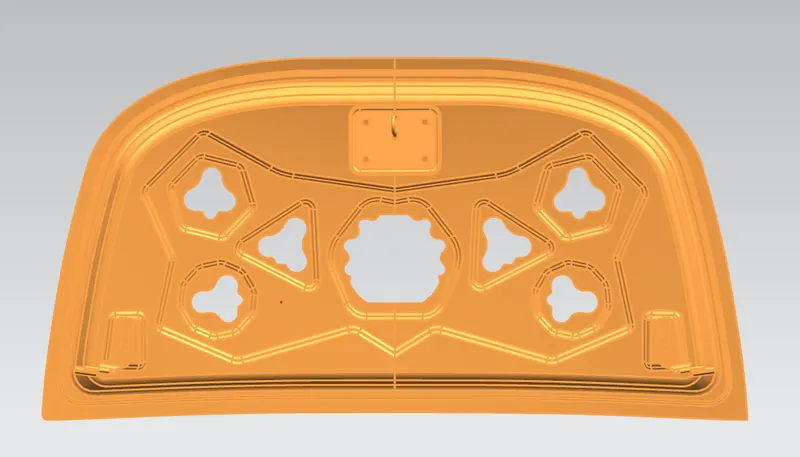
Inner hood has been designed by following the master data:-
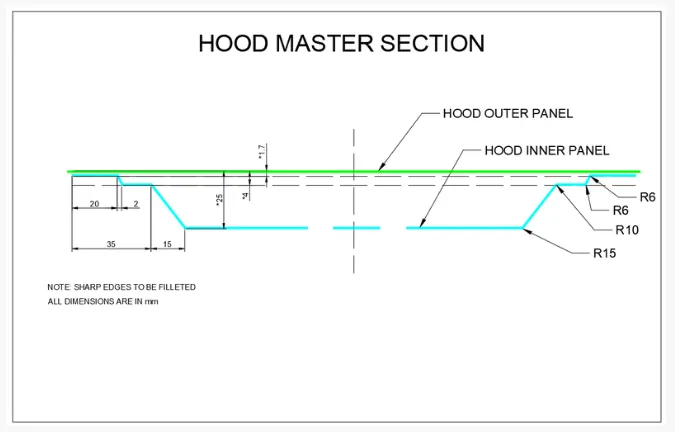
Hood thickness:-
- Outer panel thickness:- 0.75mm
- Inner panel thickness:- 0.75mm
- Reinforcement thickness:- 1.5mm
DESIGN:-
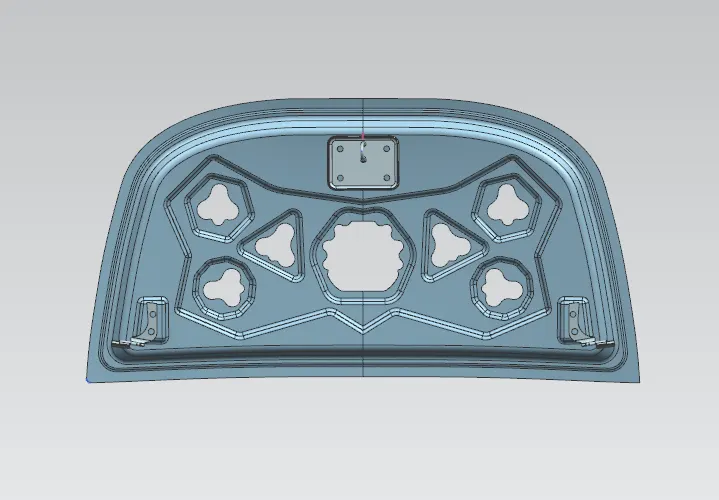
Inner panel:
The inner panel refers to the component that is attached to the underside of the hood. It is usually made of metal or plastic and serves multiple purposes:
- The inner panel provides reinforcement and strength to the hood, helping it maintain its shape and resist deformation. It adds rigidity and stability to the hood structure, especially when it is closed.
- Some inner panels may have insulation material attached to them. This insulation helps to absorb noise, reduce engine heat transfer into the passenger compartment, and improve overall comfort.
- The inner panel may have provisions for mounting various components, such as hood release mechanisms, hinges, struts, or gas springs that assist in holding the hood in the open position.
- The inner panel may also feature finishing touches to enhance the visual appearance of the engine bay. It can be painted or coated with materials that match the vehicle's interior or exterior color scheme.
- The inner panel is not usually visible when the hood is closed, it may be exposed and visible when the hood is open, providing a view of the engine compartment.
Outer panel:-
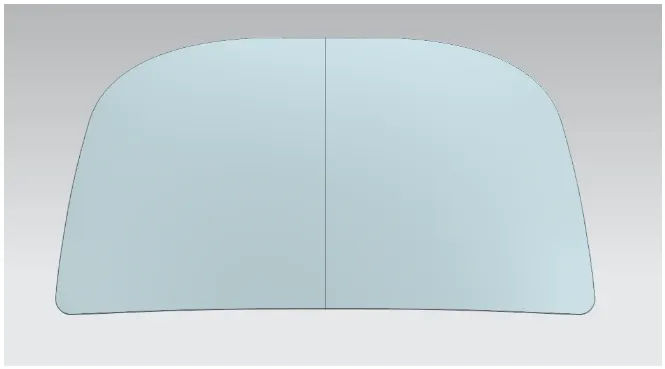
- The outer panel in a car refers to the exterior sheet metal panel that forms the visible outer surface of the vehicle's body. It is the panel that is directly exposed to the external environment and contributes to the vehicle's aesthetics and overall design.
- The outer panel contributes to the vehicle's visual appeal, enhancing its overall design and aesthetics. It may feature paint, decals, badges, or other finishes to match the vehicle's exterior color and style.
- The shape and design of the outer panel can affect the vehicle's aerodynamic performance. It is engineered to minimize drag and optimize airflow around the hood and other parts of the vehicle.
- The outer panel provides protection to the engine and other components housed within the engine bay. It acts as a barrier against debris, moisture, and other external elements that could potentially damage the engine.
- The outer panel, along with other body panels, contributes to the overall structural strength and rigidity of the vehicle. It helps maintain the shape of the hood and adds strength to the front end of the vehicle.
- The outer panel of the hood is typically manufactured using stamping or forming processes to shape the sheet metal into the desired contours and design. It undergoes surface preparation, such as cleaning, priming, and painting, to provide durability and resistance to corrosion.
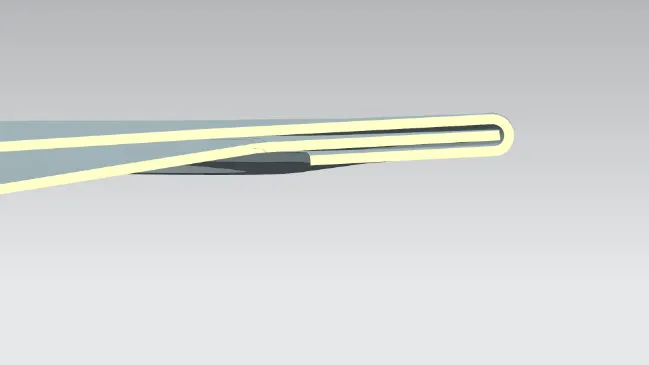
Hemming:-
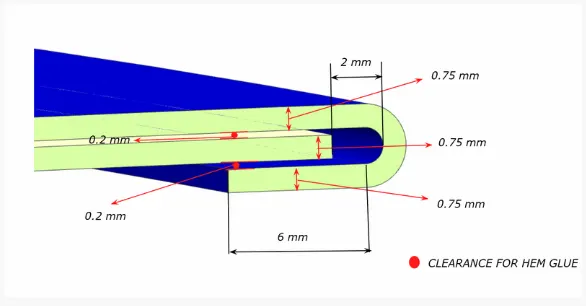
- The outer panel & Inner panel can't join by any welding process if we did it will leave a spot on the outer panel and it will spoil the look of a car. so, to join inner and outer closure panels together we use the Hemming process.
- It is the process of bending/folding the flange of the outer panel over the inner one.
- The flange of the outer panel is bent over the inner panel in progressive steps by means of the roller hemming head.
Mastic sealant:-
- Mastic sealant is used in car hoods to create a waterproof barrier, preventing water and moisture from entering the engine compartment. This helps protect the engine and other components from potential damage caused by water infiltration.
- Mastic sealant is applied to the joints and seams of the car hood to create an airtight seal. This prevents the entry of air and dust into the engine compartment, ensuring proper airflow and filtration for the engine.
- Mastic sealant can help reduce noise transmission through the hood by acting as a sound-dampening material. It helps to minimize engine noise and vibrations from reaching the passenger compartment, enhancing the overall comfort of the vehicle.
- Mastic sealant can also help dampen vibrations in the car hood caused by engine operation or road conditions. It reduces the transfer of vibrations to other parts of the vehicle, contributing to a smoother and quieter ride.
- Applying mastic sealant to the joints and seams of the car hood helps improve its structural integrity. It adds strength and rigidity, reducing the likelihood of flexing or deformation of the hood during driving or impacts.
Reinforcements:-
Reinforcements are used to provide more strength to the assembly.
1. Latch & striker
2. Hinge
LATCH & STRIKER:-
The latch and striker in a car hood are components of the hood locking mechanism that ensure the secure closure of the hood.
- The hood latch is located on the hood itself and is typically a metal or plastic mechanism that engages with the striker to keep the hood securely closed. It consists of a latch assembly with a spring-loaded mechanism.
- The striker is the counterpart to the hood latch and is usually mounted on the car's body or chassis. It is a metal or plastic component with a receiving mechanism that the latch engages with when the hood is closed.
- When the hood is closed, the latch and striker align with each other, and the latch mechanism engages with the striker to securely lock the hood in place. The latch and striker are designed to ensure a tight and reliable connection.
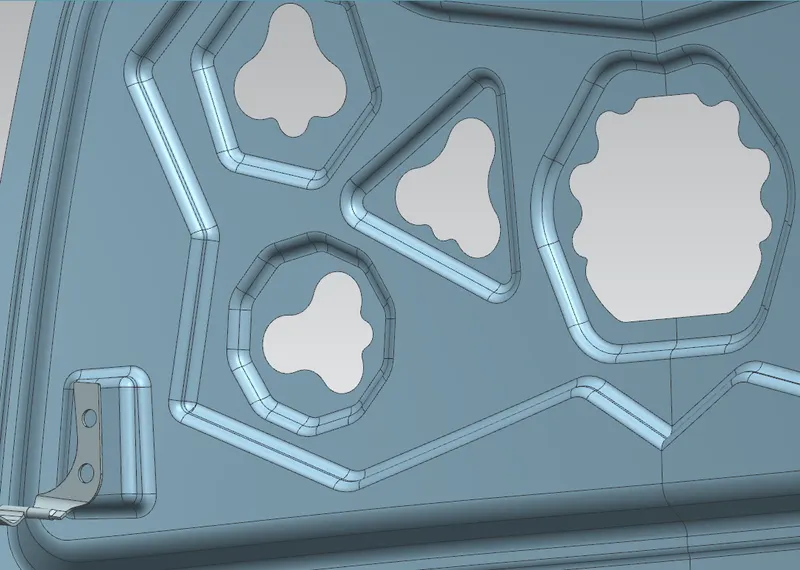
EMBOSS:-
Embossing in a car hood refers to the process of creating raised or raised design elements on the surface of the hood. It involves pressing the material from the underside to create a three-dimensional pattern or design on the visible side of the hood.
- Embossing is typically achieved through a combination of stamping and forming processes. The design or pattern is engraved onto a die, and the hood material is pressed against the die to create the raised design on the hood's surface.
- The embossed design on the car hood should be durable and able to withstand normal wear and tear, exposure to the elements, and routine maintenance such as washing and waxing. The embossed areas should be easy to clean and maintain.
- Embossing is often used to enhance the visual appeal of the car hood. It adds texture, depth, and a unique design element to the hood, making it stand out and adding a touch of elegance or sportiness to the vehicle's overall appearance.
DRAFT ANALYSIS:-
A draft analysis refers to an evaluation of the design and engineering considerations related to the airflow and aerodynamics of the hood. Here are some key points about draft analysis in a car hood:
- A draft analysis aims to optimize the aerodynamic efficiency of the car hood. It involves assessing how the shape, contours, and design of the hood impact the airflow around the vehicle.
- A well-designed hood should minimize wind resistance or drag, which can affect fuel efficiency and overall vehicle performance. A draft analysis helps identify areas of high drag and suggests design modifications to reduce it.
- Techniques such as computational fluid dynamics (CFD) or wind tunnel testing can be used to visualize the airflow patterns around the hood. This helps identify areas of turbulence, separation, or pressure differentials that may negatively impact aerodynamics.
- Draft analysis considers the positioning and design of any vents, openings, or air intakes on the hood. These features can be optimized to enhance airflow through the engine bay, improve cooling, and reduce air pressure buildup.
CONCLUSION:-
- ALL the parts of the hood are designed based on the required conditions & given dimensions. With the completion of hood design & analyzing for successful manufacturability. we can conclude that the hood can be utilized for the vehicle.
Also, considering the safety of occupants & pedestrians the hood has been designed under the EuroNCAP safety regulations.