Fender Design
WHAT IS FENDER :
- The term "fender" refers to the part of a vehicle's body that covers the wheel well and protects the wheel and surrounding areas from road debris, mud, and water splashes. Fenders are typically located above each wheel and are commonly made of metal or plastic.
- Fenders serve both functional and aesthetic purposes. Functionally, they prevent rocks, dirt, and other objects from being thrown up by the rotating wheels and potentially causing damage to the vehicle or other vehicles on the road. They also help contain water and spray kicked up by the tires, reducing the amount of splashing on the body of the car.
- Fenders contribute to the overall design and style of the vehicle. They can have different shapes and contours, and their design can vary depending on the vehicle type, such as sedans, SUVs, trucks, or sports cars.
Types of Fenders:
They are two types of fenders
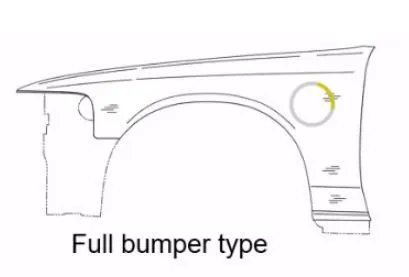
- Full Bumper type
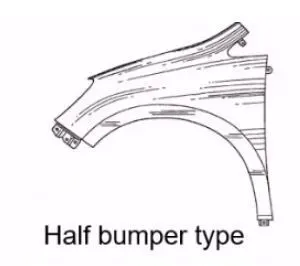
Half Bumper type
Full Bumper type :
A full bumper design usually consists of a sturdy structure that is mounted to the front or rear of the vehicle. It is engineered to absorb and dissipate impact energy, reducing the risk of damage to the vehicle's body and crucial components, such as the engine or trunk.
Full bumpers may include integrated features such as fog lights, parking sensors, and grille openings for cooling air intake. The design of the bumper can vary significantly between different vehicle models and manufacturers, reflecting the specific styling and functional requirements of each vehicle.
The manufacturing process has created more wastage and consumes raw material so that development and production reduce in the modern period.
Half Bumper type :
This type of bumper is used in modern day because of the reduced raw material wastage, reduction in car weight to improve performance and manufacturing cost is low compared to full bumper type.
A half bumper design can contribute to reducing the overall weight of the vehicle. This can have potential benefits for fuel efficiency and performance.
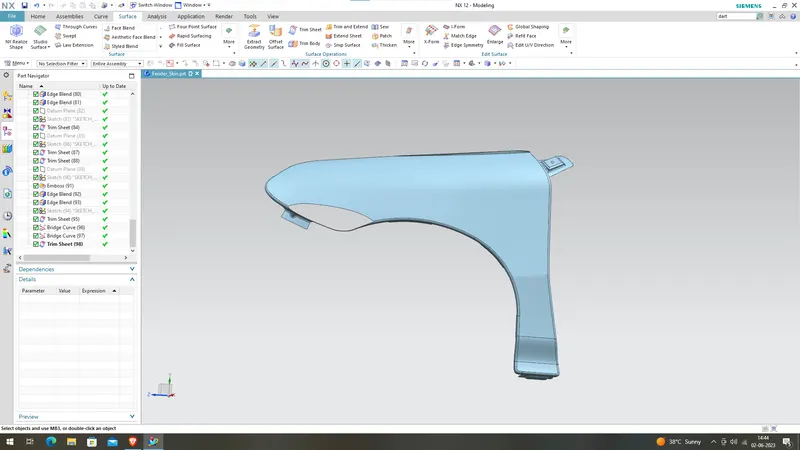
Design of FENDER :
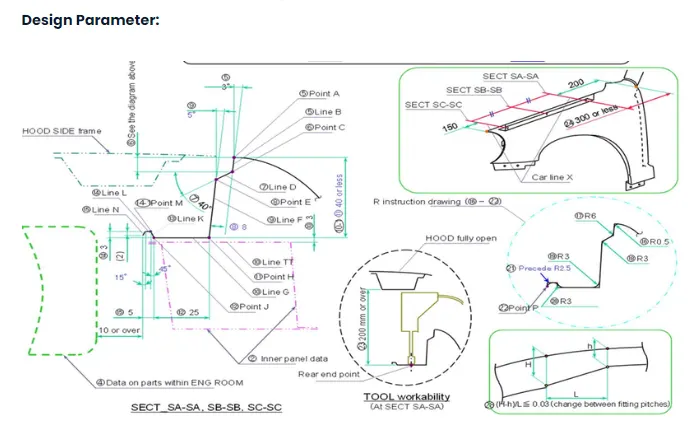
Types of mounts in Fender:
- Drip Area
- Sill Mount
- Bumper Mount
- A Pillar Mount
- Splash/Baffle Mount
Design of Dip Area :
A "drip area" in a car bumper typically refers to a small recessed or slanted section designed to divert water away from the body of the car. These drip areas serve a few advantages:
- When it rains or when the car is washed, water tends to collect on the surface of the car.
- The drip area helps channel the water away from the body of the car, preventing it from accumulating and potentially causing damage.
- Excessive water on the surface of the car can lead to water spots, streaks, and potential damage to the paint and finish. By diverting the water away, the drip area helps maintain the car's appearance and reduces the need for extensive cleaning and detailing.
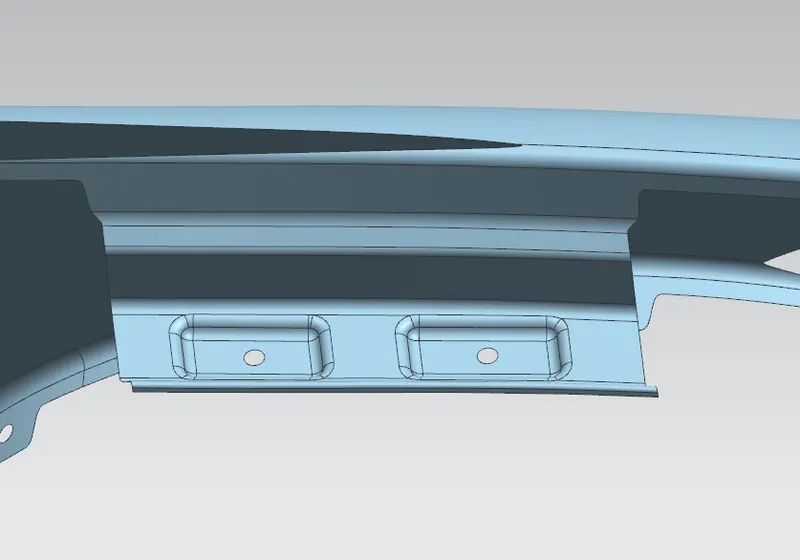
- While designing the drip area we have to initially leave 200-300mm for cowl top
- For placing the headlamp we have to leave at least 150mm at the front while designing the fender.
- Cowl top part consists of wiper motor and its instruments.
Design of bumper Mount Area :
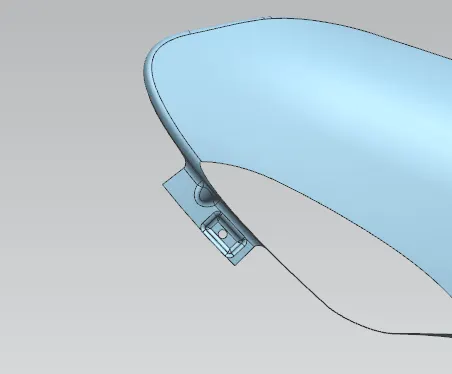
The bumper is attached to the fender using a combination of brackets, bolts, clips, and other fasteners. The fender is the panel that covers the wheel well and is located on the sides of the vehicle, just above the front or rear wheels.
Mounting the bumper to the fender provides structural support and reinforcement. It helps distribute the force of impact in the event of a collision, reducing the potential damage to the vehicle's body and frame.
Mounting the bumper to the fender allows for precise alignment and fitment. It ensures that the bumper is properly aligned with the body of the vehicle, maintaining consistent gaps and lines for a visually pleasing look.
When the bumper is mounted in the fender, it is often easier to remove and replace. In case of damage, repair or replacement of the bumper becomes more straightforward as it is directly connected to the fender using accessible mounting points.
Design of Sill Mounting :
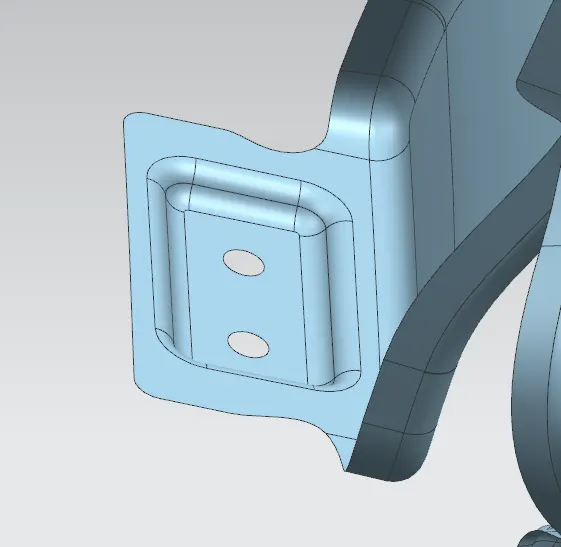
The sill typically refers to the lower section of a vehicle's body, often known as the rocker panel or lower door panel.
If you are referring to the mounting of a sill or rocker panel to the fender, it's important to note that the sill is generally a separate component from the fender. The fender is the panel that covers the wheel well and is located on the sides of the vehicle.
The sill or rocker panel is typically mounted to the vehicle's body structure, typically with the use of bolts, screws, or welding.
Design Of A - Pillar :
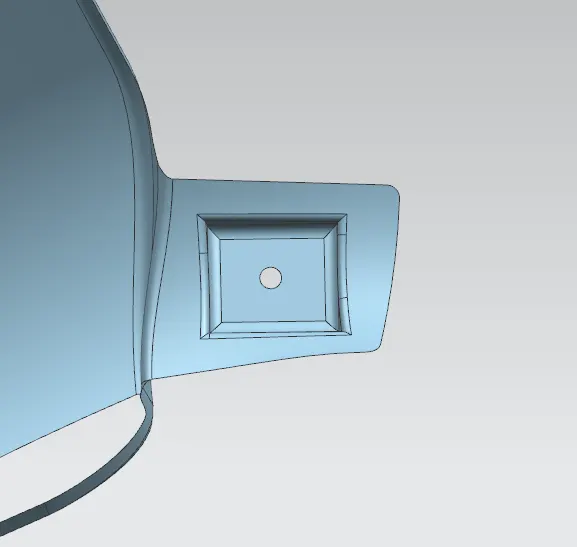
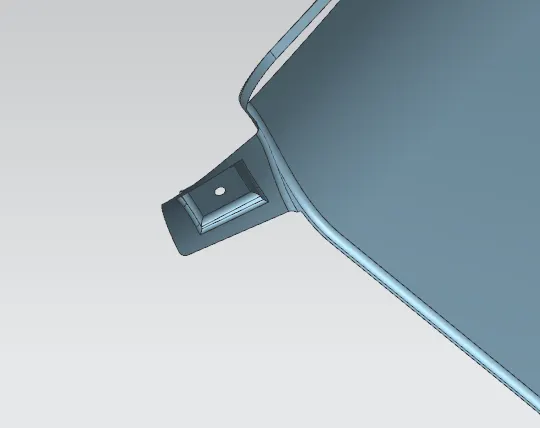
The A-pillar refers to the vertical pillar located on each side of the front windshield, providing structural support to the vehicle's roof and connecting it to the body.
The fender, as mentioned earlier, is the panel that covers the wheel well and is located on the sides of the vehicle. It typically extends from the front bumper to the A-pillar area.
It is not a common practice to mount the A-pillar to the fender. The A-pillar is usually connected to the vehicle's roof structure, windshield frame, and the body structure of the vehicle, providing stability and structural integrity to the front portion of the vehicle.
Design Of Baffle mounting area :
A baffle can be installed in the fender to control the airflow around certain areas of the vehicle. It helps optimize aerodynamics, reduce drag, and improve overall vehicle performance.
Some vehicles feature sound baffles or noise dampening materials within the fender to reduce road noise and vibrations, providing a quieter cabin environment for passengers.
The mounting of a baffle in the fender can vary depending on the specific design and purpose. It may involve fasteners, clips, or brackets that secure the baffle in place within the fender structure.
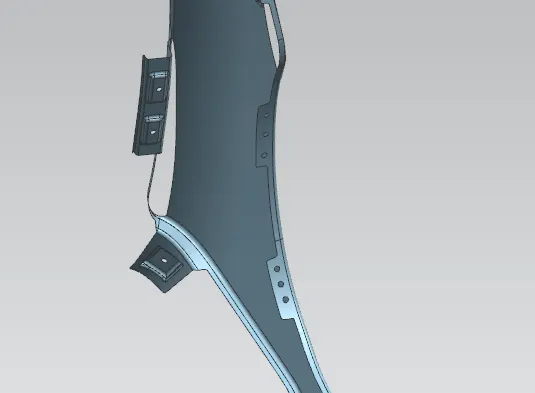
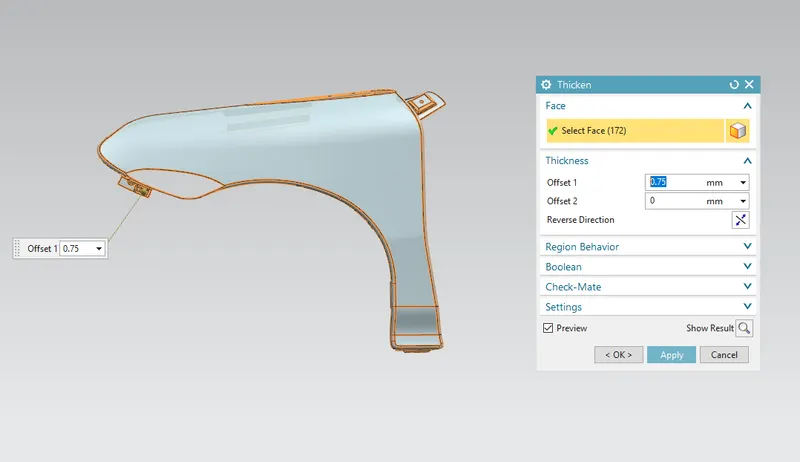
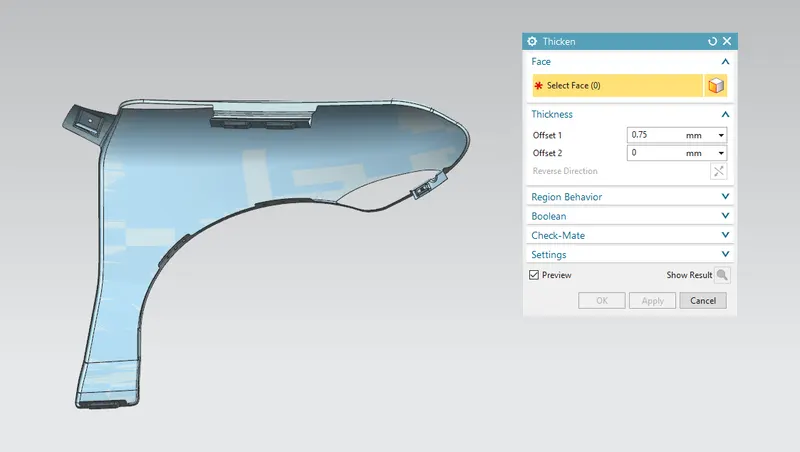
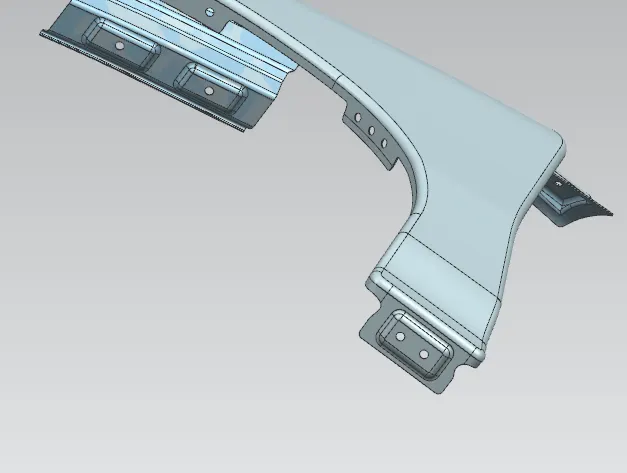
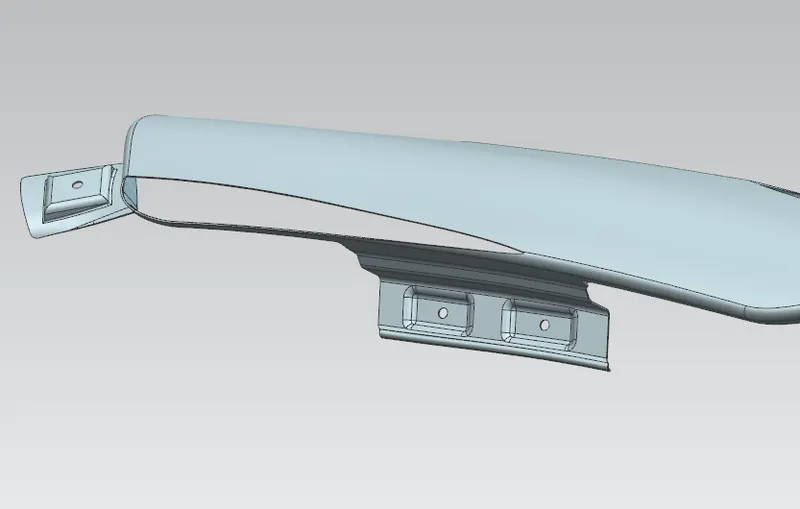
Fender Thickened for 0.75mm :
Conclusion:
Fender design is done using NX Siemens software and design has been created under given Master Section parameters.