Fender Design - Wheel Arch Challenge
what is fender :
- A fender is a panel or component that is typically located above each wheel and extends from the front to the rear of the vehicle.
- A fender refers to the panel that covers the wheel well and is located above the wheel. It is commonly found on both the front and rear sides of a vehicle. Fenders serve multiple purposes, including protecting the vehicle from road debris, providing aesthetic appeal, and acting as a structural component.
- Fenders protect the vehicle's body from road debris, such as stones, dirt, and water, which can be kicked up by the rotating wheels. They help prevent these elements from directly impacting the vehicle's body, reducing the risk of damage.
- Fenders also contribute to the safety of the vehicle and its occupants. They act as a barrier between the wheels and the passenger compartment, shielding occupants from potential hazards or injuries caused by wheel impacts during a collision.
- Fenders play a significant role in the overall design and appearance of a vehicle. They are often sculpted and styled to enhance the vehicle's aesthetic appeal, contributing to its unique look and character.
- In addition to their protective and aesthetic functions, fenders can also provide structural support to the vehicle's body. They help maintain the rigidity and integrity of the overall structure, contributing to the vehicle's stability and handling.
- Fenders are typically made of metal, such as steel or aluminum, but can also be constructed using other materials like plastic or fiberglass, depending on the vehicle's design and intended use.
wheel arch :
The wheel arch, also known as the wheel well or wheel housing, is the curved or molded section of a vehicle's body that surrounds the wheel. It is typically positioned above each wheel and provides space for the wheel to move freely while also shielding it from dirt, mud, and other external elements.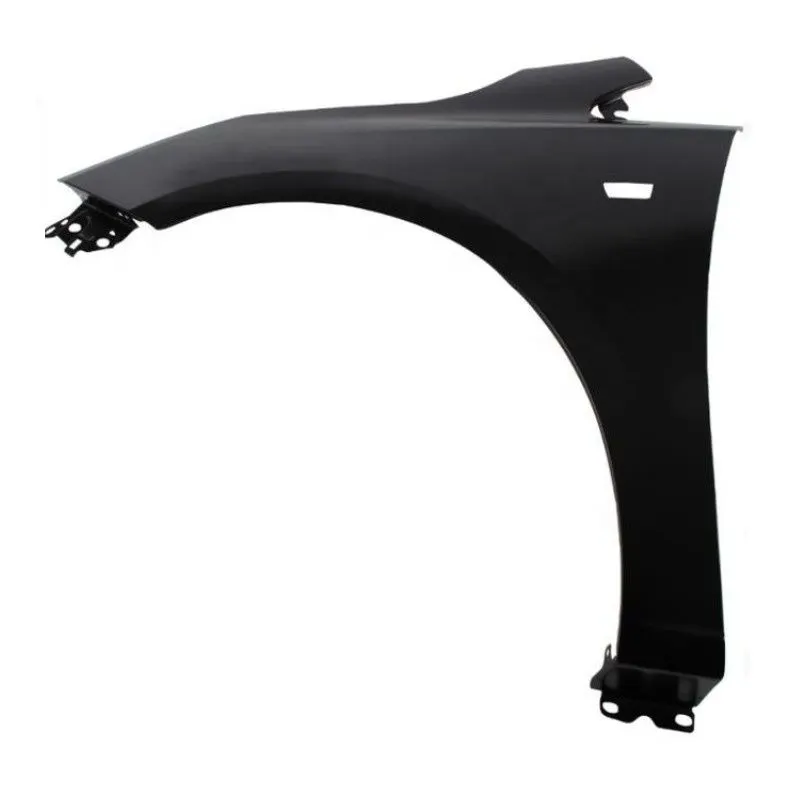
There are several different types of fenders used in automobiles, each with its own design and purpose. Here are some common types:
Full Fender:
A full fender, also known as a standard fender, is the most common type. It covers the entire wheel well and extends from the front to the rear of the vehicle, providing complete protection and coverage.
Half Fender:
A half fender, as the name suggests, covers only a portion of the wheel well. It is typically used in vehicles with a more sporty or exposed wheel design, providing some protection while allowing for a more open and aggressive look.
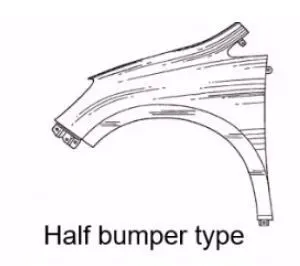
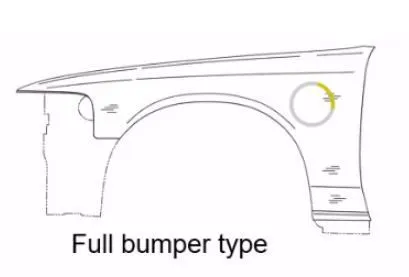
JAPAN REQUIREMENTS FOR FENDER WHEEL ARC:-
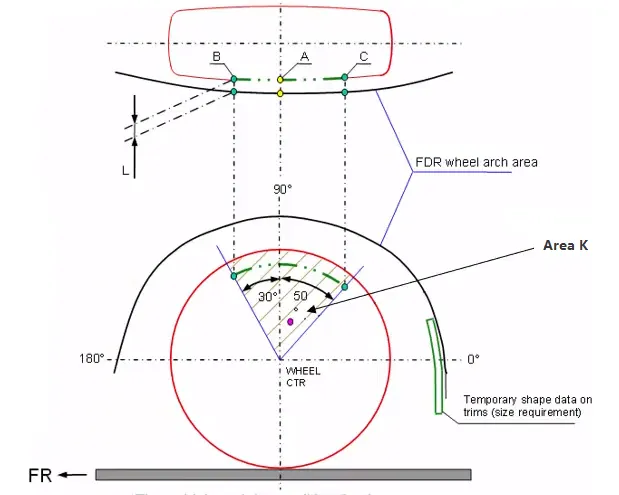
- Measure clearance L of tyire, hub, cap, and fender in three different positions within area K and produce a clearance check chart to validate.
- Clearance must be greater than 5mm in all three positions.
- Wheel guard requirement: the value shall be more than 5mm at a line 30*forward and 50*rearward from the central vertical axis of the wheel.
EUROPEAN REGULATION:-
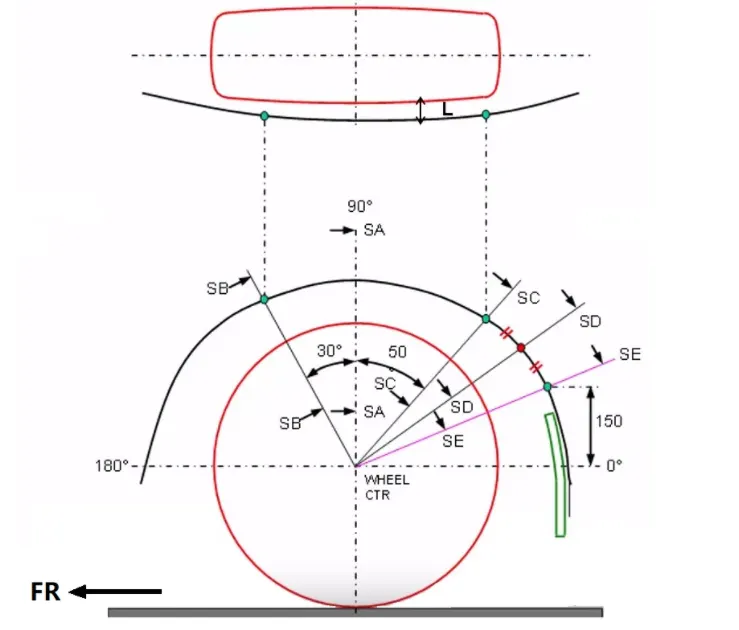
Measure CL L at section SA-SA-SB-SB-SC-SC-SD-SD-SE-SE and produce a CL check chart to validate.
- In all five sections, the CL L value should be greater than 10mm to satisfy European regulations.
- Wheel guard requirement: the value of ‘a’ shall be more than 5mm at a line 30*forward and 50*rearward from the central vertical axis of the wheel.
-
US STANDARDS REGULATION FOR FENDER WHEEL ARC:-
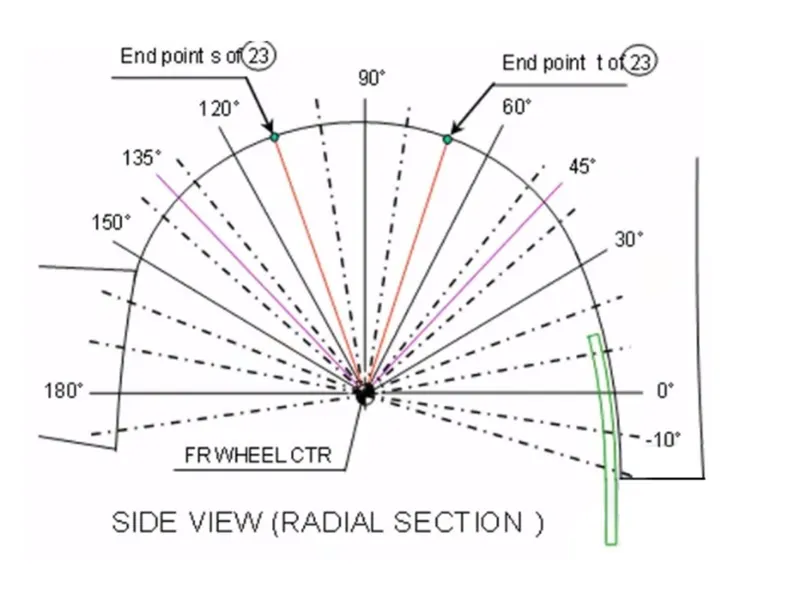
- Make clearance check details on all positions from -100* to 100* and make the clearance check table.
- All values should be greater than 5mm to satisfy the regulation.
- The value of ‘a’ shall be more than 5mm at line 30* forward and 50*rearward from the central vertical axis of wheel.
PROCEDURE:
- According to European standards, the design fender and wheel arc should pass the wheel guard requirement procedures.
- To start the test, first, create a plane with the face of the wheel Arc.
- Then sketch using lines along with given dimensions as SA, SB, SC, SD, and SE.
- After sketching the project the intersection points onto the fender face.
- Then use the measure distance tool and calculate the clearance between sketch lines and wheel arc.
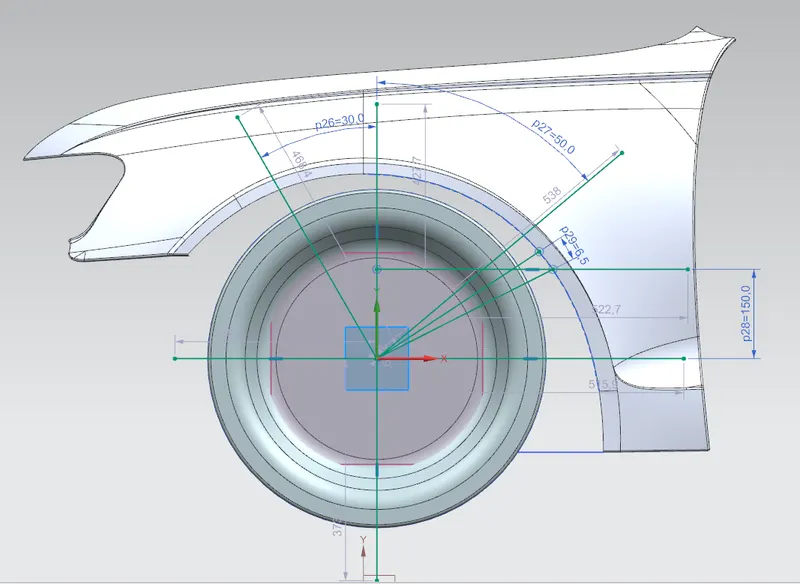
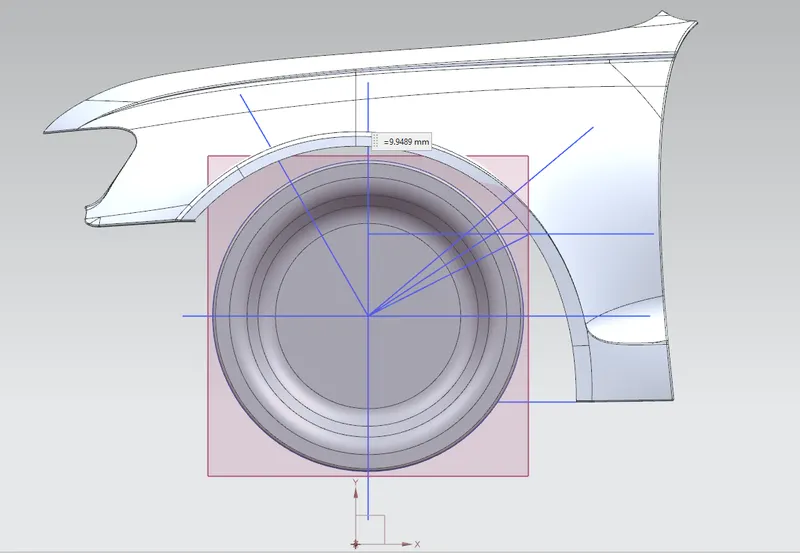
- The clearance between the SA line and wheel arc is 9.9489mm also the line SA lies outside the fender so it is a negative value.
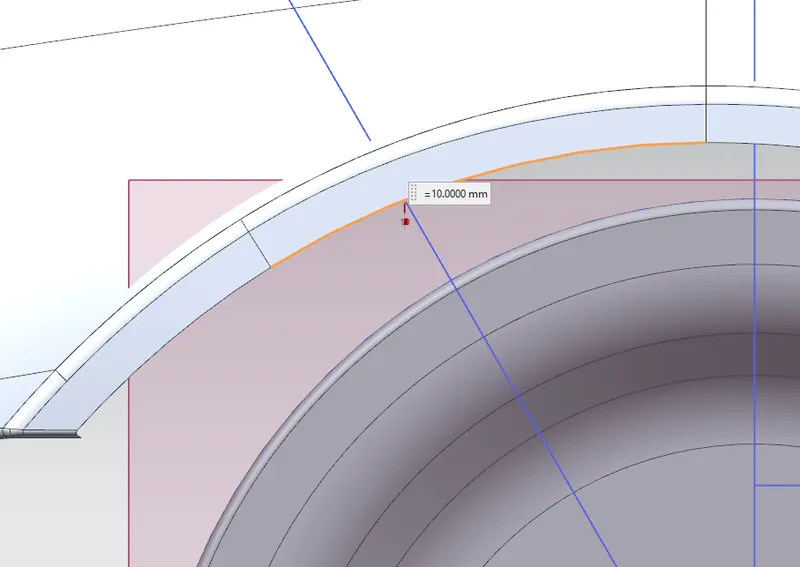
- The clearance between SB line and wheel arc is 10mm also the line SB lies inside the fender so it is a positive value.
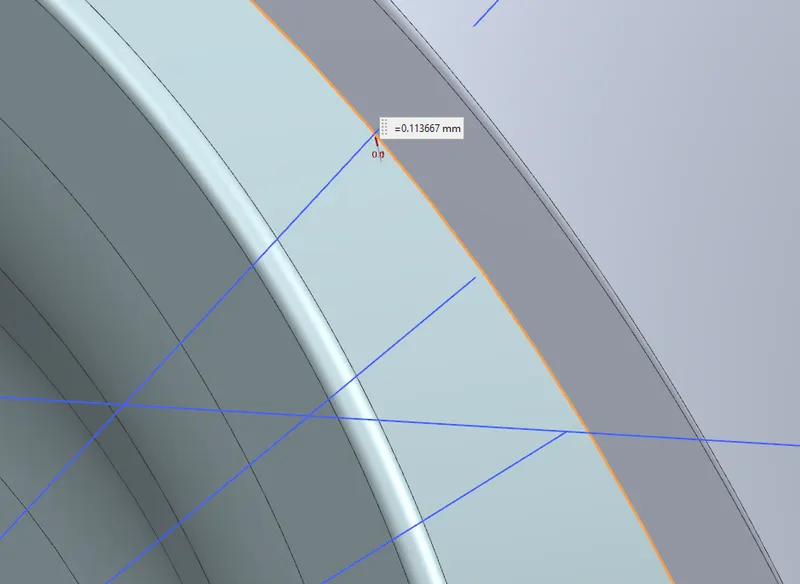
- The clearance between the SC line and wheel arc is -0.113667mm also the line SC lies outside the fender so it is a negative value.
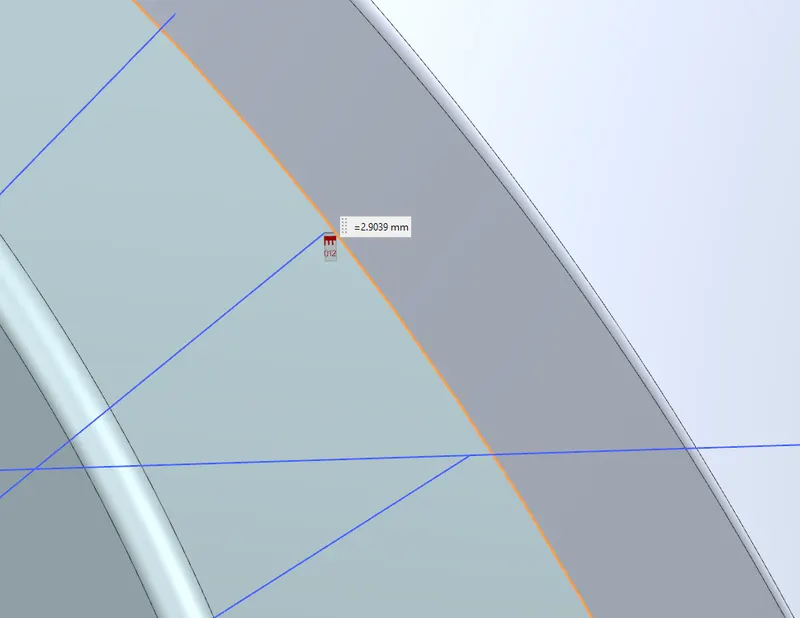
- The clearance between the SD line and wheel arc is -2.9039mm also the line SD lies outside the fender so it is a negative value.
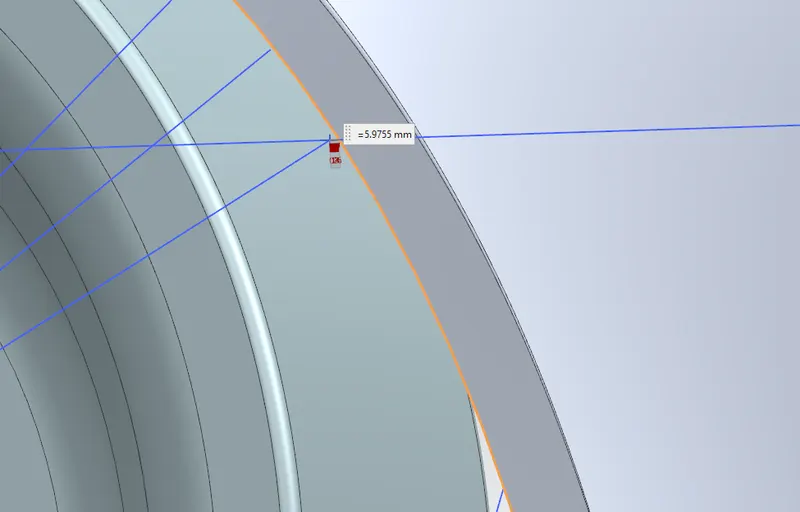
- The clearance between the SE line and wheel arc is -5.9755 also the line SE lies outside the fender so it is a negative value.
| REGION | REQUIRED CLEARANCE | ACTUAL CLEARANCE | RESULT |
| SA | 10MM | 9.9489MM | FAIL |
| SB | 10MM | 10MM | PASS |
| SC | 10MM | 0.113667MM | FAIL |
| SD | 10MM | 2.9039MM | FAIL |
| SE | 10MM | 5.9755MM | FAIL |
CONCLUSION:
From the above results we can conclude that the fender does not pass the European regulations, as the minimum clearance L
between the fender wheel arch and wheel for vehicle and pedestrian safety is 10mm and this design does not meet the requirement.